
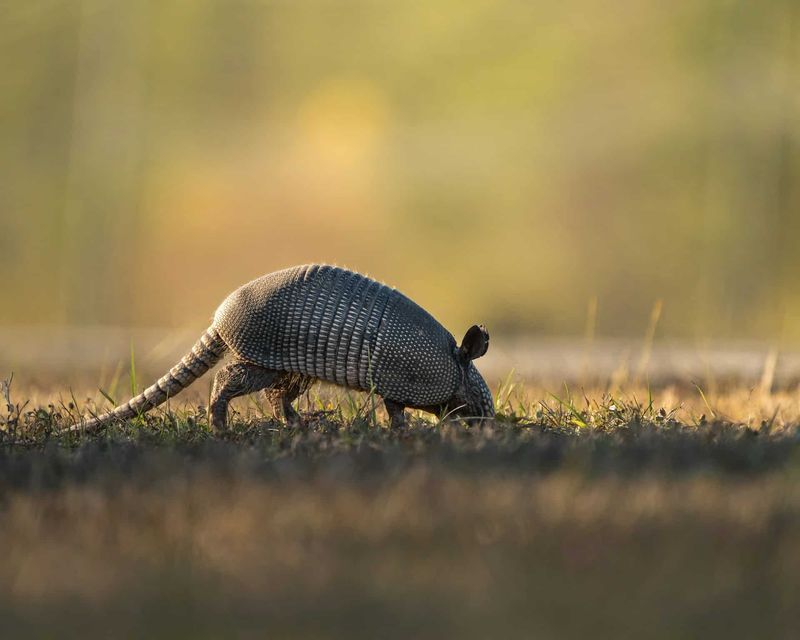
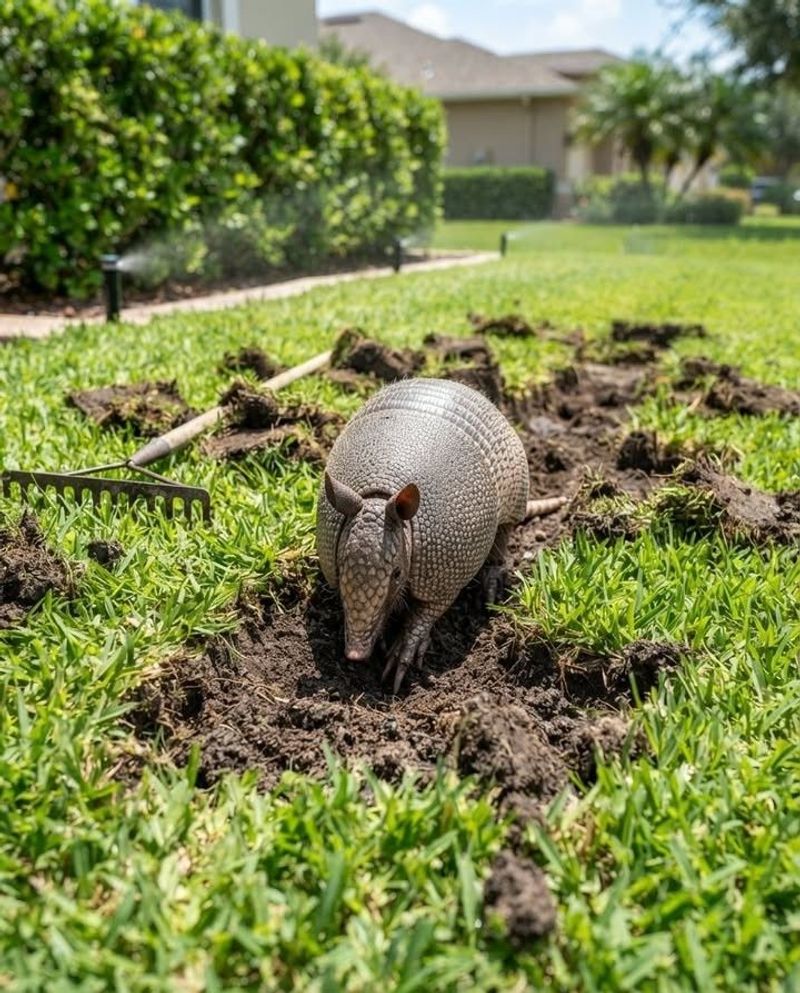
Wake up to a scatter of small holes across a green lawn, and an armadillo is a likely suspect. These animals forage after dark, and well-kept Florida yards can be a good place for them to look for food.
The draw is usually something in the soil, not the grass itself. Knowing what that is can help you pick fixes that make sense for your yard.
A moist, well-kept lawn can attract armadillo foraging
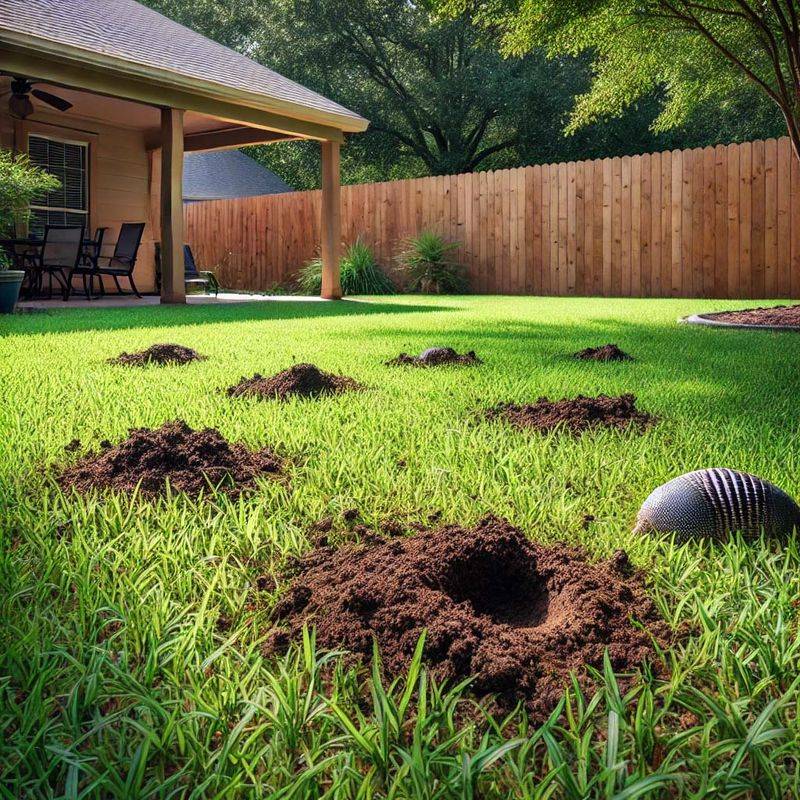
Armadillos do not dig just anywhere. UF/IFAS notes that these animals prefer moist soil, and their digging tends to be concentrated in well-kept lawns and gardens.
A thick, regularly watered lawn fits that description nicely.
FWC makes a similar connection. Its armadillo profile links moist soil and lush vegetation with earthworms and insect larvae, which are food for armadillos.
So a lawn kept damp by irrigation can become a common spot for foraging.
That does not make a green lawn a guaranteed target. Armadillos also visit gardens and other areas where soil invertebrates live, and a lawn with plenty of moisture is just one place they may concentrate their searching.
Armadillos are active mostly at night, so you usually see the results rather than the animal. A single armadillo can leave many shallow holes in one night.
That is why damage can seem to appear out of nowhere by morning.
Repeat damage is possible, especially if the food and moisture stay the same. Still, there is no solid basis for saying an armadillo will return to the exact same patch every night.
Some yards get one visit, and others see damage come and go over weeks.
Keep in mind that armadillos are not native to Florida. UF/IFAS calls them introduced and invasive, and FWC describes them as introduced and naturalized.
They are now a regular part of many Florida neighborhoods, which is why yard-friendly management matters.
What armadillos find beneath the turf
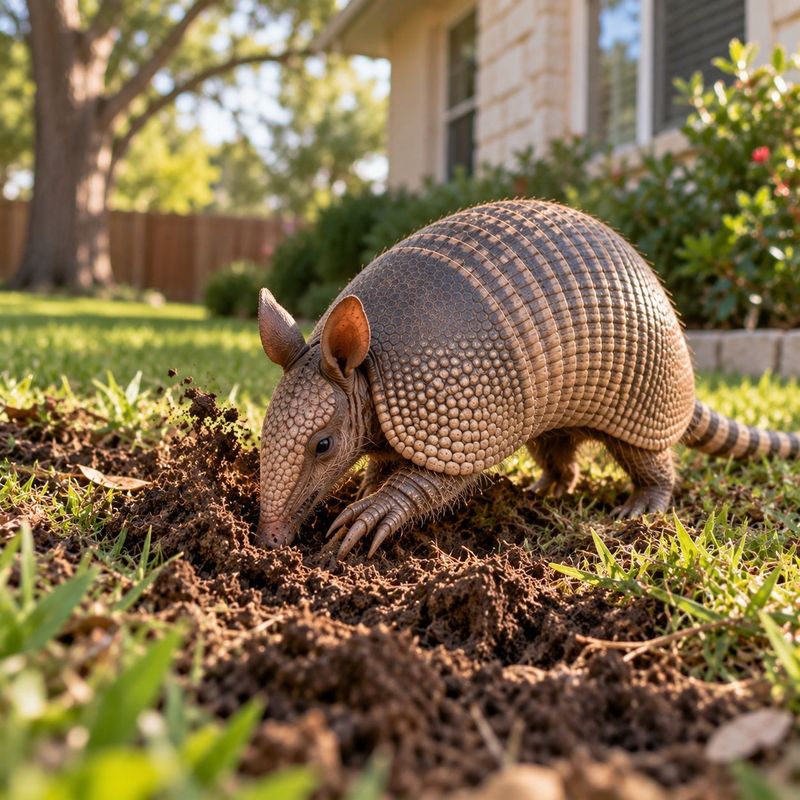
Under a healthy lawn there is a lot going on. Earthworms, beetle larvae, and other small creatures live in the top layer of soil, and armadillos use their sharp sense of smell to find them.
UF/IFAS wildlife guidance describes armadillos digging for insects and larvae in the soil.
Moisture changes how easy that food is to reach. Damp soil can bring earthworms and larvae closer to the surface, so an armadillo does not have to dig as deep.
The food is the real attraction, and the lawn is simply where it happens to be.
Grubs get most of the blame, but they are only part of the menu. UF/IFAS explains that armadillos eat a range of soil invertebrates, including earthworms.
A lawn with few grubs can still hold plenty of worms.
Picture a sandy Florida yard after a week of afternoon storms plus a sprinkler cycle. The top few inches stay damp, worms stay active near the surface, and the ground is easy to probe.
That is the kind of setting where foraging may pick up.
Earthworms are generally a sign of healthy soil, so the goal is not to wipe out everything underground. The more realistic aim is to make the surface less appealing and protect the areas you care about most.
The holes do not prove grubs are present
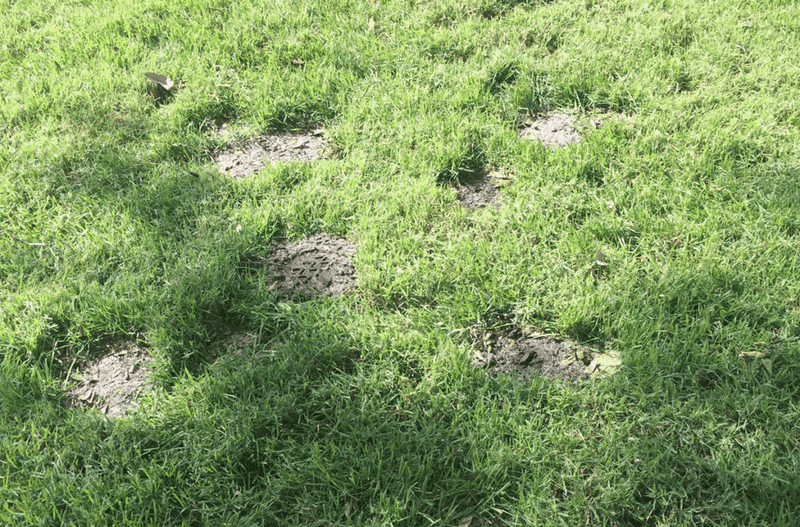
Finding holes in your lawn feels like proof of a grub problem, but it is not. Armadillos dig for many kinds of soil invertebrates, so holes alone cannot tell you which one they were after.
Checking before you treat saves time and money.
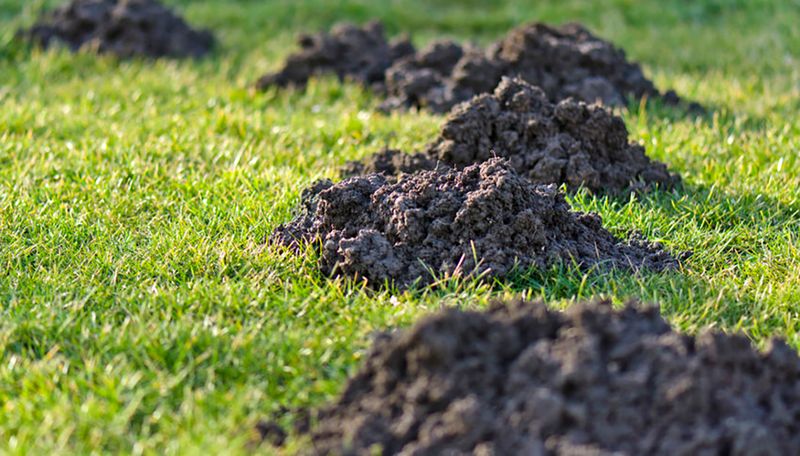
Armadillo foraging commonly leaves multiple shallow holes, often small and scattered across turf or beds. That pattern is consistent with armadillos, but it is a clue rather than a verdict.
UF/IFAS advises identifying the animal responsible before choosing any remedy, since other wildlife can also disturb soil.
Raccoons, skunks, and opossums can all leave marks in a yard. Looking at hole size, depth, and whether turf was flipped or scratched can help narrow it down.
A wildlife camera placed overnight can settle the question when the clues are unclear.
If you suspect grubs, you can check directly. Peel back a square foot of sod in a damaged area and look at the roots and top layer of soil.
Finding a few larvae does not mean they caused the holes, because armadillos eat a mix of foods.
Holes appearing on different mornings also do not prove one animal is coming back to one spot. Treat each patch as a separate observation, and decide on a response once you know what is making them.
UF/IFAS wildlife guidance stresses fixing the real cause of the damage.
Morning watering gives soil more time to dry
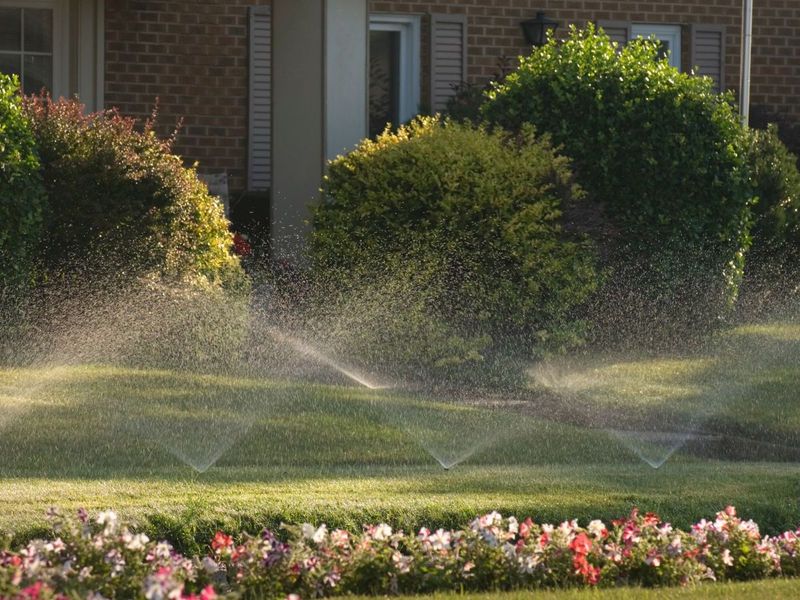
Water is the easiest thing to adjust, so start there. Giving the lawn only what it needs, instead of a daily soak, keeps the soil from staying wet for long stretches.
UF/IFAS advice on nuisance wildlife points to cutting back on excess watering and fertilizing as part of discouraging pests.
Timing matters too. FWC suggests not watering at night when nocturnal wildlife is a problem, as noted in its armadillo profile.
Watering in the morning gives the surface hours to dry before armadillos start roaming.
Try a few simple checks. Walk the yard in the evening and see whether the soil feels soggy or squishy.
If it does, your irrigation clock may be set for more water than the lawn needs, especially during rainy stretches.
Look at sprinkler zones as well. Leaky heads, overlapping spray, and low spots can leave one patch wetter than the rest, and that patch may be where holes keep showing up.
Adjusting or repairing those spots costs little.
Keep this practical. The goal is appropriate watering, not letting the lawn go thirsty, since a stressed lawn brings its own problems.
Rain sensors can help skip cycles after storms.
This step will not always stop digging, and no one adjustment is a guarantee. Think of it as the first layer in a set of changes that together make the yard a little less attractive.
Fencing protects beds, while fallen fruit adds another draw
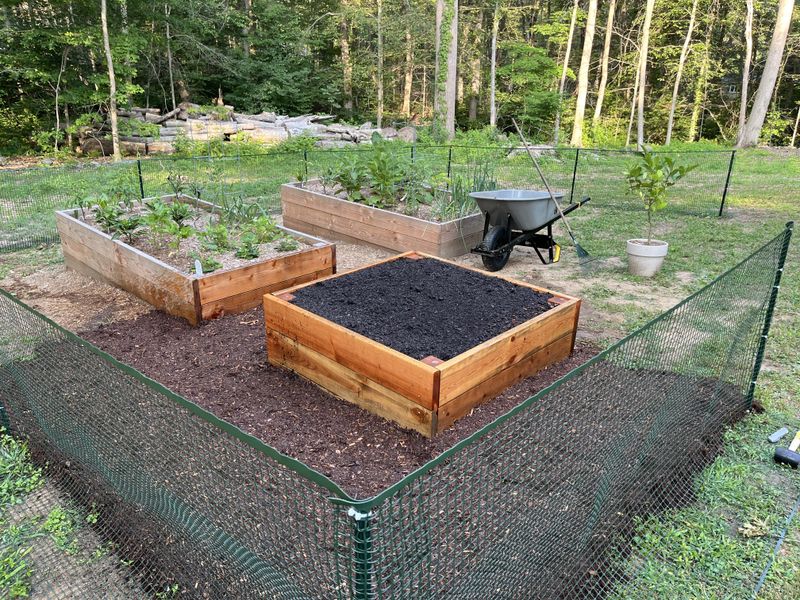
When one garden bed matters more than the rest of the yard, a fence can be worth the effort. Guidance from UF/IFAS on the nine-banded armadillo describes a fence about 2 feet high with its bottom buried at least 18 inches.
UF/IFAS also mentions angling the fence outward.
The buried part is key, since armadillos dig. A short fence set only on the surface would likely be tunneled under.
Sandy Florida soil is easy to dig in, so plan for a solid trench.
This approach suits a small planting area, such as a vegetable plot or a flower bed. Fencing an entire lawn would be costly and awkward, so do not treat it as a lawn-wide fix.
Fallen fruit is the second target. FWC says in its armadillo profile that fermenting fruit on the ground can attract armadillos.
Citrus, mangoes, loquats, and similar fruit can pile up fast under a tree.
Make a habit of picking up drops every few days during fruiting season. A bucket by the back door makes it easier.
Clearing fruit also helps reduce other nighttime visitors.
Both steps are targeted. They protect specific spots and remove one extra draw, but neither promises an armadillo will lose interest in the yard altogether.
Why common quick fixes can miss the problem
A quick fix is tempting when your lawn is pocked every morning. The trouble is that popular options often target the wrong thing.
UF/IFAS says insecticides used to reduce food sources have not been proven to stop armadillo digging.
That makes sense when you remember armadillos eat earthworms and many other invertebrates, not only grubs. Killing one kind of insect may leave plenty of other food behind.
If you find a confirmed lawn pest, any pesticide should be used only for that identified pest and strictly according to its label.
Chemical repellents are another weak spot. UF/IFAS notes that no chemical repellents or fumigants are registered for armadillos in Florida.
Homemade mixtures and store-bought products without that registration are not dependable.
Mothballs deserve a firm warning. According to UF/IFAS mothball facts, using them outdoors this way is illegal and can harm people, pets, and the environment.
Poison is also off the table for the same safety reasons.
A better use of your time is working on the conditions covered earlier: watering, protected beds, and fruit cleanup. Those steps address what draws foraging instead of gambling on a product that was never shown to work.
Trapping brings legal and handling responsibilities
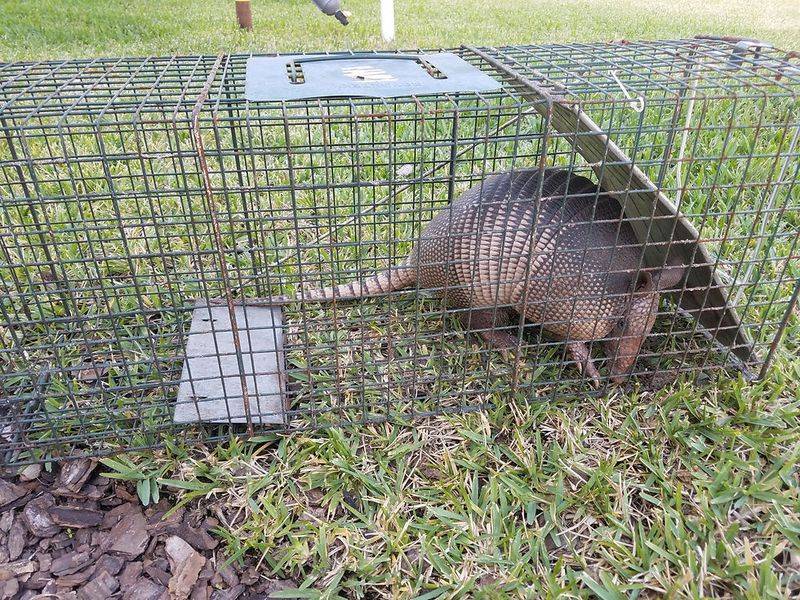
Some homeowners consider trapping when damage continues. Before buying a trap, contact FWC or a qualified wildlife-control professional.
The rules and handling duties are real, and mistakes can hurt people or animals.
FWC’s nuisance wildlife FAQ says traps must be checked at least every 24 hours. Captured animals must be handled according to current legal requirements, so a trap that sits unchecked is a problem for you and the animal.
Relocation is not an easy way out. As FWC’s armadillo profile explains, nonnative wildlife may not be transported or relocated except for euthanasia.
Moving an armadillo to a park or a friend’s property is not an option.
Health questions come up too. Hansen’s disease has been found in armadillos, but Florida Department of Health guidance describes infected armadillos as an uncommon possible source.
The department’s disease page adds that their role in transmission is not fully clear.
That does not mean an armadillo passing through your yard is a likely route of infection. The practical advice is simple: avoid direct contact with wild armadillos, and use gloves if you must handle one or a carcass.
Start by making the yard less inviting
Begin with a walk around the yard this week. Check your irrigation settings, shift watering to the morning, and cut back on extra moisture after dark, as UF/IFAS guidance suggests.
Then protect any prized bed and clear fallen fruit, which FWC links to armadillo visits.
These changes can lower the pull of your yard, but none can promise an armadillo will leave. Some visits are simply passing through.
A yard that offers less to eat and less damp ground gives them fewer reasons to linger.