
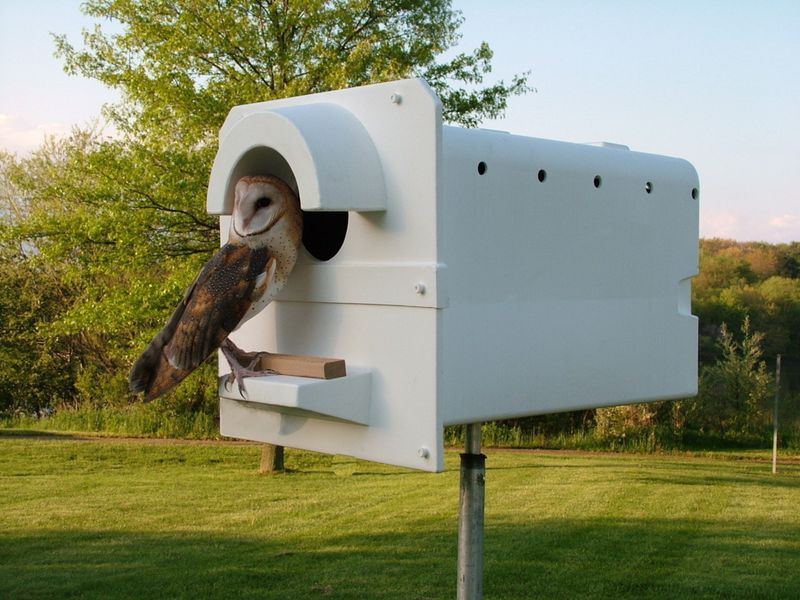
A barn owl gliding over a dark California yard looks like the perfect pest control crew. Barn owls do eat small mammals, and nest boxes are a popular way to give them a place to raise young.
But a box is not a magic switch for gophers, and the research is narrower than many headlines suggest. Here is what is known, what is not, and how to decide if a box fits your property.
Gophers are one item on the barn owl’s menu
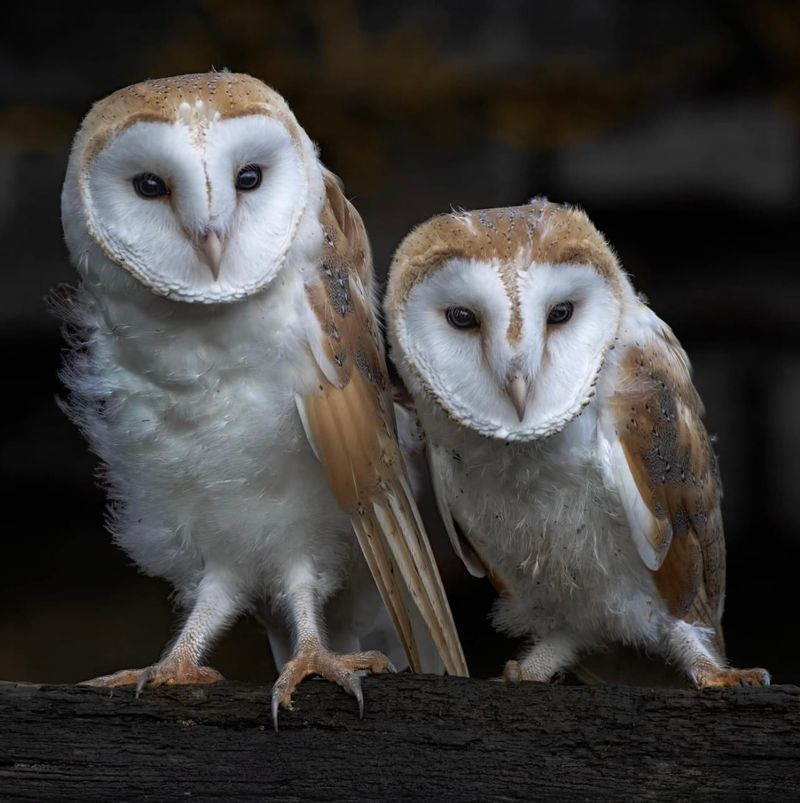
Barn owls hunt at night and eat mostly small mammals. Cornell Lab life history notes list rats, mice, and voles as common prey, and what an owl catches depends on what is available near its nest.
Pocket gophers do show up in the diet too. California vineyard diet studies, gathered in a 2016 review of barn owls as pest control, document gophers as prey.
So gophers are a real part of the menu, but only one part.
Do not assume gophers dominate what a local owl eats. Gophers spend most of their time underground, and an owl may find voles or mice easier to catch.
In one yard the owl might focus on field mice, while in another it might take more gophers.
The same review pulled together seasonal prey estimates, and it noted that some of those seasonal values were extrapolated rather than measured directly. That means the numbers give a rough picture, not a promise.
Nothing shows that barn owls in every California yard hunt gophers throughout winter.
A practical way to think about it: if you find fresh gopher mounds, treat them as a problem that needs its own plan. An owl in the neighborhood may take some gophers, but you cannot count on it to protect your lawn or vegetable beds on any given night.
Vineyard research suggests potential, not guaranteed yard control
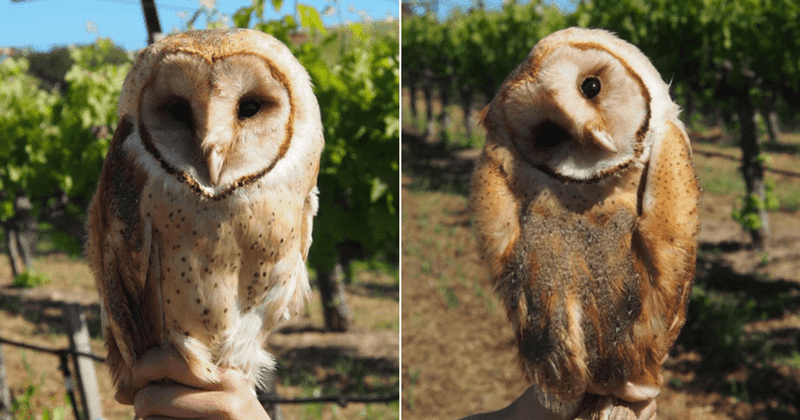
The best direct California evidence for gopher reduction comes from vineyards. In a Napa Valley vineyard study of owl nest boxes, gopher activity declined during peak owl hunting pressure at the vineyard with occupied boxes.
At the comparison vineyard, gopher activity rose slightly.
That result is encouraging, but it came from working vineyards, not from backyards. It does not show that a box will control gophers around a house, a garden, or a suburban lawn.
Vineyards are large, open, and managed very differently from a typical yard.
Where owls actually hunt matters too. A tracking study in a California winegrape region found that owls selected uncultivated habitats such as grassland, riparian areas, and oak savanna.
Only about one-third of recorded hunting locations were in vineyards.
So the land around your property shapes where an owl forages. A yard next to open grass or a creek corridor may be on an owl’s route, while a yard in a dense neighborhood may be much less attractive.
Earlier, the 2016 California review concluded that the ability of barn owls to control rodent pests at useful levels in the state was uncertain. The Napa work adds hopeful evidence, but it is still limited and agricultural.
A box offers a nesting site, not a promise that owls will stay nearby
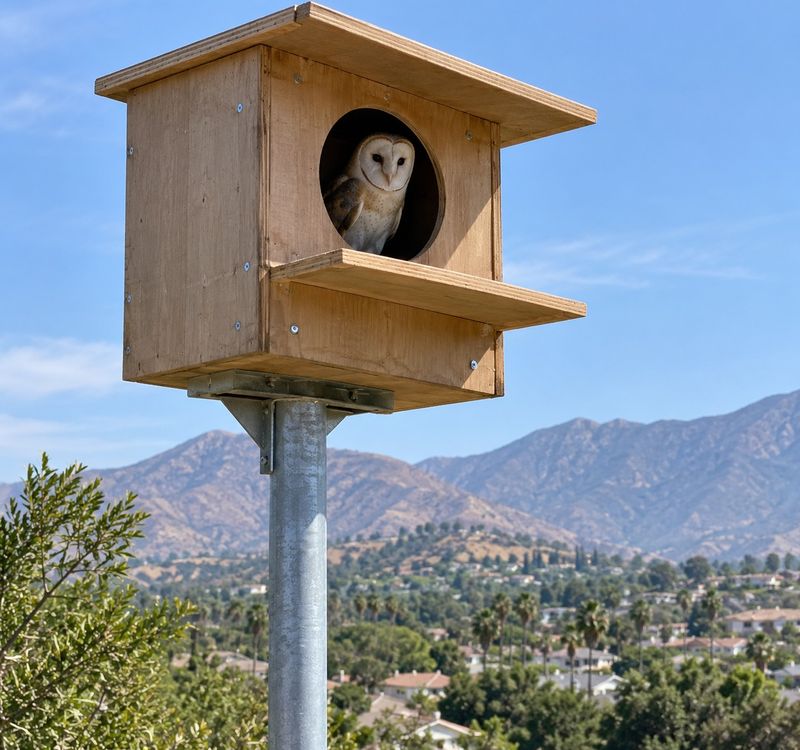
Barn owls nest in cavities, and where good natural ones are scarce, a well-sited box may give them somewhere to raise young. That is the honest pitch: a potential nesting site.
It is not a guarantee that an owl will move in.
Nesting and hunting are two different things. Even if a pair uses your box, they may do most of their hunting across a wider landscape.
Tracking research from California shows owls traveling to favored habitats rather than staying put on one property.
Several things decide whether a box gets used. Prey has to be nearby, so open grassland or fields with rodents help.
The habitat around the box matters, and so does the exact location. Constant noise, lights, or human activity can also put owls off.
Cornell’s NestWatch barn owl guide covers the design and placement details that give a box its best chance.
If you have a small, fully developed lot with no open ground nearby, a box may sit empty for years. If you live near fields, a creek, or open hillsides, it may be worth trying.
Either way, plan for a box to be a bonus for wildlife, not a gopher solution.
November is a useful time to install a box, not a universal deadline
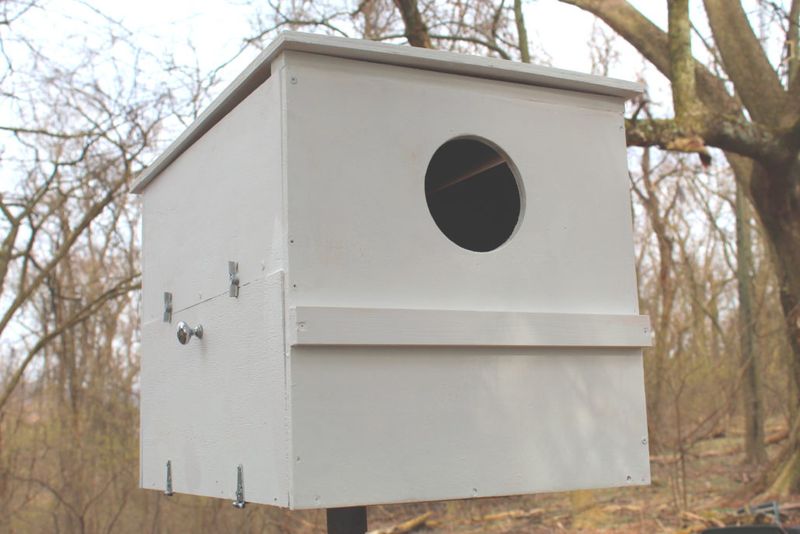
California state guidance recommends putting up a barn owl box in summer or fall, before nesting begins. The Department of Pesticide Regulation’s guide on hawk perches and owl boxes makes that recommendation, which is why November works well for many homeowners.
It is not a hard cutoff, though. Barn owls in California can pick nest sites as early as January and lay eggs as early as mid-February, according to research on owls in a winegrape region.
When prey is plentiful they may also nest outside a single fixed season.
A California nesting bird management plan reflects the same reality that nesting timing can vary.
The practical lesson is to install before a box becomes occupied. An empty box can be set up freely.
Once owls are inside, you need to leave it alone, and working near an active nest risks disturbing the birds.
If you miss November, do not assume the window is closed. Check the box for signs of use first, keep your distance if you see owls, and wait until it is clearly empty before doing any work.
Choose a barn-owl box and mount it in a suitable location
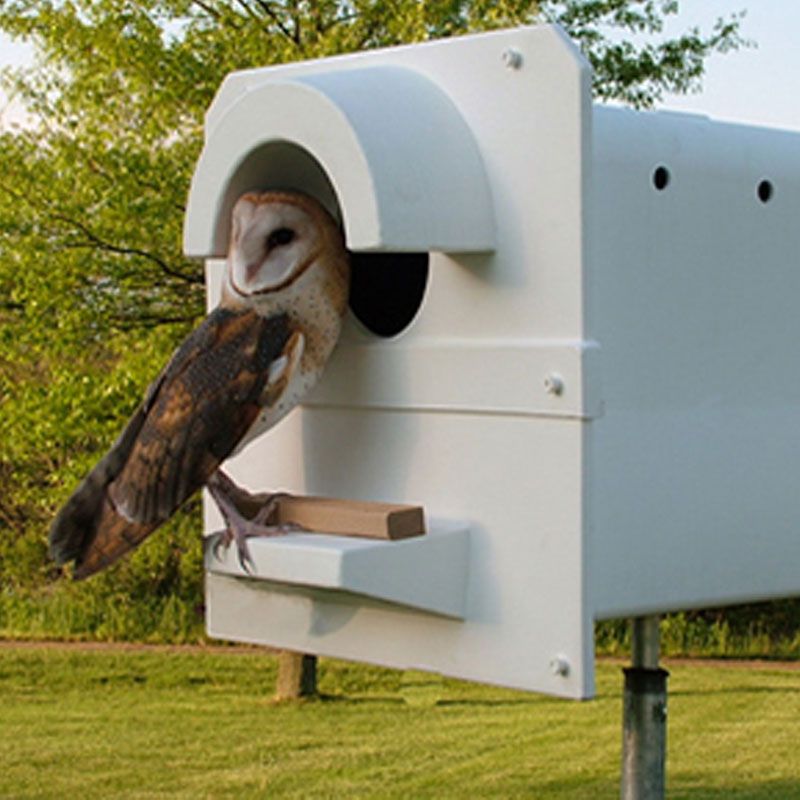
Skip generic owl houses and look for a barn-owl design. Cornell NestWatch lists a 4½-inch entrance opening, a 16-inch interior depth, and an interior of 12⅜ by 22¾ inches.
Those numbers are for barn owls specifically, so check them before you buy or build.
Location comes next. California’s Department of Pesticide Regulation, in its owl box guidance, recommends an open, quiet spot with afternoon shade.
Face the entrance away from prevailing winds, add a predator baffle, and mount the box 10 to 12 feet high.
A free-standing pole can hold a box, and so can a sturdy structure such as a barn or silo. Cornell lists both options.
Not every yard has a good spot. A cramped lot with no clear space, strong afternoon sun on every wall, or a neighbor’s bright lights may be a poor fit.
A pole that cannot be set safely or reached for cleaning is another warning sign.
Walk your property at dusk before you buy anything. Listen for noise, look for open ground, and picture the box ten feet up.
If you cannot find a quiet, shaded, open spot, it is better to skip the box than to force a bad location.
Avoid rodent poison and reduce food and shelter around buildings
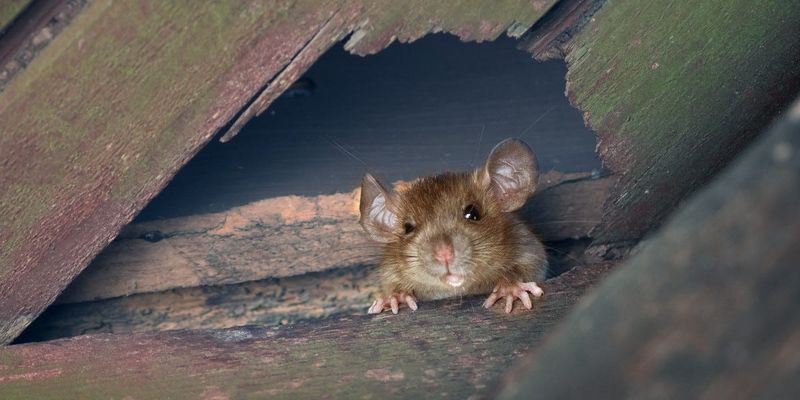
Poison and owls do not mix. When a rodent eats rodenticide, a predator or scavenger that eats that rodent can be exposed too.
The California Wildlife Health Lab documents this secondary exposure and reports widespread anticoagulant rodenticide exposure among tested raptors.
That does not mean every exposure kills an owl. It does mean poison can harm the very animals you hope to welcome, so it makes little sense to put out bait while hoping to attract a barn owl.
The same lab suggests a better first step: take away what draws rodents in. Seal holes in and around buildings.
Pick up fallen fruit, and clean up seed and debris. Make sure pet food is not left out where rodents can reach it.
A simple weekend routine can help. Check the foundation and garage for gaps, rake up fruit under trees, and store birdseed in lidded metal bins.
Sweep up spilled seed beneath feeders.
These steps can reduce rodent pressure, but they are not guaranteed to solve a gopher problem. Neither is a nest box.
If gophers are damaging plants or irrigation lines now, look for a wildlife-safe approach for active damage rather than waiting for an owl to arrive.
Leave occupied nests alone and clean boxes only when they are empty
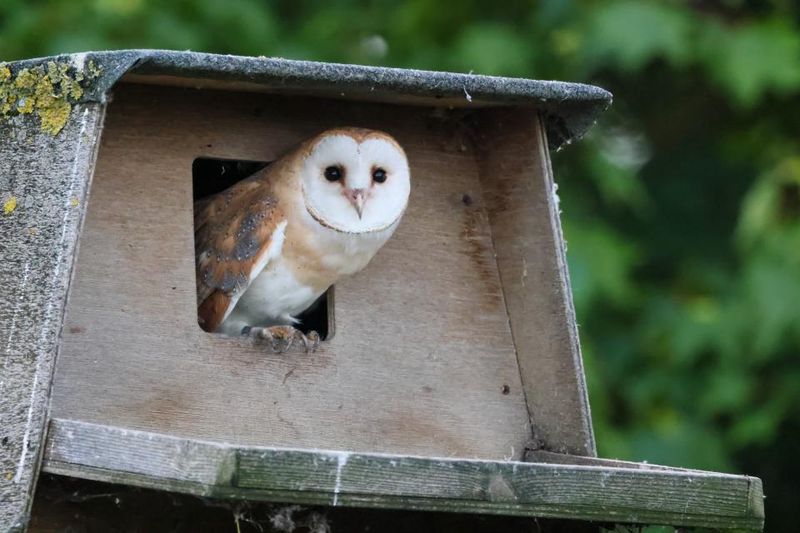
Once owls move in, stay back. Cornell NestWatch warns that barn owls may abandon a nest if they are disturbed during early nesting.
Do not open the box to peek, and keep visits and noise to a minimum.
Hungry owlets can be loud, with raspy calls at night. Keep that in mind when you pick a spot, and do not place a box close to bedroom windows.
Cleaning is a separate job with its own timing. California’s Department of Pesticide Regulation, in its owl box guidance, recommends annual cleaning from mid-August through November.
Cornell says December is generally a good time.
Those windows do not match, and neither is right for every location. Follow local guidance, and clean only when you are sure the box is unoccupied.
If you are unsure, watch the box at dusk for a few evenings and wait.
Wear gloves and a mask when you clean, since old nests hold dust and droppings. Remove debris, check for damage, and close it up again.
A box can support nesting, but it cannot promise a single gopher less. Owls make their own choices, and a good host respects that.