
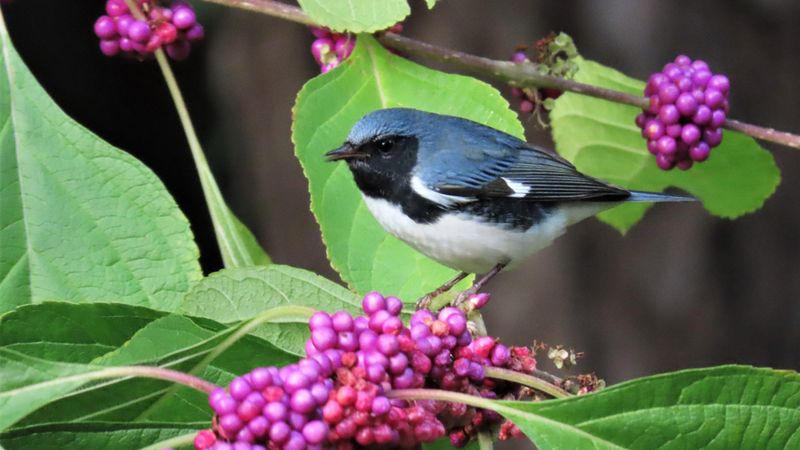
A shrub covered in bright purple berries might be the most underappreciated plant in a North Carolina yard. American beautyberry, Callicarpa americana, is a native species whose fruit can stay on the branches well after the leaves fall, giving songbirds a food source when other options thin out.
Most homeowners who pull it up are making a judgment based on its loose, sprawling shape rather than what it actually does for local wildlife. Getting to know this plant on its own terms is worth a few minutes of anyone’s time.
Identify the native beautyberry before judging it
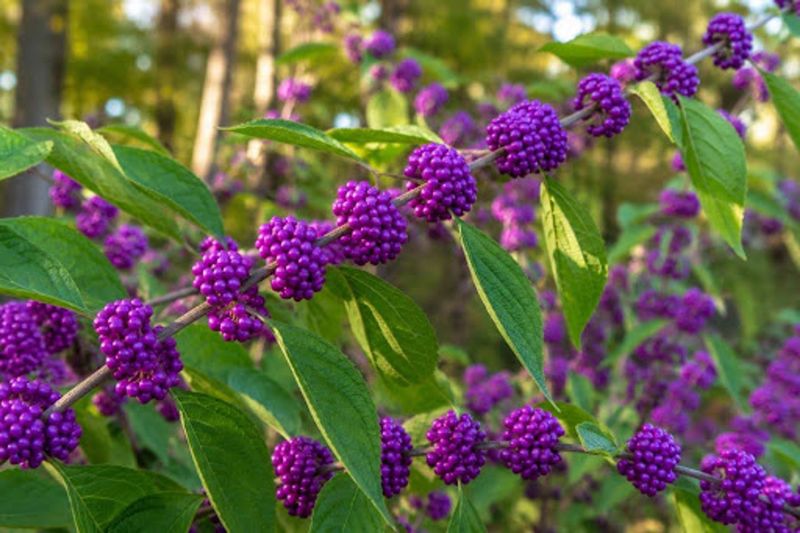
Not every plant sold as “beautyberry” at a garden center is the same plant, and that distinction matters more than most people realize. The one worth keeping in a North Carolina yard is American beautyberry, Callicarpa americana, a native shrub that grows across the state from the coastal plain up through the Piedmont and into the lower mountain foothills.
Its most recognizable feature is the tight, jewel-like clusters of magenta-purple berries that wrap around the stems in late summer and fall, a display striking enough that North Carolina named it the state’s 2021 Wildflower of the Year.
The leaves are large, opposite, and slightly fuzzy, with a coarse texture that sets them apart from the finer foliage of ornamental imports. The whole plant arches outward as it grows, producing long, flexible stems that sweep toward the ground rather than standing upright like a boxwood or a holly.
That open, relaxed silhouette is the feature most likely to earn it a “weed” label in a tidy formal bed, but it is not a defect. It is simply how the plant grows.
Japanese beautyberry, Callicarpa japonica, is a different species native to East Asia. NC State’s plant database notes it can naturalize readily and is considered invasive in Alabama.
Buying a plant labeled only as “beautyberry” without confirming the species means there is a real chance the plant going into the ground is not the native one. Checking the botanical name before purchasing protects both the investment and the local ecosystem.
American beautyberry can self-seed, and a few volunteer seedlings showing up near an established plant are normal. That trait makes it worth managing in a small yard, but it does not make the plant invasive in North Carolina or useless as a wildlife resource.
Judging it by its form alone, rather than by its ecological role and landscape fit, is what leads most homeowners to remove a genuinely valuable native plant.
Why the purple fruit matters late in the season
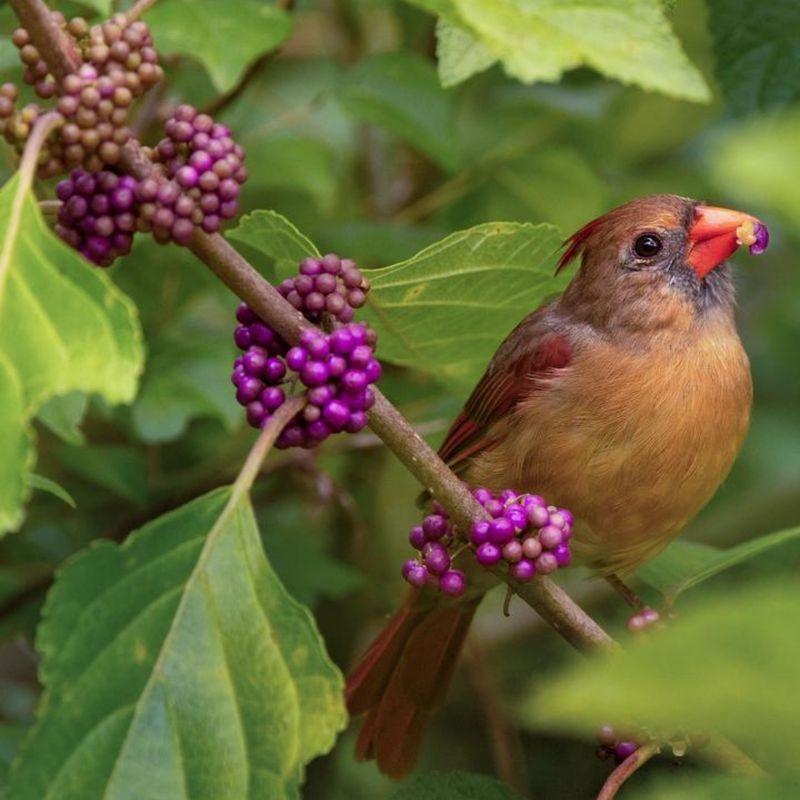
The timing of beautyberry’s fruit is what makes it genuinely useful for songbirds, rather than just visually interesting. Flowers appear on new growth in late spring or early summer, and the purple fruit develops through late summer, typically becoming fully colored by August or September.
NC State Extension notes that the clusters can remain on the stems after the leaves fall and may persist into early winter, which places them in the yard precisely when many other food sources are winding down.
One behavior worth understanding is that birds do not always eat the fruit the moment it turns purple. Fresh beautyberry is often left alone while softer, higher-sugar fruits are still available elsewhere.
As the season progresses and those competing foods disappear, the berries become more attractive. Weather can speed that process along, but the first frost is not a universal switch that suddenly starts a feeding window.
Some shrubs hold fruit well past frost; others lose their crop earlier because of bird pressure, heavy rain, or simply how that individual plant performs in a given year.
Fruit persistence is genuinely variable. University of Florida Extension describes the berries as remaining for several weeks after leaf drop, but that window depends on local wildlife populations, how much competing food is available nearby, and the weather in a given season.
A shrub in a yard with high bird traffic may be stripped within days of the birds deciding the fruit is ready. One in a less-visited spot might hold berries into January.
The practical takeaway is that beautyberry provides a conditional late-season food opportunity, not a guaranteed winter-long supply. Treating it as one useful piece of a larger bird-habitat plan is more accurate than expecting any single shrub to carry songbirds through the cold months on its own.
Which birds use beautyberry—and what it cannot provide
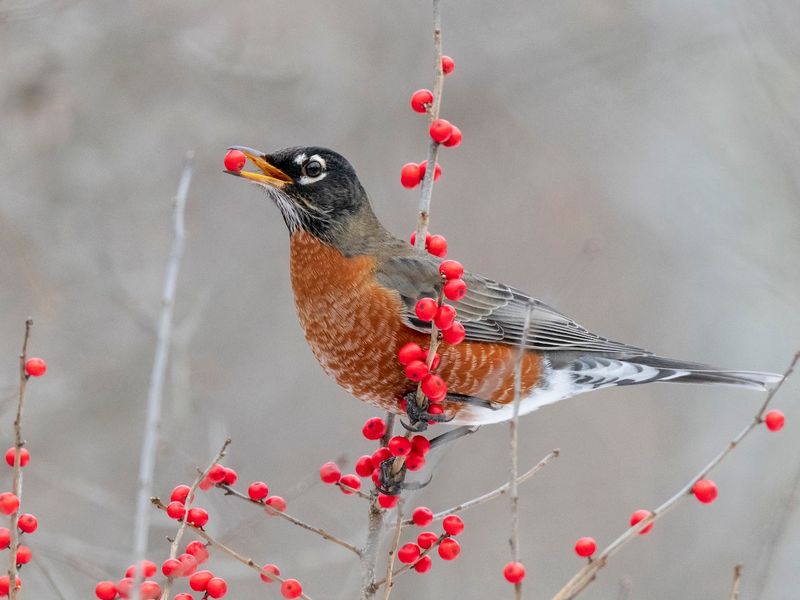
Several songbird species have been documented eating American beautyberry fruit. NC State Extension specifically lists American robins, brown thrashers, purple finches, and eastern towhees as birds that use the fruit.
Mockingbirds and cardinals also appear in Extension and wildlife-garden sources as documented visitors, making them fair examples to mention, though neither species is guaranteed to show up at every shrub or depends on beautyberry as a primary food source.
Whether any of these birds visit a particular plant depends on factors well outside a homeowner’s control: the regional population of each species, what else is fruiting nearby, how much cover and water the yard offers, and simple chance. University of Georgia Extension notes that beautyberry fruit is attractive to a range of wildlife, including small mammals as well as birds, which adds another variable: the berries may disappear before the target birds find them if other animals get there first.
Beautyberry contributes fruit and some physical structure to a yard, but it does not come close to covering everything songbirds need to survive and nest. NC State’s backyard bird habitat guidance emphasizes a diversity of plants that produce food at different points in the season, alongside reliable water, protective cover, insect-rich vegetation, and suitable nesting sites.
A yard planted with only beautyberry and nothing else will have a gap in the food calendar for most of the year and will not provide the layered structure that birds use for shelter and nesting.
The most effective approach is to treat beautyberry as one piece of a broader planting plan. Berry succession planting, where different fruiting species ripen at different points from summer through winter, creates a far more reliable food calendar than any single shrub can manage.
Beautyberry fits naturally into that sequence because it holds fruit later than many other species, filling a window that would otherwise be empty.
Use its open shape instead of fighting it
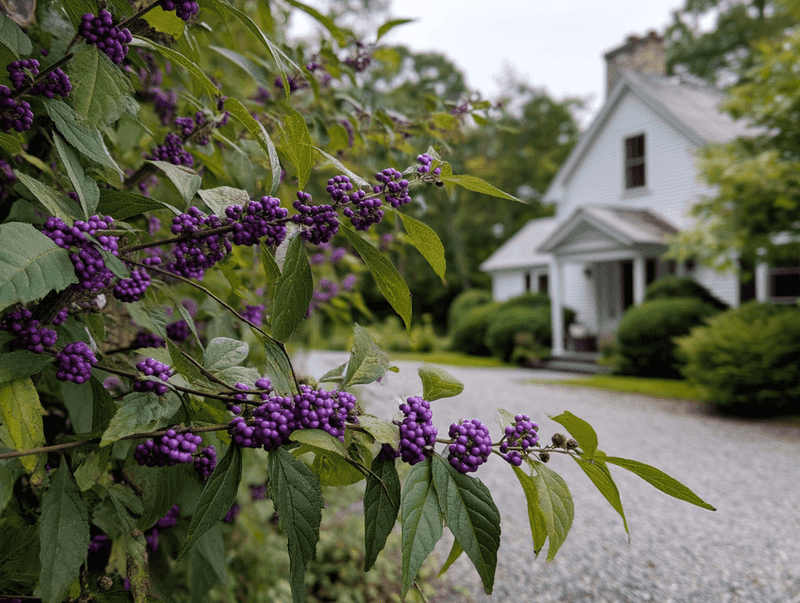
Placement is the single most effective way to make American beautyberry look intentional rather than accidental. The plant’s loose, arching habit is a genuine design limitation in a formal foundation bed next to a clipped boxwood hedge, but that same quality reads as relaxed and naturalistic along a fence line, at the back of a mixed border, or tucked against a wood’s edge where the branches can sweep outward without crowding a walkway or a window.
Mississippi State Extension describes the plant as well suited to a woodland garden or naturalistic landscape, which translates practically to any spot where the surrounding plants are allowed to grow with some freedom. A wildlife garden, an informal privacy screen along a property line, or the transition zone between a mowed lawn and a wooded area all give the shrub room to do what it does without looking out of place.
Size matters for placement decisions. University of Florida Extension puts the typical range at roughly 3 to 8 feet tall and 3 to 6 feet wide, with plants in favorable conditions sometimes exceeding those dimensions.
That footprint is larger than many homeowners expect from a shrub they found growing on its own, and it is a primary reason beautyberry gets pulled out of spots where it genuinely does not fit.
Self-seeding is worth addressing as a practical management question rather than a problem. Seedlings that appear in useful spots can be left to grow; ones that crowd established plants or turn up in the wrong bed can be pulled when they are small.
Florida Extension notes that managing volunteers while they are young is straightforward and keeps the planting from becoming dense over time. Homeowners who want a more controlled grouping can simply remove extras each spring before they establish a root system.
Give the shrub light, room, and suitable moisture
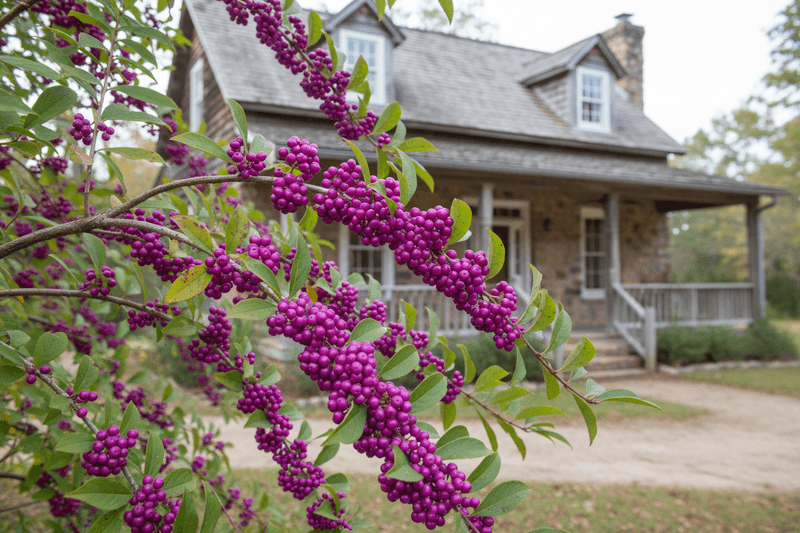
Sun exposure has a direct effect on how much fruit an American beautyberry produces. Full sun to partial shade covers the plant’s adaptable range, but NC State Extension and other sources consistently note that stronger light generally supports better fruiting.
A plant growing in deep shade may survive without complaint but produce noticeably fewer berries than one receiving at least four to six hours of direct sun each day. For homeowners whose primary goal is late-season fruit for birds, placing beautyberry where it gets morning sun with some afternoon relief is a reasonable compromise between ideal light and summer heat protection.
Soil flexibility is one of the shrub’s genuine strengths. Mississippi State Extension describes American beautyberry as tolerant of a range of soil types, including clay-heavy soils common in the North Carolina Piedmont.
Reasonable drainage matters more than soil texture; the plant does not thrive in spots that stay waterlogged for extended periods. Consistent moisture during the first growing season helps the root system establish before the plant is left to handle dry spells on its own.
Planting several American beautyberries near each other may improve fruit production, according to NC State Extension guidance, and is worth considering when space allows. That said, a single well-sited shrub can still produce fruit worth having; multiple plants are a useful strategy rather than a hard requirement.
American beautyberry is native to Florida and Texas as well as the Southeast broadly, but local conditions still determine whether it thrives. USDA Forest Service species review data places its natural range in the southeastern and Gulf Coast regions.
In Florida, University of Florida Extension notes that the plant is not salt-tolerant, making coastal sites exposed to salt spray a poor fit. In Texas, suitability depends heavily on local climate, soil moisture, and whether the site falls within the southeastern and Gulf-influenced portions of the state where the species occurs naturally.
Prune before spring growth to protect the berry crop
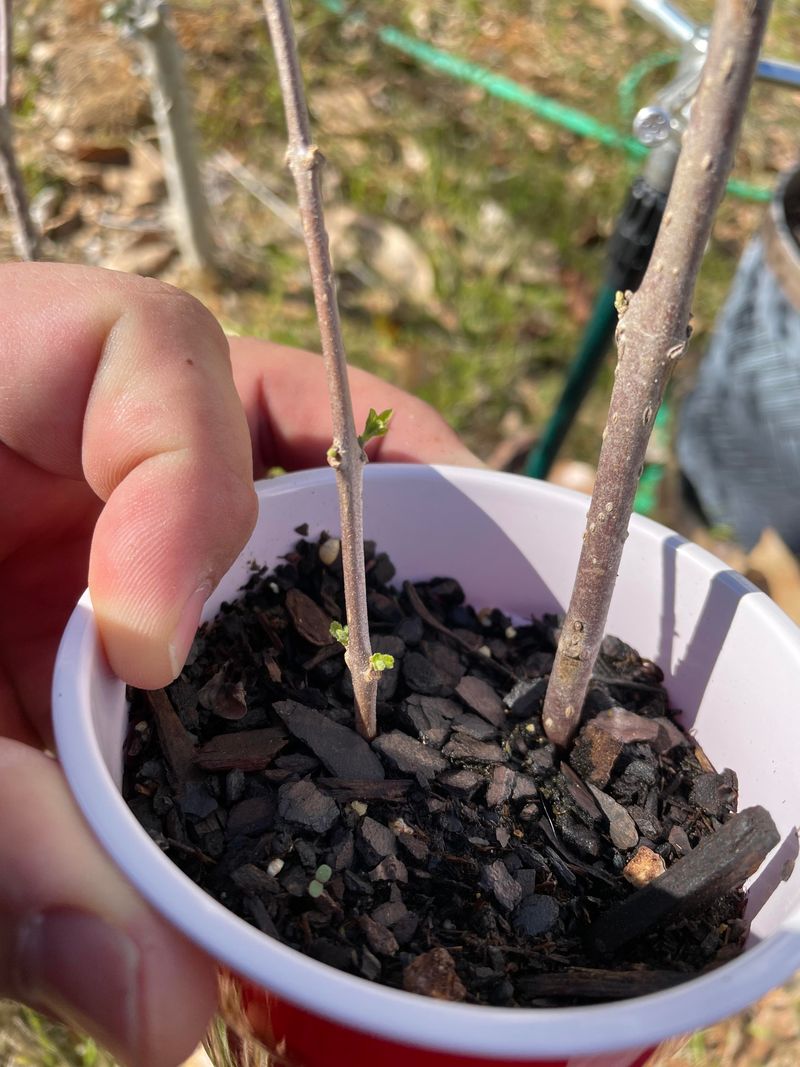
Beautyberry’s pruning calendar is tied directly to where the plant produces its flowers and fruit. Both form on new growth, meaning the stems that emerge after dormancy each year are the ones that will carry berries in fall.
That biology makes the timing of any pruning cut the single most important variable in whether a shrub fruits well or barely fruits at all.
Late winter or very early spring, before new growth begins, is the right window. Clemson Extension describes cutting established plants back hard during this period as a way to encourage a vigorous flush of new growth that will carry a full fruit crop by late summer.
The range of accepted approaches is broader than a single prescription: some sources recommend cutting back to roughly 4 to 12 inches from the ground for rejuvenation; others favor lighter thinning cuts that remove crossing or crowded stems without taking the plant all the way down. The right choice depends on the plant’s age, size, and how much shaping is needed.
Virginia Cooperative Extension notes that severe rejuvenation pruning is best reserved for established plants with a healthy root system, not for newly planted shrubs still working to get established. A young plant cut too hard in its first or second year may spend the season recovering rather than fruiting.
The firm warning is against pruning after flowering has begun. NC State Extension’s pollinator garden guidance and Florida Extension both make clear that shearing or cutting back during the growing season removes the very wood that carries the season’s flowers and berries.
A midsummer trim to tidy up the shape will cost the fall fruit crop. If the plant looks overgrown in July, the correction belongs in February, not August.
Do not turn beautyberry into a pest-control remedy
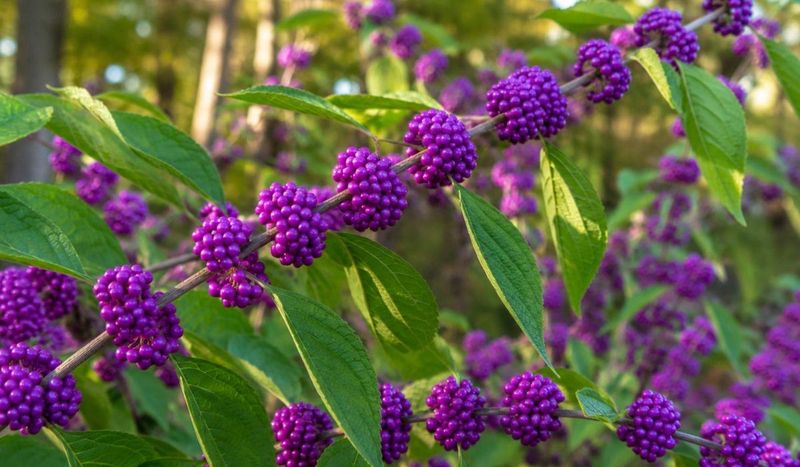
Laboratory research has identified compounds in American beautyberry that showed repellent activity against mosquitoes and ticks in controlled settings. Those findings are real, but they do not translate into a practical yard-protection strategy.
Published research on beautyberry compounds and follow-up studies on isolated extracts examined specific chemicals under laboratory conditions, not the effect of growing the shrub in a yard. Planting beautyberry has not been shown to reduce tick or mosquito populations around a home, and treating it as a substitute for established precautions puts families at real risk.
USDA Agricultural Research Service work on beautyberry-derived compounds similarly reflects extract-level science, not consumer product testing. There is no standardized, safety-tested topical product derived from beautyberry leaves available for home use, and the gap between a laboratory assay and a reliable repellent that people can safely apply to their skin is significant.
Rubbing crushed beautyberry leaves directly on skin is a step to avoid. Mississippi State Extension specifically warns that crushed leaves may cause an allergic skin reaction.
Folk use of the plant as a repellent predates any safety evaluation, and repeating that practice based on laboratory compound research is not the same as using a tested, dosed product. For tick and mosquito protection, established precautions including EPA-registered repellents, protective clothing, and tick checks after outdoor time remain the appropriate tools.
On the question of edibility, NC State Extension describes correctly identified American beautyberry fruit as edible, with the most common use being jelly. That applies specifically to Callicarpa americana, not to every purple-berried plant in a yard or every plant sold under the beautyberry name.
Unidentified purple berries should never be eaten, and other Callicarpa species do not automatically share the same culinary profile as the North Carolina native.
Keep American beautyberry where its benefits fit
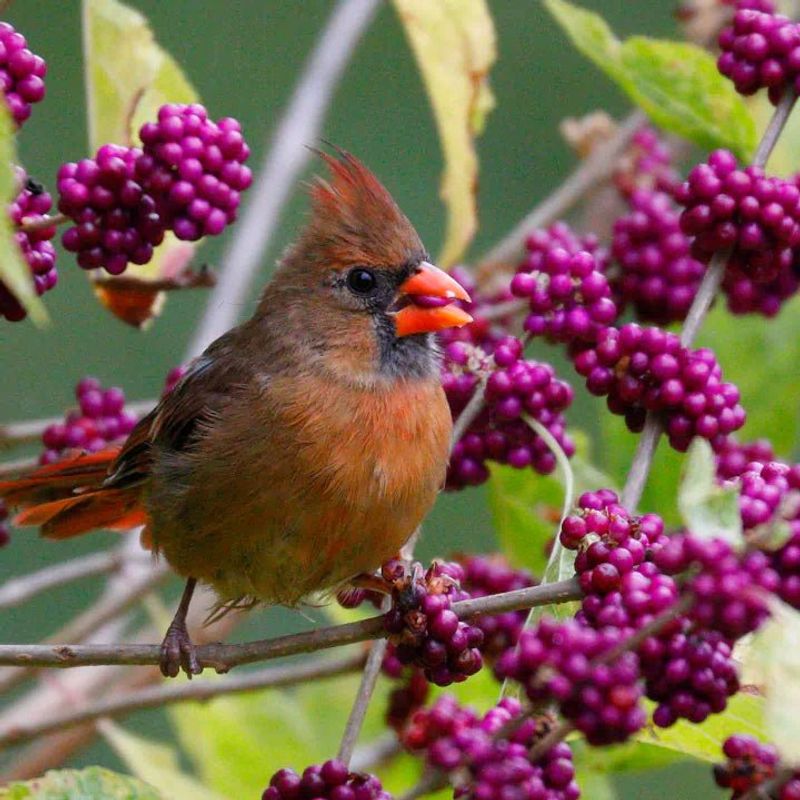
American beautyberry earns its place in a North Carolina yard when the setting matches what it actually does well. Correctly identified Callicarpa americana, planted where its open form has room to spread, gives songbirds a possible late-season fruit source that can remain on the branches after leaf drop and into early winter.
That is a genuine contribution, particularly when other fruiting plants have already been cleaned out by birds or weather.
The shrub works best as part of a broader habitat planting rather than a standalone solution. NC State’s bird habitat guidance recommends a succession of native plants that provide food, cover, and nesting support across the full calendar year.
Beautyberry fills a useful slot in that sequence, but it cannot cover the whole calendar on its own, and no single shrub can replace the insects, water, and layered structure that birds depend on year-round.
The practical decision rule is straightforward. Place it in an informal border, a woodland edge, or a wildlife-friendly corner where the arching stems are an asset rather than a problem.
Prune it in late winter before new growth starts, pair it with other native fruiting plants, and resist the urge to judge it by the standards of a clipped foundation shrub. A plant that feeds robins and towhees in November has already done something worth keeping.