
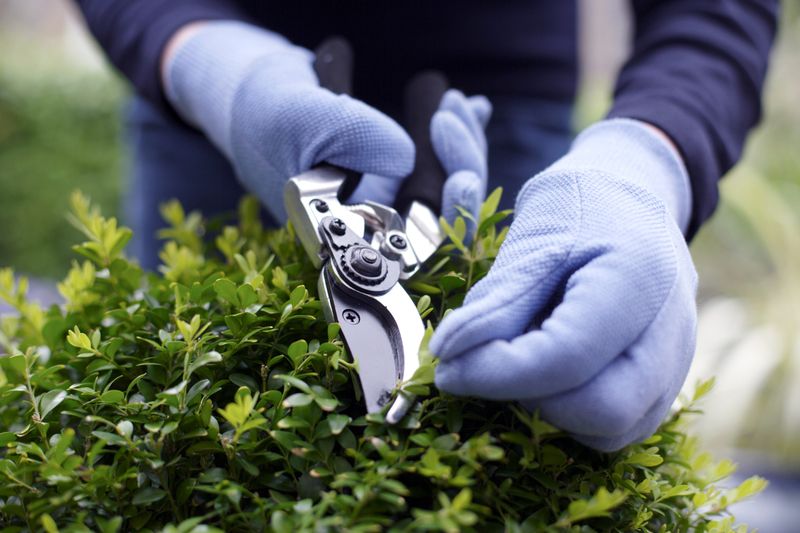
Fall brings the urge to tidy up, and crape myrtles seem like an easy target. Many Southern gardeners worry that one wrong snip now will leave them with a bare tree next summer.
The truth is more reassuring, but there is one real reason to hold back the pruning shears. Here is what a fall cut does, what it does not do, and when to pick up the saw instead.
A fall cut is not known to erase next summer’s blooms
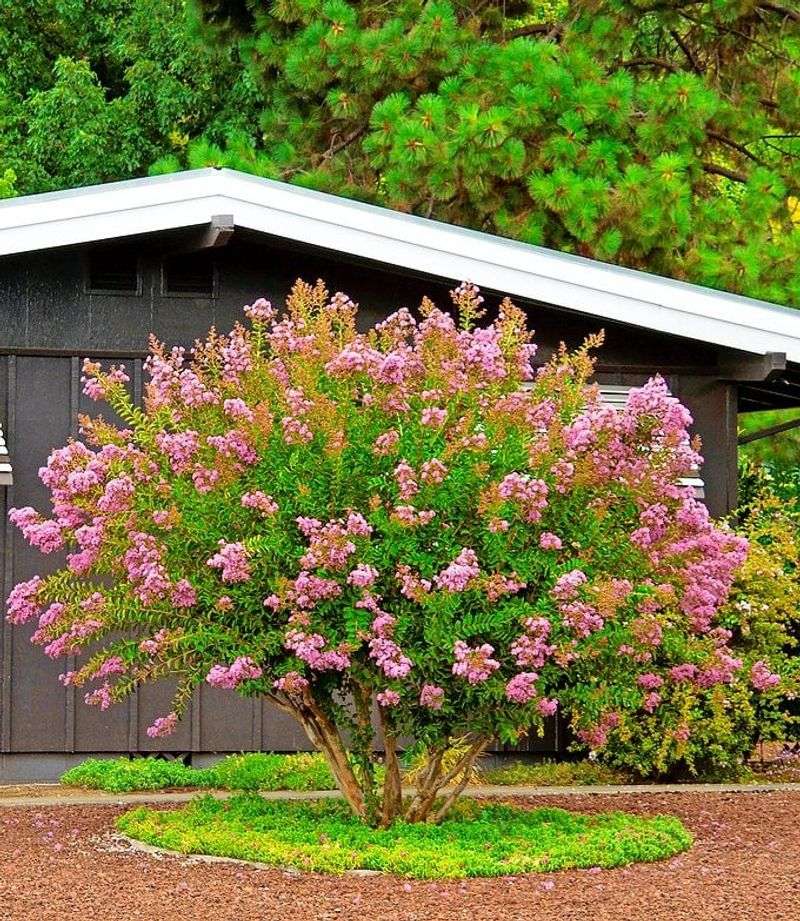
Worrying about next year’s flowers is fair, especially when the tree is the star of your yard. The good news is that a fall cut is not known to wipe out your summer show.
Crape myrtles bloom on the current season’s growth, so the flower buds are not sitting on the branches all winter waiting to be snipped off. University of Georgia Extension notes that these shrubs flower on new growth and can bloom without being pruned.
Those brown seed capsules hanging on in winter are not a factor either. UF/IFAS guidance says removing them does not reduce flowering the following season.
So there is no proof of a general bloom penalty from pruning in fall.
The more relevant worry is narrower and has to do with cold hardiness. Fall cuts may nudge a plant to push out soft new growth just before cold weather arrives.
The next section looks at what the research actually found.
The fall-pruning concern is limited evidence about cold hardiness
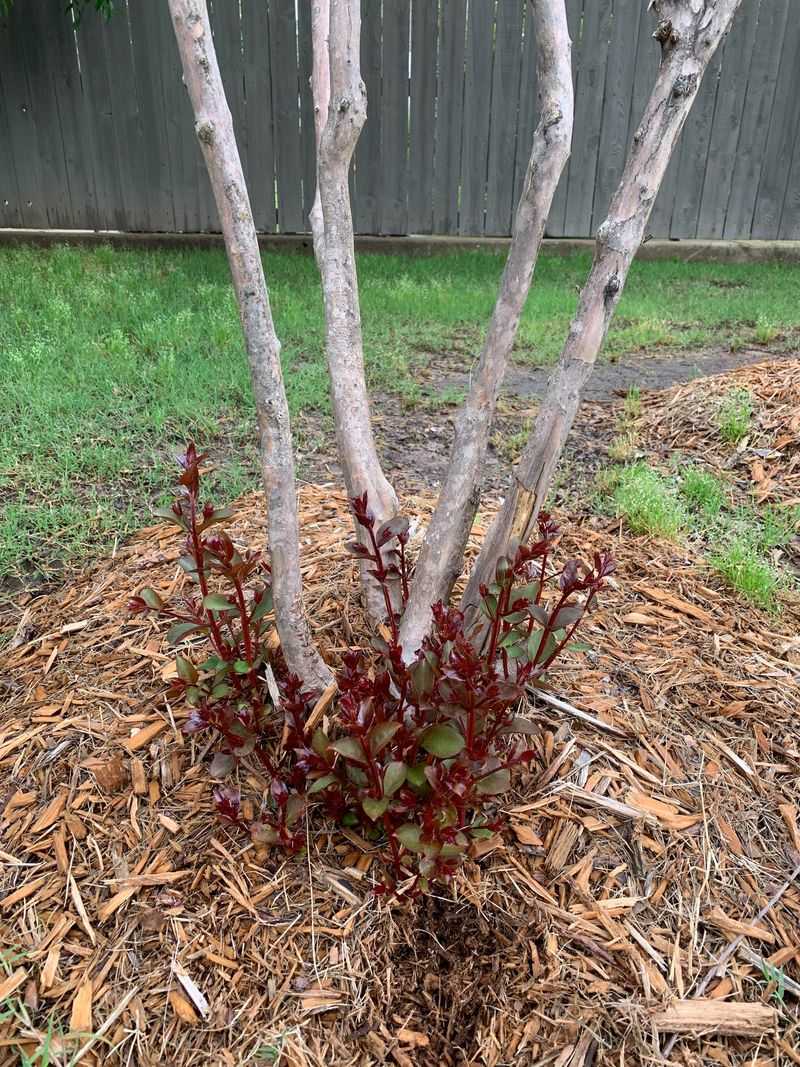
A pruning cut can signal a plant to wake up and grow. In fall, that fresh growth is soft and may not be ready for a freezing night.
That is the reason to be careful, and it is a much smaller concern than losing blooms.
A field study in Griffin, Georgia, tested this on the cultivar ‘Natchez’. In this HortScience study, pruning from October through December reduced measured stem cold hardiness compared with unpruned plants, by as much as about 3 degrees C (5 to 6 degrees F).
Look at what was measured. The researchers tested how much cold the stems could handle.
They did not track whole-tree death or next summer’s flowers. The result also came from one cultivar in one location, so it does not promise cold injury for every plant, every climate, or every light trim.
Other work, including a review of Lagerstroemia care in the Southeast, covers the wider picture of keeping these plants healthy. Treat the finding as a good reason to wait, not a reason to panic.
Leave routine shaping for dormancy, but address hazards
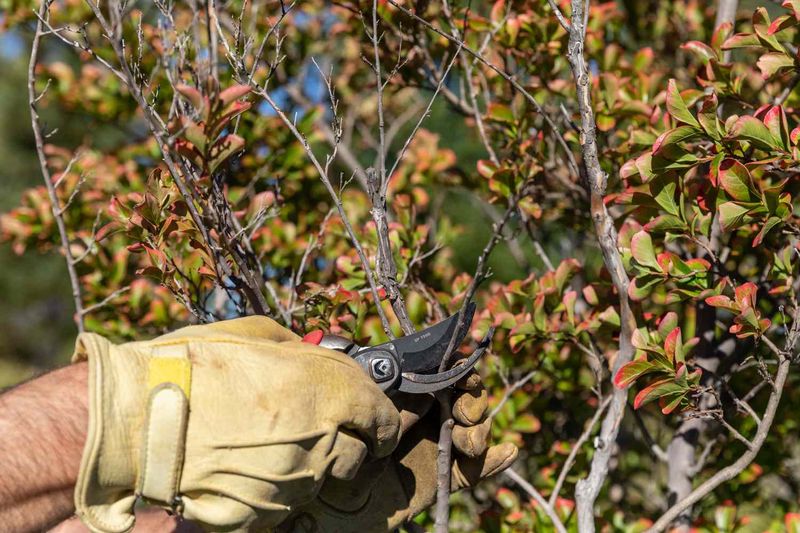
Standing in the yard in October, you can sort your to-do list into two piles. One pile holds discretionary shaping, like evening out the crown or trimming for looks.
Those cuts can wait, and healthy branches are best left alone for now.
The other pile holds safety work. A limb that is dead, cracked, or hanging over a walkway, roof, or driveway should not wait for winter.
UF/IFAS says pruning dead, damaged, or hazardous limbs can be done anytime.
A simple test helps. Ask whether the cut fixes a problem or just improves appearance.
If it fixes a problem, go ahead and make it. If it is only about looks, mark the branch with a ribbon and come back during dormancy, when the plant is better prepared for pruning.
Prune selectively while the plant is dormant
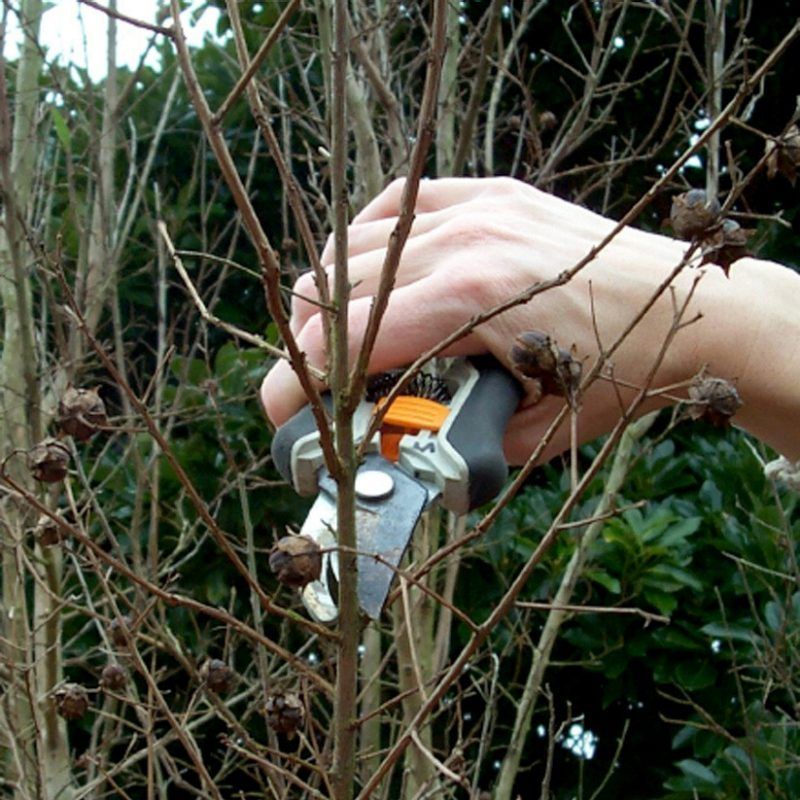
Once the leaves drop and the tree is truly asleep, structural pruning gets easier. UF/IFAS recommends December through February.
With no leaves in the way, you can see crossing limbs, rubbing branches, and the overall frame.
Work selectively. Take out dead or damaged wood, branches that rub or cross, and shoots growing into the center of the canopy.
Step back after every few cuts so you do not remove more than you meant to.
If a plant truly needs severe pruning, UF/IFAS advises doing it late in dormancy, not early in fall. For any live branch, cut at the branch collar, the slightly swollen area where the branch meets its parent.
Clemson’s pruning fact sheet gives similar guidance on avoiding stubs, which heal poorly and look untidy.
Topping is not a reliable shortcut to more flowers
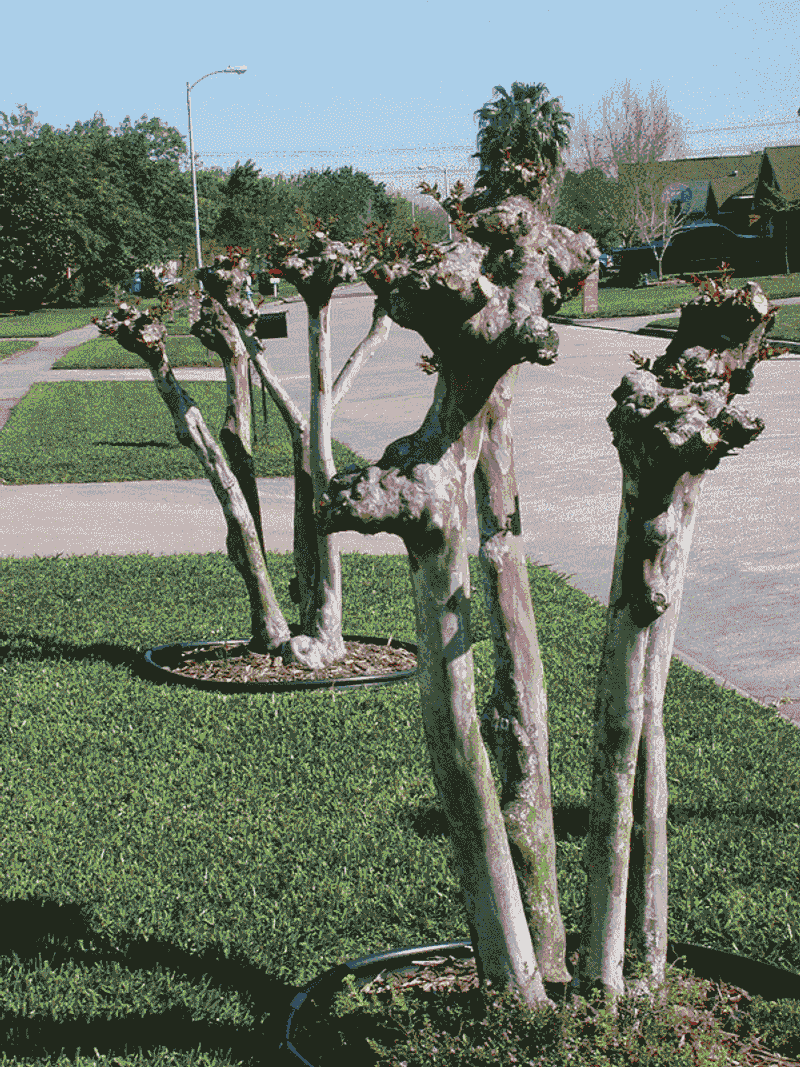
Drive through almost any Southern neighborhood and you will see it: crape myrtles chopped back to thick stubs. That is topping, which means cutting large stems at arbitrary points.
It is different from tip pruning, which trims small outer growth, and from pollarding, a deliberate system of repeated cuts to established heads that needs ongoing upkeep.
The belief that topping brings more blooms is common but shaky. UF/IFAS reports that flower numbers fall as pruning gets more severe in some cultivars, and that flowering can be delayed.
Topping may produce larger flower clusters, but that is not the same as more flowers overall.
Hard cuts also tend to trigger vigorous sprouts, which can look weak and droop under the weight of blooms. Form can suffer and maintenance goes up.
None of this means every severe cut kills a tree, but it does mean topping is a poor trade. Advice for one of these practices should not be copied over to the others.
Winter seed capsules can wait
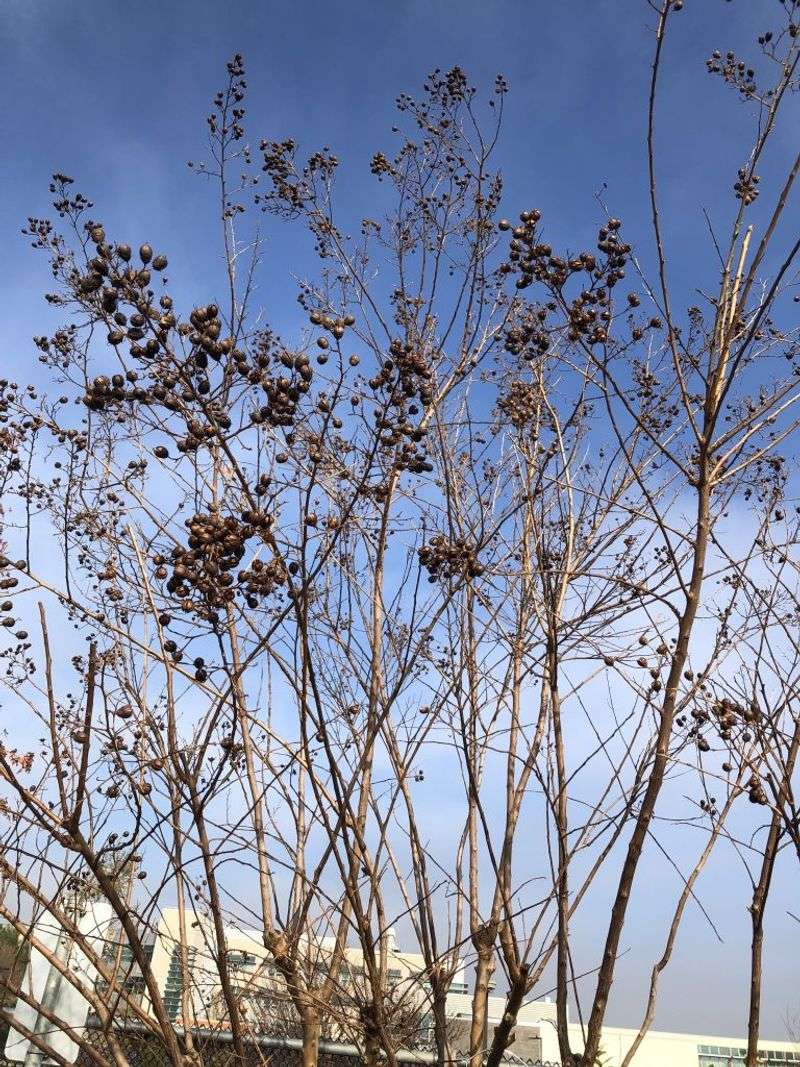
Those dry brown clusters can make a tree look untidy in winter, and the urge to snip them off is understandable. You can relax, though.
UF/IFAS says leaving winter capsules does not affect the next season’s flowering.
If the look still bugs you and you can reach them safely from the ground or a short step stool, take them off in late winter or early spring. Clemson Extension describes this as a cosmetic choice.
Skip ladders for tall trees, since the payoff is small.
Do not confuse this with deadheading in summer. Lightly removing spent blooms during the growing season can sometimes encourage another flush, as noted by UGA Extension, though many newer cultivars do not need it.
That is a separate habit and no reason to make fall cuts.
A well-sited crape myrtle may need no routine pruning
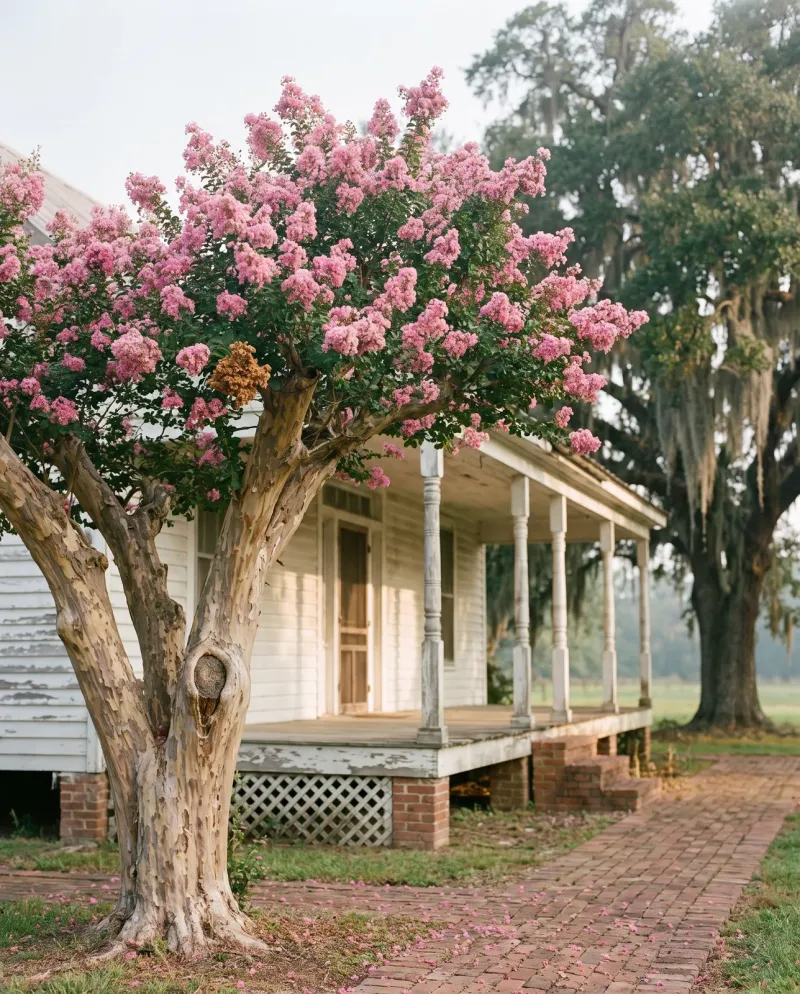
Here is the surprise for many homeowners: crape myrtles do not have to be pruned to bloom. UGA Extension points out that they flower on new growth with or without a haircut.
A plant placed well, with a mature size that suits the space, may need little or no routine pruning, as UF/IFAS explains.
If you find yourself making hard cuts every year just to keep the tree off the house or driveway, the plant is probably in the wrong spot. Consider a smaller cultivar sized for the room you have, or a different site, as suggested by UF/IFAS Extension.
So the fall plan is simple: leave healthy growth alone, fix real safety problems, and save selective shaping for dormancy. The best pruning job is often the one you never needed.