
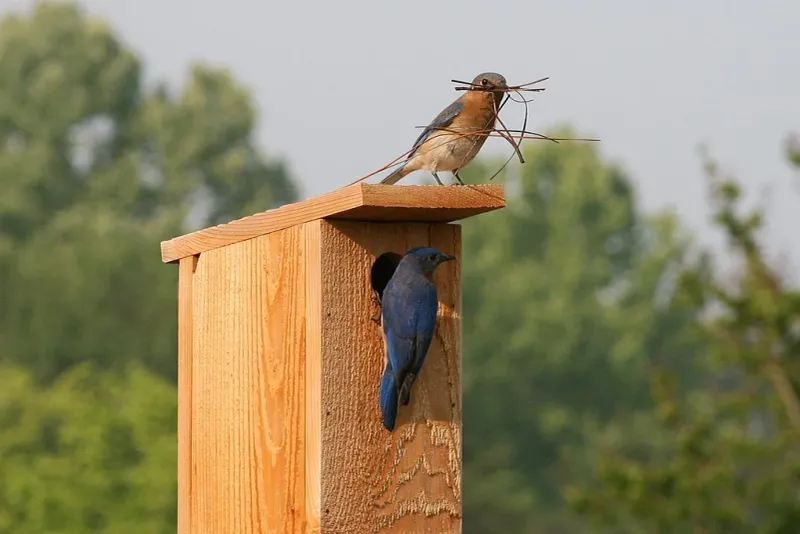
Eastern Bluebirds are one of North Carolina’s most beloved backyard visitors, and many homeowners are surprised to learn these birds can stay through the cold months. Setting up the right shelter before temperatures drop can give them a safe place to roost during bitter nights and a ready nesting spot come spring.
A clean, predator-protected bluebird box is the single most useful thing you can add to your yard this fall. Just keep in mind that whether bluebirds actually use it, and how often, depends on the weather, your yard’s habitat, and the birds themselves.
A box may give bluebirds shelter during severe cold
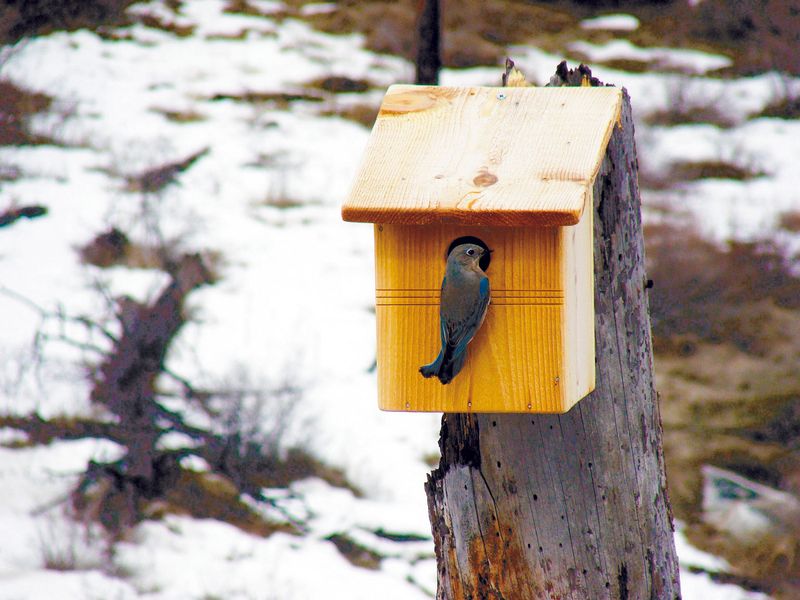
Eastern Bluebirds are year-round residents across much of North Carolina, which means they do not simply disappear when temperatures fall. North Carolina Wildlife Resources Commission confirms that bluebirds are present statewide throughout the year, though the birds you spot in December may not be the same pair you saw in July.
Winter flocks can include resident birds as well as individuals that moved south from farther north, so the bluebirds passing through your yard in January may be temporary visitors rather than permanent neighbors.
What does not change is that bluebirds sometimes need shelter during especially cold stretches. NC Wildlife habitat guidance notes that bluebirds will huddle inside nesting cavities for warmth when temperatures drop sharply.
Research reviewed by the U.S. Forest Service describes bluebirds using nest boxes as roosts during very cold weather, with one Tennessee study finding that box use occurred at temperatures around 14 degrees Fahrenheit or below.
That detail matters: roosting in a box is an overnight response to severe cold, not a sign that a specific pair has claimed your yard for the season.
A box used for roosting is not the same as a box used for nesting. A bluebird may shelter inside the box on a freezing night and spend most daylight hours foraging fields and forest edges far from your property.
Expecting continuous presence misreads how these birds actually live through winter.
Still, offering a clean, predator-protected box is genuinely worthwhile. It can provide emergency shelter on the coldest nights and will already be in place when bluebirds begin scouting nesting territory in late winter.
That combination, possible cold-weather roost plus ready spring nesting site, is the honest and realistic payoff for putting up a box now.
Choose a box designed for the season you want to support
Not every birdhouse works the same way in winter. A standard breeding nest box is ventilated on purpose, because heat buildup during summer can kill eggs and nestlings.
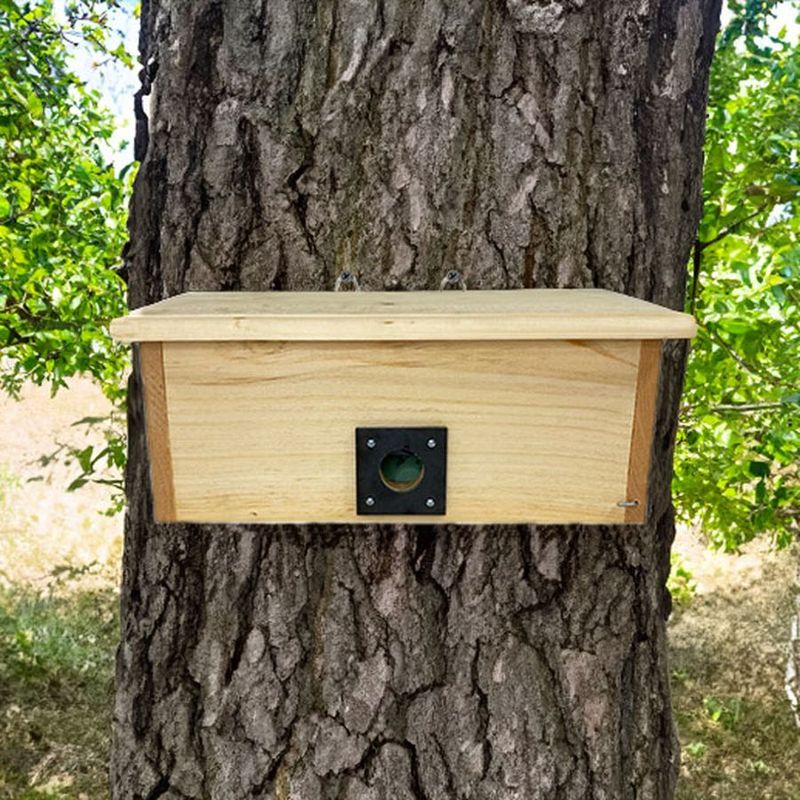
That same ventilation works against birds trying to stay warm on a January night in North Carolina. A dedicated roost box solves this by retaining more heat, positioning the entrance lower on the front panel so warm air stays inside longer, reducing ventilation openings, and including several internal perches that let multiple birds cluster together.
Cornell Lab of Ornithology guidance on winter roosting boxes explains that these design differences are meaningful: a standard nest box and a dedicated roost box are not interchangeable for cold-weather use. If you want to give bluebirds the best possible overnight shelter, a tested roost-box plan is a better starting point than modifying a regular birdhouse on your own.
Plugging every ventilation hole in a standard box without following a verified design can create problems rather than solve them, including moisture buildup and poor air quality inside the cavity.
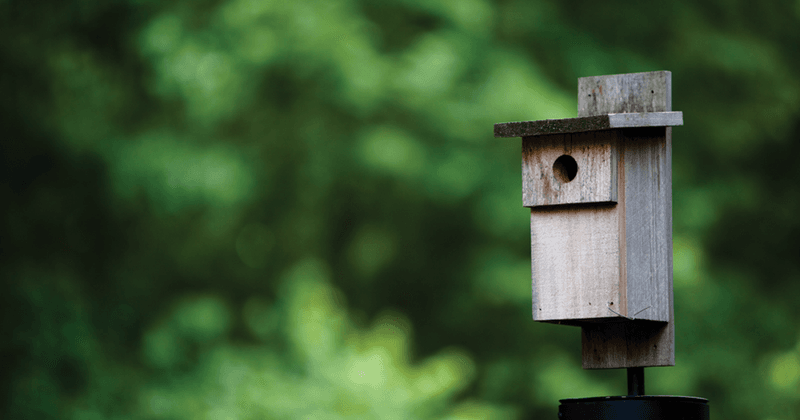
For a box that will also serve as a breeding nest box in spring, NestWatch’s Eastern Bluebird specifications call for a round entrance of approximately 1.5 inches in diameter and no external perch. The absence of a perch is intentional: House Sparrows and European Starlings use perches to hold position and harass cavity-nesting birds, so leaving one off gives bluebirds a modest advantage.
A predator guard on the mounting pole is equally important and is specifically recommended by North Carolina Wildlife to deter raccoons, cats, and snakes.
Electrical heating is not supported by any of the established bluebird organizations and is not recommended here. A weather-resistant box with the right design features, mounted safely, is all that is needed.
The North American Bluebird Society’s published research reinforces that proper construction and placement outperform improvised modifications when it comes to keeping cavity-roosting birds safe through winter.
Prepare the box in fall without over-modifying it
Fall box preparation comes down to a short checklist, and none of the steps require special tools or carpentry skills. Start by removing all old summer nesting material.
Leftover grass, pine needles, and feathers can harbor mites, bacteria, and parasites that would make the box less hospitable rather than more. Once the interior is cleared, look over the box for cracked wood, loose screws, a warped roof, or a door that no longer closes firmly.
Small problems caught in October are much easier to fix than the same problems discovered on a cold February morning.
North Carolina Cooperative Extension’s winter wildlife guidance recommends adding a roosting ladder or a few diagonal sticks inside the box so birds have something to grip when perching overnight. This modification is straightforward and does not compromise the box’s structural integrity.
Apply it when the box design calls for it, or when you are using a dedicated roost box plan that includes it as a feature.
Resist the urge to seal every gap or crack you find in a standard nest box. North American Bluebird Society research and North Carolina Bluebird Society nesting guidance both point toward following tested designs rather than improvising.
If the box is a standard breeding box, use it as-is after cleaning; if you want better winter heat retention, build or purchase a dedicated roost box from a proven plan.
On timing, fall is a practical window because it gives birds several months to discover and investigate the site before nesting season begins. The North American Bluebird Society’s introductory guide notes that fall installation allows birds to prospect the location before spring, while the North Carolina Bluebird Society recommends having boxes in place by the end of February for nesting.
Either window works; fall simply gives the birds more time to find the box on their own schedule.
Place the box near the open habitat bluebirds prefer
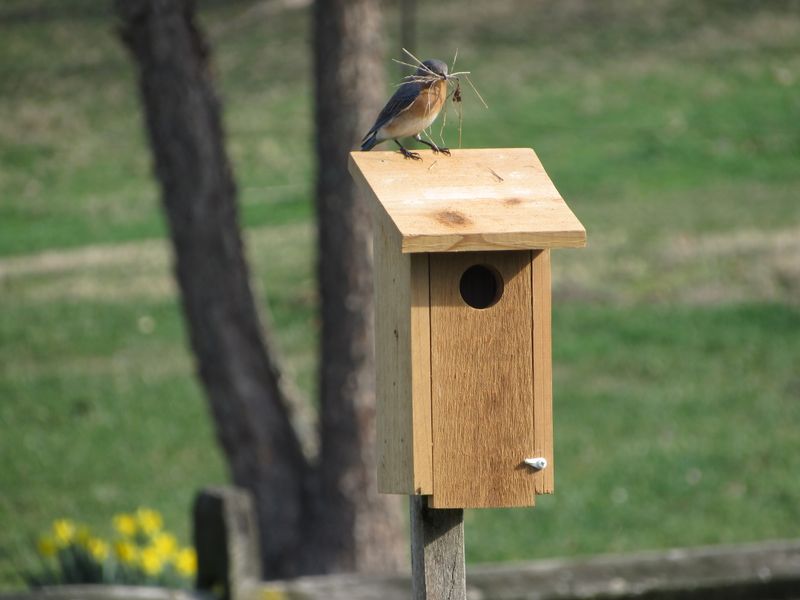
Where you put the box matters as much as what kind of box you use. Eastern Bluebirds favor open and semi-open landscapes: lawns, meadows, orchards, pastures, and areas with scattered trees rather than dense canopy.
A box mounted at the edge of a wooded lot or tucked into a heavily shaded corner is far less likely to attract bluebirds than one facing an open stretch of grass or garden bed. North Carolina Wildlife describes this habitat preference clearly, and it applies year-round, not just during nesting season.
Mount the box on a freestanding pole, not on a fence post, tree trunk, or building wall where predators have easy access. A height of 4 to 6 feet above the ground is the target range, with the entrance facing east toward open habitat when possible.
An east-facing entrance catches morning sun and typically avoids the prevailing winds that bring the worst winter weather from the west and northwest. NestWatch’s Eastern Bluebird placement guide supports both the height recommendation and the value of orienting the entrance toward open foraging ground.
A predator baffle on the pole is not optional. Raccoons, rat snakes, and outdoor cats are common in North Carolina yards and will investigate a box without one.
A smooth, cylindrical metal baffle placed below the box is the most reliable deterrent currently available to homeowners. NestWatch’s nest-box placement guidance explains baffle options and confirms their importance for any cavity-nesting species.
If you plan to put up more than one bluebird box, space them roughly 300 feet apart. Bluebirds are territorial during nesting season and two boxes placed too close together can trigger competition that discourages use of both.
Proper spacing improves the odds that at least one box will be claimed and used productively come spring.
Build winter habitat beyond the box
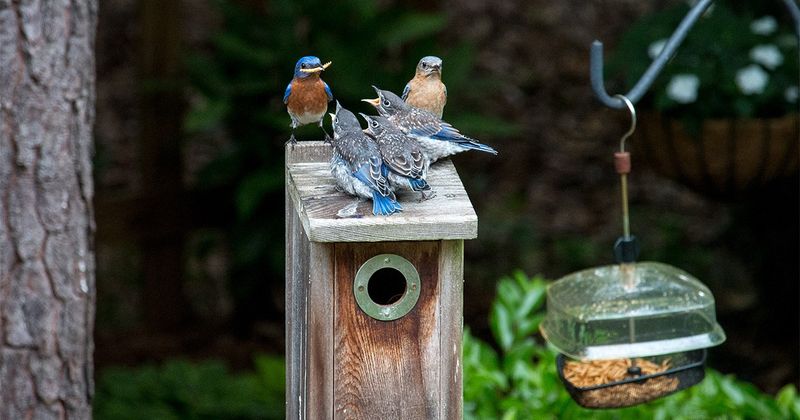
A box gives bluebirds a place to shelter, but the surrounding yard determines whether they have reasons to stay nearby during daylight hours. Bluebirds shift their diet significantly as the seasons change.
During warm months they are primarily insect hunters, but Cornell Lab’s Eastern Bluebird life history pages confirm that fruit becomes a much larger part of their winter diet, including berries from dogwood, holly, juniper, hackberry, and similar plants.
North Carolina Wildlife specifically lists sumac, mistletoe, bayberry, and American holly among the winter foods bluebirds rely on in the state. Planting native hollies, serviceberries, or a winterberry shrub near the box area can make your yard a more useful foraging stop, though no single plant guarantees that bluebirds will visit on any particular day.
Audubon’s guidance on attracting bluebirds echoes this, framing native berry plants as habitat improvements rather than reliable lures.
Supplemental feeding can complement the habitat, but the right food matters. Cornell’s bluebird overview notes that bluebirds generally do not visit standard seed feeders, so a tube feeder filled with sunflower seed will not draw them.
Mealworms, offered in a shallow dish or a dedicated feeder, are a more appropriate option and are listed by the North Carolina Bluebird Society as a suitable supplemental food. Cornell’s feeder food guidance also supports mealworms as a practical choice for insect-eating species.
Clean water is another resource worth providing. A shallow birdbath kept free of ice and debris can attract bluebirds that might otherwise pass through without stopping.
Keep expectations realistic: mealworms and water improve the habitat, but they work alongside the box and native plants rather than substituting for them.
Monitor responsibly and protect every occupant
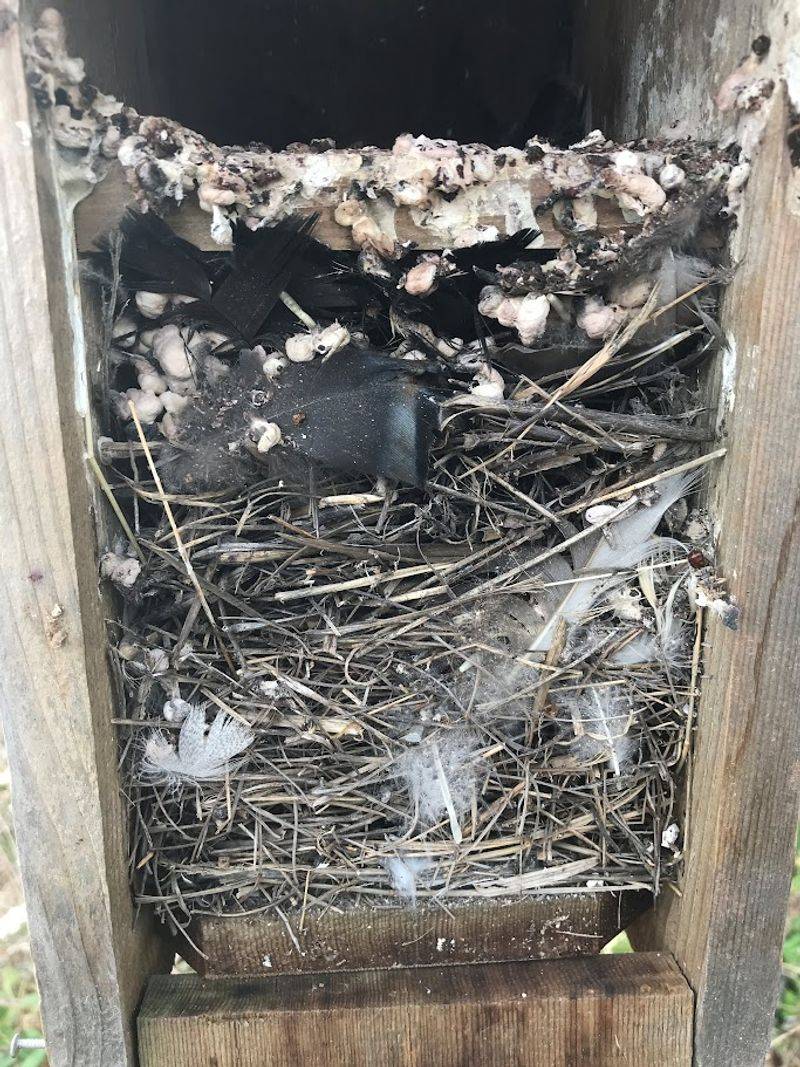
Once the box is up, checking it periodically is worthwhile, but what you find inside may surprise you. North Carolina Wildlife’s nest-box management guidance notes that cavity-nesting boxes attract a range of species beyond bluebirds.
Chickadees, titmice, nuthatches, Carolina wrens, and even flying squirrels may claim the box, especially during cold weather when any dry, enclosed space is valuable. Cornell Lab’s winter roosting research confirms that multiple species compete for the same cavities in winter, so a non-bluebird occupant is not a failure of the setup.
House Sparrows and European Starlings are a different matter. Both species compete aggressively with bluebirds for nest cavities.
Cornell’s bluebird life history resource identifies nest-site competition from these non-native birds as a genuine pressure on bluebird populations. A properly sized entrance of approximately 1.5 inches helps exclude starlings, but House Sparrows can still enter.
Monitoring the box regularly lets you identify and address competition early in the season.
Do not use pesticides in or around the box at any point. The North Carolina Bluebird Society is explicit on this point: pesticides have no place inside a nest box.
North Carolina Wildlife also reminds homeowners that bluebirds and their active nests are federally protected, so do not remove native bird nests, eggs, or occupants without understanding what the law permits.
If you add a mealworm feeder or birdbath to the yard, build a cleaning routine into your schedule from the start. CDC guidance on bird-feeder hygiene recommends cleaning feeders and baths at least monthly, scrubbing baths weekly or whenever visibly dirty, keeping pets away from areas where birds congregate, and temporarily removing feeding stations if you observe sick or dead birds nearby.
A clean feeding station protects both the birds and your household.
Measure success by better habitat, not guaranteed occupancy
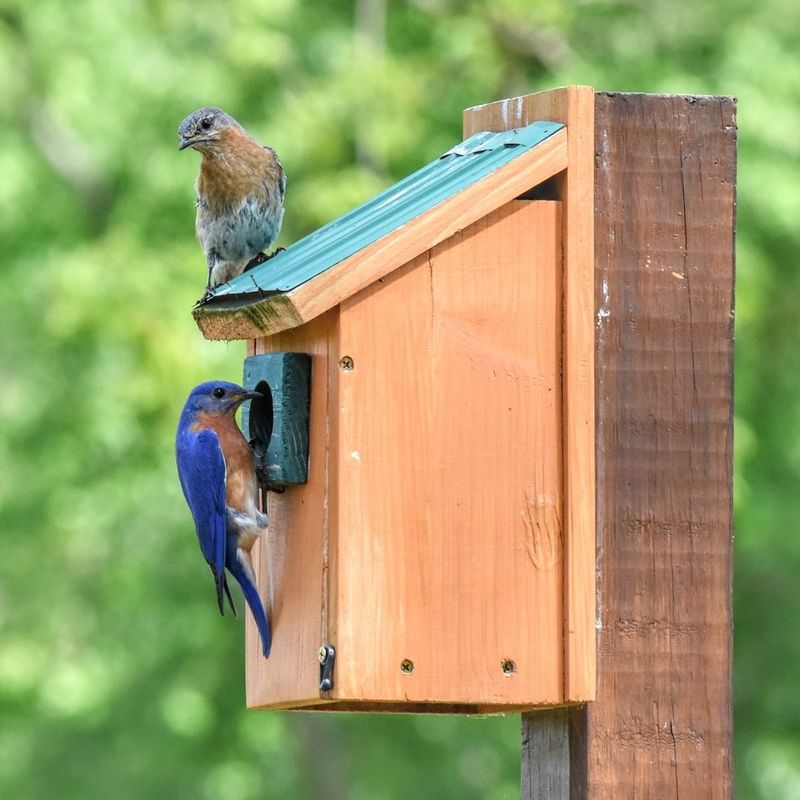
A clean, predator-protected box installed or prepared this fall can offer bluebirds a possible overnight roost during severe cold and a ready nesting site when spring arrives. U.S.
Forest Service species research makes clear that box use is tied to weather conditions and individual bird behavior, not to the simple presence of a box. Some winters the box will sit empty for weeks; others it may shelter a small group on the coldest nights.
Both outcomes are normal.
Cornell Lab’s guidance on winter roosting frames the value of a well-placed box accurately: it improves conditions for birds that are already in the area rather than pulling birds in from somewhere else. Habitat quality, competing species, food availability, and individual temperament all shape whether any particular bluebird uses your box on any particular night.
The most useful measure of success is whether your yard is genuinely safer and more resource-rich for cavity-nesting birds than it was before. A box that goes unoccupied all winter but hosts a nesting pair in April has done its job.
North Carolina’s bluebirds do not need a perfect yard, just a safer one, and every well-maintained box is a step in that direction. The birds will sort out the rest on their own schedule.