
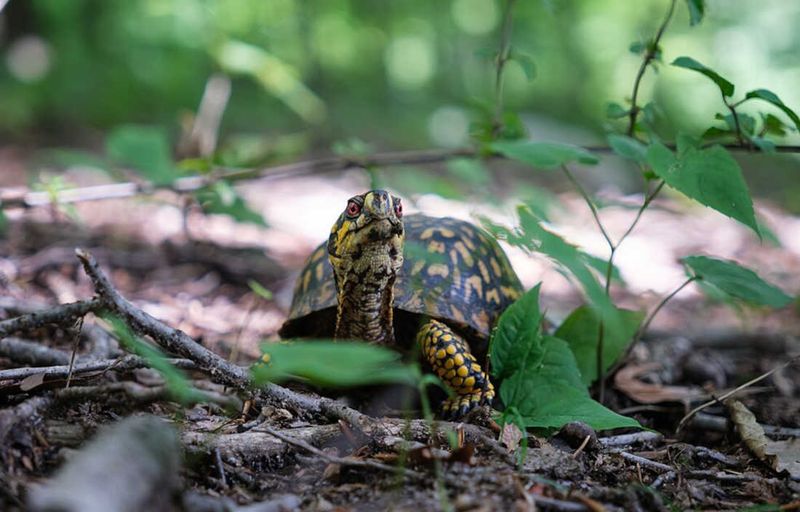
Eastern box turtles are a familiar sight in North Carolina yards, and most people who spot one want to do right by it. The instinct to pick it up and carry it somewhere safer is understandable, but that well-meaning move can actually cause serious harm.
These turtles rely on a small, familiar home range, and disrupting that connection puts them at real risk. Understanding what the turtle actually needs, which is usually just to be left alone, is the most useful thing a homeowner can know.
A Turtle in Your Yard May Be Exactly Where It Belongs
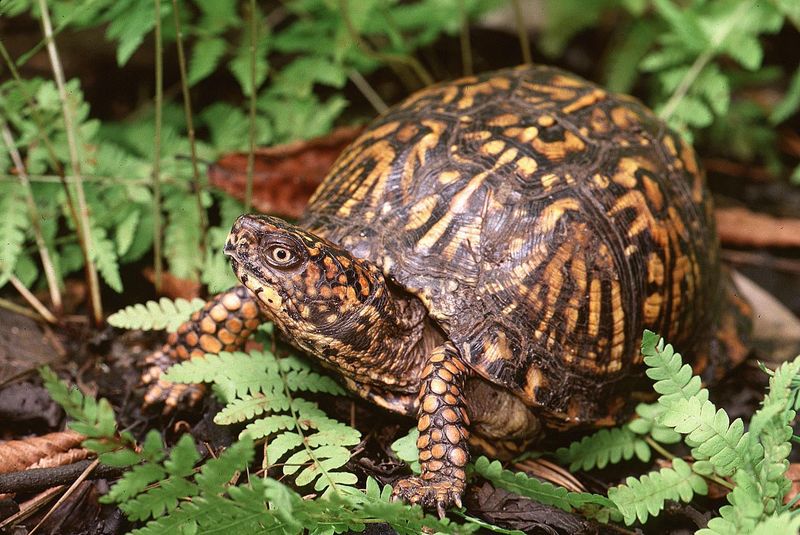
Spotting an eastern box turtle moving through your garden bed or crossing the lawn can feel like a small mystery. Where did it come from?
Is it lost? Should you do something?
The honest answer, in most cases, is that the turtle is right where it intends to be.
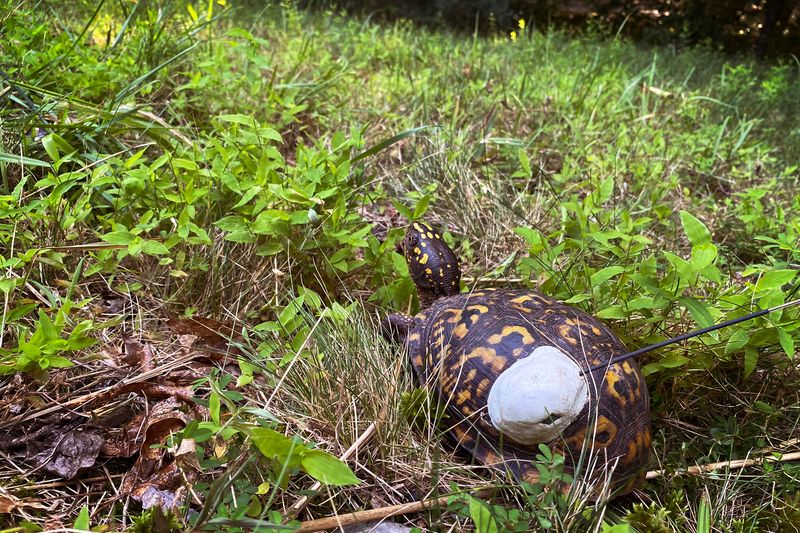
Eastern box turtles are native across North Carolina and live comfortably in a wide range of settings, including neighborhoods. NC Wildlife Resources Commission guidance makes clear that these turtles regularly use fields, forests, and residential yards as part of their normal lives.
A turtle in your yard is not a stray animal that wandered off course; it is a native species going about its day in habitat it recognizes.
That distinction matters before you take any action. Picking up a healthy turtle, carrying it inside, offering it food or water, or transporting it somewhere that looks more appealing are all responses that can cause more disruption than the turtle ever faced on its own.
The turtle has not asked to be rescued.
The most protective thing you can do when you first see one is pause. Watch it from a comfortable distance.
Note which direction it is moving. If it is not facing any immediate physical threat, that observation is all the help it needs from you.
Healthy turtles in yards are not emergencies; they are wildlife encounters, and treating them that way is the starting point for keeping them safe.
Its Home Range Matters More Than Your Property Line
Eastern box turtles are not wanderers in the way that birds or deer can be. They tend to spend their lives within a relatively small area they know well.
NC Wildlife describes these territories as usually under 2 acres, with strong homing instincts that keep individual turtles oriented toward familiar ground.
What that does not mean is that any one turtle belongs to one yard or one homeowner’s property. A home range that covers less than 2 acres can still cross several neighboring lots, stretch along a wooded fence line, dip into an undeveloped parcel, or touch a roadside edge.
The turtle moving through your garden today may have spent the past several seasons using a corridor that runs through three or four different properties without any of those homeowners ever knowing it.
Research tracking eastern box turtles across North Carolina reinforces this picture. A statewide population study documented turtles across the Coastal Plain, Piedmont, and Blue Ridge, noting that movement outside estimated study areas does occur.
A small home range is not the same as being frozen in place; turtles do travel naturally, and that movement is part of how they meet seasonal needs for food, shelter, and mates.
The practical implication for homeowners is straightforward. When a turtle shows up in your yard, it is almost certainly moving through or resting within a familiar area that happens to include your property.
The territory is the turtle’s reference point, not yours. Respecting that means treating the yard as a corridor rather than a container, and letting the animal move freely through it.
Relocation Can Disrupt Familiar Ground
Most people who move a turtle mean well. They see an animal in a yard, assume it would be better off somewhere greener or quieter, and carry it to a nearby park or tree line.
What they do not see is what happens next.
Research conducted in Davidson, North Carolina, offers a sobering look at the aftermath. A 2008 study by Hester, Price, and Dorcas followed 20 eastern box turtles, 10 residents and 10 that had been relocated as part of the research.
The relocated turtles showed substantially larger movements and home ranges than the resident turtles. Five of the 10 relocated turtles died or disappeared during the study period.
None of the 10 resident turtles did.
That is a striking difference from a small sample, and it deserves to be understood carefully. The study does not prove that every moved turtle will die, and the researchers were conducting a controlled relocation over meaningful distances, not nudging a turtle a few feet away from a running lawn mower.
The findings should be read as strong evidence that casual off-site relocation carries real, elevated risk rather than as a guarantee of a fatal outcome.
What the data does show is the mechanism behind the risk. A relocated turtle does not simply settle into new surroundings.
It attempts to return to the area it knows, often traveling farther and faster than it would under normal conditions. That increased movement exposes it to more roads, more predators, more unfamiliar terrain, and more chances for something to go wrong.
The distinction between moving a turtle a short distance from an immediate hazard and transporting it to a different location is real and important. Lifting a turtle 15 feet to clear a driveway is not the same as driving it to a pond a mile away.
The study’s most direct lesson applies to the second scenario, not the first, and that is the scenario that homeowners most often get wrong when they think they are helping.
For a Healthy Turtle, Leave It Alone
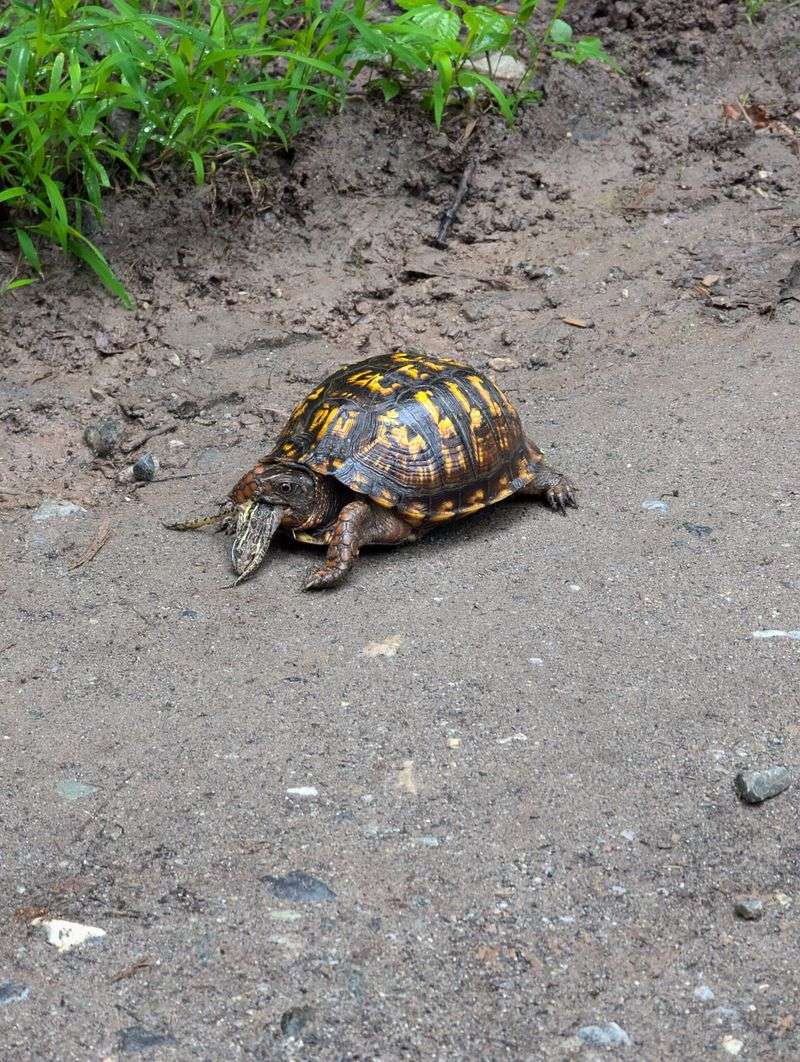
Once you know a turtle is healthy and not facing any immediate physical danger, the right response is simple: watch it and walk away. That is not passive indifference; it is an active choice to protect the animal by preserving its freedom of movement in familiar territory.
Both NC Wildlife Resources Commission and U.S. Fish and Wildlife Service guidance are consistent on this point.
Do not take the turtle inside, even briefly. Do not set out food or water to encourage it to stay.
Do not carry it to the nearest wooded area because the habitat looks better to you. Do not transport it to a pond, a park, or a neighbor’s property.
Each of those actions removes the turtle from the area it already knows and introduces exactly the kind of disruption that puts it at risk.
Keeping a healthy eastern box turtle indoors, even for a single night, creates a separate problem. Beyond the stress of captivity, it leaves you uncertain about where to release it, and releasing it somewhere unfamiliar compounds the original mistake.
The animal is not a houseguest; it has somewhere to be.
Managing a wild turtle like a garden feature, by feeding it, confining it, or trying to make it stay, is also not a neutral act. It does not match how these animals meet their needs, and it does not reflect what wildlife guidance recommends.
The evidence-based approach is simpler and more effective: let the turtle keep moving on its own terms through its own familiar ground. For a healthy animal with no hazard in its path, nonintervention is the most genuinely protective option available.
Immediate Danger Changes the Rule—but Only Briefly
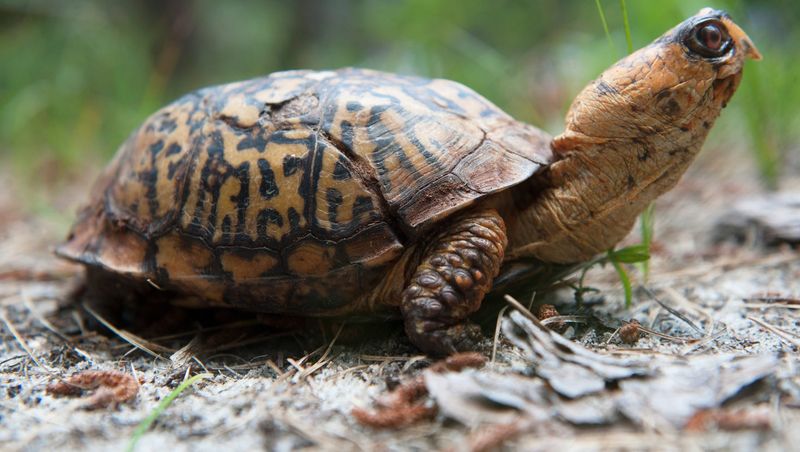
There are real situations where a turtle needs a human to step in, and a running lawn mower, an active driveway, a dog that will not back off, or a pool edge with no exit are all legitimate examples. The key is understanding what that help should look like and where it ends.
NC Wildlife guidance recommends moving a turtle only the shortest distance necessary to remove it from danger, ideally less than 50 feet. That figure is worth keeping in mind because it rules out most of the instinctive responses people reach for.
Carrying the turtle to the back corner of the yard, across the fence, or to a more appealing patch of woods is not hazard avoidance; it is relocation, and the risks described by the Davidson study apply.
When you do move a turtle from an immediate hazard, pay attention to the direction it was already heading and place it on the other side of the threat in roughly that same direction when you safely can. This preserves the animal’s orientation and reduces the chance it will immediately try to cross back through the danger zone.
Handling a box turtle safely means supporting it by the sides of the shell rather than gripping it by any limb or by the tail. Keep the movement calm and deliberate.
Once the turtle is clear of the hazard, set it down and step back. Your role is to remove the obstacle between the turtle and where it was going, not to decide where it should end up.
Personal safety matters too, so if the hazard involves moving equipment or a vehicle, make sure the area is secure before you step in.
Road Crossings Require One Specific Kind of Help
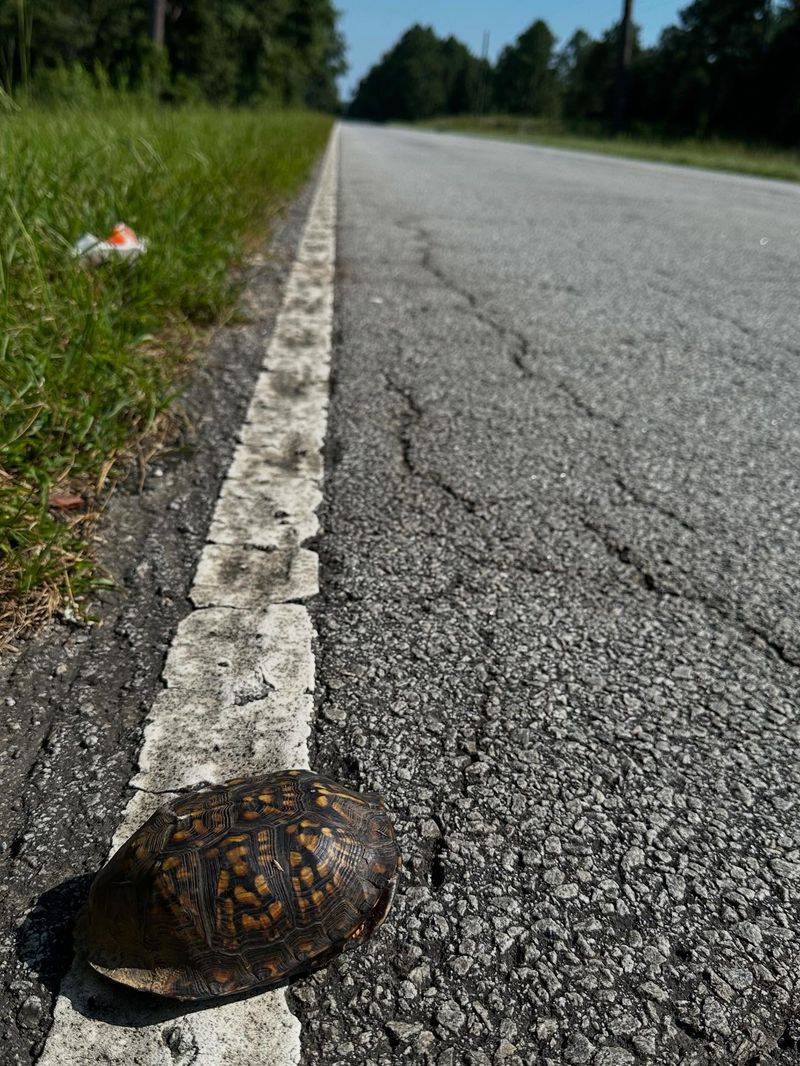
Roads are among the most serious threats eastern box turtles face, and a turtle in active traffic is a situation where stepping in makes sense. The challenge is doing it correctly, because a well-intentioned but poorly executed road rescue can leave the turtle worse off than before.
U.S. Fish and Wildlife Service guidance is specific on this point: carry the turtle to the side of the road it was already heading toward, not back to where it came from.
Moving a turtle backward across the road does not solve the problem; the turtle will attempt the crossing again, and it will be exposed to traffic a second time. The goal is to complete the journey the turtle had already started, not to redirect it.
Never take the turtle away with you. Placing a road-crossing turtle in your car and driving it to a park, a pond, or any other location removes it from its home range and creates the same relocation problem described earlier in this article.
The turtle was crossing that road for a reason, and its destination was on the other side.
Picking up a box turtle safely means supporting the shell from both sides. NC Wildlife and federal guidance both caution against picking a turtle up by the tail, which can cause injury.
For a box turtle, firm but gentle support along the shell sides keeps the animal secure without harm.
Traffic safety comes before everything else. Only stop to help if you can do so without putting yourself or other drivers at risk.
A turtle that completes its crossing on its own is a better outcome than an intervention that causes an accident. When conditions allow, the assist is simple: pick up, carry forward in the turtle’s original direction, set down on the far shoulder, and leave.
Injured Turtles Need Professional Help, Not a Temporary Home
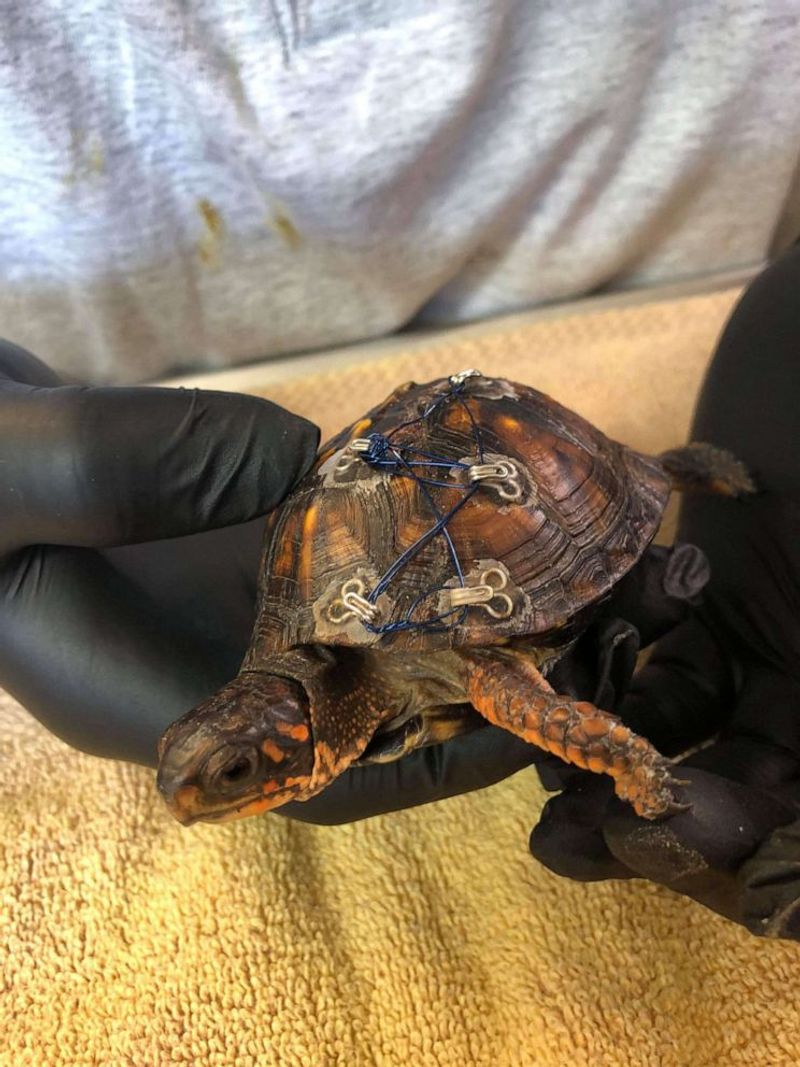
A cracked or shattered shell, active bleeding, a limb that is visibly damaged, an eye that is swollen shut, or an animal that cannot retract into its shell and shows no response are all signs that a turtle needs more than observation. These are not situations for home treatment or a wait-and-see approach.
NC Wildlife Resources Commission directs people to a licensed reptile rehabilitator when a turtle shows signs of injury or serious illness. NC State’s Turtle Rescue Team, based at the College of Veterinary Medicine, accepts injured and ill wild reptiles and asks finders to call before bringing an animal in, as the intake process may require an appointment or specific instructions.
Before you make that call or transport the turtle anywhere, record exactly where you found it. Location matters because, as NC State extension guidance explains, rehabilitated animals are returned to the place where they were found whenever possible.
A turtle released back to its familiar area has a far better chance of reestablishing normal behavior than one released somewhere unfamiliar after recovery.
While you wait for guidance, keep the turtle contained in a ventilated box in a quiet, shaded spot. Do not offer food or water unless the rehabilitator specifically instructs you to.
Do not attempt to clean, bandage, or treat the shell yourself. Shells are living structures connected to internal organs, and amateur repair attempts can cause additional harm even when they look like help.
Possession of wild eastern box turtles is a separate concern worth understanding. NC Wildlife nongame possession rules and the amphibian and reptile possession permit page outline the state framework, but species-specific guidance is clear: eastern box turtles should not be taken from the wild as pets.
Contacting a rehabilitator for an injured animal is the appropriate channel, not an opportunity to take one home.
Professional Translocation Is Not a Homeowner Project
Conservation news occasionally covers successful turtle translocation projects, where animals that were confiscated from illegal collection or raised in captivity are carefully returned to the wild. Those stories can make relocation sound straightforward, even beneficial.
The reality behind them is considerably more complex.
Professionally managed releases involve screening animals for disease, evaluating genetic compatibility with local populations, and using soft-release methods that allow turtles to acclimate gradually before they are fully free. Research on captive eastern box turtle translocation has examined the role of these staged releases in improving post-release outcomes.
Post-release monitoring tracks whether animals survive, move normally, and integrate into existing populations. None of those controls exist when a homeowner carries a turtle across a neighborhood.
U.S. Fish and Wildlife Service guidance on returning turtles to the wild notes that releasing a genetically dissimilar or unhealthy animal can harm the established population at the release site, not just the individual turtle.
More recent research on post-translocation reproduction and genetic integration reinforces that even successful conservation projects require careful planning to avoid unintended consequences.
The takeaway is not that translocation always fails; it is that the conditions that make it work are well beyond what any backyard encounter calls for or allows. A turtle that looks healthy and appears to be in the wrong place is almost certainly not a candidate for relocation.
The professional framework exists for specific conservation needs, not as a model for everyday yard encounters. Treating it as permission to move a turtle to a nicer-looking spot misreads both the science and the intent.
The Safest Help Is Usually Staying Out of the Way

A simple decision rule covers most situations a North Carolina homeowner will ever face with an eastern box turtle. Healthy turtle, no immediate danger: leave it alone and let it move on its own.
Turtle in the path of a mower, a car, or another direct hazard: move it the shortest distance possible, in the direction it was already going. Turtle crossing a road when you can safely stop: carry it to the far side in its original direction, then walk away.
Turtle with a cracked shell, visible injury, or serious illness: contact a licensed rehabilitator, note the exact location, and follow their instructions before doing anything else.
NC Wildlife, the U.S. Fish and Wildlife Service, and NC State’s Turtle Rescue Team all point toward the same underlying principle: the turtle’s existing connection to its home range is an asset, and protecting it usually means protecting the turtle.
Most of the harmful responses people reach for, carrying the animal to a pond, keeping it overnight, releasing it somewhere prettier, come from the reasonable but mistaken idea that a human can quickly identify better habitat than the turtle already knows.
Choosing not to intervene when a turtle faces no real danger is not indifference. For an animal that has spent its life learning a small patch of North Carolina ground, it may be the most genuinely helpful thing you ever do for it.