
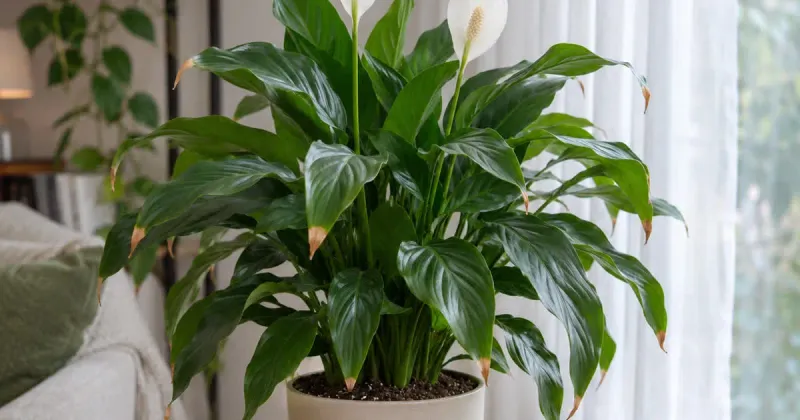
Brown, crispy tips on a peace lily can show up right when the heat comes on for winter. Many gardeners blame the tap water, and sometimes that is part of the story.
But several other winter stresses cause the same look. Here is how to sort out the likely causes and protect the new leaves.
Brown tips are a symptom, not a diagnosis
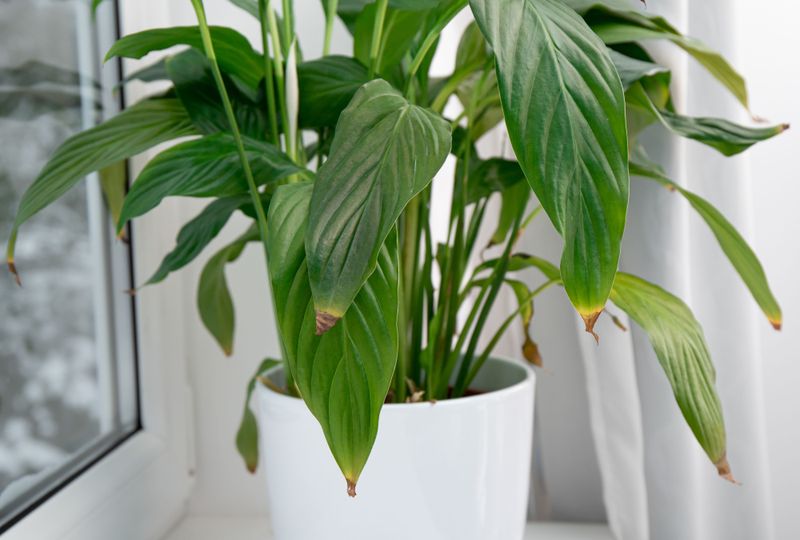
Crispy brown tips tell you something is bothering the plant, but they do not say what. University of Maryland Extension notes that indoor plant symptoms often overlap, so one look at a leaf rarely settles the question.
Water quality is one possibility. Others include uneven watering, dry heated air, too much fertilizer, poor drainage, cold drafts, and heat from a nearby vent.
UC IPM guidance on houseplant problems lists several of these as common causes of leaf browning.
That means the title idea, that tap water is usually to blame, goes further than the facts allow. Ordinary tap water works fine for most houseplants.
The better approach is to check one possible cause at a time, make a single change, and watch what the next leaves do.
Jot down where the plant sits, how you water it, and when you last fed it. A few notes make patterns easier to spot, and they keep you from changing five things at once and learning nothing.
When can water quality contribute?
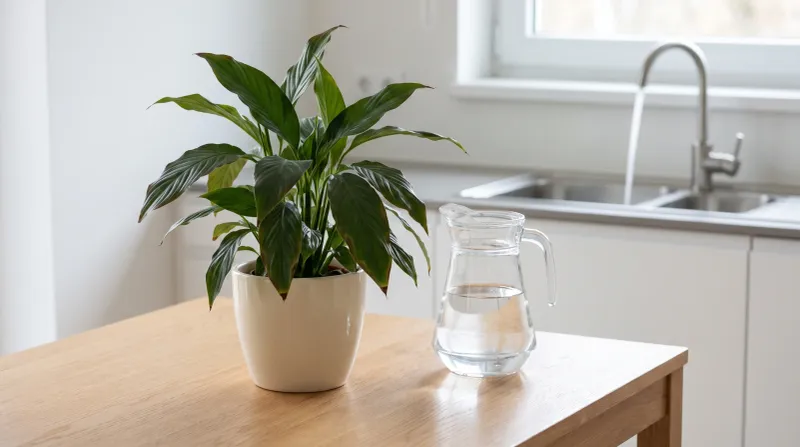
Two water-related issues are worth a look. Peace lilies are listed as fluoride-sensitive in WSU Extension’s houseplant chapter, and sodium from a household water softener can burn leaf tips.
Winter is when softened water tends to come up. UF/IFAS Extension in Nassau County says the question often arises when plants come indoors and get watered from a softened tap.
None of this means all tap water harms peace lilies. Water quality varies from town to town and even from house to house.
If your plant sits in a home with a sodium-based softener, or you know your water is high in fluoride, the water is a reasonable suspect. If neither applies, look elsewhere first.
How to test the water-source theory
Start by finding out whether the faucet you use runs through a sodium-based softener. Many homes have a separate unsoftened tap, often the cold kitchen line or an outdoor spigot.
If softened water is the only option, try unsoftened tap water, collected rainwater, or distilled water. University of Maryland Extension advises avoiding softened water for houseplants, and it describes ordinary tap water as suitable for most plants.
Treat this as a test, not a cure. Switch for a month or two and watch the newest leaves, since old brown tips will not change.
Keep the rest of your care steady so you can tell whether the water made a difference.
You may have heard that letting water sit overnight fixes it. WSU Extension supports that step only for free chlorine, which can dissipate.
It will not remove fluoride or dissolved salts.
Keep the potting mix moist, not saturated
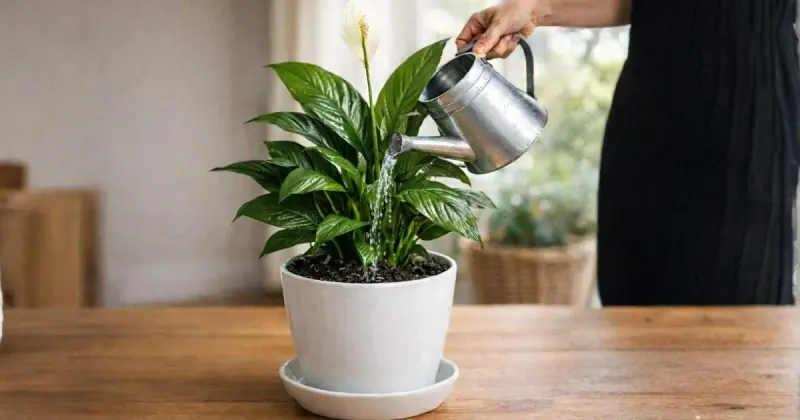
Watering rhythm is a separate question from water source, and switching to rainwater will not fix a soggy pot. Peace lilies like evenly moist mix, but UF/IFAS care guidance for Spathiphyllum cautions against overwatering and standing water.
Skip the fixed weekly schedule. Winter light is weaker and indoor conditions change, so the plant may need water less often than in summer.
Press a finger into the mix and let the feel of it guide you.
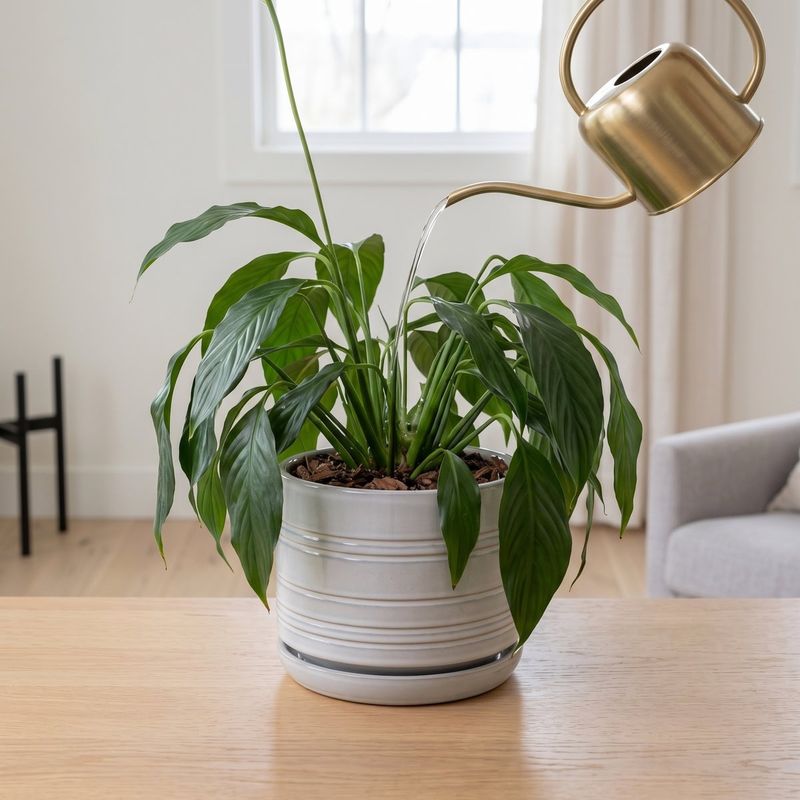
When it is time, water thoroughly until the excess drains out the bottom. Then empty the saucer so the roots are not sitting in a pool.
Maryland Extension’s watering advice points the same direction: adjust to the plant and its conditions instead of a calendar.
Moist should feel like a wrung-out sponge, not a wet one. Soggy mix can damage roots, and damaged roots can cause brown tips on their own.
A crust may call for leaching, if the pot drains
A white crust on the soil or around the pot rim can point to salt or mineral buildup. It is a clue worth following, but it does not prove fluoride caused the browning.
UC IPM treats leaf browning as a nonspecific symptom with many possible causes.
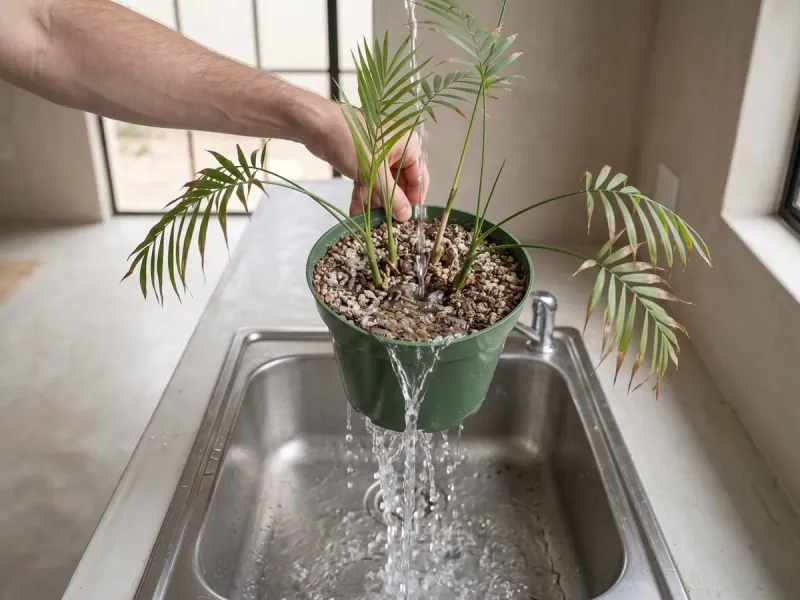
If buildup seems plausible and the pot has drainage holes, you can leach the mix. Take the plant to a sink and run water slowly through the soil so it drains freely from the bottom.
University of Maryland Extension recommends periodic leaching to carry dissolved salts out of the potting mix.
Let the pot drain fully, and never leave it sitting in the runoff. Do not try this in a pot without drainage holes, because the salts and water just stay put.
Leaching is different from changing water sources. One clears what has already built up, while the other changes what goes in next.
Winter air and placement can stress the leaves too
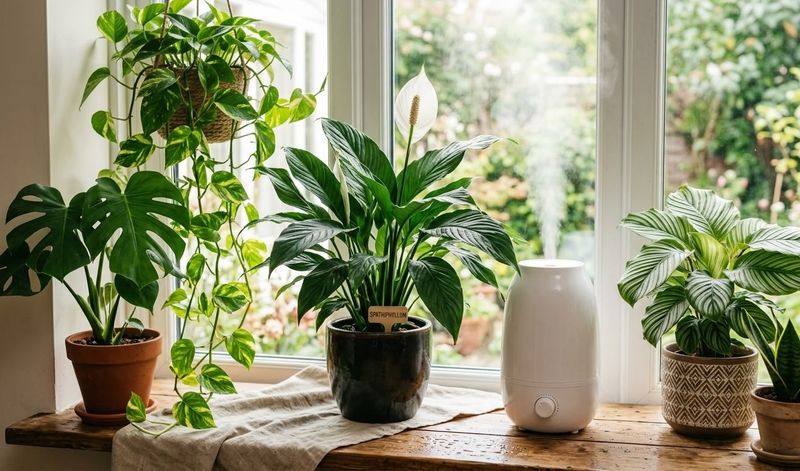
If the water checks out, look at the air. Heated indoor air in winter can get very dry, and University of Maryland Extension notes that drafts and nearby heat sources can stress plants as well.
Move the pot away from heat registers, space heaters, and door or window drafts. Misting feels helpful, but its humidity boost is brief.
Penn State Extension points to humidifiers as a steadier way to raise humidity.
Two more suspects are fertilizer and drainage. Iowa State Extension lists improper environmental conditions, including too much fertilizer, among causes of leaf damage.
A plant fed heavily in winter, when growth slows, may be getting more than it can use.
Check that the pot drains well too. Pull back on feeding if you have been generous, and see which change the new leaves respond to.
Maryland’s diagnostic guide is a handy checklist.
Judge recovery by new growth, not old tips
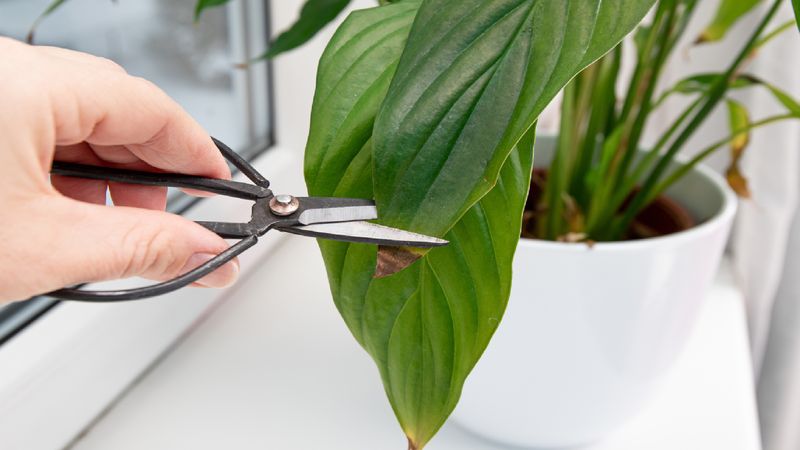
Brown tissue is dead, and it will not turn green again. Ask Extension advises trimming the brown edges if you like, but that is cosmetic.
Cut along the leaf’s natural shape with clean scissors, leaving a thin brown line so you do not injure green tissue.
The real signal is what comes next. After you correct the most likely cause, watch the newest leaves as they unfurl.
Iowa State Extension explains that fixing the cause can stop further damage, though existing damage stays.
Give it several weeks, since peace lilies grow slowly in winter. Clean new leaves are a good sign that your change helped.
If tips keep browning, move on to the next suspect.
A plant is judged by what it grows, not by what it has already lost.