
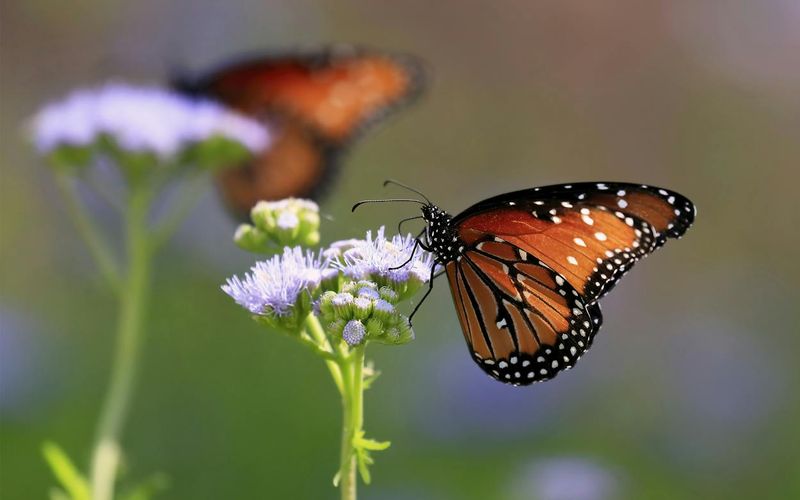
You see a monarch drift over your fence, pause for a second, and then sail right into the yard next door. It stings a little, but the reason is usually simple: your neighbor has flowers blooming when butterflies need fuel most.
In Florida, Texas, and across the South, fall is a busy season for migrating and resident butterflies, and late nectar can make or break their journey. Here are nine fall bloomers that may turn your yard into the stop they choose instead of the one they skip.
1. Goldenrod
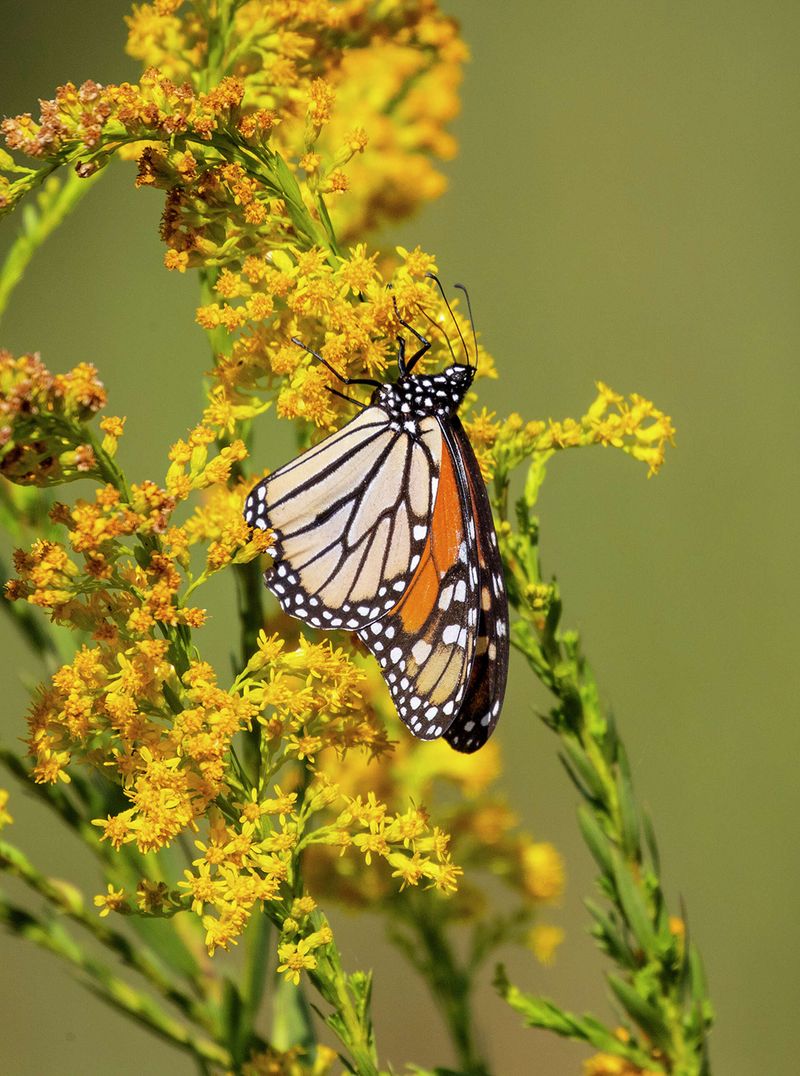
Poor goldenrod spent decades blamed for hay fever it never caused. The real culprit is ragweed, which blooms at the same time and spreads pollen on the wind, while goldenrod’s sticky pollen is carried by insects instead.
Butterflies treat those golden plumes like a roadside diner. Monarchs heading to Mexico, along with sulphurs and skippers, often load up here from September into November across Texas and the Gulf Coast.
Seaside goldenrod and wand goldenrod handle Florida’s sandy soil and salt air surprisingly well.
Plant it in full sun where it gets at least six hours of light. It tolerates poor soil, so skip the rich compost, which can make stems flop.
Some types spread by roots, so give clumping varieties like ‘Fireworks’ a spot in tidy beds and let the wanderers fill a back corner.
Cut stems back by a third in early summer if you want shorter, bushier plants with more flower heads. That one trim can noticeably increase blooms when fall arrives.
If your neighbor has a sunny patch glowing yellow right now, there is a good chance goldenrod is doing a lot of the attracting. Adding a few clumps of your own may help pull some of that traffic back.
2. Fall Aster
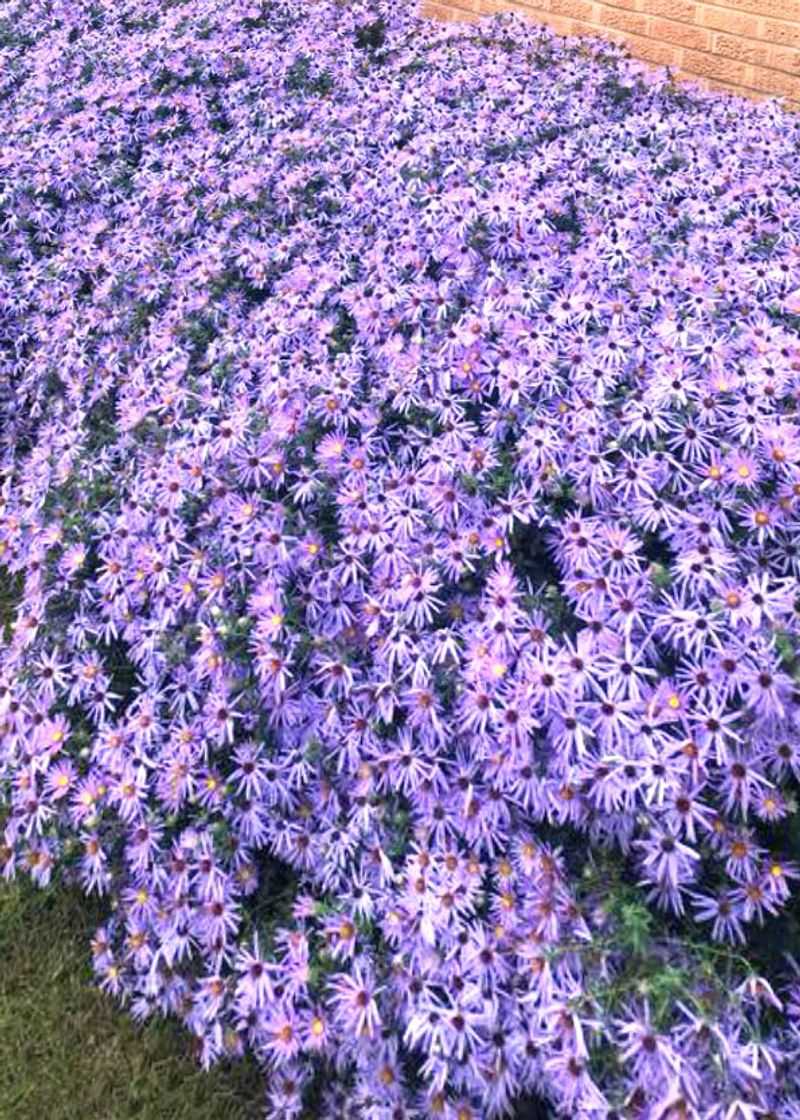
Picture a cushion of lavender stars appearing just as summer annuals fade. Fall aster, Symphyotrichum oblongifolium, puts on exactly that show, and butterflies notice fast.
Native to Texas and much of the South, this tough perennial blooms from October into late November. Each little flower has a yellow center packed with nectar, and the open, flat shape gives butterflies an easy landing pad.
Painted ladies, buckeyes, and queens often visit, along with late monarchs.
Fall aster shines in front borders, along walkways, and even in rocky, dry beds. Once established, it can handle heat and drought better than most fussy garden flowers.
Florida gardeners may also like climbing aster or Elliott’s aster, which tolerate wetter spots.
For a fuller dome of color, pinch the stems back a few times before mid-July. That simple step often doubles the number of buds and keeps the plant from sprawling over neighbors.
A single mature plant can stretch three feet wide, so give it room. Plant it near a window or porch where you can actually watch the visitors, because half the fun of a butterfly garden is seeing who drops in for a sip.
3. Gregg’s Mistflower
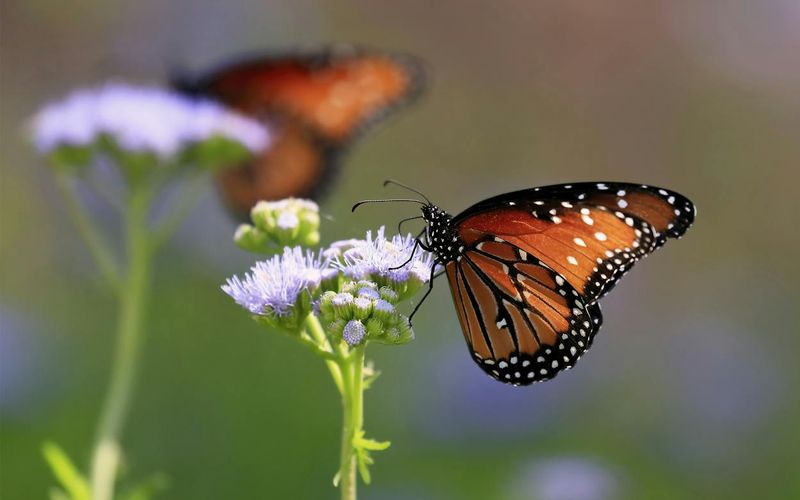
Ask Texas gardeners which plant draws butterflies best, and many will point straight to Gregg’s mistflower without a second thought. Some call it the butterfly magnet, and on a sunny October afternoon, the nickname fits.
Those fuzzy periwinkle puffs can be covered with queens, monarchs, and fritillaries all at once. Queen butterflies in particular seem drawn to it, partly because the plant offers chemicals males use in courtship.
Gregg’s mistflower stays low, around 18 inches, and spreads into a soft groundcover. It blooms off and on from spring through fall, with the heaviest flush often arriving when migrating monarchs pass through Central and South Texas.
Here is the practical part:
- Plant in full sun or light afternoon shade.
- Water during establishment, then mostly let rain handle it.
- Shear it back after a bloom cycle to encourage another round.
In Florida, it can grow well in drier, well-drained spots, though heavy summer rain may thin it out. Native blue mistflower, Conoclinium coelestinum, is a good substitute for wetter yards.
Tuck a patch near a pathway, and you may find yourself pausing on the way to the mailbox just to count wings.
4. Tropical Sage
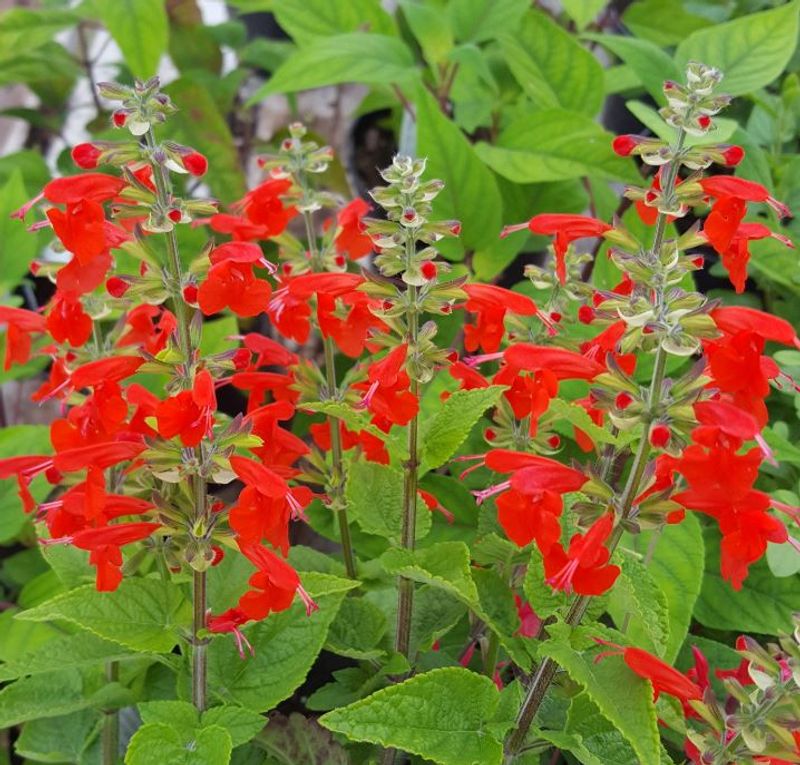
Red is the color that stops traffic, and tropical sage proves it. Salvia coccinea throws up spikes of scarlet tubes that hummingbirds adore, but plenty of butterflies stop in too, especially skippers and sulphurs.
Native to Florida and coastal Texas, this sage reseeds freely and keeps blooming nearly year-round in warm zones. Fall is when it often looks its best, after the brutal summer heat eases and fresh growth pushes out flower after flower.
One nice surprise is how forgiving it is. Partial shade, sandy soil, a missed watering or two, it usually shrugs and keeps going.
Pink, white, and coral forms exist if bright red clashes with your house.
Use it to fill gaps in mixed borders, soften the edge of a porch bed, or brighten a mailbox planting. Because it reseeds, you may find little volunteers popping up next spring.
Pull the extras or share them with friends.
Deadheading is not required, but snipping spent spikes can encourage a quicker rebloom. Leaving some seed heads in late fall feeds goldfinches and other small birds, which makes the yard feel even more alive while the butterflies keep circling.
5. Frostweed
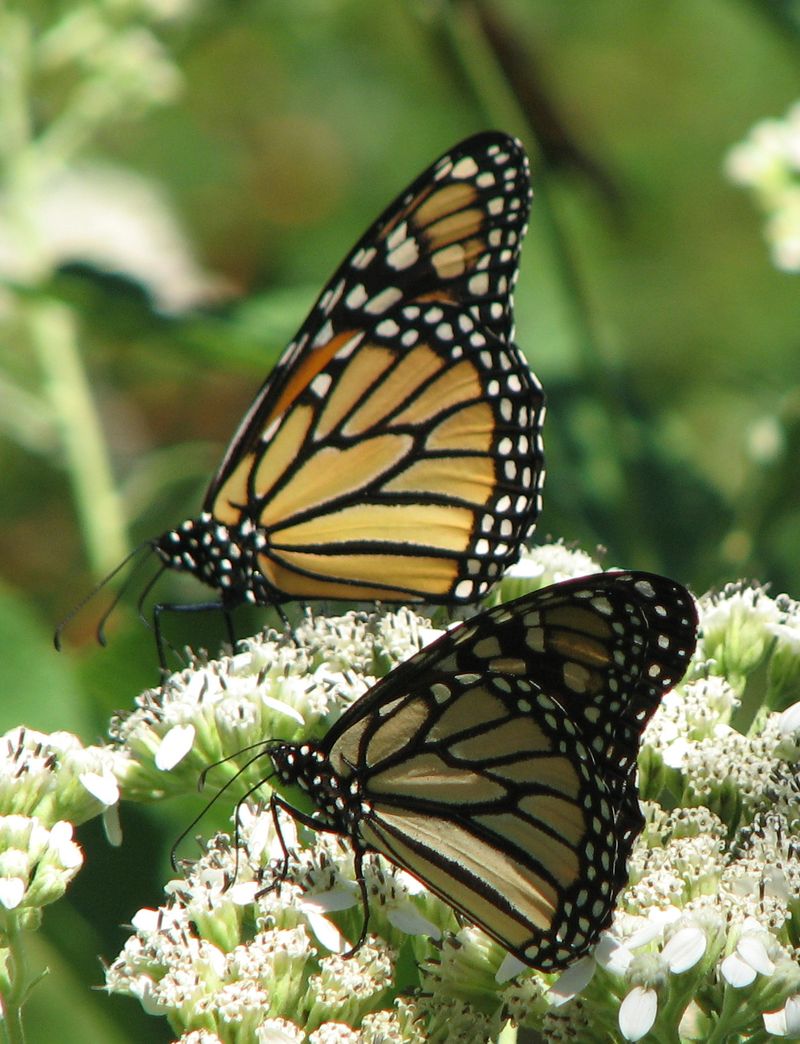
Here is a plant with a party trick. On the first hard freeze, frostweed’s stems split and push out thin ribbons of ice that curl like frozen ribbon candy, a sight that surprises nearly everyone who sees it.
Before winter, though, Verbesina virginica earns its spot as a monarch refueling station. Its flat-topped clusters of small white flowers open in September and October, right when monarch migration peaks across Texas.
Some naturalists consider it among the most heavily visited fall nectar plants in the Hill Country.
Frostweed handles shade better than most butterfly plants. If your yard has big oaks and you think butterfly gardening is only for sunny lots, this one could change your mind.
It thrives at woodland edges, under tree canopies, and along fences that get dappled light.
Fair warning: it gets tall, often five or six feet, and looks fairly plain until it blooms. Place it at the back of a bed or in a wild corner where height is welcome.
Leave the stems standing after bloom. Besides the ice show, hollow stalks can shelter native bees through winter, giving the garden a quiet second job.
6. Blazing Star
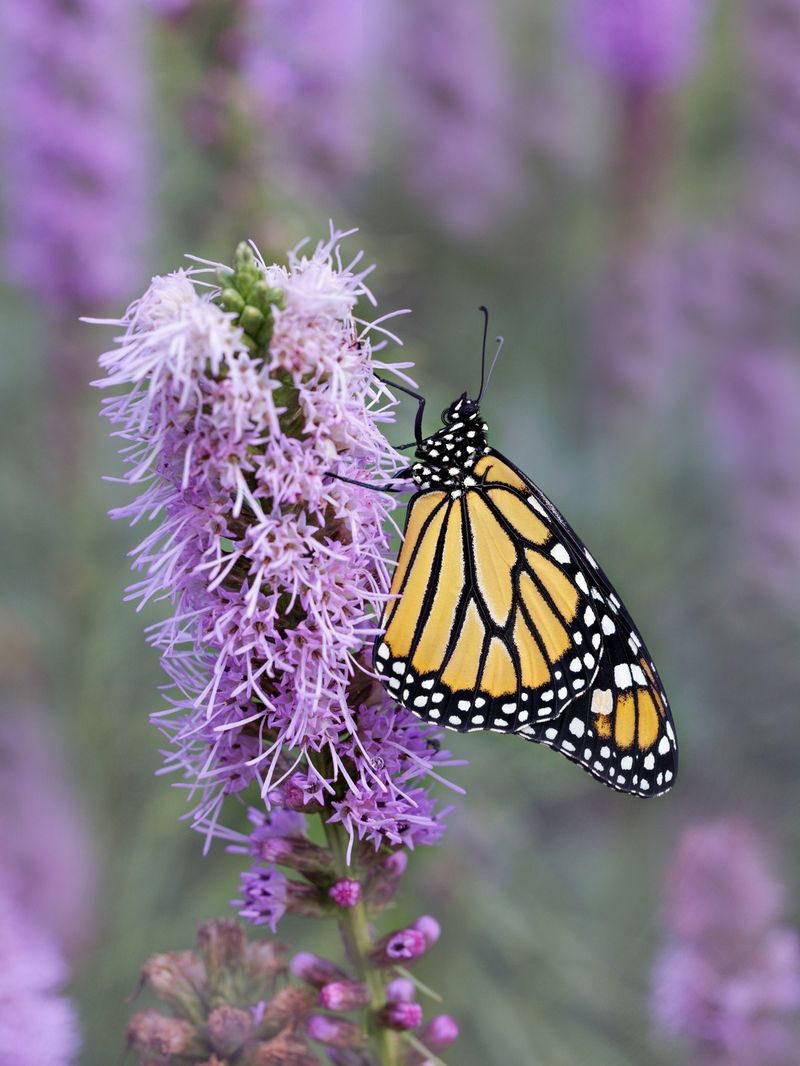
Most flower spikes open from the bottom up. Blazing star breaks the rule, blooming from the top down, so the tip glows purple while lower buds wait their turn.
Liatris species grow wild across Florida and Texas, and several bloom in late summer through fall. Dense blazing star and Chapman’s blazing star are common picks in Florida, while gayfeather types handle Texas prairies.
Monarchs, swallowtails, and skippers love working those fuzzy spikes, sometimes hanging on as the stem sways.
Gardeners appreciate how little room it takes. The narrow, upright form slips between wider plants and adds vertical drama without hogging space.
Plant corms or nursery starts in well-drained soil, because soggy ground can rot the roots, especially after heavy Gulf Coast rains.
A few planting ideas:
- Group five or more for a bolder purple patch butterflies can spot from above.
- Pair with goldenrod for a classic yellow and purple combo.
- Tuck into containers on a sunny patio.
After flowering, the seed heads can feed birds into winter. Blazing star also makes a lovely cut flower, though you may want to leave most for the winged visitors.
7. Firebush
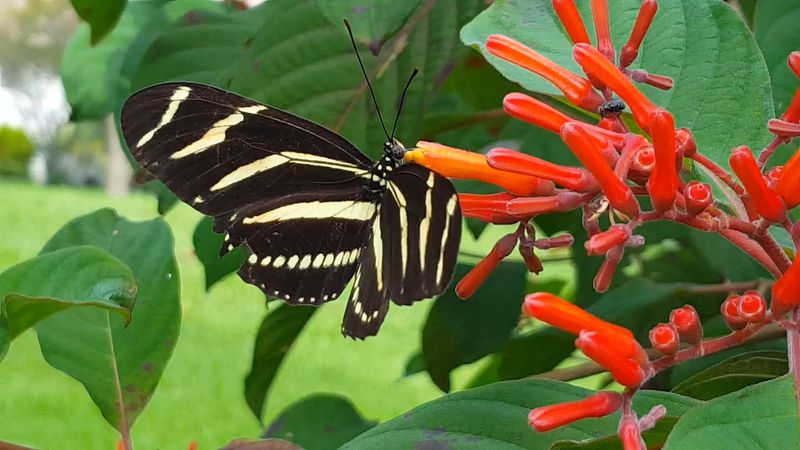
Zebra longwings, Florida’s official state butterfly, seem to have a favorite hangout, and it is often a firebush. Those orange-red tubular flowers keep coming from late spring right through fall.
Hamelia patens is native to South Florida and grows well along the Gulf Coast into South Texas. In frost-free spots it becomes a sizeable shrub, while in cooler areas it may freeze back and return from the roots in spring.
Either way, fall is prime time, when blooms, glossy berries, and bronze-tinted leaves all show up together.
Butterflies with longer tongues, like swallowtails and longwings, can reach deep into the narrow tubes. Hummingbirds join the crowd, and birds like mockingbirds eat the berries.
Give firebush full sun for the most flowers. Shade makes it leggy with fewer blooms.
It tolerates heat, humidity, and sandy soil without much fuss.
One tip: buy the native form when you can. Some dwarf and hybrid types sold at big box stores may offer less nectar, according to many Florida native plant growers.
Check the label or ask a local nursery. A well-chosen firebush near a patio can turn a hot corner into a constant flutter of activity.
8. Lantana
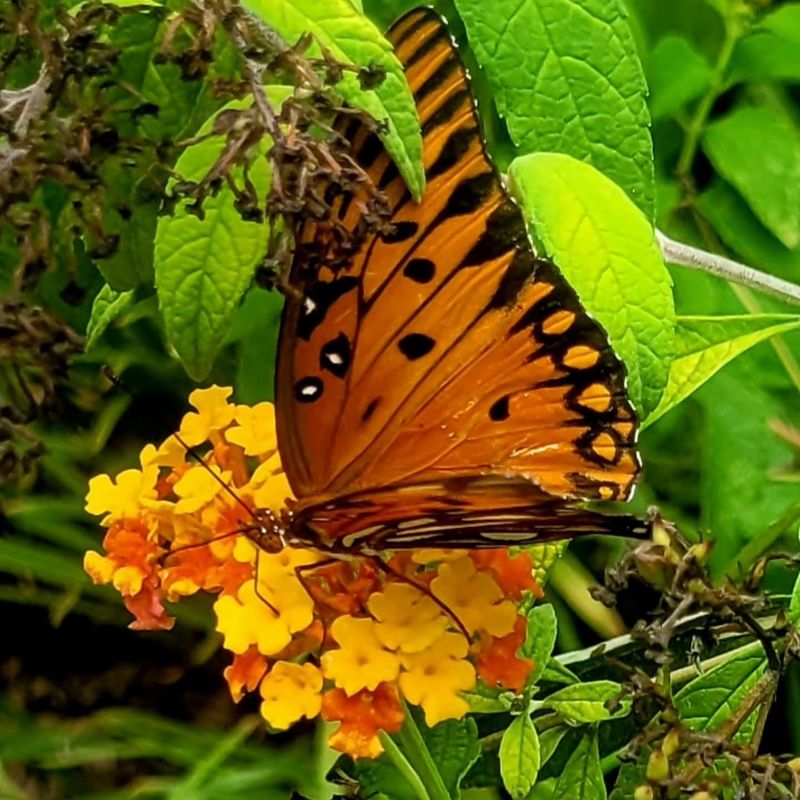
Drive through almost any Southern neighborhood in October and lantana will be there, spilling over curbs in orange, yellow, and pink. There is a reason it is everywhere: it blooms nonstop and butterflies keep coming back.
Each flower head is a tight bouquet of tiny tubes, letting a butterfly sip from many blossoms without moving far. Swallowtails, sulphurs, and hairstreaks are frequent guests well into fall, until frost slows things down.
Lantana thrives where other plants struggle, including hot driveways, reflective walls, and dry slopes. Texas lantana, Lantana urticoides, is a tough native choice for the Lone Star State.
Florida gardeners should be a little careful. Common Lantana camara can spread aggressively in natural areas there and is listed as invasive in parts of the state.
Sterile cultivars or native options like pineland lantana are safer picks.
Care is simple. Cut plants back hard in late winter, water deeply but rarely, and skip heavy fertilizer, which can lead to leaves over flowers.
Keep pets and kids from snacking on the berries, since they can be toxic. Planted with those cautions in mind, lantana delivers months of color with very little effort.
9. Tropical Milkweed Alternatives
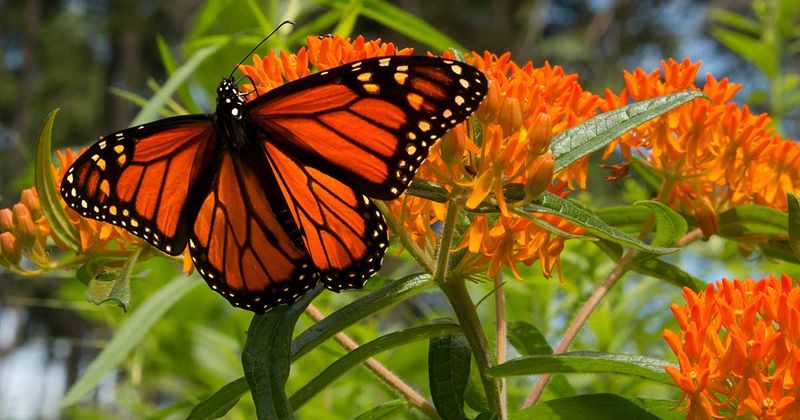
Milkweed may be the most loved butterfly plant in America, yet the kind sold at many garden centers can create problems in the South. That twist surprises a lot of well-meaning gardeners.
Tropical milkweed, Asclepias curassavica, keeps growing and blooming through mild Southern winters. Researchers have found it may encourage some monarchs to stay put instead of migrating, and it can build up a parasite called OE that weakens the butterflies.
Experts often suggest cutting it to the ground in fall and winter if you already grow it.
Native milkweeds are a better long-term bet. Consider these:
- Butterfly weed, Asclepias tuberosa, with bright orange blooms for dry, sunny spots.
- Swamp milkweed, Asclepias incarnata, for wetter Florida and East Texas yards.
- Antelope horns, Asclepias asperula, for Central and West Texas.
Natives naturally die back in cooler months, nudging monarchs to keep moving on schedule. They also host caterpillars, which means your yard becomes a nursery rather than just a snack bar.
Expect chewed leaves. Hungry striped caterpillars mean the plan is working, so resist reaching for any spray.
Pair milkweed with the nectar plants above, and visiting butterflies may have fewer reasons to fly next door.