
A sunny January afternoon can bring butterflies back into a Florida yard, even when the calendar says winter. Those flying visitors need nectar, but a garden with no open flowers offers little fuel.
These seven Florida natives can help keep food available during mild weather, especially in Central and South Florida. Match them to your part of the state, since freezes can pause both flowers and butterfly activity farther north.
1. Tropical Sage
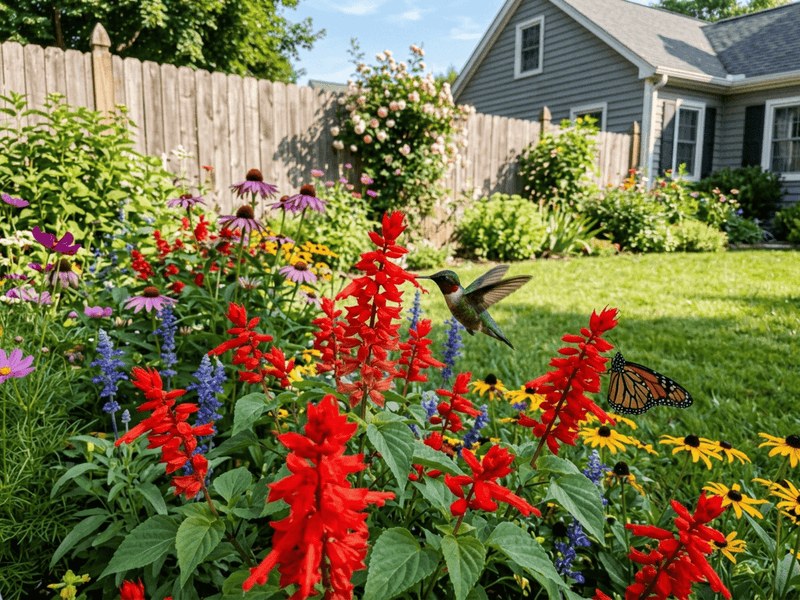
A few red flower spikes can turn a quiet winter border into a butterfly stop. Tropical sage, Salvia coccinea, produces nectar-rich blooms over a long season, including winter in frost-free parts of Florida.
Its loose, upright growth fits nicely among lower groundcovers without creating a solid wall of foliage. Plants generally reach about 2 to 4 feet tall, and the flowers also attract hummingbirds.
Choose sun or light shade and soil that drains well. In Florida’s sandy yards, water new plants regularly while roots settle in, then adjust watering to rainfall and signs of wilting rather than keeping the bed constantly wet.
For a fuller display, plant several together and trim individual spent flower stalks instead of shearing the entire patch at once. Leaving some seed heads allows replacement plants to appear nearby.
Freezing weather can damage or kill top growth, so northern gardeners should not count on uninterrupted winter flowers. In milder locations, stagger pruning so butterflies still have open blooms while another part of the planting recovers.
2. Scorpiontail
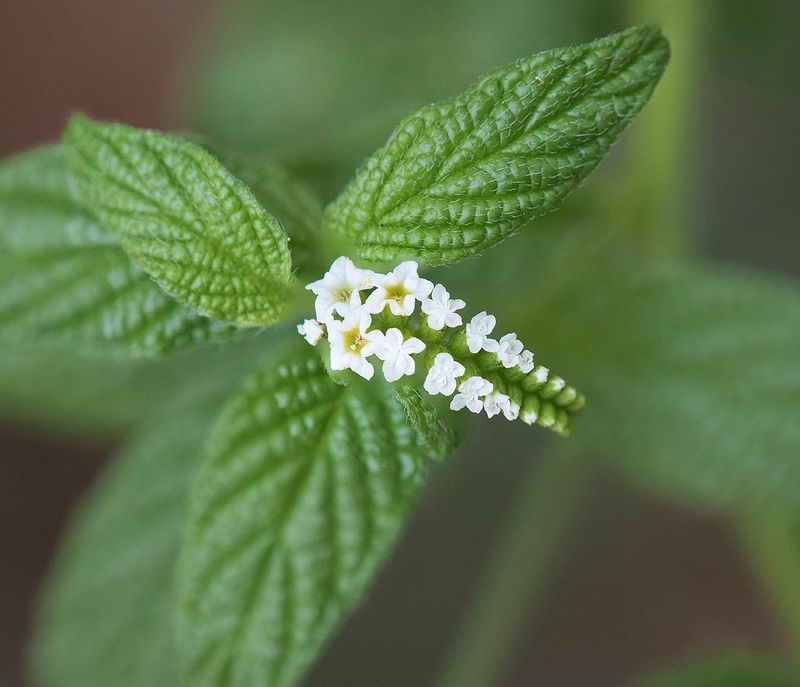
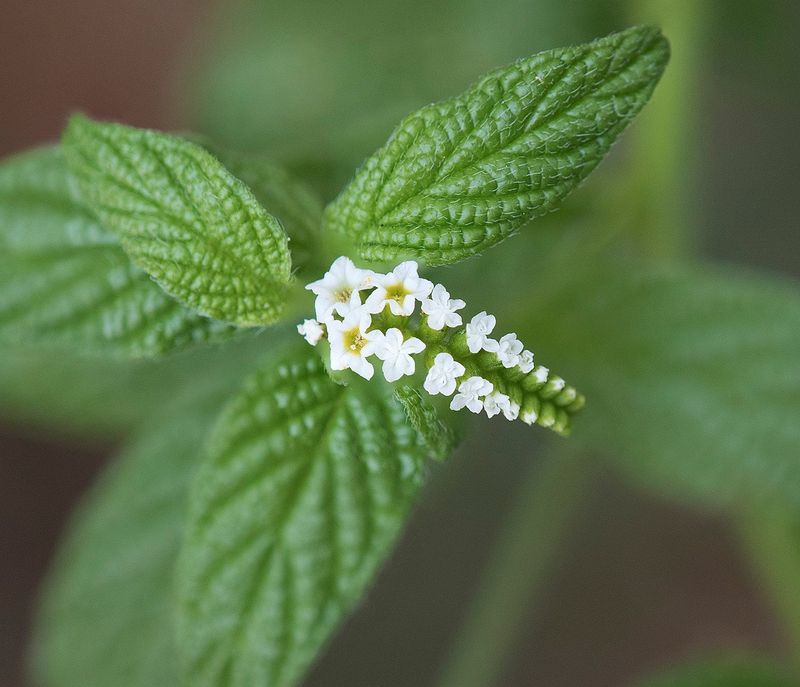
Look closely at the curled flower stalks, and the name makes sense. Scorpiontail, Heliotropium angiospermum, carries tiny white flowers along curved stems that slowly unfold as new blooms open.
Those small flowers are useful to smaller butterflies, including skippers, which can be easy to overlook beside showier garden visitors. In warm South Florida locations, the plant can flower throughout the year, giving it a valuable place in a winter nectar planting.
Use it along an informal path, beneath an open tree canopy, or between larger shrubs. Sun to partial shade works, and well-drained soil helps prevent problems caused by soggy roots.
Expect a loose, somewhat sprawling plant rather than a crisp bedding mound. Give it roughly 2 to 3 feet of room, and shorten wandering stems selectively if they reach a walkway.
Scorpiontail may reseed, which is handy when you want a relaxed native planting but less welcome in a tightly arranged bed. Move or remove extra seedlings while small, and leave the flowering parent plants available to visiting butterflies.
3. Dune Sunflower
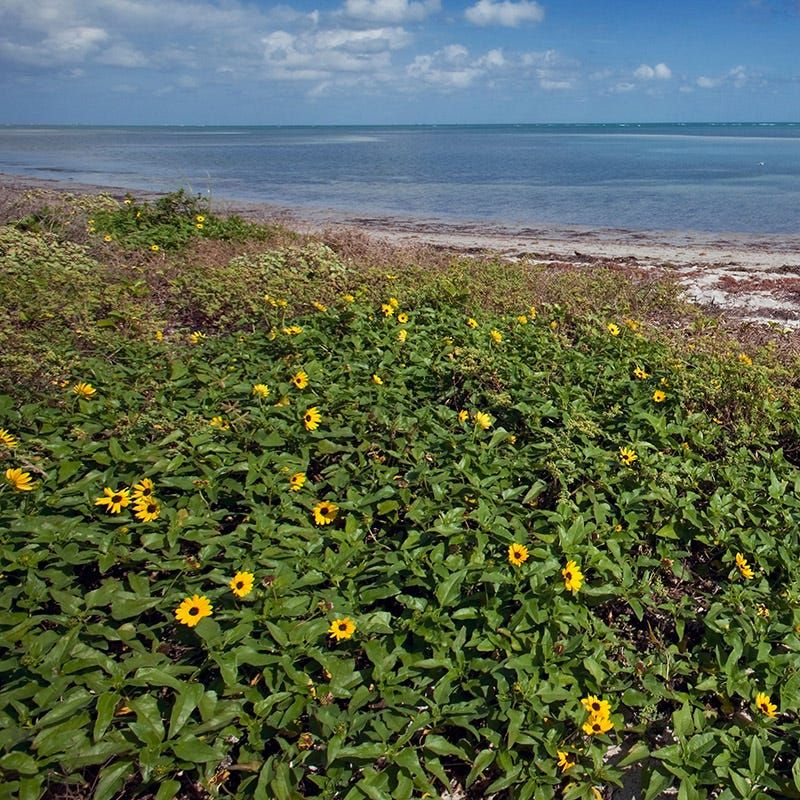
Bare sand beside a sunny driveway does not have to stay bare. Dune sunflower, Helianthus debilis, spreads into a low, flowering cover that gives butterflies feeding spots while softening a harsh-looking edge.
Yellow petals surround dark centers, and flowers can continue through winter where temperatures remain mild. Its open flower heads provide an easy feeding surface for a variety of visiting insects.
Give this plant full sun and excellent drainage. It suits many sandy coastal yards and tolerates salt exposure, but it is a poor choice for a low spot that stays wet after rain.
Allow several feet of spreading room instead of squeezing it between small, slow-growing plants. A broad bed beside a walk or an open sandy slope usually works better than a narrow formal border.
Florida has regional forms of dune sunflower, so ask a native nursery which locally appropriate stock it carries. Trim sections at different times to preserve flowers, and expect cold snaps to interrupt the display in cooler parts of the state.
4. Spanish Needles
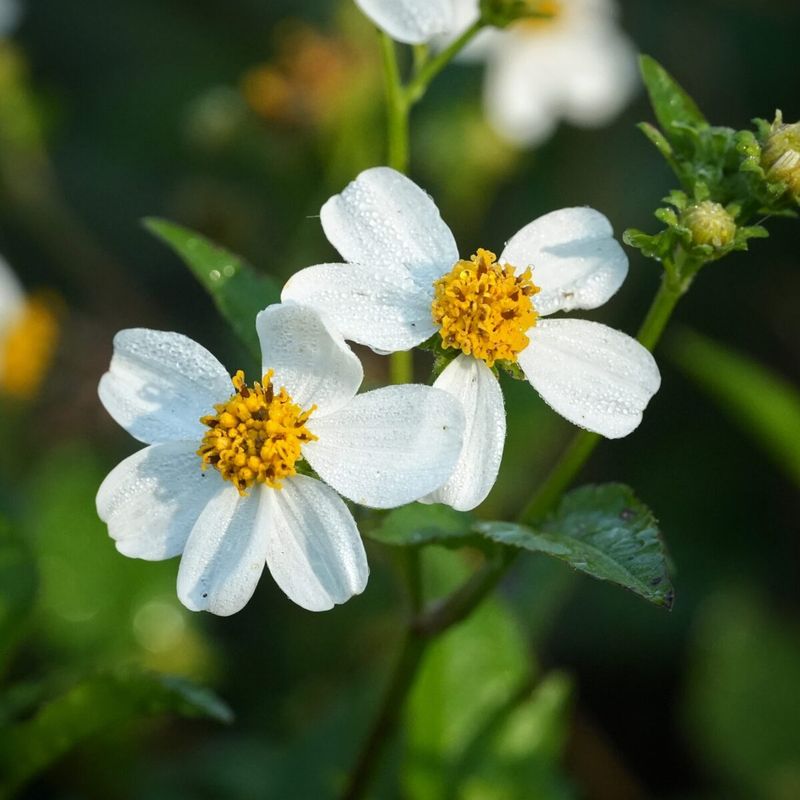
The volunteer growing near the fence may be one of your busiest butterfly feeders. Spanish needles, Bidens alba, produces familiar white-and-yellow flowers that draw a wide range of nectar-seeking visitors.
In frost-free Florida gardens, it can bloom through winter with very little attention. That makes it useful for filling gaps when more carefully arranged flower beds have few blooms.
There is a trade-off: its barbed seeds cling to clothing and pet fur, and seedlings can spread quickly. Give it a managed habitat corner away from a main walkway rather than letting it take over the front entry.
Grow it in sun for the strongest flowering, and pull unwanted seedlings before they become large. Cutting selected stems before their seeds mature helps limit its spread without removing every nectar source at once.
Buy correctly identified native plants or confirm the identity of volunteers before keeping them. Avoid spraying the flowers with insecticides, and remember that a freeze can end the current bloom cycle even though new plants may return later.
5. Buttonsage
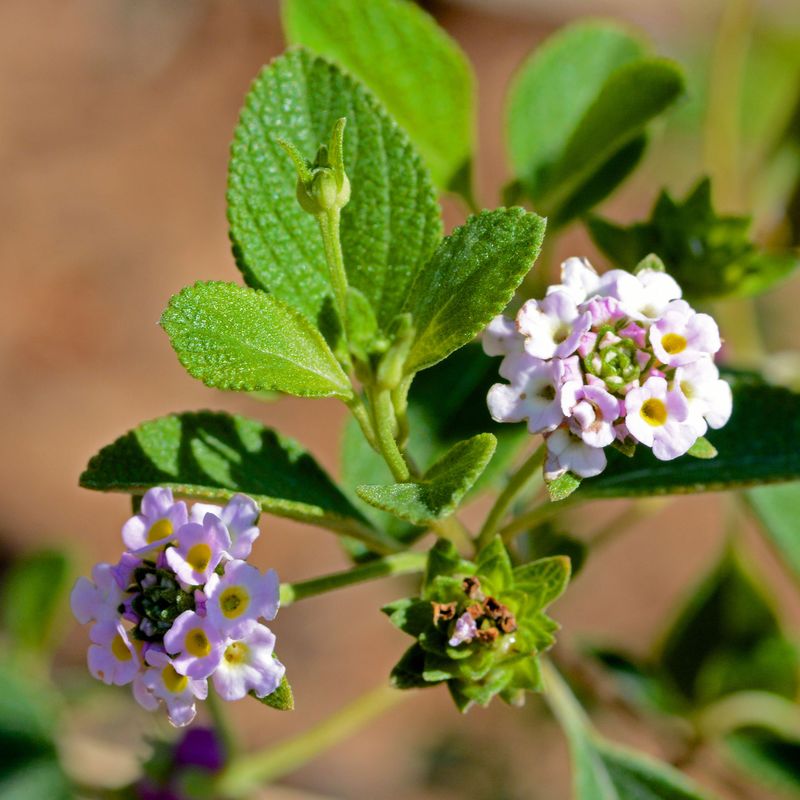
For a nectar plant with a shrub’s presence, buttonsage earns its space. Lantana involucrata forms an airy mound with small clusters of white to pale lavender flowers, followed by purple fruit that can attract birds.
Its main winter value is in warm South Florida landscapes, where flowering can continue through the cooler months. A mature plant also gives a butterfly bed some lasting shape instead of leaving every planting layer close to the ground.
Set it in sun or light shade with well-drained soil, and allow room for a shrub several feet tall and wide. It can suit coastal conditions and generally needs less watering once established in an appropriate site.
Shop by the scientific name, not simply the word lantana. Invasive lantanas and mixed nursery selections are not interchangeable with this Florida native.
Prune lightly after a flowering flush, keeping some branches untouched when blooms are scarce elsewhere. Buttonsage is not a dependable winter nectar choice for freeze-prone North Florida, so check local suitability before buying.
6. Native Blue Porterweed
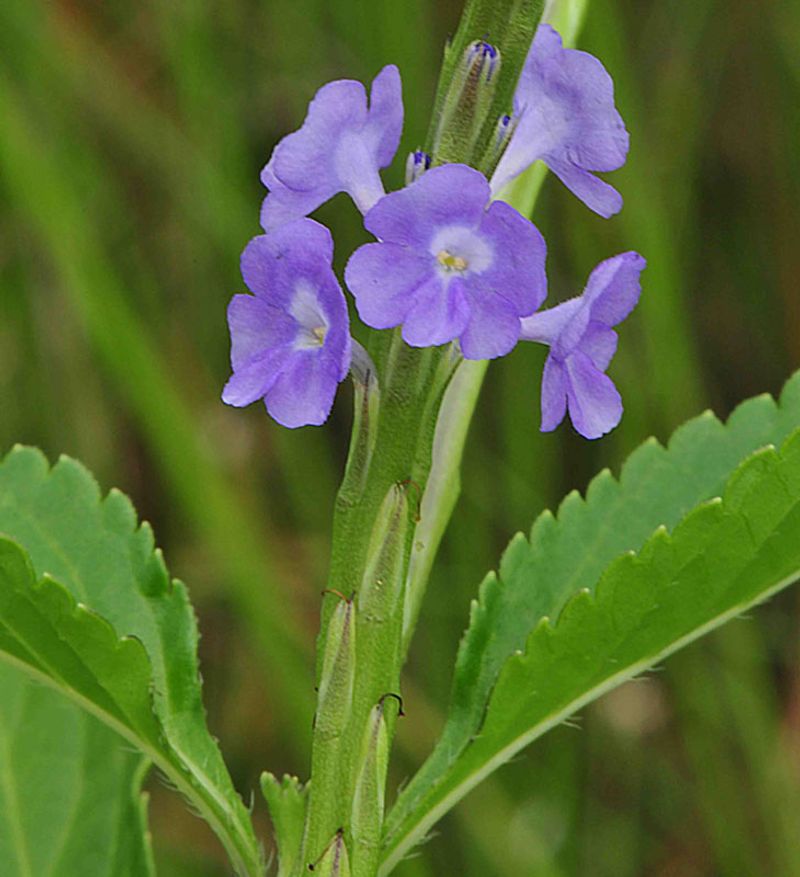
Only a few tiny blue flowers open on each spike at once, yet butterflies find them. Native blue porterweed, Stachytarpheta jamaicensis, offers a steady trickle of blooms rather than one large burst of color.
That pattern makes it useful beside plants whose flowering comes in waves. In frost-free South Florida, its long blooming season can extend through winter, helping bridge quieter stretches in the garden.
True native blue porterweed has a low, spreading habit. Place it near the front of a sunny bed where its slender flower spikes can rise above the foliage without being hidden behind taller shrubs.
Good drainage matters, and established plants tolerate dry spells better than waterlogged soil. Water during establishment, then avoid treating the planting like a thirsty lawn.
Check the nursery label carefully: the taller, upright porterweeds commonly sold in Florida may be nonnative species or hybrids. Ask for the exact botanical name and locally appropriate stock, and do not expect this cold-sensitive plant to supply reliable winter nectar in northern counties.
7. Firebush
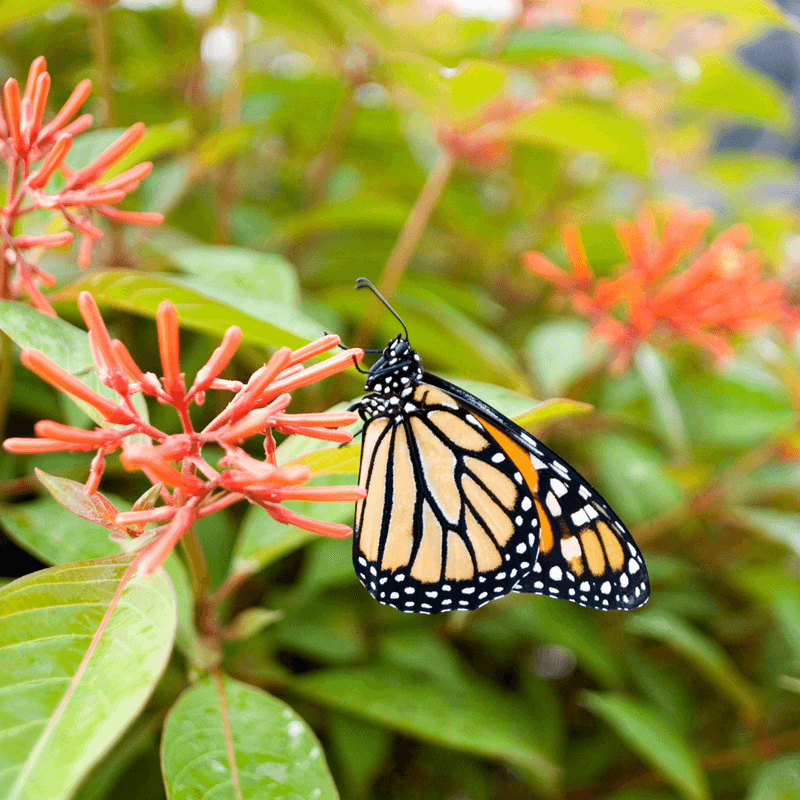
A sunny back corner can become a busy feeding station when firebush is in bloom. Hamelia patens produces clusters of orange-red tubular flowers that attract butterflies and hummingbirds, giving a larger yard a strong splash of color.
In frost-free South Florida, flowering may continue through winter. Farther north, cold can stop blooms and kill stems back, so treat its winter feeding value as a warm-region benefit rather than a statewide promise.
Space is the first thing to plan. Native firebush can grow into a large shrub, often reaching 8 to 12 feet or more in favorable conditions, making it better for a broad border than a tight foundation bed.
Choose a sunny, well-drained site for generous flowering. Water regularly while the roots establish, then reduce irrigation as the plant settles in and rainfall allows.
Ask a Florida native nursery for locally appropriate native stock, since the firebush name also appears on nonnative forms and hybrids. Avoid frequent hedge-style shearing, which removes flower-bearing growth, and prune selected branches instead so some nectar remains available during mild winter weather.