
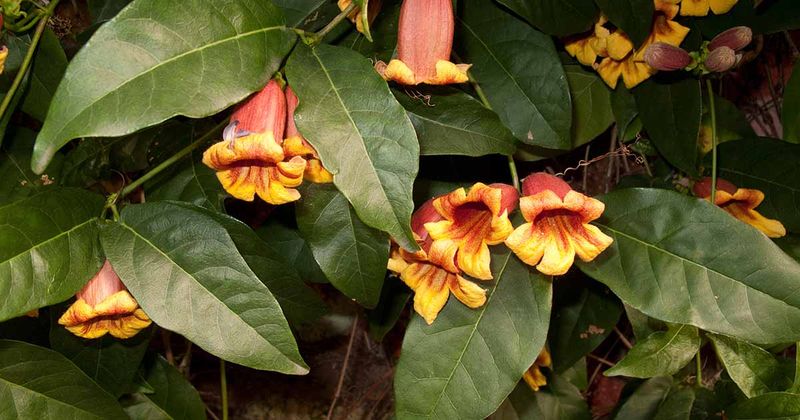
A west-facing wall in Central Texas can feel like an oven by late afternoon. Crossvine, a tough native climbing vine, is one plant homeowners are asking about as a way to add shade faster than a tree can.
It comes with real perks and a few real cautions, from fast growth to fire safety. Here is what to check before you put one in the ground this fall.
Crossvine fits only parts of Central Texas
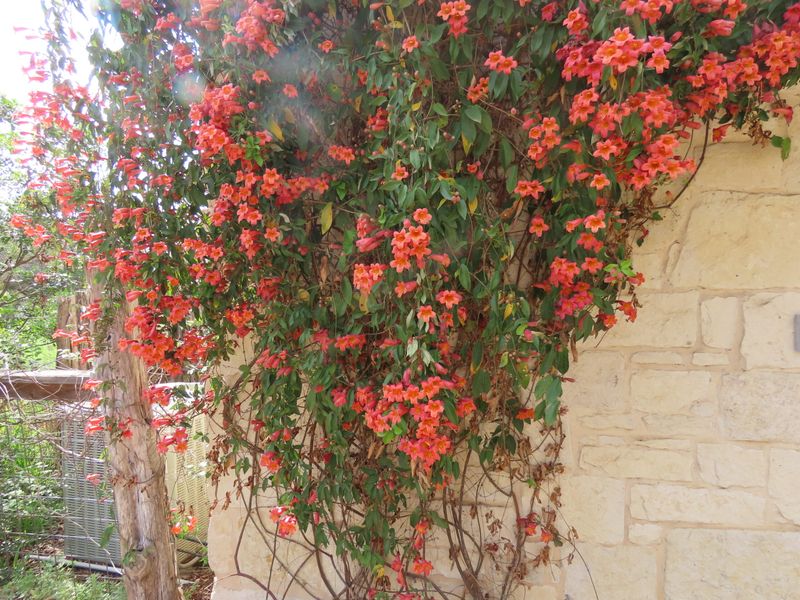
Crossvine (Bignonia capreolata) is a vigorous woody climber with orange-red, trumpet-shaped flowers that hummingbirds visit in spring. It is a Texas native, but not native to every corner of the state.
The Native Plant Society of Texas lists it in the East Central Texas Plains, the Edwards Plateau, and the Western Gulf Coastal Plain.
That means your own spot matters. A yard in Bastrop or Round Rock may sit in a different ecoregion than one in Kerrville or Georgetown, so look up your ecoregion before you buy.
Also ask the nursery where the plants were grown or sourced, since provenance can affect how well a plant handles your local soil and weather.
Do not think of this as a small wall accent. Tennessee Smart Yards gives a mature height of 35 to 50 feet.
Even if a Texas vine stays smaller in tough conditions, you are planting a big, strong climber that will want room, support, and regular attention.
If your wall is narrow, your soil is thin caliche, or your yard sits outside the listed ecoregions, talk with a local native plant nursery or your county Extension office. They can tell you how crossvine has actually behaved nearby, which is worth more than any general description.
What can a west-wall vine actually cool?
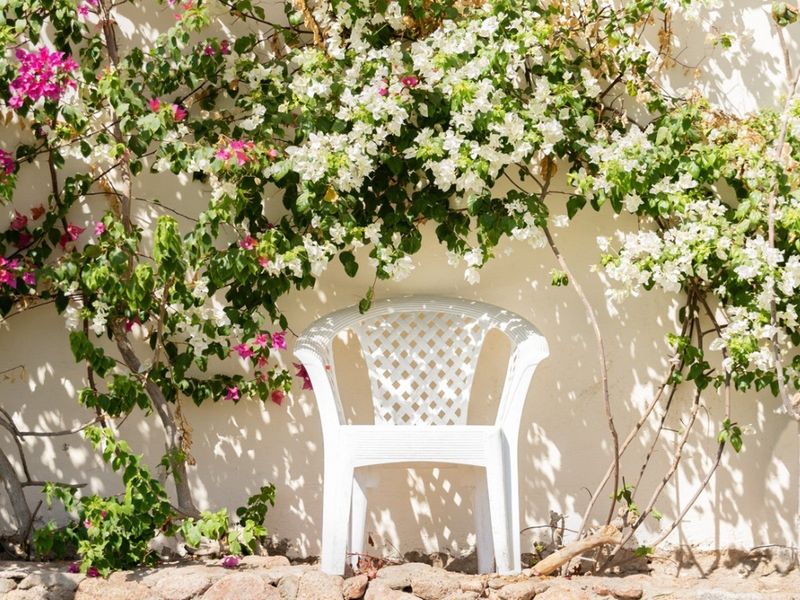
Afternoon sun bakes a west wall, and that heat moves slowly through siding and insulation into your rooms. The Department of Energy suggests shading south- and west-facing walls and windows when summer overheating is a problem.
That makes a vine on a trellis a sensible idea. It also warns against dense foliage pressed against a structure, where moisture or pests can become a concern.
Still, shade on a wall is one thing and a cooler house is another. Wall shade, heat moving through the wall, indoor temperature, energy use, and your electric bill are all separate outcomes.
Nobody has measured them for crossvine on a Central Texas home.
The studies we do have are narrow. A Chicago field study looked at ivy-covered university walls over nine days.
It found the outer wall surface averaged 0.7°C cooler and estimated about 10 percent less heat moving through opaque walls. That was ivy, in Chicago, on campus buildings.
A modeling study used Department of Energy reference buildings and found possible cooling-energy savings that varied by building type and climate. These were computer models of commercial-style buildings, not Texas houses with crossvine.
So treat a crossvine wall as a reasonable shade experiment. If you want to know whether it helps, a cheap indoor thermometer on that wall before and after can give you your own rough answer.
Fast growth is not a wall-coverage deadline
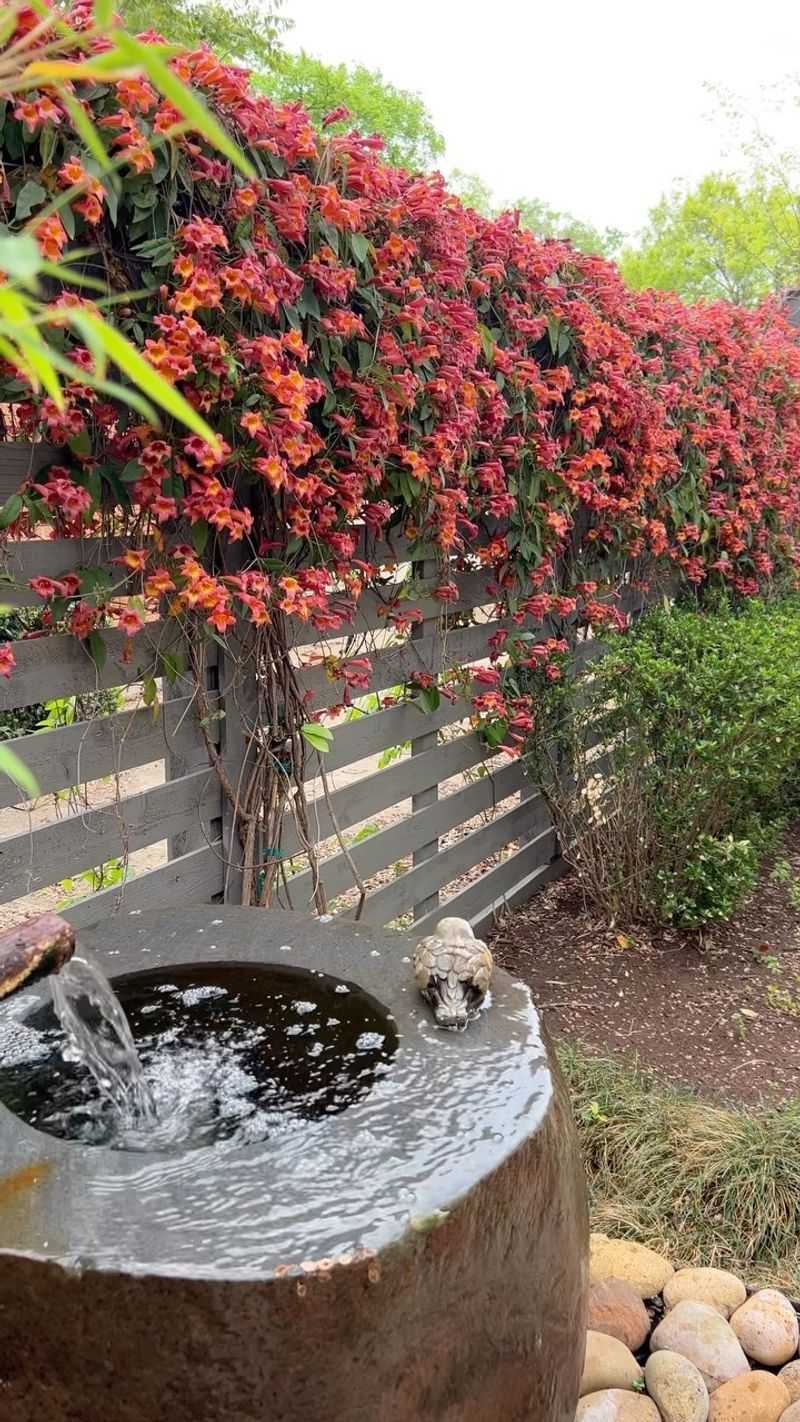
Garden talk about crossvine often includes a big number. Tennessee Smart Yards reports potential growth of 10 to 15 feet in a season.
That is a general species description. It is not a promise for a small nursery plant in a Central Texas yard, and it does not measure how much of a wall gets covered.
Vines grow in a pattern. A new plant usually spends its first season building roots, then puts on more length once it settles in.
Long shoots can reach upward and still leave wide gaps on a wall, especially if the trellis is narrow.
Compared with waiting for a shade tree to mature, crossvine may offer a quicker route to some shade. That is a fair hope.
But no source supports a one-to-two-season coverage schedule, so plan on a range of outcomes instead of a date.
A practical way to judge progress is to watch the wall at 4 p.m. in midsummer. Notice which sections get shade and which still glare.
Add a second trellis panel or wire, or train shoots sideways, to fill the hot spots.
Poor soil, a late planting, or a hard drought year can slow any vine. If you want shade sooner on a window, a shade cloth or patio awning can bridge the gap while the vine grows in.
Fall offers a useful establishment window
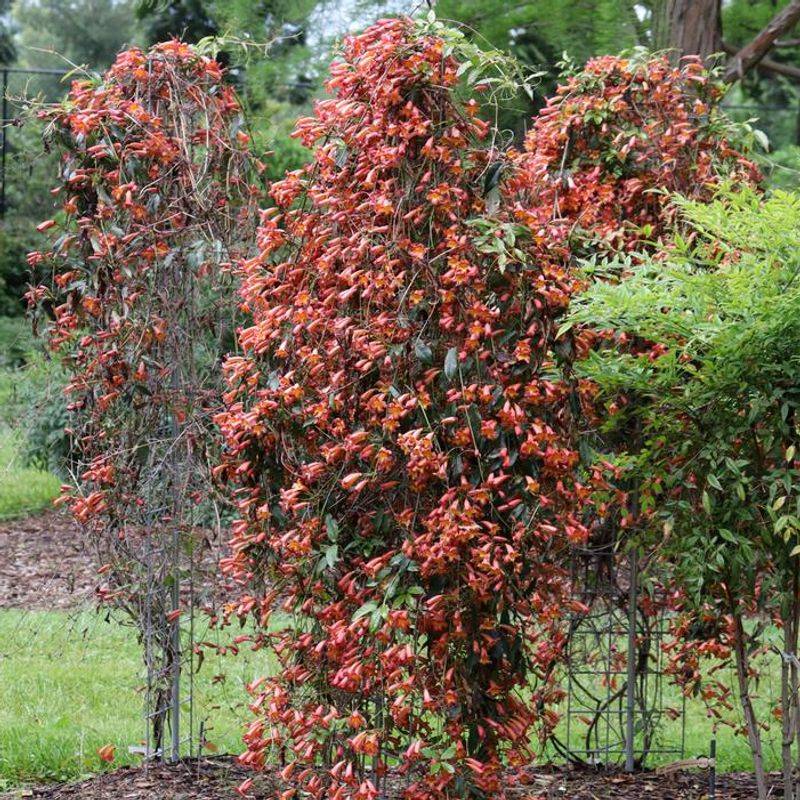
Fall is a good time to put woody plants in the ground across much of Texas, because roots can grow while the air cools and the soil still holds warmth. Texas A&M AgriLife Extension says fall planting gives woody vines time to establish before summer and names crossvine.
It also advises watering new plantings during dry spells.
The catch is that this guidance is focused on East Texas. Central Texas has hotter late falls, more variable rain, and a lot of shallow or fast-draining soil.
Treat fall as a helpful opportunity, not a deadline or the only right season.
Match the site to the plant. USDA’s plant guide says full sun and moist, acidic, well-drained soil favor flowering, while established plants tolerate a wider range of conditions, including drought.
A west wall gives plenty of sun, but the soil beside a foundation may be dry or alkaline.
Before planting, dig a test hole and fill it with water. If it is still full after several hours, pick another spot or build a raised bed.
Mulch the root zone and water deeply during dry weeks through the first year.
Build the support before the vine reaches the siding
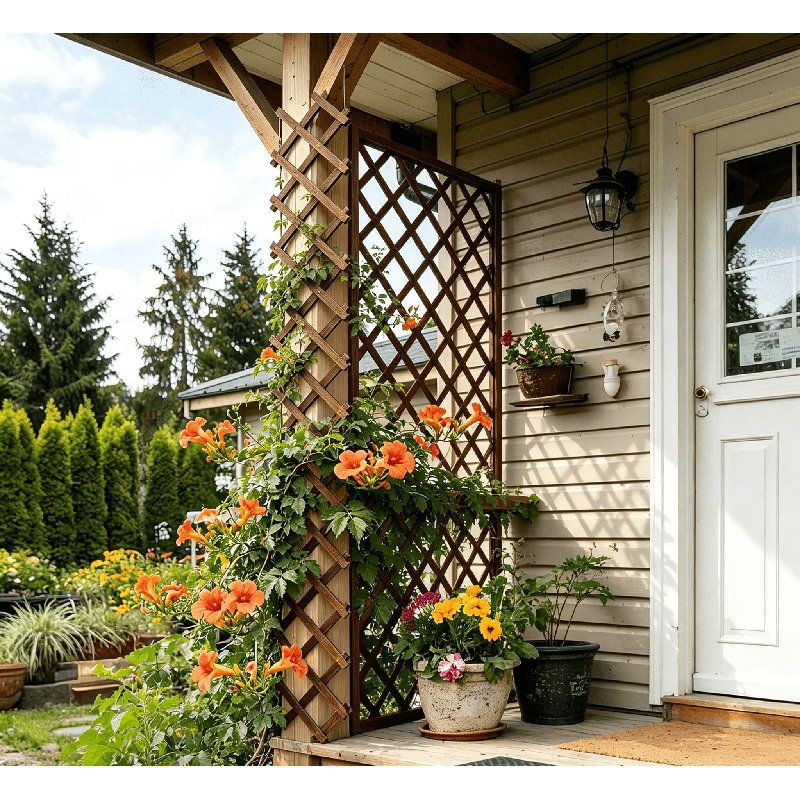
Crossvine climbs with tendrils that end in adhesive disks, and those can stick to walls. The City of Austin plant guide calls it an aggressive climber.
Once it grips paint, mortar, or wood, pulling it off can leave damage.
A more cautious setup is a sturdy support that stands off the wall. Posts with a trellis or tensioned wires a few inches out give the vine something to hold and leave room for air to move behind it.
University of Missouri Extension notes the value of airflow and removable supports near wood siding.
Removable is the key word. Hinged trellis panels or wires on hooks let you lay the whole vine down when you need to paint, repair siding, or inspect for pests.
Crossvine is heavy once it matures, so use strong anchors set in the ground or masonry, not flimsy lattice.
For shade, position the support so it covers the part of the wall getting the most afternoon sun. Do not train it directly onto every kind of siding.
If your house has stucco, old paint, or wood, the stand-off trellis is the safer bet.
Pruning and fire exposure change the planting decision
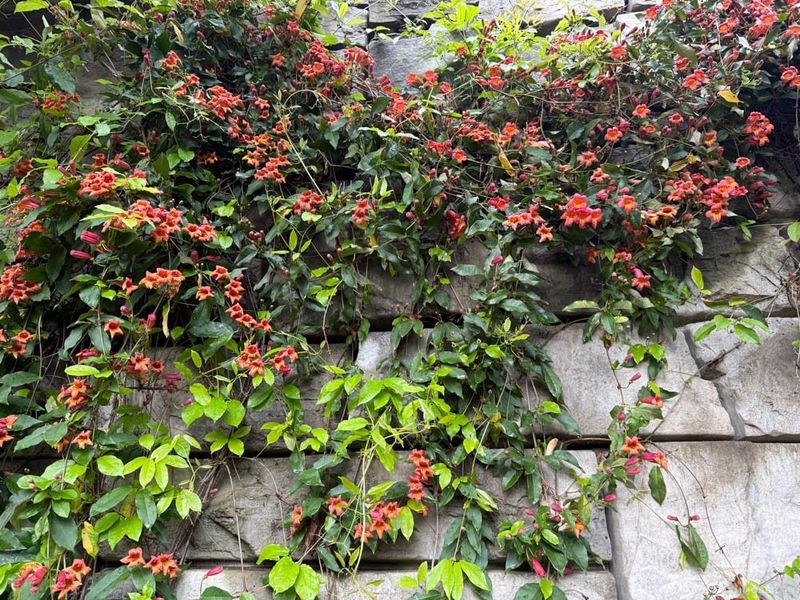
Crossvine asks for regular care. It can spread by root suckers, and the University of Tennessee recommends removing suckers if you do not want it to spread.
Watch the lawn and beds near the base and pull or cut new shoots early.
Timing matters for flowers too. The vine blooms on the previous year’s wood, so prune right after bloom, not in winter.
Cutting in late fall or winter removes the buds that would have opened in spring.
Do not count on year-round screening. USDA calls it semi-evergreen and notes it may lose leaves in harsh winters, though some regional sources describe it as evergreen.
In a cold snap, your wall may be bare for a while.
Fire is a separate and more serious issue. NC State Extension describes crossvine as highly flammable and advises against planting it within a home’s defensible space.
If you live near cedar brush, hill country woodland, or grassland that burns, this may rule it out for a wall.
Pruning will not fix flammability, so settle the fire question first. Ask your local fire marshal or county Extension office about defensible space for your lot.
Choose the wall—and the promise—you can manage
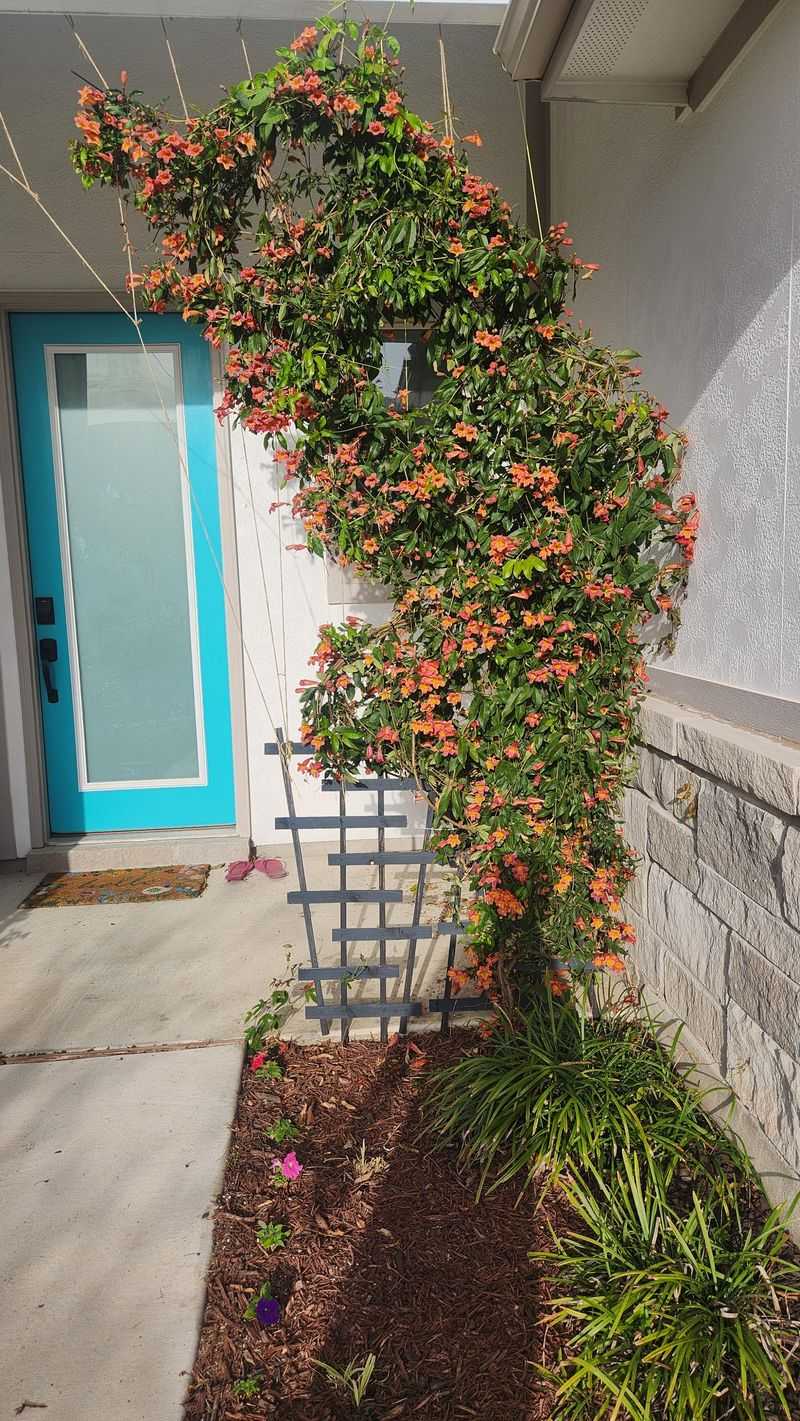
Start with your ecoregion, then check fire risk, build a stand-off support, and plant in fall if local conditions and watering allow. Crossvine may give you wall shade, which fits Department of Energy advice for west walls.
No evidence sets a coverage schedule or an AC-bill cut for a Central Texas home.
Plant it for flowers, hummingbirds, and some afternoon relief, and any cooling is a bonus.