
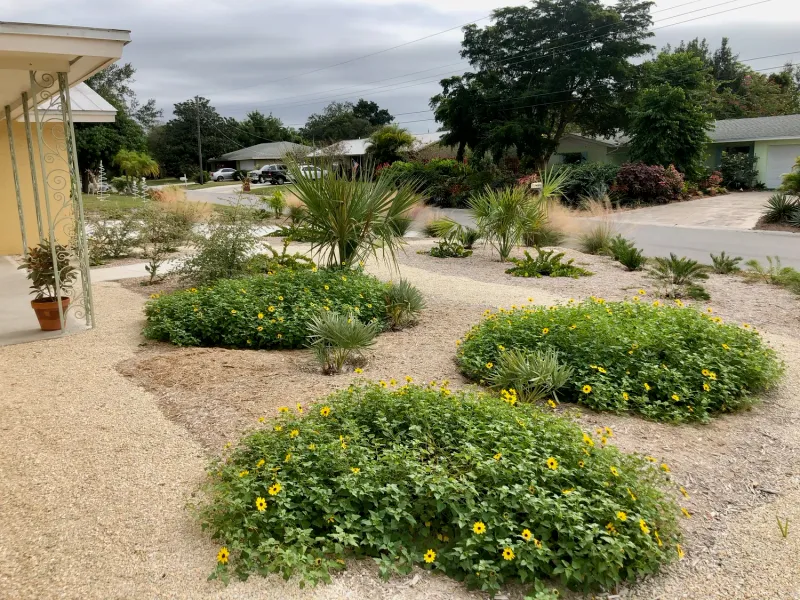
A brown patch in a Florida lawn can spread faster than your patience runs out. Southern chinch bugs often target St. Augustinegrass, but replacing selected lawn areas with native groundcovers removes their favorite meal from those spots.
The seven plants below are not typical hosts for this lawn pest, though none is pest-proof or guaranteed never to be visited. Pick the right one for your sun, soil, and space, and you can trade struggling turf for flowers, wildlife, and less mowing.
1. Frogfruit
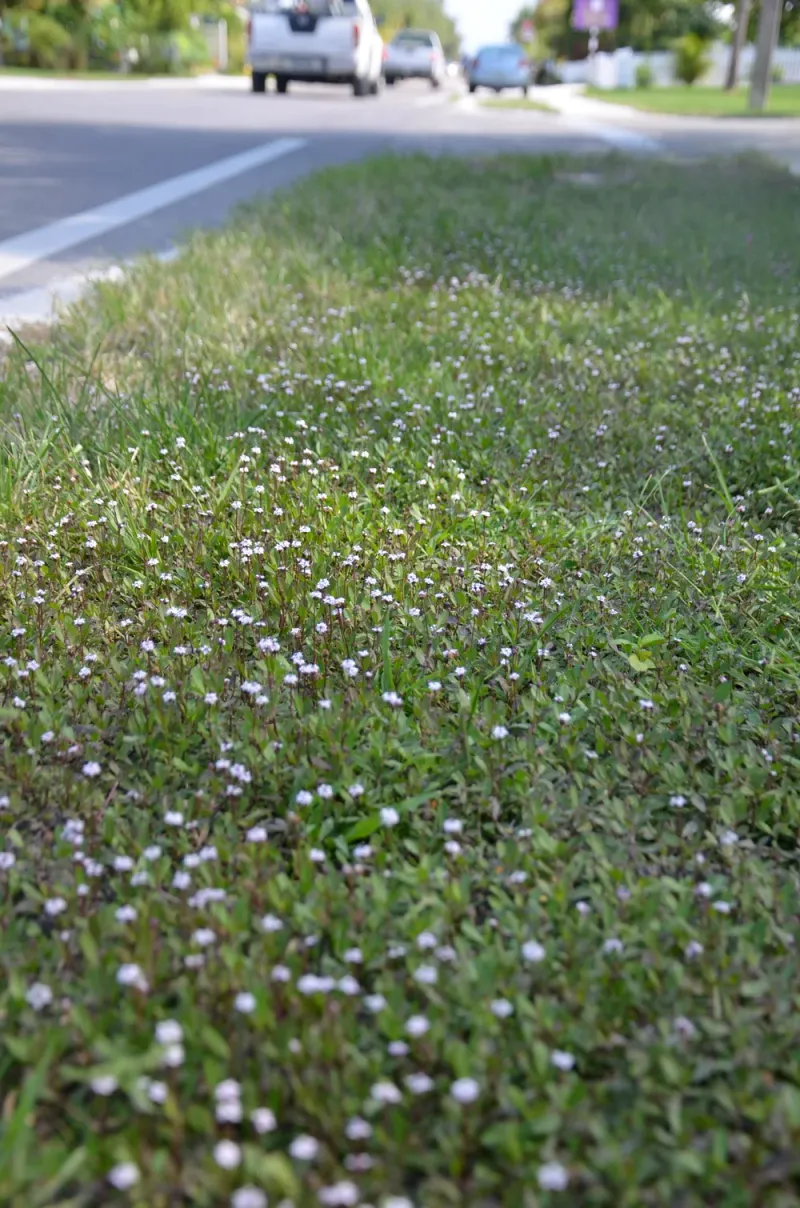
Small flowers can do a surprisingly big job in a tired lawn corner. Frogfruit (Phyla nodiflora) spreads into a low mat, offering a practical option where you want ground coverage without another stretch of thirsty turf.
Its tiny white flowers attract pollinators, and the plant feeds the caterpillars of several butterflies, including the white peacock. Unlike St. Augustinegrass, it is not a typical host for southern chinch bugs, so replacing turf with frogfruit changes what that patch offers the pest.
Choose sun or partial shade and give new plugs regular water until their roots settle in. Established plants handle a range of Florida conditions, including periods of drought and occasional wet soil, although growth and flowering vary with the site.
Use it between widely spaced stepping stones or in a lightly traveled lawn area. It tolerates occasional footsteps, not constant running or dog traffic, and its flowers attract bees near bare feet.
Expect a natural-looking carpet rather than a uniform putting green. Edge spreading stems when needed, and leave flowers standing whenever possible to preserve its strongest wildlife benefit.
2. Sunshine Mimosa
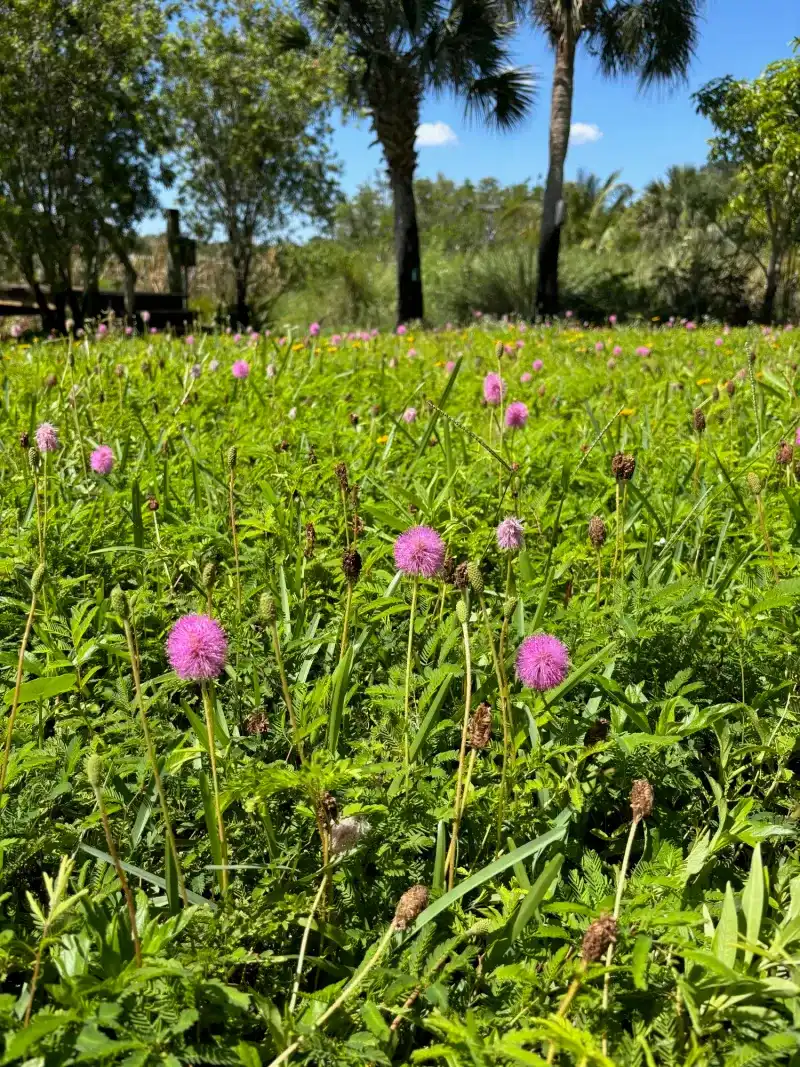
Pink powder-puff flowers make this lawn substitute look almost too playful to be practical. Sunshine mimosa (Mimosa strigillosa) pairs those blooms with fine leaves that fold when touched, adding a little surprise beside a garden path.
Its real strength is spreading across sunny ground through creeping stems. The foliage stays low, although flowers rise above it, making this Florida native useful for broad lawn-replacement patches that receive only light foot traffic.
Plant it in full sun for the strongest flowering, with well-drained soil and enough room to roam. Water during establishment, then adjust irrigation to rainfall and soil moisture instead of keeping the area constantly wet.
As a legume, sunshine mimosa can partner with soil bacteria that help it obtain nitrogen. That does not mean it instantly fertilizes neighboring plants, but it does support a lower-input planting approach.
Keep runners out of small ornamental beds, and expect weeds to need attention while plugs fill in. North Florida cold or prolonged dry weather can thin its appearance, so it will not look identical every month.
Choose it for a soft, flowering expanse, not a heavily used play lawn.
3. Twinflower
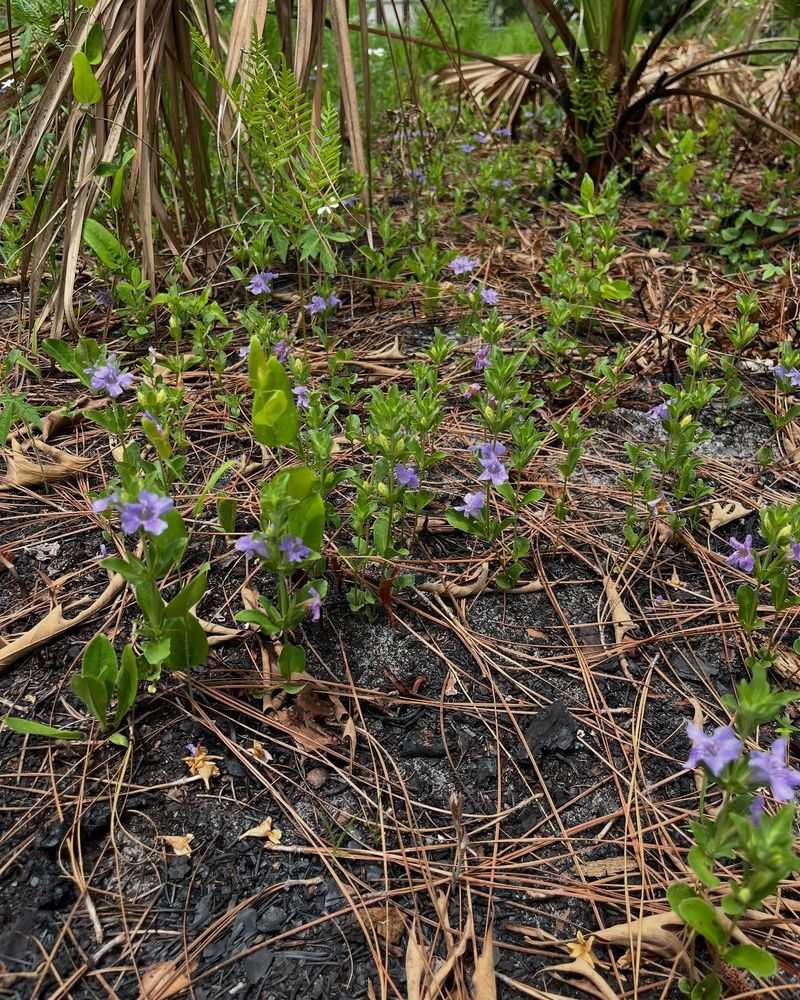
A neat border does not have to be flowerless. Twinflower (Dyschoriste oblongifolia) brings small lavender blooms to low plantings, offering a tidier-looking choice for homeowners who are not ready for a loose, meadow-style yard.
This Florida native spreads by underground stems and works well along paths, around larger native plants, or in small lawn-conversion beds. It is especially useful where you want a low flowering layer rather than a sprawling vine.
Give it sun to partial shade and well-drained soil. In sandy yards, water new plants consistently while they establish, then reduce irrigation as roots develop; avoid treating it like a plant for a permanently soggy drainage area.
Its flowers support visiting insects, and its foliage serves as a host for common buckeye butterfly caterpillars. A few chewed leaves can therefore mean the planting is doing useful work, not that it needs spraying.
Place stepping stones through the bed instead of expecting the plants to take repeated foot traffic. Trim wandering growth along the edge as needed, and leave enough space between young plants for their eventual spread.
4. Creeping Sage
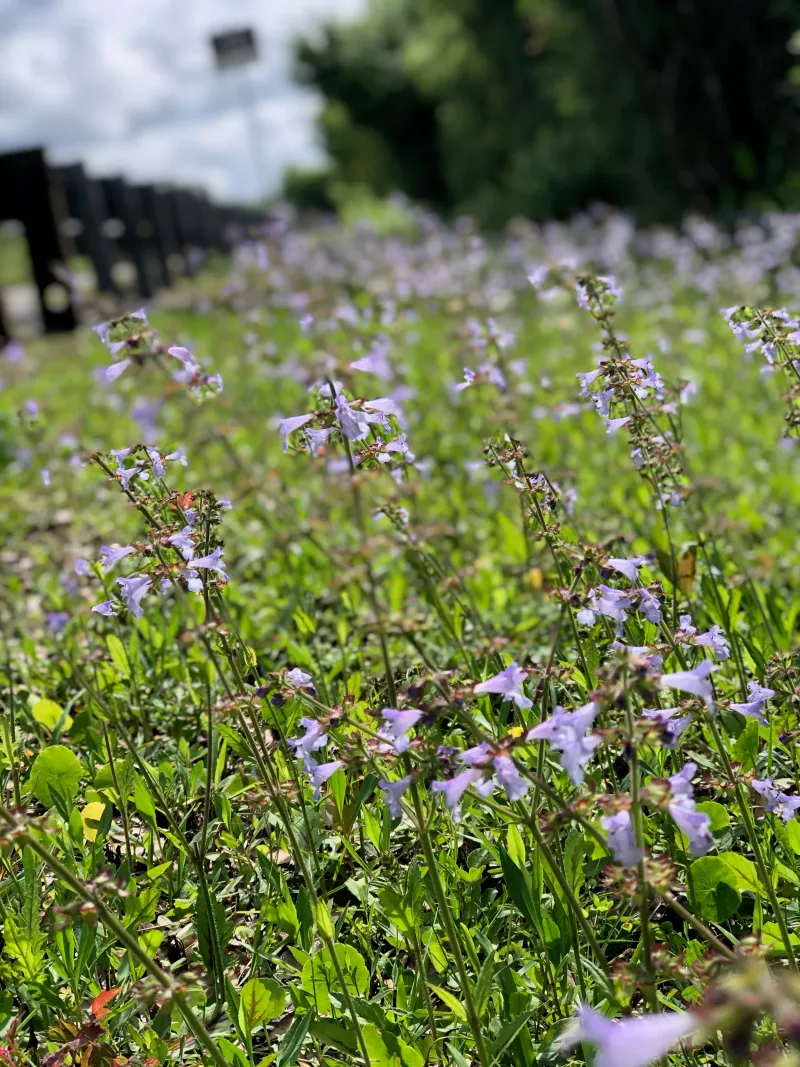
Under a tree, struggling grass often asks for more help than the space can justify. Creeping sage (Salvia misella) offers a different approach: a low native planting that fits partial shade and a relaxed woodland edge.
Small blue flowers appear on slender stems above green foliage. The display is subtle, so choose this plant for its ability to knit together a quiet garden floor rather than provide the bold color of a sunny flower bed.
It grows best where soil drains well but does not stay bone-dry throughout establishment. Filtered light beneath an open canopy or along the shaded side of a shrub bed can suit it better than an exposed strip beside hot pavement.
Keep fallen leaves in a thin, loose layer rather than burying the plants under a heavy pile. Hand-pull competing weeds while the groundcover fills in, and guide spreading stems away from neighboring plants when necessary.
Creeping sage is a bed groundcover, not a walkable turf replacement. Use a defined border and a clear path to make the planting look intentional, especially in a front yard where a loose growth habit might otherwise read as neglect.
5. Golden Creeper
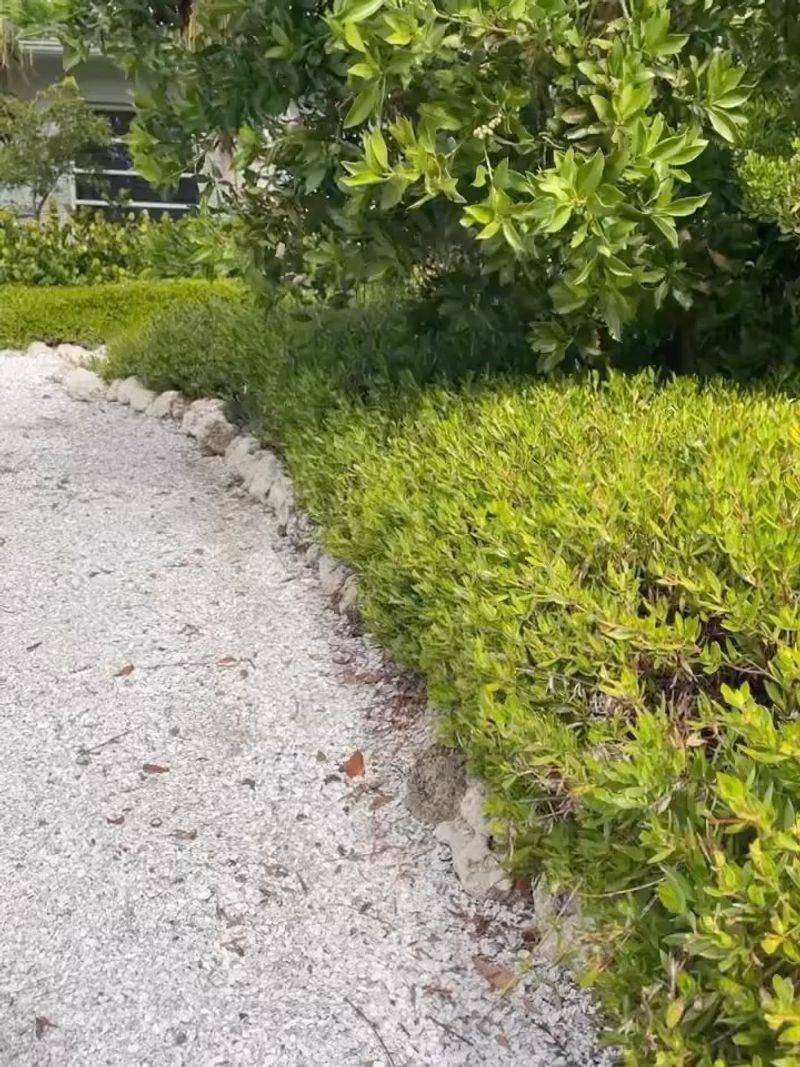
Salt air narrows the plant list quickly, but golden creeper takes coastal conditions in stride. Ernodea littoralis is a low, spreading native shrub that can cover sandy ground where a conventional lawn becomes an ongoing chore.
Its narrow leaves give the planting a fine texture, while small flowers and golden fruit add quieter details. Unlike the flatter plants on this list, it creates a low mound with real structure, making it useful around coastal homes and along sunny borders.
Reserve it mainly for warm coastal Central and South Florida sites, with local suitability checked before planting farther north. Full sun, sharp drainage, and room to spread matter more than rich soil or frequent feeding.
Water new plants until established, then avoid keeping the root zone constantly damp. Salt tolerance does not mean a plant welcomes prolonged flooding, especially where stormwater sits instead of draining away.
Golden creeper belongs outside walking routes because its woody stems cannot function as lawn. Give it its own bed, allow for mature width, and prune lightly when needed rather than repeatedly shearing it into a tight shape.
6. Beach Sunflower
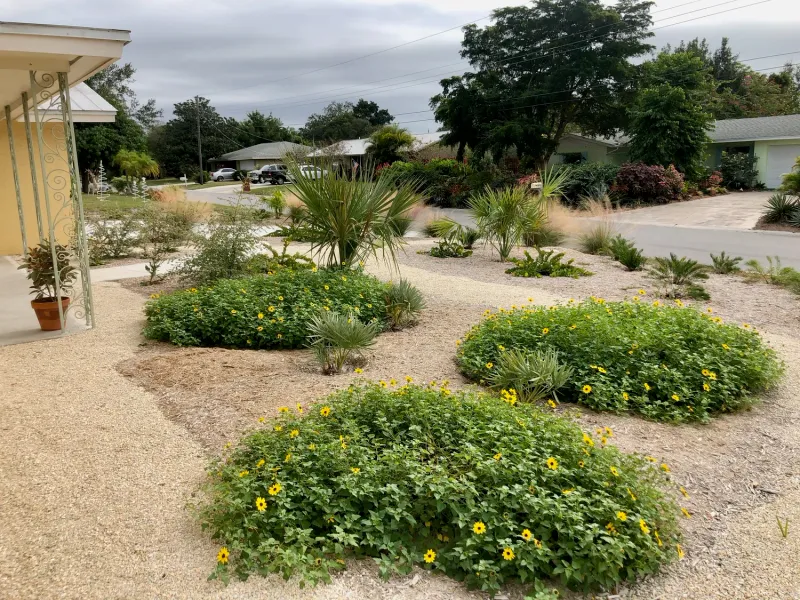
For a lawn conversion that looks like a flower garden right away, yellow daisies are hard to beat. Beach sunflower (Helianthus debilis) brings a bright, spreading layer to sunny Florida yards, especially those with lean, sandy soil.
This is the colorful choice for a street-facing bed or an open patch beside a driveway. It grows taller and looser than a lawn, so use it where a flowering mound will look welcome rather than block a walkway or hide a low sign.
Provide full sun and excellent drainage. Once established, beach sunflower handles dry conditions well, while excessive irrigation and fertilizer can encourage weak, overgrown plants instead of a sturdy display.
Flowers draw bees and butterflies, and seed heads can provide food for birds. Leave some spent blooms in place if the setting allows, but expect occasional seedlings and remove extras where they crowd other plants.
Ask a native nursery which locally appropriate form to buy, since Florida has regional subspecies worth matching to your area. Cold can shorten the display in northern parts of the state, and older plants may need refreshing.
Keep it out of footpaths and give spreading branches room to spill naturally.
7. Railroad Vine
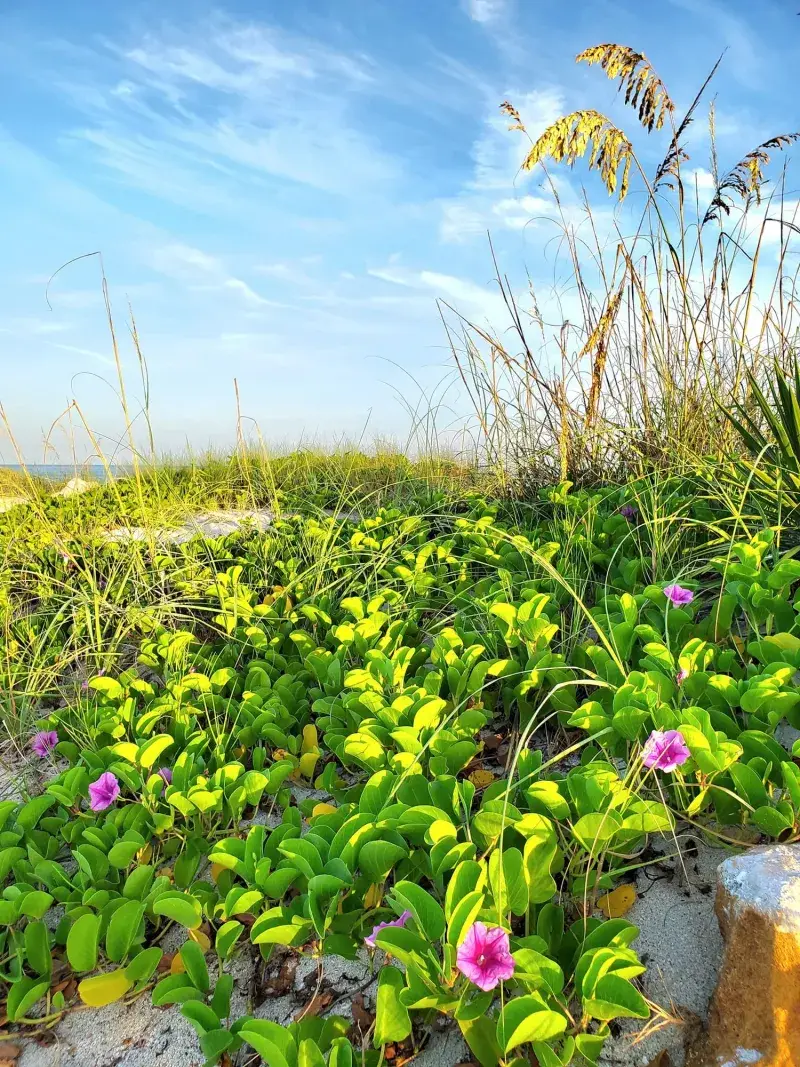
Give a vine this much ambition a tiny bed, and you will spend your weekends redirecting it. Railroad vine (Ipomoea pes-caprae) earns its place where there is plenty of open, sunny sand to cover, especially near Florida’s coast.
Long runners carry thick leaves and large pink-purple flowers across the ground. Its beach-adapted growth makes it useful for broad coastal landscape areas, but that same vigor makes it a poor fit between closely packed perennials.
Choose full sun and fast-draining sandy soil. Established plants tolerate salt exposure and drought, yet new nursery plants still need water while roots develop; a constantly wet inland depression is not a substitute for a beach habitat.
Cold limits its usefulness in northern Florida, so check local experience before investing in a large planting. Buy nursery-grown stock rather than collecting plants from dunes, where vegetation helps protect fragile coastal ground.
Plan access before planting because railroad vine is not a walking surface. Trim runners that reach pavement or neighboring beds, and leave generous clearance around smaller plants.
Its payoff is scale: a large sandy patch can become a flowering groundcover instead of another section of chinch-bug-prone turf.