
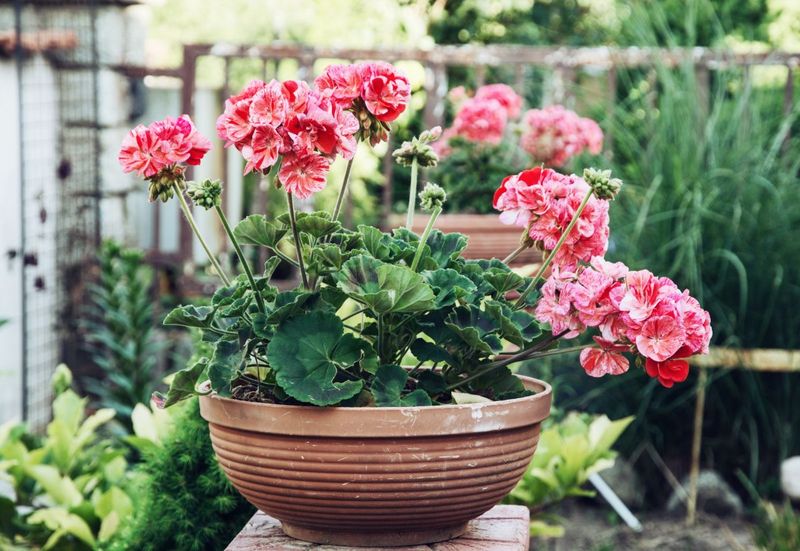
Your potted geraniums were covered in color all summer, and now the flowers are thinning out. It is easy to wonder if your feeding routine is the culprit.
Fertilizer can play a role, but it is only one of several things worth checking. A little detective work now can save you from changing the wrong thing.
Could fertilizer be part of the problem?
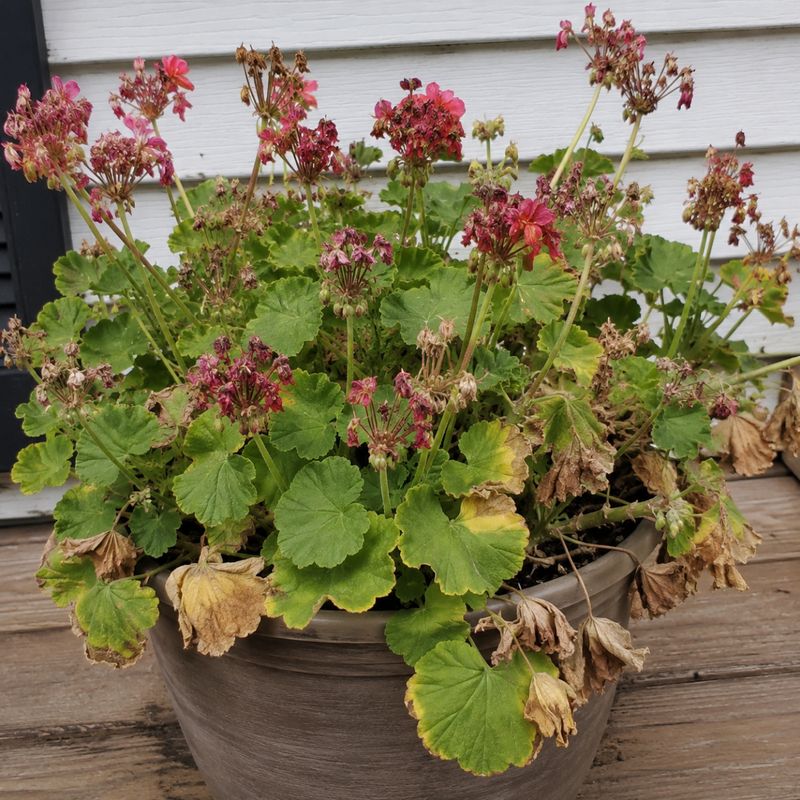
Geraniums are not heavy eaters. University of Minnesota Extension notes that they need relatively little fertilizer and may not flower well if they get too much.
So overfeeding is a real possibility worth checking when blooms fade.
Here is the catch. Nothing we found shows that a normal summer feeding schedule commonly makes potted geraniums quit blooming in fall.
Flowering also naturally rises and falls through the year. UF/IFAS says blooming can fade by mid to late summer, and plants can then grow well again in fall and winter.
Think of this article as a troubleshooting checklist, not a one-step cure. Fertilizer is one suspect among several, along with light, water, drainage, and plant type.
Working through them in order helps you make a measured change instead of a guess, and no single change is guaranteed to bring flowers back.
Fall care depends on where the pot is growing
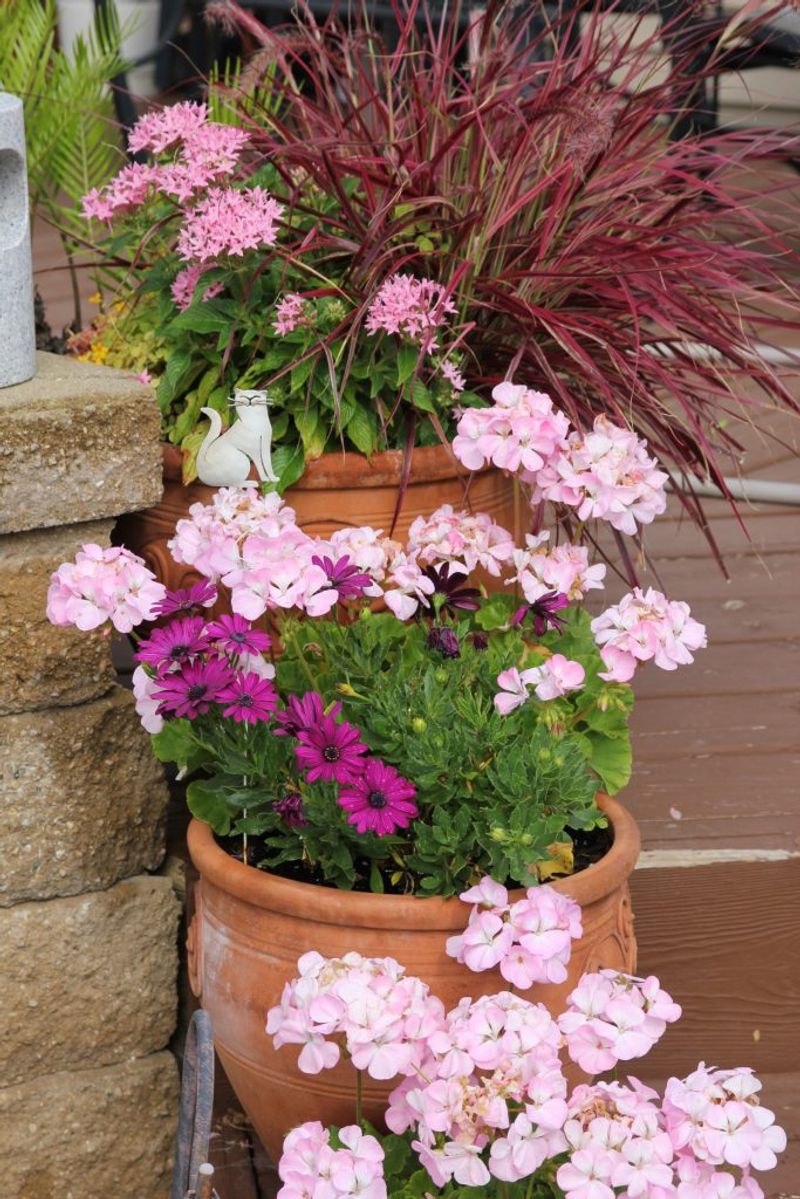
A gardener in Pensacola and a gardener in San Antonio should not follow the same fall calendar. UF/IFAS gives Florida advice by region, with different timing for south and central Florida than for the north.
For north Florida, UF/IFAS recommends cutting plants back and fertilizing in early fall to stimulate new growth.
That means a blanket rule to stop feeding in fall does not fit everywhere. We also did not find a Texas-specific fall feeding schedule for potted geraniums, so Texas readers should check with their local county extension office rather than borrow Florida timing.
Cooler nights are another easy scapegoat, but they do not automatically explain faded outdoor blooms. UNH Extension mentions 55 to 60 degree nights for flower buds on indoor geraniums.
That is indoor guidance, not an outdoor cutoff for your porch pots.
Check the plant and container before changing the feed
Before you touch the fertilizer, take a slow walk around the pot. Most garden geraniums are Pelargonium, not the hardy perennial Geranium, and care can differ a bit among zonal, ivy-leaf, and scented types.
Clemson Extension notes that ivy-leaf types have different temperature and sun preferences than common zonals.
Next, look at light. Geraniums do best in full sun and well-drained soil, and UMN Extension also advises removing spent flowers.
Shorter fall days or a shady spot may matter more than your feeding.
Then check water and drainage. Make sure the holes are clear and the soil does not stay soggy.
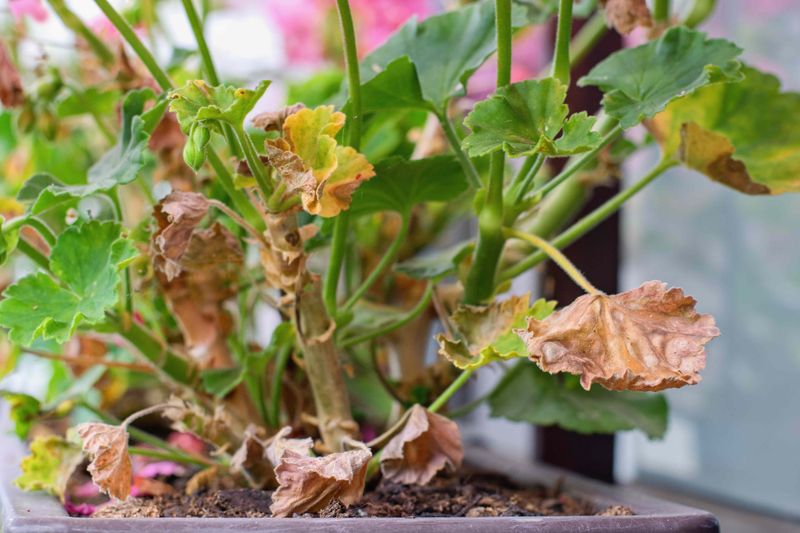
UF/IFAS warns that geraniums allowed to get too dry may yellow and drop lower leaves, so yellow lower leaves are not always a feeding clue.
Adjust fertilizer cautiously
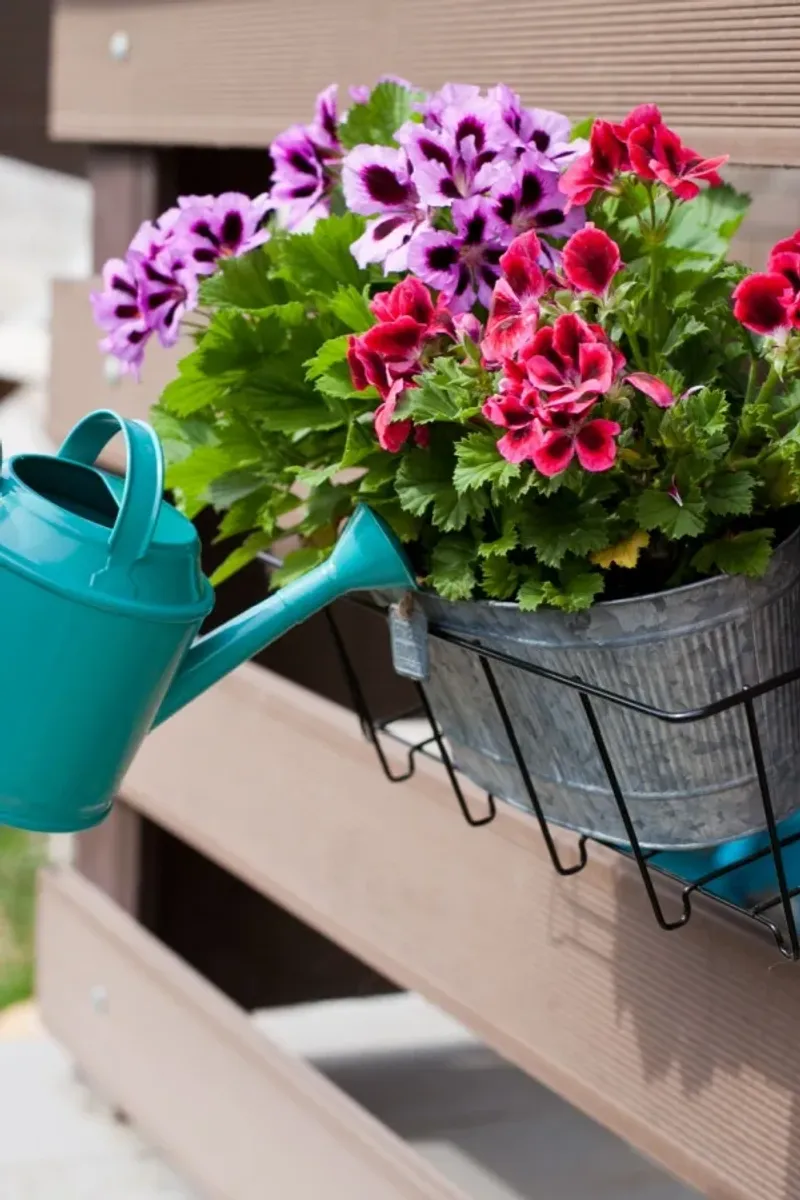
Start with the label. Check how much to apply, how often, and how long the product releases nutrients.
A slow-release fertilizer mixed in months ago may still be working, and adding a liquid feed on top could double up.
Containers add a twist. UMN Extension explains that frequent watering can leach nutrients out of pots, yet too much fertilizer can damage plants.
So a heavily watered pot might be low on nutrients, while a pot with a heavy hand might be overfed.
Let the plant guide you. Pale, stunted growth may point to too little, while crusty salt on the soil or pot rim and scorched leaf edges may hint at too much.
For Florida, UF/IFAS fertilizer guidance is a good reference. Make one modest, label-led change rather than a universal fall dose or a full stop.
Do not assume a bloom booster will help
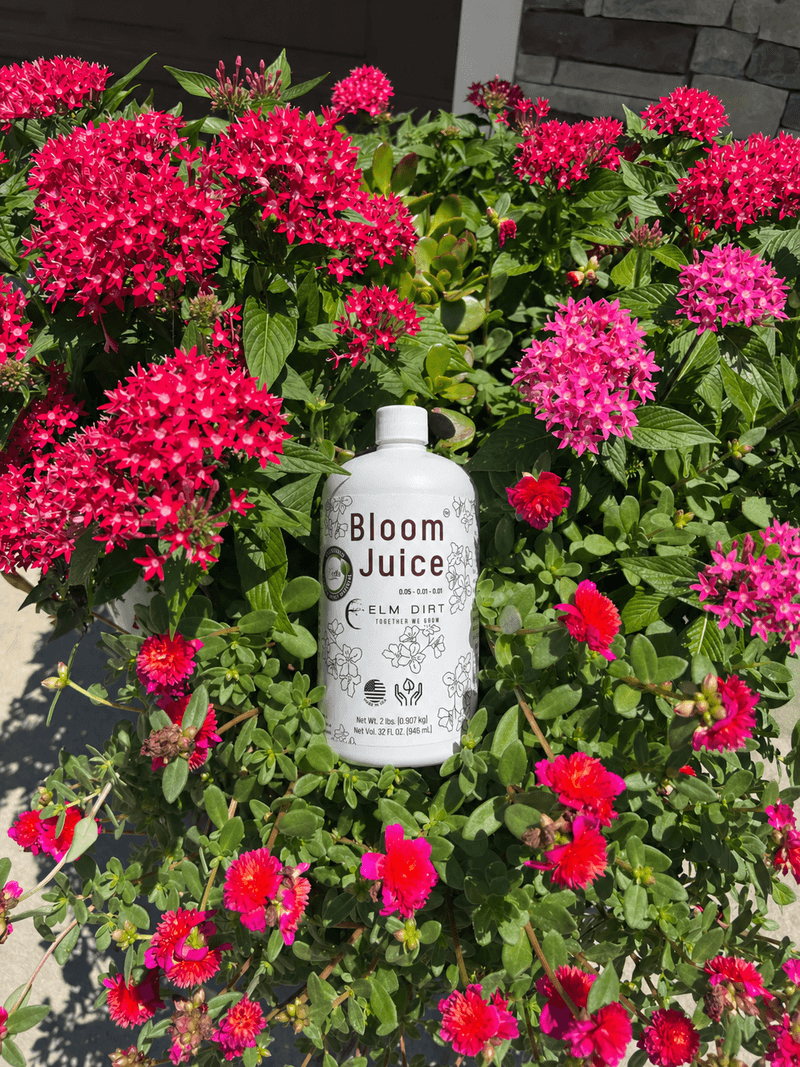
Bloom booster products are tempting when flowers fade. They are usually high in phosphorus, and many soils already have enough.
UMass Extension advises testing instead of guessing, and notes that extra phosphorus can harm water quality.
Nutrient form may matter too, but only in certain settings. A 2026 hydroponic study found more flowering with nitrate-dominant nutrient solutions than with ammonium-rich ones.
That was under controlled production conditions, not in backyard pots.
So the study is not a fall feeding rule for your containers. It simply shows that the type of nutrient can play a part.
Follow your product directions, and avoid piling on a strong booster without knowing what the plant needs.
Choose a next step and monitor the plant
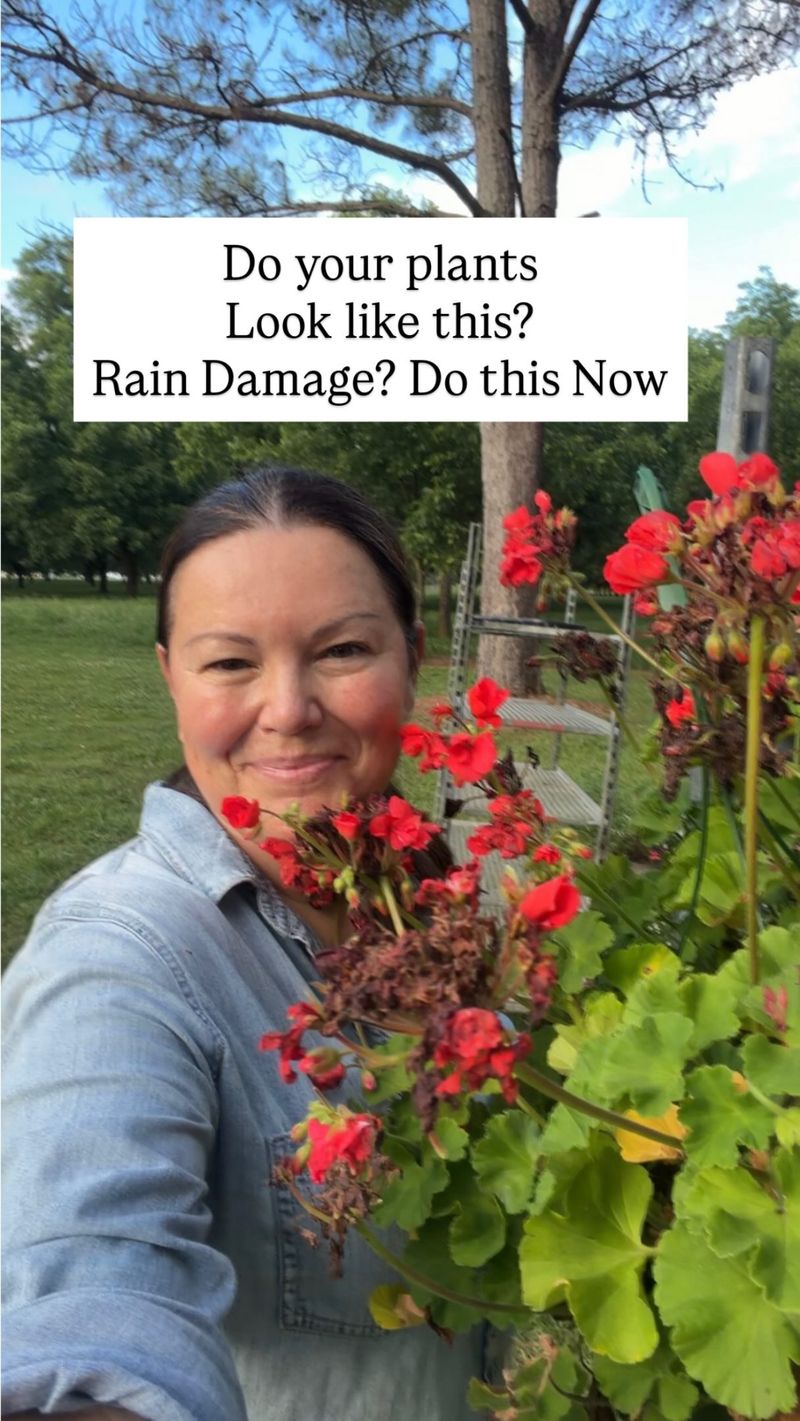
Work through it in order. Confirm your plant type and local conditions, check sun and moisture, snip off spent blossoms, and read the fertilizer directions.
Then make one modest change, such as following the label timing, as UMN Extension suggests for containers.
Overfeeding is one possibility, not a proven reason for every fall slump. Watch the pot for a few weeks and jot down what you changed.
Flowers may return, but nothing guarantees it.
Sometimes a resting geranium just needs a trim and patience.