
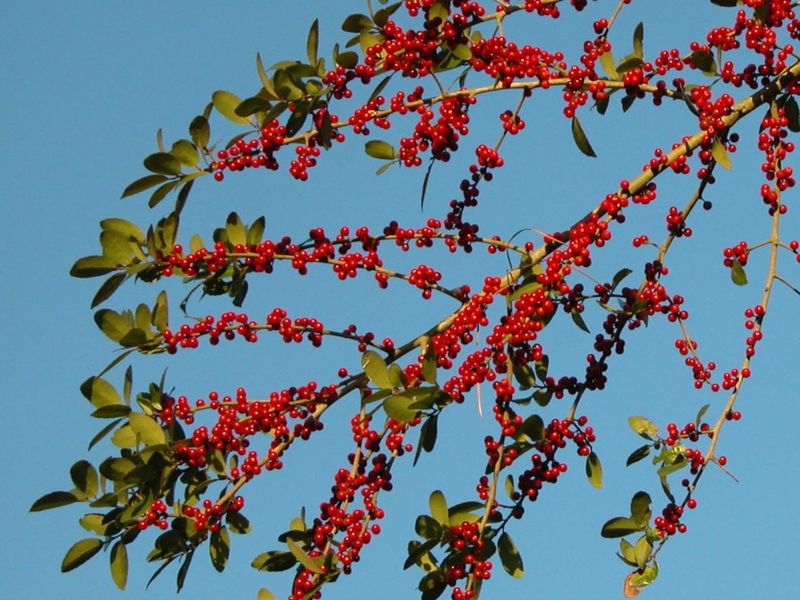
Plenty of Central Texas yards still hold a Bradford pear, and many owners are looking for something better to plant. Yaupon holly is a Texas native that offers small spring flowers for bees and red berries for birds.
It is not a big shade tree, so size and space matter. Here is what it can really do in a suburban yard, and what to check before you buy.
What the Bradford pear comparison can—and cannot—show
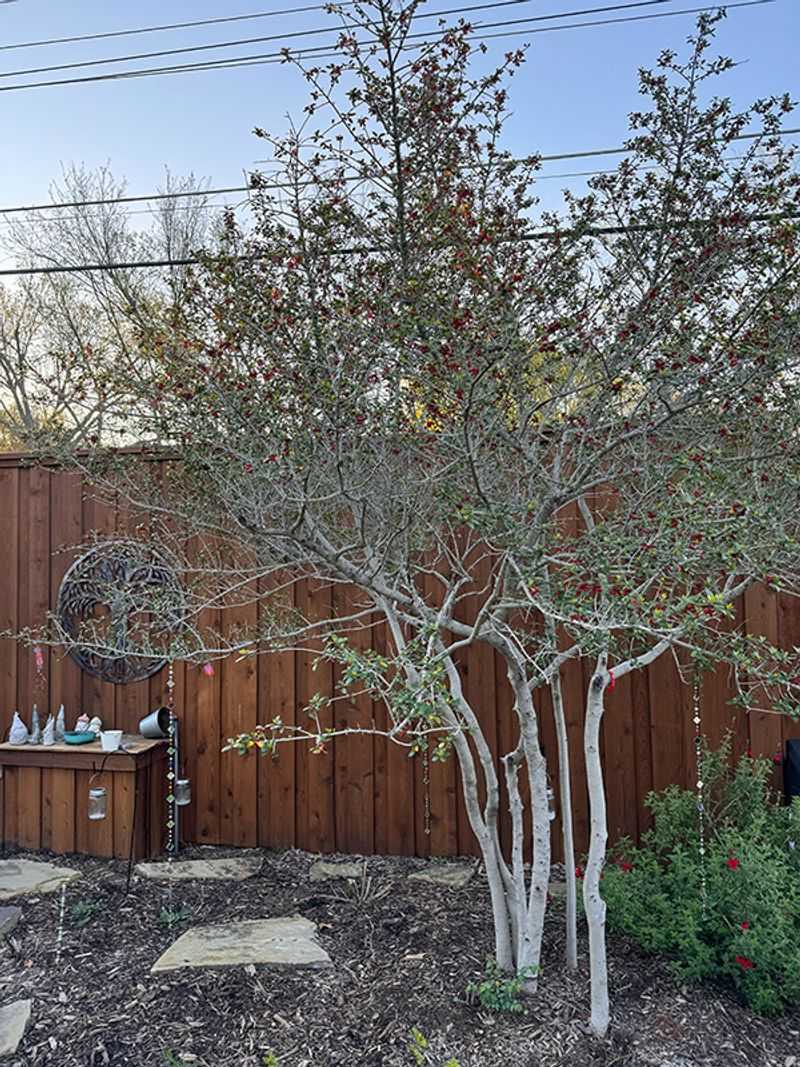
Nobody has measured how much wildlife a yaupon supports compared with a Bradford pear, so this article will not name a winner. The sources simply do not offer a side-by-side count.
What they do offer is solid information about yaupon’s seasonal value, and that is reason enough to consider it.
First, a quick clarification. Bradford pear is the common name for one cultivar of Callery pear.
NC State Extension explains that the original Bradford could not self-pollinate. Later Callery pear varieties and rootstock sprouts, however, can cross-pollinate and produce viable seed that birds and other animals spread.
That means a Bradford pear is not a fruitless, wildlife-free tree, and it is not simply harmless either. Texas Invasives tracks Callery pear in its plant database because of this spreading habit.
So the better question is practical: what does yaupon offer a Central Texas yard? The answer is a Texas-native plant with spring blooms that draw insects and berries that feed birds and mammals.
The next sections cover how to judge whether it fits your space.
Yaupon brings a modest spring bloom
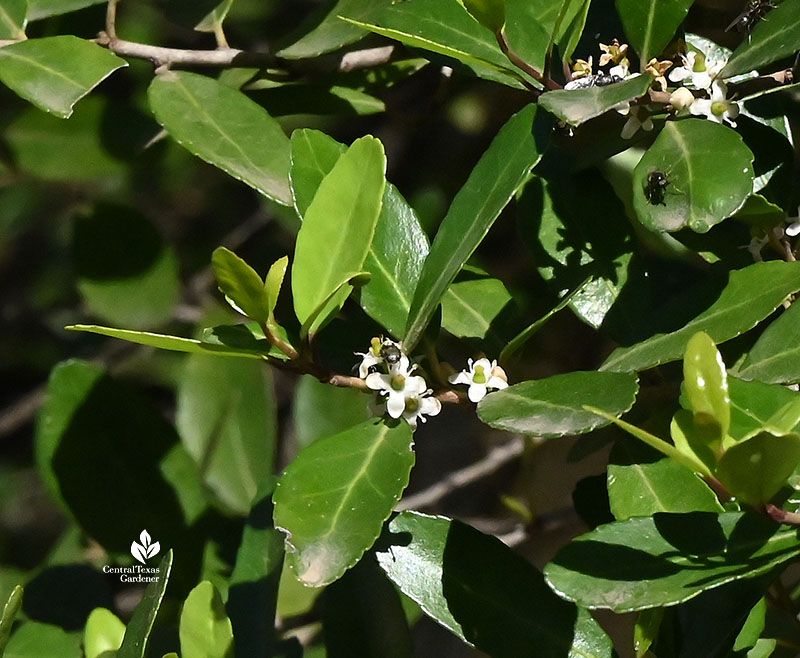
Picture a crabapple or redbud in full show, then lower your expectations a few notches. Yaupon (Ilex vomitoria) is a Texas native, and Texas A&M describes its white flowers as usually blooming from April through May.
Those blooms attract insects.
The flowers are small and tucked along the stems, so they are not a showy ornamental display. From the sidewalk you may barely notice them.
Up close, though, they can be busy. UF/IFAS notes the flowers attract bees for several weeks.
What does that mean for your yard? Think of the bloom as a quiet service for pollinators rather than a curb appeal feature.
Stand near the plant on a warm April morning and listen for buzzing, which is often the best sign it is working.
If you want a flashy spring show, pair yaupon with other Texas natives that bloom boldly. If you want a tough evergreen that helps insects during that spring window, yaupon fits the job.
Its glossy small leaves also stay on the plant through the year, which gives the yard structure when other plants are bare.
Female plants can carry fruit into winter
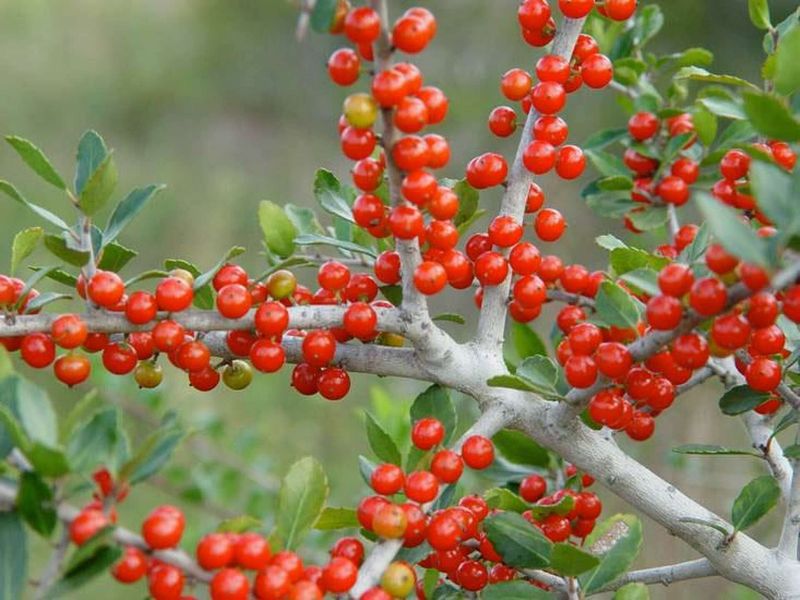
Red berries are the main reason many people plant yaupon, but only some plants make them. Yaupon has separate male and female plants.
Texas A&M reports that the red fruit grows on female plants, which need a male nearby, and that birds and mammals eat it.
The display also lasts. Texas SmartScape describes berries on female plants through fall and winter, so a fall berry crop can carry into the colder months when the yard looks plain.
Buying takes a little attention. A plant in a nursery pot in spring usually shows no sex, and a male will never fruit.
UF/IFAS suggests choosing a female already bearing berries, or one propagated from a female.
Buying in fall, when berries are visible, takes out the guesswork. Also look around your neighborhood.
A male yaupon in a nearby yard may already cover pollination, but if you are unsure, plant one male close to your females.
One caution: the berries feed wildlife, not people. They are not a snack, and the safety section below explains why.
A small tree, not a canopy replacement
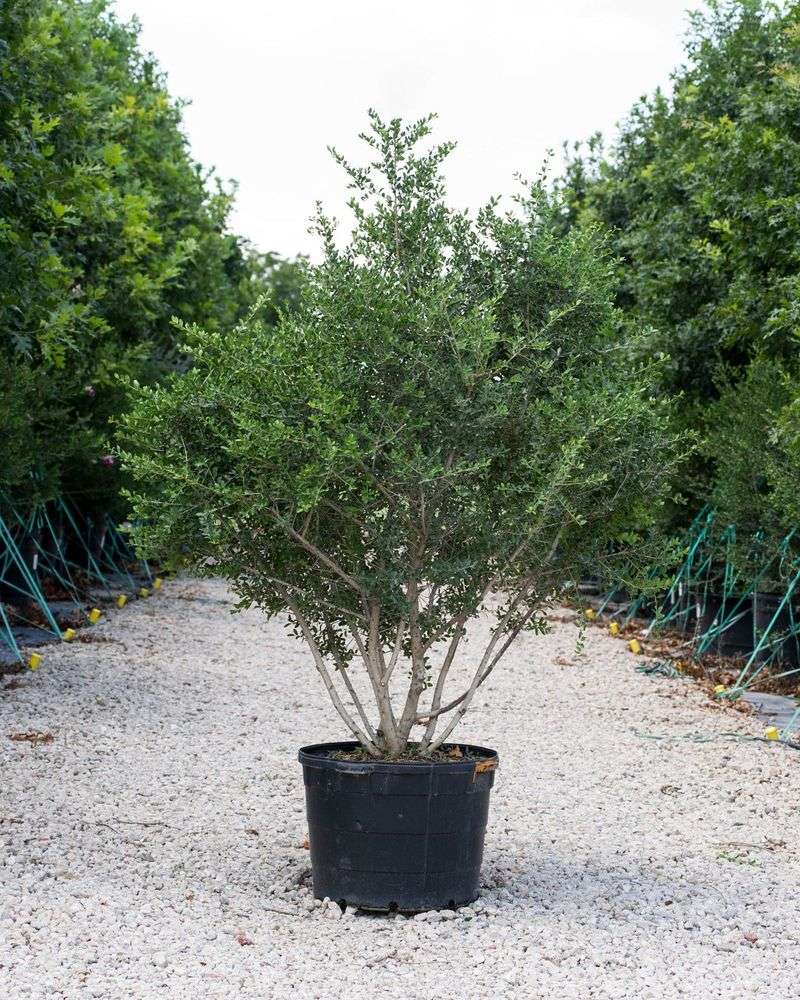
If you are hoping yaupon will replace a big shade tree, adjust the plan. Austin’s plant guide lists it at 12 to 20 feet tall and 10 to 15 feet wide.
That is a handy size for a suburban lot, but it is not a canopy.
UF/IFAS gives a broader mature height range of 15 to 25 feet. Some plants will end up taller than Austin’s listing, so leave room.
Yaupon is best described as a small tree or large shrub, and it often grows with several stems.
Shade is where expectations matter most. It can cast some shade, particularly near a patio corner or window, but it will not cool a whole backyard the way a mature oak would.
UF/IFAS also notes crowns may be thin when grown in shade.
Sun affects berries too. Austin says fruiting is best in full sun, so a plant tucked under bigger trees may live fine but carry fewer berries.
A good test: measure the spot and picture a shrubby tree of about 15 feet. If you want screening, a bird feeding station, or a small patch of shade, it may fit well.
If you want heavy afternoon shade for a west-facing wall, plan on a larger tree as well.
Match the site and plan for upkeep
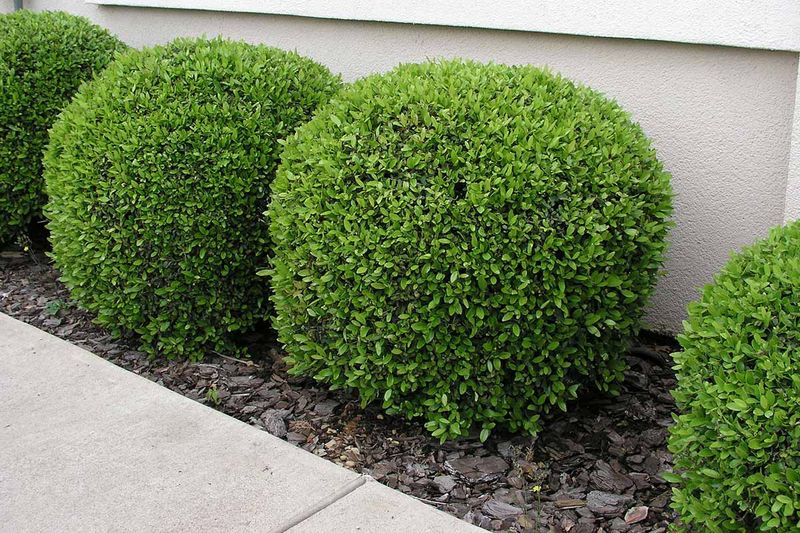
Yaupon is at home in Texas. The Texas Tree Selector places it in the Edwards Plateau and other Texas ecological regions, classes it as a small plant, and says it tolerates partial to heavy shade, drought, alkaline soil, and poorly drained sites.
That covers a lot of Central Texas headaches, from limestone soil to spots that stay soggy after storms.
Tolerance is not the same as best performance, though. Yaupon may live in shade, but Austin’s guide says fruiting is best in full sun.
If berries matter most, give it the sunniest spot you can.
Upkeep is light but not zero. Left alone, yaupon often grows as a single- or multi-trunked shrub.
You can prune it to develop one or more trunks, and that shaping is optional, not required.
UF/IFAS notes that yaupon can sucker from roots. Watch for new shoots popping up near the base or a few feet away, and pull or cut them if you want a tidy look.
Plan on a little seasonal pruning and sucker patrol rather than a plant you can ignore. Once established, its drought tolerance helps during triple-digit summers and watering limits.
Keep the berries away from people and pets
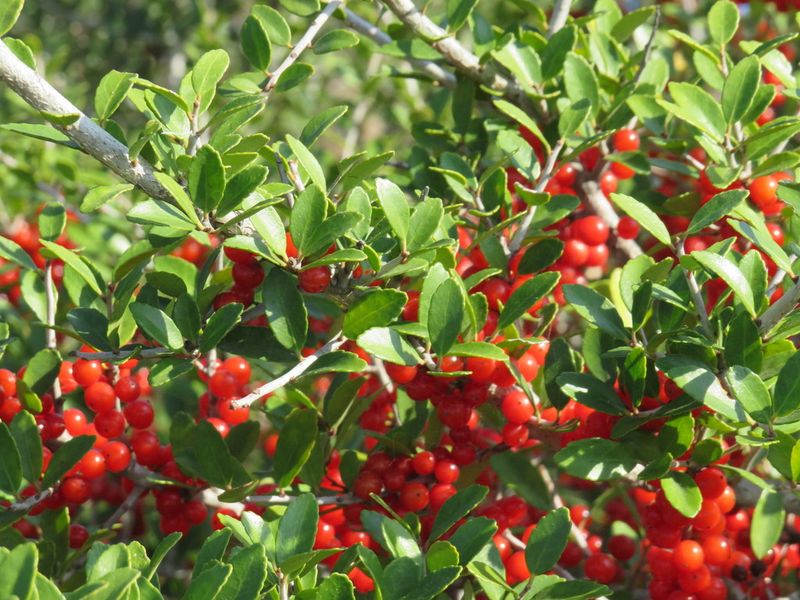
Bird food is not people food. Austin’s plant guide warns that yaupon berries are poisonous to humans, so do not taste them or treat them as a foraged snack.
NC State Extension lists fruit ingestion as a low-severity poisoning risk, with possible nausea, vomiting, and diarrhea. Low severity does not mean harmless, so treat the berries with care.
The practical step is simple. Teach kids early that the red berries are for birds only.
If you have a toddler or a curious dog, consider placing the plant away from play areas, or raking up fallen fruit.
If someone swallows berries and feels sick, contact a medical professional or poison control for advice.
When yaupon fits a Central Texas yard
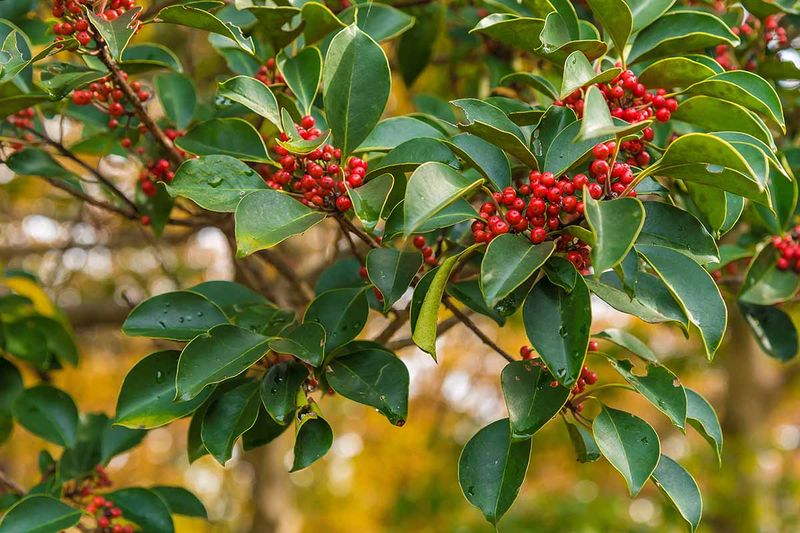
Yaupon suits you if you want a Texas native with spring insect activity and possible fall and winter fruit, and if your site, plant sex, and shade expectations line up. Texas A&M’s description backs the flowers and fruit, while Austin’s guide backs the size and sun advice.
Choose a sunny spot, pick a berried female with a male nearby, and leave room for a 15-foot shrubby tree. Skip it if you need a true canopy.
Think of yaupon as a small evergreen that works hard in the seasons when it counts.