
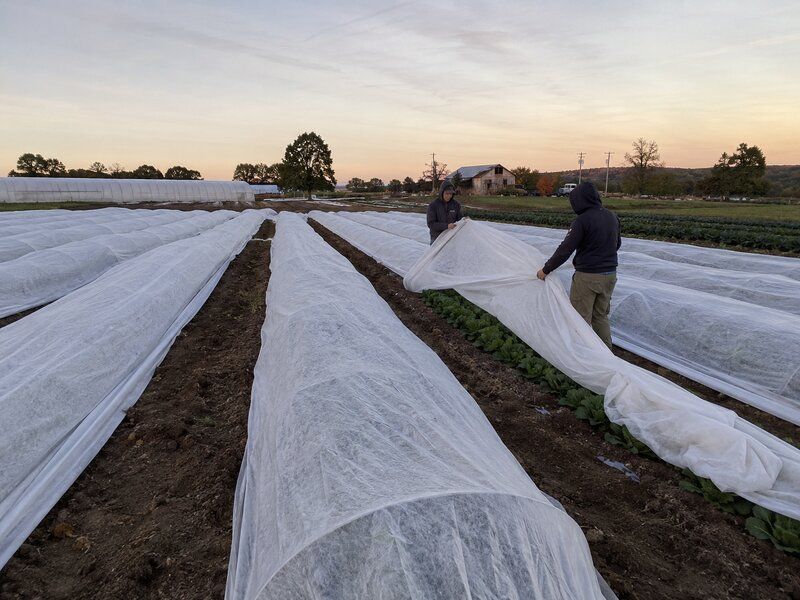
A cold night is on the way, and your tender plants are sitting out in the yard. Frost cloth can help, but when you put it on matters almost as much as owning it.
Get the timing right and the cover has a better shot at holding onto some of the day’s warmth. Here is how North Carolina homeowners can set it up and what to expect.
Cover plants before sunset, not at one exact hour
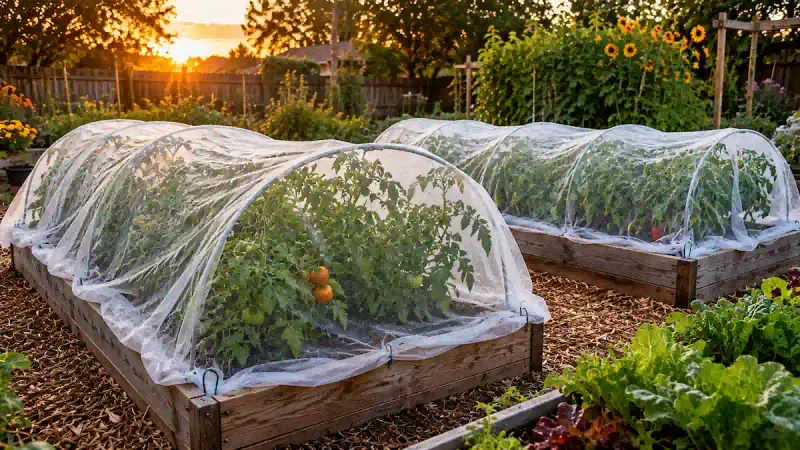
When frost is in the forecast, the best window to cover plants is late afternoon or evening, before the sun goes down. There is no magic clock time that works for every yard.
Sunset comes at different hours across the mountains, Piedmont, and coastal plain, and it shifts through the season, so watch the sun instead of the clock.
The reason is simple. During the day, soil and plants soak up solar warmth, and after dark they start to release it.
Texas A&M AgriLife Extension advises covering before sunset so that warmth is still there to be held in. NC State Extension’s frost and freeze guide gives the same before-sunset advice for frost conditions.
Covering after dark, once the ground has already cooled, means you may be wrapping plants around air that has already lost much of its warmth. Starting early gives the cover more to work with.
Timing is only one piece of the puzzle, though. Fabric weight, how well the cover is installed, the forecast low, the plant itself, and the spot where it grows all play a part.
A practical habit is to check the forecast in the morning, gather your covers and anchors by lunchtime, and finish the job while you still have good daylight to work in.
Think of the before-sunset window as a way to improve your odds, not as a promise. The next sections show how to make that early start count.
A cover slows heat loss; it does not create warmth

Frost cloth is not a blanket with a heater inside. It makes no heat of its own.
What it can do is slow the escape of warmth that is already around your plants, mostly the warmth stored in the soil and radiating off leaves and stems.
Picture a mug of hot cocoa. A lid does not warm the cocoa, but it keeps the heat from drifting away as fast.
A cover over a plant works in a similar, passive way. University of Georgia Extension describes covers as helping hold in heat gathered during the day rather than supplying new heat.
That is also why the before-sunset window helps. If you cover while the soil is still holding the day’s warmth, the fabric has something to trap.
Wait until the ground has chilled and there is little left to retain.
The same idea explains why a cover reaching the ground matters. Warmth rising from the soil is a main source of heat under the fabric, so leaving big gaps lets it slip out.
UF/IFAS Extension in Okaloosa County also frames covers as a way to reduce cold exposure on chilly nights, not a cure for it.
Treat the cover as one helper among several. It does not control the temperature your plant feels, and it cannot promise a plant will come through the night unharmed.
Spread the cover to the ground and anchor it
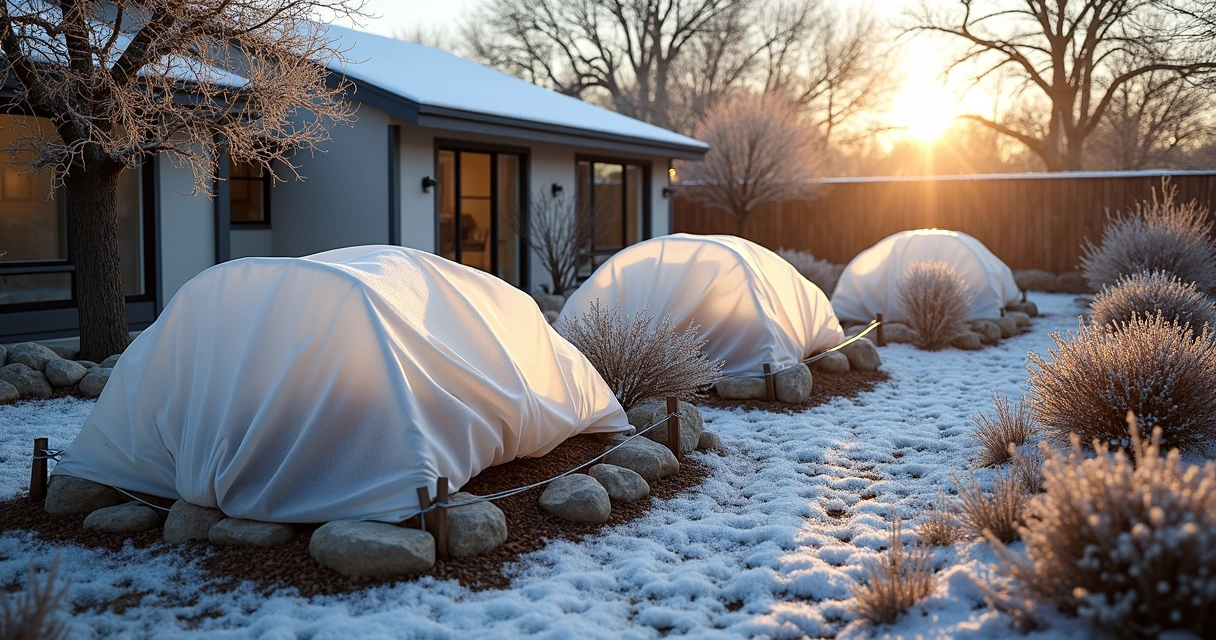
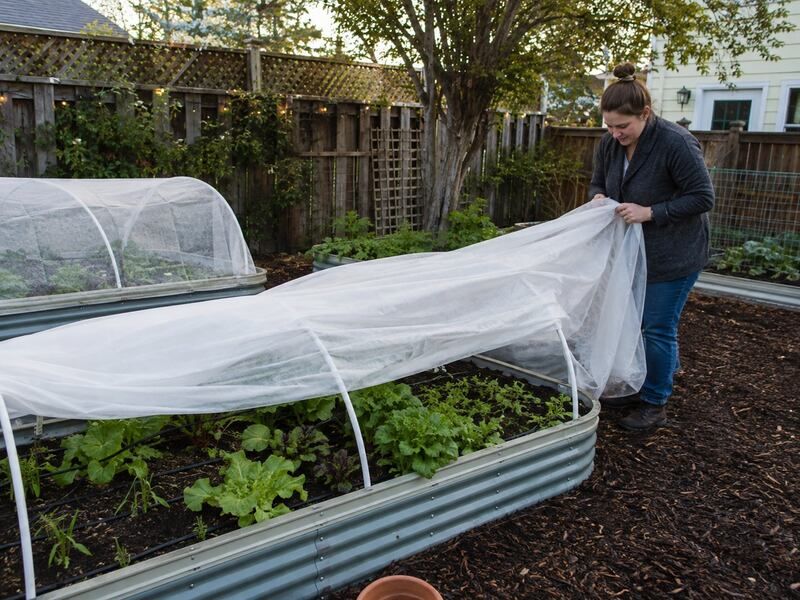
Start by draping the cover over the whole plant, with plenty of extra fabric. Pull the edges all the way down until they touch the ground on every side.
The aim is to enclose the plant and the patch of soil beneath it.
Next, anchor those edges. Landscape staples, bricks, flat stones, or bags of mulch all work well, and a few in each direction keep a night breeze from lifting the fabric.
Check the corners, since that is where wind usually sneaks in first.
Resist the urge to cinch the cloth tight around the trunk like a belt. Texas A&M AgriLife Extension advises anchoring the edges instead, because a tight tie at the trunk can stop the cover from capturing warmth coming off the soil.
For a potted plant, you can move it near a wall or under an eave if that is easy, then cover it and let the fabric reach the surface it sits on. A pot on a cold patio loses heat quickly, so a little extra wrapping around the container can be worth the effort.
Walk the line one more time before dark. Look for gaps, loose corners, or spots where the fabric hangs open.
Fixing these takes only a couple of minutes and gives the cover a better chance to do its job.
Fabric weight and support affect the protection you get
Not all frost cloth is alike. Thicker fabric generally holds in more warmth, but it is also heavier on the plant.
University of Maryland Extension estimates about 2°F of frost protection for lightweight fabric, 4 to 6°F for medium-weight, and up to 8°F for heavy-weight row cover.
Treat those numbers as general estimates, not guarantees. A particular plant in a particular yard on a particular night may do better or worse, depending on wind, moisture, and how the cover is fitted.
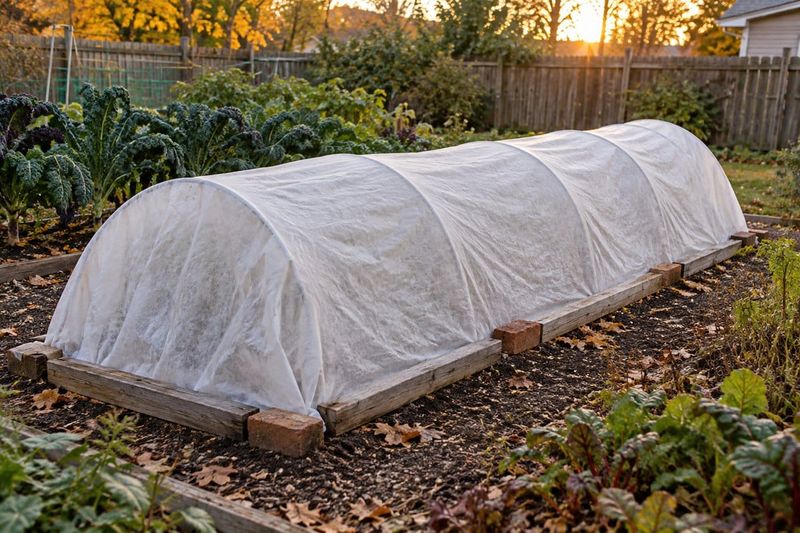
Support helps too. Hoops, tomato cages, stakes, or a simple frame hold the fabric up and away from leaves.
That cuts down on crushed branches, which matters most with heavier cloth or delicate growth such as new shoots on tender perennials.
UF/IFAS Extension in Okaloosa County notes that contact between covering and foliage can raise the risk of injury in colder conditions, so lifting the cloth off the plant is the safer general approach.
Contact is not automatically a failure, though. Some lightweight floating row covers are made to rest right on low crops like lettuce or other garden greens.
If you use one of those, follow the product directions.
For shrubs and taller plants, a frame is usually worth the few extra minutes. Pick the lightest fabric that suits the expected cold, then support it so it protects without squashing.
Treat frost cloth as a buffer, not a guarantee
A cover is best thought of as a buffer. It can take the edge off a light frost or a modestly cold night.
It is far less dependable when the cold is deep or lasts several nights in a row.
Results swing with the plant, the fabric, how well you installed it, and how severe the cold turns out to be. A cover that helps a pot of pansies may do little for a tender plant that is already stressed.
UF/IFAS Extension in Okaloosa County points out that covers have limits during harder freezes.
You may come across big numbers from commercial crop research. For example, NC State’s strawberry production guide says a 1.5-ounce cover can potentially protect open strawberry blooms down to 24°F at canopy level.
That is a result for one crop under a specific setup, so do not carry that figure over to your landscape shrubs or to other covers.
If a hard freeze is forecast for a plant you truly cannot lose, consider bringing a container indoors, or take cuttings as a backup. Covering is still worth doing for plants in the ground, but pair it with realistic expectations.
An estimate is a rough guide. It is not a promise for the plants in your own yard.
The forecast and your yard also matter

Two cold nights with the same forecast low can behave very differently. A clear, calm night lets heat escape upward quickly, which is the classic setup for frost.
A cloudy or breezy night usually feels different, and a cover may behave differently as well. NC State Extension notes that temperatures vary from place to place and that these weather types are not the same.
Your own yard has its own pockets. Low spots can collect cold air, while spots near a house wall or under a tree canopy often stay a little milder.
The mountains, Piedmont, and coastal plain also see freezes at very different times, so a neighbor’s experience may not match yours.
Frost and freeze dates are best seen as typical ranges, not fixed days. The National Weather Service in Wilmington shares freeze climatology information, and the Raleigh office offers frost and freeze maps that help you see when your area tends to get its first cold nights.
Keep in mind that frost and freeze advisories describe forecast weather. They do not tell you what a specific plant will go through or whether it will survive, since plants differ in how much cold they can handle.
A cheap outdoor thermometer placed near your plants can show you how your own yard compares with the forecast.
Remove or vent the cover as daytime warmth returns
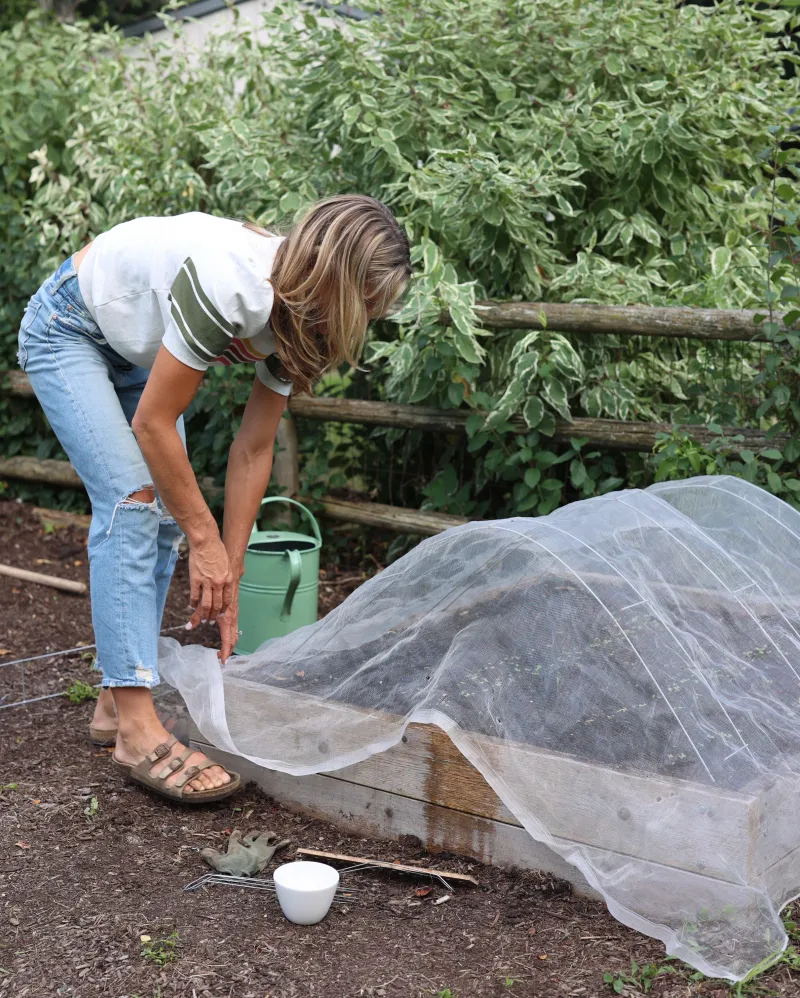
Once the sun is up and the air warms, a cover can start working against you. Trapped heat can build up under the fabric, so pull it off or lift the edges to let air move through.
Doing this in mid-morning, after temperatures climb above freezing, is a sensible habit.
You may not have to take it off entirely if another cold night is coming. UGA Extension suggests using judgment, and its crop-season guidance also treats venting as something that depends on the cover and conditions.
A cloudy, cool day with more cold on the way may call for leaving the cloth loosely in place. A sunny day with a mild afternoon is a better time to open it up.
Check the plants for dampness or signs of heat stress while you are there.
The routine is short: cover before sunset, secure the edges at ground level, and reassess when the weather changes.
The best frost protection is a habit you repeat, not a single move.