
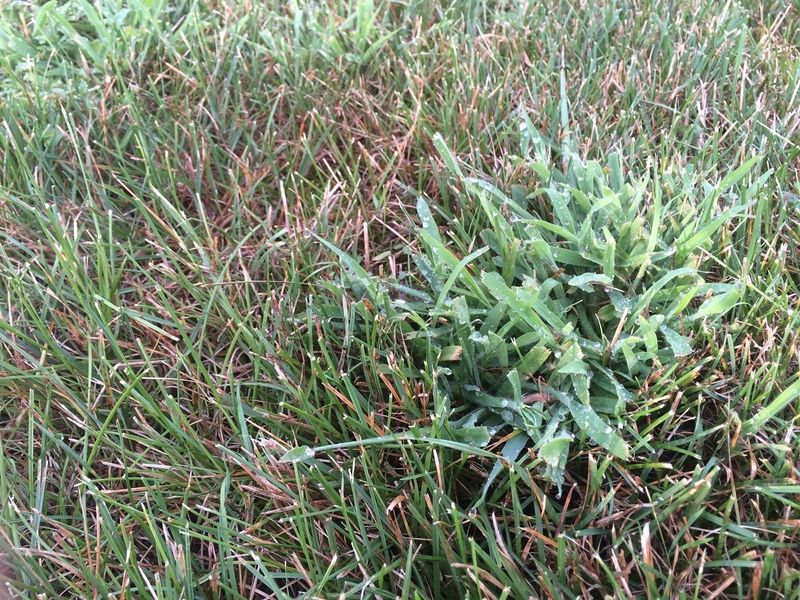
Every summer, the same patchy invader shows up in the same spots, and pulling it out barely slows it down the next year. Crabgrass is not just persistent by nature; it is opportunistic, filling in wherever your desirable grass is thin, stressed, or struggling to compete.
Southern lawns in Florida and Texas deal with this cycle constantly, but the fix is less about fighting the weed and more about understanding why your turf keeps losing ground. Getting that diagnosis right is what separates a lawn that keeps improving from one that keeps repeating the same battle.
Crabgrass is exploiting a weak spot in the lawn
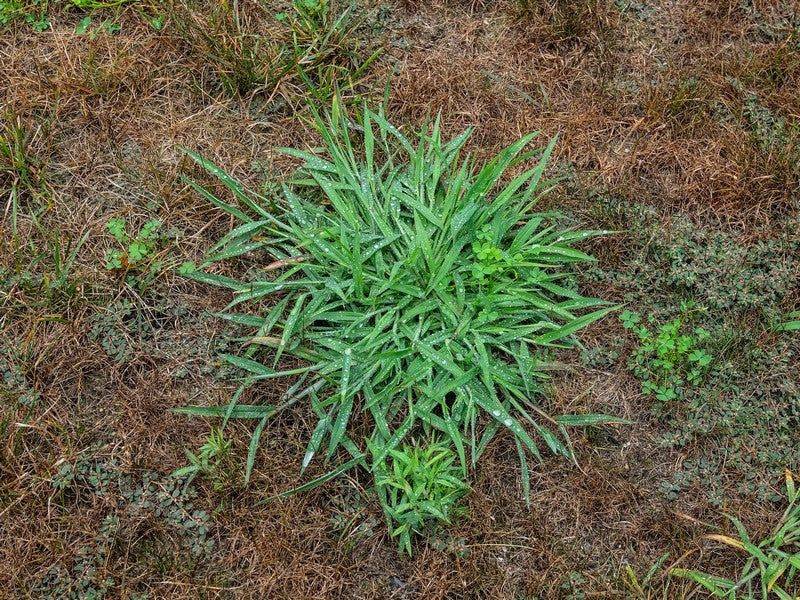
Recurring crabgrass rarely points to one mysterious defect hiding under every lawn. What it almost always points to is turf that is losing the competition, whether because it is thin, bare, stressed, or poorly matched to where it is growing.
University of Minnesota Extension describes crabgrass as an opportunist that fills in wherever desirable turf weakens, not a weed that forces its way through healthy, dense grass.
The list of conditions that can weaken Southern turf is longer than most homeowners expect. Compacted soil, drought stress, poor drainage, too much shade, heavy foot traffic, incorrect mowing, unsuitable grass selection for the site, unbalanced fertility, and missed prevention windows can all create the opening crabgrass needs.
In many cases, more than one of these factors is working at the same time.
Before reaching for herbicide or a core aerator, the smarter first step is figuring out which of those conditions is actually at work in your yard. UGA Cooperative Extension guidance on turfgrass disorders consistently recommends diagnosing the site before choosing a treatment, because fixing the wrong problem will not stop crabgrass from coming back.
The weed is a symptom of weakened turf, and the real job is finding out what is weakening it.
Inspect the site before blaming the soil
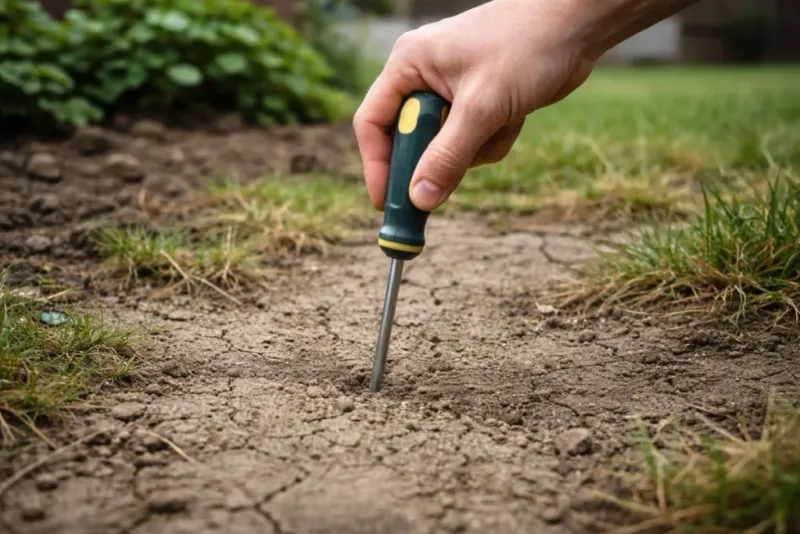
A practical inspection takes less than twenty minutes and can tell you far more than a single bag of pre-emergent ever will. Start by walking the areas where crabgrass keeps returning and pressing a screwdriver or your finger firmly into the soil after the lawn has dried out for a day or two.
Soil that resists penetration or feels like packed clay is a signal worth investigating further.
Also look for shallow roots when you pull a plug of turf, visible footpaths worn into the grass, water pooling after rain, or runoff sheeting off the surface instead of soaking in. These patterns, combined with thin turf and bare patches, are consistent with compaction or poor infiltration.
UGA’s turfgrass disorder guidance identifies thin stands, bare soil, and poor rooting as key indicators that the turf is under physical stress.
Once you have checked for compaction and drainage issues, assess the rest of the picture. How much direct sun does the area receive each day?
Has the lawn been mowed too short or too infrequently? Are there signs of pest or disease damage, or does the grass just look like it was never quite right for that location?
Compaction matters where it is actually present, but shade, drought, and the wrong grass species for the site create the same crabgrass opening without any soil hardness involved.
Use core aeration only when compaction limits the lawn
Compacted soil can quietly undermine turf health in ways that make crabgrass feel inevitable. When soil particles are pressed tightly together, water and air move through the root zone slowly, roots cannot penetrate deeply, and drought stress builds faster than it would in looser soil.
That combination gives crabgrass exactly the foothold it needs.
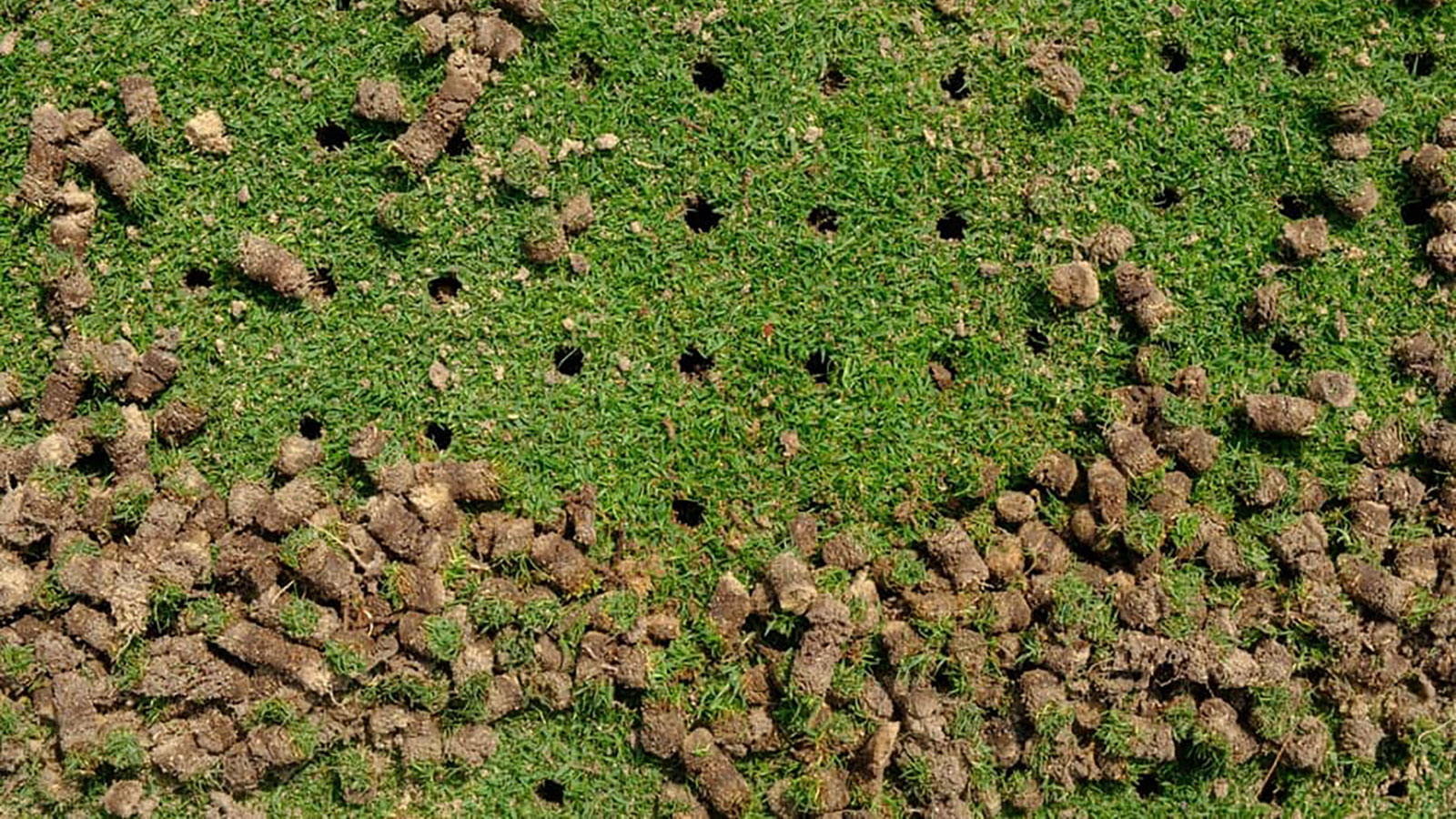
Core aeration addresses that problem by physically removing small plugs of soil and creating channels for water, air, and nutrients to reach the root zone. For warm-season grasses, UGA’s turfgrass fertility and aeration guidance recommends aerating while roots are actively growing and when soil temperatures at four inches are near 65 degrees Fahrenheit and rising.
Aerating too early in the season, when warm-season grasses are still coming out of dormancy, limits recovery.
Timing and soil moisture both matter. Aerating saturated soil can make compaction worse rather than better, so wait until the lawn is moist but not waterlogged.
Also recognize that not every compaction problem responds to routine aeration. UF/IFAS guidance on preparing a Florida lawn notes that compaction from construction or heavy equipment can extend more than twelve inches below the surface and persist for years, sometimes requiring renovation, shallow tillage, or incorporation of organic matter before turf can recover.
If you suspect deep construction-related compaction, consult a local extension professional before attempting to till, especially near established trees or buried utilities.
Build a dense canopy that competes with crabgrass
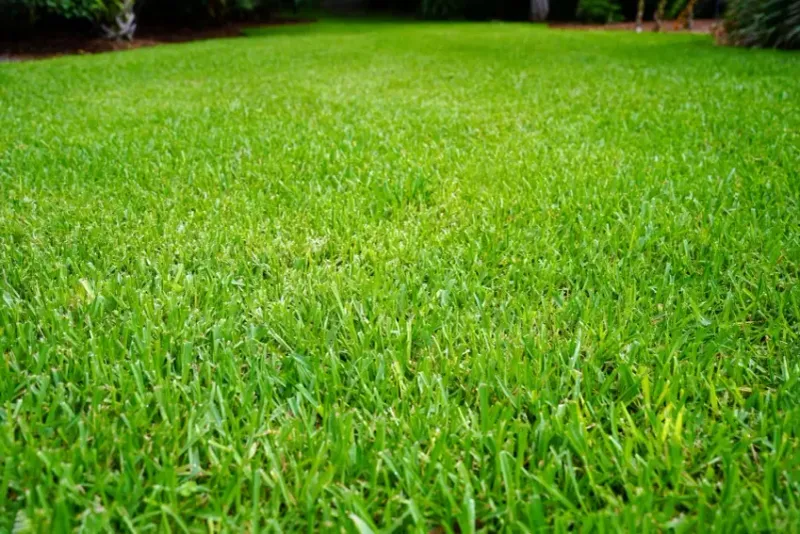
Soil repair only gets you partway there. The lawn still needs to grow dense enough to shade out crabgrass seedlings, and that means managing the turf above ground just as carefully as the soil below it.
Mowing height is one of the most underused tools in that effort.
Keeping grass at the higher end of its recommended range, without exceeding what the species tolerates, increases leaf surface area and shades the soil enough to make germination harder for crabgrass. UF/IFAS crabgrass guidance notes that mowing at the upper end of the recommended height range can reduce crabgrass establishment.
The one-third rule applies regardless of species: remove no more than one-third of the leaf blade at any single mowing to avoid scalping and stress.
Watering strategy matters just as much. UF/IFAS homeowner best management practices recommend irrigating when the lawn shows wilt signs, such as folded blades, a bluish cast, or footprints that linger rather than bouncing back.
Frequent, shallow watering keeps the surface moist and encourages crabgrass while pushing desirable grass roots upward instead of deeper. Deep, less-frequent watering builds a root system that handles drought better and competes more effectively.
Fertility decisions belong on a soil test, not a guessing schedule. UGA’s turfgrass fertility guidance is clear that excess fertilizer cannot repair compacted soil, poor drainage, shade, or an unsuitable grass variety, and early-season applications during dormancy or slow growth may feed weeds more than the lawn.
Apply fertilizer only during active turf growth and according to what a soil test shows your site actually needs.
Time pre-emergent control to suppress the next flush
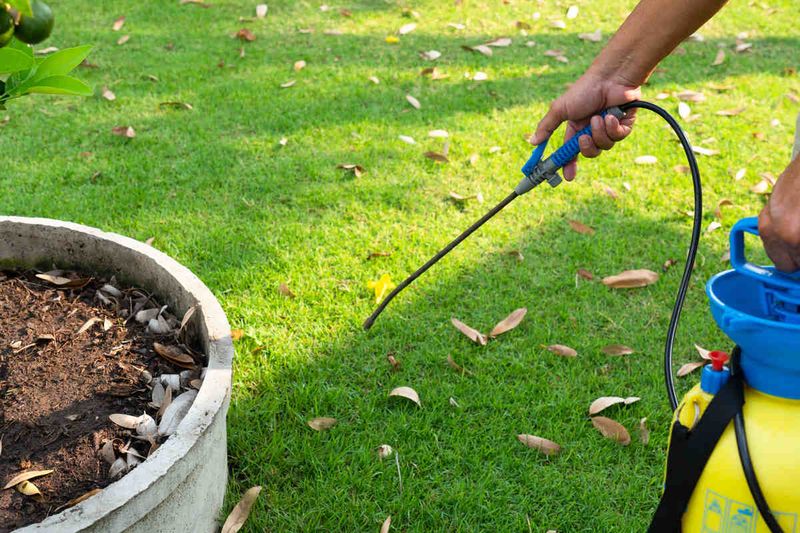
A healthy lawn canopy reduces crabgrass pressure, but it rarely eliminates it completely. Pre-emergent herbicide is the practical companion to turf repair, working before seeds sprout rather than after they become established plants.
Applied correctly and on time, these products can meaningfully reduce the next flush of crabgrass without requiring you to chase every seedling by hand.
The timing window is narrow and non-negotiable. Pre-emergent products must be in place before crabgrass germinates, and most need rainfall or irrigation to move them into the soil surface where they act.
Applying too late, even by a week or two during a warm spring, means the first wave of seedlings has already escaped. Most products also need a follow-up application where crabgrass pressure is high, since effectiveness typically fades after roughly six to twelve weeks.
UF/IFAS’s weed management guide for Florida lawns confirms that a second application may be needed and that the product label determines whether one is permitted.
Regional timing varies enough that no single calendar date works everywhere. Texas A&M AgriLife Extension’s bermudagrass management calendar places initial pre-emergent applications around mid-February in South Texas, early March in North and Central Texas, and mid-March in the Panhandle.
Florida guidance commonly targets February 1 in South Florida, February 15 in Central Florida, and early March in North Florida, but local conditions shift those dates year to year.
Soil temperature near the surface is a more reliable trigger than the calendar alone. Texas A&M AgriLife’s Williamson County pre-emergent guidance recommends monitoring the top inch of soil, with crabgrass germination beginning around 55 degrees Fahrenheit.
Your local extension office, a soil thermometer, and the product label together give you the most reliable application window for your specific location.
Manage emerged crabgrass without injuring the lawn
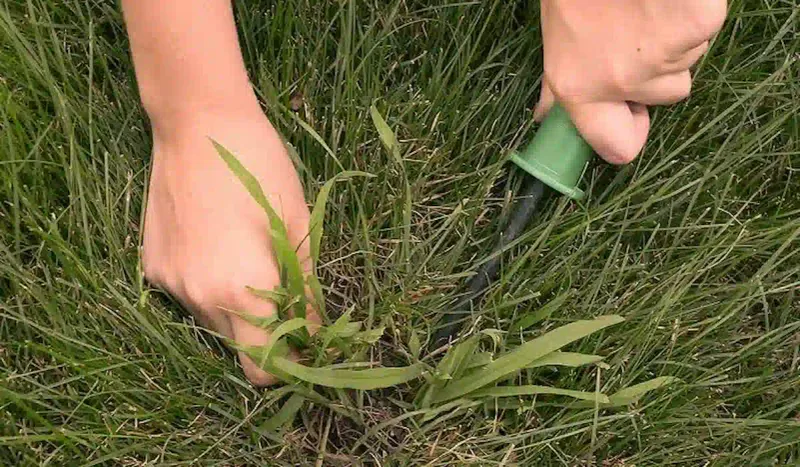
When crabgrass is already up and growing, the options narrow quickly, and the right choice depends heavily on the turf species underneath, how large the plants are, and what the product label actually permits. Young crabgrass plants, those with just a few leaves and no seedheads, are generally easier to suppress with a labeled post-emergent product than mature plants that have already developed a fibrous root system.
Mature crabgrass is harder to kill without also stressing or injuring the surrounding lawn. UF/IFAS crabgrass guidance cautions that homeowner herbicide options in Florida are limited for many common turfgrasses, and St. Augustinegrass in particular offers very few safe choices for post-emergent crabgrass control.
Hand removal or carefully targeted spot treatment is often the safest path for small infestations in sensitive turf types. For larger infestations, consulting a licensed lawn care professional familiar with your turf species is worth considering.
Preventing seed production helps reduce next season’s pressure, but it does not erase what is already in the soil. UGA Lincoln County Extension notes that mowing can limit seed set, though doing so consistently once seedheads have formed is difficult.
Removing plants before they mature and set seed is more effective than mowing them down after the fact.
A few approaches that circulate online deserve a direct correction. Vinegar-based products are contact treatments that burn exposed leaf tissue but provide no soil-level or pre-emergent control and can damage desirable grass on contact.
Corn gluten meal has not been shown to reliably replace labeled pre-emergent products in Southern conditions. EPA pesticide safety guidance is equally clear that applying more herbicide than the label directs does not improve results and increases risk.
The label is a legal document, not a suggestion.
Reduce recurrence with a repeatable lawn routine
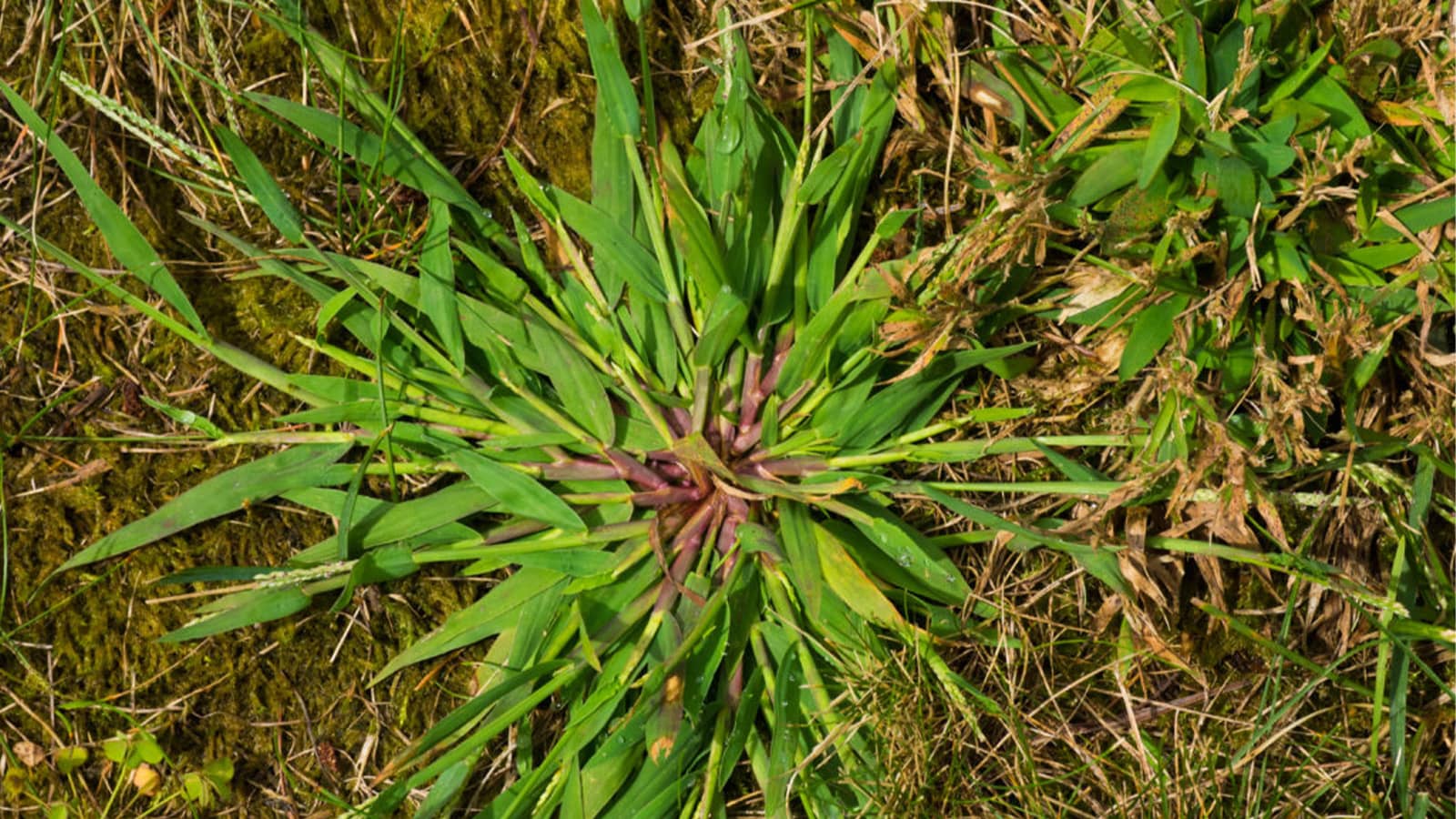
Keeping crabgrass from dominating year after year comes down to repeating a short sequence every season rather than finding a one-time fix. Start by diagnosing any new weak spots before they become bare patches.
Thin turf, a new footpath, a drainage change, or a stretch of extra shade from a growing tree can all reopen the door for crabgrass even in a lawn that looked solid the previous fall.
Once you know what is weakening the turf, correct that specific cause. Aerate only where compaction is actually limiting roots or water movement.
Adjust mowing height, watering depth, and fertilizer timing to what the turf species and a current soil test call for. Reseed or resod bare areas during the appropriate establishment window, keeping in mind that pre-emergent herbicides applied too close to new planting can interfere with establishment.
The product label’s waiting period controls that decision.
Florida lawns carry an added complication worth knowing. UF/IFAS Pinellas County crabgrass control guidance identifies India crabgrass and blanket crabgrass as species that may persist longer than one growing season in Florida, which means the simple assumption that all crabgrass dies back and resets from seed each winter does not hold for every Florida lawn.
University of Minnesota Extension frames the realistic goal plainly: reduce encroachment through turf health and timely control, because complete elimination is unlikely even in a well-managed lawn. A healthy, dense lawn paired with locally timed pre-emergent suppression is a durable strategy, not a permanent guarantee.
Some crabgrass may still appear, but far less of it will find a place to stay.