
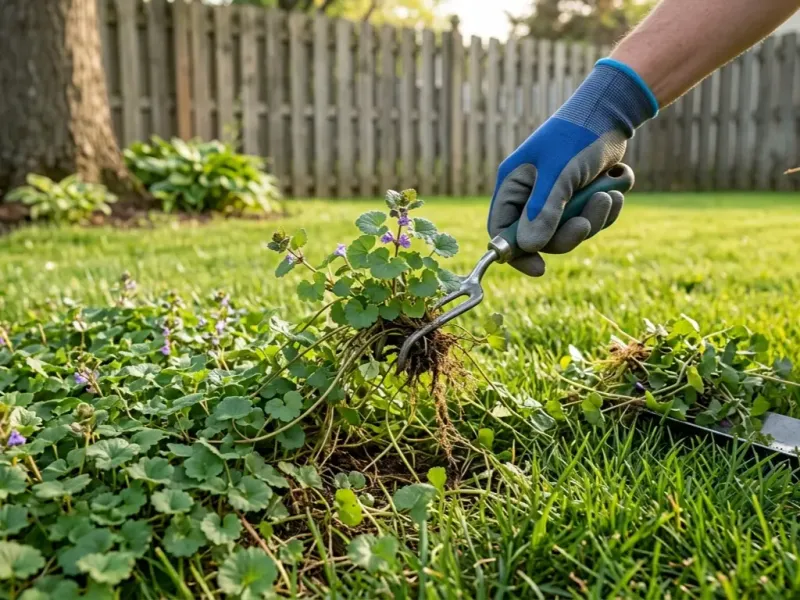
Ground ivy, better known as Creeping Charlie, has a habit of quietly taking over thin, moist, or shaded lawn patches before most homeowners even notice it spreading. Its creeping stems root wherever they touch soil, so pulling a few leaves barely slows it down.
Southern homeowners in Florida and Texas face a slightly different battle than northern gardeners, because warm-season turf and climate conditions don’t always follow the same playbook. This guide walks through how to identify the weed, remove it without herbicides, and make lasting changes that give your lawn a fighting chance.
Confirm the purple-flowered weed before you remove it
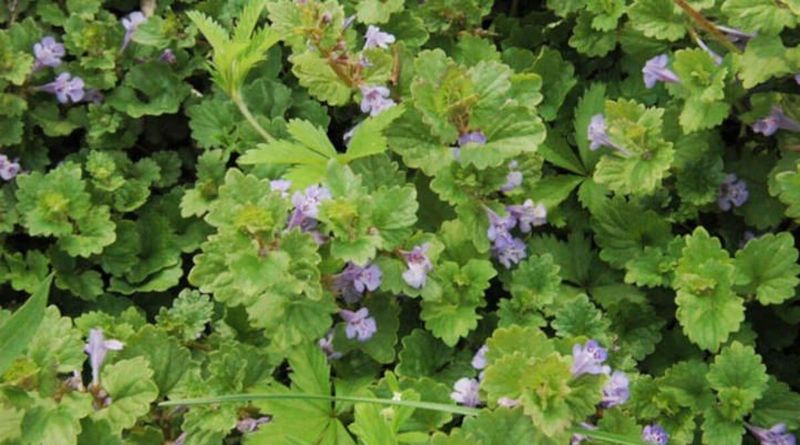
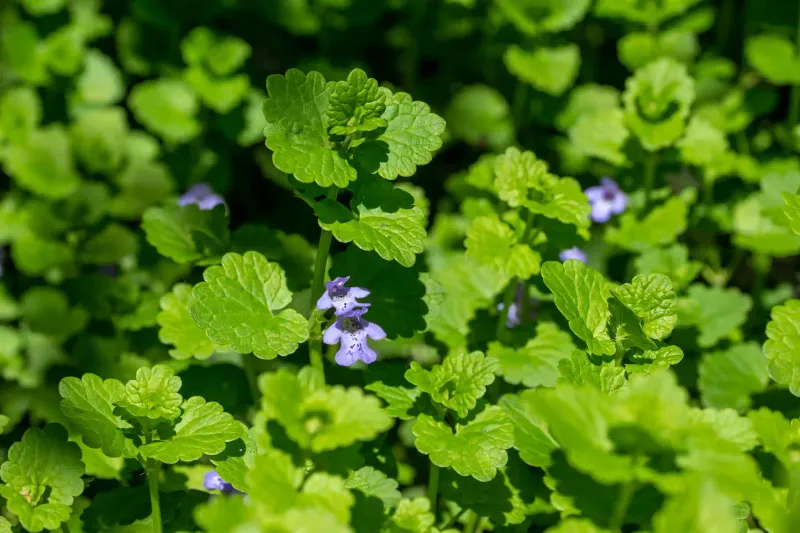
Not every purple-flowered creeping weed taking over your lawn is Creeping Charlie, and treating the wrong plant wastes effort. Creeping Charlie, known botanically as Glechoma hederacea, has a very recognizable set of features: opposite, rounded or kidney-shaped leaves with scalloped edges, square stems, and small lavender-blue funnel-shaped flowers that appear in spring.
Crush a leaf between your fingers and you’ll notice a distinct minty, slightly musty odor that sets it apart from most lawn weeds.
The most important trait for identification is the creeping stem that roots at its nodes, the small joints along the stem where leaves attach. When you follow a stem to one of those nodes and press it gently into the soil, you’ll often find it has already anchored itself.
Iowa State’s integrated crop management profile confirms that this node-rooting habit is a defining characteristic of the species.
Henbit is a common look-alike that confuses many Southern gardeners. Both have square stems and purple flowers, but henbit is typically a winter annual that does not root at stem joints the way Creeping Charlie does.
Henbit leaves also clasp directly around the stem rather than attaching on separate stalks. Iowa State’s comparison of ground ivy and henbit notes these structural differences as the most reliable way to tell them apart.
Confirming the correct plant before you start pulling protects your time and keeps you from chasing the wrong weed across your yard.
Node-rooting stems explain why one pull rarely solves the problem
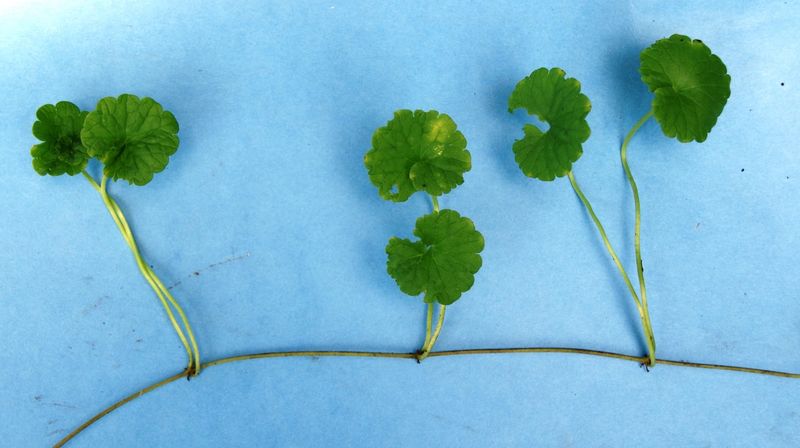
Pulling a handful of Creeping Charlie and expecting it to stay gone is a reasonable hope, but the plant’s biology makes that outcome unlikely after a single session. Each creeping stem, called a stolon, can root at multiple nodes along its length.
When you grab a stem and pull, any node left behind in the soil has what it needs to generate a new plant on its own.
That recovery system is why extension specialists describe Creeping Charlie as a persistent perennial rather than a weed you can clear in one afternoon. The plant also spreads by seed, so a patch that flowers and sets seed before you get to it can restock itself even after thorough hand removal.
Both routes, vegetative and seed-based, mean the weed has more than one way to bounce back.
The practical takeaway is to treat herbicide-free hand removal as a suppression strategy for manageable infestations rather than a guaranteed eradication method. Iowa State Extension’s control guide is direct on this point: removal must be persistent, and as much of the rooted stem and root system as possible needs to come out each time.
Expect to return to the same patch, remove new growth promptly when it appears, and keep at it across more than one growing season before the patch weakens noticeably.
Pull or dig small patches while the soil is workable
Hand removal works best on small, defined patches in lawns, along borders, or in planting beds where you can actually reach the rooted network. Trying to hand-pull a large, dense infestation spread across a wide lawn area becomes less practical quickly, and the effort rarely keeps pace with regrowth.
Be honest about the size of what you’re tackling before you start.
The easiest time to pull is shortly after a soaking rain or after you’ve watered the area deeply. Moist soil releases roots and rooted nodes with far less resistance than dry, compacted ground.
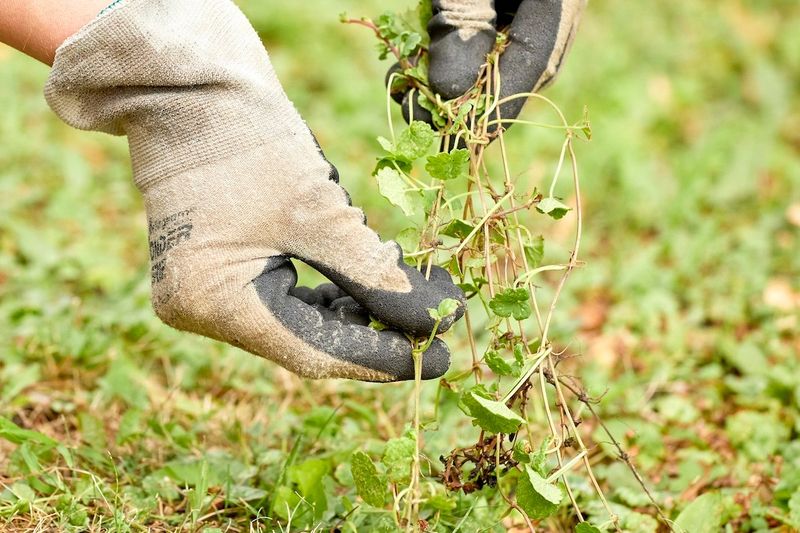
Work carefully with a hand weeder, garden fork, or similar tool to loosen the soil around the stems before pulling, rather than yanking from the surface. The goal is to remove as much of the rooted stolon network as possible, not just the visible green growth above ground.
Move slowly through the patch and trace each stem back toward the soil. Where you find a node that has rooted, work the tool underneath it and lift the whole section out.
Iowa State Extension’s removal guidance stresses that leaving rooted sections behind is one of the most common reasons a pulled patch comes back quickly. Avoid scattering broken stem pieces across the lawn as you work, since any fragment with a node can potentially take hold in a new spot if conditions are right.
Contain pulled material as you go and remove it from the site entirely once you’re done.
Collect every fragment and schedule repeat inspections
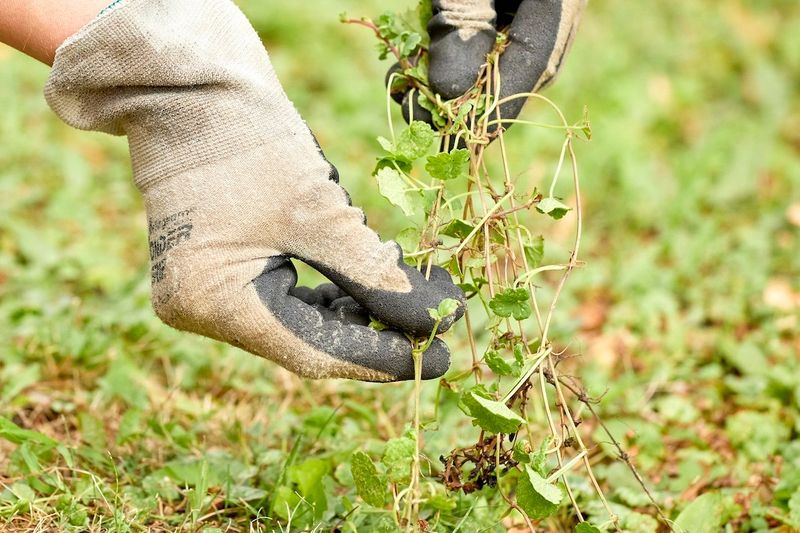
Getting stems and roots out of the ground is only half the job. Every piece of pulled material, including small stem fragments and any loose nodes, needs to leave the site.
Leaving pulled Creeping Charlie on the soil surface is risky because rooted nodes can re-establish contact with moist ground and begin growing again. University of Wisconsin Extension’s Creeping Charlie control guidance specifically flags this as a concern, noting that the plant’s ability to root from stem pieces makes disposal an essential part of removal.
Bag the pulled material for yard waste pickup or dispose of it according to your local guidelines. Composting is not a safe default unless you can confirm your compost pile reaches temperatures high enough to kill vegetative plant material, which most home compost setups cannot reliably guarantee.
After the initial removal, set a schedule to inspect the cleared patch every two to three weeks. Iowa State’s control guide makes clear that surviving nodes commonly regrow, and catching new growth early keeps the weed from re-establishing a foothold.
Measure success by the trend over time: fewer rooted stems per inspection, a smaller area affected, and a patch that shrinks rather than expands season to season. Expecting a completely weed-free result after one or two removal sessions sets an unrealistic bar.
The realistic goal is a progressively weakening patch that your lawn eventually has a better chance of reclaiming.
Strengthen the lawn without pretending it can do all the work
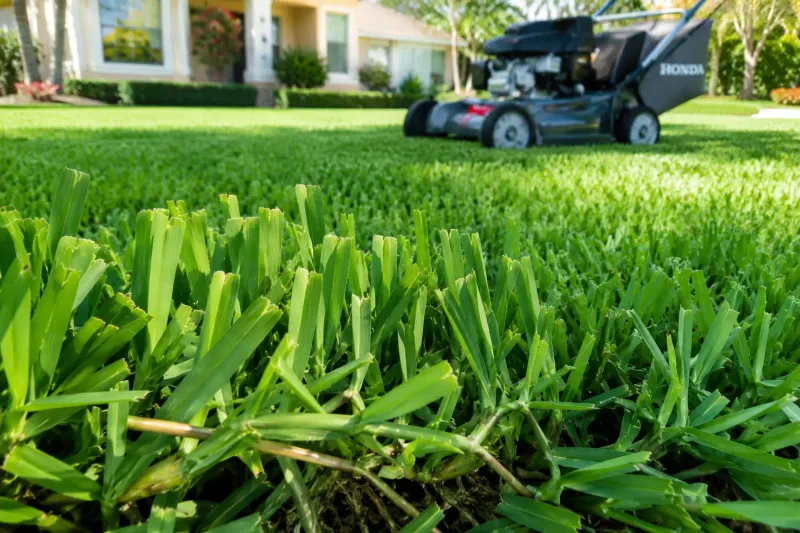
Creeping Charlie moves into lawns because conditions favor it, and addressing those conditions after removal gives your turf a better chance of holding the space. The weed commonly thrives in moist, shaded areas and where grass is thin or weak, but it can also grow in sunny spots, so shade alone does not explain every infestation.
University of Minnesota Extension’s ground ivy overview notes that dense, healthy turf is the most reliable cultural defense, though it takes time to establish and is not a stand-alone fix for an existing infestation.
Mow at a height appropriate for your specific grass species. Southern lawns often include St. Augustine, Zoysia, Bermuda, or Centipede grass, and the right mowing height differs for each.
Cutting too low weakens turf and opens the canopy to weeds. Water deeply but infrequently rather than running irrigation daily, since consistently wet soil is exactly what Creeping Charlie prefers.
If a low spot in your yard stays soggy after rain, correcting drainage there addresses a root cause rather than just the symptom.
Fertilize based on a soil test rather than a guessing schedule, and choose a turfgrass variety suited to your specific site conditions, including shade tolerance if that applies. Reducing excessive tree canopy where practical can improve light and reduce moisture retention at the soil surface.
Correcting compaction by aerating allows grass roots to deepen and compete more effectively. Wisconsin Extension and Penn State Extension both caution that improving turf density can slow the spread of ground ivy but may not control an established infestation by itself.
Treat these steps as reinforcement after removal, not a replacement for it.
Avoid shortcuts that spread the weed or injure the lawn
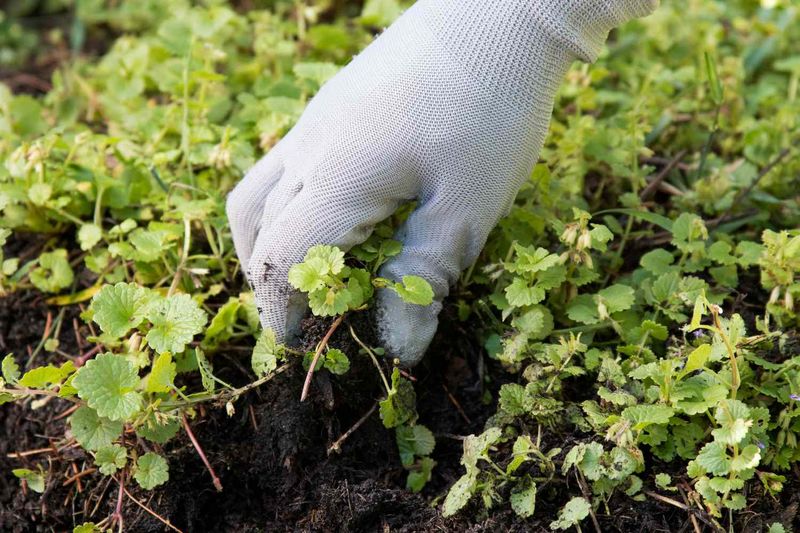
Several popular shortcuts for dealing with Creeping Charlie either fail to address the rooted stolon network or actively make the problem worse. Mowing is the most common example.
Because Creeping Charlie grows close to the soil surface, the mower deck passes over much of the plant without cutting the rooted stems. Penn State Master Gardener guidance on ground ivy is direct: mowing may reduce visible top growth temporarily but does not remove the stolons responsible for the plant’s persistence.
Aggressive dethatching or power-raking sounds appealing as a way to comb the weed out of the lawn, but Wisconsin Extension warns explicitly that cutting through creeping stems and roots with a power rake can break them into smaller pieces and scatter those pieces across the lawn. Each fragment with a node is a potential new plant.
Dethatching can also remove desirable grass and leave bare soil that requires reseeding, creating more work rather than less.
Borax is sometimes promoted as a natural lawn treatment for Creeping Charlie, but Iowa State Extension’s borax FAQ explains that early research results were inconsistent, that soil type and pH affect outcomes significantly, and that Wisconsin research did not reproduce the same effectiveness. Excess boron can linger in the soil and injure turf, nearby ornamentals, and other desirable plants.
Vinegar, salt, boiling water, and household mixtures carry similar problems: no reliable evidence supports them as selective, safe lawn treatments, and all of them can damage grass, alter soil chemistry, or harm adjacent plants. Skip these and focus on the removal and site-correction steps that have actual extension support behind them.
Choose timing and turf expectations for the local Southern climate
Much of the advice you’ll find about the best time to tackle Creeping Charlie comes from northern university extension programs, and it’s worth understanding why before applying it to a Florida or Texas lawn. The widely repeated recommendation that late fall is the prime control window is strongly tied to herbicide research in cool-season turf regions, where the plant moves carbohydrates toward its roots as temperatures drop.
That physiological timing supports herbicide uptake in those states. It does not automatically translate into a superior hand-pulling window for Southern warm-season lawns.
Wisconsin Extension’s Creeping Charlie article reflects this northern framing, and UF/IFAS lists ground ivy as a perennial weed associated with shaded or low-light conditions in Florida, but detailed no-herbicide seasonal timing guidance specific to Florida or Texas warm-season turf is limited in the available research. In much of the South, warm-season grass may still be actively growing in fall or entering dormancy at different times depending on location, grass species, and yearly weather patterns.
A more practical rule for Southern homeowners: begin removal when Creeping Charlie is clearly visible, the soil is workable, and you can reach the rooted network. Then repeat whenever regrowth appears.
Where dense shade, chronic moisture, or other site problems repeatedly defeat turf despite your best efforts, replacing grass with a site-adapted groundcover may be a more realistic long-term solution than continually fighting the weed. Penn State’s guide on growing turf under shaded conditions supports this approach for persistently unsuitable sites.
Before choosing a replacement plant, verify that it is regionally adapted and not invasive in your specific area. The Texas A&M AgriLife Earth-Kind Plant Selector is one useful starting point for Texas gardeners.
Florida homeowners should consult UF/IFAS or their county extension office for site- and region-specific recommendations, since a plant that behaves well in one part of the South may be invasive or poorly adapted in another.
Follow a persistence-first suppression plan
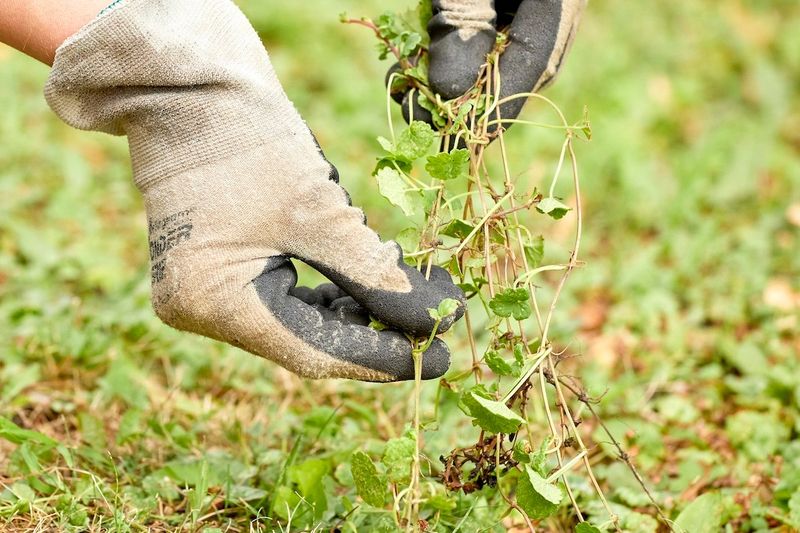
Putting the whole approach together comes down to a sequence you can repeat rather than a one-time fix. Start by confirming you’re dealing with Creeping Charlie and not a look-alike.
Once you’re certain, target a manageable patch, work when the soil is moist, and remove as much of the rooted stolon network as possible rather than just the surface growth. Collect every fragment and remove pulled material from the site before any node has a chance to re-root.
From there, inspect the cleared area regularly and pull new growth as soon as it appears. Correct the site conditions that helped the weed get established: address drainage problems, adjust irrigation, mow at the right height for your specific grass species, and consider aerating compacted areas.
Iowa State Extension and Wisconsin Extension both frame this as a multi-season commitment rather than a single-session solution.
This plan can genuinely weaken or suppress Creeping Charlie in small to moderate infestations without herbicides, but it may not clear a large, deeply established patch, and it will not produce results overnight. For sites where turf simply cannot compete, a regionally appropriate groundcover chosen with guidance from your local extension office is a more honest answer than an endless removal cycle.
A lawn with fewer rooted weed patches and better-matched conditions for the grass you’re growing is a real and measurable win.