
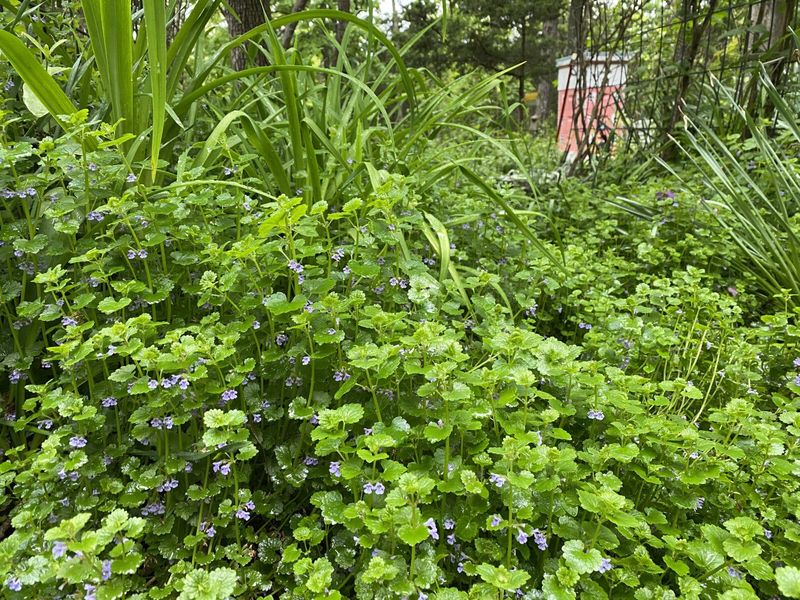
Creeping Charlie is one of those weeds that seems to laugh at you every spring, no matter how many times you pull it. You yank out a fistful of leaves, step back satisfied, and two weeks later the patch is back as thick as ever.
The reason has nothing to do with bad luck and everything to do with how this plant is actually built. Once you understand what you are really up against, you can match your effort to the right part of the plant and finally start making progress.
First, make sure the stubborn patch is creeping Charlie
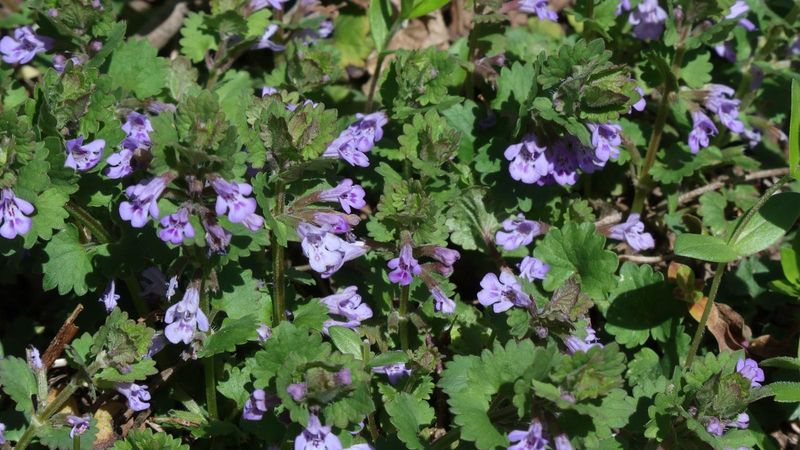
Before spending an afternoon on your hands and knees, it pays to confirm you are dealing with the right plant. Creeping Charlie, also known as ground ivy (Glechoma hederacea), has a few reliable features that set it apart from other low-growing weeds.
University of Minnesota Extension’s weed identification guide describes rounded or kidney-shaped leaves with scalloped edges, opposite leaf arrangement along the stem, and square stems you can feel between your fingers.
Crush a leaf and you will notice a faint minty or musky odor, which is one of the most distinctive identifiers. In spring, small purple or blue funnel-shaped flowers appear in clusters along the stems.
Both of these clues together make a confident identification straightforward.
Two common look-alikes are henbit and purple deadnettle, both of which also have square stems and purple flowers. Henbit leaves are more oval and attach directly to the stem without a petiole on upper leaves, while purple deadnettle has triangular leaves with a slightly reddish tinge toward the top of the plant.
Confusing any of these with creeping Charlie matters because each is a different type of weed. Henbit and purple deadnettle are winter annuals that die back on their own in warm weather, so the removal strategy differs from what you need for a creeping perennial that persists and regrows year after year.
The rooted stolon network explains why the patch returns
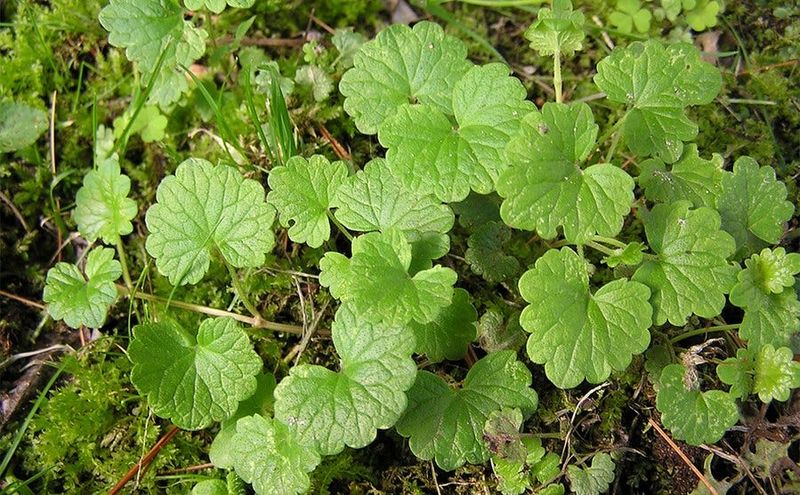
Ground ivy spreads primarily through above-ground stems called stolons, which creep outward from an established plant and root at the nodes, the joints where leaves emerge. Each rooted node has the potential to produce new shoots and become its own growing point.
University of Minnesota Extension describes both above-ground stolons and underground stems contributing to the plant’s persistence, while Penn State Extension’s turfgrass weed guide emphasizes stolon nodes as the primary source of new plants.
Seeds can also play a role, though most of what you see returning in an established patch comes from the network of stems and rooted nodes already in the ground. The plant does not have one central taproot that anchors everything.
Instead, the network fans out in multiple directions, with rooting points distributed across the whole area the patch has colonized.
This structure is why a patch can seem to disappear after you remove visible foliage, then reappear weeks later. The leaves were gone, but portions of the stolon network were still alive in the soil.
As long as those nodes remain intact and in contact with moist earth, the plant can push out new growth. Calling it a single spreading root misses the picture.
It is better understood as a web of interconnected stems, each capable of anchoring and regenerating independently.
Casual pulling removes leaves, not necessarily the rooted plant
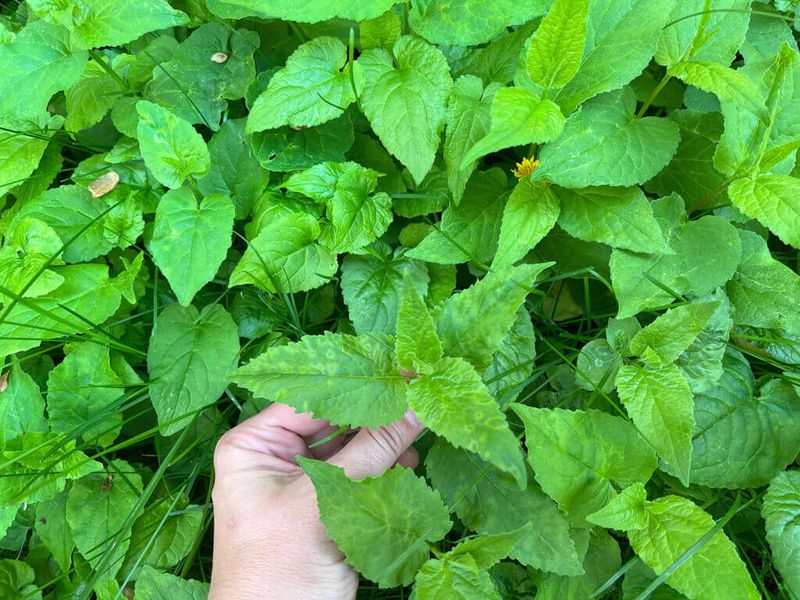
Most gardeners pull weeds the same way regardless of species: grab the visible growth and tug. With creeping Charlie, that approach tends to snap off stems above the soil line while leaving the rooted nodes right where they are.
Penn State Extension’s Master Gardener guidance on ground ivy notes that hand removal is generally ineffective unless the stolons and their nodes are removed along with the visible foliage.
The difference between tugging at leaves and deliberately tracing a stolon network is significant. A casual pull often separates the stem at a weak point, leaving a rooted section behind that is perfectly capable of sending up new growth within a few weeks.
Viable node-bearing pieces can also re-root if they end up lying on moist soil in contact with the ground, though this is a precaution rather than a certainty. Not every detached fragment will establish itself, but the risk is real enough to take seriously.
Illinois Extension’s guide to managing creeping Charlie in lawns reinforces the distinction between surface removal and complete extraction. The problem is not that pulling can never work.
The problem is that pulling only what is visible above ground almost never removes the full network, and any portion left behind is enough to restart the patch. The next section covers what complete removal actually looks like for a small, accessible bed.
For a small bed, remove the whole network while the soil is moist
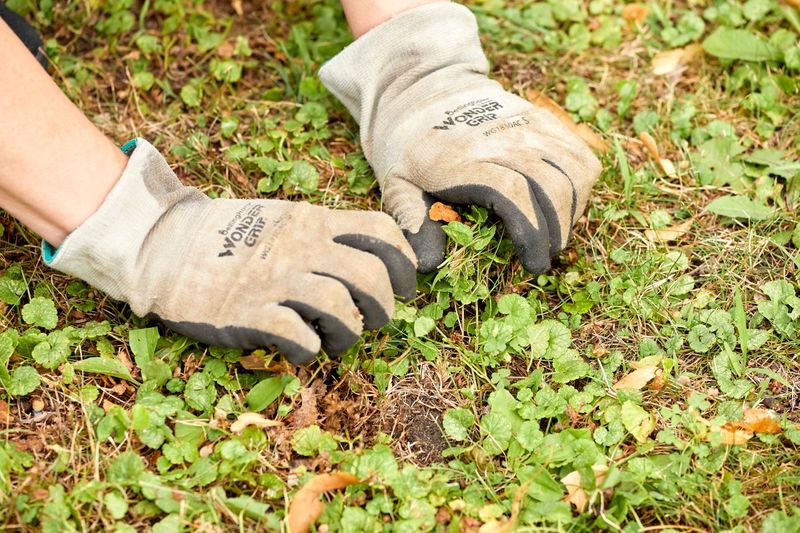
Moist soil is your best ally for this job. When the ground is damp after rain or watering, roots release more cleanly and you are far less likely to snap a stolon midway and leave a rooted section behind.
Work with a hand fork or a narrow trowel rather than your fingers alone, and use it to loosen the soil under a runner before lifting rather than pulling straight up.
Trace each visible stem back toward its origin before you remove it. Creeping Charlie stolons can run a foot or more before connecting to a rooted node, so following the stem rather than just grabbing the nearest handful is what separates a thorough removal from another temporary fix.
Lift the full network, including attached roots, and set it aside. Illinois Extension and Penn State Extension’s ground ivy guidance both support removing the complete stolon network rather than pulling at foliage.
Once the material is out of the ground, remove it from the area entirely rather than leaving it on the bed surface. Stolon pieces that contain viable nodes can re-root when they stay in contact with moist soil, so leaving pulled material in place is a prudent risk to avoid.
Bag it or dispose of it away from garden beds. Penn State’s turfgrass weed resource confirms the plant’s strong capacity to root at nodes under suitable conditions.
Plan to return to the same spot every two to three weeks for at least one full growing season. Missed nodes and any seeds already in the soil will generate new seedlings, and catching them while they are small and shallow-rooted is far easier than waiting until a new network has established.
This method is practical for a small, clearly bounded bed. It becomes much harder to execute reliably once the infestation extends into a lawn where stolons are tangled with grass roots.
A lawn patch may need a reset instead of endless extraction
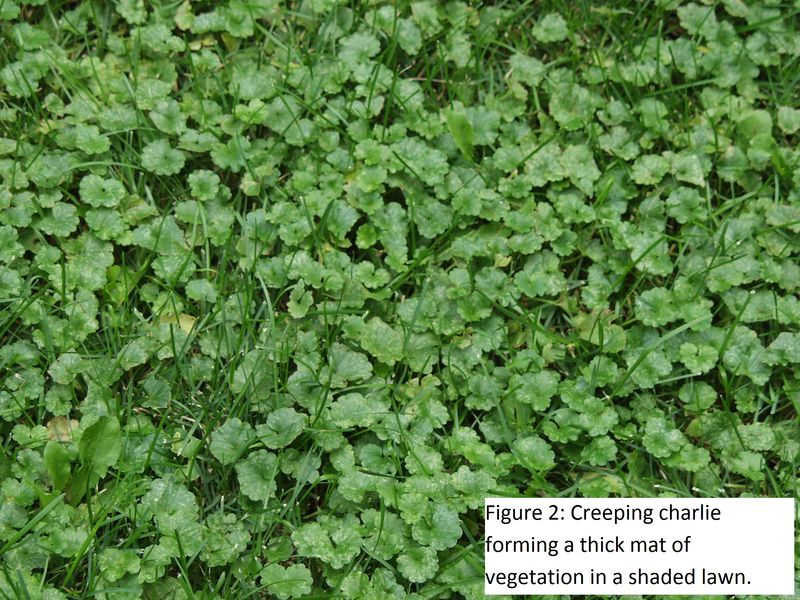
Pulling a stolon network out of bare garden soil is one thing. Pulling it out of established turf is another challenge entirely.
In a lawn, creeping Charlie runners weave between grass blades and root at nodes throughout the mat, which makes it nearly impossible to trace and remove every connected piece without also uprooting large sections of grass. Chasing every rooted section by hand in a lawn infestation often causes more disruption than it solves.
For a small, localized lawn patch, a more practical approach is to remove the affected area entirely, turf and all, and then repair or reseed it. Illinois Extension’s perspective on lawn weeds supports removing the whole patch in some situations rather than attempting to extract runners from within healthy turf.
This resets the area and gives you a clean surface to work with rather than a tangle of weed and grass roots.
For larger or more widespread infestations, the realistic goal shifts from total extraction to suppression combined with site improvement. Illinois Extension’s lawn management guide explains that dense, site-adapted turf mowed at the appropriate height and fertilized based on actual soil needs may help slow creeping Charlie’s advance.
The key word is slow. Research published in Agrosystems, Geosciences and Environment cautions that cultural practices alone may not suppress established ground ivy, particularly in areas where the site conditions favor the weed.
A healthy lawn helps, but it is not a cure on its own.
Matching your method to the scale of the problem saves time and frustration. A two-square-foot patch in the lawn edge calls for a different response than a twenty-square-foot infestation under a shade tree, and recognizing that difference early keeps you from spending weeks on a strategy that was never going to work at that scale.
Shade can make a different landscape more durable than a perfect lawn
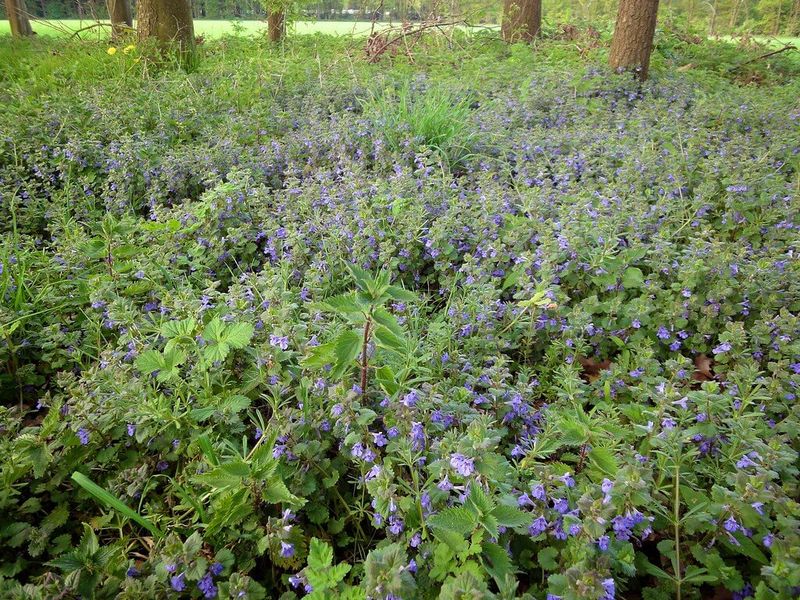
Creeping Charlie often moves into a yard through the back door: a spot under a tree where the grass has thinned, a low-lying corner that stays damp, or a bed edge where turf never quite fills in. Shade is strongly associated with ground ivy infestations, though the plant can also grow in full sun and tolerates a range of soil conditions.
Trimming tree limbs to increase light can help reduce favorable conditions, but increasing sunlight alone is unlikely to eliminate an established patch.
Illinois Extension and Penn State Extension both suggest that gardeners reconsider the goal of maintaining turf in deeply shaded spots. Forcing a sun-loving grass to compete with ground ivy in a low-light location is a losing position over time.
A shade-tolerant grass variety, a mulched planting bed, or a deliberately chosen shade-adapted ground cover gives the site a better long-term occupant than bare patches of struggling turf that creeping Charlie will continue to colonize.
For Southern gardeners, this decision has a regional dimension. Florida and Texas lawns commonly use warm-season grasses like St. Augustinegrass, zoysiagrass, or bermudagrass, and shade tolerance varies considerably among them.
Texas A&M AgriLife Extension classifies ground ivy as a creeping perennial that reproduces through above-ground stems, below-ground stems, and seeds, and notes that creeping perennials are generally difficult to control once established. UF/IFAS guidance similarly lists ground ivy among perennial weeds associated with shaded or low-light lawn conditions in Florida.
A mulched bed planted with a shade-adapted species such as Asian jasmine, native ferns, or liriope will not eradicate existing ground ivy on its own, but it replaces a vulnerable gap with a plant community that can actually thrive in the available light. That shift in site use addresses the underlying reason creeping Charlie keeps winning in that particular spot.
The lasting fix combines removal with repeated inspection and a better site fit
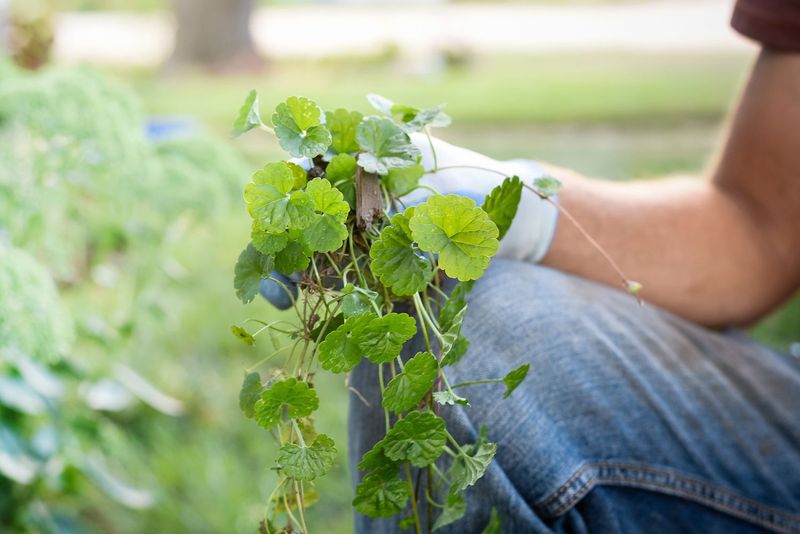
Managing creeping Charlie comes down to a short decision path applied consistently over time. Start by confirming the plant’s identity so your effort targets the right weed.
Then match your method to the size and location of the infestation: thorough hand removal with a fork works for small accessible beds, while a turf reset or site change is often the more honest answer for a lawn patch or a shaded corner that has been losing ground for years.
Whichever approach you use, removing visible foliage without the attached stolon network and rooted nodes leaves the patch intact below the surface. Illinois Extension and University of Minnesota Extension both emphasize follow-up as a non-negotiable part of any removal effort.
Improving turf density or switching to a shade-adapted planting can reduce the conditions that favor the weed, but neither step guarantees eradication on its own.
Creeping Charlie becomes more manageable when you treat it as a rooted, spreading network rather than a loose handful of leaves. The gardener who traces stolons, removes nodes, and returns to check the site every few weeks will consistently outperform the one who pulls the visible green and walks away satisfied.