
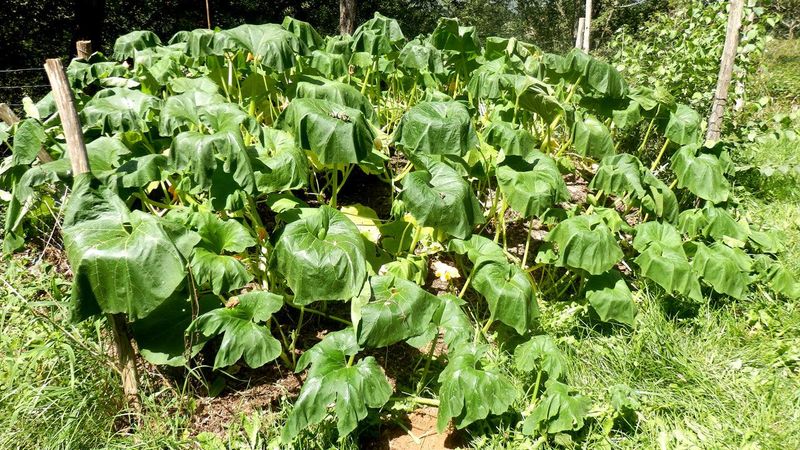
Watching your cucumber vines go limp in the middle of a hot afternoon is unsettling, especially when you thought you were doing everything right. The good news is that temporary afternoon wilting is one of the most common things cucumbers do during summer heat, and it does not automatically mean something is wrong with your watering schedule. Understanding what causes it, how to read the signs, and when to actually be concerned can save you a lot of worry and a lot of unnecessary trips to the hose.
Afternoon wilt often signals heat stress rather than a timing mistake
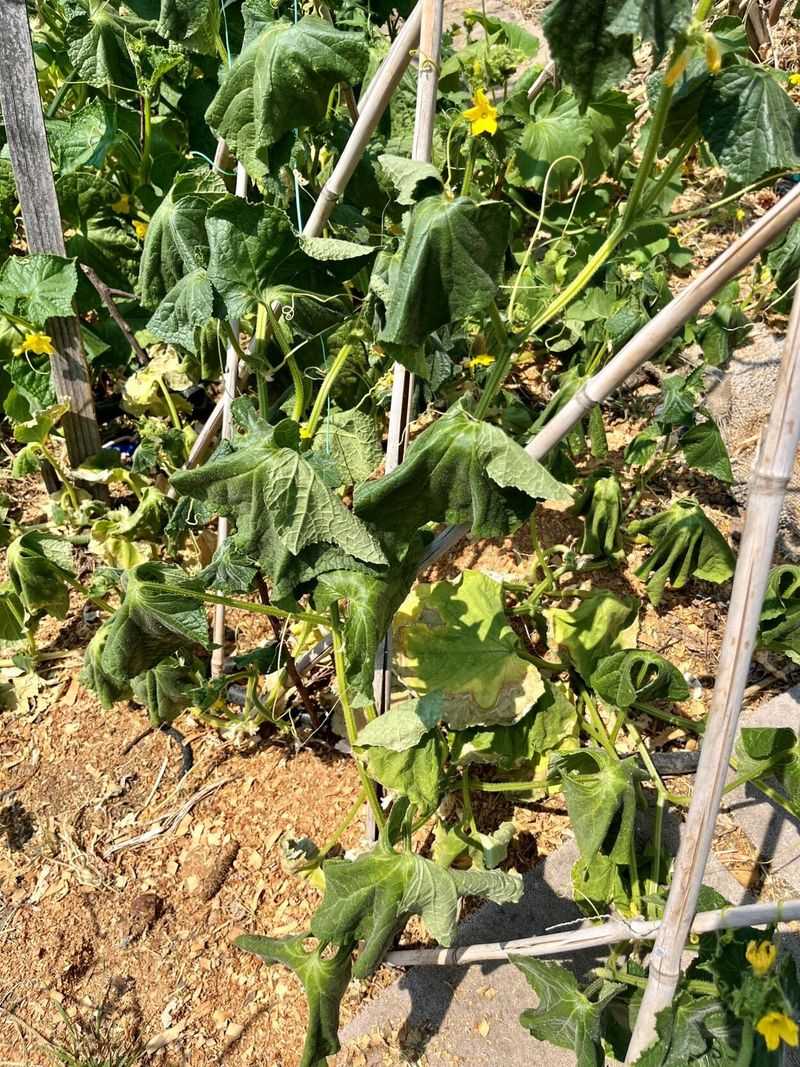
Cucumber vines have a reputation for drama during hot afternoons, and most of the time they earn it honestly. When temperatures climb into the upper 80s or 90s, cucumber leaves can lose water through transpiration faster than the roots can replace it, causing the whole vine to droop even when the soil holds adequate moisture. Colorado State University Extension specifically describes temporary afternoon wilting as common in cucumbers and notes that morning wilting is the more serious warning sign.
That afternoon slump does not prove the gardener watered at the wrong time. A vine can be perfectly hydrated at the root zone and still fold during peak heat because the plant’s water-moving system simply cannot keep up with demand. Oregon State University Extension identifies midday wilting followed by evening or morning recovery as a likely heat-stress pattern, not an indictment of the gardener’s schedule.
The contrast that matters is what happens after temperatures fall. A vine that perks back up by evening or looks normal the next morning is showing a very different pattern from one that stays limp overnight or begins the day already drooping. Recovery timing gives you an initial clue, but it is not the full story, and the sections below will explain exactly why.
Recovery helps assess the pattern but does not rule out disease
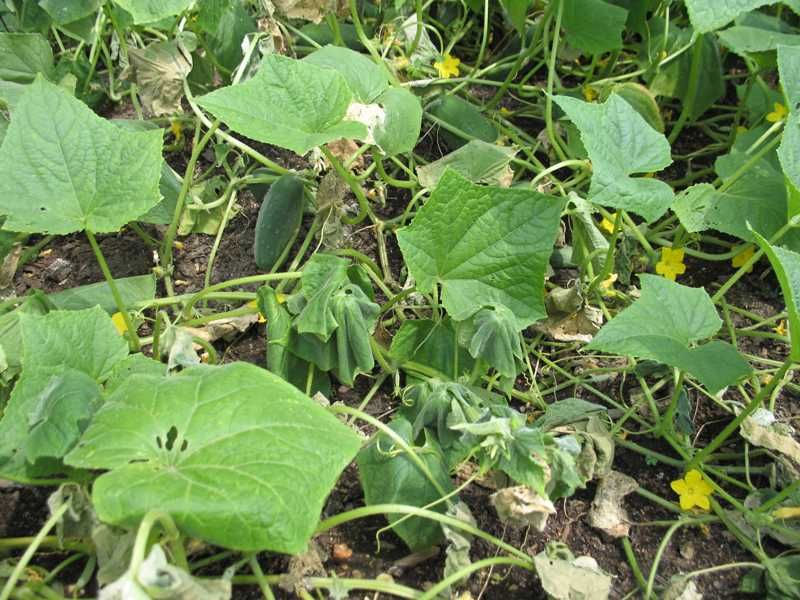
After a hot afternoon, go back outside once the sun drops and check whether the vines have straightened. Then check again the next morning before temperatures rise. A vine that recovers fully by evening and starts the next day standing upright is showing behavior consistent with temporary heat stress, which is genuinely common and not by itself a reason to panic.
That said, one night of recovery is not a clean bill of health. Bacterial wilt, a serious cucumber disease spread by striped and spotted cucumber beetles, can produce daytime wilting followed by apparent nighttime recovery in its early stages. According to University of Minnesota Extension guidance on bacterial wilt, the disease can initially look like heat stress before it progresses. Treating one recovery as proof the plant is fine can cause you to miss the window when intervention still matters.
Watch the vine over several days rather than making a single observation. If the afternoon drooping becomes more severe, starts happening earlier in the day, or stops reversing overnight, something beyond heat is likely at work. Yellowing, browning, or dying sections of the vine are escalation signals that deserve a closer look. Recovery is a useful data point, but the pattern across multiple days tells you far more than any single afternoon check.
Check moisture below the surface before watering
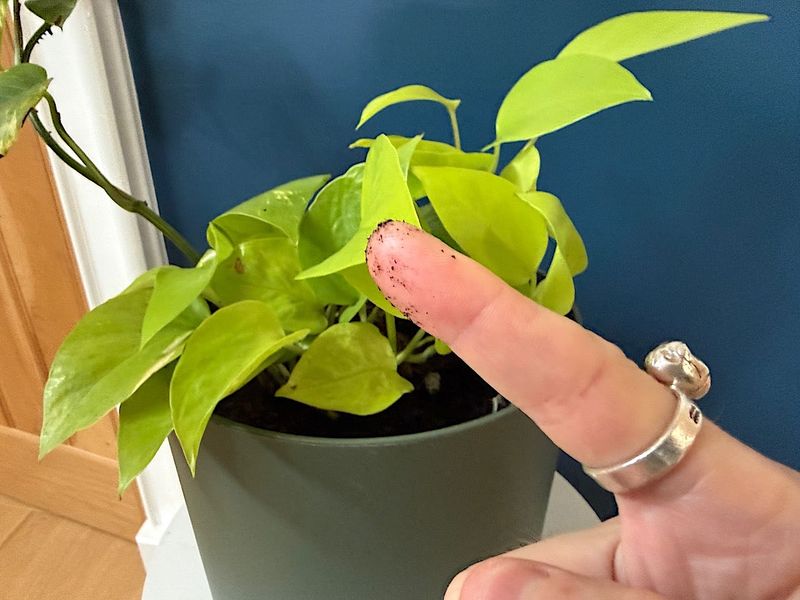
Before reaching for the hose, spend thirty seconds checking what the soil is actually doing below the surface. Push a finger or a thin trowel about two inches down next to the plant. If the soil at that depth feels moist and cool, the root zone probably has adequate water and the afternoon wilt you are seeing is more likely a heat response than a drought signal. University of Minnesota Extension recommends this two-inch soil check rather than relying on surface appearance or a fixed watering clock.
A dry surface can be misleading, especially under mulch. Straw or wood-chip mulch slows evaporation well enough that the top inch can look and feel bone dry while the soil an inch lower is still holding plenty of moisture. Watering based on surface appearance alone risks overwatering, which creates its own root-zone problems.
How quickly that two-inch zone dries out depends on several things beyond just the weather. Utah State University Extension notes that containers and sandy soils lose moisture far faster than heavier garden beds. Young transplants, large vines loaded with fruit, high heat, persistent wind, and poor drainage all change the timeline. Replacing a rigid watering schedule with a soil-based decision keeps you from watering too much or too little regardless of what the calendar says.
Morning favors overhead irrigation, while drip systems make timing less important
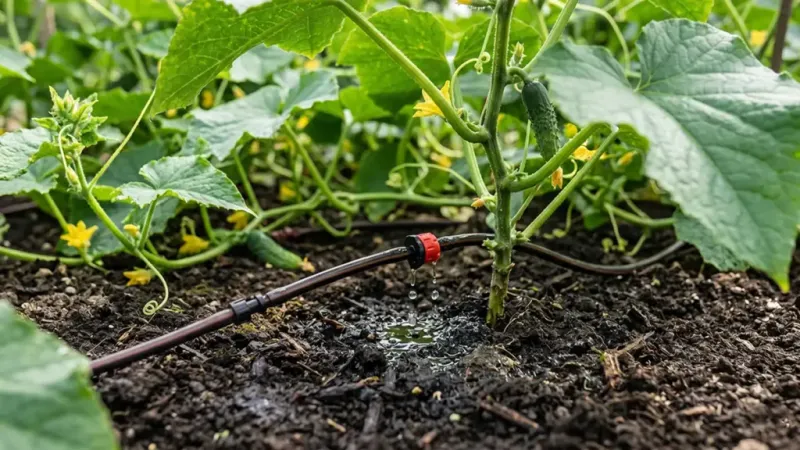
Watering time genuinely matters for some irrigation methods and matters much less for others. When you use a sprinkler or a handheld hose that wets the foliage, morning is a reasonable default. Leaves that get wet early in the day have hours of sunlight and airflow to dry out, which limits the prolonged moisture that fungal diseases prefer. University of New Hampshire Extension lists keeping foliage dry as one of the core steps for preventing common garden diseases, and morning overhead watering supports that goal.
Drip irrigation and soaker hoses work differently. They deliver water directly to the soil at the base of the plant, so foliage stays dry regardless of the hour. Penn State Extension’s review of drip irrigation timing found no consistent advantage for morning over afternoon application when water goes to the soil rather than the leaves. Getting the amount and frequency right matters more than the clock for drip systems.
One caution worth stating plainly: do not delay necessary water just to stick to a morning schedule. If your cucumber’s root zone is dry and the vine is genuinely stressed in the afternoon, UMN Extension advises watering as soon as practical, including during the afternoon or evening if that is when you discover the problem. A preference for morning is a useful habit, not a rule worth enforcing at the plant’s expense. Also worth skipping: the old claim that water droplets in sunlight scorch cucumber leaves.
Penn State Extension addresses this as a garden myth; the real concerns with overhead watering are evaporation and wet foliage, not a scorching effect from sunlight.
Water a dry root zone slowly and thoroughly
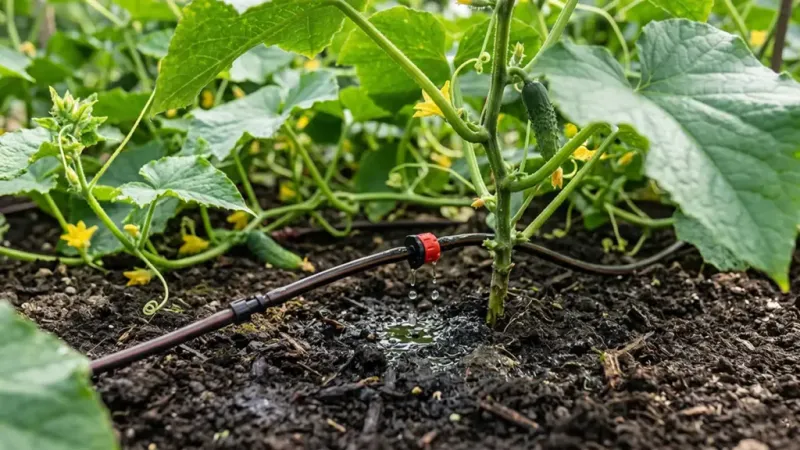
When the two-inch soil check confirms the root zone is dry, slow and steady wins. Pouring water quickly at the base of the plant often means most of it runs off the surface before reaching the roots. A soaker hose, drip line, or a hose set to a trickle held in place for several minutes gives water time to move down into the zone where cucumber roots actually feed.
Utah State University Extension and USU’s vegetable water recommendations both cite roughly one to two inches of water per week as a general starting point for cucumbers. Treat that figure as a loose reference rather than a prescription. Sandy soil drains faster and needs more frequent attention. Containers can dry out in a single hot day.
A large vine carrying several developing cucumbers pulls more water than a young transplant. High heat, dry wind, and low rainfall all push demand higher, while a recent soaking rain or heavy mulch may mean the plant needs nothing for days.
Consistent moisture also affects harvest quality. University of Minnesota’s irrigation strategies for vegetables connects uneven watering to bitter or misshapen cucumbers, and Penn State’s drip-system guidance reinforces that frequency and amount matter more than timing. One thorough watering can address a dry root zone, but it will not fix wilt caused by disease, stem injury, or damage from overwatering. If the vine stays limp after the soil is moist, something else is driving the problem.
Persistent or progressive wilt points beyond watering
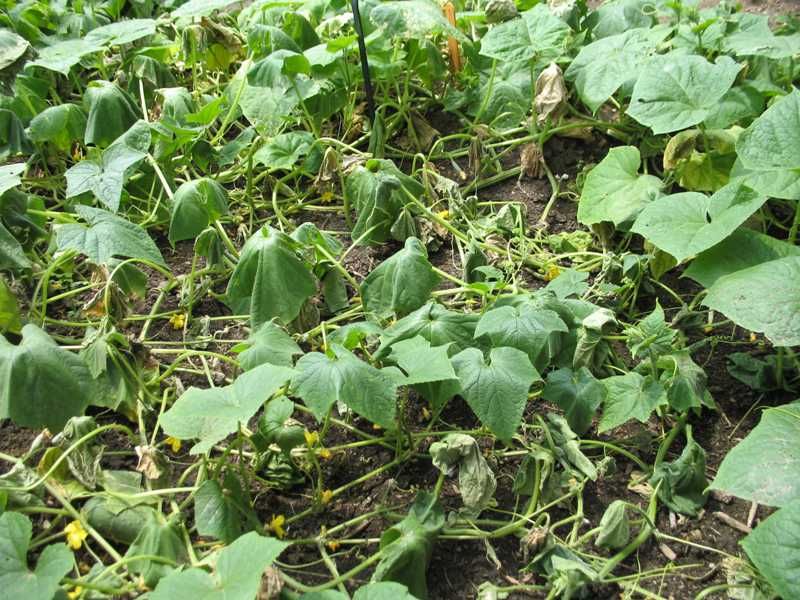
A vine that wilts by mid-afternoon and recovers by evening fits a heat-stress pattern. A vine that starts the morning already drooping, worsens steadily over several days, or develops yellowing and browning alongside the wilt is telling a different story. These are the situations where adding more water is unlikely to help and may make things worse.
Bacterial wilt is one of the first possibilities to consider when symptoms escalate. The disease is carried by striped and spotted cucumber beetles, and UMN Extension’s bacterial wilt page explains that infected plants can initially recover overnight before the wilt becomes permanent and the vine dies. University of Illinois Extension describes a field diagnostic test: cut a runner close to the crown, press the two cut ends together for a few seconds, then slowly pull them apart. Thin, thread-like strands of bacterial ooze stretching between the cut surfaces support the diagnosis.
A negative result does not rule the disease out, so continue watching for progression regardless.
Once bacterial wilt takes hold, extra water and pesticides will not reverse it. Illinois Extension’s cucurbit troubleshooting guide recommends removing infected plants to reduce the chance of beetles spreading the pathogen to healthy vines nearby.
Other causes of persistent wilt include overwatering and root rot, spider mite infestations, or stem injury. Squash vine borers are less common on cucumbers than on squash, but they can bore into stems and cause sudden collapse. Check the stem base for small entry holes or sawdust-like frass if you cannot identify another cause. UMN’s cucumber growing guide also notes that root problems from compacted or waterlogged soil can mimic drought wilt even when the surface appears moist.
Use the soil check and symptom pattern to choose your next step

Three observations guide every decision: what the vine looks like after the heat breaks, what the soil feels like two inches down, and whether symptoms are staying the same or getting worse. If the vine recovers each evening and the root zone holds moisture, hold off on watering and keep watching. Reflexive watering when the soil is already moist does the plant no favors.
If the soil is dry at two inches, water thoroughly at the base whenever you catch it, morning, afternoon, or evening. UMN Extension is clear that delaying needed water to honor a morning schedule is the wrong call. Penn State’s drip-irrigation review reinforces that timing is secondary to getting the amount right.
When the vine stays wilted into the evening, starts the morning limp, or begins yellowing and browning, stop adding water and start investigating. Check for cucumber beetles, look at the stem base, and consider the bacterial wilt cut-stem test. Colorado State University Extension draws the same line: morning wilt is a warning that afternoon wilt is not. A vine that revives reliably with cooler air is showing you heat stress; one that does not recover is asking you to look harder.