
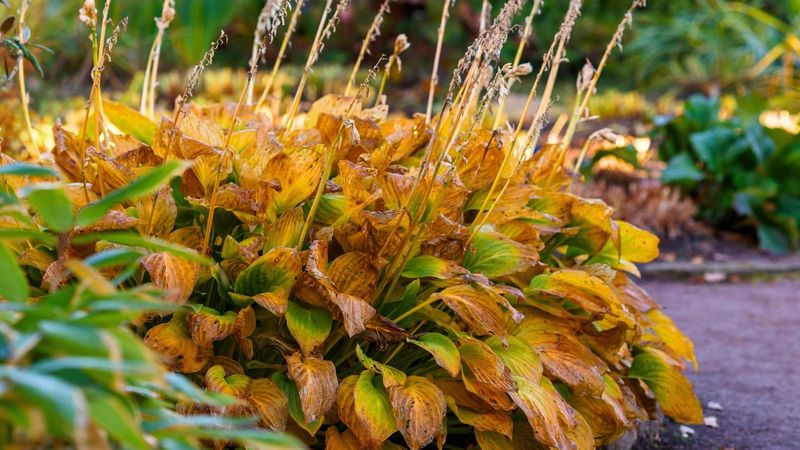
If you’ve heard that cutting hostas too late in fall will hurt next year’s growth, that warning has things backwards. The real risk is removing healthy green leaves too early, before the plant has finished its natural seasonal wind-down.
Hostas are tough, forgiving perennials, and knowing when to actually pick up the pruners makes all the difference for a clean, healthy bed.
The real hosta timing mistake happens while leaves are still green
Hostas regrow each spring from underground crowns and rhizomes, not from the leaves you see above ground. That means once the foliage is truly dead, removing it does not threaten next year’s plants.
Wisconsin Extension guidance recommends allowing hosta foliage to die back naturally so the plant can move nutrients into its root system before removal, and Ask Extension’s horticulture response confirms that cutting can wait until after the first frost or even until spring without causing harm.
The actual mistake many gardeners make is the opposite of what the warning suggests. Pulling out shears while the leaves are still green and upright, simply because the calendar says it’s fall, can cut short the plant’s normal seasonal transition before it’s complete.
Hostas are herbaceous perennials, meaning their above-ground growth dies back each year while the plant survives underground. North Carolina Extension notes that hosta foliage commonly dies back in late fall or winter, often when temperatures drop to around 28 degrees F or lower.
The right time to cut is after that natural decline, not before it.
Let the foliage—not the calendar—tell you when to cut
No single date works for every hosta in every yard. Foliage condition is a far more reliable guide than any fixed point on the calendar, and that condition shifts based on your local temperatures, cultivar, and how much shade the plant receives.
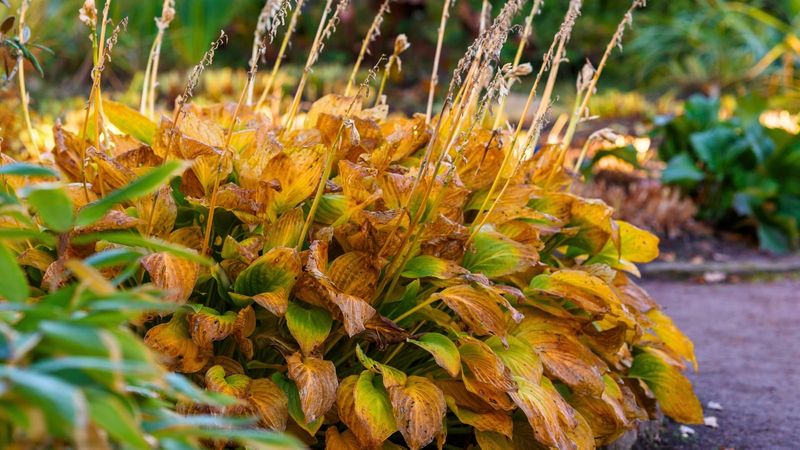
Illinois Extension recommends cutting hosta leaves and petioles after fall color has subsided, which is a plant-based cue rather than a date. Look for substantial yellowing or browning across most of the clump, foliage that has gone limp and collapsed onto the soil, or leaves that have been blackened and killed by frost.
Any of those signals tells you the plant has wound down and cleanup can begin.
One early yellow leaf does not mean the whole plant is ready. North Carolina Extension describes hosta foliage as dying back in late fall or winter, a process that plays out gradually.
Waiting for broad, consistent decline across the clump, rather than reacting to the first sign of color change, gives the plant the full benefit of its natural seasonal rhythm without leaving you standing in the garden with pruners for weeks before anything actually needs cutting.
Let hosta foliage complete its seasonal decline
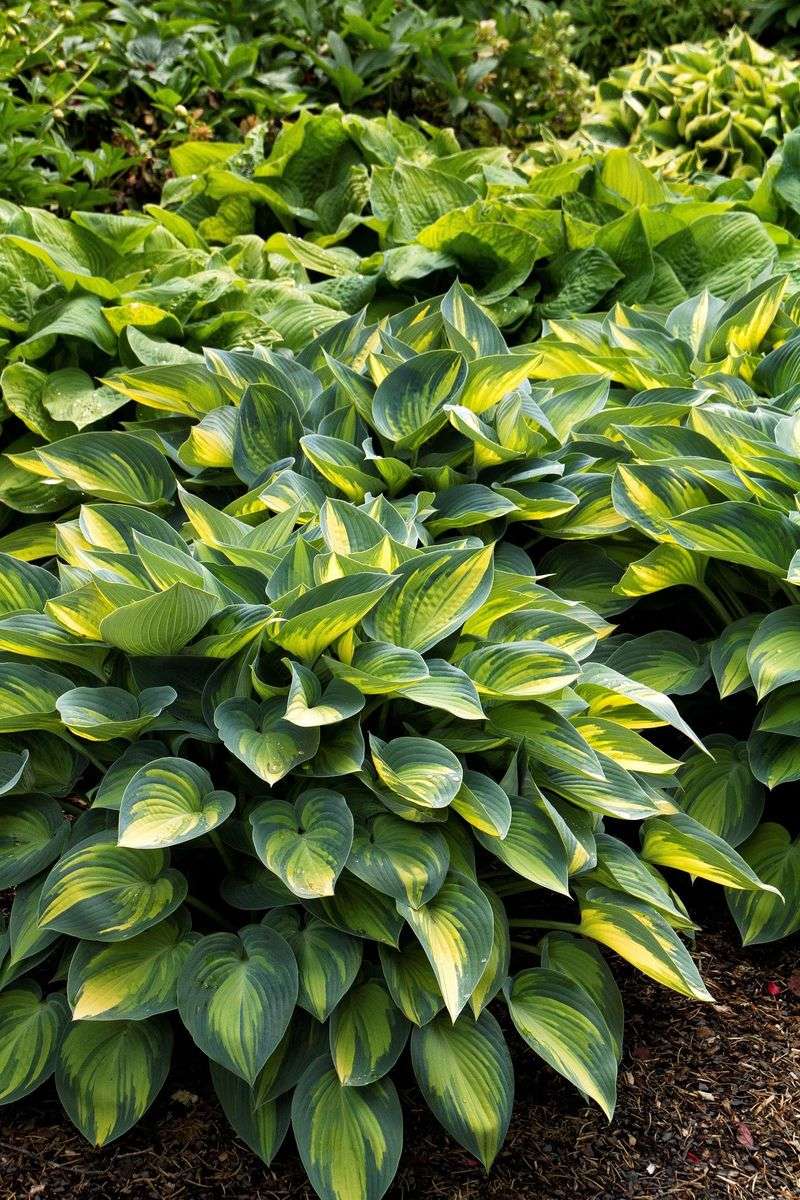
Active green hosta foliage is doing useful work. During autumn, perennial plants generally move carbohydrates and nutrients toward their below-ground structures as they prepare for dormancy.
Cutting healthy leaves before that process has run its course removes some of the plant’s working capacity during a period when it is still finishing the season.
Wisconsin Extension specifically advises letting hosta foliage die back naturally so the plant can complete this transition before leaves are removed. Wisconsin Extension’s fall color guidance also notes that autumn is an active period for plants, not simply a shutdown.
That said, extension sources do not establish a precise cutoff date, guarantee a measurable spring-growth benefit from waiting a specific number of days, or quantify exactly how much early cutting affects the following season.
What the guidance does make clear is that dead foliage, once frost has killed it or it has collapsed on its own, can be removed without concern. Ask Extension’s horticulture response explicitly states that waiting until spring to cut back spent foliage is also acceptable.
The practical takeaway: leave green leaves alone, and feel free to clean up once the plant has genuinely finished for the season.
Once the leaves collapse, cleanup is straightforward
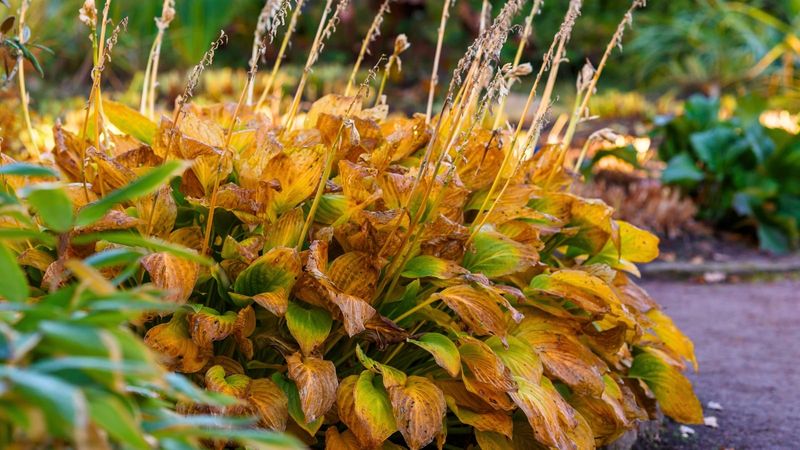
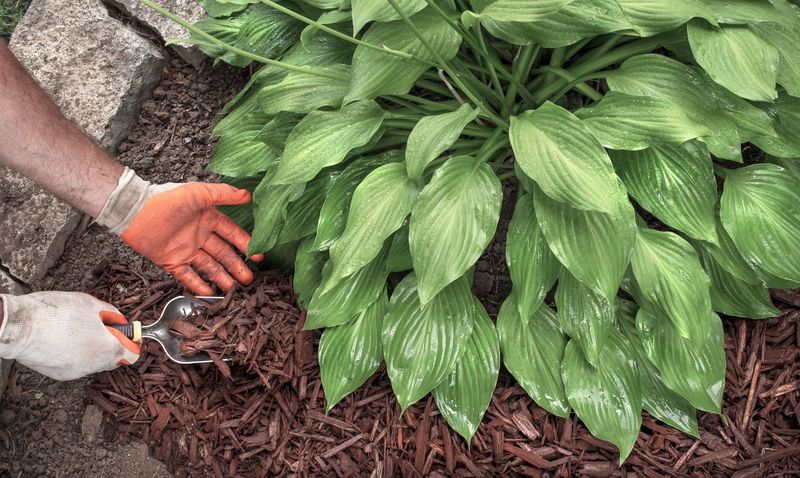
After frost has killed the foliage or the leaves have naturally yellowed and fallen, cleanup is simple and carries no risk to next year’s plants. Cut the leaves and petioles down close to the ground, leaving just a short stub so you can find the crown easily in spring without accidentally digging into it.
Illinois Extension recommends removing the foliage and petioles after fall color subsides and clearing wet leaves from around the crown, where soggy debris can sit through winter and create problems. That wet debris removal matters more than precise timing once the foliage is already dead.
Ask Extension’s guidance confirms that cutting after the first frost is perfectly acceptable, and that leaving the dead foliage in place through winter and cleaning up in early spring is also a reasonable option if you prefer it. Both approaches work.
The key distinction is that these instructions apply to foliage that is already dead, not to green, actively growing leaves that happen to be in your way on a mild fall afternoon.
Targeted fall cleanup can reduce wet-leaf and slug problems
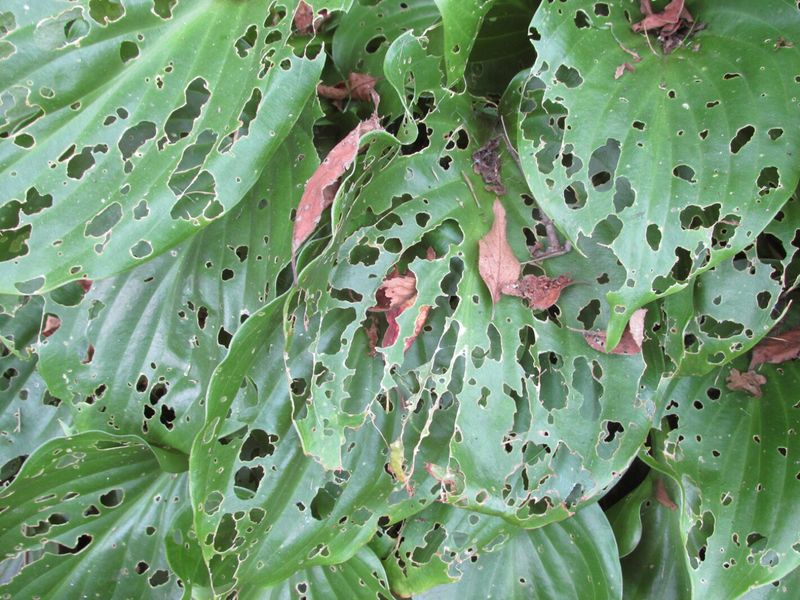
Removing spent hosta foliage has practical benefits beyond tidiness, but those benefits are most meaningful when specific problems are present. Wet, matted leaves left on the crown through winter can trap moisture and create favorable conditions for crown rot and slug overwintering.
Illinois Extension says fall cleanup can reduce future slug populations and specifically recommends removing wet leaves from around the crown where they shelter slugs, rabbits, and voles. If your garden has had consistent slug pressure, removing spent foliage in fall rather than leaving it until spring is a reasonable targeted response.
That said, Illinois Extension’s hosta slug guidance makes clear that slug management around hostas calls for thoughtful, targeted action rather than a blanket rule to strip every perennial bed bare. The strongest reasons to clean up hosta foliage are diseased material that should not overwinter in the bed, persistent moisture pooling around the crown, or a documented slug problem.
Tidiness alone is a lower priority than those practical concerns, and leaving some dead plant material in nearby beds can still support overwintering beneficial insects without affecting hosta health.
Brown leaves are not always a dormancy signal
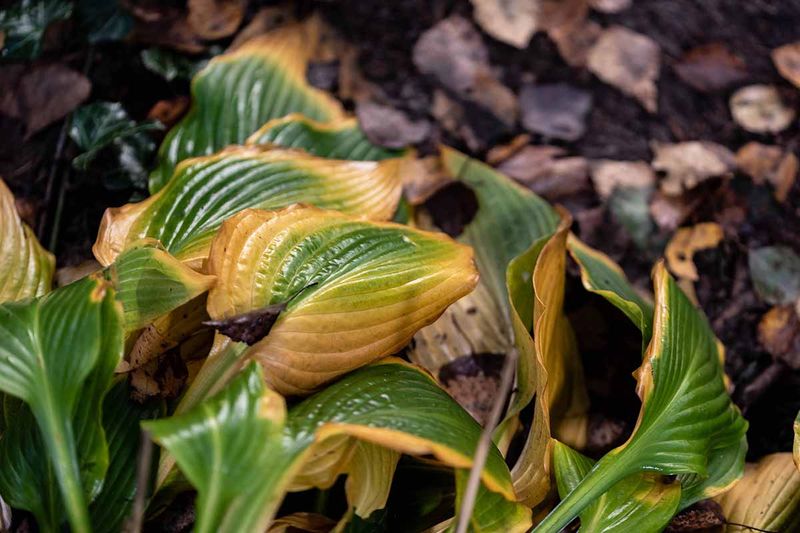
Not every hosta that turns brown or collapses in fall is simply going dormant. Several diseases and pests produce symptoms that look similar to normal seasonal decline, and treating them the same way can spread problems to healthy plants nearby.
Penn State Extension’s hosta disease guide describes several warning signs that set disease apart from routine dieback. Petiole rot causes a mushy, water-soaked base at the petiole with white fungal growth visible near the soil line.
Hosta Virus X produces unusual mosaic patterns, streaking, or mottling that does not match typical fall yellowing, and Penn State notes it can spread on hands and tools during division or cleanup. Foliar nematodes create brown, angular lesions between the leaf veins rather than the broad, even discoloration of normal decline.
A plant that collapses well before your other hostas, shows soft or rotted tissue at the base, or displays streaking that looks nothing like gradual yellowing deserves a closer look before you assume dormancy. Foliage with these signs should be removed and discarded rather than added to a home compost pile, and your pruners and gloves should be cleaned before moving to the next plant.
Iowa State Extension’s diagnostic guidance also notes that premature yellowing and collapse can indicate foliar nematode damage, which requires different management than routine fall cleanup. When in doubt, isolate the question before assuming the plant is simply done for the season.
Southern hostas need local cues, especially in Florida
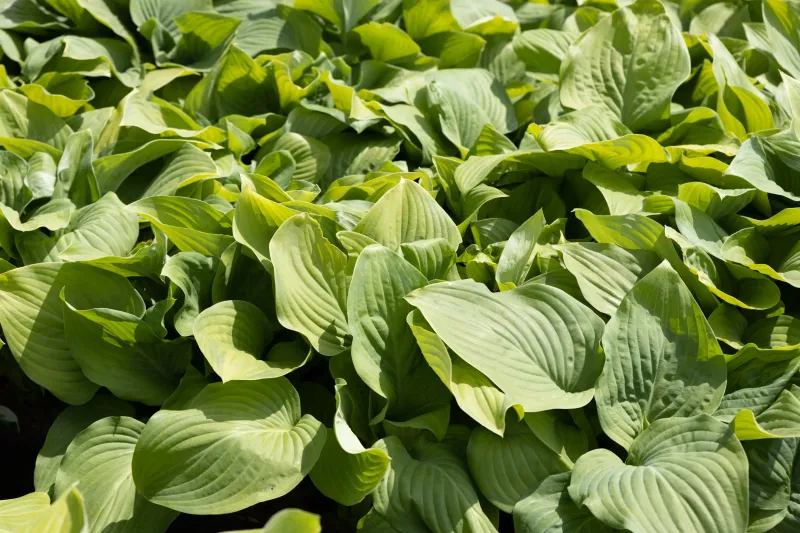
Gardeners in Texas, the Carolinas, and the upper South can generally follow foliage-condition cues without major adjustments, watching for frost damage and natural yellowing rather than a fixed date. Hostas in those areas still experience enough winter cold to go dormant reliably, though the timeline may run later than it does in the Midwest.
Florida is a different situation. North Carolina Extension notes that hostas need temperatures below 40 degrees F for a couple of months to complete their dormancy cycle.
UF/IFAS Santa Rosa County Extension identifies hostas as plants that prefer cold winters, and many standard cultivars perform poorly or produce weak growth in Florida’s warmer zones where adequate chilling is not guaranteed. North Florida can provide more winter cold than central or south Florida, so location within the state matters significantly.
Low-chill cultivars bred for warmer climates are a separate case and may perform better in zones 9 and 10, but they still need shade, consistent moisture, and careful site selection. For Texas gardeners, the advice is similar: follow your plant’s condition, note local freeze patterns, choose cultivars suited to your area’s heat and humidity, and make sure the planting site offers reliable afternoon shade and good moisture retention.
No single statewide schedule fits either Florida or Texas reliably.
Protect the crown without burying it
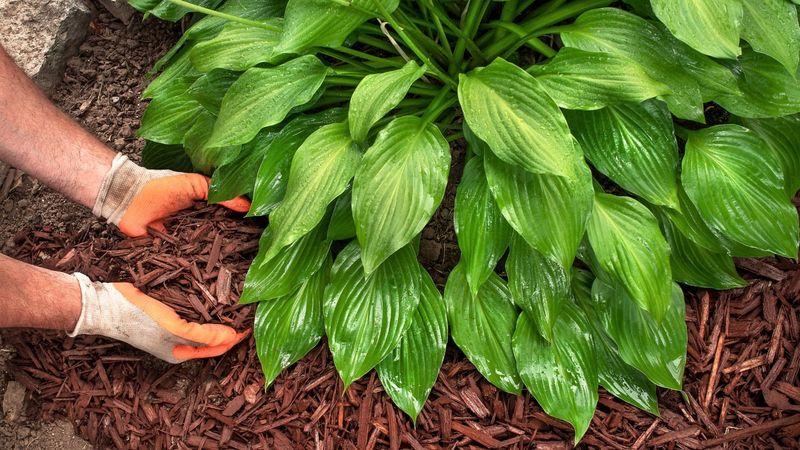
Most established hostas handle winter without any special protection once cleanup is done. Their energy is stored underground in the rhizomes, and a hard freeze that kills the foliage does not typically threaten a plant that has been in the ground for a full season or more.
Iowa State Extension’s hosta growing guide confirms that most established hostas do not need winter protection, while late-summer or early-fall plantings and recent divisions are more vulnerable. For those younger plants, a modest layer of clean, weed-free mulch placed over the root zone after the ground cools can reduce frost-heaving risk, which is the cycle of freezing and thawing that pushes shallow roots out of the soil.
The important limit here is placement. Penn State Extension warns against piling mulch or soil against hosta bases, connecting that practice to increased petiole rot risk.
Illinois Extension adds that excess winter mulch should be pulled back in spring to reduce crown-rot risk as temperatures warm. Keep mulch over the root zone and away from direct contact with the crown, and use a thin, breathable layer rather than a dense pile that traps moisture against the plant base through the cold months.
Use one simple rule: wait for decline, then clean up
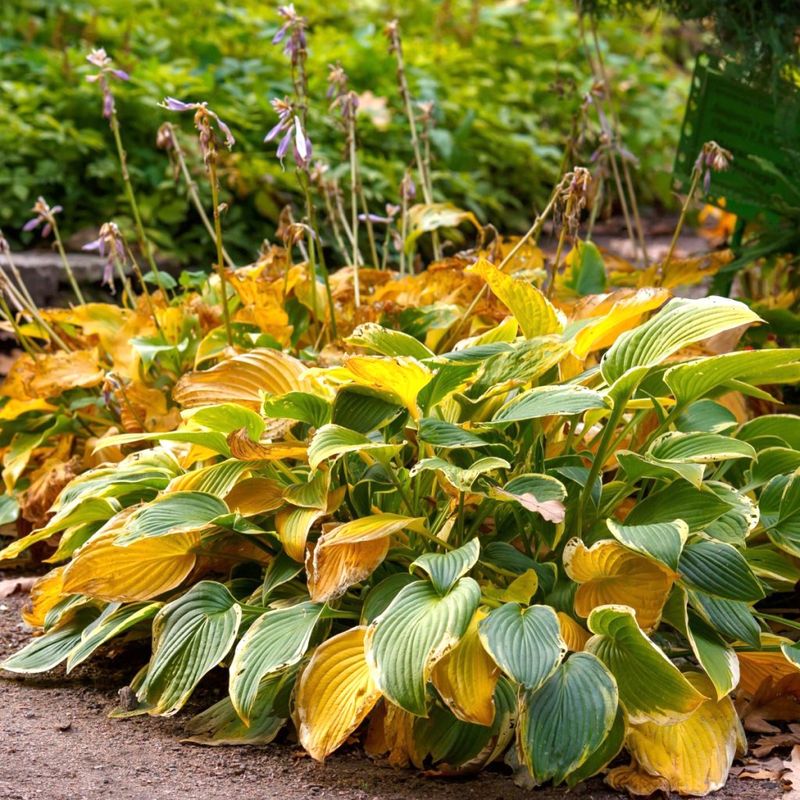
The clearest rule for hosta fall care is also the most forgiving: leave healthy green leaves alone, wait for the foliage to yellow, collapse, or be killed by frost, then cut it back close to the ground and remove any wet debris from around the crown. That sequence respects the plant’s natural timeline without requiring you to track a calendar date.
Wisconsin Extension and Ask Extension both confirm that cutting after frost or waiting until spring are acceptable options once the foliage has died. Late cleanup is generally not the threat to next year’s growth.
Handle diseased or suspect foliage separately, dispose of it rather than composting it, and clean your tools before moving to the next plant.
Southern gardeners in Texas and Florida should lean on plant condition and local freeze patterns rather than any fixed regional date. A hosta that still looks green and upright has more work to do.
One that has gone soft and brown is ready for the shears. The plants will tell you when it’s time, and next spring’s growth will reflect how well you listened.