
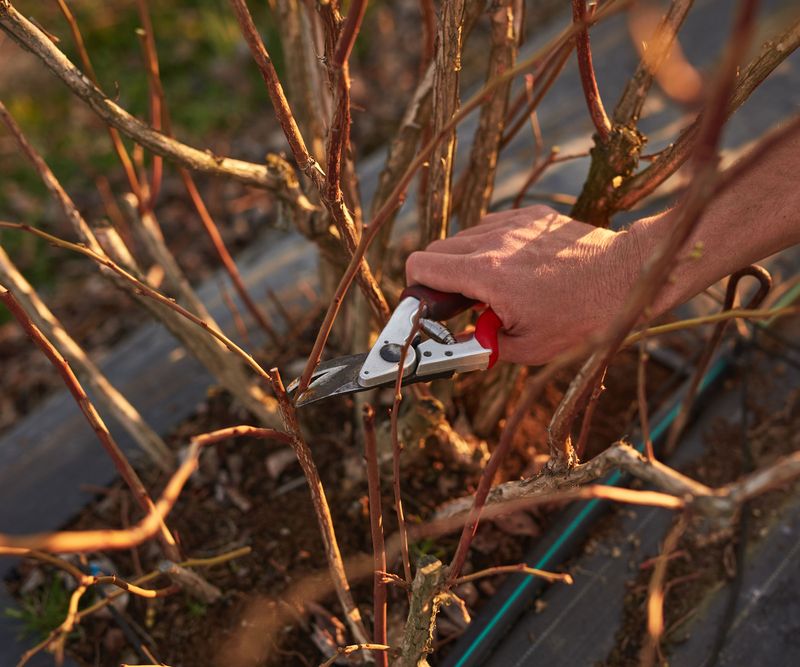
Those little shoot tips on your blueberry bush may already hold the flowers for next spring. Snip them at the wrong moment and some of the coming crop can go into the clippings.
Knowing where the buds sit and when they form helps you prune with purpose instead of guessing. Here is how Southern gardeners in Florida, Texas, and beyond can keep the bush healthy and still protect the fruit.
Next season’s flower buds develop on this year’s growth
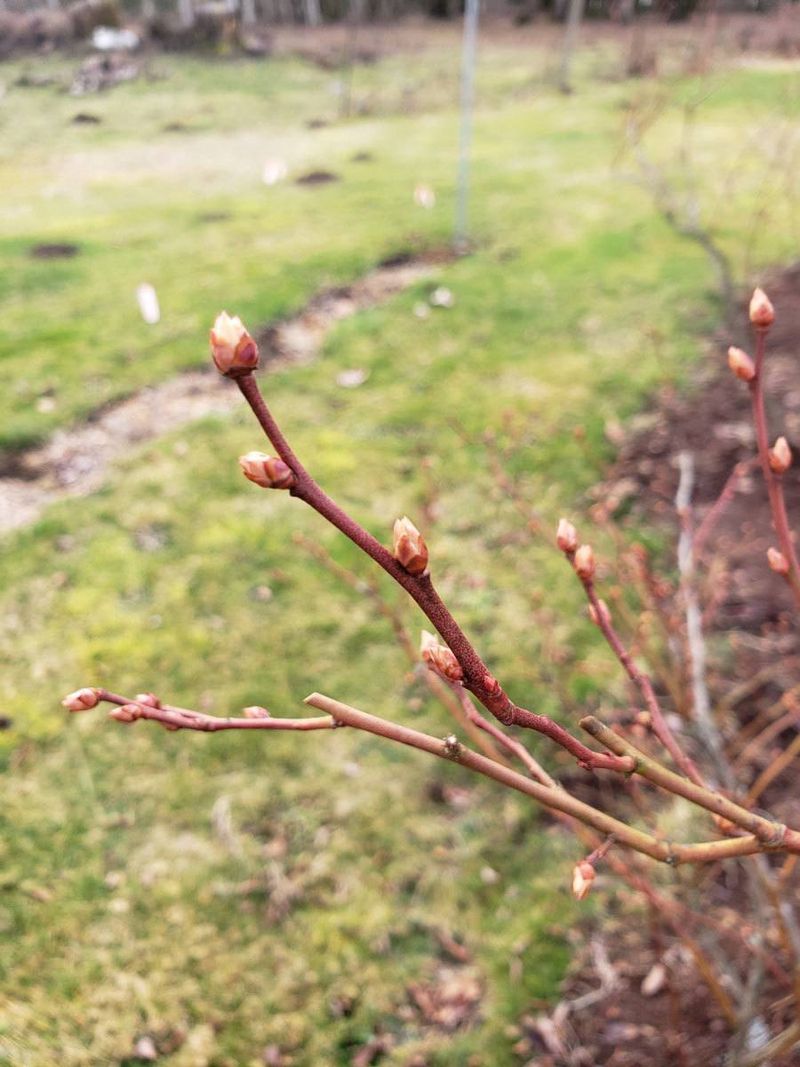
Flower buds that bloom the following spring form on the current season’s growth. That shoot you watched stretch out this summer will be one-year-old wood when it flowers, so it is not the old, woody cane that already fruited.
In the Southeast, UGA Extension describes flower-bud initiation as commonly starting in late summer and continuing into early fall. The exact timing is not a fixed deadline.
Weather, cultivar, and how the bush is managed all shift it.
A UF/IFAS study of two southern highbush cultivars also found differences between cultivars in when buds began to form. So your neighbor’s bush may be on a slightly different schedule than yours.
Not every shoot carries flower buds, and not every tip does either. But a healthy, vigorous shoot may already be holding part of the coming crop, which is why a cut in this window deserves a second look.
Recognize the buds before you cut
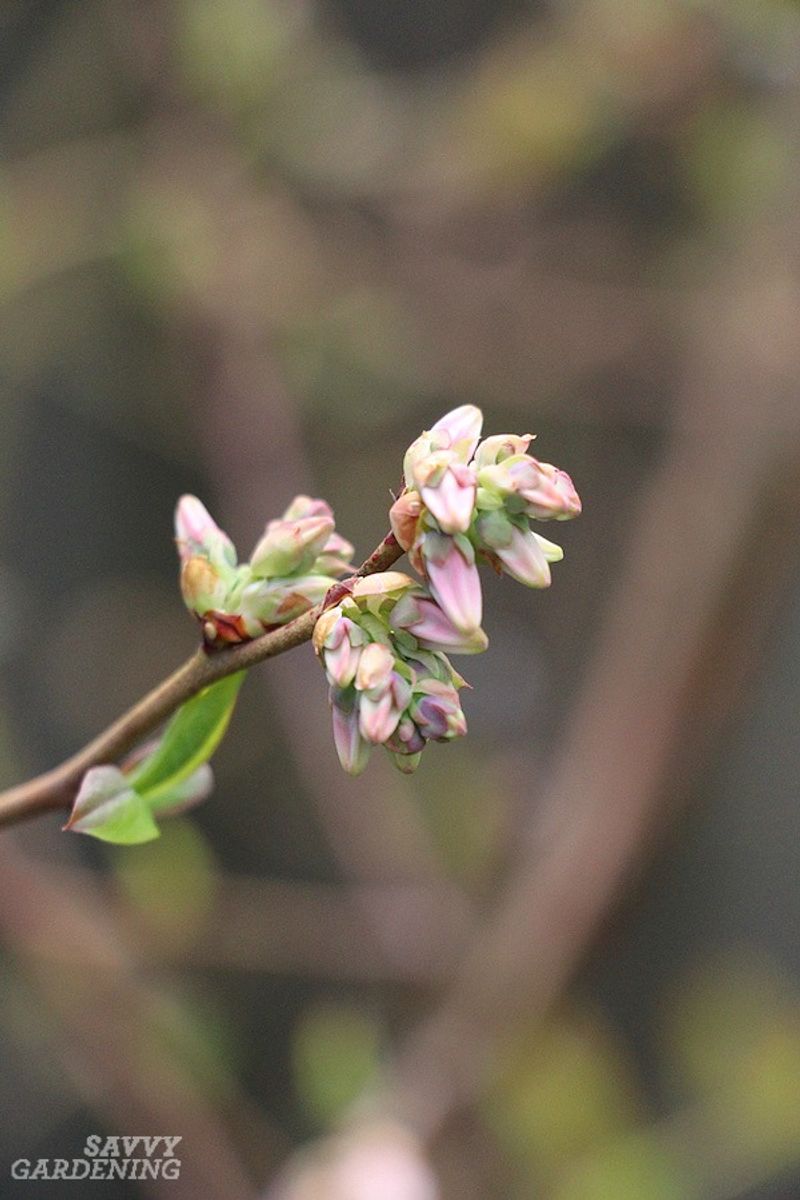
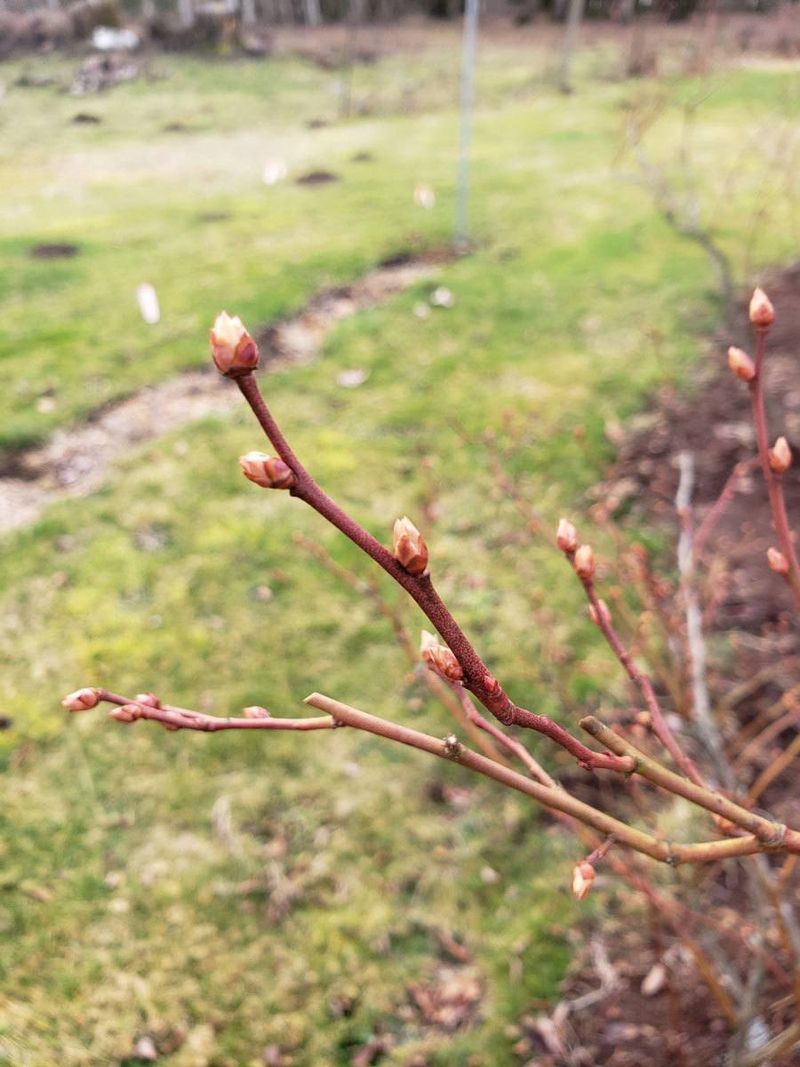
Take a slow look at a shoot before the pruners come out. Flower buds are typically larger and rounder, and you will usually find them toward the upper portion of the shoot, as UGA’s guide to blueberry buds explains.
Vegetative buds are smaller and more pointed. They sit lower along the stem and grow into leaves and new shoots rather than flowers.
Try a quick check on a few shoots. Run your eye from the tip downward and notice where plump, rounded buds give way to slim, pointed ones.
Some shoots will show plenty of round buds, while others may show few, so do not assume every tip is loaded.
That simple look tells you what a cut would cost. If you decide to protect the coming crop, you can leave healthy shoot ends that carry round buds alone and direct your cuts elsewhere on the bush.
Cutting a bud-bearing tip can reduce the coming crop
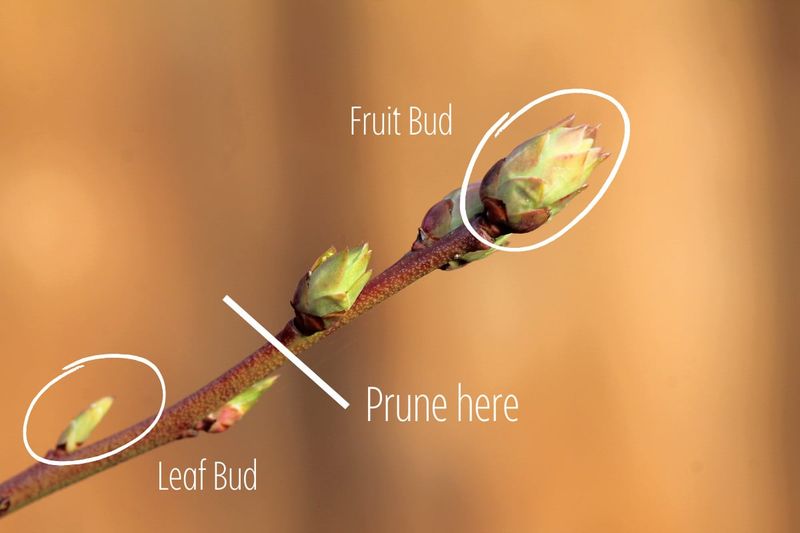
Here is the chain of events. A shoot tip carries flower buds, you cut off that tip, and the flowers that would have opened the following spring are gone.
Each bud removed is a bit of potential fruit removed with it.
The size of the loss depends on which shoots you cut and how much growth you take. Trimming a few stray tips costs far less than shearing the whole bush.
An autumn cut does not automatically mean a lost harvest.
Timing also is not a magic shield. UGA Extension guidance on pruning blueberries notes that cuts removing flower buds still reduce some potential fruit, even when made at the recommended dormant-season time.
Picture a gardener who tips every branch to keep the bush neat. Compare that with one who removes a few crowded, weak stems.
The first may take off many buds, while the second leaves most of them in place.
Prune selectively to manage the bush
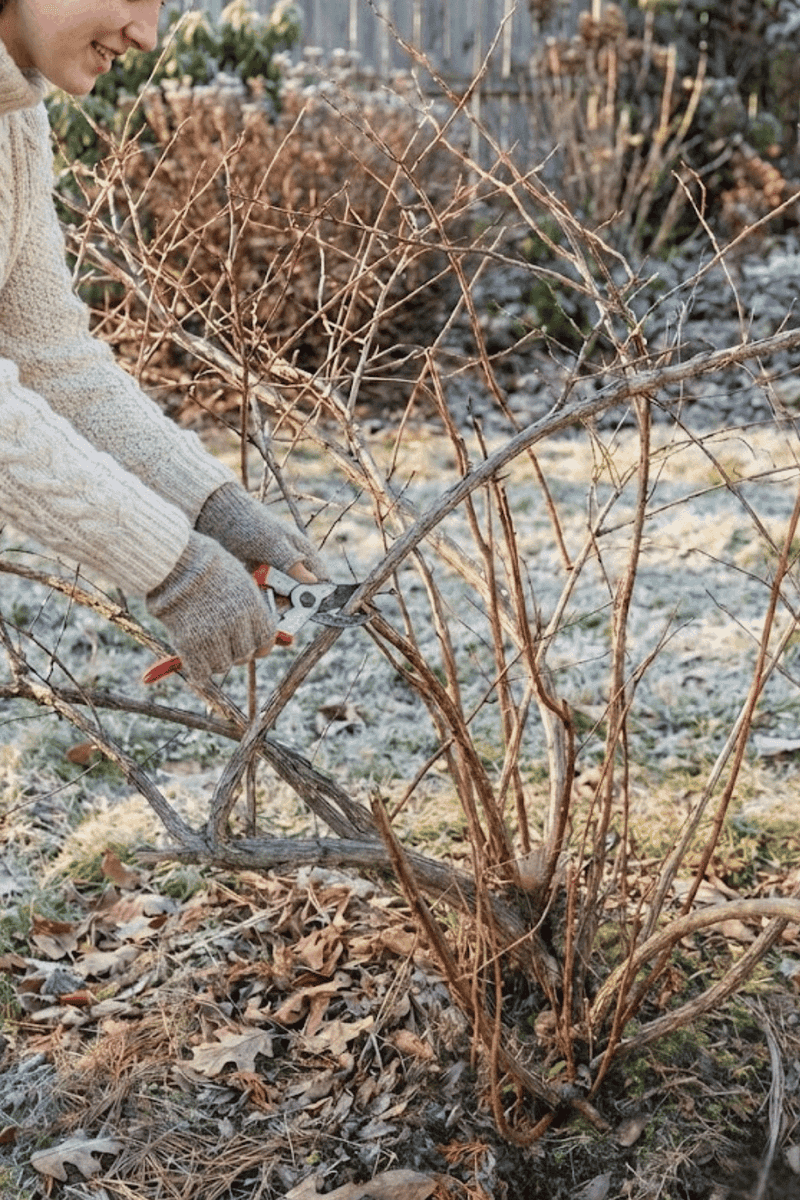
Pruning is a management tool, not a villain. Purposeful cuts take out old, weak, low, or crowded growth so the bush stays open, strong, and productive over the years.
That is very different from indiscriminate tip-cutting. Texas A&M AgriLife’s blueberry guide, which addresses rabbiteye blueberries, recommends occasional thinning and removing older branches to renew the bush.
Georgia guidance also describes cane renewal as selective removal of chosen stems.
Sometimes giving up a few flower buds is a fair trade. You might accept a lighter crop to improve structure, or to keep an overloaded bush from setting more fruit than it can carry.
Pruning does not guarantee a bigger harvest, but done with a plan it supports a healthier plant.
Match pruning guidance to the blueberry system
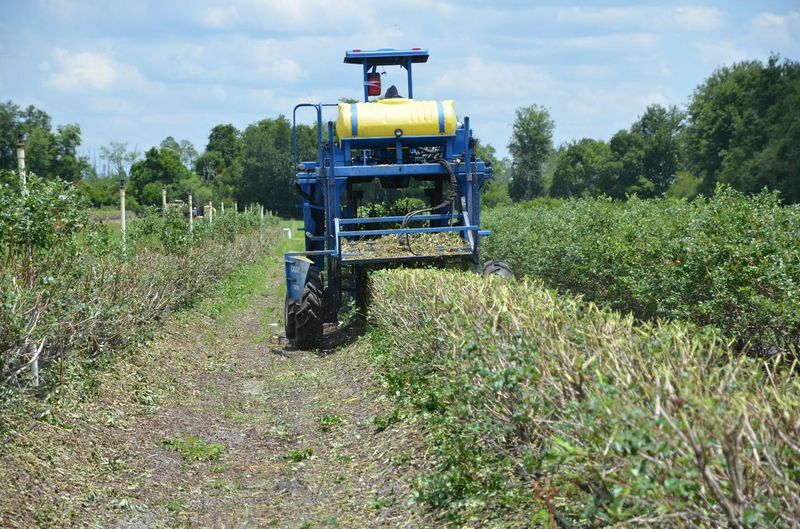
There is no single Southern pruning calendar. Georgia sources commonly describe late-winter or dormant-season structural pruning.
Florida southern highbush production guidance differs. UF/IFAS recommends postharvest hedging soon after harvest, usually in early June, with cane renewal in December or January for deciduous plantings.
It warns that delaying hedging until mid-to-late summer may harm flower-bud differentiation and yield. These are production recommendations, not a universal backyard rule.
Florida’s evergreen production system is its own case, since plants may keep their leaves instead of going dormant the way many general guides assume.
In Texas, the AgriLife guide covers rabbiteye renewal. It does not set a statewide fall pruning date.
Check which type you grow and ask your local county Extension office what fits your area.
Protect healthy tips, but remove dead or diseased wood
If protecting the coming crop is your goal, skip routine fall shaping that clips healthy shoot ends carrying buds. Save structural pruning for the time that suits your cultivar and local system, and remember that a dormant-season cut can still remove some flower buds, as UGA Extension notes.
Cleanup is a separate job. Dead or diseased wood can come out at any time, and Mississippi State Extension adds that winter pruning may reduce disease development through pruning wounds.
That is a possible advantage, not a guarantee.
Walk the bush with a plan. Mark the brown, brittle, or cankered stems first, then pick a few old or crowded canes if renewal is due, following the selective approach in Georgia’s pruning guidance.
A blueberry bush rewards a gardener who cuts with a reason for every snip.