
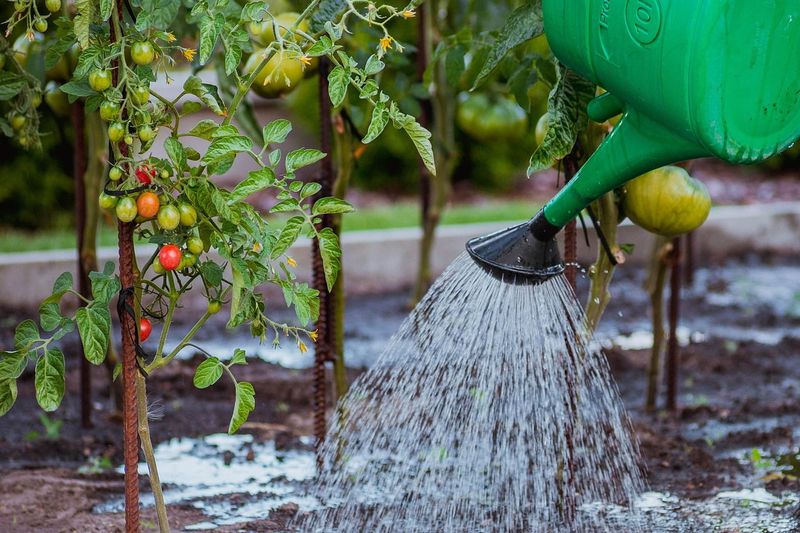
Watering your tomatoes every day sounds like good plant care, but the real story is more complicated than the calendar on your wall. The trouble is not how often you water – it is whether each watering actually reaches the root zone, drains properly, and matches what your plant genuinely needs.
Shallow drinks and soggy soil can quietly damage roots, invite disease, and throw off fruit development before you notice anything is wrong. Understanding what actually happens below the surface gives Southern gardeners a real edge when summer heat turns up.
The calendar is not the problem—the root zone is
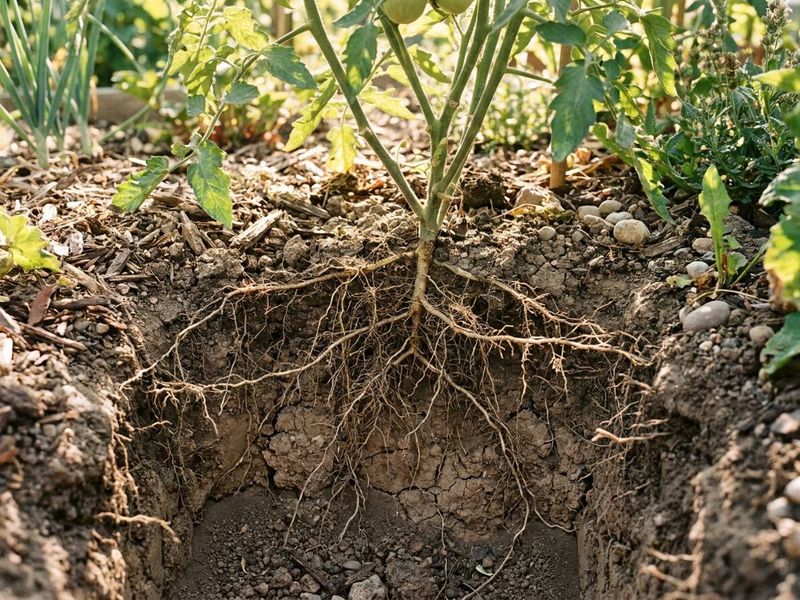
Frequency alone does not determine whether your tomatoes thrive or struggle. What matters is whether each watering thoroughly wets the active root zone, whether the soil drains well enough to let air return to the roots between sessions, and whether the total volume of water applied matches what the plant actually needs at that growth stage.
A gardener who waters every day with a slow drip system matched to plant demand and a fast-draining medium may be doing exactly the right thing. A gardener who soaks heavy clay soil to the point of saturation every morning is creating a different problem entirely.
The distinction that counts is volume, depth, and drainage – not the number of days between sessions. University of Minnesota Extension guidance on growing tomatoes emphasizes soaking the soil thoroughly and verifying how deeply it is wet, rather than treating the surface and moving on.
Applying a small amount every day can leave roots concentrated near the top of the soil, while applying too much at once can fill pore spaces with water and cut off root oxygen.
Frequent irrigation may be appropriate when a fast-draining medium and high crop demand call for it. UF/IFAS irrigation management guidance makes clear that crop water needs vary with plant type, growth stage, evaporative demand, and soil type – making soil moisture a more reliable guide than any fixed schedule.
Judge the root zone, not the clock.
Shallow drinks train roots to stay shallow
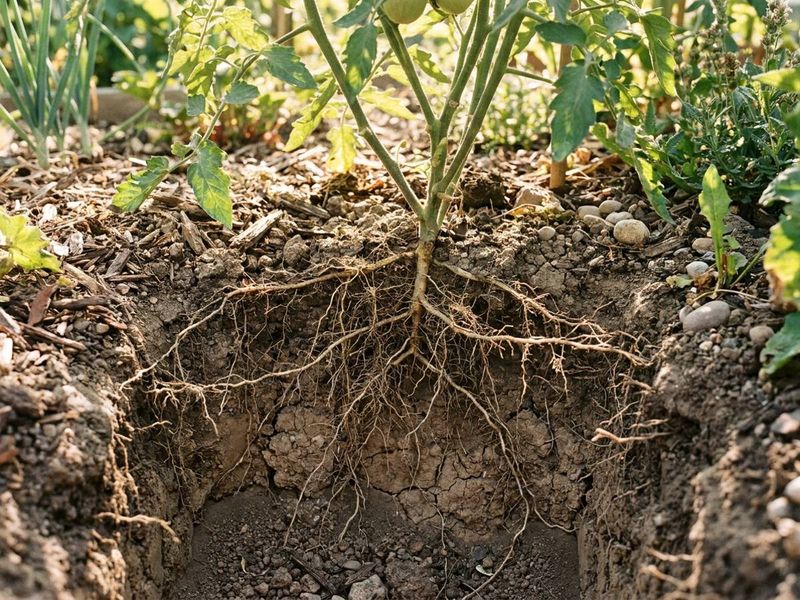
Roots follow water. When irrigation only wets the top inch or two of soil, roots have little reason to push deeper, and most of the root mass ends up concentrated just below the surface.
That matters enormously during a Southern summer, because the top layer of soil heats up fast, dries out quickly between waterings, and offers far less stability during drought or heat stress than a deeper root system would.
A quick sprinkle and a thorough soaking are not interchangeable, even if they happen on the same schedule. University of Minnesota Extension recommends soaking the soil deeply and checking how far down the moisture actually reached – because a plant that looks watered from the top may have a dry root zone just a few inches down.
Shallow roots are more exposed to temperature swings, more vulnerable to brief dry spells, and less able to pull nutrients from a broader soil volume.
Frequent irrigation can still be appropriate when it genuinely wets the surrounding root zone and matches the medium’s drainage and the plant’s demand. The goal is not to water less often by default – it is to make each watering count by moving moisture down to where the active roots are growing.
A slow, steady application at the base gives water time to infiltrate rather than run off the surface.
What happens when wet soil runs out of air?
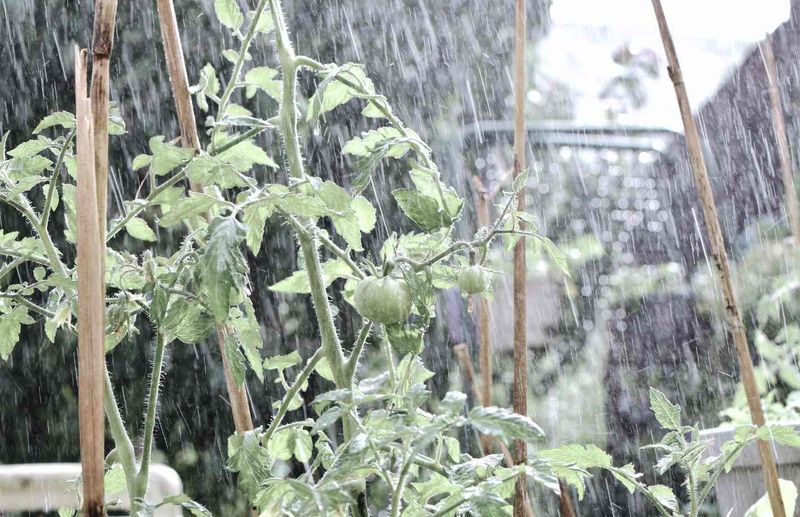
Roots need oxygen as much as they need water. Soil is not solid – it contains a network of pores that ideally hold a mix of water and air.
When those pores stay filled with water for extended periods, roots cannot get the oxygen they need to function. Penn State Extension’s guidance on excess water and soil resilience explains that prolonged saturation can lead to root dysfunction, nutrient leaching, root rot, plant stress, and in severe cases, plant death.
This risk is separate from shallow watering. A gardener can water deeply and still cause oxygen problems if the soil drains poorly or if water is applied faster than it can move through the profile.
Heavy clay soils, compacted beds, and containers without adequate drainage holes are the most common culprits in Southern gardens. In those situations, repeated soaking does not simply give the plant more of what it needs – it replaces the air around the roots with water and keeps it there.
The contrast worth understanding is that a well-drained sandy medium or a properly built raised bed can handle more frequent irrigation without staying saturated, because water moves through quickly and air returns to the pore spaces between sessions. The problem is not wetness itself but prolonged, oxygen-poor saturation – and the solution starts with knowing your soil’s drainage before setting any watering routine.
The harvest pays for uneven moisture
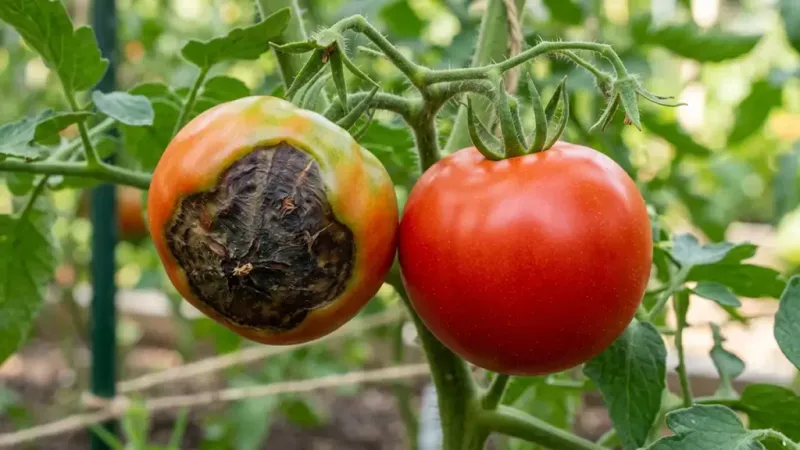
Tomato plants are sensitive to moisture swings at every stage from flowering through harvest. Research on deficit irrigation and tomato yield found that water deficits, particularly during sensitive growth stages, can reduce yield, fruit size, and quality – meaning too little water carries its own harvest cost alongside too much.
Fruit cracking happens when a dry spell is followed by a heavy drink. The skin stops expanding during the dry period, then splits when the fruit suddenly takes up more water.
Blossom-end rot is a related but distinct problem. UGA Extension’s tomato troubleshooting guide identifies drought or uneven watering, root damage, and excess nitrogen as factors that aggravate it – and Oregon State University Extension explains that blossom-end rot is a physiological disorder involving calcium movement into developing fruit, not simply a shortage of calcium in the soil.
Adding a calcium supplement will not fix the problem if moisture management stays erratic, because the plant cannot move calcium into fruit effectively when roots are stressed or moisture is inconsistent.
Disease risk is another consequence of poor watering habits. UGA’s guide to cultural problems in tomatoes notes that wetting foliage and causing soil splash can increase the spread of fungal and bacterial diseases – though disease development depends on pathogen presence, weather, and cultivar susceptibility as well.
Keeping water at the base and off the leaves reduces that risk without eliminating it entirely.
Check below the surface before adding more water
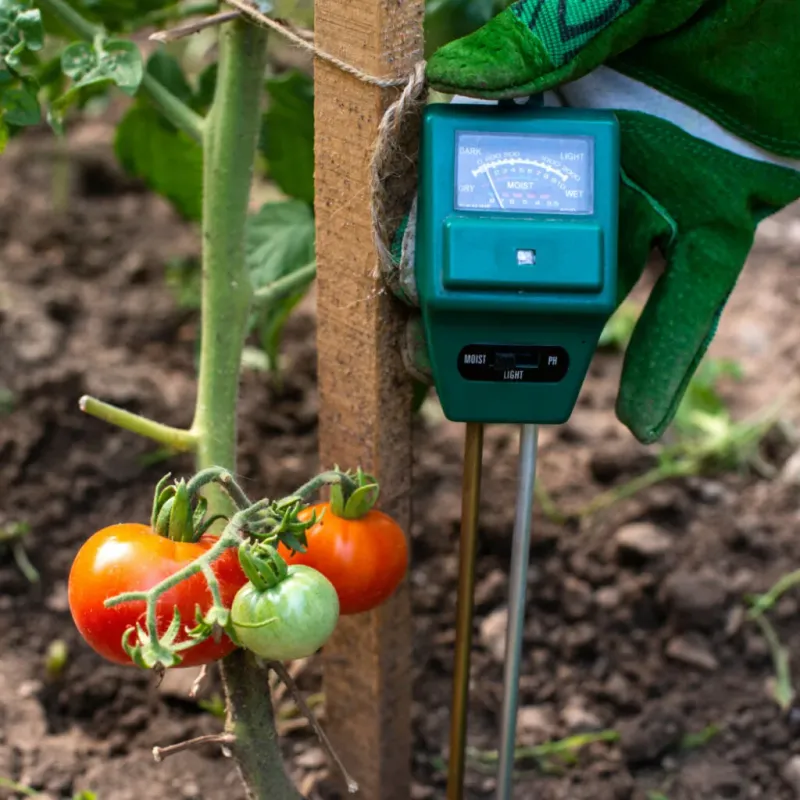
The most reliable watering tool a home gardener owns is a finger or a trowel. Before turning on the hose or the drip timer, push your finger or a narrow trowel two to three inches into the soil beside the plant.
If it feels moist at that depth, the root zone likely has enough water. If it is dry that far down, it is time to water.
If it feels soggy or smells sour, the soil needs to dry out before any more water goes in.
UGA Extension’s guidance on watering tomatoes recommends aiming to wet the soil roughly 6 to 8 inches deep for established plants, adjusting for soil texture and drainage. Sandy soil may need more frequent checks because it dries faster; clay holds moisture longer and can stay too wet between sessions.
Containers dry out more quickly than in-ground beds and may need checking daily during peak summer heat.
Wilting leaves are not a reliable stand-alone signal. University of Minnesota Extension notes that heat can cause temporary midday wilting even when soil moisture is adequate, and plants with damaged roots can wilt even when the soil around them is wet.
Checking moisture below the surface gives you real information; watching leaves alone does not. If a plant droops at noon but perks up by evening, heat stress is the more likely cause than drought.
A better watering routine starts at the base
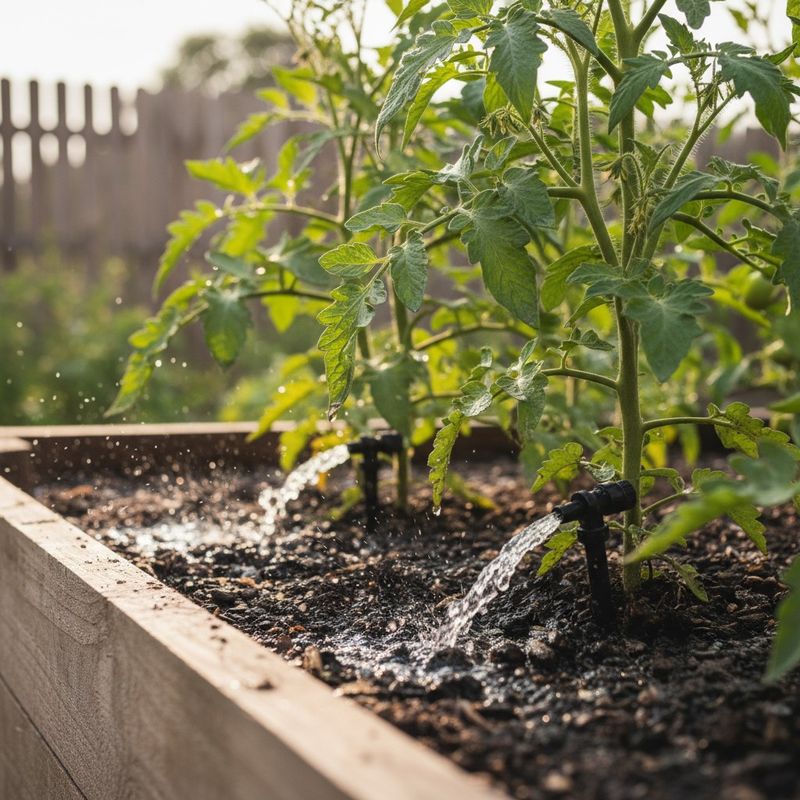
Apply water slowly at the plant’s base until the root zone is thoroughly wet, then wait until the soil begins to dry before watering again. Slow application gives water time to move down through the soil profile rather than running off the surface or pooling around the stem.
A drip line, soaker hose, or careful hand watering aimed at the soil rather than the leaves keeps foliage dry and reduces soil splash, both of which lower the conditions that allow fungal and bacterial diseases to spread.
UGA’s cultural problems guide and UGA’s tomato watering guidance both recommend base irrigation as a way to reduce disease risk while keeping moisture where it counts. A 2 to 3 inch layer of mulch around the plant helps hold soil moisture between waterings, moderates soil temperature, and smooths out the wet-dry swings that lead to cracking and blossom-end rot.
Gardeners whose soil stays wet for days after watering need to address drainage before adjusting frequency. Adding water to a poorly draining bed on a fixed schedule compounds the oxygen problem rather than solving it.
Penn State Extension points out that improving drainage and allowing the root zone to begin drying is the correct response to persistently saturated soil – not simply cutting back on watering days while leaving the underlying drainage problem in place.
Southern conditions can make frequent watering the right choice
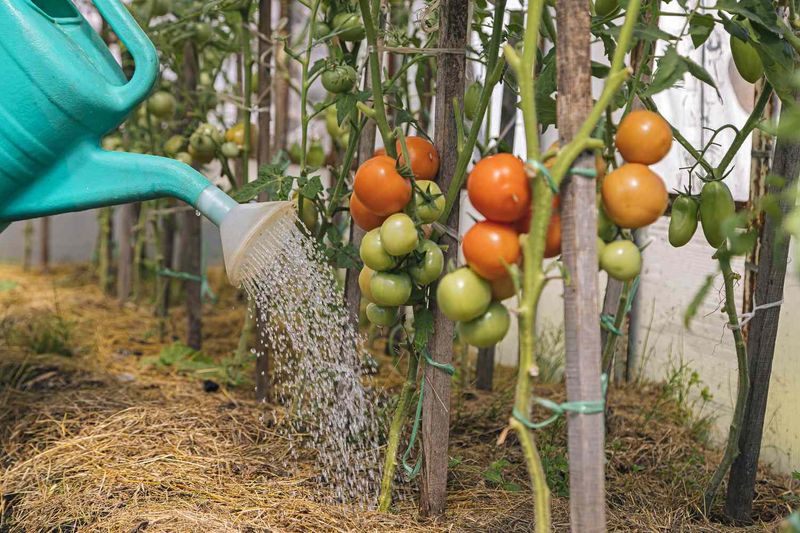
Not every garden situation calls for stretching the interval between waterings. Containers dry out faster than in-ground beds because they hold a limited volume of soil and lose moisture through their sides and drainage holes.
During a Texas summer with temperatures in the high 90s and low humidity, Texas A&M AgriLife Extension notes that fruiting tomatoes may need irrigation about every other day, with at least an inch of water applied, for maximum production – with the interval lengthening when weather cools or rainfall arrives. That example reflects extreme evaporative demand, not a universal schedule.
Sandy or very fast-draining soils present a similar situation. Water moves through quickly, roots dry out sooner, and waiting several days between sessions can create water stress even when the surface looks fine.
Newly transplanted seedlings also need more attention – their root balls are small, they have not yet established contact with surrounding soil moisture, and they can dry out faster than established plants even in mild weather.
Greenhouse production takes this further. UF/IFAS greenhouse vegetable production guidelines report that mature fruiting tomatoes grown in soilless media can use roughly 2 to 2.5 quarts of water per day during peak harvest, with irrigation frequency set by the growing medium’s water-holding capacity.
Florida’s broader vegetable guidance, via UF/IFAS irrigation management principles, favors soil-moisture monitoring over fixed schedules for exactly this reason. One more factor worth naming: heat above roughly 95 degrees Fahrenheit can cause tomatoes to drop blossoms regardless of moisture, so watering more often will not overcome heat-related fruit set problems during the peak of a Southern summer.
Water for the harvest, not for the calendar
The clearest decision rule for Southern tomato gardeners is this: wet the active root zone thoroughly, check below the surface before the next session, let the soil begin to dry, and change your interval whenever soil type, weather, containers, drainage, or plant stage changes. Research on tomato irrigation and yield confirms that both drought and excess moisture can reduce performance, which means the goal is neither less water nor more water by default.
The target is consistent moisture with adequate air around the roots. University of Minnesota Extension puts it plainly: soak thoroughly, then check how deep the moisture reached before deciding when to water again.
A garden that follows the soil rather than the schedule gives tomatoes the stable conditions they need to set fruit, fill out, and deliver the harvest you planted them for.