

Walk outside on a cool October morning and you might find your favorite azalea or viburnum chewed down to bare stems overnight. Deer pressure on ornamental shrubs can spike when their preferred foods become less available, but the timing and severity depend heavily on where you live, local deer numbers, and what else is growing nearby.
For Florida and Texas homeowners, the damage can show up any time from late summer through winter. Knowing what you are dealing with and acting fast makes a real difference.
Seasonal scarcity changes the menu, but not on the same schedule everywhere
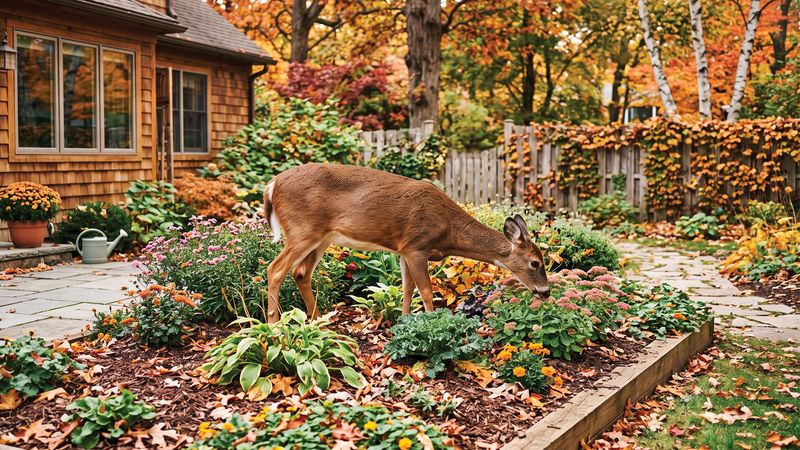
White-tailed deer are remarkably adaptable eaters. U.S.
Forest Service research on white-tailed deer confirms that their diets shift with season, rainfall, habitat, and what food happens to be most available at a given time. In fall, that menu can include acorns, agricultural crops, wild fruits, and a wide variety of browse, so the idea that forage simply runs out in autumn is too simple.
What does happen is that deer tend to rely more heavily on woody browse and landscape plants when preferred green forage becomes less available or less nutritious. In the Southeast, that shift may not hit until late fall or even winter, depending on rainfall, mast production, and local deer density.
A drought year or a poor acorn crop can push deer into suburban landscapes well before the calendar says fall.
The practical takeaway for Southern gardeners is to respond to fresh damage rather than wait for a specific date. Check your shrubs now.
Ragged, torn leaf edges and missing terminal buds are early warnings that deer have found your yard. Acting at the first sign of browsing is far more effective than trying to reverse an established feeding pattern once deer have decided your landscape is reliable food.
First identify whether deer are browsing, rubbing, or reaching through a barrier
Before spending money on repellents or fencing, take five minutes to look closely at the damage. Browsing leaves behind ragged, torn edges on leaves, missing buds, and snapped terminal branches, especially on growth that deer can reach from the ground up to about five or six feet.
Young, tender stems are hit hardest because deer prefer soft, nutritious growth over older woody material.
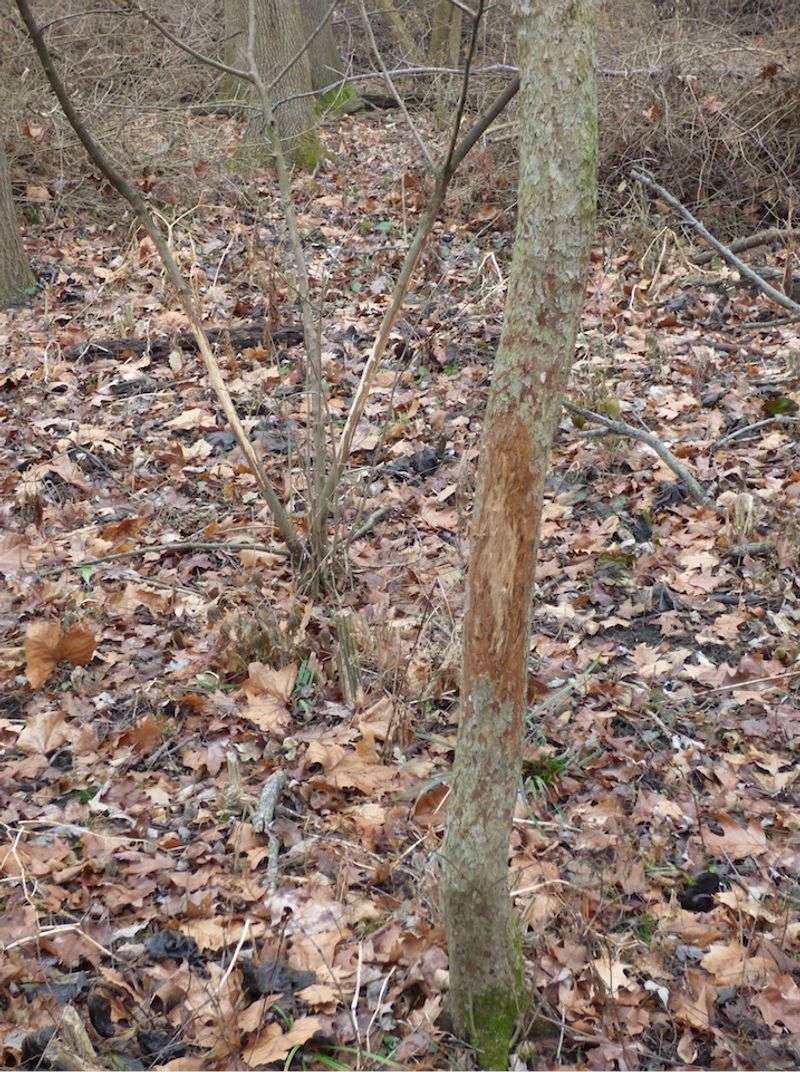
Antler rubbing looks completely different. University of Minnesota Extension guidance on protecting trees and shrubs notes that bucks rub their antlers against trunks and branches in late summer and fall, which strips bark, breaks small branches, and can girdle a young shrub or tree entirely.
The damage concentrates on the trunk and lower scaffold branches rather than the leafy canopy.
This distinction matters because a foliage spray aimed at deer browsing will not reliably stop a buck that is using your crape myrtle to scrape velvet. Physical protection is more dependable for rubbing.
A sturdy trunk wrap, a rigid cage around the base, or a secured wire cylinder placed around the lower trunk gives rubbing bucks nothing useful to work against. For shrubs showing both types of damage, plan for both a canopy enclosure and a trunk guard, because one solution rarely covers both problems at once.
A real barrier beats a scent when the planting matters most
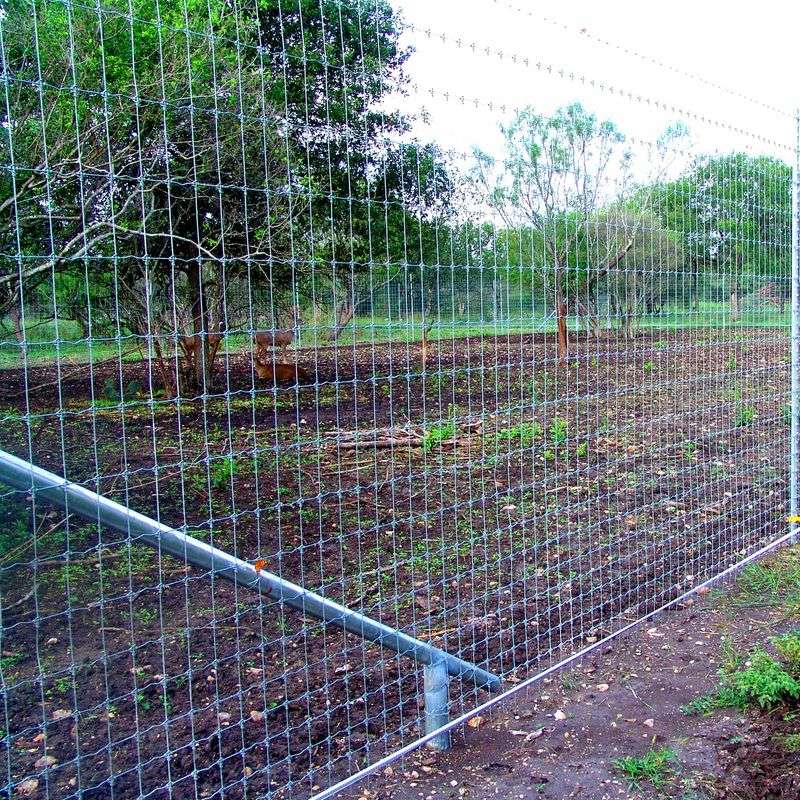
Physical exclusion is the most dependable protection available, and it is worth understanding what that actually means before buying materials. Mississippi State University Extension guidance on discouraging deer identifies a sturdy woven-wire fence approximately 8 feet high as the strongest general recommendation for keeping deer out of a landscape.
Deer can clear lower fences, particularly with a running start on level ground, so 8 feet is the dependable target for a true exclusion fence rather than a loose guideline.
Height alone does not make a fence work. A closed, properly latching gate matters as much as the fence panels themselves.
The bottom of the fence needs tight contact with the ground so deer cannot push underneath it, and the layout should avoid corners or narrow passages where deer might feel trapped and attempt to jump. Regular inspection for gaps, sagging sections, or storm damage keeps the barrier functional over time.
University of Minnesota Extension advice on keeping animals out of gardens also notes that electric fencing is a separate system, not a casual substitute for a well-built physical fence. Electric setups require appropriate energizer equipment, regular vegetation clearing beneath the wires, routine maintenance, and attention to local ordinances and household safety.
If you have children or pets in the yard, factor that into the decision before installing any electrified system.
For one shrub, build a cage that blocks the foliage—not just the trunk
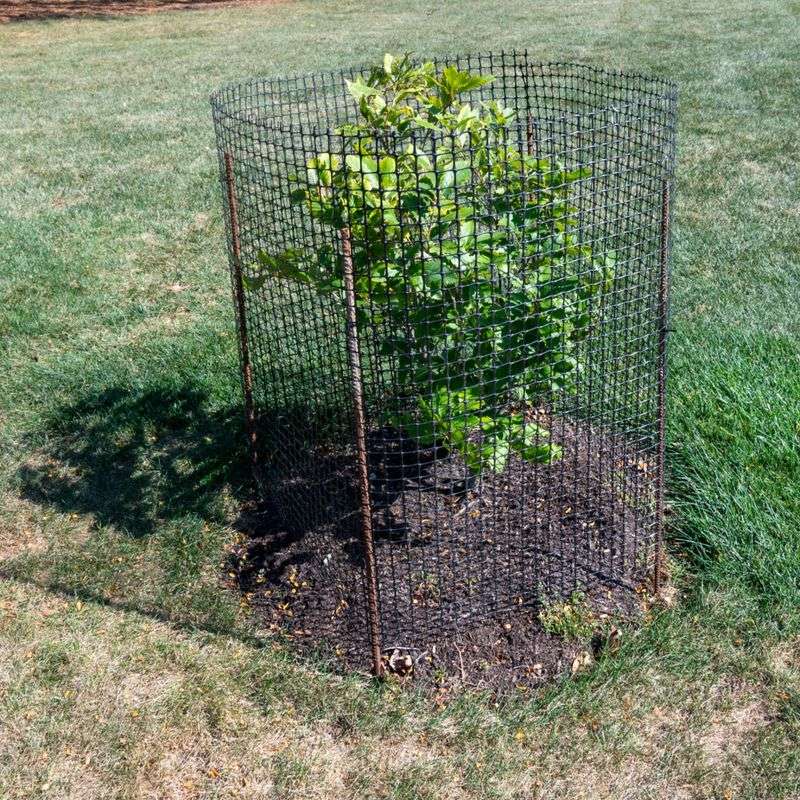
A full perimeter fence is not realistic for every yard, and many homeowners just need to protect a handful of prized shrubs. A sturdy cage or rigid wire enclosure built around an individual plant can do the job well when it is sized and secured correctly.
UF/IFAS guidance on deterring nuisance wildlife supports using physical barriers around individual plantings and warns specifically against extremely thin netting that can trap birds and other wildlife.
The cage needs to surround the browseable growth, not just the trunk. Deer eat leaves, buds, and soft branch tips, so a cylinder of fencing that only wraps the lower stem leaves the canopy completely exposed.
Build the enclosure wide enough that deer cannot reach through the mesh to grab foliage, and tall enough to stay above the plant’s accessible growth as it matures. For young shrubs, plan to expand the cage as the plant grows.
Secure the bottom of the enclosure firmly to the ground. Deer will push and probe, and a cage that tips or lifts at the base is not much of a barrier.
University of Minnesota Extension recommends rigid guards and seedling tubes for young trees and shrubs, emphasizing that protection should cover accessible growth rather than just the base. Check every cage monthly for damage, shifting, or any gap where mesh has pulled loose, and look for signs that wildlife has become entangled in loose or sagging sections.
Repellents can reduce damage, but they demand a maintenance plan
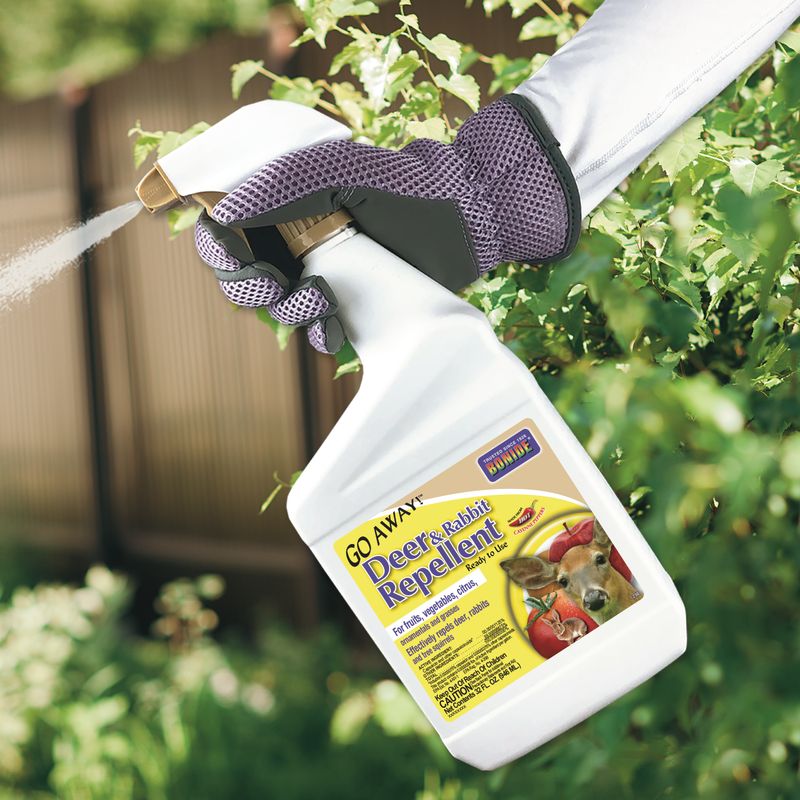
Commercial repellents work best in specific situations: small areas, early-stage browsing, or moderate deer pressure where deer have other options nearby. Penn State Extension’s guidance on white-tailed deer in home plantings is candid about the limits here – repellents are damage-reduction tools, not guarantees.
Very hungry deer may ignore even well-applied products, and success varies by product, local deer density, weather, plant growth rate, and how accustomed local deer have become to the smell or taste.
Odor-based repellents work by making an area smell threatening or unpleasant to deer. Taste-based products coat foliage so deer find it unpalatable.
Rain, irrigation, and new plant growth all dilute or wash away active ingredients, which is why reapplication on schedule matters as much as the initial treatment. An egg-and-water spray is one option that University of Minnesota Extension research on protecting plants from deer found can reduce browsing when applied thoroughly and reapplied roughly every two weeks or after heavy rain.
Under severe pressure or in winter when deer are truly hungry, its performance drops considerably.
Always read the current product label before applying any registered repellent. EPA pesticide labeling guidance makes clear that a product approved for ornamental shrubs may not be approved for vegetables, fruit trees, or herbs.
Follow the label for application site, rate, timing, and reapplication intervals without exception. A repellent used outside its labeled scope is being used illegally, regardless of how natural the ingredients sound.
“Deer-resistant” plants lower the odds; they do not end the problem
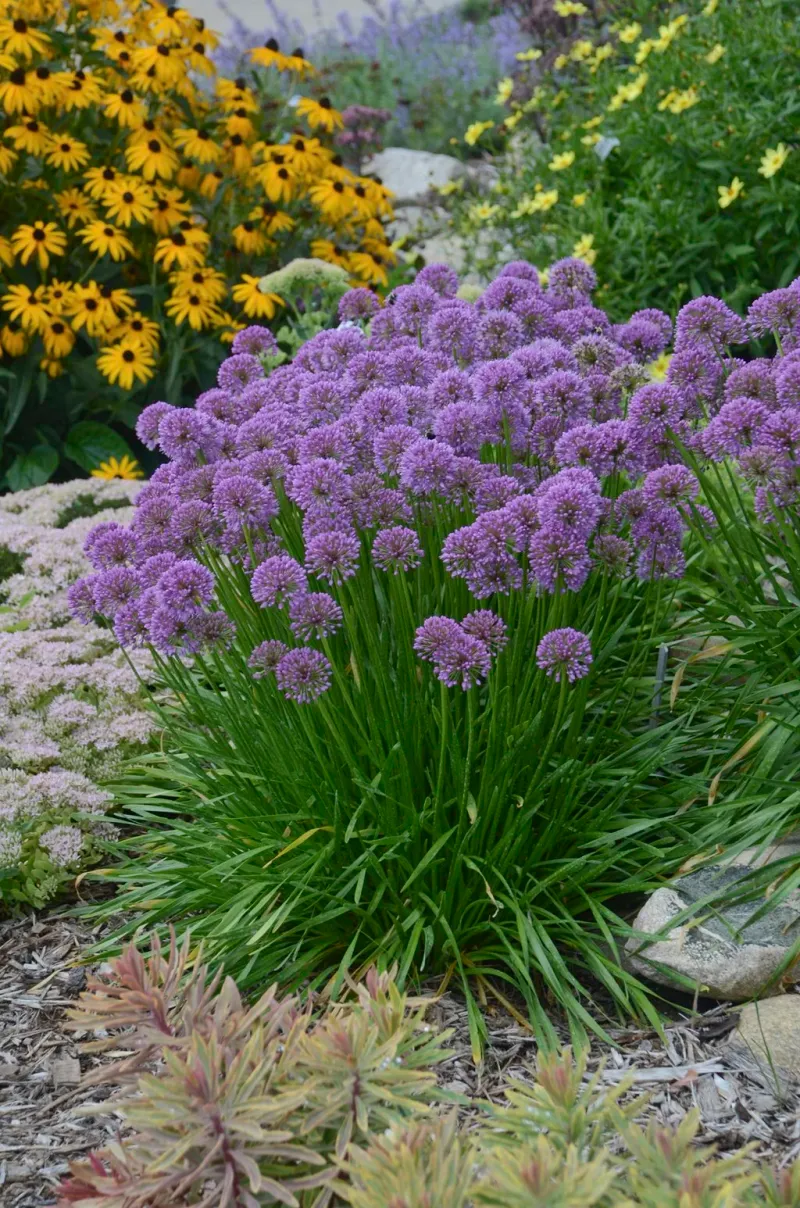
Swapping out heavily browsed shrubs for less-preferred species is a smart long-term move, but plant selection works best as a second layer of protection after physical exclusion, not as the main defense. Mississippi State University Extension’s overview of deer-resistant plants explains that characteristics like strong fragrance, coarse or leathery leaves, fine hairs, thorns, latex sap, or natural toxicity tend to make plants less attractive to deer.
The key word is less attractive. No shrub is truly deer-proof when animals are hungry enough.
For Texas gardeners, Texas A&M AgriLife Extension’s guide to deer in the urban landscape lists plants that tend to see lighter browsing pressure in Texas landscapes, including ceniza (Texas sage), yaupon holly, rosemary, juniper, agarita, yucca, evergreen sumac, and autumn sage. Even these may be browsed during drought or when deer populations are high.
The Texas A&M AgriLife Earth-Kind Plant Selector is a useful tool for checking regional adaptation before you plant, though it does not provide deer-resistance ratings on its own.
Florida readers need a different lens entirely. UF/IFAS deterrent guidance supports physical barriers and regionally adapted planting, but adaptation to Florida’s climate is a separate question from whether deer prefer a plant.
Before replacing a damaged shrub anywhere in the South, check that the replacement is suitable for your specific region, not listed as invasive locally, and safe around pets and children.
Use scare devices only as backup, and skip unsafe shortcuts
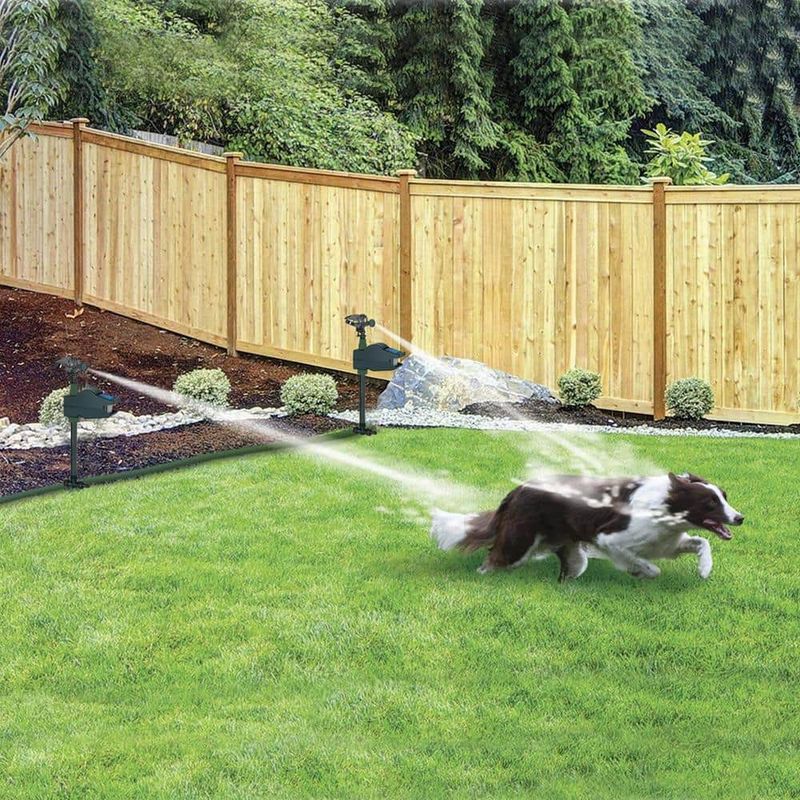
Motion-triggered sprinklers, flashing lights, and noise-making devices can discourage deer temporarily, but deer are quick learners. Penn State Extension’s large garden pest guidance frames scare devices as supplemental measures because deer habituate to them, sometimes within days or weeks.
Moving the device to a new location or rotating between different scare methods can extend their usefulness, but they should never be the primary line of defense for a shrub you genuinely care about.
Some shortcuts are worse than useless. Outdoor mothball use is not a safe or legal deer deterrent.
EPA pesticide labeling guidance is clear that using a pesticide in a manner inconsistent with its label is a violation of federal law, and mothballs are labeled for enclosed spaces only. EPA guidance on avoiding illegal household pesticide products also cautions that products without proper registration may never have been evaluated for effectiveness or safety.
Irish Spring soap, human hair, predator urine, and similar household materials may have limited situational use, but none of them should be treated as a reliable standalone solution.
The most effective approach combines layers: identify the damage type first, then install the strongest feasible physical barrier, add a labeled repellent when pressure is moderate, inspect and maintain everything on a regular schedule, and replace vulnerable plants only after confirming regional suitability. A deer that finds one gap in your plan will find the shrub.
The goal is to leave no gap worth finding.