
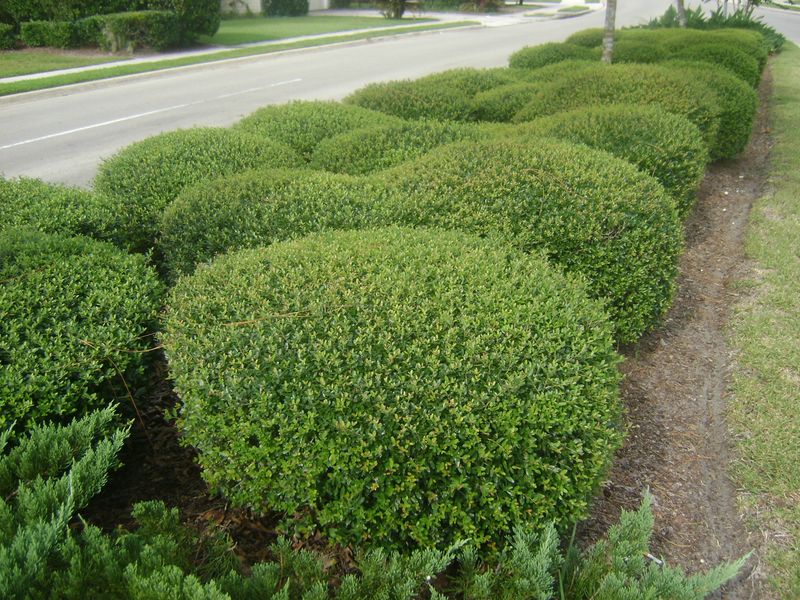
Foundation beds look neat from the street, but the mix of mulch, fallen leaves, and thick plants right against the wall can give outdoor roaches a cozy place to hang out. Florida homeowners have many shrub choices, and one native option is dwarf yaupon holly.
It is compact and needs little pruning, but it is not a roach repellent. Here is how to pick it, place it, and care for the bed so there is less shelter next to your house.
Foundation beds can provide outdoor roaches with shelter
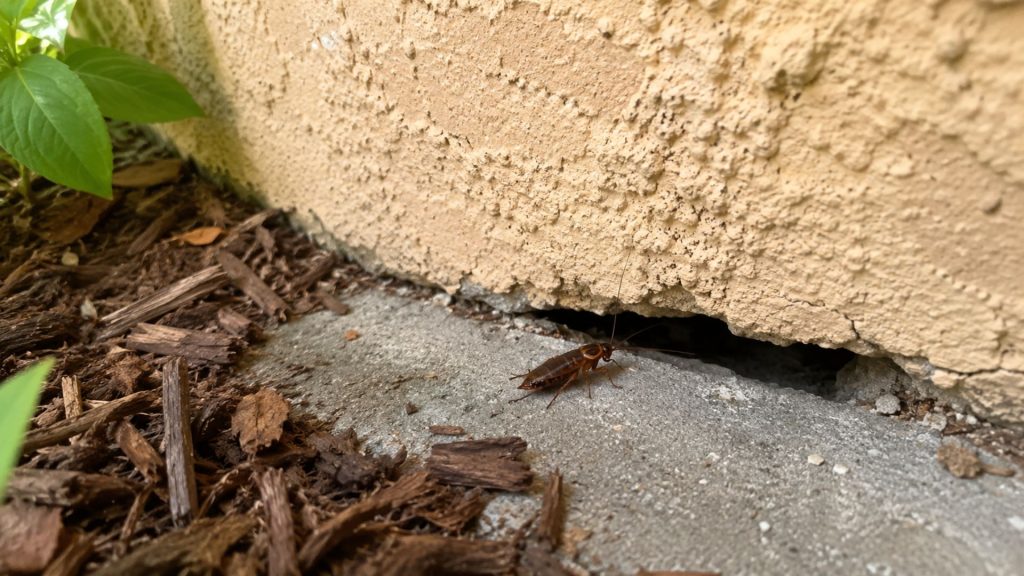
Walk around your house and look at the beds along the wall. Outdoors, cockroaches can be found in leaf litter, mulch, tree holes, palms, and under vegetation, according to UF/IFAS cockroach guidance.
A foundation bed can offer all of those things in one narrow strip.
That does not mean every shrub causes a roach problem. Plants are not a proven highway into your home, and plenty of well-kept beds sit beside roach-free houses.
The concern is how the bed is built and maintained: thick mulch that stays damp, piles of fallen leaves, and plants jammed together or pressed against the siding.
UF/IFAS landscaping advice on keeping pests from entering your home points to the same fixes. Space plants apart, keep them away from the structure, and keep mulch thin near the foundation.
These are habitat changes, and they reduce potential shelter rather than guarantee that roaches stay away.
Because of that, judge the whole bed before you swap any plant. Ask yourself a few questions.
Are branches touching the wall? Is mulch piled over the foundation edge?
Is leaf debris collecting behind the shrubs? Is a sprinkler or a downspout soaking the soil beside the house?
A new shrub planted into the same crowded, damp setup will not change much, so fix the setup first.
Once you know what your bed offers, you can choose plants and maintenance steps that make sense for it. The rest of this guide walks through those choices one at a time.
Which roaches are you seeing near the house?
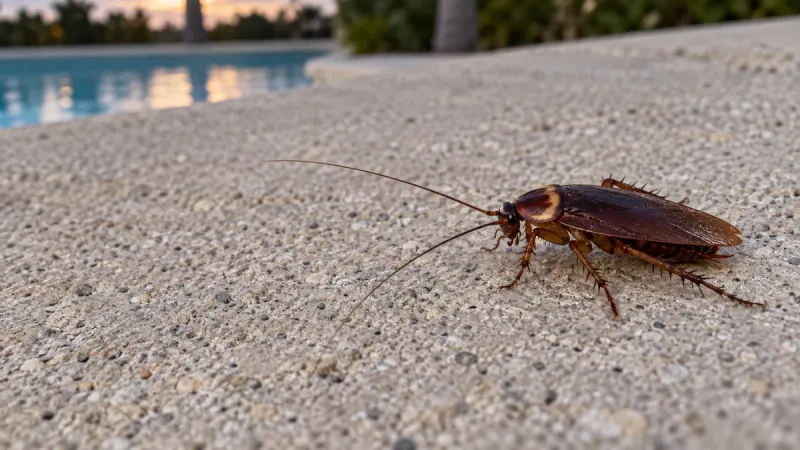
Before you rework a bed, figure out what you are actually dealing with. Roach is a broad label, and the species behave differently.
UF/IFAS notes that German cockroaches are usually found indoors, while several larger species commonly called palmetto bugs are generally found outdoors and may enter buildings.
That difference matters for your plan. If you see big roaches on the patio, in the mulch, or near the garage door at night, outdoor habitat near the house may be part of the story.
Landscaping changes make sense there.
If you find small roaches in kitchens, bathrooms, or around appliances, that points toward an indoor infestation. A foundation bed will not fix it.
Trimming a shrub or thinning mulch outside does little for insects living and breeding inside the cabinets.
For persistent indoor roaches, UF/IFAS recommends integrated pest management, often called IPM, as the most effective approach. IPM combines several steps: finding where roaches live, removing food, water, and shelter, sealing entry points, and using treatments carefully when needed.
A practical way to sort it out is to note where and when you see them. Collect a few details, such as size, location, and time of day.
If you are unsure of the species, take a clear photo to your local UF/IFAS Extension office for identification. Knowing the species tells you whether to focus on the yard, the kitchen, or both.
Dwarf yaupon is a planting option, not a roach repellent

Dwarf yaupon holly is a handy foundation choice for a simple reason: it stays compact and needs little care. UF/IFAS Gardening Solutions says dwarf hollies need little pruning beyond occasional shaping, and the yaupon cultivars grow throughout Florida.
Two common picks are ‘Bordeaux’ and ‘Nana’. Both are dense, rounded nursery cultivars of native yaupon holly, not dwarf forms found growing wild. ‘Bordeaux’ reaches about 2 to 3 feet tall and 3 to 5 feet wide. ‘Nana’ grows about 3 to 5 feet tall and 3 to 6 feet wide.
More background on the species is in the UF/IFAS yaupon holly profile.
Now the candid part. Nothing reviewed shows that yaupon repels roaches or lowers their numbers.
The plants are dense, and cockroaches can shelter under vegetation, so a yaupon is not a shelter-free plant.
Any pest benefit comes from how you manage the bed: giving the shrub room, shaping it, keeping debris cleared, and controlling moisture. Swapping in yaupon alone will not do it.
The real appeal is practical. You get an evergreen native with a tidy shape, modest size, and low upkeep, which suits a front bed you do not want to fuss with every month.
Plan for the shrub’s mature spread
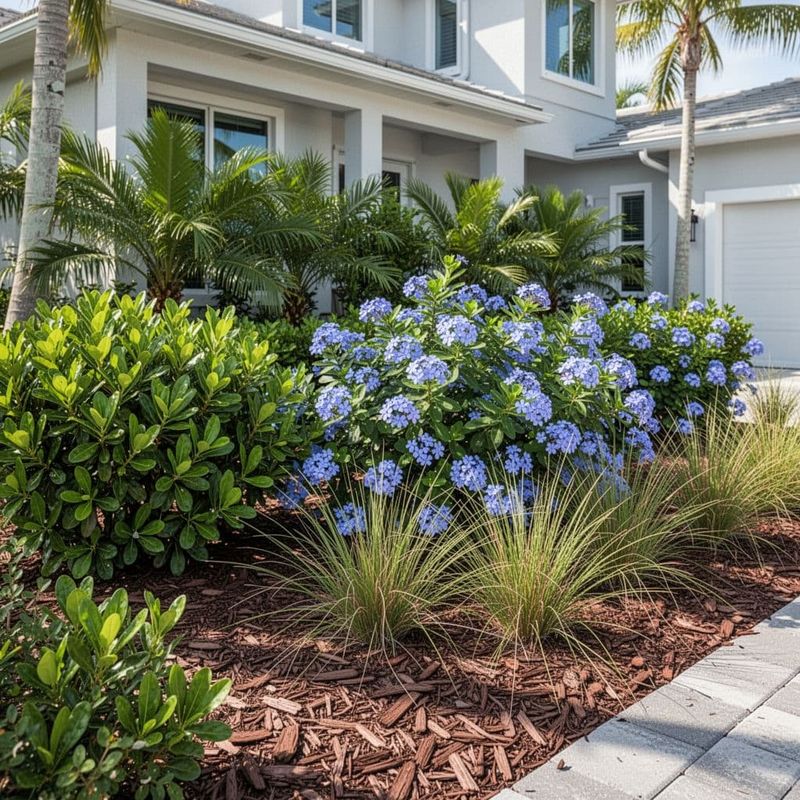
Nursery pots can fool you. A one-gallon yaupon looks small, but it will fill out to several feet wide, and that is the size to plan around.
Start with the mature spread listed on the plant tag or in Florida-Friendly Landscaping guidance.
The rule to follow comes from UF/IFAS landscaping advice: allow at least 2 feet between the house and the plant’s mature spread. Avoid tight groupings, too, so air and light can move through the bed and you can see the soil.
Here is a quick example using the numbers for ‘Bordeaux’, which can reach about 5 feet wide. Its center would sit roughly 2.5 feet from its own edge, so you would plant it about 4.5 feet or more from the wall.
For ‘Nana’, which can spread up to 6 feet, plan for about 5 feet from the wall to the center of the plant.
Spacing between shrubs matters just as much. Measure from center to center using the full mature width, so neighboring plants touch only lightly, if at all.
If that leaves a bed looking sparse at first, fill gaps with temporary annuals or a thin layer of mulch rather than extra shrubs.
A compact plant still needs this room. As the dwarf holly size ranges show, even small cultivars spread wider than many people expect.
Crowding one against the structure undoes the point of choosing a tidy shrub.
Keep mulch and plant debris in check near the wall
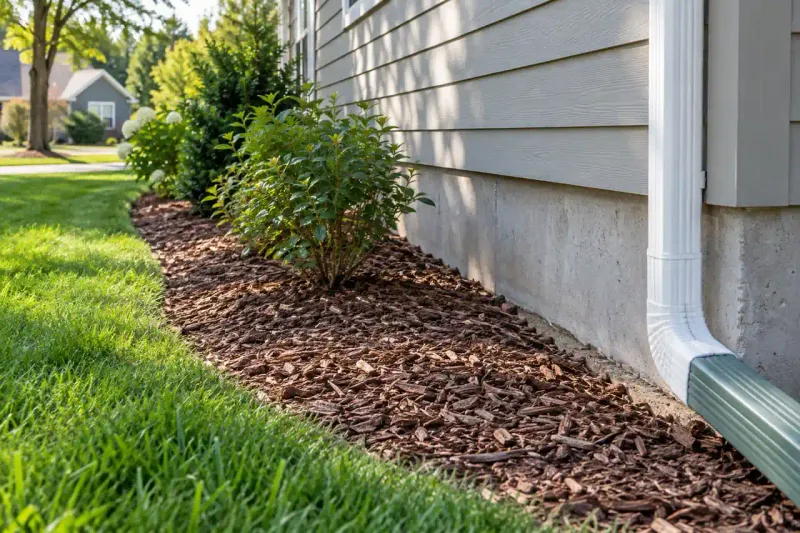
Mulch is not the enemy. It holds moisture in sandy Florida soil, slows weeds, and protects roots.
The trick is depth, especially next to the house.
UF/IFAS advises mulch no deeper than 2 inches within 12 inches of the foundation, and 2 to 3 inches elsewhere in plantings. Its outdoor cockroach guidance also recommends a thin layer extending about 1 foot from the foundation so the area can dry out.
Do a quick check with a ruler. Push it down through the mulch beside the wall.
If you read more than 2 inches, rake the extra toward the outer part of the bed. Mulch also tends to creep against siding and weep holes over time, so pull it back to keep that edge visible.
Next, look at debris. Fallen fronds, leaves, and trimmings pile up behind shrubs and along the slab, giving shelter that outdoor roaches use, as UF/IFAS cockroach guidance describes.
Clear nearby plant debris every few weeks, and more often after storms or heavy leaf drop.
Keep expectations realistic. These steps reduce potential shelter near the wall.
They do not guarantee roach control, but they are cheap, quick, and easy to repeat on a regular schedule.
Pair planting changes with moisture and entry-point management
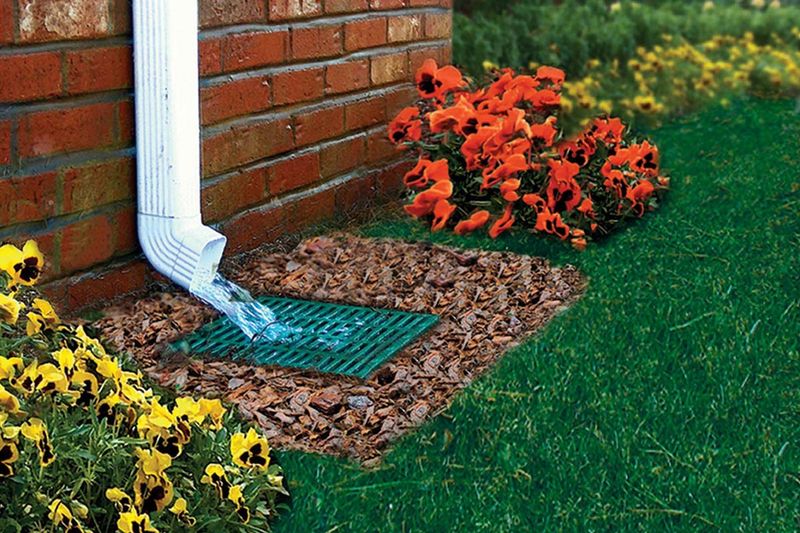
Roaches need water, and a bed that stays wet beside the house helps them. Look at where your water goes.
Aim sprinklers away from the wall, extend downspouts so they empty well past the foundation, and route air-conditioner condensate drain lines away from the house.
Both UF/IFAS landscaping advice and its cockroach guidance support reducing moisture near the structure. Established yaupon is fairly forgiving once it is rooted, so you rarely need to water it heavily beside the wall.
Next, close the gaps. Seal cracks in the foundation, gaps around pipes and wires, and worn door sweeps or weatherstripping.
Small openings are an easy way for larger outdoor roaches to wander in.
None of these pieces works well alone. UF/IFAS says an integrated pest management approach is the most effective way to control cockroaches.
In practice that means combining sanitation, habitat changes, exclusion, and targeted treatment when needed.
If you decide to use a pesticide, read the product label first and follow every direction and precaution. Treat it as one tool inside IPM, not a replacement for fixing moisture, debris, and entry points.
Spraying a bed that stays soggy and cluttered only buys a short break.
Build a better bed without expecting a roach-proof shrub
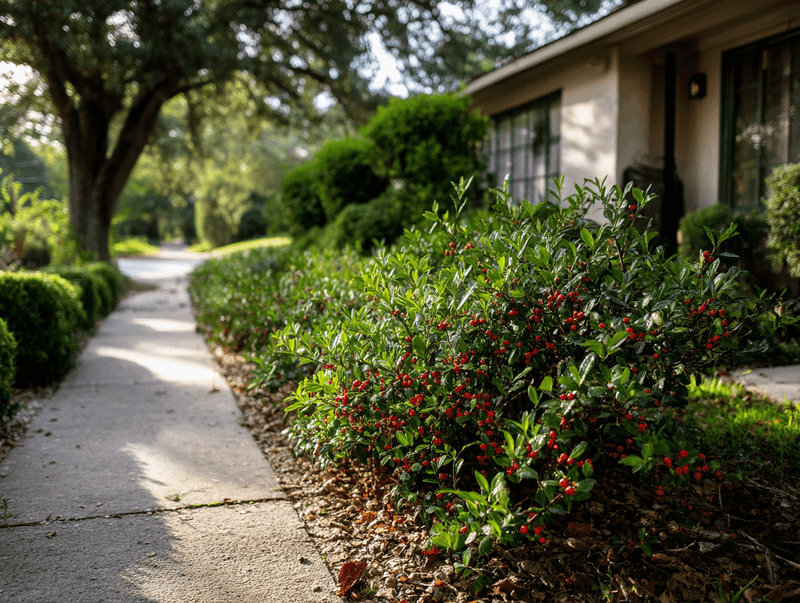
A dwarf yaupon can give you a tidy, native, low-pruning edge for the house, as UF/IFAS describes. No shrub here is roach-proof, though.
Plan for mature spread, keep mulch thin by the wall, clear debris, and steer water away from the foundation, following UF/IFAS landscaping guidance.
Treat roaches indoors as a separate job that calls for integrated pest management. A good bed is mostly about giving pests fewer comfortable corners to settle into.