

Pulling up a row of fall carrots and finding twisted, forked, or cracked roots instead of smooth, straight ones is genuinely frustrating after months of waiting. The good news is that misshapen carrots are sending clear signals about what went wrong underground, and most of those problems are fixable before the next planting.
Forking, splitting, and other deformities usually have different causes, so the first step is reading the symptom correctly rather than assuming one fix will solve everything.
Read the symptom before changing the soil

Sorting your harvest into groups by symptom type is the most useful thing you can do before reaching for a bag of amendments or a bottle of spray. Forked or branched roots, long cracks or splits, and roots covered in tiny hairs, galls, lesions, or obvious discoloration each point toward different underlying problems, and treating them as one issue can lead you in the wrong direction.
Forked or multi-tipped carrots most often develop when the growing taproot hits something that blocks or deflects it: compacted soil, a rock, a large clod, or another physical obstacle. University of Minnesota Extension’s carrot diagnosis guide also lists root injury from cultivation, insects, disease, and nematodes as causes that can produce the same branched appearance, so a few forked roots alone are not enough to confirm a soil problem.
Long cracks and splits along the root surface more often reflect uneven soil moisture, particularly a dry stretch followed by heavy rain or irrigation, rather than a physical obstruction. Utah State University Extension’s physiological problems guide connects this cracking pattern to rapid root expansion after water stress.
Hairy roots, galls, yellowing foliage, wilting, or patchy decline across the bed suggest something beyond soil texture, so those symptoms deserve a pest or disease investigation rather than a quick soil fix.
Forking starts when the taproot meets resistance

A carrot taproot grows straight down when it has a clear, unobstructed path through loose, uniform soil. When that path is blocked by a rock, a hard clod, a buried root, construction debris, or a layer of compacted earth, the taproot deflects or branches rather than pushing through.
That branching is not random; it is a mechanical response to whatever the root could not penetrate.
Cultivation damage is a separate physical cause worth checking. Running a hoe or trowel too close to established carrot seedlings can nick or sever the tip of the developing taproot, triggering the same branched result you would see from a buried rock.
Minnesota Extension’s forked-root diagnosis page identifies both physical obstruction and root injury as recognized causes of branching.
Excess nitrogen and fresh manure can also contribute to forking and excessive top growth, though they are not the default explanation for every misshapen root. If you applied a heavy nitrogen fertilizer or worked fresh manure into the bed before planting, note that as a possible factor.
Walk the bed and probe for hard layers with a screwdriver or rod; if it stops easily at 6 to 8 inches, compaction is a likely culprit. USU Extension recommends inspecting for these physical and nutritional contributors before making changes for the next crop.
Splitting usually follows a sharp moisture swing
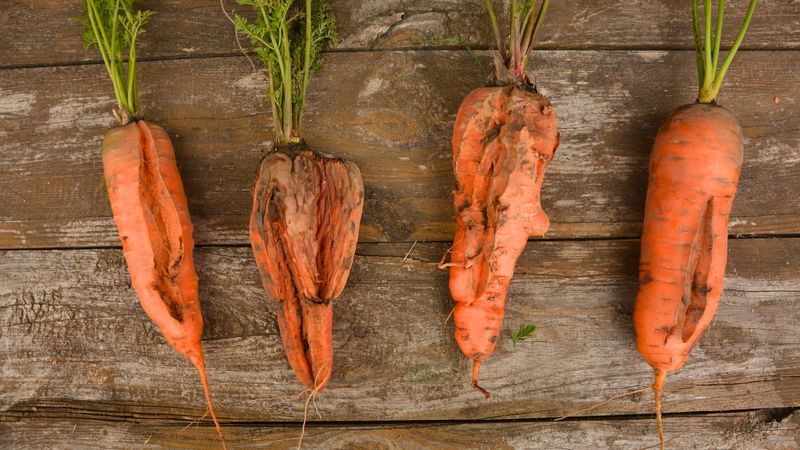
Cracking and forking look alarming for the same reason, but they usually develop through completely different processes. A forked carrot branched because the taproot was blocked or injured.
A cracked carrot most likely expanded too fast after a period of water stress, and the outer tissue could not keep up with the sudden surge of water uptake inside.
Utah State University Extension’s physiological problems reference specifically connects carrot splitting to dry periods followed by heavy rain or irrigation, with older and larger roots being more vulnerable because they have less flexibility than younger tissue. That pattern is common in Southern fall gardens where a dry spell in October can be followed by a heavy rain event or an overzealous watering session.
Blaming overwatering alone misses the point. The problem is the swing between dry and saturated, not high total water use.
Overwatering consistently can create its own set of problems, including hairy roots, disease pressure, and poor flavor, but those are different symptoms from a clean longitudinal crack. USU’s vegetable water recommendations emphasize keeping moisture reasonably even throughout the growing period rather than alternating between neglect and flooding.
One more thing worth knowing: cold carrot roots can crack during harvest when pulled forcefully from stiff soil, so not every visible split developed while the root was still growing underground.
Look for pests and disease when symptoms spread
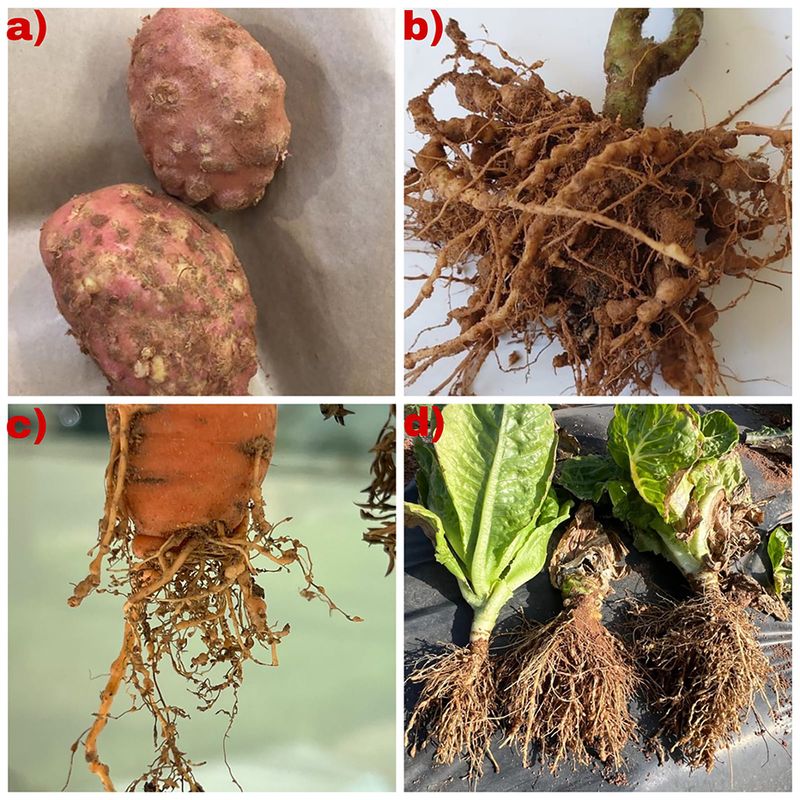
Some carrot deformities are not about soil structure or irrigation at all. When you notice symptoms spreading across a significant portion of the bed, or when the roots themselves show signs beyond simple branching or cracking, a pest or disease problem becomes more likely than a physical soil issue.
Specific warning signs include excessive hairiness on the root surface, small galls or swellings, sunken lesions, stunted plants, yellowing or wilting foliage that does not match the rest of the bed, and patchy areas where plants declined while neighboring sections stayed healthy. Minnesota Extension’s diagnosis tool lists insects, diseases, and nematodes alongside soil obstruction as recognized causes of forked and misshapen roots, precisely because the surface appearance can overlap.
Florida gardeners face a heightened risk from plant-parasitic nematodes, particularly root-knot nematodes, because warm sandy soils allow nematode populations to build up year-round. UF/IFAS nematode management guidance for vegetable gardens identifies these pests as significant problems in Florida and documents their ability to cause carrot forking and distortion.
That said, finding a handful of crooked carrots is not enough to confirm an infestation. Galls, numerous small swellings, excessive root branching combined with stunting and yellowing across the patch, and a history of nematode problems in that bed all make a stronger case.
Confirmation requires soil or root sampling through your local extension office, and any treatment decision should follow an actual diagnosis rather than appearance alone.
Build a clean rooting zone for the next crop

Turning the diagnosis into a practical soil plan starts with one straightforward goal: give the taproot a clear, unobstructed path through at least the main rooting zone. UF/IFAS Gardening Solutions recommends loosening soil to about 1 foot deep and clearing out rocks, roots, large clods, and construction debris before planting.
Any object that damages or deflects the growing taproot can encourage branching, so a thorough cleanup matters more than just breaking the surface crust.
One foot is a useful home-garden starting point, not a guaranteed prescription for every yard or every variety. Short, blunt carrot types like Chantenay or Danvers tolerate shallower or heavier soil better than long Imperator types, which need a deeper, looser profile to develop properly.
Match your soil preparation depth to the variety you plan to grow.
Avoid working or walking on soil while it is wet. Penn State Extension’s home garden soil guide explains that foot traffic or tillage on saturated soil destroys pore space and creates compaction that is difficult to reverse.
Raised beds can reduce compaction and improve drainage where native soil is rocky, poorly drained, or heavily compacted, but only when they are filled with suitable, non-cloddy material. A raised bed filled with heavy clay or chunky fill soil creates the same obstacle problem you were trying to escape.
Use well-amended, loose growing mix and avoid compressing it by stepping directly on the bed surface after filling.
Keep moisture even without waterlogging the bed
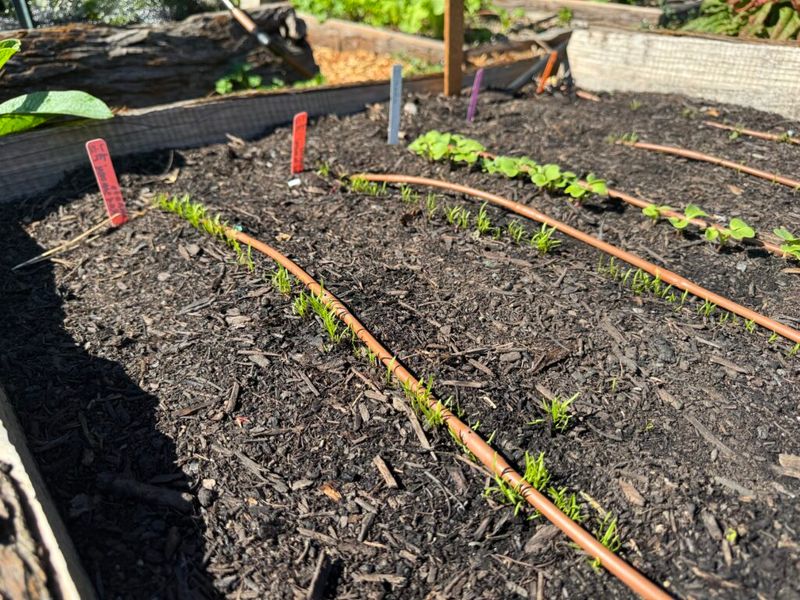
Consistent moisture throughout root development is the single most effective way to prevent the kind of cracking described in the previous section. That does not mean following a rigid schedule; it means watching your soil, your weather, and your plants and adjusting accordingly.
Utah State University Extension’s carrot growing guide recommends regular watering and avoiding the wet-dry cycles that favor cracking and disease.
USU’s vegetable water recommendations offer 1 to 2 inches per week as a broad starting point for carrots, while noting that soil type, temperature, and weather all change actual needs. In Southern gardens, especially in Florida, sandy soil drains quickly and may require more frequent, lighter applications rather than one heavy weekly soak.
UF/IFAS Florida irrigation guidance reinforces that sandy soils have low water-holding capacity and that irrigation frequency must account for local conditions rather than a fixed number.
Mulch is a practical tool for reducing sharp moisture swings between waterings, but it should not trap the bed in a constantly soggy state. A 2- to 3-inch layer of straw or shredded leaves helps moderate soil temperature and retain moisture without sealing out air.
During late summer and early fall when carrot seeds are still germinating in Florida and Texas, keep the soil surface consistently moist to support emergence in the heat, but dial back to steady, even irrigation once roots are actively enlarging. Saturated soil around maturing roots promotes rot and hairy root growth, which are different problems from the cracking you were trying to prevent.
Protect the taproot from sowing through harvest
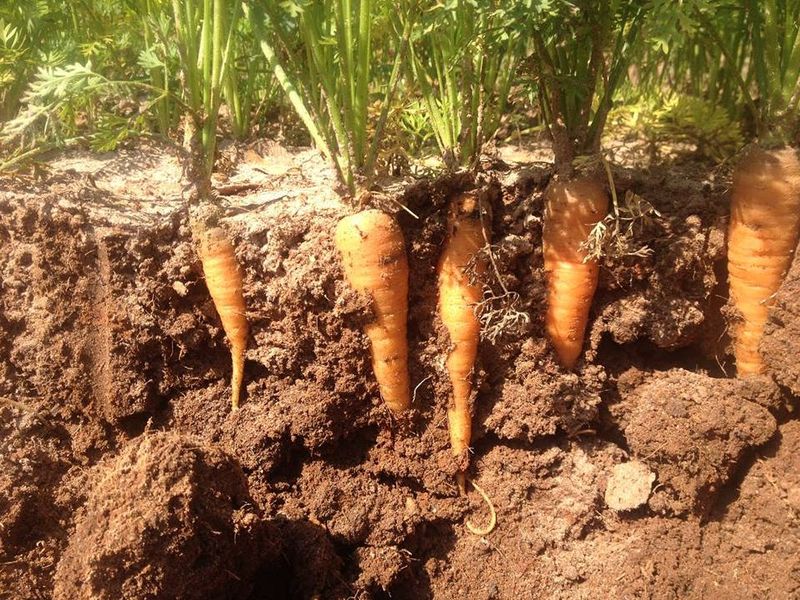
Good soil preparation and steady moisture give the taproot the best possible environment, but how you plant, thin, and tend the crop also determines whether roots stay straight. Carrots are best direct-sown rather than transplanted.
UF/IFAS Florida Fresh plant detail for carrots classifies them as having limited transplantability, and the reason is straightforward: disturbing or deforming the taproot during transplanting can produce the same forked, stubby result you are working to avoid. Starting seeds where they will grow eliminates that risk entirely.
Thin seedlings to the spacing your variety requires, typically 1 to 3 inches apart for most types. Crowding restricts root development and can contribute to poor, irregular shapes.
USU’s carrot guide also cautions against deep cultivation near established plants because cutting close to the roots can injure the taproot tip and trigger branching, the same outcome you would see from a buried rock.
On fertilizer, use mature compost as a soil-structure amendment and run a soil test before adding anything else. Penn State Extension recommends testing as a more defensible approach than guessing at deficiencies from root appearance.
Nitrogen management is site-specific; USU Extension notes that excess nitrogen can encourage excessive top growth and root branching, while fresh manure can injure roots directly. For regional timing, UF/IFAS lists Florida planting windows from August or September through March depending on location, and Texas A&M AgriLife Extension describes fall and winter production windows that vary by region across the state.
Judge carrots by condition, not appearance

A crooked, forked, or cracked carrot is not automatically a ruined one. UF/IFAS Gardening Solutions states plainly that strangely shaped carrots are perfectly edible, though they can be harder to peel.
Shape alone is not a food-safety concern.
What does matter is condition. Wash all harvested carrots under running water and trim away any damaged, bruised, or cracked areas before eating.
USDA FSIS guidance on washing fresh produce notes that bacteria can thrive in damaged areas of vegetables, so trimming is a practical step rather than an optional one. Roots showing soft rot, extensive decay, or visible mold are a different matter entirely; USDA guidance on molds on food advises discarding vegetables with significant mold because surface mold on a moist vegetable can penetrate deeper than it appears.
Discard based on softness, rot, and mold, not based on a funny shape.
At harvest, use a digging fork or trowel to loosen the soil around each root before pulling, especially in firm fall soil. Oregon State University Extension’s carrot guide recommends this approach to reduce mechanical breakage, which is particularly relevant when roots are cold and more brittle.
For the next planting, the three priorities that matter most are clearing the rooting zone of obstructions, keeping moisture even as roots develop, and protecting the taproot from injury at every stage.
Straight carrots are rarely the result of luck; they are the result of giving a single, fragile root tip nowhere to go but down.