

Peonies look tidy all summer, then the leaves yellow, droop, and drop into a messy pile around the plant. That pile can matter more than most gardeners think.
Old peony foliage can hold a fungus called Botrytis, which may bother shoots and buds the next spring. Here is how North Carolina gardeners can handle the cleanup the right way, and what it can and cannot do.
Use the plant, not the calendar, to set cleanup time
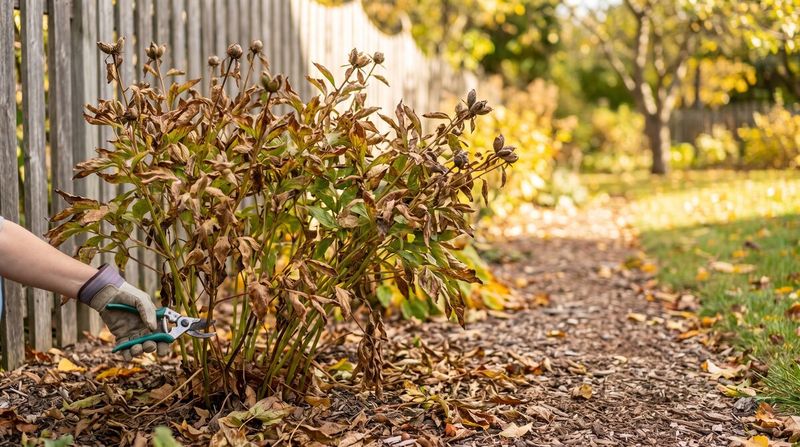
Late October is a handy reminder to walk out and look at your peonies. It is not a deadline.
Frost dates swing a lot between the mountains, the Piedmont, and the coastal plain, so the plant itself is a better clock than the date on the wall.
Herbaceous peonies do best where winters are cold enough to give them their chilling time. North Carolina Extension’s Plant Toolbox says they grow well in the mountains and cooler Piedmont, but can languish in warmer areas where the chilling requirement is hard to meet.
If you garden in a warmer part of the state, your plants may behave differently, and that is normal.
So what should you look for? Foliage that has turned brown, collapsed, or been blackened by a hard frost is ready for cleanup.
Leaves that are still healthy and green are not. They are still feeding the roots for next year.
In a mild fall, some plants hold green leaves into November or later. In a cold snap, others may collapse early.
Either way, wait for the plant to tell you. UConn Extension ties the cutting to dead or frost-damaged foliage rather than a set date, and that logic works well here too.
Use late October as a check-in. Look over each clump, note which ones have died back, and come back in a week or two for the rest.
Understand what Botrytis cleanup can accomplish
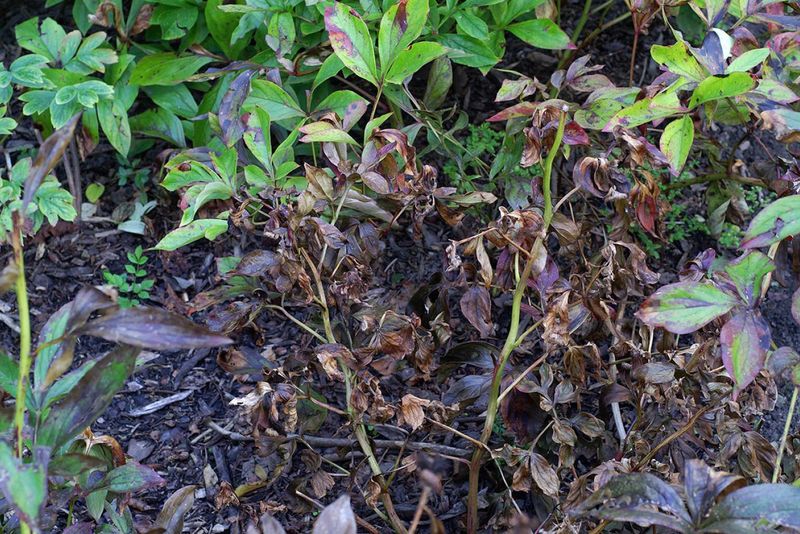
Botrytis blight, also called gray mold, is a fungus that likes cool, wet weather. Iowa State Extension explains that it can make young shoots discolor, wilt, and fall over, and that affected buds may turn brown and fail to open.
It can also harm leaves and flowers.
The fungus can survive in decayed plant material. That is why old foliage matters in the fall.
Illinois Extension describes gray mold as a disease that spreads from infected debris and by spores moved on wind and rain. Clearing that debris takes away one nearby source.
Be careful about naming the culprit, though. Brown buds or blackened leaves do not prove Botrytis by themselves.
The American Peony Society notes that Botrytis can colonize buds but does not itself cause aborted buds. Other problems, such as a late frost or weather stress, can also leave buds that never open.
Think of cleanup as sensible housekeeping. It can reduce infected material in your bed, but spores can still drift in from elsewhere.
It will not guarantee a disease-free spring.
Cut back herbaceous peonies after dieback
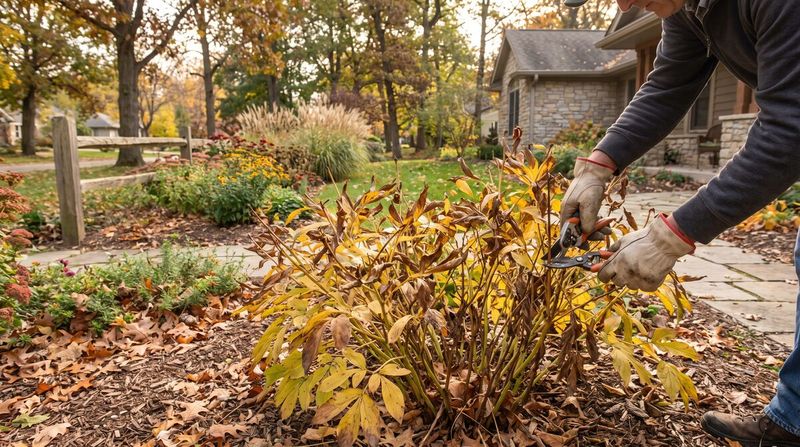
Once the leaves are brown, floppy, or frost-blackened, grab clean, sharp pruners. Cut the stems down near the soil line or leave a few inches standing.
Work clump by clump so you can check each crown as you go.
Advice on height differs a little. Iowa State suggests cutting at ground level after the foliage dies back, while UConn mentions about 3 inches after hard frost damage.
Neither number is a rule. Pick a height you can cut cleanly without nicking the crown or the new buds near the soil.
Patience matters here. Green leaves are still making food for the roots.
Iowa State warns that removing foliage too early can weaken the plant and lead to fewer flowers the next spring. If part of a clump is still green, leave it.
One firm limit: this advice is for herbaceous peonies only. Tree peonies have woody stems that stay through winter, and UConn says not to cut them back this way.
If you are unsure which type you own, look for woody branches that hold buds at the tips.
Remove debris and dispose of suspected disease

After the cutting comes the cleanup that gets skipped. Rake or pick up every fallen leaf, stem piece, and bit of petal around the crown.
Check under the mulch too, since small bits hide there.
Where do the clippings go? If you suspect disease, keep them out of your home compost pile.
UConn Extension advises removing the debris from the garden, and Iowa State gives similar guidance. A backyard pile often does not stay hot enough to be a safe bet.
Bag the material and send it out with your yard waste or trash instead.
Clean pruners between plants, or at least after any clump that looked sick. A quick wipe with rubbing alcohol is simple and cheap.
Now the honest limits. Illinois Extension notes that Botrytis spores travel by wind and rain splash, so a neighbor’s garden can still send some your way.
A tidy bed lowers the local supply, nothing more.
If your plants had brown buds last spring, the Iowa State bud-browning guide is a good place to compare symptoms before you decide what you were facing.
Treat larger flowers as a separate spring goal
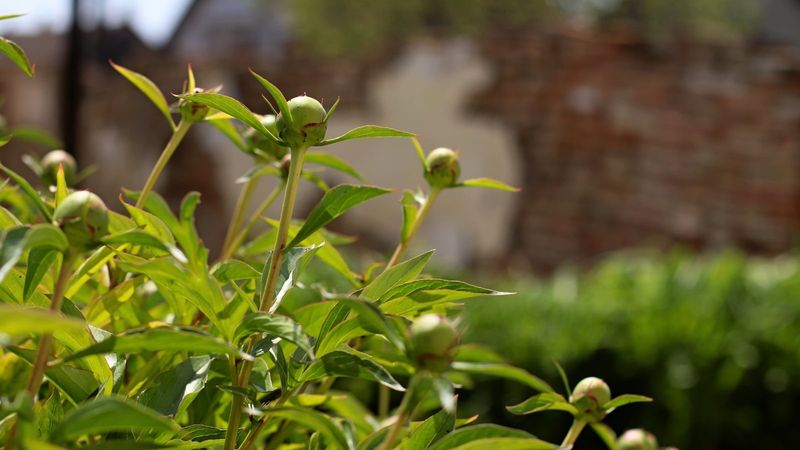
Plenty of gardeners hope that tidy fall work leads to bigger blooms. It does not work that way.
Fall cleanup targets infected debris. Flower size is a separate matter handled in spring.
The spring method is called disbudding. UConn and Purdue Extension both recommend pinching off the small side buds on a stem while leaving the main terminal bud at the tip.
The plant then puts its energy into one larger flower per stem. You do it when the buds are small, usually pea-sized, and it costs you the extra blooms on that stem.
Rushing the fall job in hopes of better flowers can backfire. Iowa State says that taking off green foliage too soon can weaken the plant and lead to fewer flowers the next spring.
Put the two jobs on separate parts of your calendar. Fall is for waiting on dieback and clearing debris.
Spring is for deciding whether you want fewer, larger blooms or more, smaller ones.
Let dieback guide the final decision
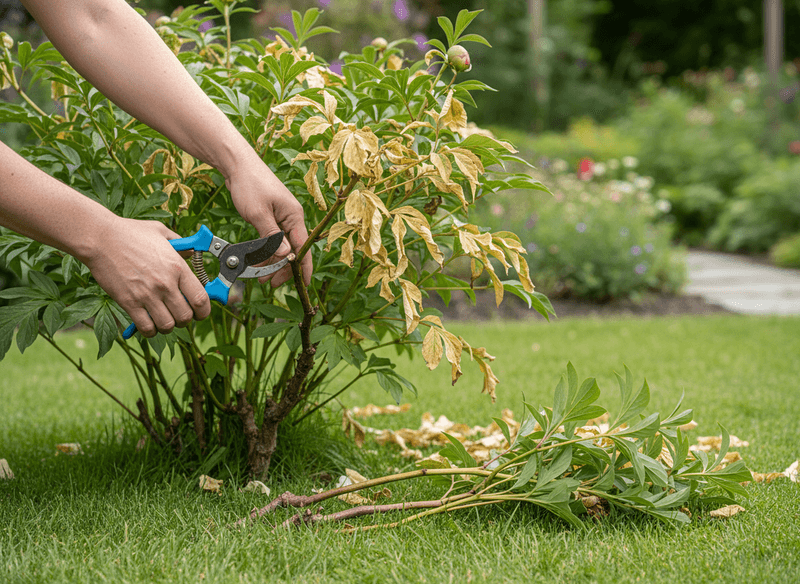
Here is the short version for your garden notebook. Check your herbaceous peonies in late October.
Wait for foliage that is dead or frost-damaged, cut it back, and clear the debris away. Details on timing are in North Carolina’s Plant Toolbox, and UConn backs up the cleanup steps.
That work can cut down one source of Botrytis. It does not set your bloom size or stop every infection.
A peony bed is a slow conversation with the seasons, and the plant usually sets the pace.