
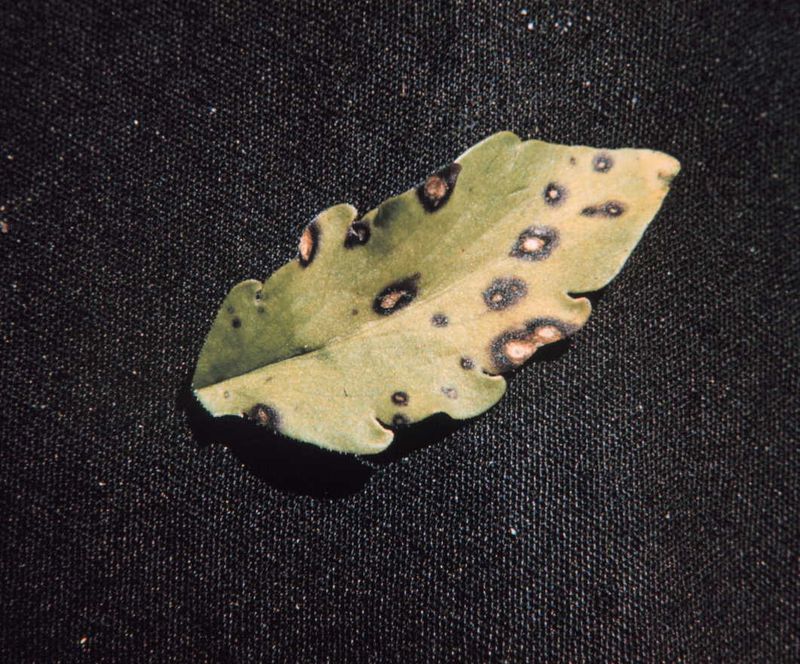
You plant a tray of fresh pansies, and by morning half of them look chewed or missing. The damage is a set of clues, and reading them can save you from guessing at the wrong fix.
No single mark gives a perfect answer, but a few careful checks can point you toward rabbits, deer, or slugs. Here is how to look at the bed and choose a sensible next step.
Start with the shape of the damage
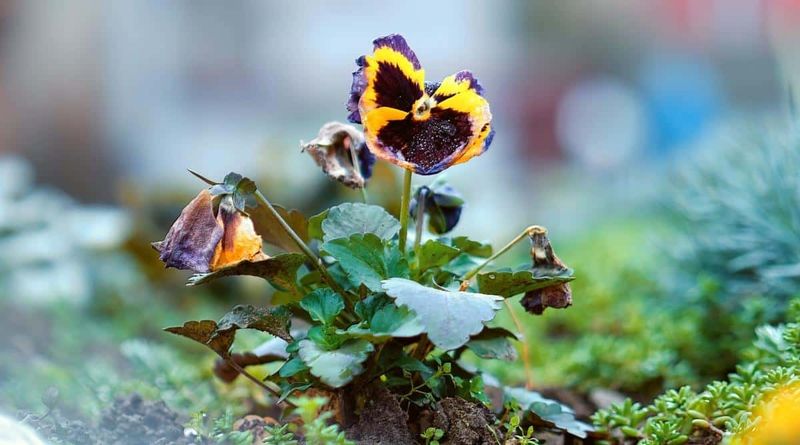
Before you buy anything, crouch down and look closely at the plants and the soil around them. Chewing from a mammal usually removes or tears pieces of the plant, while slugs tend to leave irregular holes and slime trails on leaves or flowers.
Pansies grow so low that height alone cannot separate deer from rabbits. A rabbit and a deer can both reach them without any effort, so look at how the plant was cut or torn instead of how high the damage sits.
Take note of a stem that is cut at or just above the soil line. Cutworms feed at night and can sever young plants near ground level, so they belong on your list of suspects.
Slime is another thing worth checking for, and slugs leave shiny or dried trails behind them. Cut and torn edges are explained in the next sections, and UF/IFAS wildlife damage guidance is a useful reference.
Several clues together will tell you far more than any single mark.
Clean angled cuts can point to rabbits
Stems that look snipped, with a neat slanted edge close to the ground, are consistent with rabbit feeding. It is a clue rather than proof, so keep looking at the rest of the bed before you decide.
UF/IFAS gives a typical rabbit browsing height of 15 inches or lower. That number helps with shrubs and taller seedlings, but pansies sit so low that nearly every feeder can reach them, so height will not settle the question here.
The UF/IFAS description of rabbit damage is most useful for the clean, angled look of the cut.
If rabbits seem likely, a small barrier is a practical choice for a bed. UGA Extension recommends a 2-foot-high chicken-wire fence with 1-inch mesh, with the bottom buried or an outward-bent apron added to discourage digging.
That is extension guidance, not a guarantee. A determined animal or a gap at one corner can still let feeding continue, so check the fence edges now and then.
Ragged tears can point to deer
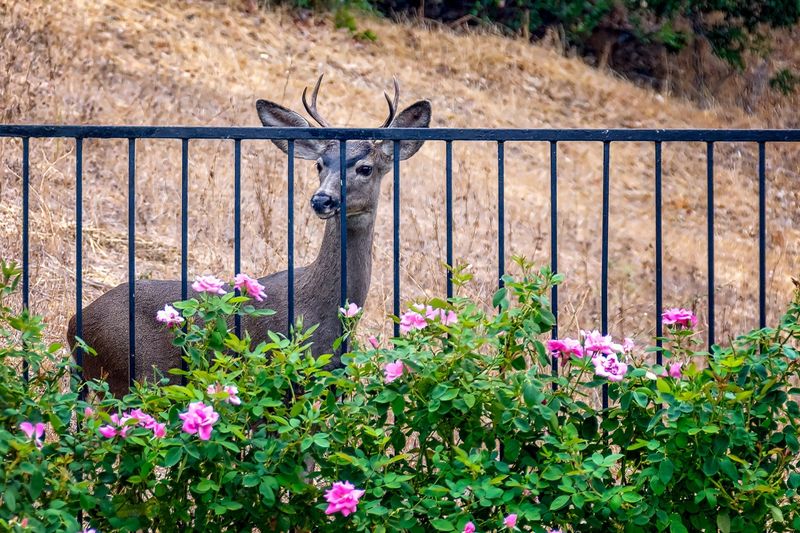
Deer have no upper front teeth, so their browsing often leaves ragged or torn plant tissue instead of a tidy cut. UF/IFAS wildlife damage guidance describes this pattern, and UF/IFAS also notes that deer nibble pansies.
Treat the torn look as suggestive, not conclusive. Other feeders can leave rough edges too, so pair it with other signs such as hoof prints or damage to nearby plants.
When deer visit again and again, keeping them out physically is the more dependable long-term approach. A UGA garden-fencing guide suggests considering a 6- to 8-foot fence for deer.
Repellents are a less dependable option. UGA guidance on repellents notes they may need reapplication, especially after rain, and you should follow the product label.
UGA also says home remedies such as soap and human hair are unreliable.
Look for holes and slime trails
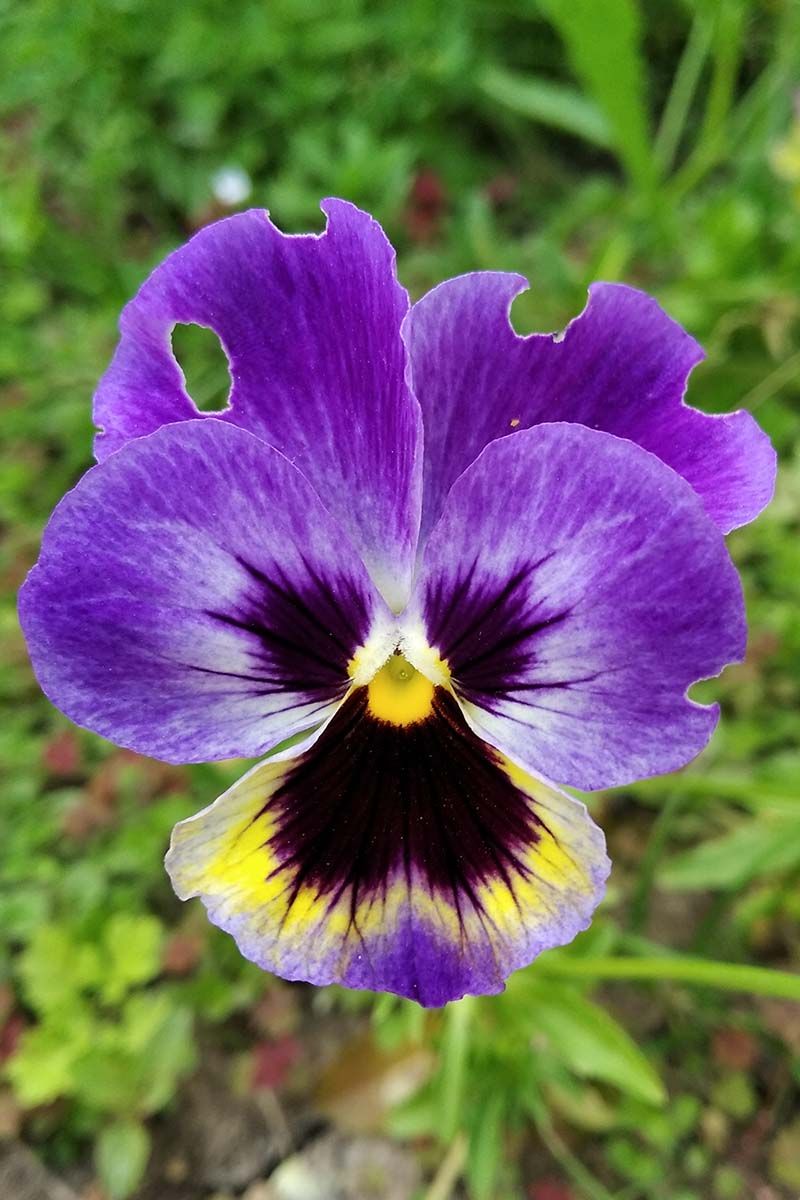
Slugs leave a different kind of signature. Check the leaves and flowers for ragged, irregular holes, then look at the leaves, soil, and nearby mulch for shiny or dried slime trails.
A plant reduced to stubs is not a typical slug signature. Slugs rasp holes in tissue, so stubs make rabbits, deer, or cutworms more likely, and the holes and slime are the stronger clues.
Timing helps too. Slugs are generally active at night in cool, damp conditions, which describes many Southern fall evenings after rain or heavy watering.
To confirm, step outside after dark with a flashlight and look over the pansies, the edge of the bed, and any nearby cover. Seeing the animals at work is the most convincing evidence you can get.
If you find nothing, the holes and trails may be from an earlier night, so repeat the check on another evening.
Reduce slug shelter around the bed
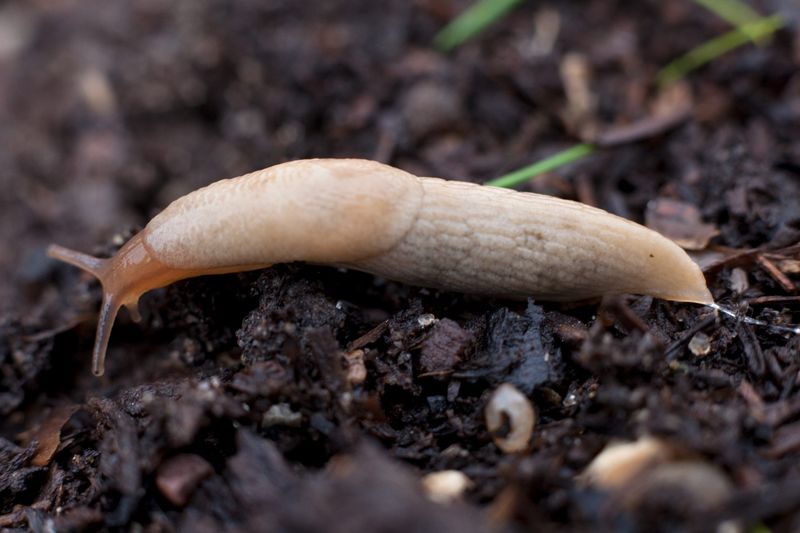
If slugs look likely, begin by taking away what they hide in during the day. Persistently damp spots, thick debris, and extra moisture all give them shelter, so water in a way that lets the surface dry between sessions.
Drying things out will not eliminate slugs by itself, so go on a hunt. Check under plant debris, flower pots, boards, and around the pansies, and pick slugs off by hand when you find them.
A flashlight trip after dark makes this faster.
Some gardeners choose bait as well. Oregon State Extension covers slug control options, and the safest approach is to pick a product labeled for the site you are treating.
Do not assume any bait is pet-safe. Safety depends on the specific product, so follow the full label, including directions for protecting children, pets, and wildlife.
University of Minnesota Extension also describes habitat changes and hand removal as part of managing slugs.
Use the clues to choose a response
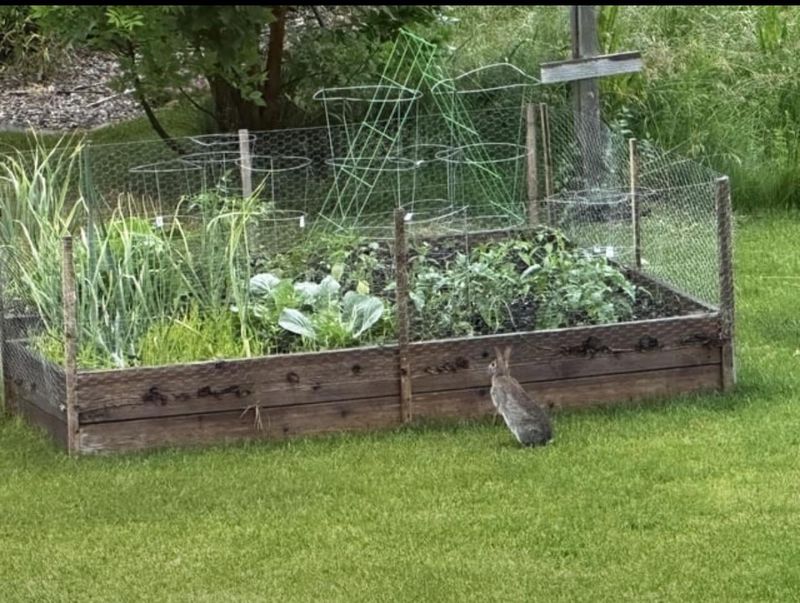
Put your notes side by side and pick the response that fits the most clues. Clean, angled cuts near the soil suggest rabbits, so a low wire barrier is a reasonable move.
Persistent torn damage points toward deer, where sturdy fencing is the more dependable long-term step.
Holes and slime trails lean toward slugs, so cut back on damp cover and hand-pick them. Causes can overlap, and a plant severed at the soil line may be the work of cutworms, so keep that possibility open.
No deterrent guarantees protection. Sprays can help for a while, but follow the label and expect to reapply.
Read the damage again after a few nights to see whether your change is working. Pansy timing also varies by region, so use your local extension office for planting dates.
The bed will keep giving you clues, so keep reading them.