
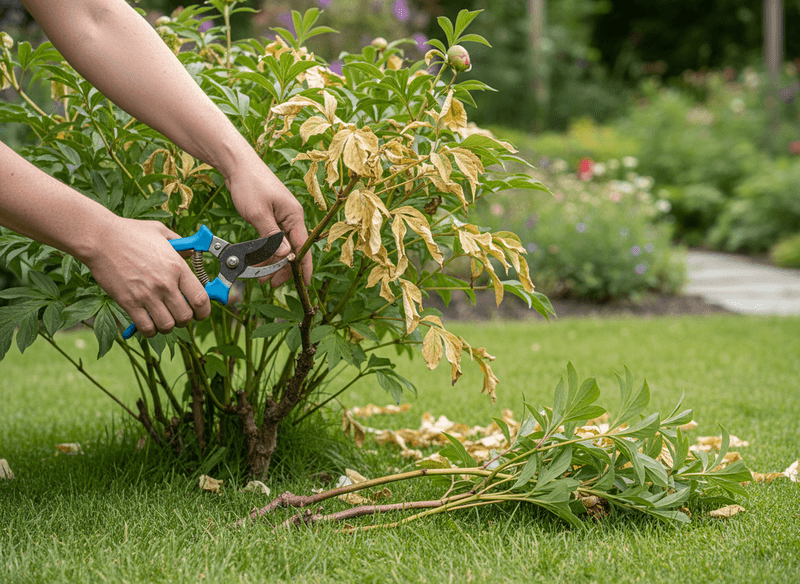
Peony leaves turn brown and floppy every autumn, and many gardeners wonder when to grab the pruners. The timing matters, because cutting too soon can hurt the plant and waiting too long can leave diseased debris in the bed.
A simple cleanup after the foliage declines may help cut down on disease that carries over to spring. Here is how to do it right, even if you are not sure which kind of peony you have.
What fall cleanup can—and cannot—do
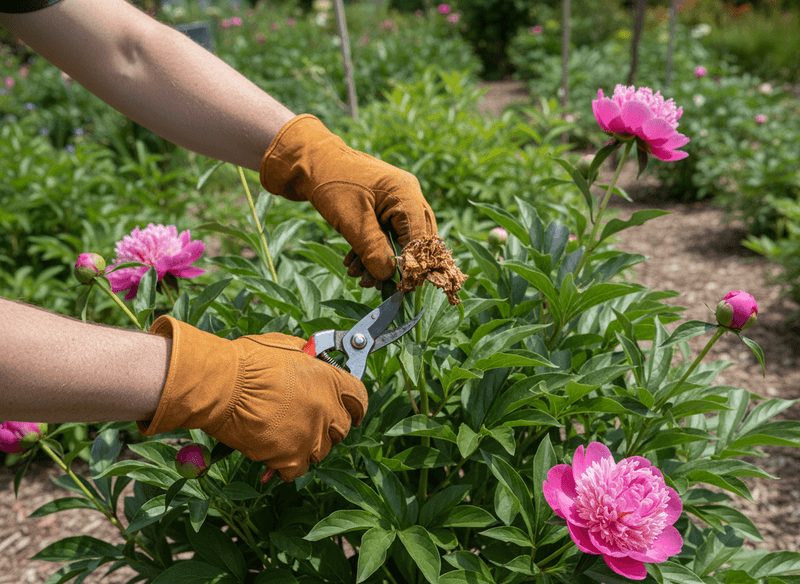
Peony cleanup is about sanitation, not magic. Botrytis, a fungus that causes gray mold, blotchy leaves, and blighted buds, can survive the winter in garden debris, according to Iowa State Extension guidance on peony problems.
Removing infected or dead material can reduce one possible source of that disease the following season.
It helps to be clear about what the step does not do. The research reviewed does not show that fall cleanup increases next year’s flower count or makes the plant look fuller.
Its job is to lower the chance that old, diseased stems and leaves send spores back into your bed.
Botrytis can also be influenced by weather, so cleanup is one tool among several. A related Pacific Northwest disease handbook entry describes how the fungus persists in peony debris and thrives in wet conditions.
The rest of this guide walks through the practical side: when to cut, which peonies to cut, and what to do with the pile afterward.
Wait for the foliage to decline
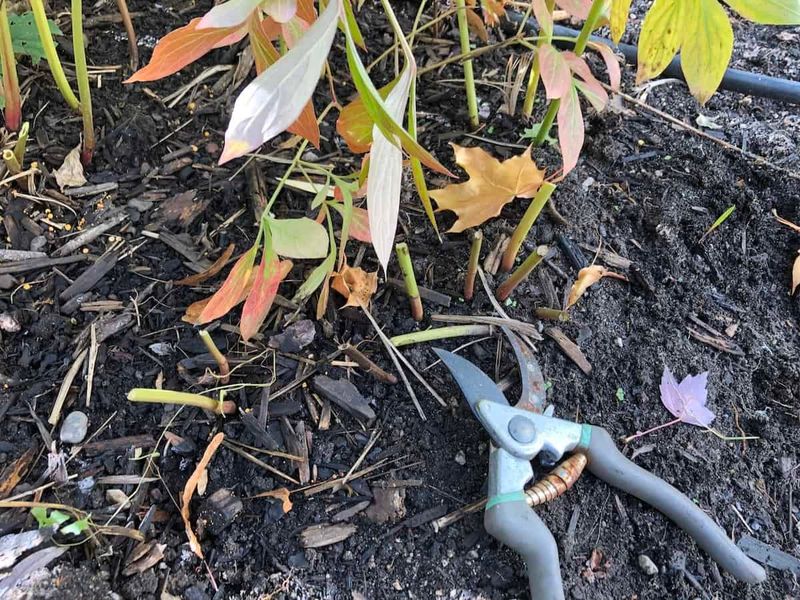
Patience is the first rule. Healthy green leaves are still making food for the plant, so leave them alone while they are working.
The main cleanup comes after the foliage has browned, collapsed, or been damaged by frost.
Iowa State’s answer to when to cut back peony foliage is to wait until after a hard freeze, and it warns that cutting in August or early September may mean fewer blooms. The American Peony Society likewise suggests leaving mostly green leaves in place until frost.
Those recommendations come from colder regions, so treat the freeze as a clue rather than a calendar date. In much of the South, the plant itself is the better guide.
Once the leaves have faded and flopped on their own, the plant has finished its work and you can cut.
Identify the peony before cutting
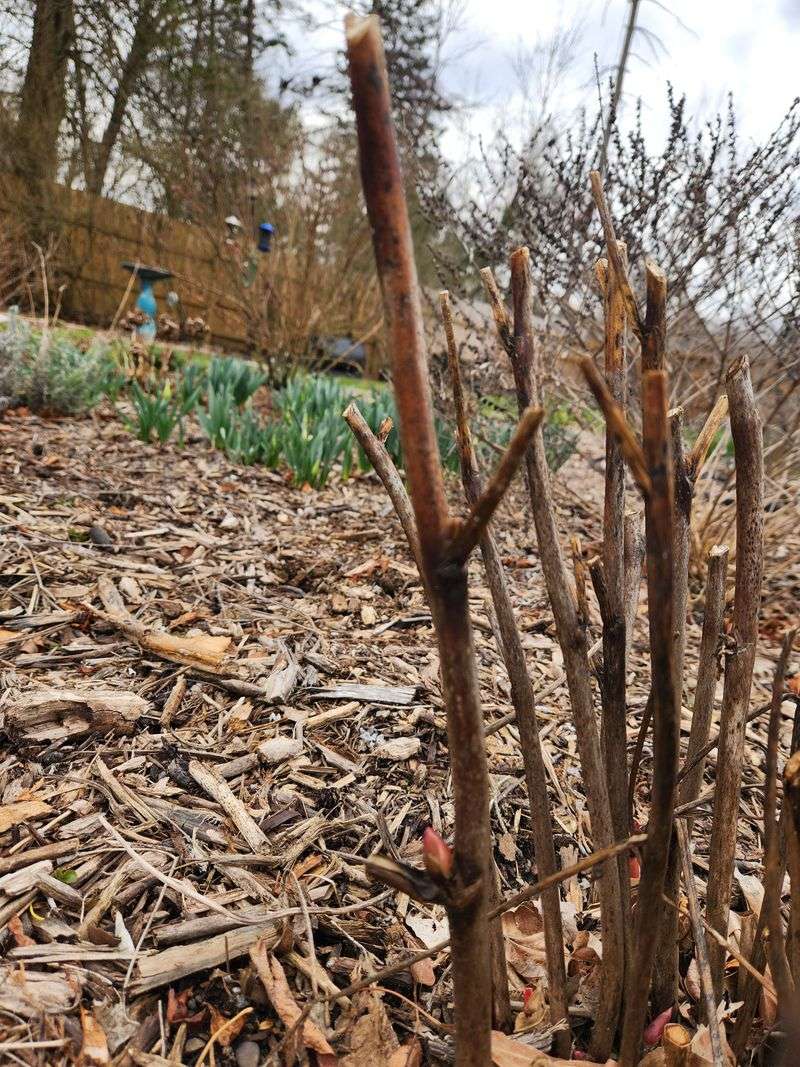
Not every peony is pruned the same way, so check which kind you have before you cut. Herbaceous peonies die back each fall, with soft stems that collapse and turn brown.
After the foliage declines, these can be cut close to ground level.
Tree peonies are different. They are woody shrubs with permanent branches, and they should not be cut to the ground.
Doing so removes the structure that carries next year’s growth and buds.
Itoh, or intersectional, peonies sit in between and follow their own guidance. The American Peony Society’s cutting guidance generally has you cut Itoh types back to where growth becomes woody.
If you inherited a peony and are unsure, look in late fall. Stems that melt down to the soil point to an herbaceous type, while hard, bark-covered branches point to a tree peony.
When in doubt, leave the woody parts alone and remove only clearly dead leaves.
Remove debris, especially infected material

Once the stems are cut, don’t leave them lying around the crown. Rake or gather the cuttings and haul them away, so old foliage isn’t sitting on the soil all winter.
Extra care matters if Botrytis has been a problem in your garden. Iowa State advises destroying debris where the disease has occurred, as described in its peony problem guide.
The Matthaei Botanical Gardens peony care calendar and the American Peony Society both advise against composting infected peony debris.
A bag for the trash or a municipal yard waste pickup is a safer choice than the home compost pile. Clean your pruners afterward with rubbing alcohol if you cut diseased stems.
This applies to dead or infected material. Healthy green foliage stays on the plant until it declines naturally or frost damages it.
Treat Botrytis as one part of the care picture
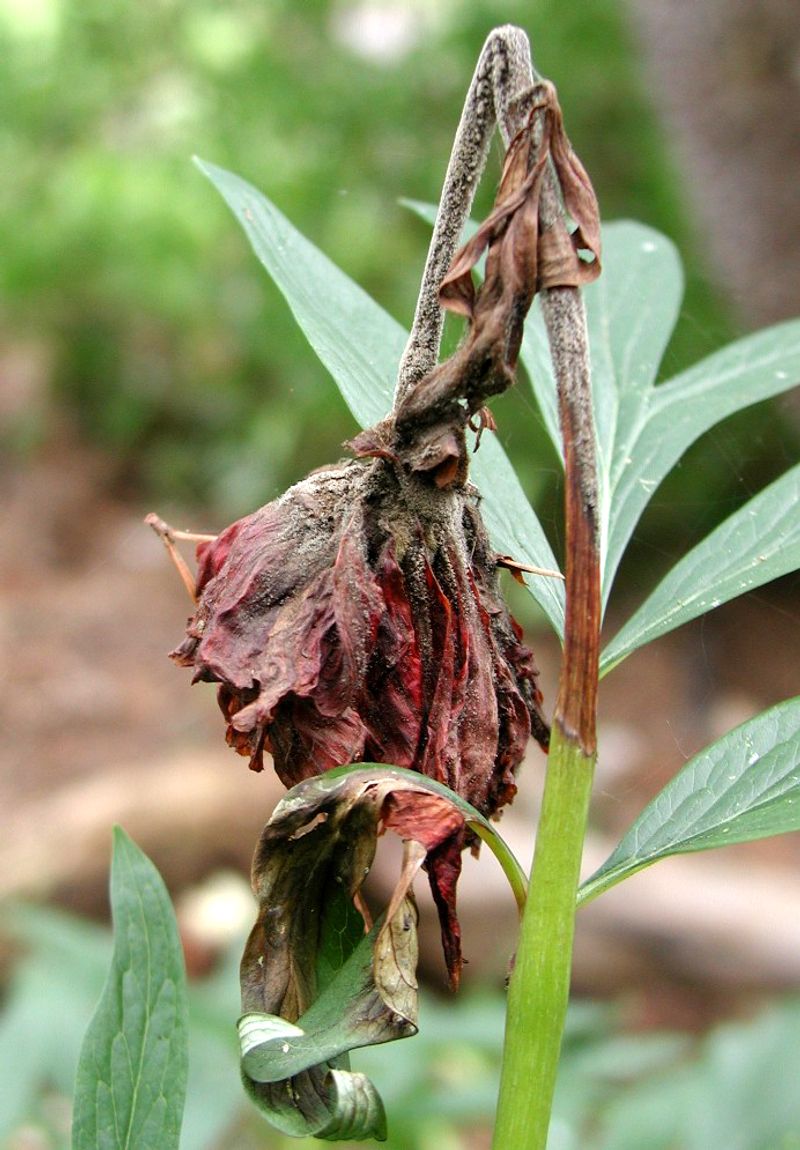
Botrytis blight can attack stems, leaves, and flower buds, and wet weather gives it a boost. Fall sanitation helps with the debris side of the problem, but it will not stop the disease alone.
Spacing plants so air moves through the clump and avoiding long stretches of wet leaves matter too, as outlined in the Texas A&M peony disease guide.
Water at the soil line in the morning when you can, so foliage dries quickly. Thin crowded neighbors if the bed stays damp and stuffy.
Also resist the urge to call every spotted leaf Botrytis. Peonies can get other diseases with similar symptoms, and University of Illinois Extension notes that lab culture may be needed to identify the cause properly.
If a problem keeps returning, your local extension office can help sort out what you are seeing.
Adjust timing and expectations in the South
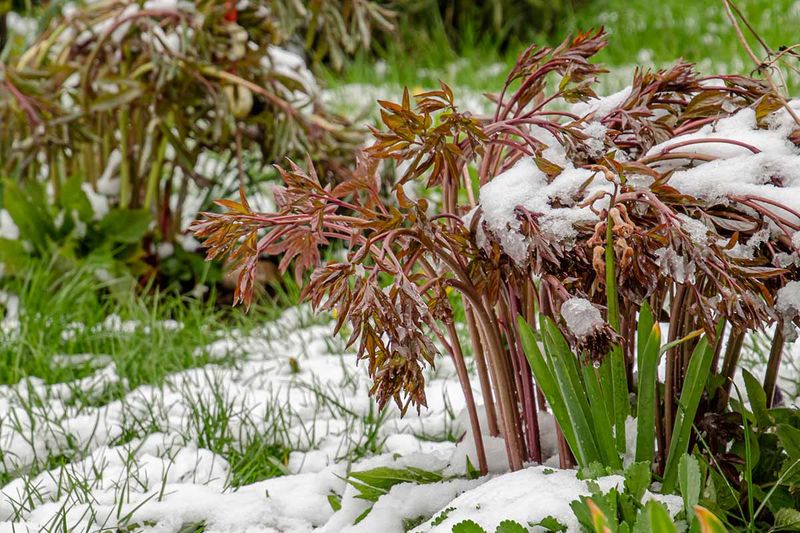
Southern autumns rarely follow a cold-region script. A hard-freeze date from Iowa may never arrive in parts of Florida or Texas, and waiting for it could leave you staring at a plant that is long past its prime.
Use the plant’s condition and your local weather instead. Leave healthy green foliage in place, and cut away leaves and stems that are clearly dead or diseased.
Iowa State’s timing advice is a useful starting point, but it was written for colder winters.
Cleanup timing is a separate question from whether peonies will thrive where you live. Herbaceous peonies need winter chill.
Virginia Tech Extension says they are unlikely to flower in USDA zone 9, and the American Peony Society cautions that south of Interstate 20 they may be marginal, depending on cultivar and chilling.
Tidy beds will not make up for a warm winter. Good cleanup helps a peony that suits your climate, and chill hours decide the rest.