
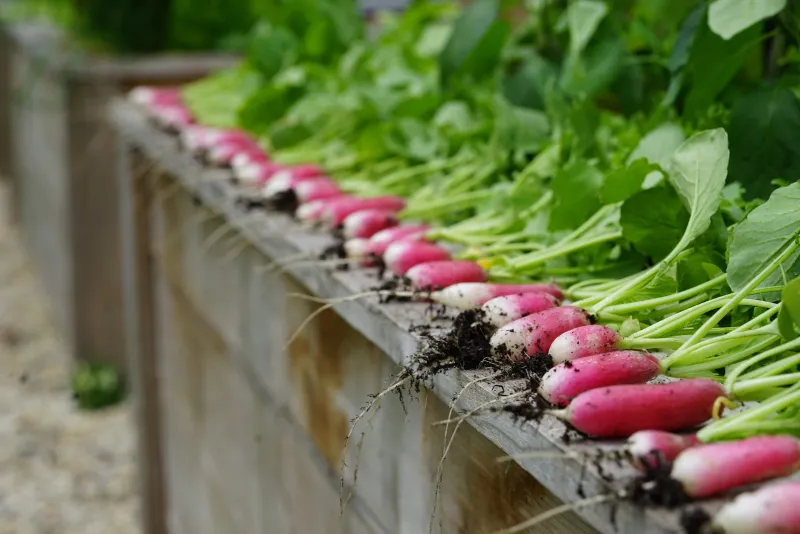
You pull up a radish and find a tangle of greens but almost nothing worth eating underneath. That mismatch between lush tops and a threadlike or undersized root is one of the most common frustrations in a fall vegetable garden, especially across Florida and Texas where the planting window can feel short.
Crowding and skipping the thinning step are frequent culprits, but heat, soil, moisture, and fertilizer habits can all play a role. Understanding what is actually happening below the soil puts you back in control of the next planting.
Lush leaves signal a problem, not a single diagnosis
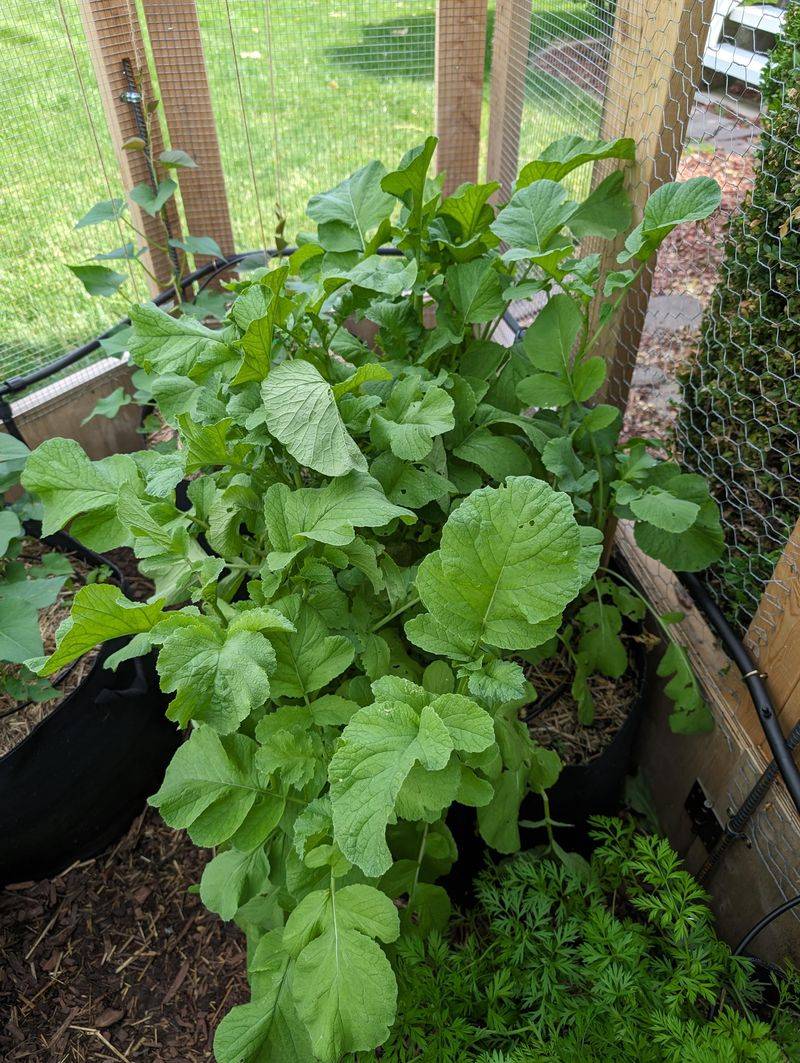
Pulling up a radish plant and finding a pencil-thin or oddly shaped root beneath a crown of healthy-looking leaves is a genuinely confusing moment. The foliage looks vigorous, so the plant appears to be doing well, but large tops do not confirm that the edible root is developing normally.
The swollen portion most gardeners call the “bulb” is technically a thickened root or hypocotyl-root structure, and several different problems can prevent it from sizing up even when the leaves above are thriving.
Crowding and failure to thin are well-supported common causes. University of Illinois Extension lists close spacing and failure to thin as direct causes of small, poorly developed, or misshapen radish roots, and similar guidance appears from extension programs in Minnesota, Utah, Iowa, and Texas.
When seedlings are packed tightly, each plant competes for the moisture, nutrients, and physical space its root needs to enlarge, and foliage can continue to look lush even as root development stalls.
Crowding is not the only explanation worth considering, though. Iowa State University Extension identifies excess nitrogen as a common reason radishes push leaf growth at the expense of root sizing.
Utah State University Extension points to heat, shade, uneven moisture, compacted soil, and bolting as additional contributors. Running through each possibility systematically is more reliable than assuming one cause is always responsible.
Close spacing can limit individual root development
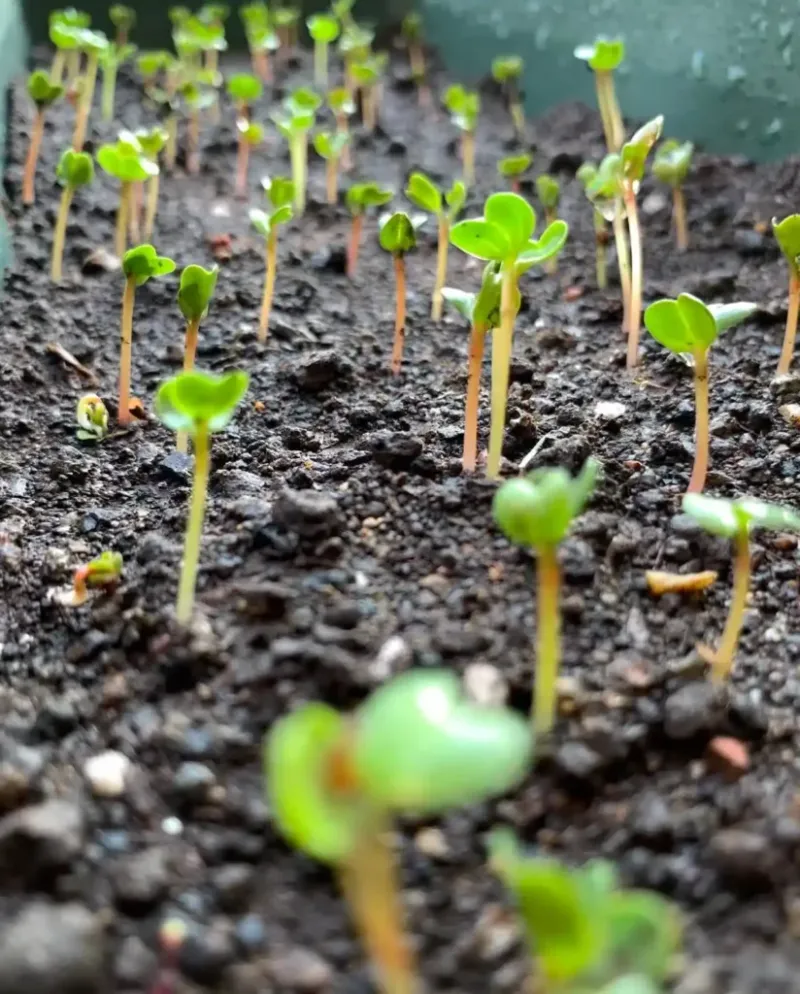
When radish seeds germinate in a dense cluster and no seedlings are removed, each plant shares the same small column of soil with several neighbors. As the crop matures, every root trying to enlarge is pressed against others doing the same thing, and the available moisture and nutrients are spread across more plants than the bed was prepared to support.
The result is commonly a row of small, misshapen, or poorly developed roots rather than the plump, round ones pictured on the seed packet.
A peer-reviewed planting density study found that wider plant spacing improved individual plant development and economic root production up to an optimum, while very dense planting can increase total yield per area but reduce individual root diameter. That trade-off matters for home gardeners who want usable, full-sized roots rather than maximum count.
Extension programs from Minnesota and Illinois both connect close spacing to undersized or distorted roots as a practical diagnostic, and the University of Minnesota diagnostic tool specifically lists crowding as a cause of undeveloped radish roots.
Foliage can look full and green even in a crowded bed because leaves grow upward into open air rather than competing underground the way roots do. That visual mismatch is exactly why gardeners sometimes overlook spacing as the source of the problem.
Illinois Extension guidance ties the thinning recommendation directly to giving each root enough room to reach its expected mature size, which varies considerably by variety.
Thin promptly at the recommended seedling stage
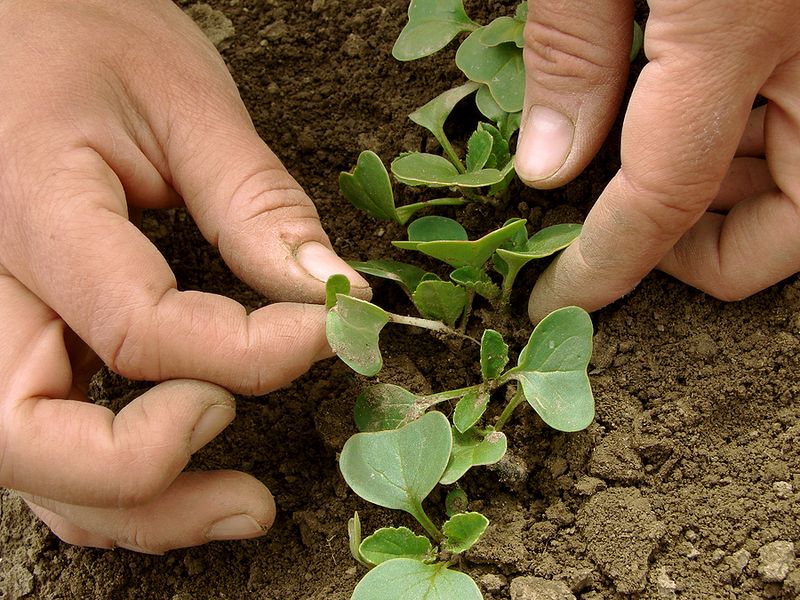
The corrective step most gardeners delay too long is thinning, and the timing matters more than most seed packets make obvious. Rather than waiting for roots to show visible crowding damage, remove excess seedlings promptly once they are large enough to handle, following whatever seedling stage your seed packet recommends.
Leaving the strongest plants at the correct interval gives each remaining root a realistic chance to develop without competing shoulder-to-shoulder with its neighbors.
University of Minnesota Extension recommends thinning ordinary radishes to about 2 inches apart once seedlings reach a small edible size, with larger daikon types needing 4 to 6 inches. Snipping excess seedlings at soil level with small scissors works well when roots are close together and pulling might disturb neighbors.
Texas A&M AgriLife Extension specifically advises thinning as roots begin to expand so remaining radishes are not crowded during the period when root sizing actually occurs.
Young thinnings pulled from the bed are mild and entirely edible, so nothing goes to waste. One practical limit worth knowing: thinning supports young, actively growing plants but cannot reverse damage from prolonged heat, drought, bolting, or overmaturity.
If plants have already flowered or grown pithy from heat stress, thinning the same bed is unlikely to rescue those roots, and reseeding during a cooler, locally appropriate window is usually the more productive choice. Illinois Extension notes that radishes left too long or grown slowly in heat can become hot, fibrous, or woody regardless of spacing.
Match the spacing to the radish variety
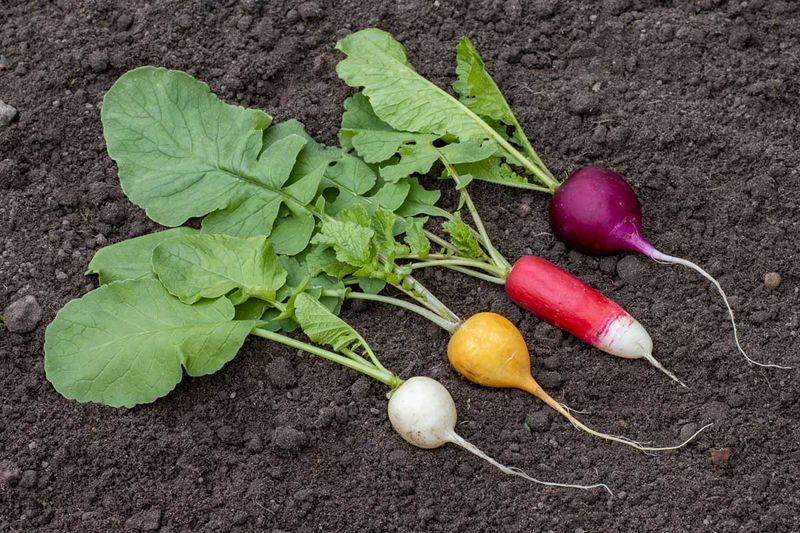
One spacing number does not fit every radish on the market, and treating all varieties the same is a reliable way to end up with undersized roots again at the next planting. Small round salad radishes, the kind most gardeners picture when they hear the word radish, commonly need about 1 to 2 inches between plants.
That interval may look sparse when seeds first sprout, but it gives compact roots the room they need to round out properly before harvest.
Winter radishes and daikons are a different situation entirely. Illinois Extension lists 2 to 4 inches for winter radishes, while University of Minnesota Extension recommends 4 to 6 inches for large daikon types.
These varieties can grow a foot or more in length and several inches across, so crowding them at salad-radish spacing predictably produces stunted roots. Florida gardeners growing daikons should note that UF/IFAS daikon cultivation guidance likewise emphasizes loosened, well-prepared soil and appropriate spacing to support the large roots these varieties develop.
Always check the seed packet first, because spacing can vary even within the same category depending on the cultivar’s mature root size. One additional point that confuses some gardeners: seeing the top of a daikon root or its shoulder sitting slightly above the soil surface is normal and does not indicate failed development.
That exposure is a natural part of how large winter radishes mature, not a sign that something went wrong below ground.
Support root enlargement with loose, evenly moist soil
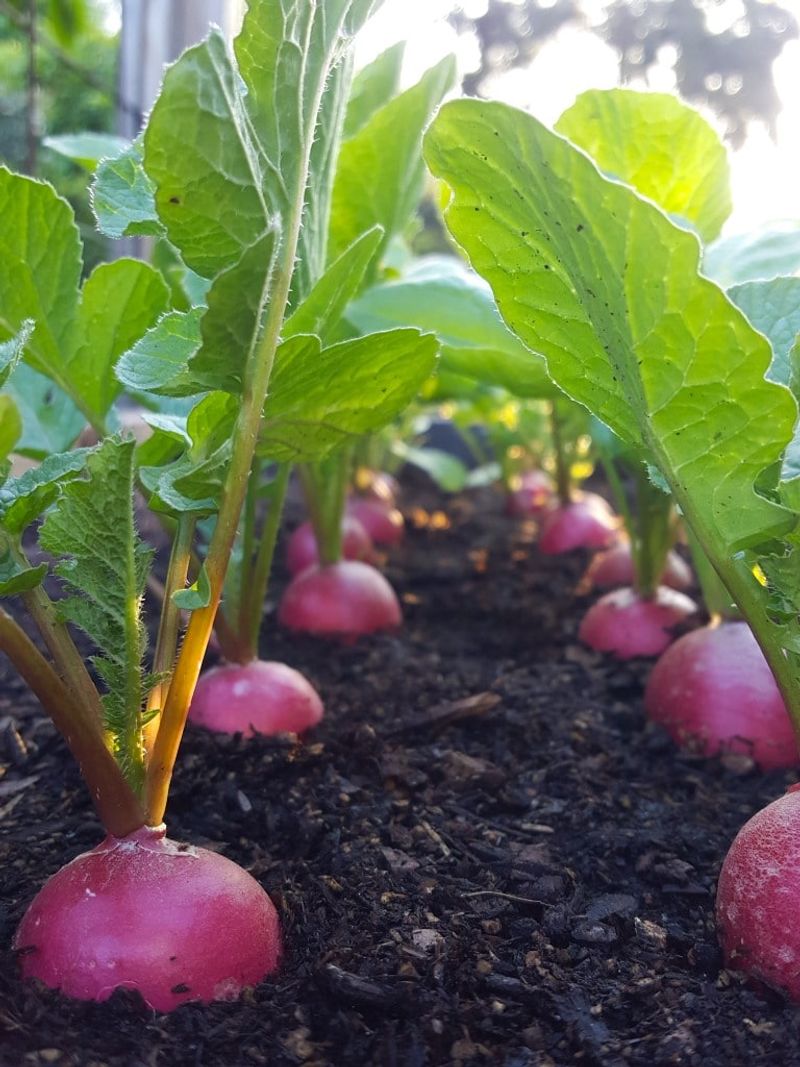
After thinning, the next step is making sure the remaining plants have soil conditions that actually allow roots to expand. Compacted or rocky ground forces a developing radish root to push through resistance rather than swell outward, and the result is often forked, stunted, or oddly shaped roots even in a properly spaced bed.
University of Minnesota Extension recommends loosening soil at least 6 inches deep for ordinary radishes and deeper for long varieties like daikons, giving roots a clear path to grow.
Keeping the bed weed-free matters more than many gardeners expect. Texas A&M AgriLife Extension specifically advises keeping the bed clean of weeds because weeds compete for moisture and nutrients and can add to the stress already created by close plant spacing.
Pulling weeds while they are small prevents their roots from tangling with developing radish roots and reduces competition during the short window when radishes size up most rapidly.
Moisture consistency is equally important. Alternating between dry spells and heavy watering can slow root development, worsen flavor, and contribute to cracking.
The goal is evenly moist soil maintained throughout the growing period, with thorough watering rather than frequent light sprinkles that wet only the surface. UF/IFAS guidance for Florida root crops reinforces that well-prepared, loose soil paired with consistent moisture gives radish roots the best conditions for full development.
Heat and excess nitrogen can imitate a crowding problem
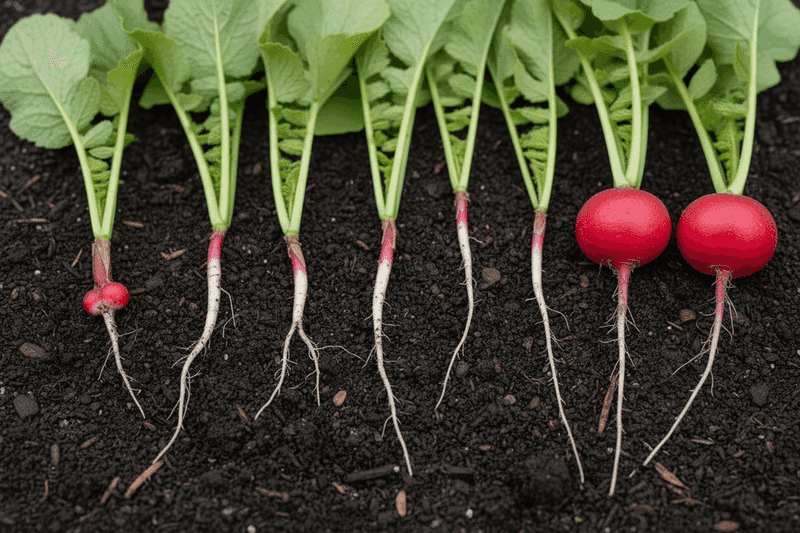
Correcting spacing and still pulling up undersized roots is a signal worth taking seriously. Several other conditions produce the same top-heavy, root-light result, and working through them one by one is more useful than assuming the spacing fix should have solved everything.
Heat is one of the most common alternative causes in Southern gardens. Cool-season radish varieties planted while temperatures are still warm can push leaf growth, suppress root enlargement, or bolt entirely, and no amount of thinning corrects a heat problem.
Utah State University Extension’s physiological problems guidance identifies high temperatures, long days, and bolting as conditions that favor foliage over root development in radishes. Florida and Texas gardeners face this directly because both states have substantial regional variation in when fall temperatures become suitable for cool-season crops.
UGA Cooperative Extension lists a Georgia fall planting window of roughly August 15 through October 15, while Texas A&M AgriLife Extension’s fall vegetable guide gives region-specific dates ranging from September 1 in some areas to December 15 in others. Checking your local extension calendar rather than a national planting date is the most reliable way to time fall radishes correctly.
Excess nitrogen is another mimicker. Iowa State University Extension specifically warns that too much nitrogen drives lush leaf growth at the expense of root sizing, and adding fresh manure or heavy nitrogen fertilizer as a quick fix can intensify the problem rather than solve it.
Fertilizer decisions for a struggling crop are best guided by a soil test rather than by adding amendments based on appearance alone. Shade, uneven moisture, and compacted soil can all contribute similarly, so each factor is worth evaluating before concluding that spacing was the only issue.
Harvest usable roots promptly and reseed when conditions fail
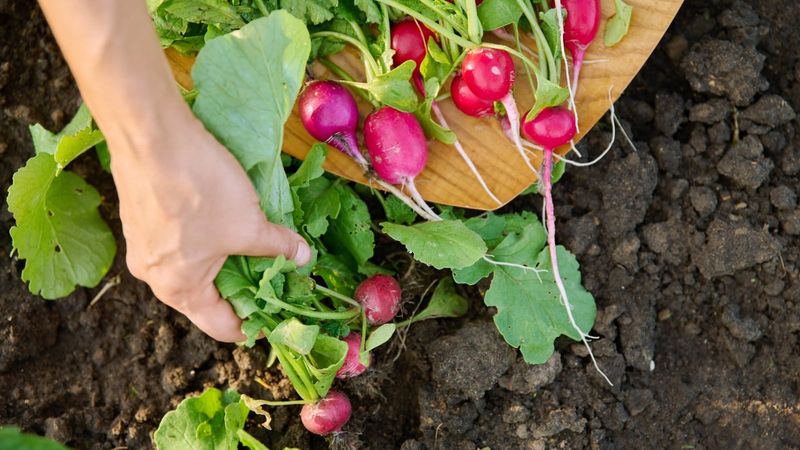
Radishes have a narrow window between ready-to-harvest and past their prime. Illinois Extension notes that roots left too long in the ground, or grown slowly under heat stress, can become hot, fibrous, woody, or pithy, none of which improve with more time in the soil.
As soon as roots reach a usable size for the variety, pull them. Waiting for a larger root that may not come only risks losing the harvest you already have.
When a crop has already bolted, been damaged by prolonged heat, or gone overmature, thinning the same planting is unlikely to turn things around. Utah State University Extension confirms that plants stressed by unsuitable conditions may not recover root quality regardless of spacing corrections.
The more productive response in that situation is to pull the struggling plants, refresh the bed, and reseed during a cooler window that matches the crop’s actual temperature needs. Both UGA Cooperative Extension and Texas A&M AgriLife Extension provide region-specific fall planting calendars that help gardeners identify that cooler window rather than guessing.
The sequence that gives fall radishes the best chance is straightforward: choose a variety suited to your region, check the seed packet for the correct spacing, thin promptly once seedlings are handleable, maintain loose and evenly moist soil, keep weeds out, and investigate heat, nitrogen, shade, and moisture if roots remain small after thinning. A radish that gets those basics right during a suitable planting window is rarely the one that pulls up with nothing worth eating.
The greens are a clue the plant is alive and growing; the root is the reward for getting the conditions right.