
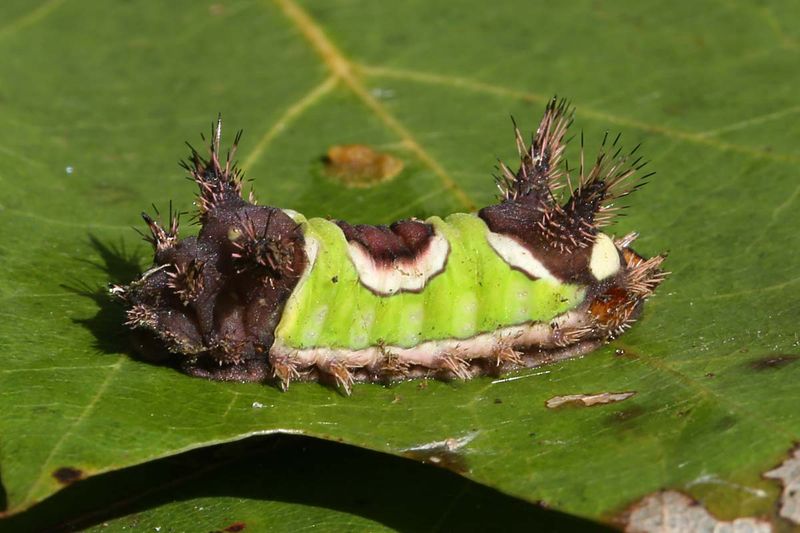
A fuzzy little caterpillar on a shrub can look cute, but some of them can leave a painful rash on bare skin. Late summer and early fall is when North Carolina Poison Control hears about caterpillar stings most often.
Two North Carolina caterpillars, the saddleback and the hag moth larva, show why it pays to look first and touch never. Here is how to tell them apart and what to do if one gets you.
Fall timing calls for caution, not a species guess
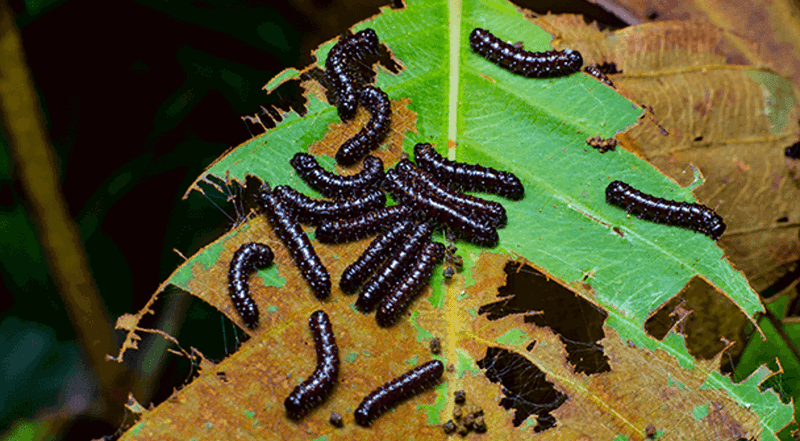
Cooler mornings and golden light make early fall a busy time in the yard, and it is also a busy time for caterpillar contact. North Carolina Poison Control reports that caterpillar stings occur most often in late summer and early fall across the state.
That is a broad window for all caterpillars, so it works as a general reminder to be careful while pruning, raking, or checking shrubs.
The timing does not tell you which caterpillar is sitting on your shrub. Most caterpillars you find in a North Carolina yard are not stinging types, and plenty of hairy ones are not dangerous at all.
The point is that you cannot sort the safe ones from the irritating ones by season or by how fuzzy they look.
Two stinging types are worth knowing by sight. NC State Extension describes the saddleback caterpillar as a woody-plant feeder, and the hag moth caterpillar has host-plant records in North Carolina, including white oak.
Both are documented in the state, but neither is guaranteed to turn up on shrubs in your neighborhood, so a sighting is not a given.
The safest habit is simple: look with your eyes, take a photo, and keep your fingers out of it. A clear picture can help you or an expert work out what you have found.
Saddleback and hag moth caterpillars look different
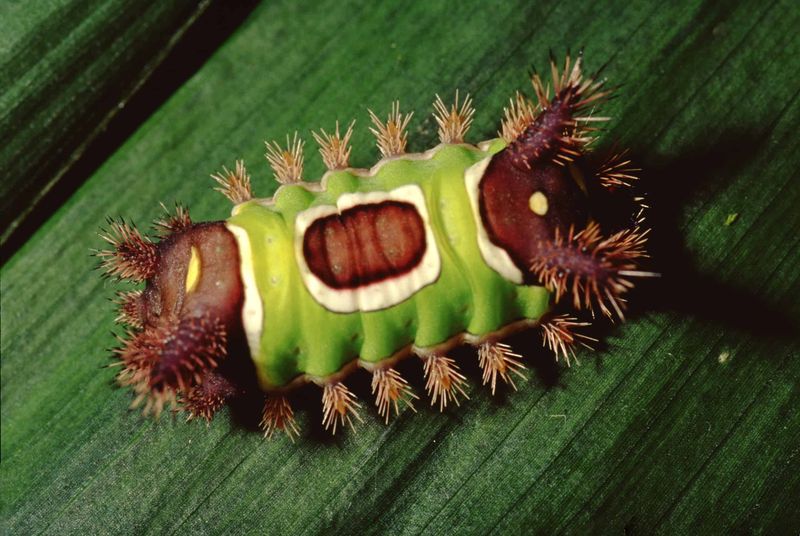
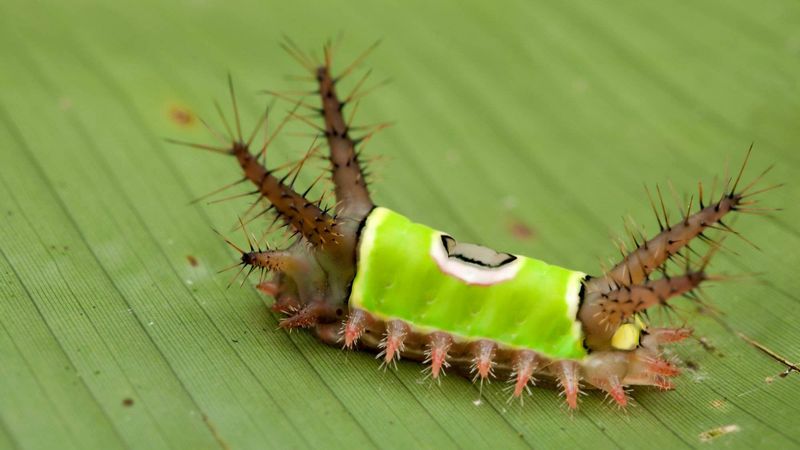
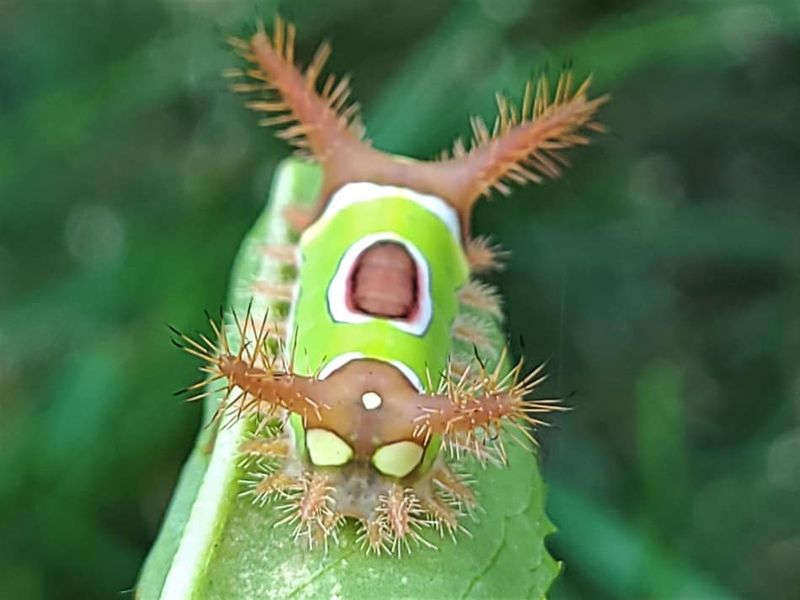
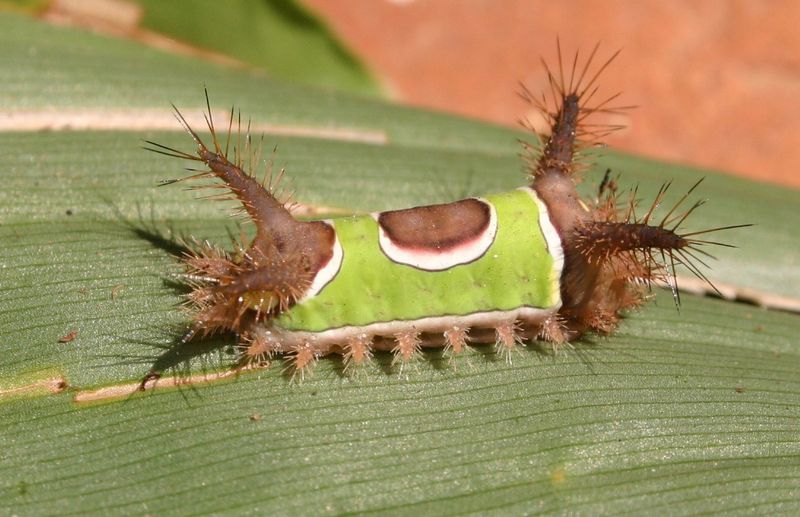
Picture a small green slug-shaped caterpillar wearing a brown patch like a saddle on its back. That is the saddleback, and NC State Extension notes its prominent spined projections at both ends and along the sides.
The green body and the brown saddle are the main clues.
The hag moth caterpillar, sometimes called a monkey slug, looks quite different. It has a brown body with irregular, hairlike side appendages that look like shaggy little arms, as described by Virginia Tech Extension.
Of the two, it is the better match for a hairy-looking caterpillar.
A saddleback is not really fuzzy in the ordinary sense, as University of Maryland Extension points out for stinging caterpillars on shrubs. Its look comes from the saddle and the spines, not from soft fur.
So the word fuzzy alone will not help you here.
Appearance may not settle every case, because young caterpillars and unusual color forms can confuse things. When you are unsure, snap a photo from a few inches back and share it with your local Extension office.
That is safer than guessing, and far safer than picking one up to look closer.
Their contact risks are not identical
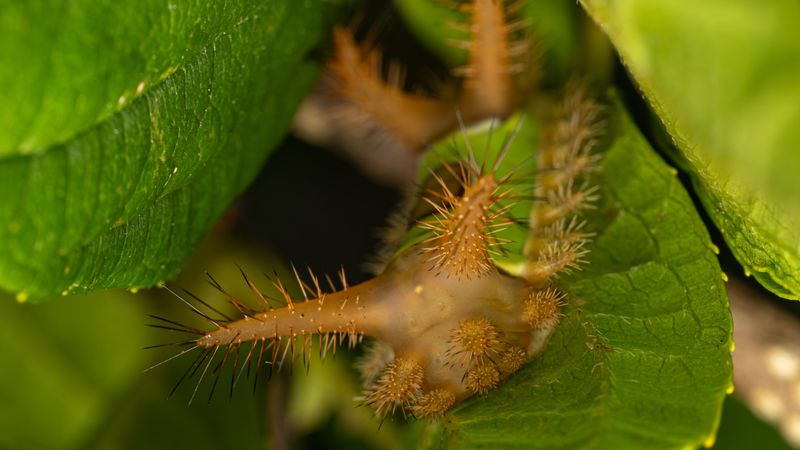
Each of these caterpillars calls for care, though not in exactly the same way. NC State Extension says saddleback spines can cause painful skin reactions.
Brushing one with bare skin is what to avoid.
Hag moth hairs are best treated as potentially irritating. Virginia Tech Extension says the hairs can irritate some people.
Sources differ on whether to call this caterpillar a stinger, and UF/IFAS mentions toxin glands and possible skin symptoms while also noting conflicting information.
That mixed picture is a good reason to skip bare-handed contact without assuming a reaction every time. Many people who brush against a caterpillar have little or no trouble, and others have a rash or sharp pain.
Neither of these species should be called harmless to people.
Severe reactions are not typically expected from caterpillars in the United States, according to Poison Control, though serious symptoms do need medical attention. Think of it as sensible caution, not a reason to panic.
Avoid handling an unknown caterpillar
Picture a toddler reaching for a bumpy little creature on a hedge. A calm “let’s just look” is the best response.
Keep kids from picking up caterpillars with conspicuous hairs or spines, since a child may not know which ones sting.
The rule is simple when you cannot tell what you have: do not pick it up. Poison Control recommends avoiding contact with fuzzy or spiny caterpillars.
That is a general precaution for unknown ones, not a claim that every caterpillar is a hazard.
Leaving it alone is usually the best plan, and it often wanders off by itself. If a caterpillar sits on a doorknob, a play set, or a path where someone will bump it, you may need to move it.
Use thick gloves and a tool such as a stick or a pair of tongs, and avoid bare hands.
If one lands on skin, do not swat it away with your hand. North Carolina Poison Control advises against brushing a caterpillar off with a bare hand, so use a stick or folded paper instead.
Do not crush or step on it.
After skin contact, lift hairs with tape and wash
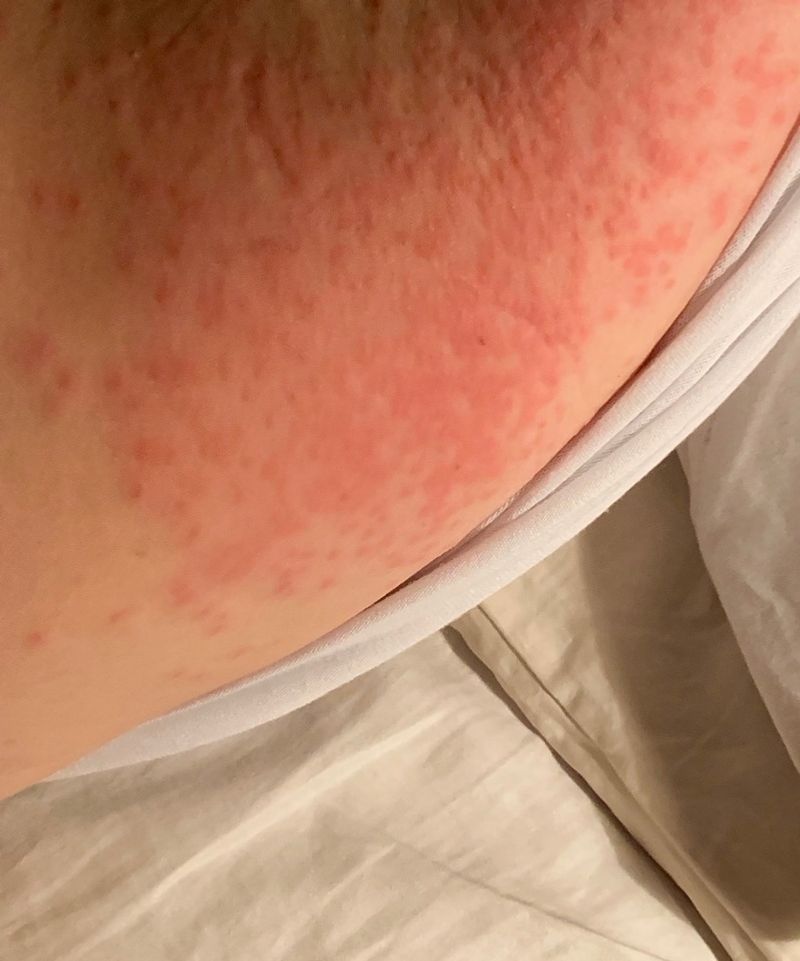
If a caterpillar touches your skin and it starts to sting or itch, start with tape. North Carolina Poison Control advises gently pressing tape onto the area and lifting it off, which can pull out spines or hairs left behind.
Then take a fresh piece of tape and repeat. Using new tape each time keeps you from pressing the same hairs back onto your skin.
Avoid rubbing or scratching, which can push the hairs in deeper.
Once the tape is done, wash the area with warm, soapy water. That step helps clear away what the tape missed.
For symptoms afterward, Poison Control says an antihistamine may help with itching, and hydrocortisone may be applied around the sting. Results vary from person to person, and nobody can promise how long discomfort will last.
If you have questions about a particular exposure, call North Carolina Poison Control at 1-800-222-1222 for advice based on your situation.
Rinse eye exposure and act on serious symptoms
Most caterpillar contact stays on the skin, but hairs can drift into the eyes. If that happens, rinse with room-temperature water and call North Carolina Poison Control.
Their caterpillar guidance gives this advice, and the helpline is 1-800-222-1222.
Try not to rub the eye, since that can work the hairs in further. Keep rinsing gently while you make the call.
Some symptoms mean it is time to stop home care. Seek urgent medical help for difficulty breathing or swallowing.
Those signs are not typical after a caterpillar encounter, but they need prompt attention when they do show up.
Severe blistering is another reason to act. Contact a health provider if the skin blisters badly.
A mild rash or sting is usually a different matter, and the tape, wash, and call routine from the last section covers that.
Having the helpline number saved in your phone ahead of time makes any of these moments easier.
Leave the caterpillar alone when the shrub is not at risk
A chewed leaf can make any gardener reach for a fix. With saddlebacks, there is usually little to worry about.
NC State Extension says they typically occur in low numbers and do little harm to landscape plants.
That claim is about saddlebacks, not every caterpillar. Other species and larger outbreaks can do more damage, so check how much of the plant is actually being eaten.
A few nibbled leaves are very different from a bare branch.
Guidance on stinging caterpillars on shrubs from University of Maryland Extension generally treats control as unnecessary when plant damage is minimal. In practice, a shrub that still looks full and green does not need a rescue.
It is tempting to stomp or crush a caterpillar, but that brings you close to the spines and hairs you are trying to avoid. Leave it alone when you can, and plan pruning or trimming for a time when you can look the plant over first.
Wear long sleeves and gloves for work near shrubs and oaks.
A quiet shrub with a small visitor is often just a shrub doing its job as part of the food web.