
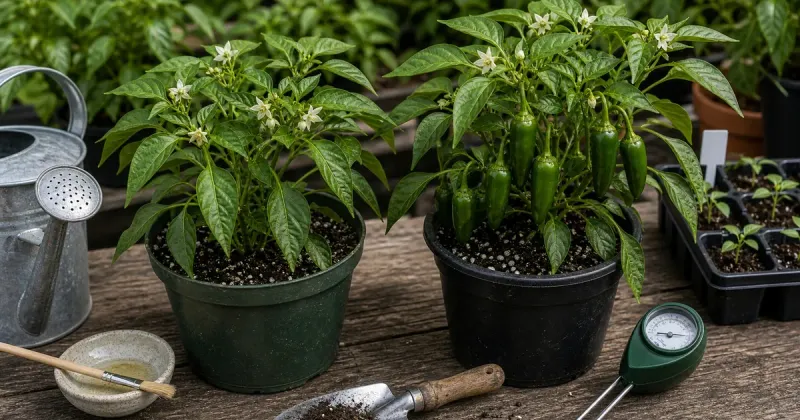
Your pepper plant looks incredible, with thick stems and leaves the size of your hand, but the fruit count is embarrassingly low. Before you reach for another bag of fertilizer, consider that the problem might actually be what you have already been feeding it.
Too much nitrogen is one possible culprit, but heat, water stress, and poor pollination can produce the same frustrating picture. Working through the real cause first will save you time, money, and a season of waiting on peppers that may never come.
Excess nitrogen can create leafy peppers, but leaves do not prove the cause
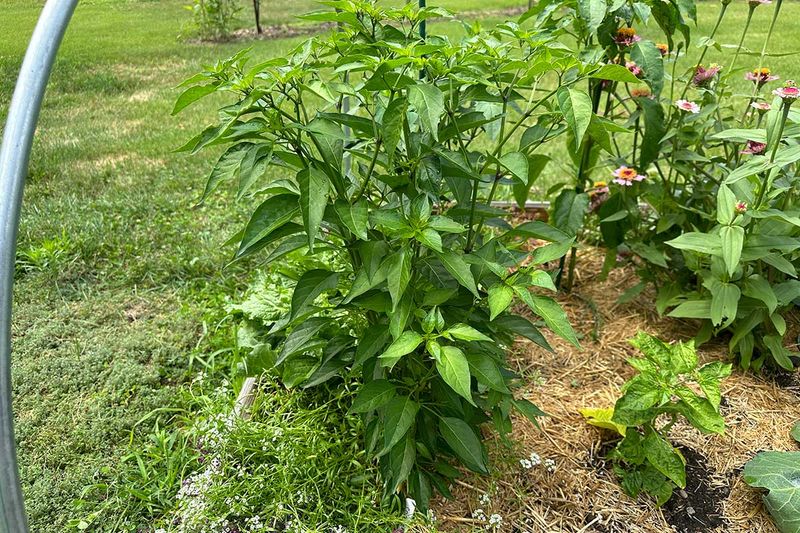
Nitrogen is a building block for plant tissue, and peppers need it to establish healthy stems and foliage. When a gardener applies more nitrogen than the plant can use for fruiting, the extra push often goes straight into shoot and leaf production.
University of Minnesota Extension guidance on growing peppers notes that too much nitrogen produces bushy, leafy plants that are slow to bear fruit, and UF/IFAS research on pepper production adds that excessive nitrogen can cause a proliferation of leaves and branches while increasing the risk of blossom-end rot by driving rapid shoot growth.
Here is where many gardeners get tripped up: a big, leafy plant does not automatically mean fertilizer caused the poor fruit set. Heat above 90 to 95 degrees Fahrenheit during the day or above 75 degrees at night can prevent flowers from setting fruit entirely.
Poor pollination, drought, waterlogged roots, disease, root damage, and cultivar traits can all produce a vigorous plant with very little to show at harvest.
Illinois Extension’s analysis of pepper production problems challenges the assumption that overfertilization alone explains fruitless but otherwise healthy plants. Treat large foliage as a symptom worth investigating, not a confirmed diagnosis, and resist the urge to reach for another product before you know what you are actually correcting.
Pause unnecessary high-nitrogen feeding
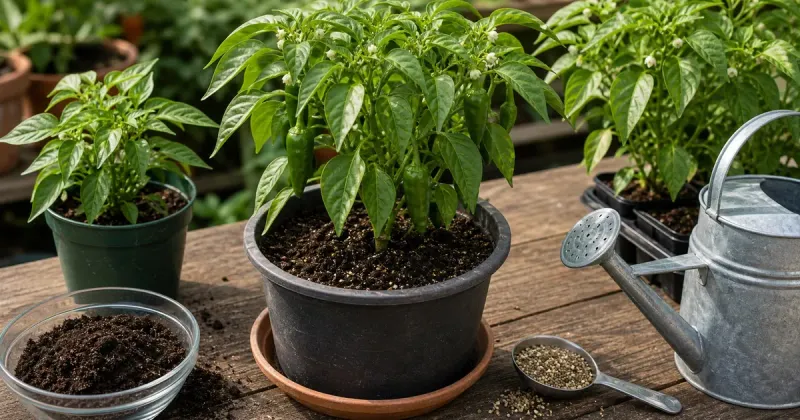
The safest first move when your pepper plants are all leaves and little fruit is to stop adding high-nitrogen fertilizer until you understand what is going on. That does not mean cutting off all nutrition or letting a genuinely deficient plant suffer.
It means pausing the repeated, unmeasured applications that can push nitrogen well beyond what the plant and soil actually need.
Start by reading the fertilizer label. The three numbers printed on every bag or bottle represent nitrogen, phosphorus, and potassium in that order.
The first number is nitrogen. A product labeled 10-10-10 contains 10 percent nitrogen by weight, while something labeled 30-0-4 is heavily nitrogen-dominant.
Iowa State University Extension guidance on fertilizer rates recommends applying nutrients according to soil-test results and crop needs rather than routine schedules, because adding nutrients a soil already has in adequate supply does not improve yields and can cause harm.
UF/IFAS pepper guidance warns that excessive nitrogen raises the risk of blossom-end rot and excess vegetative growth, both of which reduce usable fruit. The EPA’s yard-level nutrient guidance also points out that over-applying fertilizer can move nitrogen into waterways, so sticking to label rates protects more than just your pepper crop.
Pausing unnecessary feeding is low-risk and gives you time to figure out whether nitrogen, water, heat, or something else is the real problem.
Use low-nitrogen fertilizer only when the plant actually needs feeding
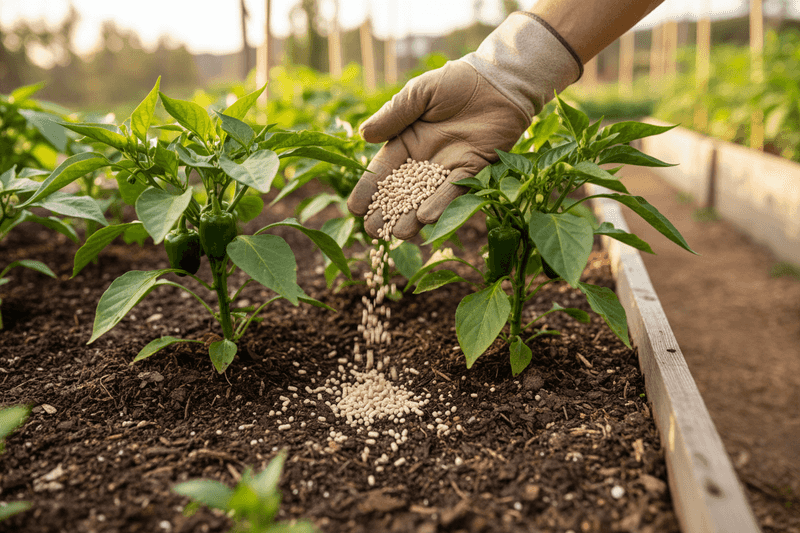
Once you have paused unnecessary high-nitrogen applications and confirmed that your plant genuinely needs feeding, a low-nitrogen fertilizer may be appropriate. UC Cooperative Extension’s pepper growing guide recommends waiting until flowers open before feeding, then using aged compost or a low-nitrogen organic fertilizer, followed by a second application about three weeks later.
That schedule reflects California growing conditions and is offered as practical guidance, not a prescription that fits every soil type, climate, or pepper variety.
What you should not do is automatically swap a high-nitrogen fertilizer for a high-phosphorus one on the assumption that phosphorus will trigger flowering. Some gardening advice frames phosphorus as a fruiting switch, but current nutrient management recommendations tell a more careful story.
Iowa State Extension’s fertilizer rate guidance and Virginia Cooperative Extension’s nutrient recommendations for peppers both base phosphorus and potassium applications on soil-test levels. If those nutrients are already adequate in your soil, adding more will not improve fruit set and can create nutrient imbalances.
Excess phosphorus that runs off into waterways contributes to algae blooms and water-quality problems, as EPA nutrient pollution guidance explains. The practical rule is straightforward: feed when the plant shows a documented need, use a product matched to that need, and apply at label rates.
A soil test from your local extension office is the most reliable way to know what your garden actually lacks before you spend money on products that may not help.
Stabilize moisture before blaming the nutrient ratio
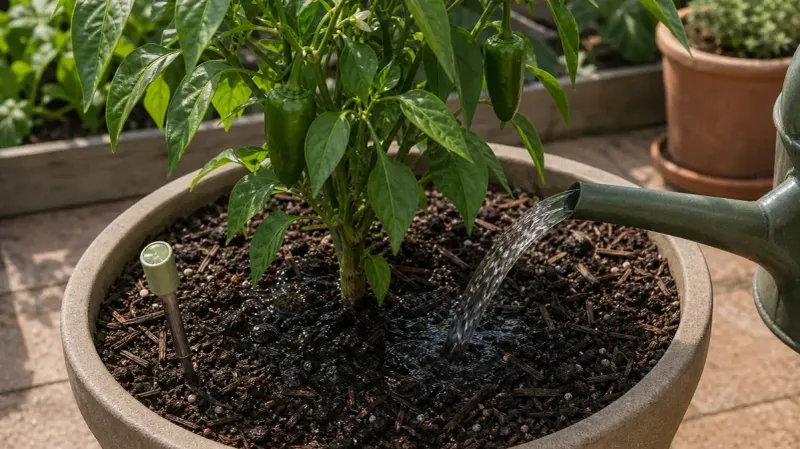
Fertilizer ratios get most of the attention when peppers underperform, but root-zone moisture is often the more immediate problem. Uneven watering creates conditions where the plant cannot move water and dissolved nutrients from the soil into developing fruit, even when those nutrients are present in adequate amounts.
Mulch and drip or soaker irrigation can help keep the root zone more consistent between rain events and watering sessions, which matters especially in the heat of a Southern fall.
Oregon State University Extension’s pepper growing guide recommends consistent moisture to support steady fruit development, and UF/IFAS pepper guidance specifically links water imbalance, root stress, and high soluble-salt levels in the soil to disrupted calcium movement in fruit. That disruption can cause blossom-end rot, the dark, sunken patch that appears on the bottom of developing peppers.
Blossom-end rot is commonly misread as proof that the soil lacks calcium. UC IPM’s blossom-end rot overview explains that the condition is a localized calcium-delivery failure inside the rapidly expanding fruit, often tied to water imbalance, root damage, excess fertilizer salts, or fast vegetative growth rather than low soil calcium.
Clemson Extension’s review of calcium spray claims finds that foliar calcium sprays are unlikely to correct the underlying causes. Fixing the water situation first is almost always more effective than adding another product.
Southern fall heat may block fruit set regardless of fertilizer
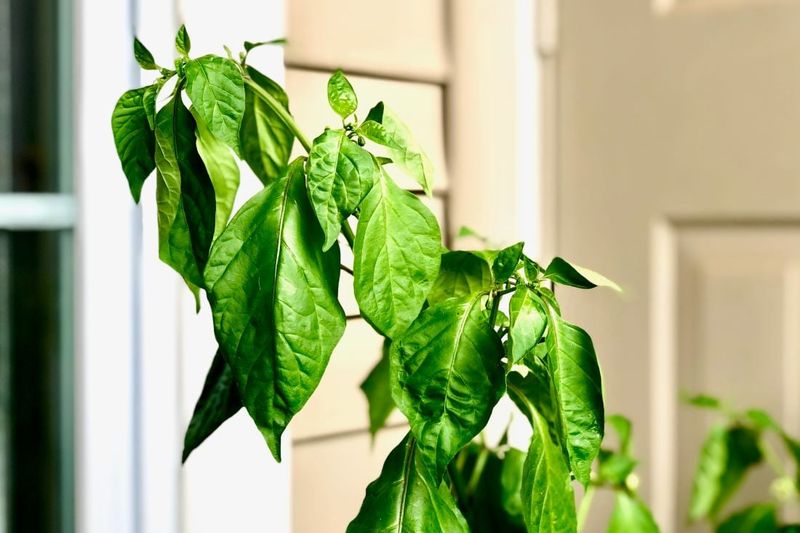
Southern gardeners face a challenge that no fertilizer formula can fully address: high temperatures during the fall planting window can prevent peppers from setting fruit regardless of how well-fed or well-watered the plants are. University of Maryland Extension’s resource on poor blossom and fruit set reports that pepper flowers and small fruit may drop when daytime temperatures exceed 95 degrees Fahrenheit or when nighttime temperatures stay above 75 degrees.
Texas A&M AgriLife pepper guidance gives similar figures, noting that many peppers drop blooms when daytime highs rise much above 90 degrees and nights stay warm.
Florida and Texas gardeners deal with distinct versions of this problem. In Florida, UF/IFAS bell pepper production research describes late summer and early fall as a difficult window for bell peppers because of combined heat, humidity, and rainfall, though some hot-pepper types tolerate those conditions better.
UF/IFAS pepper production guidance for Miami-Dade County reinforces that cultivar choice and planting timing are critical variables in the state’s southern regions.
Texas conditions vary more by region, but Texas A&M AgriLife’s fall vegetable gardening guide emphasizes that transplant timing and regional temperature differences matter significantly across the state. When temperatures are the limiting factor, shade cloth, cultivar selection, and adjusted planting dates will do more for fruit set than any change to the fertilizer bag.
Remove other barriers and watch for new growth
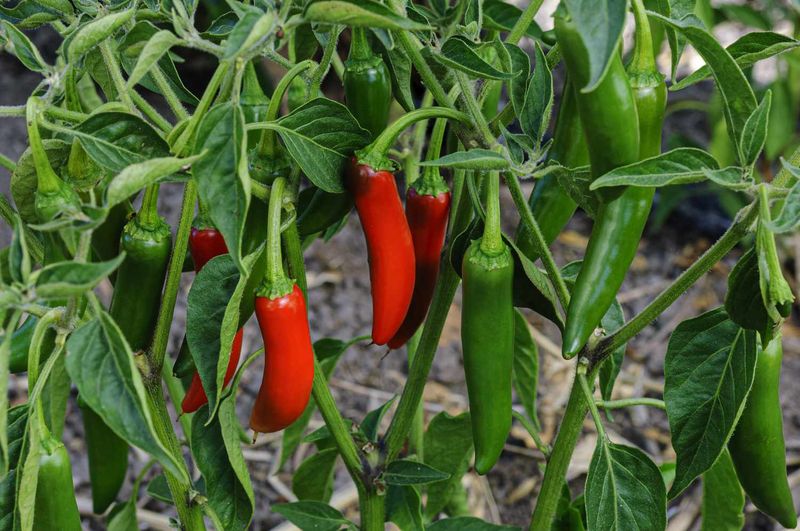
After you stop unnecessary high-nitrogen feeding and stabilize soil moisture, the next step is to hold steady and pay attention. Resist the temptation to stack additional products on top of the changes you have already made.
Adding a bloom booster, a calcium spray, and a potassium supplement all at once makes it impossible to tell which adjustment, if any, helped, and it raises the risk of salt stress in the root zone.
Keep watering consistently, monitor the plant for new flower buds, and harvest any ripe or usable peppers already on the plant. University of Maryland Extension’s blossom and fruit set resource lists failure to harvest regularly as one factor that can cause plants to slow their flower and fruit production.
Picking mature peppers may help signal the plant to continue producing, though it is not a guaranteed reset button on a plant that is dealing with heat or root stress.
UF/IFAS pepper guidance and UC IPM’s blossom-end rot overview both point to plant stability, consistent moisture, and reduced stress as the foundation for recovery. These steps remove common barriers, but they cannot guarantee a new flush of fruit if heat, disease, root injury, pollination failure, or another unresolved issue continues to work against the plant.
Correcting conditions improves the odds; it does not override every obstacle.
Replace automatic fertilizer swaps with targeted care
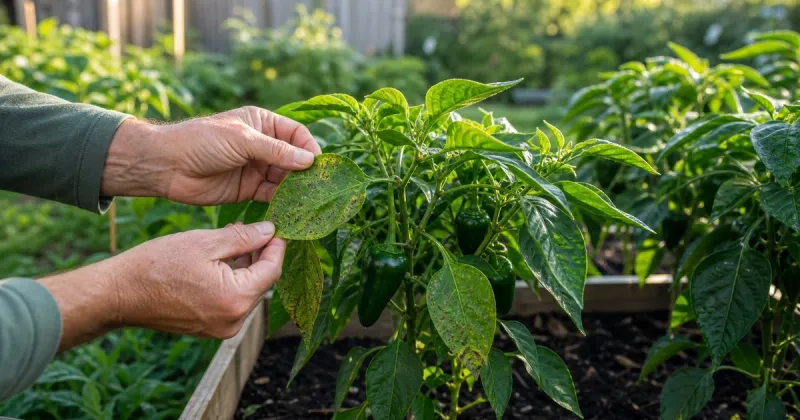
The reliable change for leafy, underproductive fall peppers is not blindly trading nitrogen for phosphorus. It is replacing unmeasured, routine feeding with a deliberate process: stop applications that exceed label rates or soil needs, read the fertilizer analysis before using any product, and run a soil test before adding phosphorus or potassium.
Iowa State Extension’s fertilizer rate guidance and Virginia Cooperative Extension’s pepper nutrient recommendations both ground phosphorus and potassium decisions in documented soil needs rather than assumed deficiencies.
Check moisture consistency, assess the current temperatures against the thresholds where fruit set typically fails, and evaluate whether the cultivar you planted is suited to your fall window. UF/IFAS pepper guidance and University of Maryland Extension’s fruit set resource both point to a combination of factors rather than a single nutrient fix as the path to better production.
Diagnosis before application is not a complicated extra step. It is the actual swap that works.