
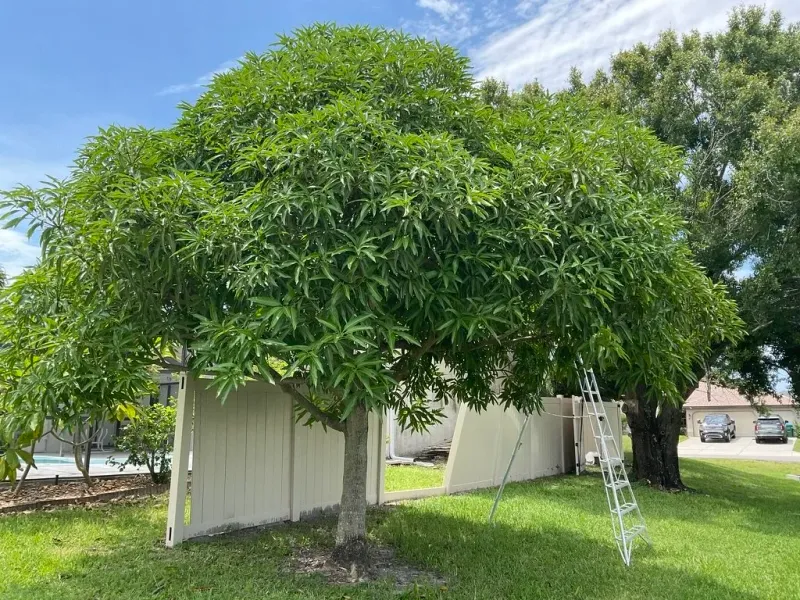
Your mango tree has finished its season, and the pruning saws are probably calling your name. Before you cut, it helps to know that timing matters as much as technique.
In Florida, the best cue is not the calendar page but the day you pick the last fruit. A little planning now can protect next year’s bloom and keep the tree easier to manage.
Use the last harvest—not the season name—to time routine pruning
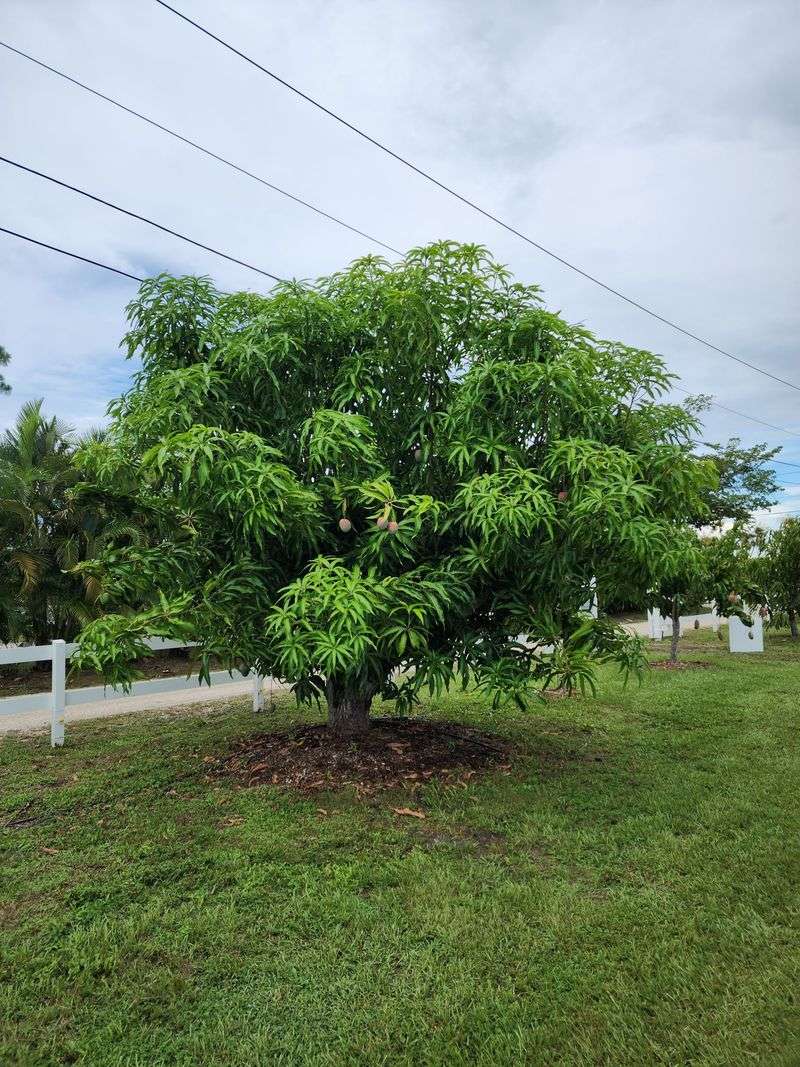
Ask a dozen Florida mango growers when to prune, and a few will say “fall.” That answer sounds tidy, but it skips the one clue that matters most: when your tree finished producing. For routine shaping, UF/IFAS guidance for home landscapes says to prune soon after harvest.
Florida mangoes generally mature from May through September, and most production lands in June and July. From flowering to mature fruit takes about 100 to 150 days.
Those are typical patterns, not a schedule printed on your tree.
Harvest dates vary with variety, weather, and the year. A early-season tree may be picked clean by midsummer.
A late variety may hold fruit into September. If both trees get trimmed on the same fall weekend, one may be right on time while the other is cutting close to bloom season.
So think of the last ripe mango as your starting gun. Once the final fruit is off, the tree is ready for routine shaping.
If you picked your last mango in July, you have a good stretch of time to work. If you picked in September, the window may be shorter, and you may want to keep cuts light.
A simple habit helps: write the date of your last harvest on a garden calendar or in your phone. Next year, that note will tell you far more than the season name ever could.
Why late or substantial pruning can put bloom at risk

Mango trees set their flowers on branch tips that matured before bloom season. Cut those tips away late, and the tree may answer with leafy growth instead of flower spikes.
That is the concern behind a caution from tropical fruit experts.
In a 2024 UF/IFAS interview, experts advised against pruning in October or later. They also said that removing more than 35 percent of the canopy can prompt vegetative growth instead of bloom.
Treat that number as expert guidance, not a universal law. It is not a target to aim for, and it does not mean every tree will react the same way.
Variety, location, and the weather all play a part.
It also does not mean a late cut will erase your crop. It means late or heavy pruning puts bloom, and therefore production, at some risk.
Think of it like sending a tree back to growing leaves right when it should be getting ready to flower.
Say you picked your last fruit in early August. A light touch in late summer sits comfortably inside the usual guidance.
A big cutback in November is the kind of job the experts warn about. The goal is to keep your pruning ahead of the bloom period and modest in size.
Shape selectively to keep a useful canopy
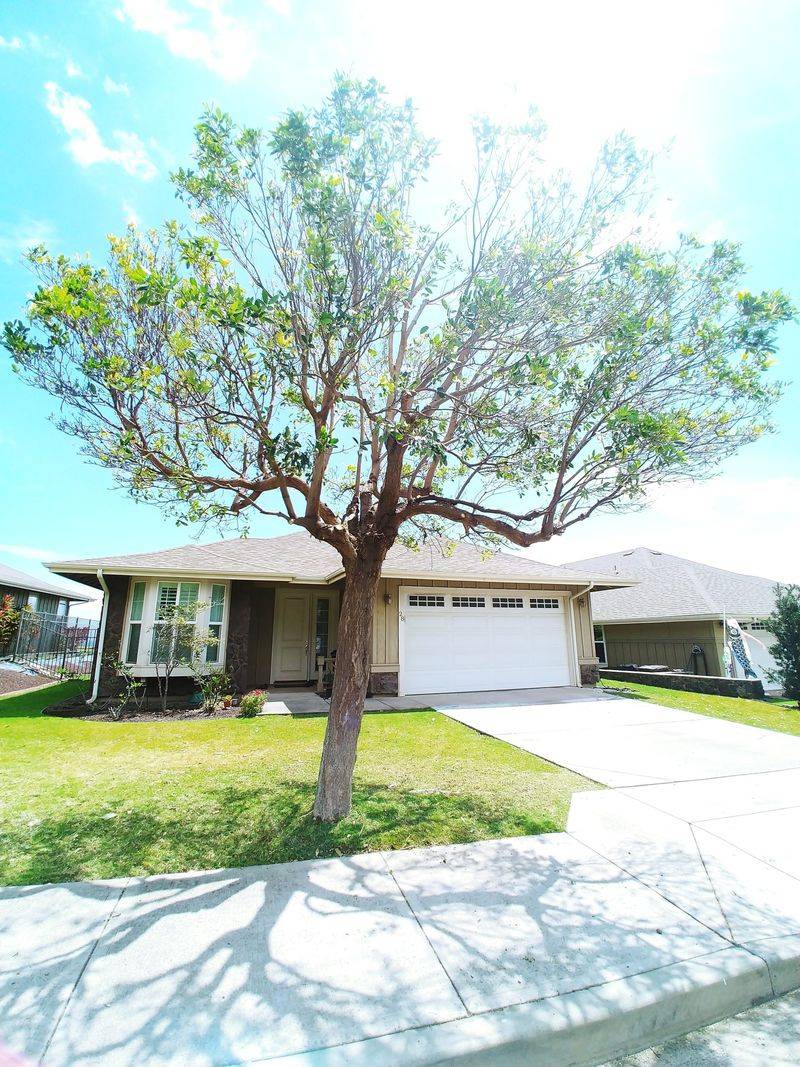
Routine shaping is more like a haircut than a buzz cut. UF/IFAS recommends selectively removing a few upper limbs back to their origin, which means following the limb down to where it joins a larger branch or the trunk.
That keeps the cut clean and avoids leaving awkward stubs.
Taking out upper limbs has a few payoffs. It helps preserve the lower canopy, where much of your easy-to-reach fruit hangs.
It also eases harvest, since you are not stretching toward the top of the tree. A thinner, better-balanced crown may also reduce potential storm damage during hurricane season.
Start by looking at the tree from a few steps back. Spot the tallest, most crowded limbs or any that cross and rub.
Choose a few, not dozens, and take them out one at a time, stepping back after each cut to see how the shape changes.
There is no set amount of canopy to remove. The right amount is whatever keeps the tree workable without opening a large gap in its structure.
If you are unsure, stop early. You can always make another cut after the next harvest, but you cannot put a branch back.
Keep this job separate from a major canopy reduction. Shaping is a small, repeatable chore.
Reduction is a bigger project with its own risks, covered in the next sections.
Make clean cuts and handle diseased trimmings carefully
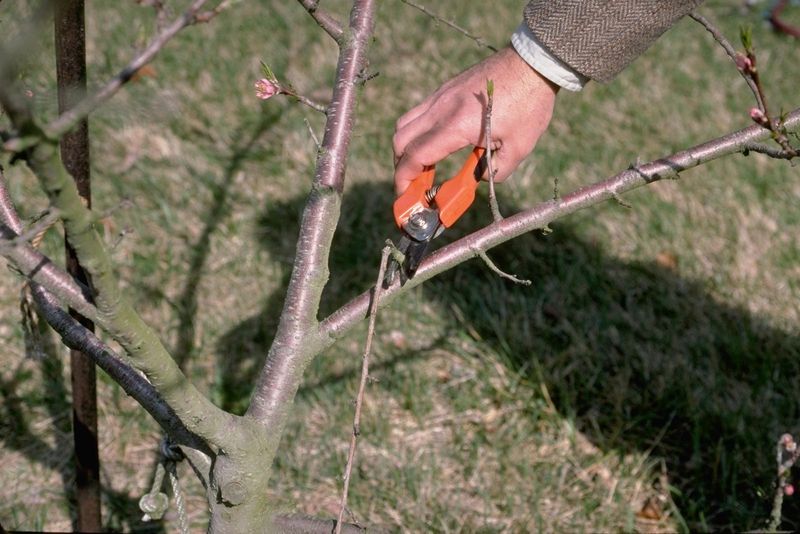
Good cuts heal better, and clean tools keep problems from hopping from one plant to the next. For small branches you can safely reach from the ground, aim for thinning cuts.
According to UF/IFAS pruning guidance for tropical and subtropical fruit trees, those cuts go back to a lateral branch, the trunk, or the ground.
Leave the branch collar intact. That is the slightly swollen ring where a branch meets its parent.
Cutting flush with the trunk removes it, while cutting just outside it leaves the tree’s natural healing tissue in place.
Sanitation matters too. Wipe or disinfect your pruners and saw between plants, especially if you have been working on anything that looks sick.
A quick clean takes a minute and can help avoid spreading trouble around the yard.
Then think about where the trimmings go. UF/IFAS advice on edible landscapes says not to compost diseased trimmings.
Spotted, blackened, or otherwise suspicious leaves and twigs are better bagged and kept out of the compost pile.
A sharp blade also makes a difference. Dull tools crush and tear bark, leaving ragged edges that take longer to close.
Sharpen before you start, and the work goes faster too.
Severe pruning can reduce production for more than one season
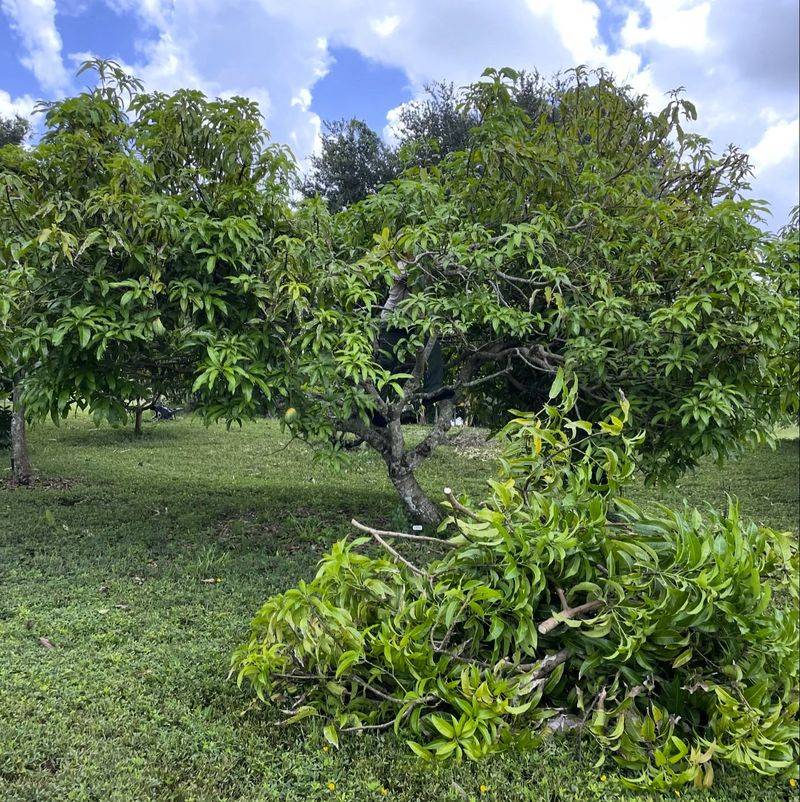
Maybe your mango has grown into a giant, and you are thinking about a big cutback. Go in with clear expectations.
UF/IFAS says severe pruning can reduce production for one or several seasons.
The same source says severe pruning does not injure the tree. So the trade-off is not about the tree’s survival.
It is about how much fruit you may give up while it rebuilds its canopy.
This is a different issue from the timing warning covered earlier. The late-pruning worry is that cuts made near bloom time may push the tree toward leaves instead of flowers.
The severe-pruning point is about the overall size of the cut and how long recovery can take, no matter when it happens.
If your tree has gotten out of hand, consider spreading the work across more than one year. A few well-chosen limbs after each harvest can bring the height down gradually, and you keep more of your fruiting wood along the way.
For most yards, the better path is steady, selective pruning after harvest. It costs less fruit, causes less stress on you, and avoids a drastic reset.
An aggressive cut can have its place, but go in knowing the price.
Leave tall trees and major cuts to a professional
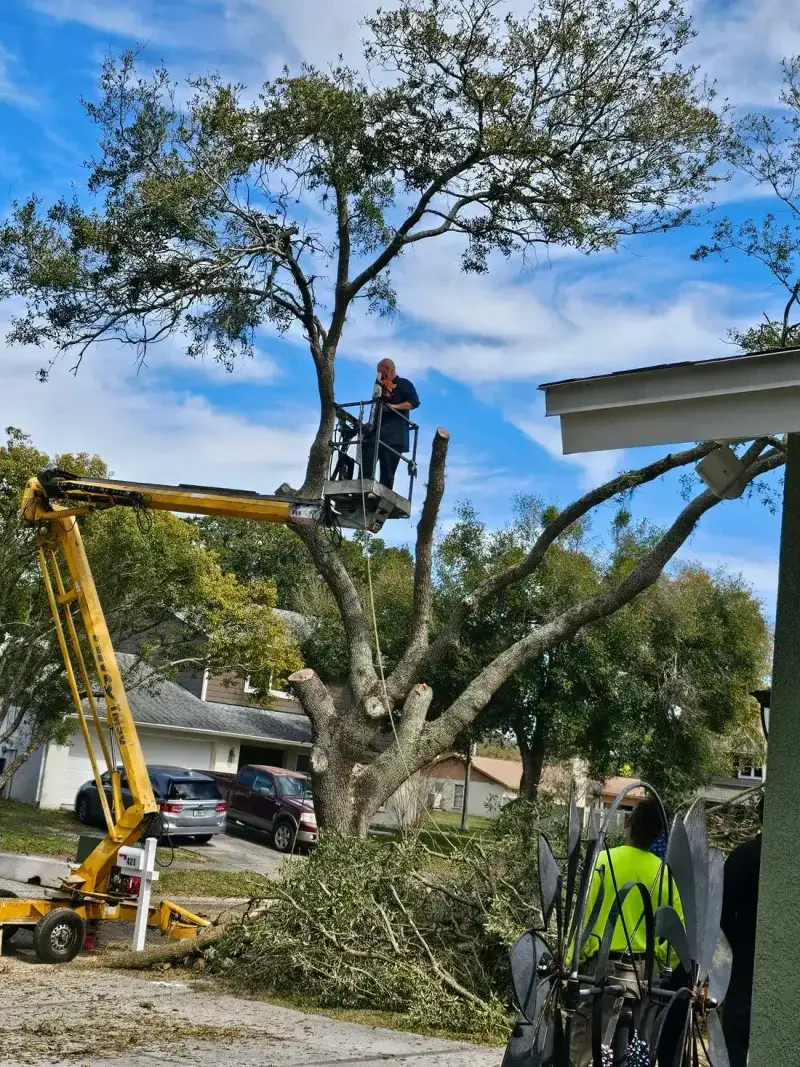
A large mango tree is not the place for a ladder, a chainsaw, and a brave afternoon. Do not climb a big mango tree to prune it.
UF/IFAS calls climbing dangerous and recommends a licensed, insured professional arborist for large trees.
The home-landscape guide also urges extreme caution when a tree reaches 25 to 30 feet or taller. At that height, falling limbs, unstable branches, and nearby power lines add real risk.
The advice in UF/IFAS pruning guidance points the same way.
Hand pruning from the ground is fine for small, reachable limbs. Anything that needs climbing, a pole saw overhead near wires, or heavy equipment belongs to a pro.
The same goes for any major canopy reduction.
When you call an arborist, ask for proof of license and insurance. Share your goals, such as lowering height, easing harvest, or reducing storm risk.
Tell them when your last harvest was, so the work can be scheduled with bloom timing in mind.
Paying for a professional can feel steep. Compared with an injury or a damaged roof, though, it is often the smaller bill.
Pruning is only one factor in fruit set
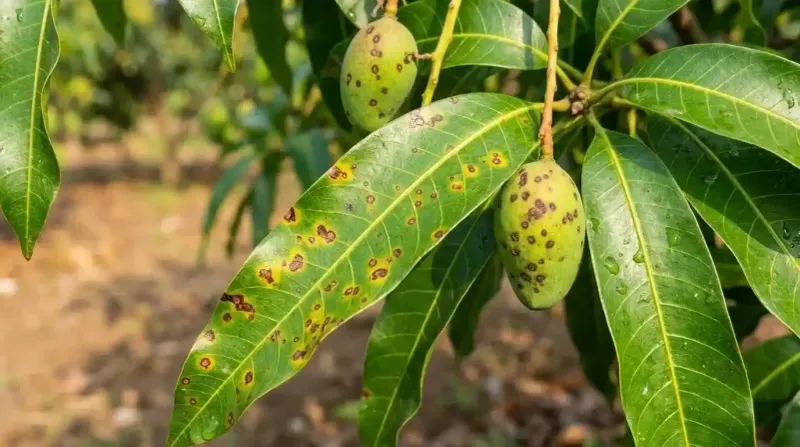
If your mango tree gave a thin crop, pruning may not be the reason. Fruit set depends on many things, and a trimmed tree is easy to blame.
Pruning timing is one piece of a bigger picture.
UF/IFAS lists anthracnose, powdery mildew, and low temperatures during bloom among the major limits on Florida fruit set. Anthracnose and powdery mildew are fungal diseases that can damage flowers and young fruit.
A cold snap while the tree is blooming can also hurt the crop.
The 2024 UF/IFAS interview adds more to the list. It mentions shade, overwatering, overfertilizing, pests, and simply a bad year for conditions.
Here is a practical way to use that list. Look at your tree’s surroundings.
Is it shaded by a neighbor’s oak? Is a sprinkler hitting it every day?
Are you feeding it heavily? Were there dark spots on the flowers?
Each of those is worth noting.
No single answer fits every tree, and a yard walk-through cannot diagnose one. If problems keep returning, your county UF/IFAS Extension office can help you sort out what is going on.
Meanwhile, keep notes each season on bloom, weather, and care.
Let the harvest date guide the next cut
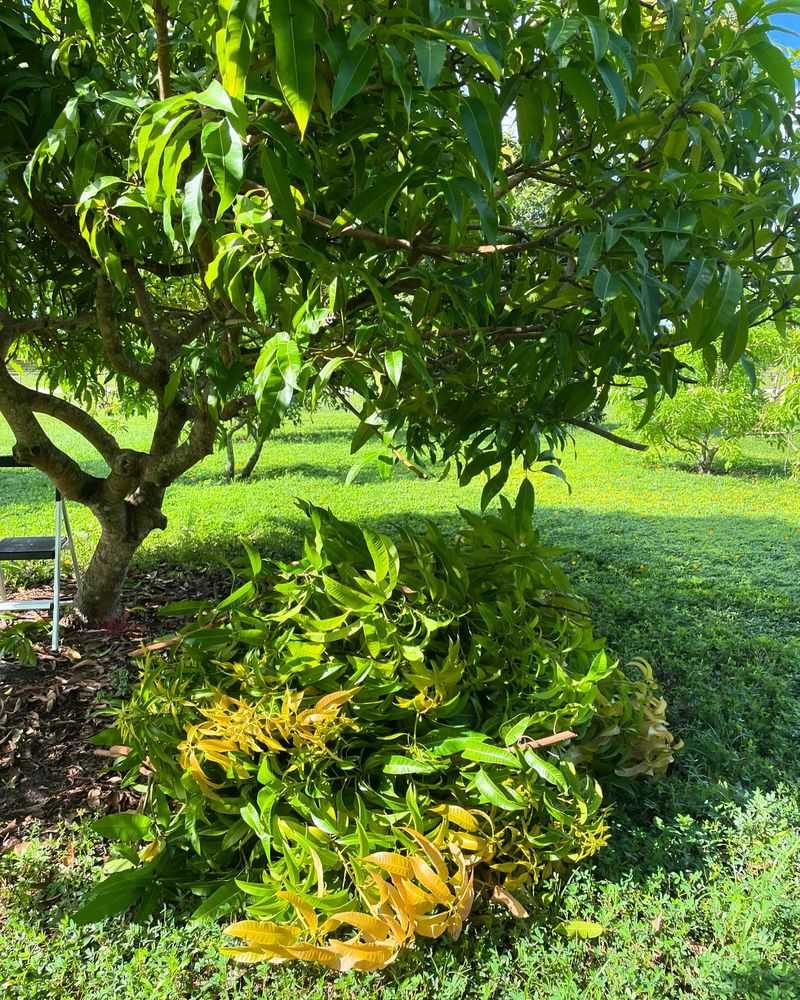
Finish routine shaping soon after your last harvest, keep each cut selective, and be cautious about substantial pruning in October or later. UF/IFAS home-landscape guidance and expert comments from 2024 both point that way.
This is risk management, not a promise of fruit. A fall cut does not doom a crop, but a calm, early trim leaves the tree more room to bloom.
Your last mango is the best calendar you have.