
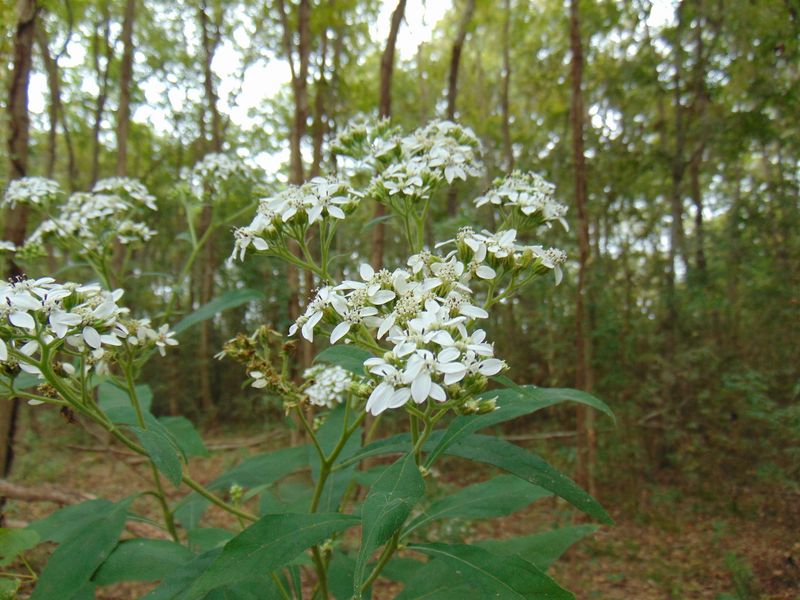
Shady corners in Texas yards often go quiet by late summer, when many sun-loving flowers fade or struggle. Frostweed is a Texas-native perennial that can fill that gap with clusters of small white flowers.
It grows tall, spreads on its own, and feeds pollinators when other blooms are scarce. Here is how to tell whether it fits your yard.
Which native perennial blooms in shady Texas yards as fall arrives?
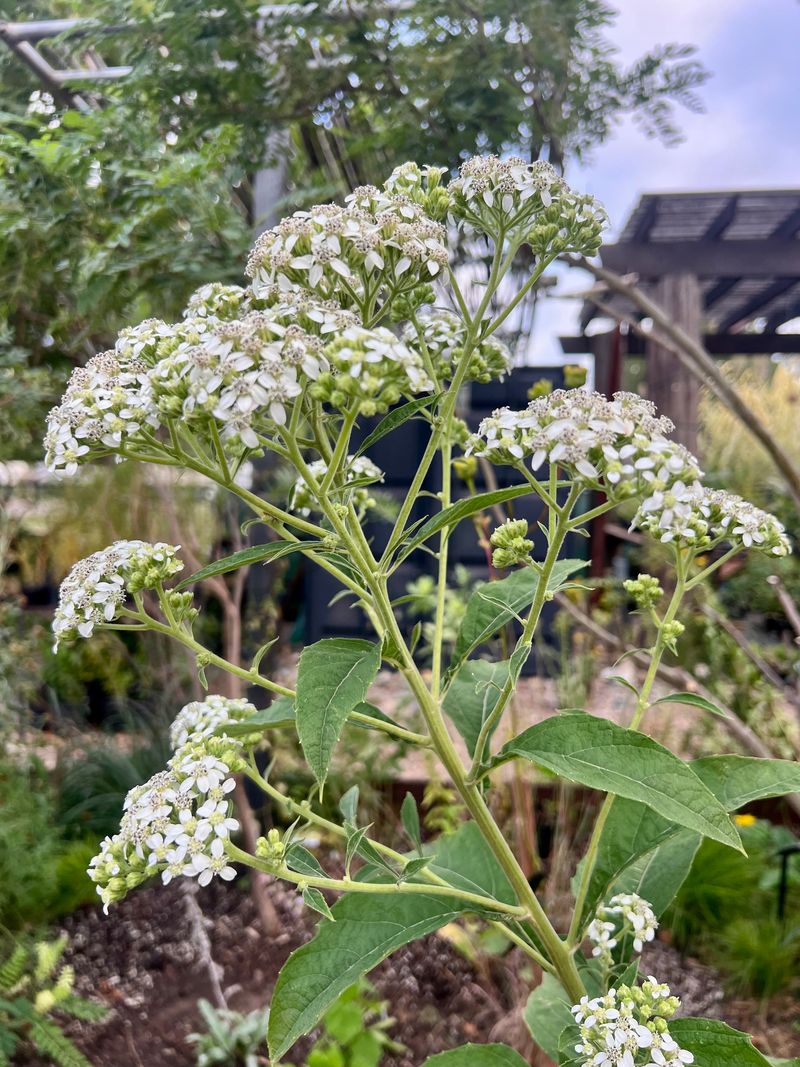
Frostweed, known by the scientific name Verbesina virginica, is a Texas-native perennial that carries clusters of small white flowers on tall, upright stems. The common name “frostweed” gets used for more than one plant, so the scientific name helps you buy the right one.
Most plants reach about 3 to 6 feet, according to the Native Plant Society of Texas. That is closer to a shrub in size than a groundcover, so picture it behind shorter plants rather than at the front of a border.
It is native in Central Texas and other parts of the state, though how common it is varies from place to place.
The flowers show up in the back half of the year. The University of Texas at Austin lists bloom from August through November.
A Texas native shade garden guide describes white flowers from August to the first frost.
Those endpoints differ, so do not count on a set date. Bloom timing shifts with the weather, your exact location, and how much light the plant gets.
Think of it as a late-summer-into-fall bloomer, not a plant that saves every flower for autumn.
For a shady Texas spot that needs something to look at when summer winds down, it is worth a closer look.
A shady site can work, but light changes its form
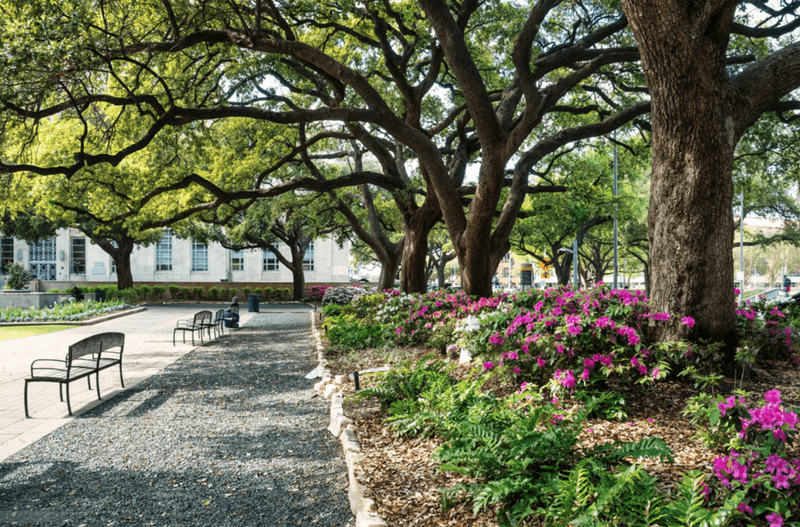
Frostweed grows in shade to part shade, and it handles a wide range of soil moisture, from fairly dry to moist, according to the Native Plant Society of Texas. That flexibility is why it can work under oaks, along a fence line, or on the north side of a house.
Light changes how the plant looks, though. The Houston Arboretum recommends dappled shade and notes that sunnier, drier conditions tend to produce shorter, more compact plants with more flowers.
Deep shade is the other direction. Plants there can stretch taller and look leggier, with fewer flowers to show for the extra height.
If you want a tidier plant, a spot with filtered light or a few hours of gentler sun is a better bet than the darkest corner of the yard.
A quick test before planting: watch the spot on a bright afternoon. If light flickers through leaves for much of the day, that is dappled shade.
If it stays dim from morning to evening, expect a taller, looser plant.
Soil is more forgiving. Because frostweed tolerates both dry and moist ground, you do not need to bring in special soil, but a spot that is not baking dry in summer will help a young plant settle in.
Its late-season flowers provide pollinator nectar
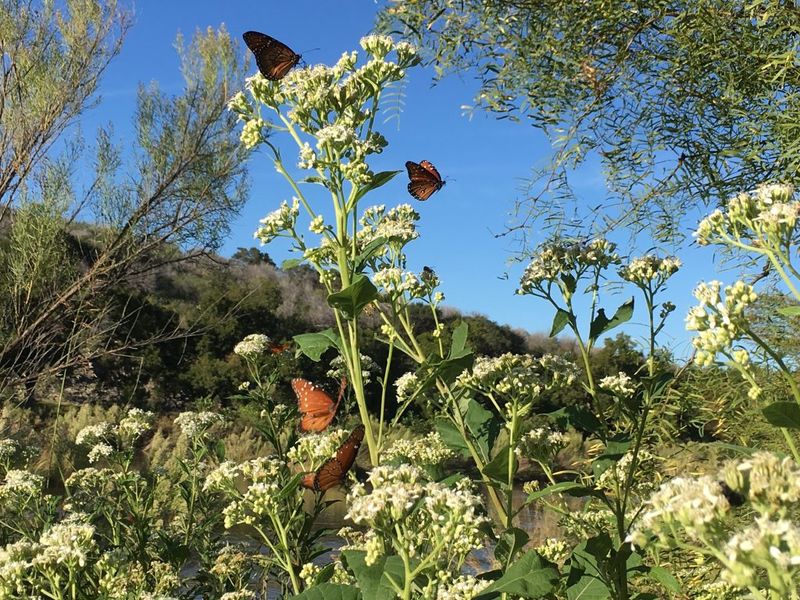
When many garden flowers have faded, frostweed is still offering blooms. Its flower clusters are a nectar source for butterflies, bees, and other pollinators, as noted by the University of Texas at Austin, and the Native Plant Society of Texas describes similar value.
The timing is what makes that useful. Flowers that open from late summer into fall add a food source during a stretch when fewer plants are blooming, especially in shady areas where flowering options are limited.
It helps to be realistic about what you will see. A plant is a resource, not a guarantee.
Which insects visit depends on your neighborhood, the weather, and what else is blooming nearby. Planting frostweed will not promise monarchs or any particular visitor, and it is not a proven way to boost their numbers.
You can still make the most of it. Pair frostweed with other native bloomers that flower at different times so the yard offers nectar across more of the season.
Skip pesticide sprays on and around the plants, since flower visitors are the whole point.
Then pull up a chair on a mild fall morning and watch. Small flower clusters often draw a surprising amount of quiet activity.
Give frostweed room in a naturalistic planting
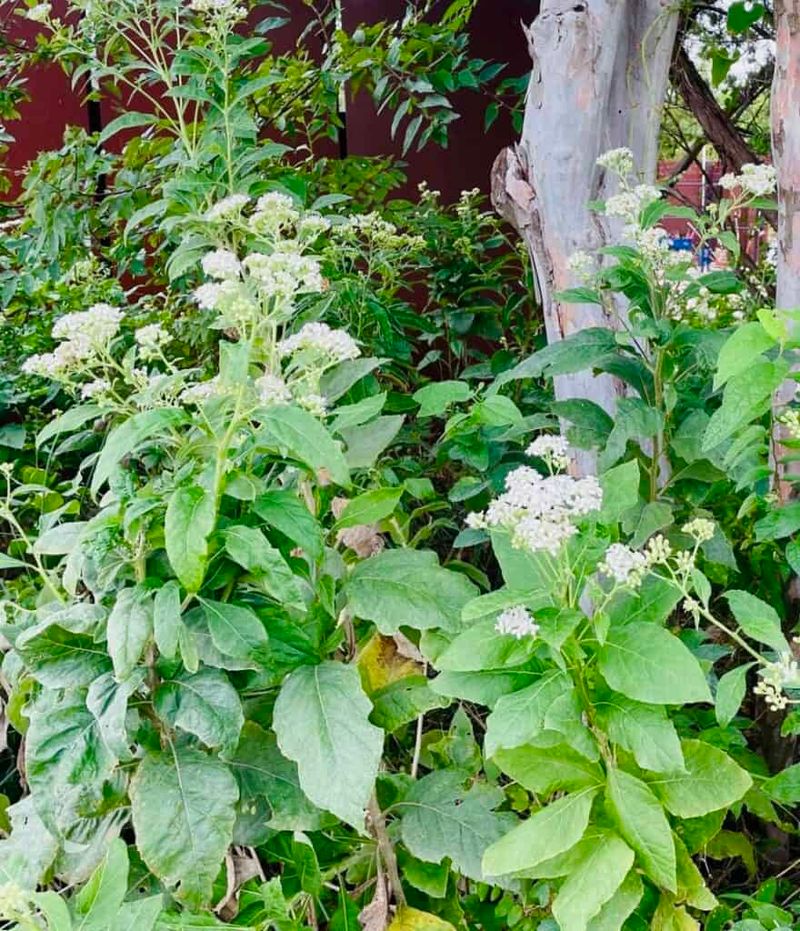
Frostweed does not stay politely in one spot. It can form colonies, and in a small or formal bed it may dominate its neighbors, according to the Native Plant Society of Texas.
Combine that with a height of several feet and you have a plant that wants space.
Good homes include a woodland edge, a naturalized strip along a back fence, or a wild corner under mature trees. These are places where a loose, informal look is the goal.
A narrow front border or a clipped, tidy bed is usually the wrong stage.
Plan for spread from the start. Give each plant generous room, and picture a patch rather than a single clump a few years from now.
Place shorter shade plants in front so the tall stems form a backdrop instead of blocking the view.
Management is simple but ongoing. The Denton County Master Gardener Association fact sheet is a useful reference for growth habits.
If frostweed pushes beyond its intended area, thin it by pulling or digging out the extra plants.
A practical trick is to mark the edge of the patch you want with a border, mulch line, or path. Anything that pops up past that line is easy to spot and remove.
If your shady space is small and formal, a less vigorous plant may serve you better.
Fall planting still calls for establishment water
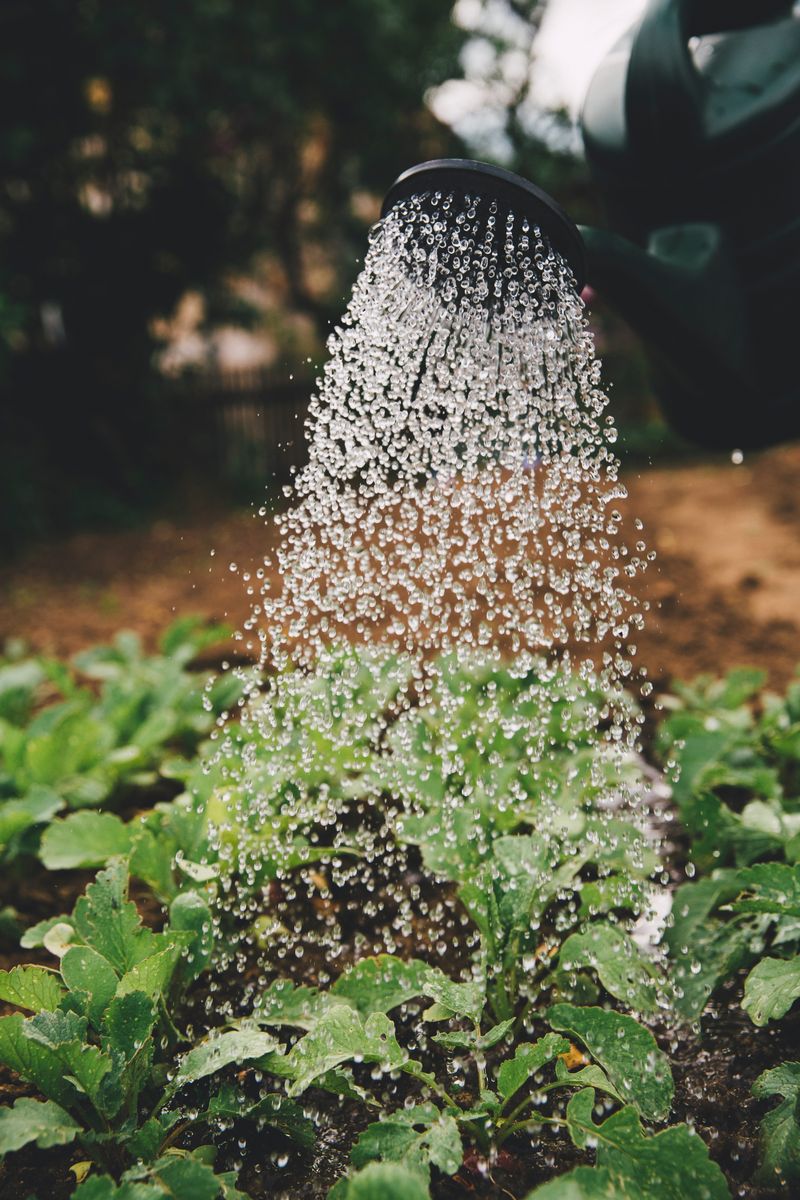
Autumn is generally a good time to plant in Texas. Cooler air and milder sun are easier on new roots than the triple-digit heat of summer, which gives perennials time to settle in before the next hot season.
That timing helps, but it is not a free pass. A newly planted perennial still needs regular water while its roots grow into surrounding soil.
The Texas Parks and Wildlife Department offers yard guidance on landscapes that use water wisely, and the Texas Water Development Board watering guide covers how to water landscapes efficiently.
Do not read “drought tolerant” as “needs no water at first.” Tolerance describes an established plant with deep roots. A young one has not built those yet.
A few habits help. Water deeply rather than often, so moisture reaches the root zone.
Add a layer of mulch, keeping it off the stems, to slow evaporation. Check the soil with a finger before watering again.
Always follow your city or utility watering restrictions. Many allow hand watering or drip lines on certain days, so plan your schedule around the rules.
Fall planting gives frostweed a good chance, but careful watering is what carries it through the first season.
Frost flowers are ice, not the plant’s blooms
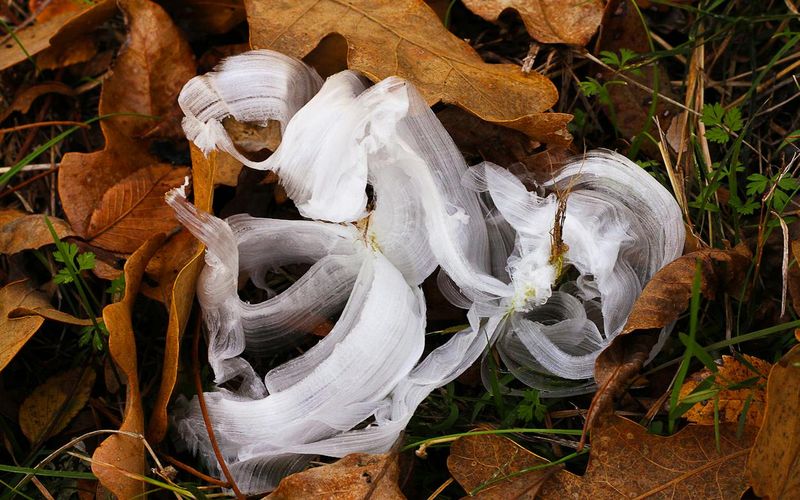
The name frostweed leads to a common mix-up. The white flowers you see in late summer and fall are real blooms.
The “frost flowers” people talk about in winter are something else entirely.
According to Texas Parks and Wildlife, these are ice ribbons. During a hard freeze, water moves up through the plant and splits the stem, and the water freezes into thin, curled sheets of ice as it escapes.
The effect is brief. The ice often melts as the morning warms, so you have to look early.
It also depends on conditions, so do not count on seeing it every year. A mild winter may pass with no ice ribbons at all.
If you want to try, check the stems at the base of the plant after a hard freeze, at first light. Dried stems from the past season are where the ice usually shows up.
Think of the ice as an occasional bonus, not the reason to plant frostweed. The dependable show is the cluster of white flowers that comes first.
Choose frostweed when your yard has room for it
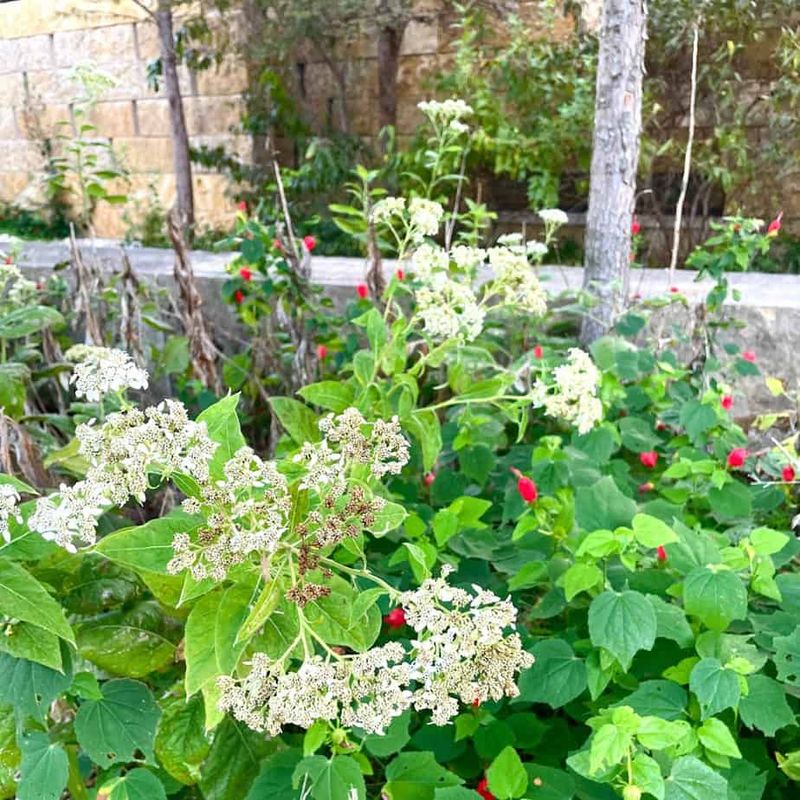
Frostweed makes the most sense where you have a shady, informal area with space for a tall plant that spreads. Late-season white flowers and pollinator nectar are the payoff, and the Native Plant Society of Texas profile is a good place to confirm its needs.
Judge it by your own site, not by how common it may or may not be in nearby yards. If you have the room, the light, and the patience to thin it, it is a strong candidate.
If not, skip it without regret.
Some plants earn their place by showing up right when the garden needs them.