
Garlic is one of the easiest crops to tuck into a Southern fall garden, but the advice on when and how deep can get tangled fast. A clove set the right way gives the plant a solid start, though it does not lock in a giant bulb.
Timing in Florida, Georgia, and Texas is not the same, and neither is the best depth. Here is how to plant garlic so it has its best shot at sizing up.
When should Southern gardeners plant garlic?
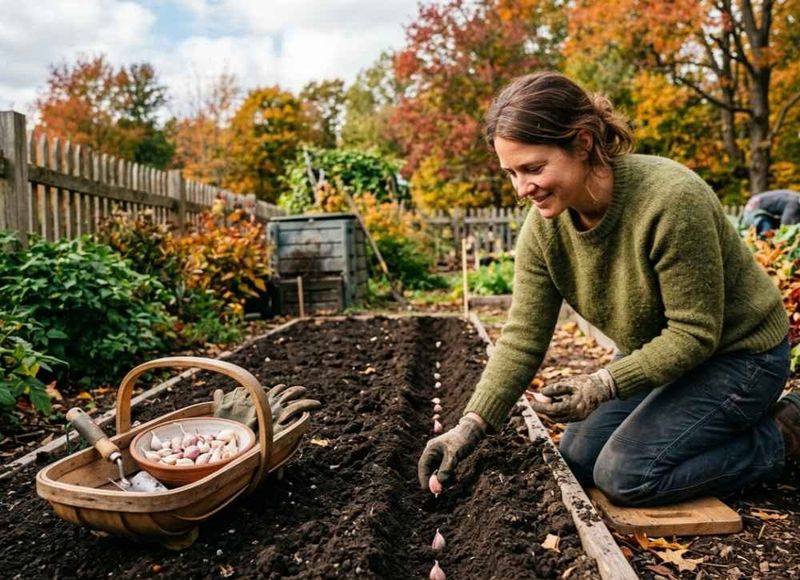
Late October works for some gardens, but it is not a deadline for the whole South. Georgia gardeners get a wide window, since UGA Extension recommends planting from late September through November.
Florida gardeners should aim later. UF/IFAS recommends late fall through early winter, which means a cloves-in-the-ground date in late October may be a bit early for much of the state.
Texas is a big place, so one calendar date does not fit everyone. The Texas A&M home vegetable gardening guide ties garlic planting to your local first freeze, listing about four to six weeks before it arrives.
So check your own area’s average first freeze, then match it to your state’s guidance. If you are in the right window right now, you have time to get cloves planted and rooting before winter settles in.
If you are a little early or late, you still have room to adjust.
Choose large, healthy cloves
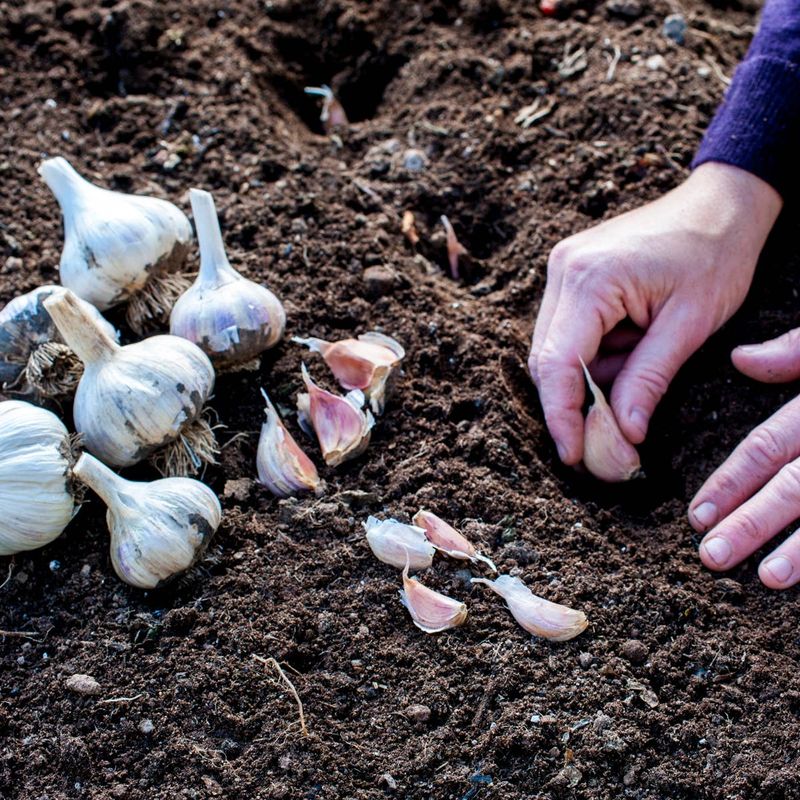
Your bulbs start with the cloves you buy or save. Pick ones that feel firm and look healthy, and skip any that are soft, shriveled, moldy, or damaged.
Size matters here. UGA Extension says larger cloves tend to yield larger mature bulbs, and the big outer cloves on a bulb are the best choice if size is your goal.
The small inner cloves can still grow, but they are a weaker starting point.
Timing the split matters too. Break the bulb apart shortly before planting, not weeks ahead, because UGA notes that separating cloves early decreases yields.
Keep the papery skin on each clove as you plant.
A large, healthy clove gives you a head start, but it is only one piece of the puzzle. Soil, moisture, variety, and weather all shape what comes out of the ground, so a big clove improves your odds without promising a particular result.
Give garlic sun, drainage, and room
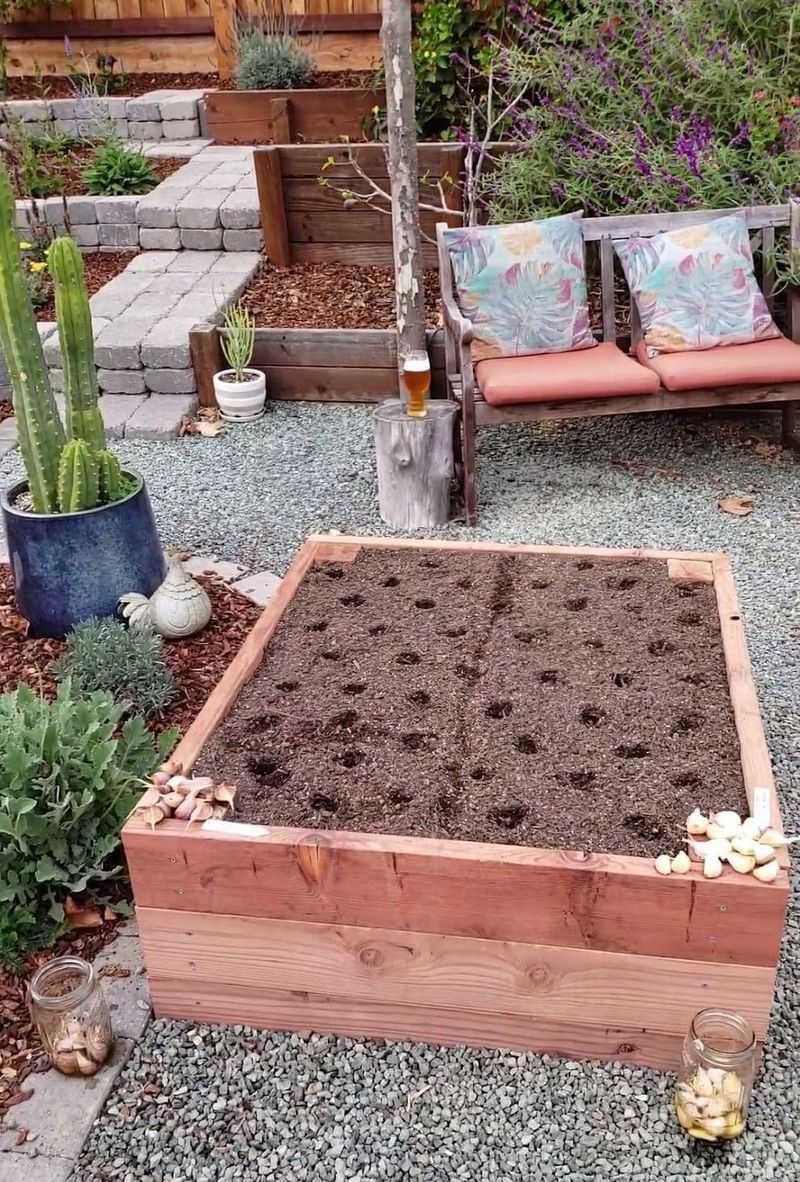
Garlic wants a spot that gets plenty of sun and drains well. UF/IFAS Pasco County points to full sun, at least six to eight hours, and a raised bed can help if your yard holds water after rain.
Spacing varies by source. Georgia guidance calls for cloves about six inches apart, while Pasco County suggests four to six inches.
Texas A&M’s Bexar County guidance gives three to six inches and notes that crowding the plants reduces the size of individual bulbs.
If you want bigger bulbs, lean toward the wider end of your local range. If you have a small bed and are happy with smaller bulbs, tighter spacing lets you fit in more plants.
Either way, give each clove its own patch of soil to grow into.
Plant cloves upright at a locally appropriate depth
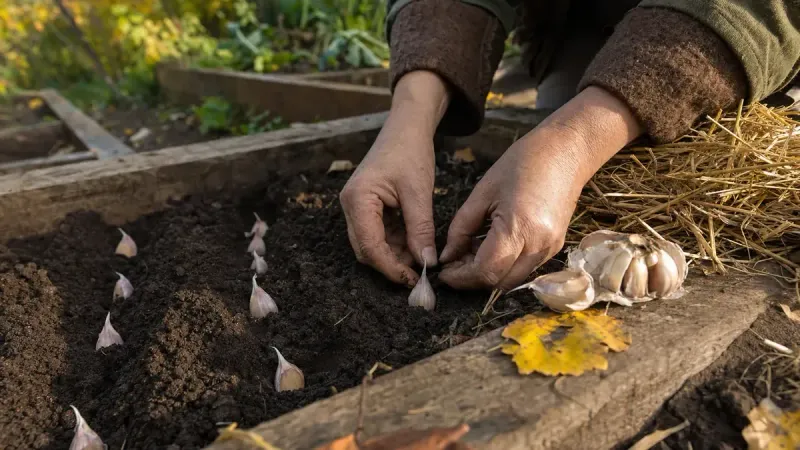
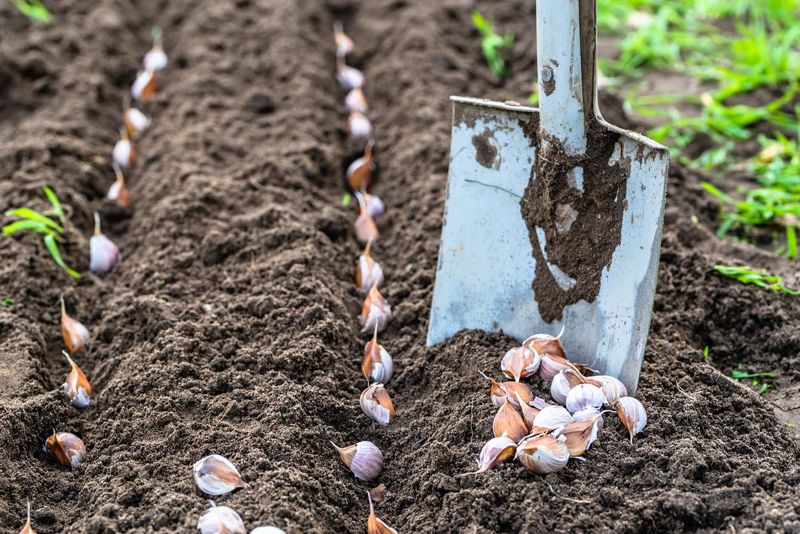
Set each clove in the hole with the pointed end facing up and the flat root end down. That upright position is the standard approach, and UGA links it to a straighter neck, not to a guaranteed bigger bulb.
Depth guidance differs by place. UF/IFAS Pasco County recommends planting one to two inches deep, and Bexar County gives the same one to two inch range.
UGA gives one to three inches, with colder parts of Georgia possibly needing more.
Watch the wording, because “two inches deep” can mean different things. Pasco County speaks of planting depth, while University of Maryland Extension says to cover each clove with one to two inches of soil.
Those are not quite the same measurement.
Deeper is not better. Bexar County warns that planting too deep can interfere with bulb swelling, so stay within your local range.
Bulb size depends on more than planting technique
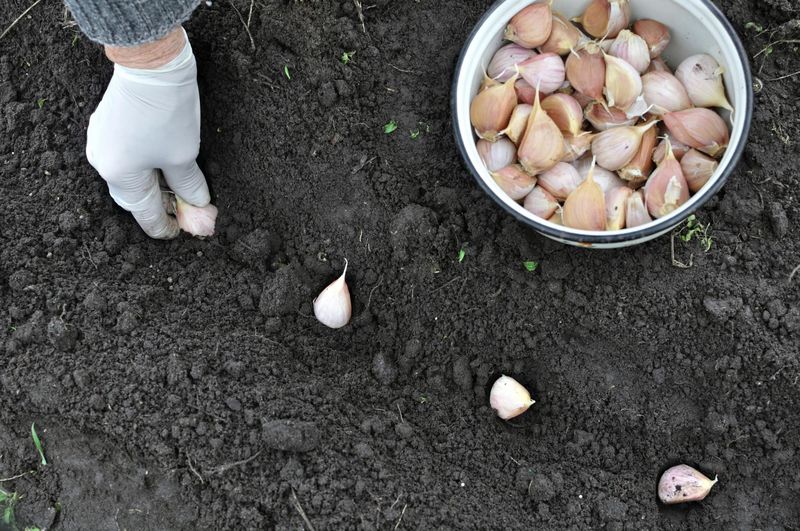
Plenty of garlic advice makes it sound like depth and direction decide everything. They do not.
Setting cloves point up at a sensible depth helps the plant grow well, but several other things matter more directly.
UGA explains that yield potential depends on clove size and on how much leafy growth the plant makes before it starts forming a bulb. A plant that grows strong leaves before bulbing has more to work with.
Weather and variety enter the picture too. Texas A&M notes garlic’s temperature and day-length needs, and varieties differ in how they respond.
A type that does well in one part of the South may sulk in another.
That is why a clove tucked in during October may or may not turn into a big bulb by summer. Do the basics well, choose a variety suited to your area, and treat bulb size as a result you can nudge, not one you can command.
Keep soil evenly moist as garlic grows
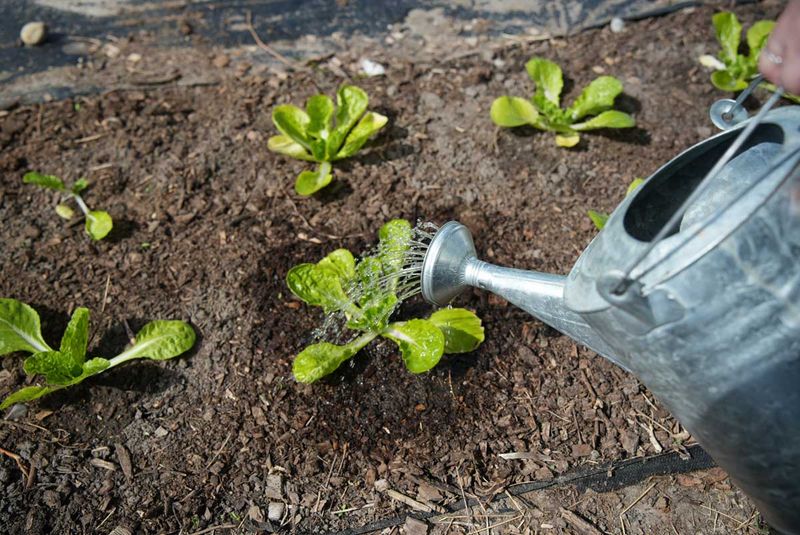
Once cloves are in the ground, moisture becomes your main job. Garlic does best when the soil stays evenly moist, and UF/IFAS Pasco County describes it as moist but not waterlogged.
Here is where your site choice pays off. A well-drained bed, which UGA also recommends, lets extra water move away so roots are not sitting in a soggy puddle after heavy rain.
Check the soil with your finger. If the top inch or two feels dry, a drink is probably due.
If it is wet and heavy, hold off. Rainfall differs a lot between a Texas fall and a Florida one, so let the soil guide you rather than a fixed schedule.
Steady moisture supports healthy leaf growth, but watering alone will not make a big bulb. Think of it as keeping the plant comfortable while the other factors do their work.
Use the leaves to judge harvest readiness
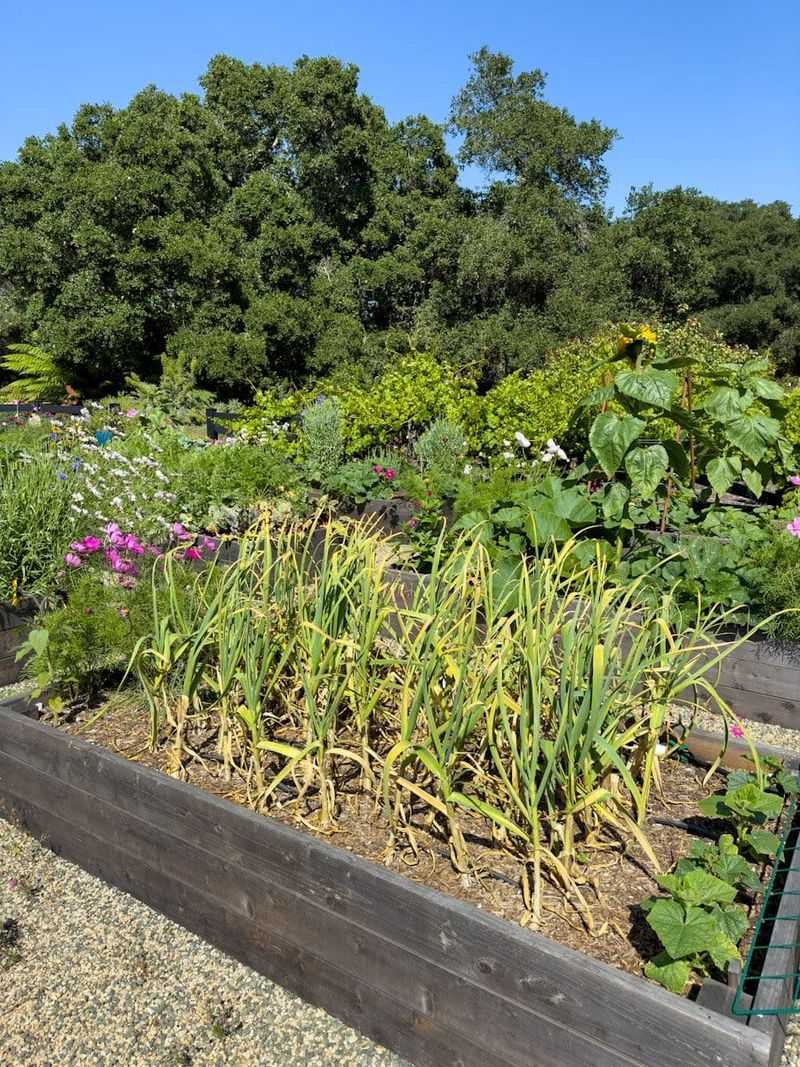
Skip the calendar and watch the plant. UF/IFAS advises harvesting when about half the leaves have dried and bent toward the ground.
Texas A&M’s Bexar County guidance uses a similar sign, tops that are partly dry and starting to bend. Loosen the soil gently and lift a bulb or two to check before pulling the whole bed.
Timing shifts from year to year and garden to garden, since variety, weather, and clove size all play a part. Your neighbor’s garlic may be ready weeks before or after yours.
Good planting habits give garlic a fair start, but they cannot promise a certain bulb size or a set harvest date. The leaves will tell you when the plant is done.