
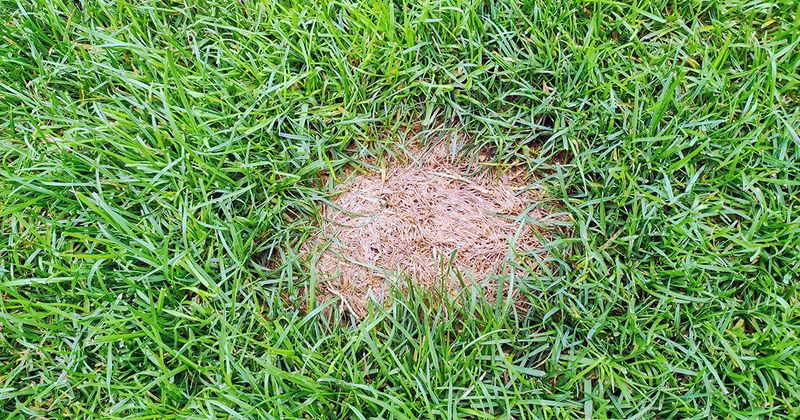
Scattering grass seed on bare ground and ending up with patchy, thin results is one of the most common lawn frustrations in Florida, Texas, and across the South. The good news is that bare soil is not the enemy.
A firm, well-prepared seedbed can support healthy germination, but a few fixable setup problems often stand between scattered seed and a lawn that actually fills in. Understanding what those problems are, and how to address them one step at a time, can save you from wasting another bag of seed.
Bare soil can work when you prepare it correctly
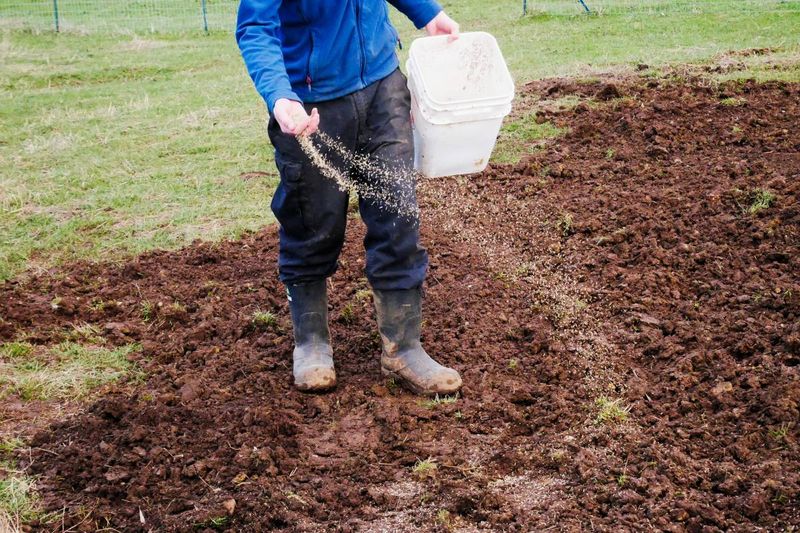
Plenty of gardeners assume bare soil is the problem when their grass seed fails to sprout. The reality is more specific: a properly prepared bare seedbed is often the best starting surface you can give new seed.
Problems arise not from bare soil itself but from seed left sitting on ground that is loose and fluffy, crusted hard, uneven, littered with debris, or actively eroding.
Loose or crusted surfaces create two related problems. Seed resting in air pockets or on a hard crust cannot consistently draw moisture from the soil beneath, and the emerging root may have nowhere to go.
These are contact and moisture issues, and they are fixable with basic site preparation. Compacted soil is a different problem: it can restrict water infiltration and block root penetration even when seed makes surface contact, and it may require aeration or mechanical loosening before reseeding will work.
Seed-to-soil contact is one important setup issue, but it does not explain every failure on its own. UF/IFAS lawn establishment guidance identifies improper watering as the most common cause of seeding failure, and species selection, timing, and site conditions all matter just as much.
A smooth, firm, moist seedbed gives your seed the best mechanical start, but contact and watering have to work together from the first day.
Why light contact helps a seed start
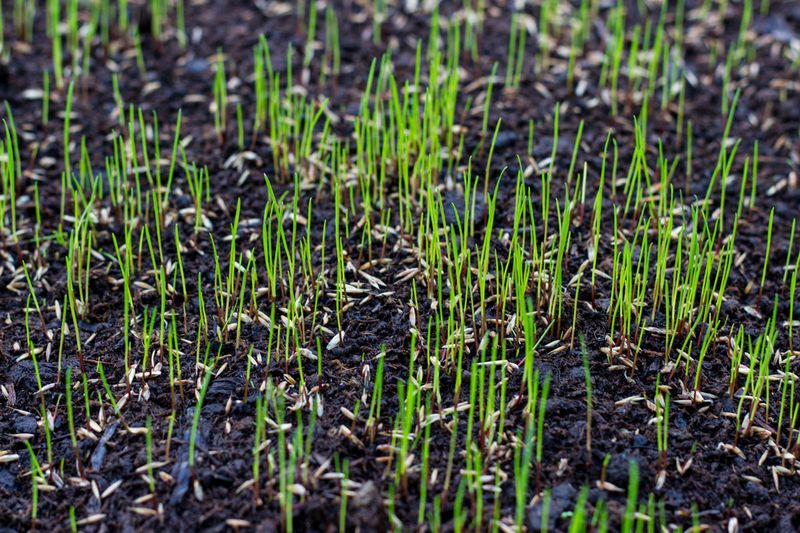
A grass seed is not just waiting for warmth. It needs to pull water from the soil around it steadily and without interruption from the moment it begins to swell.
When seed rests on a clod, a hard crust, a layer of thatch, or loose dry dust, that steady supply gets cut off at the wrong moment.
The sequence that goes wrong is easy to picture. Seed absorbs enough moisture to begin swelling and activating.
Then the surface dries, or the seed shifts in a gap between soil particles, and the connection breaks. At that point the seedling can die before the root ever reaches stable ground.
UF/IFAS warns specifically that allowing newly swollen seed to dry out is a common way to lose an entire seeding effort.
Firming a prepared seedbed addresses this by pressing seed into consistent contact with moist soil particles rather than leaving it balanced on an uneven surface. The goal is connection, not compression.
Oklahoma State Extension describes this firm, even contact as a key step in successful lawn establishment. What you want to avoid is the opposite extreme: packing the soil so tightly that water cannot move through it and the emerging shoot cannot push upward.
Rake the seed in, then firm the surface
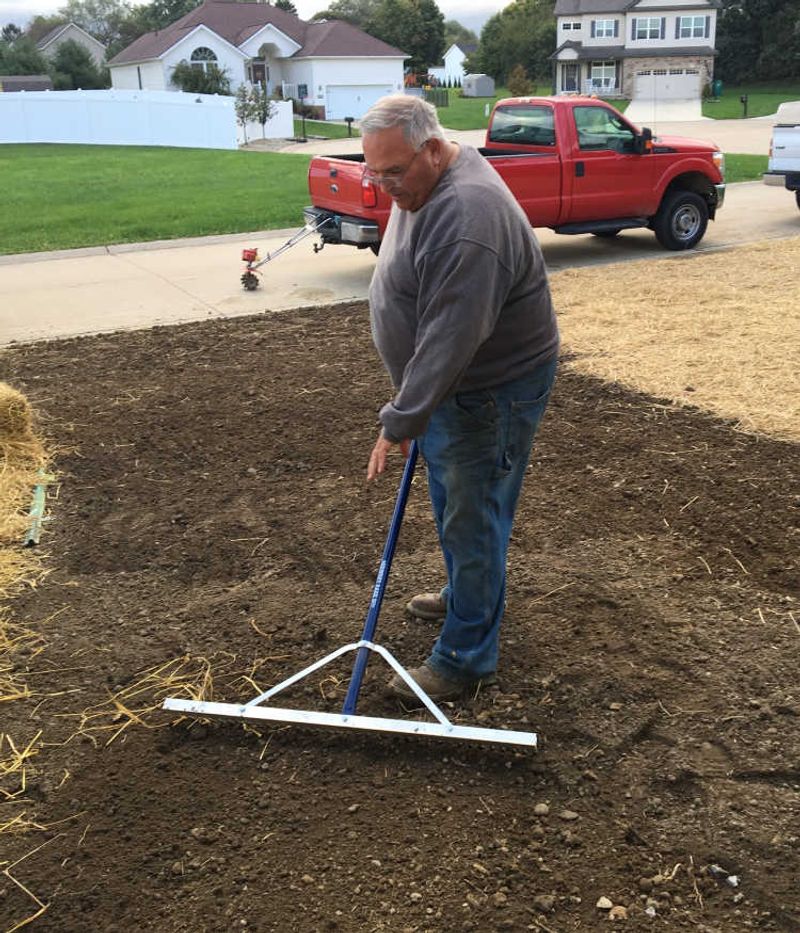
Before a single seed goes down, the seedbed needs to be ready. Clear away sticks, rocks, dead thatch, and any large clods.
Break up surface crusts with a hand rake and smooth the area so water will drain evenly rather than pool in low spots. UF/IFAS site-preparation guidance recommends moistening crusty surfaces before raking to make them easier to work and to start building the moist seedbed the seed will need.
Once the seedbed is smooth and firm, divide your seed into two equal portions. Broadcast the first half walking in one direction across the area, then broadcast the second half walking perpendicular to the first pass.
Texas A&M AgriLife Extension and UF/IFAS both recommend this two-direction approach to reduce skipped patches and uneven clumping.
After broadcasting, lightly rake or drag the seed into the surface. Oklahoma State Extension suggests roughly 1/8 inch of soil coverage as a general target, though the right depth varies by seed size and species.
Small-seeded grasses need shallower coverage than larger ones; burying seed deeply is one of the faster ways to prevent it from emerging at all. Finish by rolling the area with a lightweight or appropriately weighted roller to press seed against the soil without compacting the surface.
A roller that is too heavy can create the same root-zone problems you were trying to avoid.
Keep the seedbed moist while roots develop
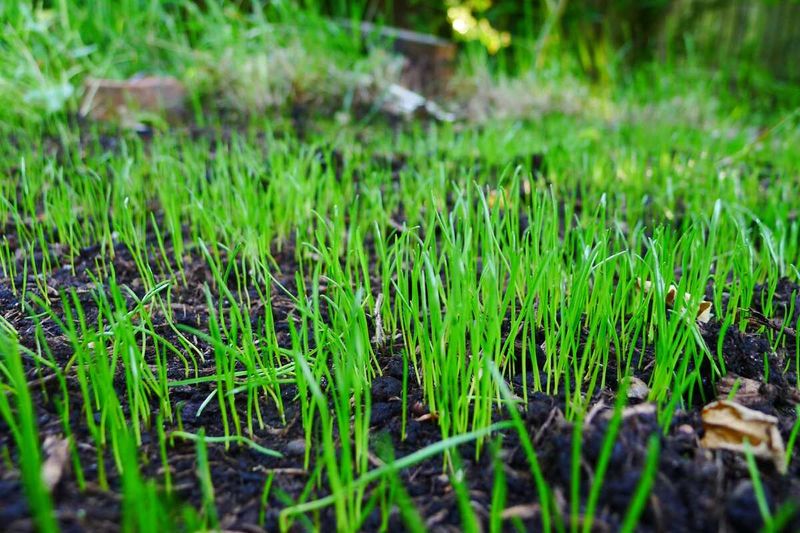
Firming the seedbed gives seed its best mechanical start, but moisture is what turns that contact into germination. The two requirements work together: a seed pressed against dry soil has no more advantage than a seed resting on a crust.
Keeping the surface consistently moist from the moment seed goes down through the first weeks of root development is where many seeding efforts fall short.
Small, frequent irrigations generally support germination better than one long soak. UF/IFAS recommends two to three short irrigations per day for roughly the first two weeks after seeding to keep the surface from drying between cycles.
In Florida and Texas, heat and wind can accelerate surface drying dramatically. Texas A&M AgriLife Extension notes that hot, windy conditions may require four or five short irrigation cycles per day to maintain that moist surface.
The right number depends on your soil type, slope, irrigation output, and the grass species you planted.
Saturation is not the goal. Waterlogged soil can displace oxygen the roots need and may encourage fungal problems.
Once seedlings have developed enough root depth to reach moisture below the surface, begin shifting gradually toward less frequent but deeper watering. Oklahoma State Extension describes this transition as a key part of moving newly established turf toward the irrigation habits of a mature lawn.
Confirm the grass and site fit before reseeding
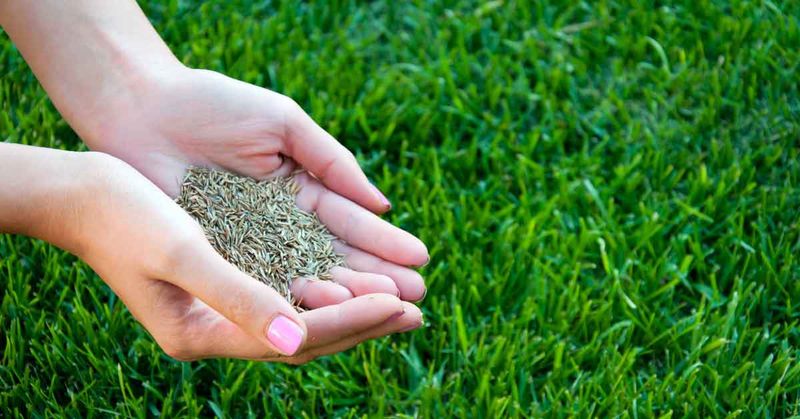
A perfectly prepared seedbed cannot overcome the wrong grass for the location. Before reseeding, check the seed label carefully.
Look at the species, cultivar, purity percentage, germination rate, and weed-seed content. UF/IFAS advises seeking seed with at least 90% purity and 85% germination where those numbers are available.
Retail mixes sometimes contain cool-season grasses that germinate fast but perform poorly through a Florida or Texas summer.
Southern grasses also differ in how they are normally established. In Florida, bahiagrass, centipedegrass, and some bermudagrass varieties can be started from seed.
St. Augustinegrass in Florida is established vegetatively by sod, plugs, or sprigs rather than seed, so scattering St. Augustine seed is not a productive path. Texas A&M AgriLife similarly distinguishes between grasses that are routinely seeded and those that are better established by sod or sprigs.
Timing matters too. Oklahoma State Extension identifies upper soil temperatures of roughly 68 to 95 degrees F as the target window for warm-season seeding.
UF/IFAS generally points to spring and summer as favorable periods in Florida, but exact timing varies by species and local conditions. Shade is a site-fit problem, not a technique problem: a sun-loving grass planted under a dense canopy will struggle no matter how well the seedbed was prepared.
UF/IFAS rates common Florida lawn grasses differently for shade tolerance, and matching the right species to your specific light conditions is a step that cannot be skipped.
Use mulch carefully and avoid seed-blocking herbicides
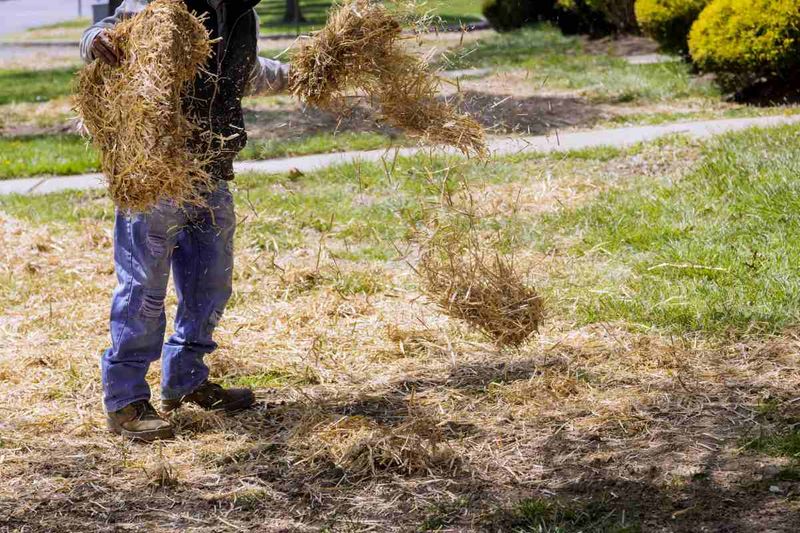
A thin layer of clean mulch can help hold moisture and reduce surface erosion on a freshly seeded area, particularly on slopes or in spots that dry quickly. UF/IFAS recommends covering roughly 50 to 75 percent of the bare ground with weed-free grass hay or straw, leaving enough open soil for light to reach the seedlings.
Oklahoma State Extension suggests clean wheat straw at around 100 pounds per 1,000 square feet as a practical target.
A thick blanket of mulch, however, creates its own problems. Heavy straw can block the light that warm-season grasses need to establish, smother seedlings before they reach the surface, increase humidity in ways that encourage disease, and introduce weed seed if the material is not clean.
Texas A&M AgriLife cautions that heavy mulch can particularly hinder seeded bermudagrass and buffalograss, which need light exposure during early establishment. Penn State Extension also notes that excessive mulch can smother seedlings and create cleanup challenges after germination.
Pre-emergent herbicide is a separate and serious concern. These products are designed to stop germination, and they do not distinguish between weed seeds and turf seeds.
Applying a pre-emergent while trying to establish a new lawn from seed can prevent the grass from sprouting at all. UGA Extension weed-management guidance and local UGA Forsyth County guidance on pre-emergence timing both underscore that product labels and local extension recommendations should govern any herbicide decisions during establishment.
Know when contact is not the diagnosis
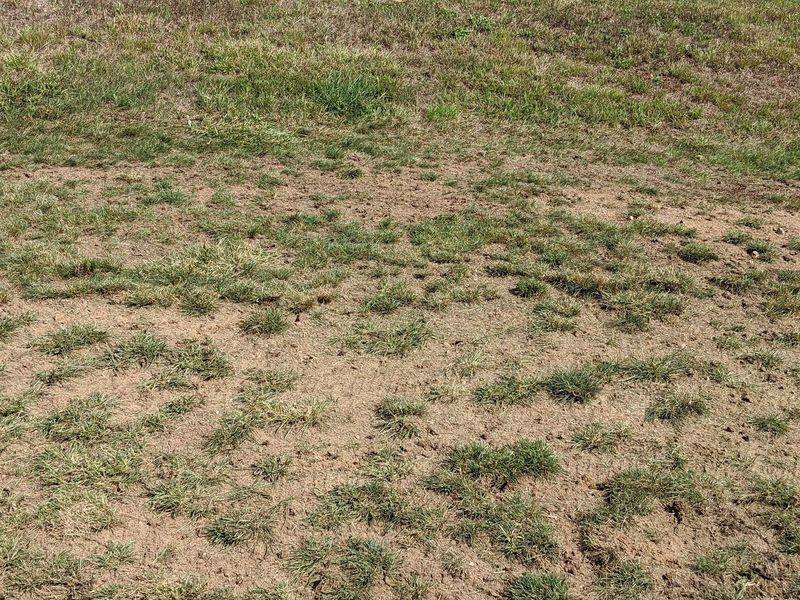
Improving seed-to-soil contact is a useful fix for a specific setup problem, but several situations point to a different cause entirely. Seed that washes downhill in a rainstorm is an erosion problem.
A seedbed that dries out within hours of irrigation, even after firming, usually signals a watering frequency or schedule issue rather than a contact problem. Seed sown when soil temperatures are outside the target range for the species will simply sit dormant or fail regardless of how well it was pressed into the surface.
Poor or contaminated seed is another separate issue. Low germination rates, old seed stored in poor conditions, or mixes that contain the wrong species for your region will not be rescued by better seedbed preparation.
Dense shade is a species-selection and site problem. UF/IFAS lawn-grass selection guidance makes clear that shade tolerance varies significantly by species and cultivar, and no amount of surface preparation changes how much light reaches the soil.
Compacted soil deserves its own mention because it is often confused with the loose or crusted surfaces described earlier. Compaction restricts water infiltration and root penetration at a structural level.
Rolling seed into compacted ground may improve surface contact but will not open up the root zone. Oklahoma State site-preparation guidance recommends addressing compaction through aeration or tillage before seeding.
On fertilizer, follow a soil test and local turfgrass recommendations rather than applying nitrogen immediately; UF/IFAS site-preparation guidance advises against preplant nitrogen for Florida lawn establishment and recommends waiting for uniform cover before fertilizing.
Use this sequence before you blame bare soil
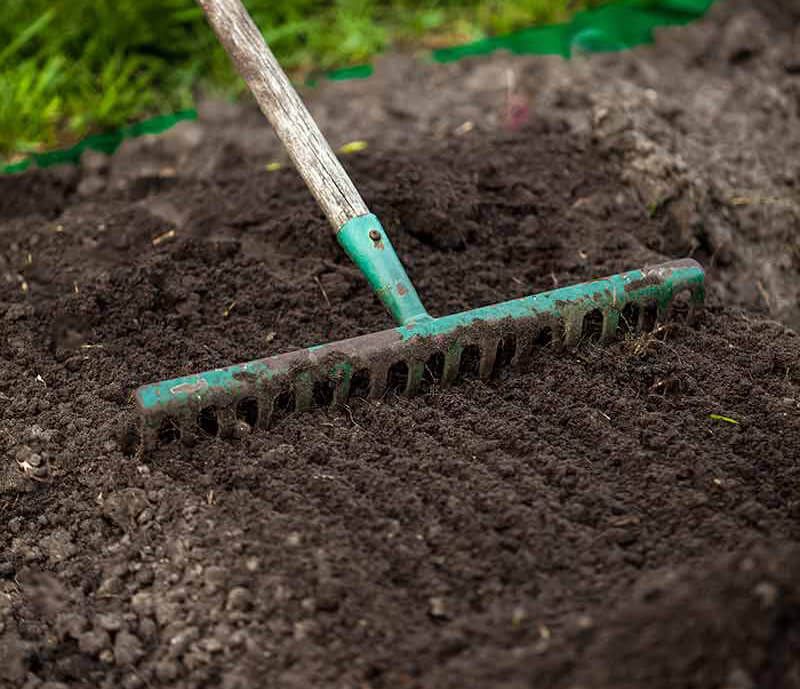
When grass seed fails, run through this sequence before concluding that bare soil was the problem. Start with a firm, smooth, debris-free seedbed.
Divide seed into two portions and broadcast in perpendicular directions. Lightly rake or drag the seed into the surface at a shallow depth suited to the species, then firm the area with a lightweight roller without over-packing the soil.
From that point forward, keep the surface consistently moist with small, frequent irrigations and do not let newly swollen seed or young seedlings dry out. UF/IFAS, Texas A&M AgriLife, and Oklahoma State Extension all point to these steps as the foundation of successful seeding.
Before reseeding a failed area, also verify that the species is right for your region and light conditions, that the planting window matches the grass, and that seed quality is acceptable. A roller improves contact; it does not fix the wrong grass, the wrong season, or a watering schedule that lets the surface bake dry between cycles.
Bare soil prepared well is a good place to start a lawn. The sequence is what determines whether the seed agrees.