
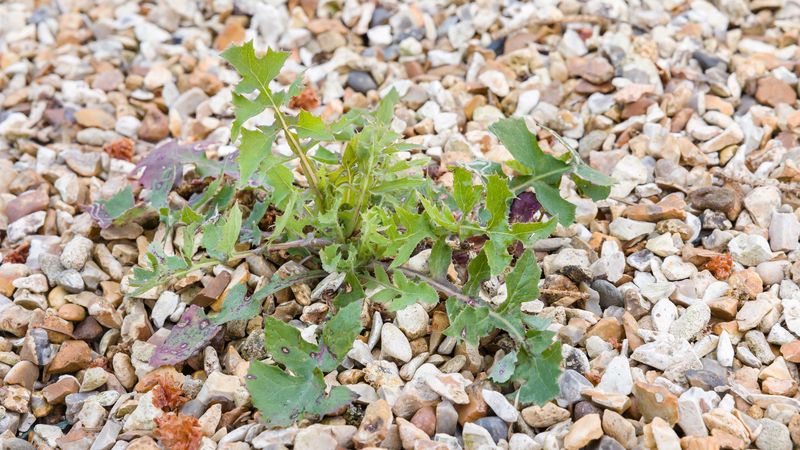
Gravel paths look clean and low-maintenance right up until the weeds start pushing through, and then it feels like a battle you can never win. The problem is not that pulling weeds is useless.
The real issue is that certain weeds are built to survive it, and without changing how the path is built and maintained, you will keep fighting the same plants season after season. This guide walks through why those weeds keep coming back, how to rebuild the path so fewer of them can push up from below, and what regular upkeep actually looks like.
Pulling can weaken weeds, but perennial roots change the equation
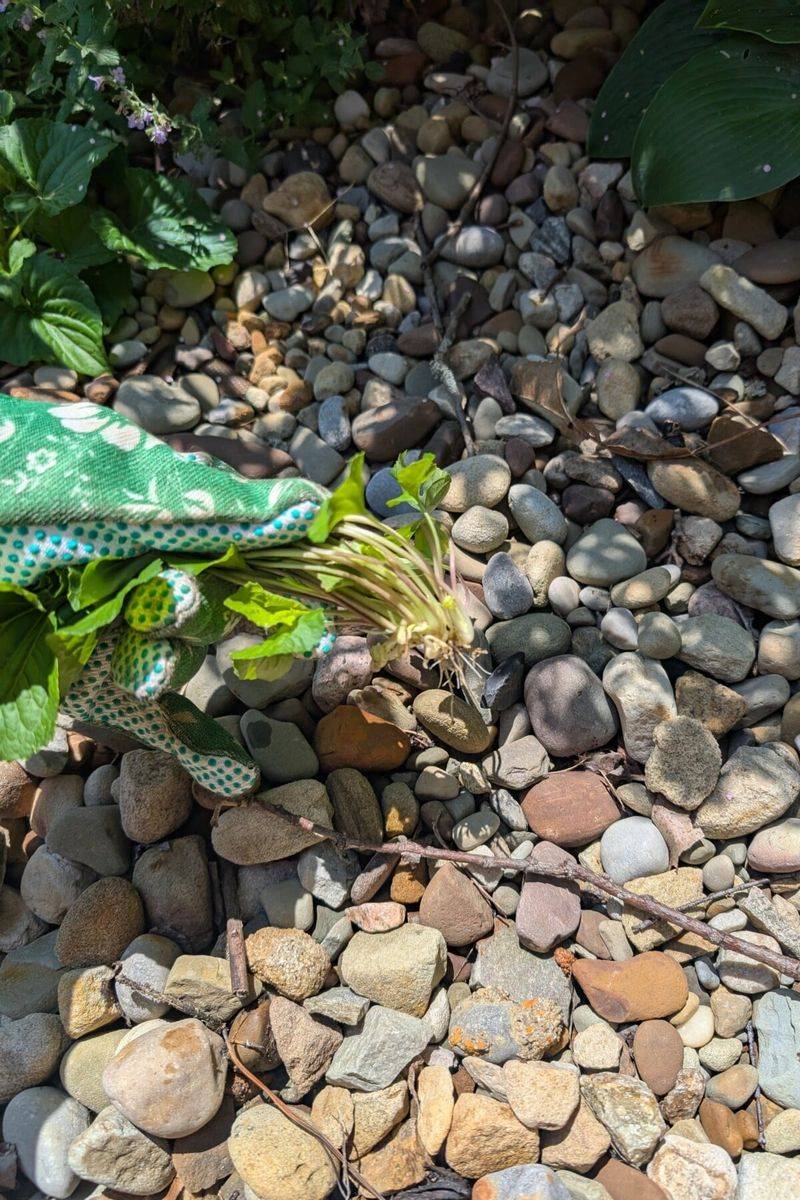
Pulling weeds from a gravel path is not wasted effort, but it works better on some plants than others. Annual weeds, which complete their life cycle in a single season, can often be removed effectively when caught early.
Yank them before they flower or set seed, and you remove the plant and reduce the next round of seedlings.
Perennial weeds are a different situation. Plants like nutsedge, bermudagrass, bindweed, and dandelion store energy in their roots, rhizomes, stolons, or tubers.
When you pull the visible shoot, the root system below simply pushes out a new one. UF/IFAS research on nonchemical weed control confirms that extensive-rooted perennial weeds may require numerous pulling sessions before stored root energy is exhausted, and even then results depend on the species, the depth of the root system, and how consistently you follow through.
Repeated pulling can gradually drain that stored energy over time, but it is not a quick fix for an established infestation. The practical takeaway is to remove small weeds as early as possible.
As CSU Pueblo Extension notes, small weeds are easier to pull and preventing seed production reduces future infestations. For deeply rooted perennials already established in your path, expect multiple sessions and consider pairing hand removal with a path renovation rather than relying on pulling alone.
Clear the path before choosing a barrier
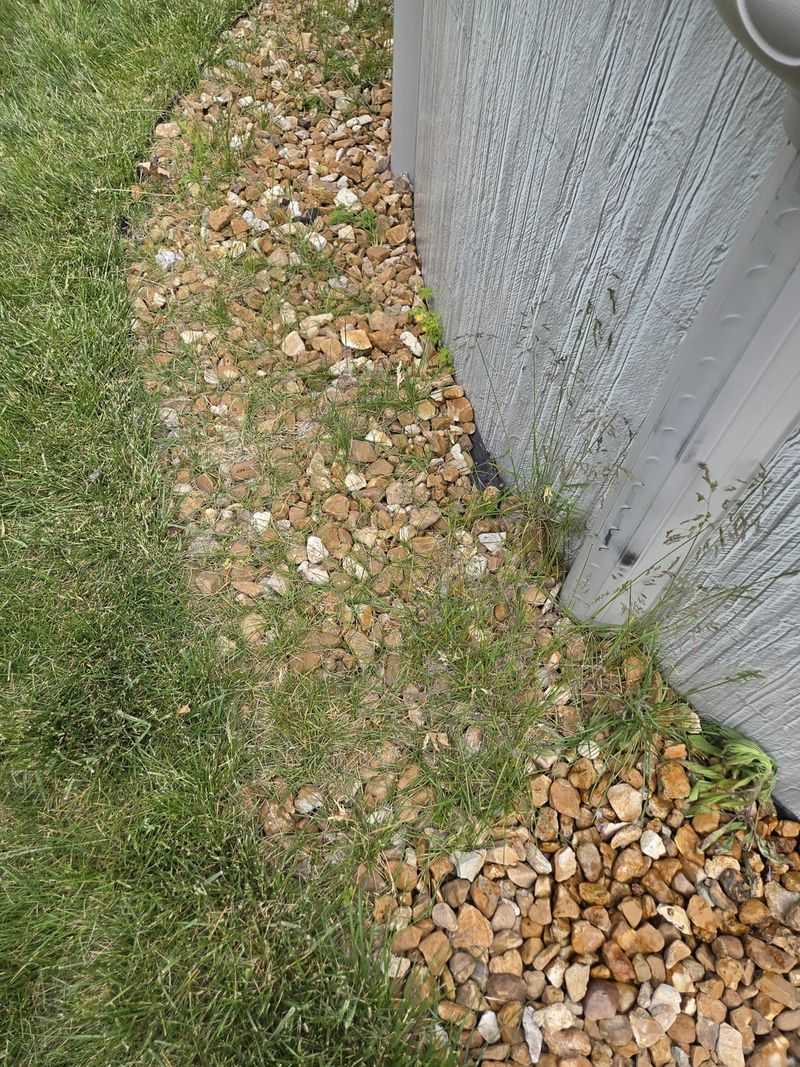
Before any barrier goes down, the ground underneath it needs to be as clean as you can reasonably get it. Start by identifying what you are dealing with.
Walk the path and look for established perennial clumps, patches of nutsedge or bermudagrass, and any creeping growth coming in from a lawn or bed along the edge. Those plants cannot simply be covered over and forgotten.
Nutsedge is particularly persistent. UF/IFAS notes that nutsedge can penetrate thinner landscape fabrics, making it one of the few weeds documented to push through the barrier itself.
Bermudagrass works differently. Its threat comes from stolons and rhizomes that spread laterally and can invade around, over, or through weaknesses in the fabric edge rather than punching straight through in the same way.
Both require careful removal before you rebuild, but the reason and the removal approach differ.
Rake out accumulated soil, dead roots, and organic debris where practical. That layer of dirt and plant matter sitting in the gravel is partly what keeps new seeds alive.
Cornell’s turfgrass and landscape weed resource recommends keeping soil out of gravel as a core management step. If established perennials remain after hand removal, a correctly labeled herbicide applied to the intended site may be an option before rebuilding, but the label must specifically permit that use.
CSU Pueblo Extension is direct: the method works best when the original weed population is dealt with first. Do not bury living weeds under fabric and expect the barrier to finish the job.
Use a suitable permeable fabric beneath the walkway
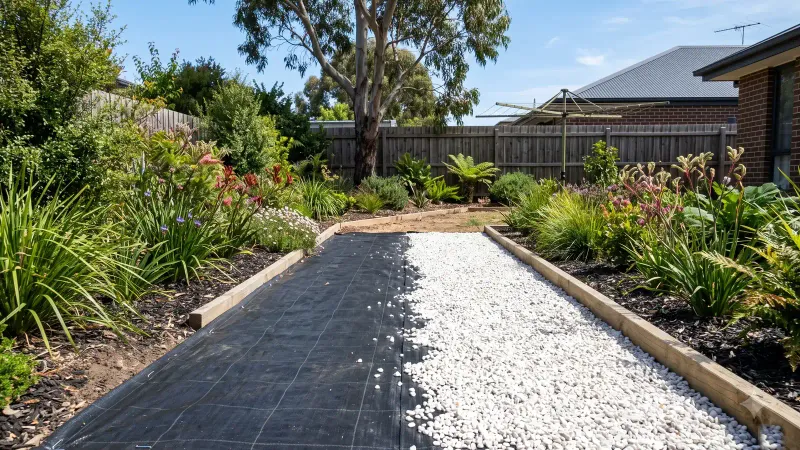
Once the ground is cleared and the worst weeds are removed, a permeable landscape fabric designed for walkway construction can go down over the prepared surface. The product matters.
A woven geotextile rated for foot-traffic paths is not the same as the thin spun-bond sheeting sold for vegetable beds, and neither of those is the same as black plastic sheeting. Black plastic is largely impermeable, which means it blocks water and oxygen movement through the soil and can cause drainage problems under a gravel path.
A permeable woven fabric allows water to pass through while creating a physical barrier against weeds pushing up from below.
Utah State University Extension identifies walkways as an appropriate use for permeable landscape fabric, distinguishing that application from planted beds where fabric creates more problems than it solves. The UGA Extension path construction guide recommends preparing the path with excavation and a crushed-stone or sand base before laying a weed-blocking layer beneath the surface material.
Even the right product has real limitations. CSU Extension cautions that landscape fabric can clog, degrade, and allow weeds to root on top as organic matter accumulates.
Seams and edges are the most vulnerable spots. Overlapping seams by several inches and securing the edges firmly reduces gaps where runners can slip underneath.
The fabric is one layer in a system, not a standalone fix. UF/IFAS confirms that nutsedge in particular may still penetrate thinner products, reinforcing that no fabric provides a permanent guarantee.
Match the gravel build to the path’s actual use
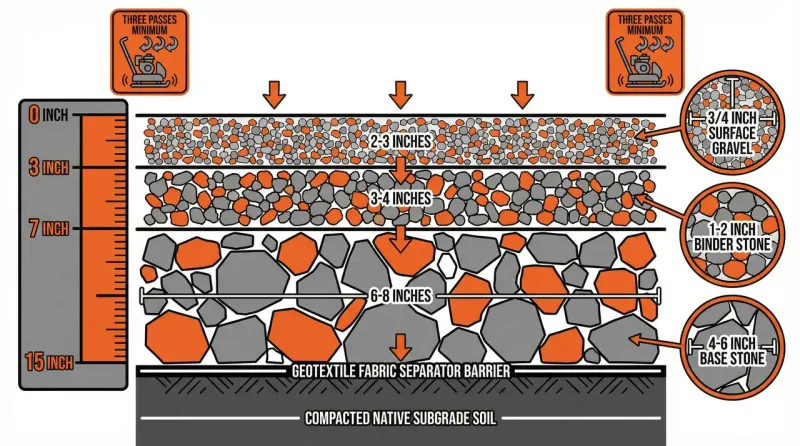
The fabric needs to stay covered, and what covers it should match what the path is actually for. A bare decorative gravel area beside a planting bed, a foot-traffic walkway, and a vehicle-bearing driveway are three different construction problems.
Treating them as interchangeable leads to paths that shift, thin out quickly, or fail to suppress weeds because the base was never prepared correctly.
For a pedestrian gravel path, CSU Extension recommends roughly 4 inches of gravel for effective weed suppression in unplanted areas, while UF/IFAS cites 2 to 3 inches as adequate for many home landscape mulch situations. Those figures are context-dependent, not universal rules.
A footpath benefits from a prepared compacted base, proper drainage away from structures, and angular aggregate that locks together rather than shifting underfoot. Utah State Extension notes that placing fabric beneath roughly 3 to 4 inches of material in walkway situations helps the barrier stay in place and function as intended.
A driveway is an entirely different standard. The University of Wisconsin gravel road construction guide describes substantially thicker aggregate layers, engineered drainage, and compaction requirements for vehicle-bearing surfaces that far exceed what a footpath needs.
The UGA path guide also emphasizes proper excavation and base preparation as the foundation for a durable surface. The point is simple: build for the actual load and use, use the right aggregate depth for that purpose, and compact it properly so the fabric beneath stays protected and the surface stays weed-resistant longer.
Maintain the surface and edges before weeds take hold
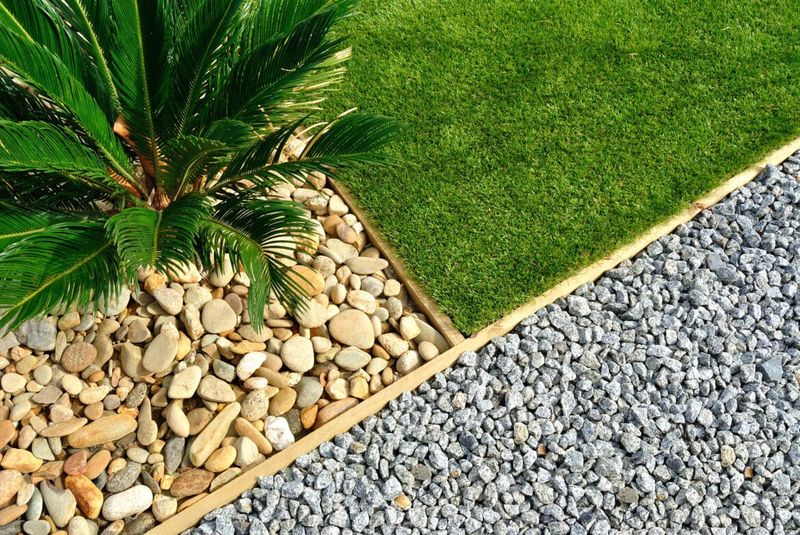
A well-built path still needs regular attention, because the fabric underneath cannot stop what arrives from above. Windblown seeds, dust, leaf litter, and bird droppings gradually accumulate on top of the gravel and create a thin layer of organic matter that acts as a seedbed.
Small seedlings that root into that layer are easy to remove when they are young and have not yet established in the soil below.
Cornell’s gravel weed management guidance recommends periodic raking to prevent soil accumulation, maintaining adequate gravel depth, and controlling weeds at the edges as the core maintenance steps. When the gravel layer thins from foot traffic or weathering, replenish it.
A thin gravel surface lets more light reach the fabric and gives windblown seeds better contact with organic debris. CSU Pueblo Extension reinforces that keeping the surface free of soil and plant debris is what makes the renovation last.
Edges deserve separate attention. Bermudagrass, creeping Charlie, and similar spreading plants move inward from lawns and beds through stolons and rhizomes.
A defined border, whether a metal or plastic landscape edging strip, a concrete mow strip, or a cleanly cut edge, slows that lateral spread. Trim adjacent grass and groundcovers regularly, and pull any runners that have crossed the border before they root into the path.
Removing small weeds early, before they flower or send out new runners, keeps the maintenance workload manageable rather than letting it build into another full-scale clearing job.
Treat shortcuts and herbicides as limited tools
Household remedies come up often in gravel weed discussions, and most of them fall short of what their reputation promises. Vinegar is a common example.
UGA Extension research on alternative herbicides classifies acetic-acid products as contact treatments. They burn the visible foliage but generally do not move effectively into the root system, which means established perennial weeds are likely to regrow.
Oregon State University Extension echoes that limitation and adds that concentrated horticultural vinegar can cause serious eye and skin injury, making it far from a casual spray-and-walk-away option.
Salt, bleach, dish detergent, and Epsom-salt mixtures carry their own risks. Salt can persist in soil and injure or kill nearby desirable plants.
Bleach is not labeled for vegetation management and can harm soil organisms. Penn State Extension cautions against improvised chemical mixtures for outdoor weed control.
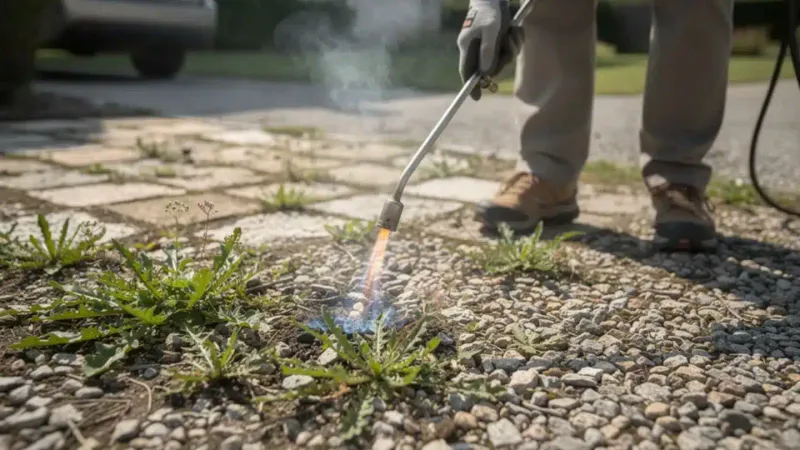
Boiling water and flame weeding are contact methods as well. They may kill surface growth but leave perennial roots intact and able to resprout.
Flame weeding also carries real fire risk around dry Southern vegetation, wood fencing, and structures.
Registered herbicides can play a role on a bare, unplanted path, but only when the product label specifically permits the intended site, such as paths, driveways, or non-crop areas. The EPA states that using a pesticide inconsistently with its label is illegal and that the label specifies where, when, how much, and how the product may be applied.
EPA label guidance also covers drift, wind conditions, nearby water, desirable plants, pets, and children. Nonselective herbicides can damage surrounding lawn and bed plants, so spot treatment with a shield or wick applicator is safer than a broad spray.
For Florida readers with edible landscapes near a path, UF/IFAS advises particular caution around gravel, weed cloth, and chemical use near edible crops because of heat, moisture, and contamination concerns.
Aim for fewer weeds and easier upkeep, not a weed-proof path
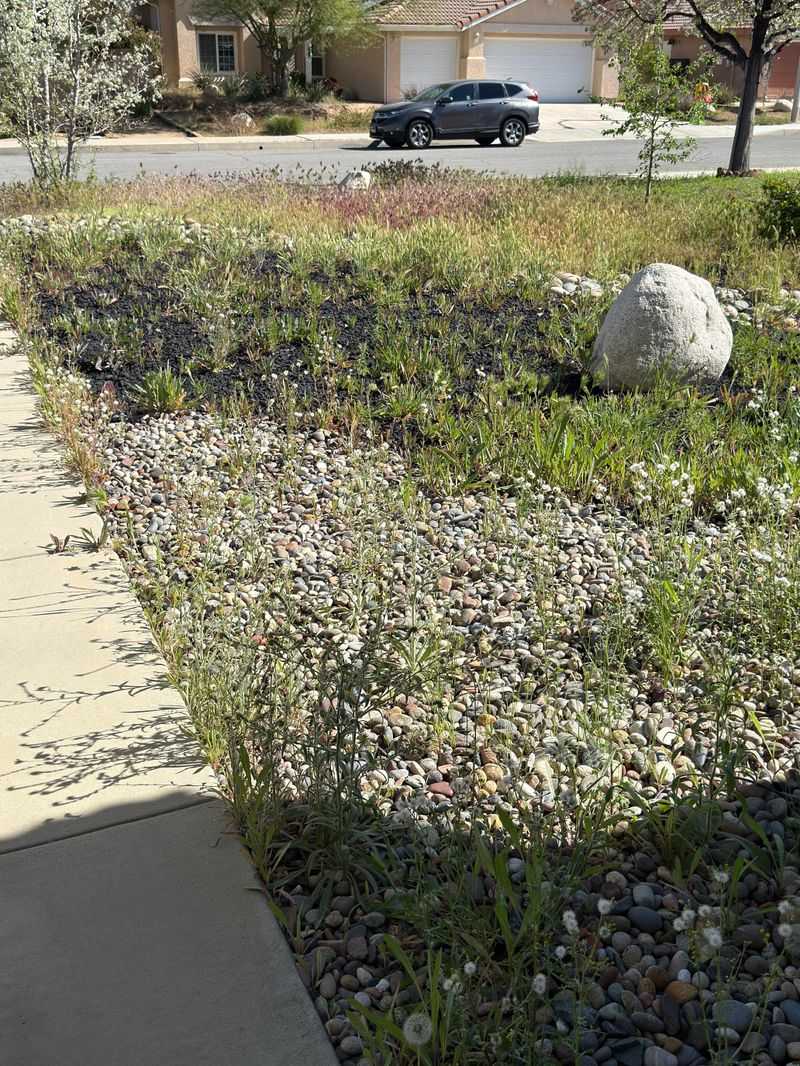
The honest promise of a gravel path renovation is not that you will never see another weed. Seeds will still land on top of the gravel, organic debris will still accumulate, and aggressive grasses can still work their way in from the edges.
What a well-built path can do is reduce the number of weeds pushing up from established roots below, and make the ones that do appear easier to remove before they dig in.
The sequence that gives you the best chance: remove existing weeds and clear debris thoroughly, prepare the ground with proper excavation and a compacted base, install a permeable woven fabric rated for foot-traffic paths over the cleared surface, cover it with an appropriately deep and compacted gravel layer for a pedestrian walkway, define and maintain the edges, and pull new seedlings while they are still small. Utah State Extension and CSU Pueblo Extension both frame this as a suppression strategy, not a permanent solution, and that framing is worth keeping.
Results depend on weed species, soil conditions, drainage, construction quality, and how consistently you maintain the surface. Cornell’s gravel weed guidance puts it plainly: regular raking and edge control are what keep the system working after the rebuild.
A gravel path done right is not weed-proof, but it can be genuinely easier to manage than bare soil, and that is a worthwhile trade.