
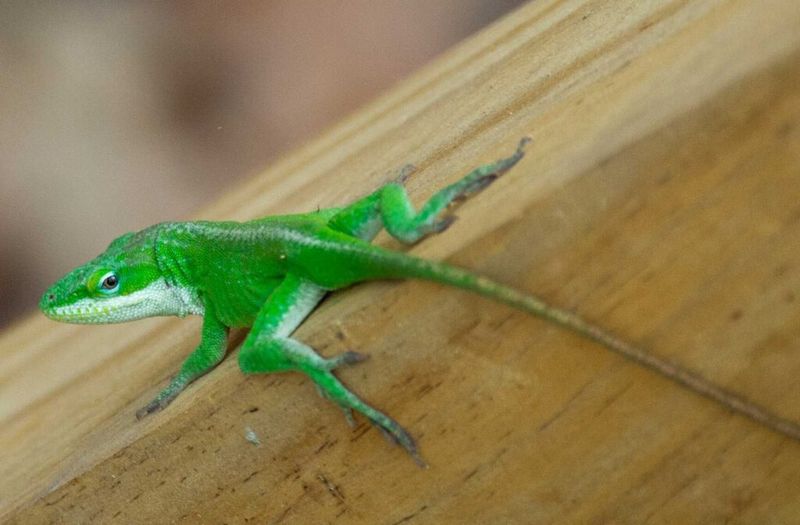
If you have noticed small lizards perching on your potted plants or darting along porch railings lately, you are not alone. Many North Carolina homeowners spot green anoles near container gardens during warm autumn afternoons, and the pattern raises a fair question: what is pulling them in?
The answer is less about a mysterious statewide event and more about what your specific porch setup may be offering these native lizards. Understanding the connection can help you care for your plants and appreciate a harmless backyard neighbor at the same time.
A porch sighting is not proof of a statewide surge
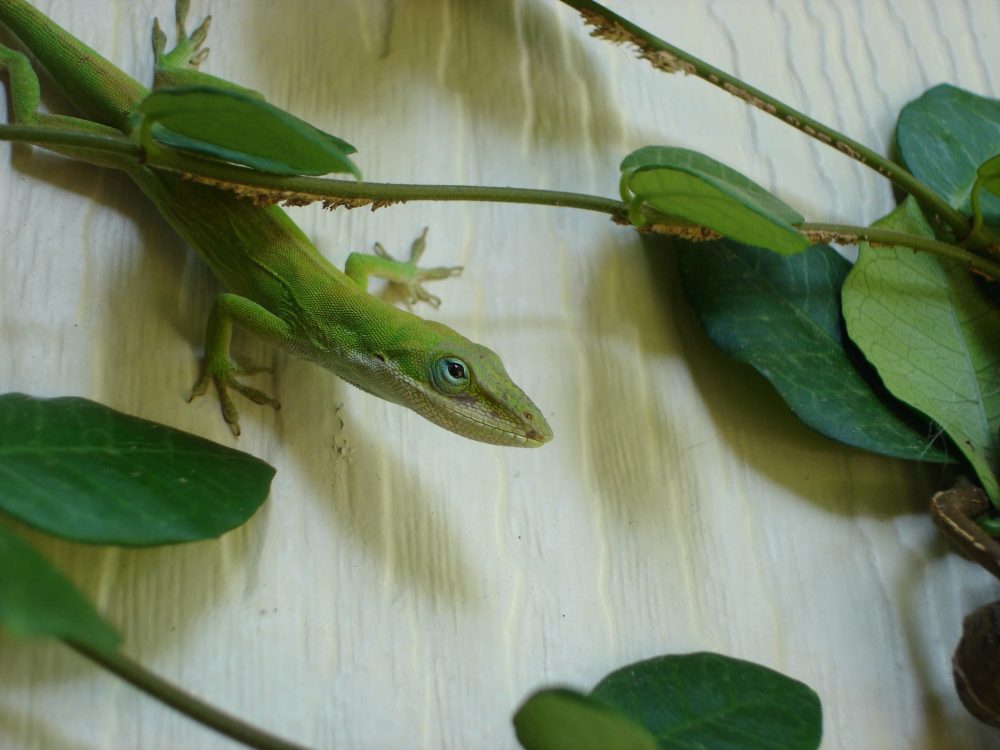
Spotting a handful of lizards around your porch containers feels significant, but a cluster of local sightings does not add up to a documented statewide event. According to the North Carolina Wildlife Resources Commission, green anoles are native, common lizards that routinely use suburban yards, gardens, building edges, shrubs, fences, and other vertical structures.
They are especially widespread in the Coastal Plain and southern Piedmont, and their presence near homes is ordinary rather than alarming.
What can make a familiar population suddenly seem more noticeable is a change in conditions rather than a change in numbers. Warm, sunny autumn afternoons pull ectothermic animals out to bask on exposed surfaces.
Bright pot rims, pale porch rails, and smooth container walls make small lizards far easier to see against a light background than they would be tucked inside dense shrubbery.
A rise in visibility is not the same as a rise in population, and the reviewed sources do not document a current statewide fall surge around porch containers. North Carolina’s reptile species account confirms that green anoles range from the barrier islands to the lower mountains, but cold temperatures and elevation constrain their distribution, so a uniform claim covering all of North Carolina would not hold up.
One more caution before drawing conclusions: green anoles can appear green, brown, gray, or mottled depending on temperature, stress, and activity level. Color alone cannot tell you whether a lizard is a native green anole or a nonnative brown anole.
Identification requires looking at overall body shape, toe pads, dewlap color, and markings in combination. The best starting point is to treat the sighting as a reason to look more closely at the local microhabitat rather than as evidence of an unusual wildlife event.
Why a container may become a small hunting site
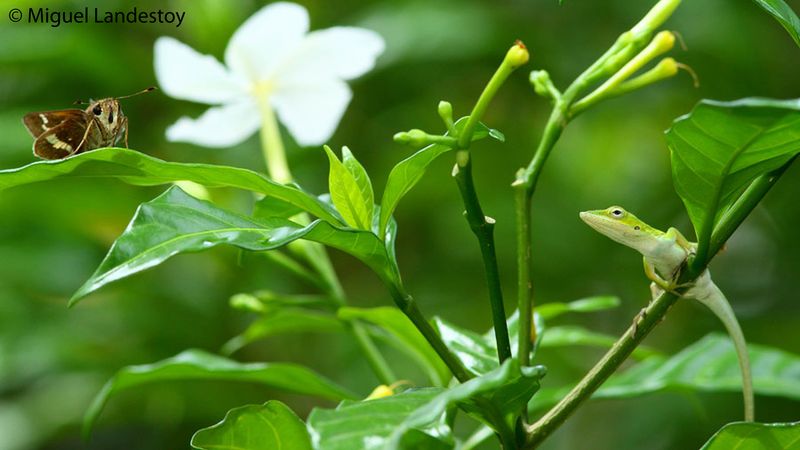
Porch containers do not attract anoles on their own. What they can do is concentrate several resources in one small space: prey insects, moisture, leafy cover, and elevated perches.
That combination, drawn from the species’ documented diet and habitat preferences, explains why a well-planted, regularly watered container might see more lizard activity than a bare patch of concrete nearby.
The diet of a green anole is broad. North Carolina Wildlife documents prey that includes flies, moths, crickets, beetles, ants, termites, butterflies, worms, and slugs, along with other small arthropods.
Many of those insects move through or shelter in container plantings, especially when foliage is dense or stems and stakes provide vertical structure for perching and ambushing.
Moist potting media and any decaying organic matter in a container can support fungus gnats and other small invertebrates, adding another layer of potential prey. Meanwhile, stems, leaf undersides, pot rims, railings, and nearby walls serve as both basking surfaces and hunting platforms.
N.C. Cooperative Extension notes that logs, snags, rocks, and other structures function as reptile ambush sites, and a porch railing or pot stake can serve a similar purpose in a suburban setting.
None of this means the plant species itself is the draw, or that porch pots have been measured as a uniquely important food source for anoles anywhere in the state. The more supportable explanation is that a container with adequate moisture, some insect activity, and elevated perches may function like a small hunting ground.
Penn State Extension’s guidance on container plants points out that potted plants can harbor a surprising variety of insects and invertebrates, which is exactly what makes the container microhabitat worth examining when you notice regular lizard activity.
Inspect the container microhabitat before drawing conclusions
Anole activity near a container is a prompt to look more carefully at what is living in and around the pot. It is not, by itself, a sign that your plant is healthy, stressed, or pest-ridden.
The inspection may turn up nothing unusual, and that is a completely normal outcome.
Start with the soil surface. Tiny flies rising when you water the pot or gently disturb the growing medium suggest fungus gnats, whose larvae live in moist potting media and feed on fungi, algae, decaying organic matter, and occasionally roots.
UGA Extension’s guide to growing indoor plants identifies overwatered or poorly drained containers as common environments where small pest populations build up unnoticed. If no flies appear, move on without assuming a problem exists.
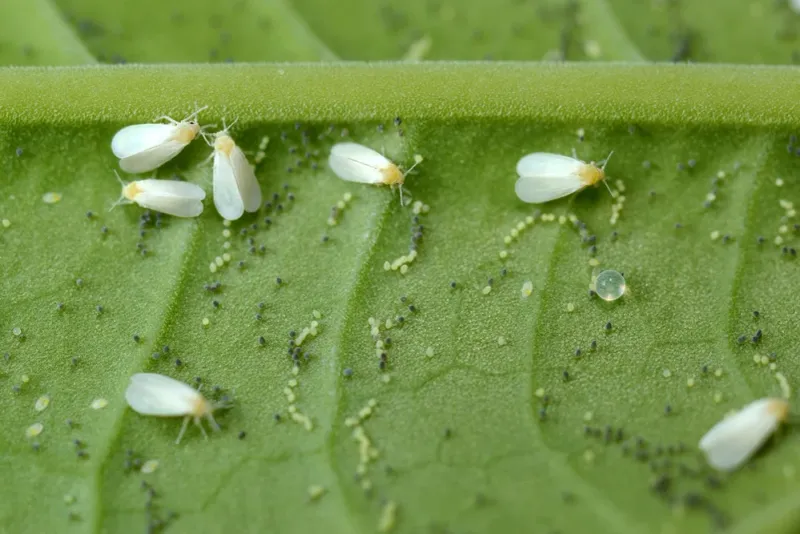
Next, check the foliage. Aphids and whiteflies tend to cluster on tender new growth and leaf undersides, while scale insects and mealybugs appear as bumps, cottony masses, or waxy coatings on stems and older leaves.
Sticky residue on leaves or surfaces below the plant, trails of ants moving up the stem, or patches of black sooty mold are all clues that a honeydew-producing pest may be present. UGA Extension’s hitchhiker-pest guide also recommends checking pot rims, drainage holes, and the space between the pot and saucer for hiding insects and damp organic debris.
Separate the documented breeding conditions from places that may simply shelter insects. Moist potting media is a known fungus-gnat breeding site; pot undersides, dense foliage, and leaf litter beneath the container are places to check for hiding insects, decaying material, or standing water, but they are not automatically breeding grounds.
Penn State Extension’s fall plant inspection checklist recommends working through new growth, stems, leaf undersides, and the soil surface systematically before concluding anything about plant health or pest load.
Weather and porch lights can change what you notice
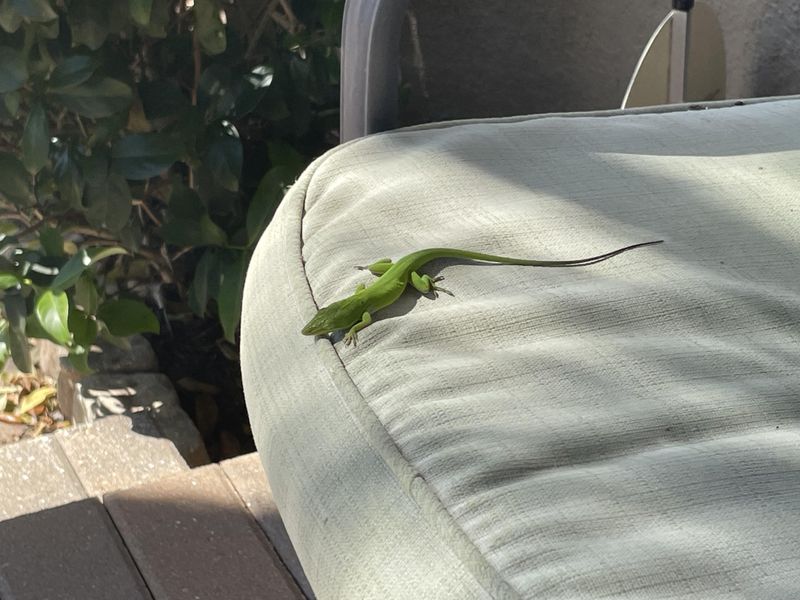
A sudden uptick in anole sightings on a warm October afternoon may have more to do with temperature than with any change in the local population. North Carolina’s reptile species account describes green anoles as strongly limited by cold, which means their above-ground activity rises and falls with daily and seasonal temperatures.
A mild, sunny stretch in autumn can pull lizards out onto exposed surfaces that they largely avoided during cooler days, making familiar animals look like new arrivals.
Porch lighting adds another layer worth considering, though the connection is less straightforward than it might appear. Research published in Physiology and Behavior found that artificial light at night altered green anole behavior, including increased nighttime waking and foraging under simulated light conditions.
Separately, insect research reviewed in a PMC synthesis describes how artificial light can disrupt insect orientation and cause some species to accumulate near light sources.
Taken together, those findings suggest a plausible chain: a porch light draws insects, insects draw anoles, and the anoles end up in a visible spot near the fixture. That chain is reasonable but unproven for any specific porch setup.
Before changing your lighting or container arrangement, note what time the anoles appear, how warm and sunny the day is, and how close the lizards are to the light source. Observation first gives you something concrete to act on, rather than a change made on a hunch.
Correct excess moisture without creating new problems
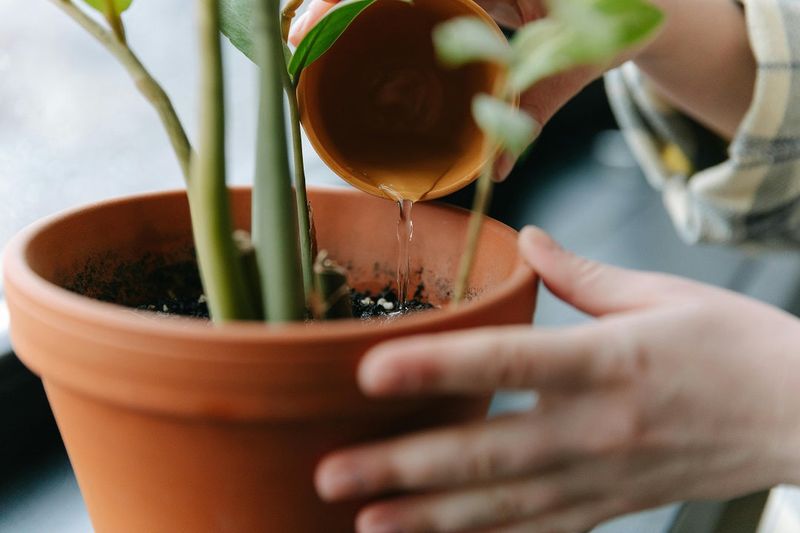
Containers that stay wet between waterings can quietly build up conditions that support fungus gnats and contribute to root problems, both of which are bad for the plant regardless of what wildlife shows up nearby. The goal here is better plant care, not a deliberate attempt to manipulate insect populations for the sake of the anoles.
Let the growing medium dry to the level appropriate for the specific plant before watering again. Most container plants do better with a dry-down period between waterings than with consistently saturated soil.
Penn State Extension’s container-plant guidance recommends using pots with drainage holes and allowing excess water to escape freely rather than pooling at the root zone. Empty saucers after each watering so standing water does not accumulate beneath the pot.
Remove decaying plant debris from the soil surface and from any gap between the pot and saucer. Old leaves, spent flowers, and decomposing organic matter on or near the growing medium give fungus-gnat larvae a food source and a place to develop.
UGA Extension’s office-plant hitchhiker guide notes that debris accumulation is one of the easier contributing factors to address without chemicals.
Yellow sticky cards placed near the pot are a practical, low-impact tool for monitoring adult fungus gnats. A high catch rate on the card confirms an active population and tells you the drainage correction is worth prioritizing.
UGA Extension’s fungus-gnat fact sheet identifies cultural controls, including reduced watering and improved drainage, as the primary response before any other treatment is considered. Overwatering containers or leaving standing water simply to attract lizards would work against the plant’s health and could create separate problems, including mosquito breeding habitat.
Use targeted responses for confirmed plant pests
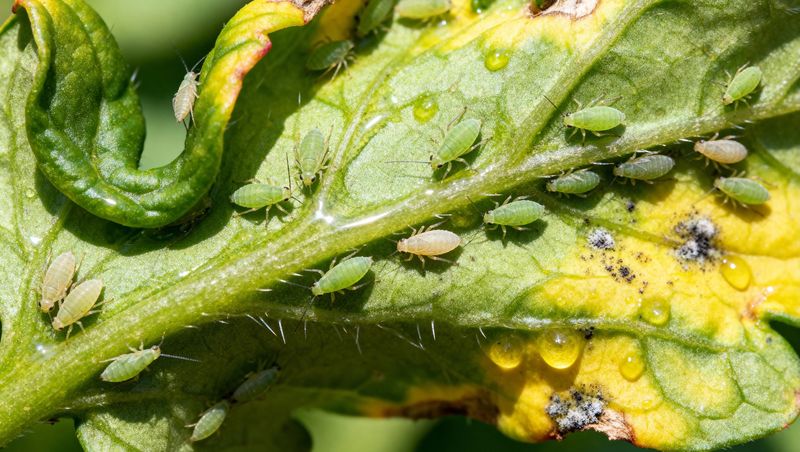
Finding aphids or another visible pest during your container inspection calls for a measured response, not an immediate reach for the insecticide cabinet. Broad-spectrum products can kill beneficial insects alongside target pests, and pesticide residues can expose reptiles like green anoles through contaminated prey or treated surfaces.
Seeing a lizard near a pot is not a reason to spray; confirming a pest population is the threshold that matters.
For aphids, a firm stream of water directed at infested stems and leaf undersides is often the first and most practical step. UGA Extension’s aphid management guidance recommends water sprays, hand removal, and pruning of heavily infested growth as lower-risk options that preserve natural enemies and do not require chemical application.
Monitoring after each treatment tells you whether the population is declining or holding steady.
If a pesticide becomes necessary after non-chemical steps have not resolved the problem, use it selectively. Treat only the target area, follow the product label exactly, and apply during a time when pollinators and other wildlife are less active.
EPA guidance on reducing pesticide impacts on wildlife emphasizes treating only where the pest is present, avoiding runoff, and minimizing exposure to non-target animals. Reptiles face additional risk because they contact treated surfaces directly and can ingest pesticide residues through prey, a concern addressed in EPA’s T-HERPS risk framework for amphibians and reptiles.
Anoles are generalist predators. They may consume aphids, flies, caterpillars, spiders, and beetles without distinguishing between pest and beneficial species.
Treating a container with a broad-spectrum product removes the prey that drew the lizard there in the first place and risks harming the animal directly. Targeted, label-compliant treatment when a pest is confirmed is the approach that protects both the plant and the wildlife using it.
Support native anoles without manufacturing a pest habitat
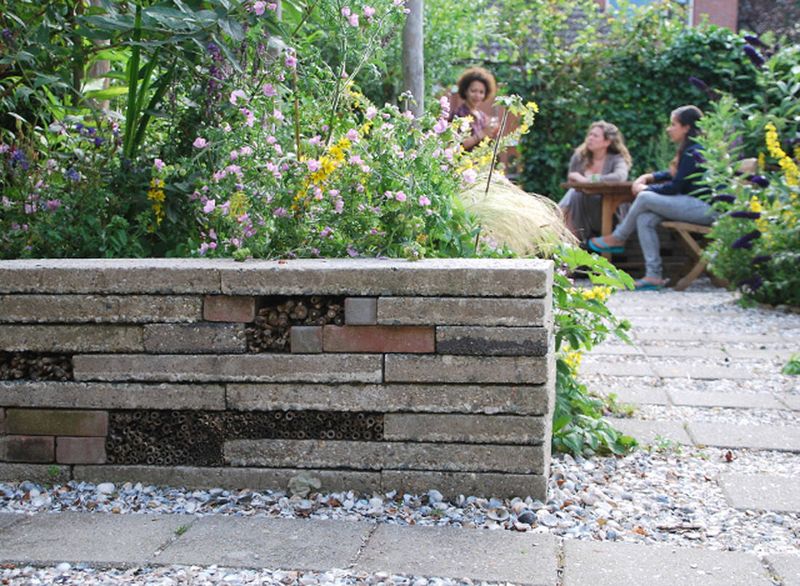
Maintaining a porch that native anoles find useful does not require saturating containers, adding rotting material, or leaving standing water around. Those actions create plant disease risk, fungus-gnat problems, and potential mosquito habitat, and they are not necessary to make a porch attractive to lizards that are already comfortable in suburban settings.
Plant diversity helps more than any single species selection. A mix of leafy, woody, and flowering container plants provides varied foliage textures, stem structures, and insect communities without requiring any special management.
N.C. Cooperative Extension’s reptile habitat guidance identifies logs, snags, leaf litter, rocks, and similar structures as useful cover and ambush sites for reptiles.
A few flat rocks or a small piece of rough-barked wood near the container area can serve that function on a porch without creating a maintenance burden.
Avoiding unnecessary broad-spectrum pesticide applications is one of the most direct ways to keep the local insect community intact and the food supply available for anoles and other predators. EPA’s wildlife pesticide guidance notes that reducing unnecessary treatments protects non-target species and preserves the ecological relationships that make a yard function.
Wild green anoles are best enjoyed in place. North Carolina regulates the possession of native reptiles, and the NC Wildlife Resources Commission’s restricted-species permit page outlines the requirements that apply to native reptile possession and transport.
Watching anoles hunt, display, and bask on a porch costs nothing and carries no regulatory complications, which makes observation the most straightforward way to appreciate them.
Use the sighting as a prompt, not a verdict
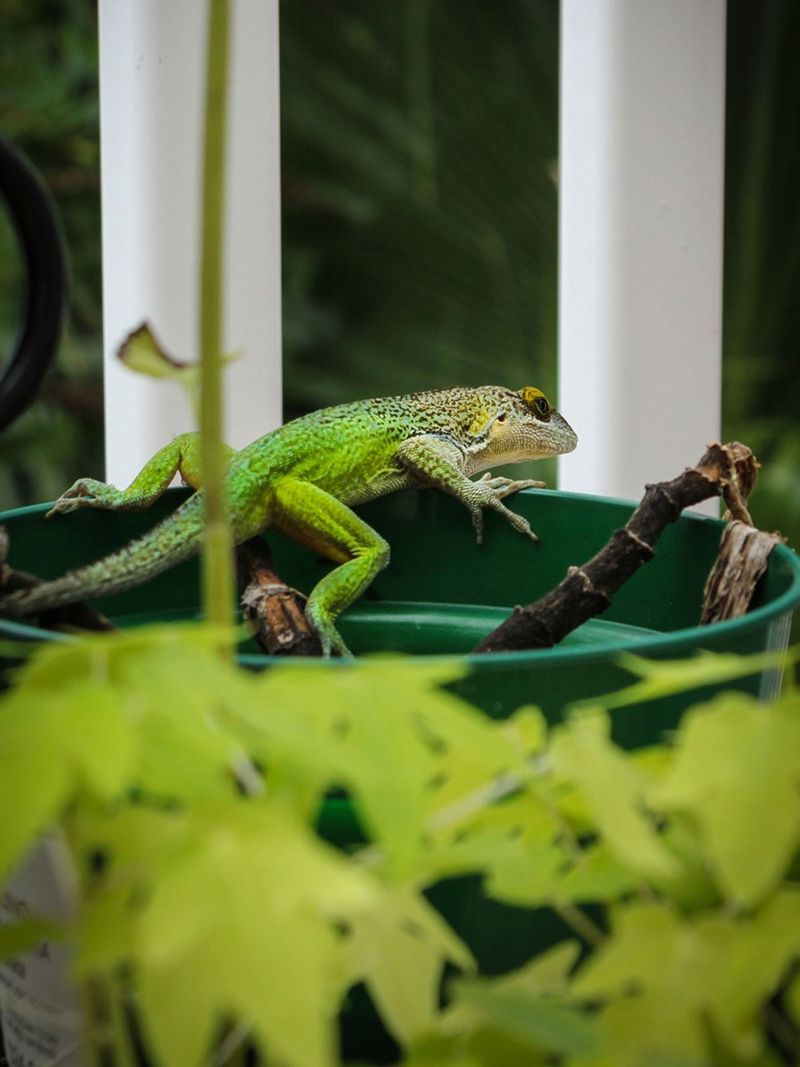
Several green anoles around a porch container do not confirm a statewide population event, a uniquely important food source, or a plant-health problem. What the sighting does confirm is that the local setup, whether that means prey insects, a bit of moisture, leafy cover, elevated perches, warm afternoon sun, or some combination of those factors, is working in the lizard’s favor right now.
The practical response is a short inspection: check the soil moisture and drainage, look over the foliage for visible pests, clear any debris from the saucer and pot base, and note whether the anoles are using the container itself or the surrounding rails, walls, and stakes as their actual hunting and basking spots. NC Wildlife’s green anole profile and N.C.
Cooperative Extension’s reptile habitat guidance together support treating the porch as a microhabitat worth understanding rather than managing for a single outcome. If the UGA container-plant inspection turns up nothing, the anoles are simply using a convenient spot, and that is a fine result.
Correct any watering or drainage problems for the plant’s sake, address confirmed pests with targeted methods, and leave the rest alone. A native lizard working your porch containers is a small, useful reminder to look at the whole container environment with fresh attention, not just the plant inside it.