
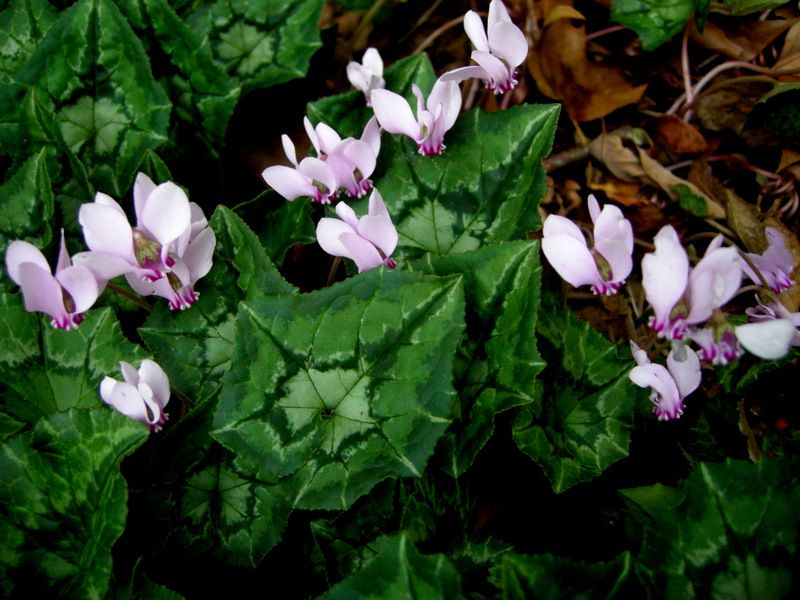
Under the bare edge of a tree canopy, a small plant can add pink or white blooms and silver-marbled leaves to a shady spot. Hardy cyclamen, known as Cyclamen hederifolium, is a low perennial that many North Carolina gardeners overlook.
It usually flowers in late summer or early fall, then carries patterned leaves through the cool months. Here is how to give it the right spot, plant it well, and know what to expect season by season.
Hardy cyclamen brings fall color, but November blooms are not a sure thing
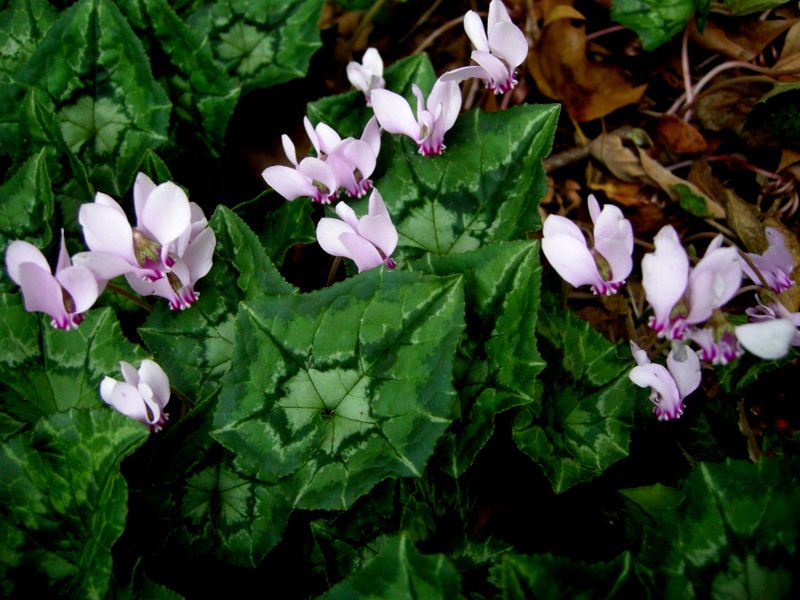
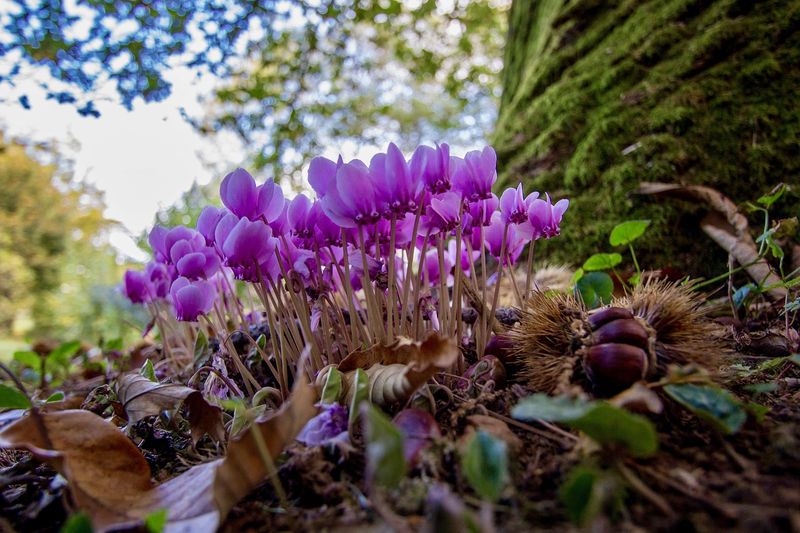
Picture a plant only 4 to 6 inches tall, spreading 6 to 12 inches wide, with pink or white flowers that nod like tiny swept-back butterflies. That is Cyclamen hederifolium, often called hardy cyclamen or ivy-leaved cyclamen.
According to the NC State Extension Plant Toolbox, it is listed for North Carolina’s Coastal Plain, Piedmont, and Mountains, and it suits woodland settings.
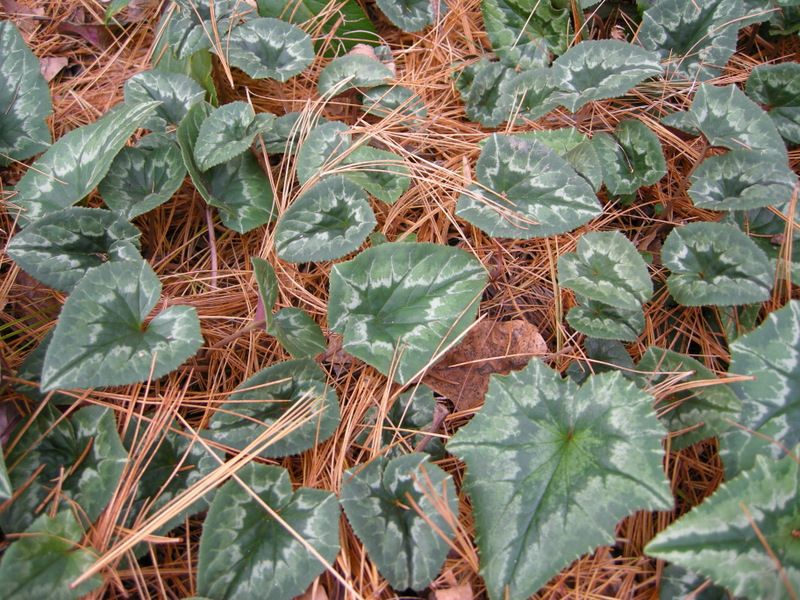
Its charm comes from scale. The flowers rise on short stalks just above the soil, and the leaves are gray-green with silver or white marbling.
In a spot where little else is going on at ground level, that small show can catch the eye.
Timing needs a careful look. NC State describes the usual bloom as late summer and early fall, with flowering and new leaves in September and October.
By November 1, many plants have finished, and some gardens will have only a few late flowers. NC State’s page even includes a Wake County photo dated November 3, so late blooms do happen.
Plan on fall flowers as a typical bonus, not a promise. The more dependable November payoff is the foliage, which gets its own section next.
If you want blooms, early autumn is the better time to look for them, and local weather, elevation, and site conditions will shift the calendar from the mountains to the coast.
Its patterned leaves provide the longer-lasting seasonal display
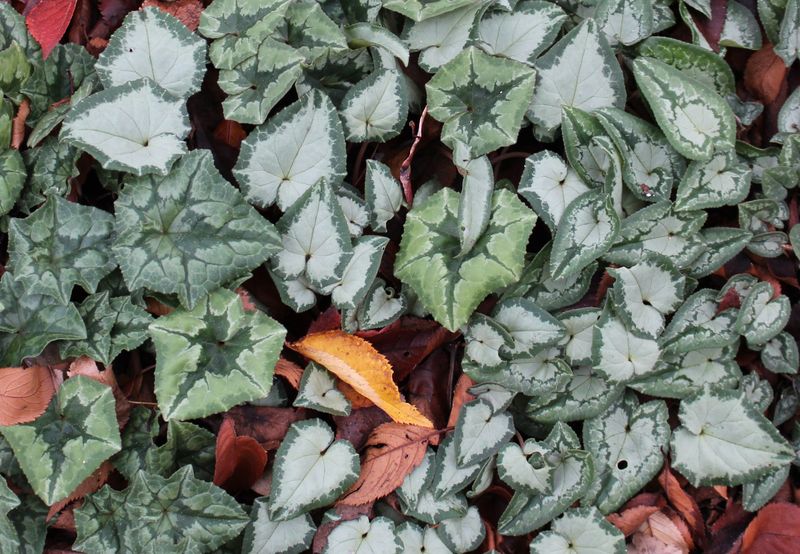
Leaves are the long game with hardy cyclamen. Each one is heart-shaped to ivy-like, gray-green, and marbled with silver or white, so no two patches look quite alike.
NC State notes that the foliage follows the flower stalks, while the Royal Horticultural Society profile says flowers appear before the leaves in early autumn.
Once the leaves are out, they persist through the cool season. That makes the plant useful when summer perennials have faded and the shade garden looks plain.
It does not mean the garden has nothing else going on, since many plants offer winter interest, but a silver-patterned carpet is a handy addition.
Here is the catch. The RHS classifies this plant as deciduous, so it is not evergreen in the usual sense.
The foliage becomes dormant in late spring or early summer and disappears until the next cycle. A hard freeze or an unusually rough winter can also leave leaves looking tired, and conditions vary from one site to another.
Think of it as a plant with a winter-through-spring leaf season. If you spot thin or battered foliage in January, that is not automatically a sign something is wrong.
The tuber underground is what carries the plant forward, and the leaves are simply its seasonal solar panels.
Choose a shaded site where water can drain freely

Walk your yard and look under the deciduous trees. Those beds, shaded in summer and brighter once leaves drop, are the kind of place hardy cyclamen can fit.
NC State recommends partial shade and humus-rich soil, and notes that the plant tolerates dry shade.
Drainage is the deciding factor. Shade alone does not make a bed suitable.
Kew warns that poorly drained, wet soil can rot the tubers, and low spots that stay soggy are a poor match.
A simple test helps. After a good rain, check the bed a day later.
If water still pools or the soil feels sticky and heavy, choose a slightly higher spot or a different plant. Slopes, the edges of raised beds, and areas where leaf mold has built up over time often drain better.
Think of a woodland-style planting as small drifts rather than single plants. A few tubers tucked among ferns, hellebores, or other shade-lovers can fill out over time.
Keep the placement within the plant’s documented North Carolina range: the Coastal Plain, Piedmont, and Mountains, and remember that heavy clay or a creek-side bed may need a different choice.
Plant the tuber shallowly without treating one depth as universal
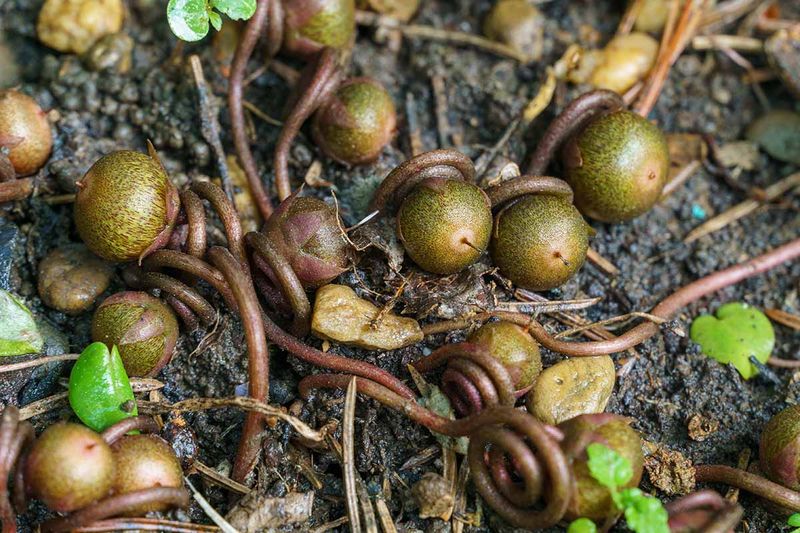
Gardening sources do not agree on a single planting depth, and that is fine. NC State says about 1 inch deep, while the RHS growing guide gives a somewhat deeper range and cautions against planting too deep.
The practical answer is to read the label or instructions that came with your tubers and plant on the shallow side. Tuber size, soil type, and supplier handling can all affect the best depth, so one number cannot cover every purchase.
Look at the tuber before planting. It is a flattened, rounded corm, and the top is the side with small knobby buds or a slight dip.
Set it with that side up and keep the upper shoulders lightly covered rather than buried under several inches of soil.
Loosen the soil first and mix in some leaf mold or compost if the bed is thin or compacted. Then pick the spot with care, because hardy cyclamen does best when left alone.
Digging nearby each year can disturb the tuber, so avoid planting it where you will be tilling or replanting annuals. Water the bed in after planting if the weather is dry, but do not leave it soggy.
Match care to winter growth and summer dormancy
Care is easiest when you follow the plant’s yearly rhythm. While leaves are growing in the cool season, give it water during dry spells.
Cyclamen tolerates dry shade, but a long rainless stretch in fall or winter can still leave the foliage stressed.
When the plant goes dormant in late spring or early summer, the needs flip. Kew’s guidance points to keeping the site relatively dry during this rest period and avoiding persistently wet soil, especially in summer.
If you irrigate nearby shrubs or perennials, check that the sprinkler is not soaking the cyclamen patch every day.
Autumn brings a different chore. Heavy leaf litter can block light from the new leaves, so remove thick layers of fallen leaves.
Do it by hand or with a light touch, because raking directly over the plants can damage their tops.
A good habit is to lift leaves off the patch in sections, shaking them clear and checking for emerging growth underneath. Oak and maple leaves can pile up fast, so a quick check after a windy week is worthwhile.
Skip the extras. There is no need to start a fertilizing, pruning, or division routine here.
A well-drained site, timely water in dry spells while leaves are active, and a drier summer rest cover the main seasonal needs.
Hardy cyclamen is neither florist cyclamen nor a native groundcover
Not every cyclamen belongs outdoors. The big, bright pots sold in stores around the holidays are florist cyclamen, Cyclamen persicum, and they are frost-tender.
The University of Arkansas Extension points out that hardy species are different garden plants. When shopping, look for the name Cyclamen hederifolium rather than just cyclamen.
Origin matters too. NC State identifies C. hederifolium as native to parts of Europe and western Asia and introduced in the United States.
It is not a North Carolina native, so it should not be chosen as a native-plant restoration plant. NC State lists bees among its wildlife value, but that does not make it a native substitute.
The plant can self-seed and naturalize when left undisturbed. That describes how it spreads, and the sources reviewed do not label it invasive in North Carolina.
Safety deserves a clear note. NC State says cyclamen is toxic if ingested, and the ASPCA lists Cyclamen species as toxic to dogs, cats, and horses.
Households with pets or young children should plant it out of reach or choose something else. Bee visits do not make any part of it safe to eat.
Small, patterned, and seasonal, it earns a spot in the right shade bed, as long as that bed is chosen with care.