
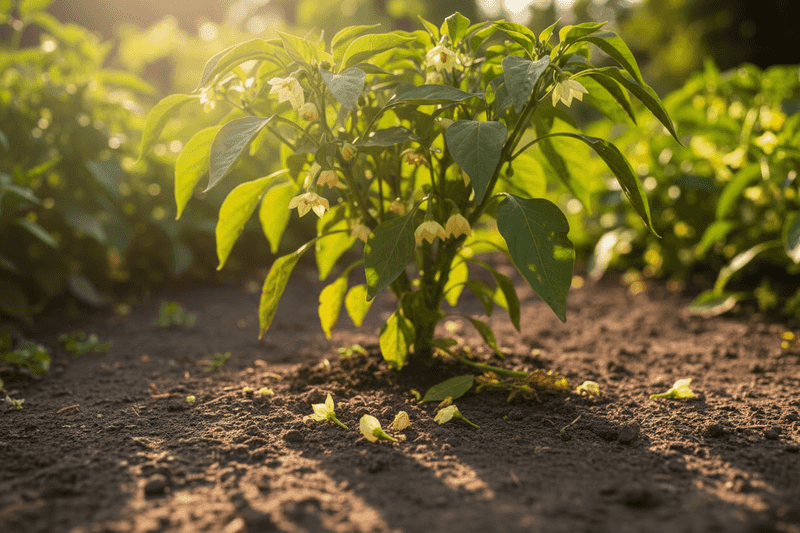
Watching your pepper plants flower beautifully and then drop every blossom before a single pepper forms is one of the most frustrating sights in a summer garden. Many gardeners assume they did something wrong with the hose, but the real story is more complicated than that. High temperatures during a heat wave can directly interfere with a pepper’s ability to set fruit, and while letting the soil go bone dry before flooding it can add to the problem, the weather itself is often the main culprit. Understanding what is actually happening gives you a clearer path to helping your plants through the heat.
Heat—not just watering—can make pepper blossoms fall
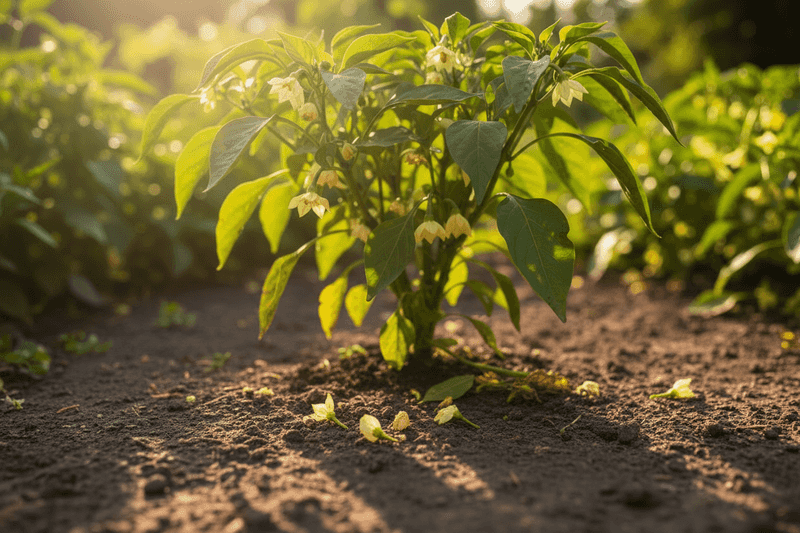
Walking out to your pepper bed and finding a scatter of fallen flowers on the soil is an alarming sight, especially when the plants looked healthy just days before. The most common reason this happens during a summer heat wave is not a watering mistake – it is the temperature itself. Oklahoma State University Extension notes that many peppers drop blooms when daytime temperatures climb well above 90 degrees F and nighttime temperatures stay above roughly 75 degrees F, though these numbers are approximate and vary by cultivar.
Bell peppers tend to be more sensitive to heat than smaller hot pepper types, but no pepper is completely immune to blossom drop when temperatures push past its preferred fruit-setting range. Think of those temperature figures as a strong clue rather than a hard biological switch – some plants may struggle at lower thresholds, and others may push through briefly higher ones.
A watering swing, meaning a period of significant soil dryness followed by a heavy soak, can absolutely add stress and worsen the situation. The original idea that watering is usually the cause, however, overstates the case. New Mexico State University Extension lists high temperature alongside irregular moisture, wind, humidity, pests, and nutrient problems as possible contributors to pepper flower drop – weather belongs at the top of that list during a heat wave.
Heat can disrupt the flower’s entire reproductive process
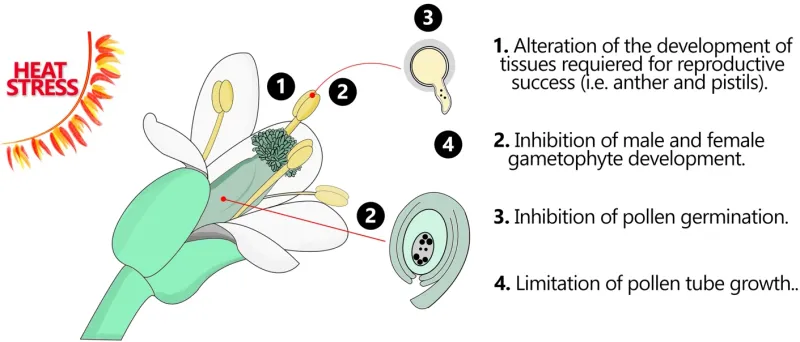
When temperatures climb too high, the damage to a pepper flower goes far beyond simple thirst. Research on bell pepper published in Plant, Cell and Environment found that elevated temperatures can sharply reduce pollen viability and impair anther opening, which is the process that releases pollen in the first place. Beyond that, heat can interfere with pollen transfer, fertilization itself, and the early stages of fruit development after fertilization occurs.
That chain of disruptions explains why consistent watering, while genuinely helpful for reducing added stress, cannot guarantee that flowers will hold and develop into fruit during a sustained heat wave. Irrigation keeps roots hydrated, but it cannot repair reproductive tissue that heat has already compromised. A flower may look intact on the outside while its internal biology has already failed.
Additional research on pepper under high-temperature stress points to oxidative damage and disrupted photosynthesis as compounding factors that affect flower retention. Hand pollination – moving pollen from flower to flower with a brush or fingertip – is sometimes suggested as a rescue, but it cannot reliably overcome pollen that heat has already damaged or fertilization pathways that heat has already disrupted. Peppers are generally self-pollinating and do not need a second plant, so the limiting factor during a heat wave is not a lack of pollen transfer attempts but the quality of the pollen itself.
A severe dry-down can add water stress to a heat problem
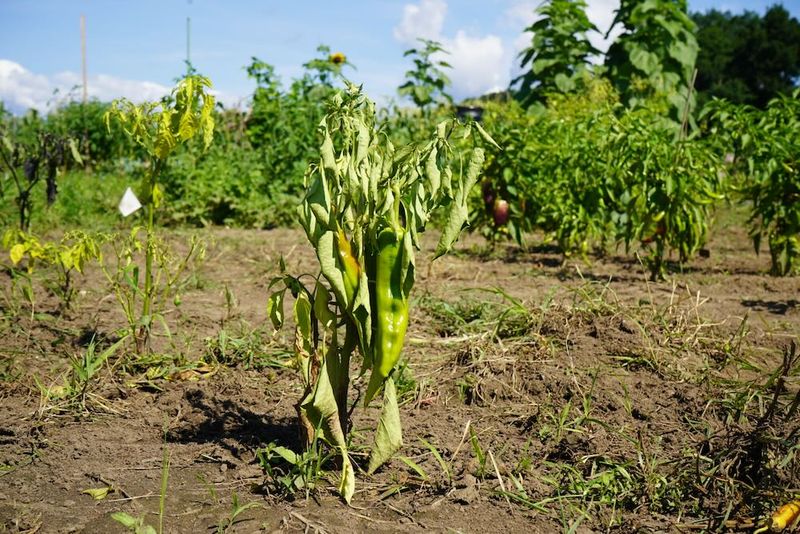
The watering mistake most worth correcting is not a wrong time of day or a wrong watering tool – it is the pattern of letting soil dry out significantly and then compensating with a heavy soak. That swing from dry to saturated creates its own form of stress, and during a heat wave when the plant is already struggling, the added pressure can push more flowers and tiny developing fruit to abort.
Oklahoma State University’s pepper production guidance identifies inconsistent water availability as a contributor to flower drop, poor fruit set, sunscald, and fruit cracking. The opposite extreme matters too: soil that stays waterlogged can damage roots and encourage root diseases, which removes the plant’s ability to take up water even when plenty is available.
Separating water stress from heat stress is a key diagnostic step. A plant dropping blossoms during a 95-degree afternoon is not automatically telling you it ran dry. University of Minnesota Extension’s irrigation guidance for vegetables emphasizes that the practical goal is uniform moisture in the root zone – not constant saturation and not periodic flooding after a dry spell. Getting the root zone adequately wet and keeping it reasonably stable is the correction, not simply adding more water at the first sign of trouble.
Check the root zone before you reach for the hose
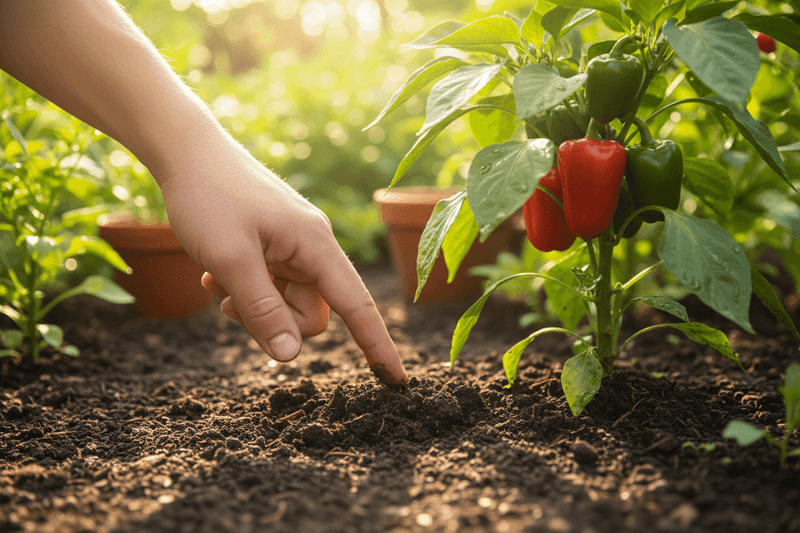
Before adding any water, spend thirty seconds actually checking the soil. Push a finger or a thin trowel down about two inches beneath the surface – and beneath any mulch layer – and feel whether the soil is moist, barely damp, or genuinely dry. University of Minnesota Extension recommends checking soil moisture at roughly two inches below the surface before deciding whether to water, rather than relying on the appearance of the soil surface or the look of the leaves.
Leaf wilt during extreme heat can be genuinely misleading. On a very hot afternoon, pepper leaves may droop and look stressed even when the root zone has adequate moisture, because the leaves are losing water through transpiration faster than the roots can replace it. That kind of midday wilt often recovers on its own once temperatures drop in the evening. Watering in response to it, when the soil is already moist, risks pushing toward oversaturation.
Containers behave very differently from in-ground beds. UMN Extension notes that container plants can dry out much faster than garden beds and may need daily or even more frequent checks during extreme heat. A five-gallon pot sitting in full afternoon sun can go from adequately moist to critically dry within a single hot day, while a raised bed with amended soil and mulch may still hold moisture from a watering two days prior. Check both types on their own schedule rather than on the same calendar.
Water slowly at the base and adjust the interval
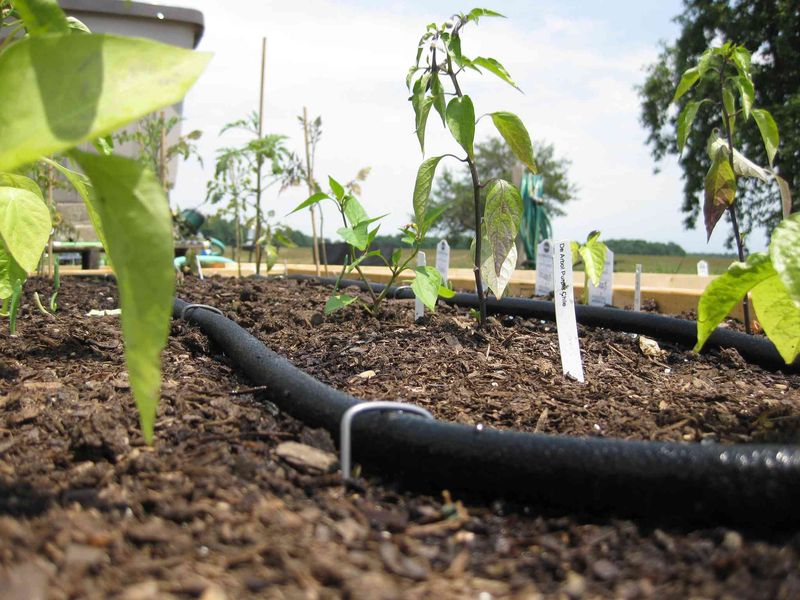
Once you have confirmed the soil actually needs water, the method matters. Drip irrigation, a soaker hose, or a low-flow hose held at the soil surface all deliver water slowly enough that it can soak into the root zone rather than run off or pool on top. Apply water until you can feel that moisture has reached the depth where the roots are active, then stop and let the soil tell you when it needs attention again.
Calendar-based routines and the common “one inch per week” guideline are starting points, not reliable rules. UMN Extension’s pepper-growing guidance notes that peppers may need roughly one to two inches per week, but sandy soil, containers, strong wind, intense heat, and large established plants can all push that number higher – sometimes much higher. A fixed schedule applied without checking the soil can either underwater a container in a heat wave or overwater a clay bed that drains slowly.
Morning is a practical time to water because cooler temperatures mean less evaporation, but that preference should not become a rigid rule. UMN Extension’s heat-wave gardening guidance is clear that a severely wilted or drought-stressed plant should be watered rather than left to wait until the following morning. Overhead watering – spraying leaves and flowers with a sprinkler or hose – is not the right rescue approach here. Wet foliage invites fungal disease, and directing water onto flowers does nothing useful for root-zone moisture.
Keep the water low and slow at the base of the plant.
UMN’s vegetable irrigation strategies reinforce that adjusting frequency based on actual soil conditions – rather than a fixed interval – is the most reliable way to maintain the even moisture peppers need during a stressful season.
Use mulch and breathable shade to reduce added heat stress
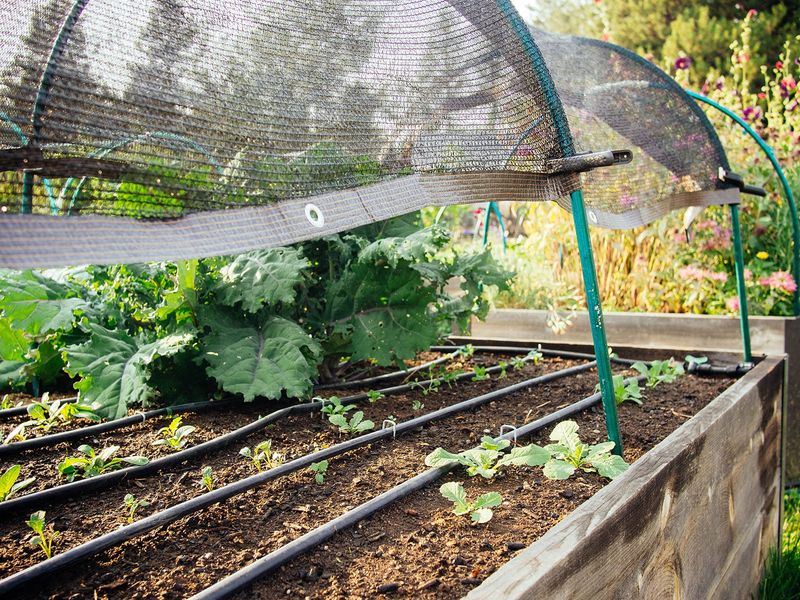
Two practical steps can reduce the heat load on your pepper plants without requiring any changes to your irrigation system. The first is mulch. Applying organic mulch – straw, shredded leaves, or wood chips – about two to four inches deep around your plants slows evaporation from the soil surface and helps moderate root-zone temperature. UMN Extension recommends keeping mulch a few inches away from the plant stem to avoid trapping moisture against it, which can invite rot.
The second step is temporary shade during the hottest part of the day. University of Delaware Cooperative Extension identifies approximately 30 percent shade cloth as suitable for peppers and tomatoes, noting that heavier shade can reduce the light plants need for photosynthesis and fruit development. The cloth should be supported on stakes or a simple frame above the plants rather than draped directly on them, so air can move freely underneath. Good airflow matters – stagnant hot air under a cover can be worse than direct sun.
Plastic sheeting and tarps are not appropriate substitutes. Ask Extension guidance on heat-wave garden care warns that impermeable covers can trap and intensify heat rather than reduce it. When temperatures moderate, remove or fold back the shade cloth so plants receive full light again. For container growers, UMN Extension suggests moving pots to a spot with morning sun and afternoon shade when that is practical, since containers heat up faster than in-ground soil and give you the flexibility to reposition them.
Distinguish blossom drop from blossom-end rot and other problems
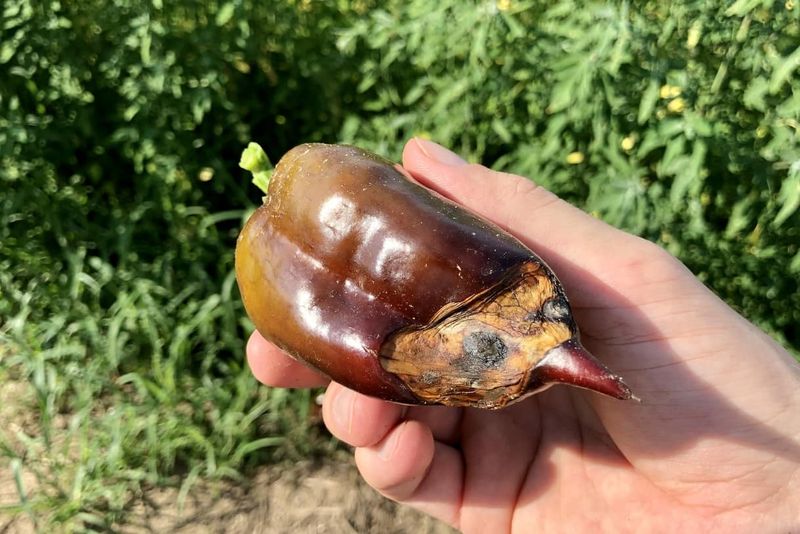
Blossom drop and blossom-end rot sound related, but they are two separate problems that call for different responses. Blossom drop means a flower or tiny developing fruit falls off before a pepper ever forms. Blossom-end rot shows up later, on a pepper that has already grown to some size, as a dark, leathery, sunken area at the bottom tip of the fruit. Utah State University Extension explains that blossom-end rot is associated with disrupted calcium transport, often made worse by uneven soil moisture – but it is not the same condition as losing flowers before fruit sets.
Dropped flowers do not diagnose a calcium deficiency. Adding calcium sprays or amendments in response to blossom drop is not supported, and doing so without a soil test can throw off nutrient balance. Improving moisture consistency is far more relevant to blossom-end rot prevention than reflexively reaching for calcium products.
A few other fixes commonly suggested during heat waves are also worth setting aside. Oklahoma State Extension notes that high-nitrogen fertilizer can push excessive leafy growth at the expense of flowering, but heavy fertilizing or hard pruning during extreme heat adds stress rather than reducing it. Misting flowers with water does not reliably cool reproductive tissue or rescue heat-damaged pollen. NMSU Extension’s overview of chile pepper environmental disorders also points to wind, humidity extremes, and pest pressure as possible contributors – so if your blossom drop does not ease when temperatures moderate and moisture stabilizes, look for signs of insect damage, disease, or unusual leaf symptoms before settling on heat and water as the only explanation.
Stabilize conditions and wait for better fruit-setting weather
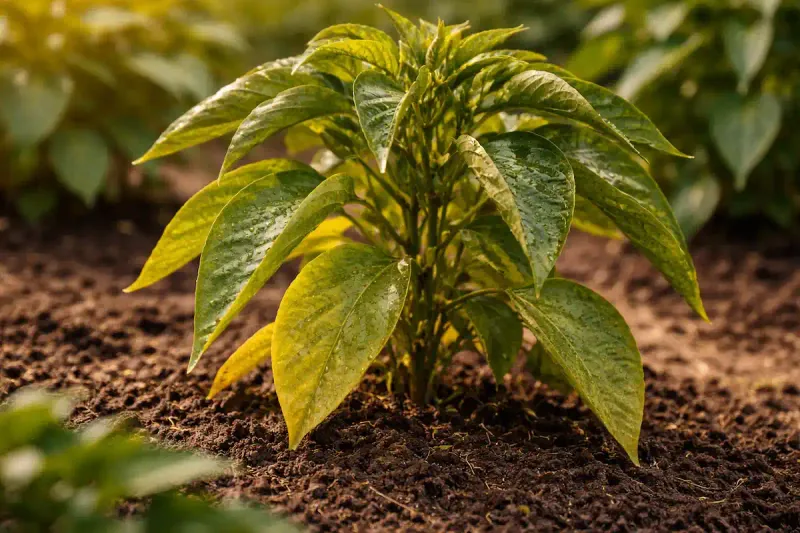
The most honest takeaway from a heat-wave blossom drop is that some of it may be outside your direct control. Your job right now is to reduce every source of added stress so the plant is ready to set fruit when conditions improve. Start by checking the root zone: if it is genuinely dry, water slowly at the base until moisture reaches the roots; if it is already saturated, hold off and check drainage. Apply mulch if you have not already, and consider temporary breathable shade cloth during peak afternoon heat.
UMN Extension’s vegetable irrigation guidance frames the goal plainly: keep moisture in the root zone consistent, adjust based on actual soil conditions, and avoid the swings in either direction that pile water stress onto heat stress. University of Delaware Cooperative Extension reinforces that reducing heat load with shade and mulch complements good watering rather than replacing it.
Flowers already damaged by sustained heat are unlikely to recover, and that is worth accepting rather than fighting with remedies that do not address the root cause. UMN Extension’s heat-wave gardening advice encourages watching for new flower buds and renewed fruit set as temperatures ease – which they eventually will. A pepper plant that has been kept consistently watered, mulched, and reasonably shaded through a heat wave is a plant in good shape to produce a strong late-season harvest once the weather cooperates.