
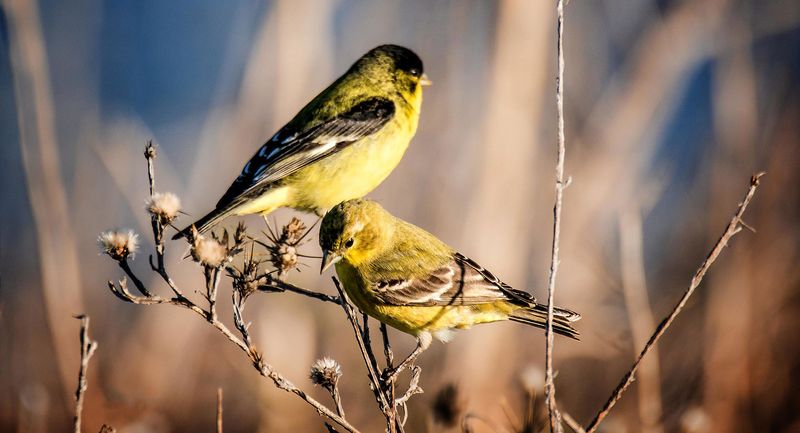
Every fall, many California gardeners grab the pruners and clear out spent flowers. Those faded blooms often hold something small birds want: seeds.
Lesser goldfinches are seed eaters, and a few well-chosen flower heads left standing may give them something to eat. Here is how to try a selective approach that fits your plants, your site, and fire safety.
A tidy fall cleanup can remove a useful food source
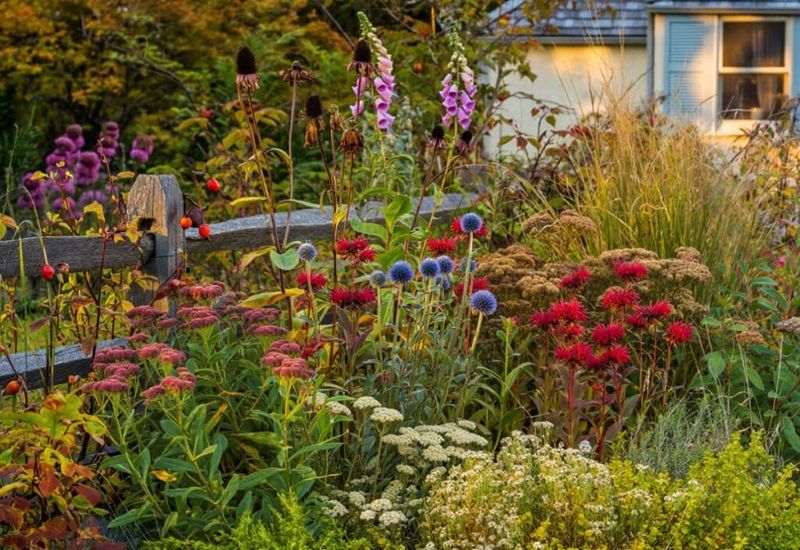
Once the blooms fade, the urge to cut everything back is strong. A clean bed feels finished, and deadheading has long been standard advice for keeping flowers neat.
The catch is that those brown, spent flower heads are where the seeds finish ripening.
When you snip them all off, you also remove seeds that small birds could have eaten. That does not make tidying a mistake.
It just means there is a middle path worth trying.
The habit is simple: leave some healthy, mature flower heads standing, and clean up the rest. Think of it as selective cleanup, not a rule against cutting anything back.
You still get to remove diseased stems, trim plants that flop over a walkway, and clear beds that need attention. Extension guidance on fall perennial care describes leaving healthy seed heads as one option, while removing diseased top growth, rather than treating every plant the same way.
It helps to picture your yard in zones. A few clumps in a back corner or along a side border might stay up through winter, while beds near the house get a more thorough cleanup.
Pick the spots where a bit of scruffiness will not bother you or your neighbors.
Standing seed heads make potential food available. They do not promise that goldfinches will show up, and they are not a complete wildlife plan.
They are one small, low-effort change that costs you nothing except a little restraint with the pruners.
Why seed-bearing flowers can feed lesser goldfinches
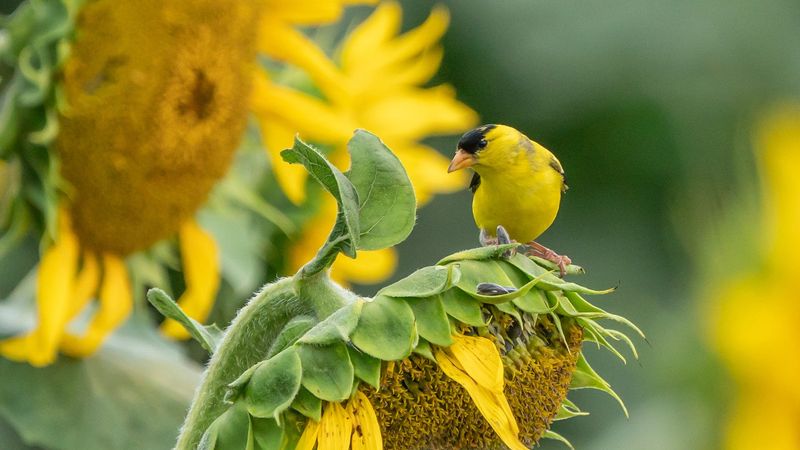
Lesser goldfinches are small seed specialists. Cornell Lab of Ornithology notes that they eat mostly seeds, and plants in the sunflower family are a major food source.
They also use gardens, so a yard is a reasonable place to offer some of that food.
California’s own wildlife account backs this up. The California Department of Fish and Wildlife describes these birds feeding on thistles and other composite plants, taking seeds directly from the plant.
Composites are the daisy-like flowers with a dense center packed with seeds.
That is where standing flower heads come in. A mature sunflower head holds seeds that appeal to birds, as noted by UC IPM.
Other spent daisy-type blooms can offer smaller seeds in the same way.
So the food connection is well supported: these birds eat these seeds, and these plants make them. What is not established is the bigger promise.
No source we reviewed tested this exact yard habit, so we cannot say it causes repeat visits or keeps birds around all winter.
A fair way to put it is that you are leaving a snack on the table. Whether anyone stops by depends on where you live, what else is nearby, and the birds themselves.
Choose seed plants that suit your California yard
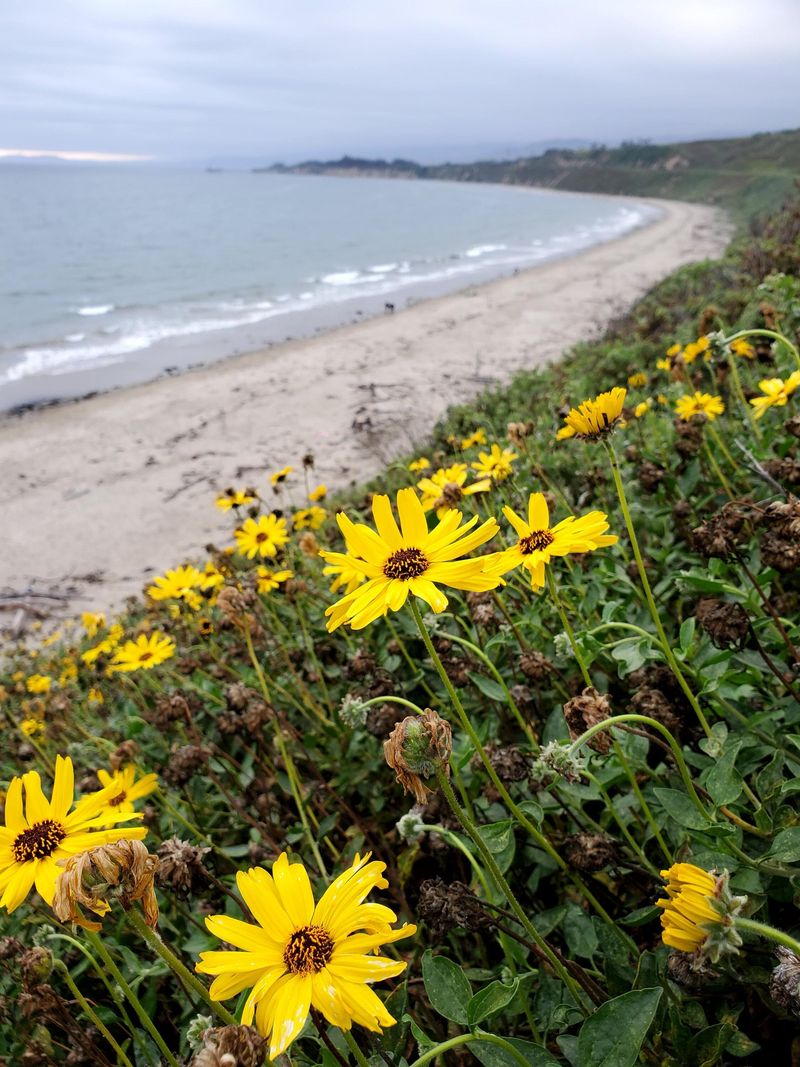
Not every plant with a familiar name belongs in every California yard. The state spans foggy coast, hot inland valleys, mountains, and deserts, and what thrives in one place may struggle or spread in another.
Start by checking what suits your local conditions, and ask a nearby nursery or native plant society if you are unsure.
A good place to look is the sunflower family. A UC Master Gardeners bird-gardening guide lists native sunflower and California aster among its seed-producing options.
Both fit the daisy-style flower that goldfinches are known to feed on.
Be careful with common names. Sunflower and coreopsis are broad labels covering many species, and neither word tells you a plant is native or well matched to your area.
Look for the full botanical name on the plant tag so you know what you are buying.
Sea dahlia is a helpful example. Calflora identifies it, formerly called Coreopsis maritima, as California-native.
That does not mean every coreopsis at the garden center is native, or that sea dahlia belongs in every neighborhood. It is just one species with a clear local identity.
Choose plants that handle your sun, soil, and summer dryness without extra water. Healthy, well-matched plants make better seed heads, and they keep your yard water-wise too.
Leave selected healthy seed heads standing
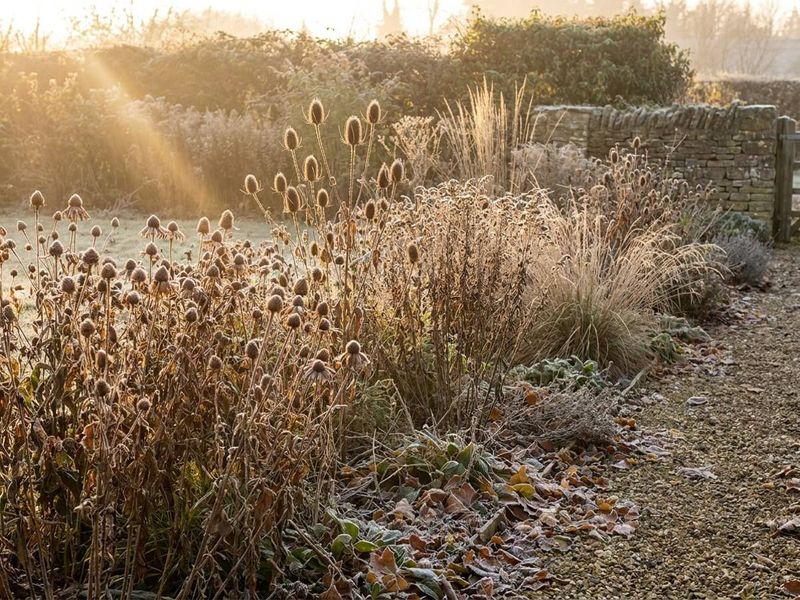
Here is how the habit looks in practice. Walk your beds in fall and pick a few plants with firm, mature seed heads that look healthy.
Leave those, and cut back the ones that are in your way.
Skip anything that blocks a path, hangs over a driveway, or tends to flop onto the lawn. Standing stems should not create new headaches.
A back border, a fence line, or an island bed away from the house often works well.
Plant health matters too. Extension guidance supports leaving healthy seed heads while removing diseased top growth.
Look for spotted, moldy, or mushy leaves and stems. Those should be cut and thrown away, not left up, and not composted if disease is a concern.
A simple routine can help: check each clump, cut and bag the unhealthy parts, trim anything in a walkway, and leave the rest. If you are on the fence, cut it.
A smaller offering is better than a messy or risky one.
There is no single correct date for cutting back. California’s climates vary widely, and the guidance we reviewed does not set one schedule.
Watch your own plants, notice when seeds are gone or stems turn unsightly, and tidy up in late winter or early spring when it suits your yard.
Winter goldfinch presence varies across California
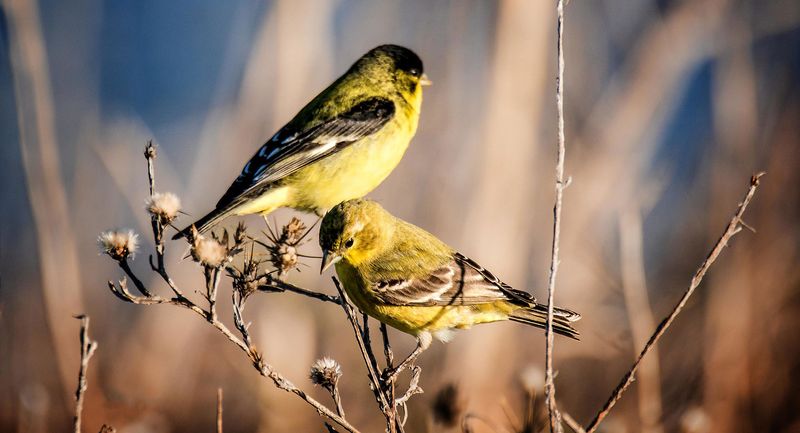
If you are hoping for a winter flock, it helps to know that California is not one uniform habitat. Lesser goldfinches are common residents in much of the state, and the California Department of Fish and Wildlife describes them as mostly nonmigratory there.
Still, winter numbers shift by region. The same account reports declines in winter in the mountains, the Great Basin, and the southern deserts, along with local seasonal movement.
A yard on the coast and a yard in the high Sierra can have very different winters.
This means two neighbors in different parts of the state could leave identical seed heads and see different results. Even within one area, birds may move around as food and weather change.
Goldfinches also use varied habitats and eat other foods, as Cornell Lab of Ornithology explains. Your seed heads are one resource in a larger landscape of gardens, weedy edges, and open areas.
Standing flowers cannot replace broader habitat needs such as water, shelter, and a yard that avoids unnecessary risk to wildlife. Pesticides, for example, are a separate concern, and leaving seeds does not make up for them.
Treat the habit as one useful piece, and keep an eye out to see who visits.
Keep seed heads compatible with defensible space
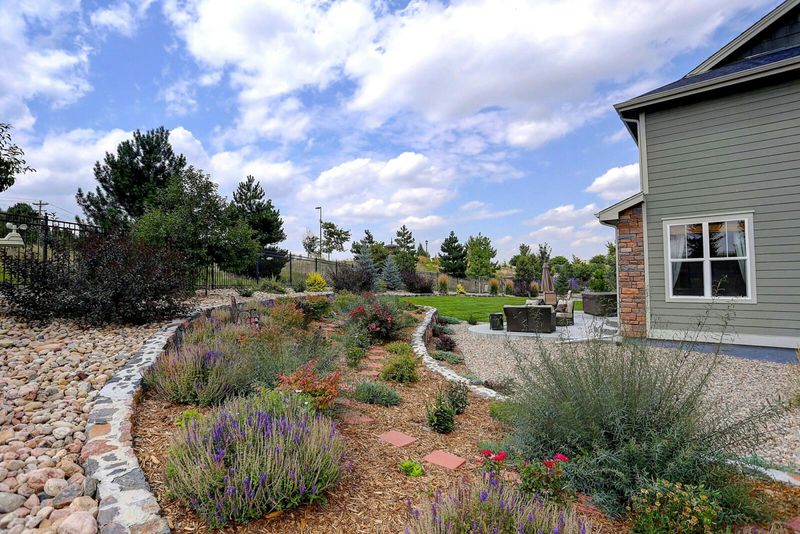
Bird food should never come at the cost of fire safety. Do not leave dry vegetation against your house to save seeds for goldfinches.
In wildfire country, that trade is not worth making.
CAL FIRE calls the first five feet around a structure the most important ember-resistant zone, and it calls for removing dead or dying plants there. For the zone from five to 30 feet, its guidance calls for clearing dead plants.
That means the fall cleanup near your walls, decks, and vents should stay thorough.
Local rules can be stricter or different from the state overview, so check with your local fire authority. Hillside and wildland-edge homes may face tighter requirements than flat suburban lots.
That leaves the farther parts of your yard for selective retention, and only where site conditions and fire guidance allow. A few healthy seed heads in a well-spaced bed, kept apart from the house and trimmed back if they dry out into a hazard, can work.
The rest of your plants, especially anything dead or diseased, still follow the usual cleanup. As extension guidance suggests, fire risk, access, and plant health can all make cutting back the better call.
Treat whatever you leave as potential food, not a promise of winter visitors. A safe yard with a few seeds is better than a risky yard full of them.