
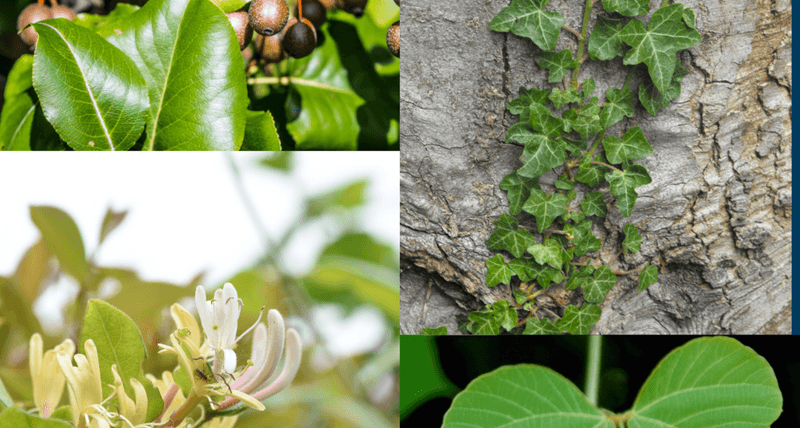
That fragrant vine climbing along your wooded edge may look harmless, but in North Carolina it is often Japanese honeysuckle, an invasive plant. It can wrap around shrubs and young trees, block their light, and crowd out native plants.
A careful plan works better than a panicked yank. Here is how to identify it, choose a method that fits your patch, and keep an eye out for regrowth.
Identify the vine before you start
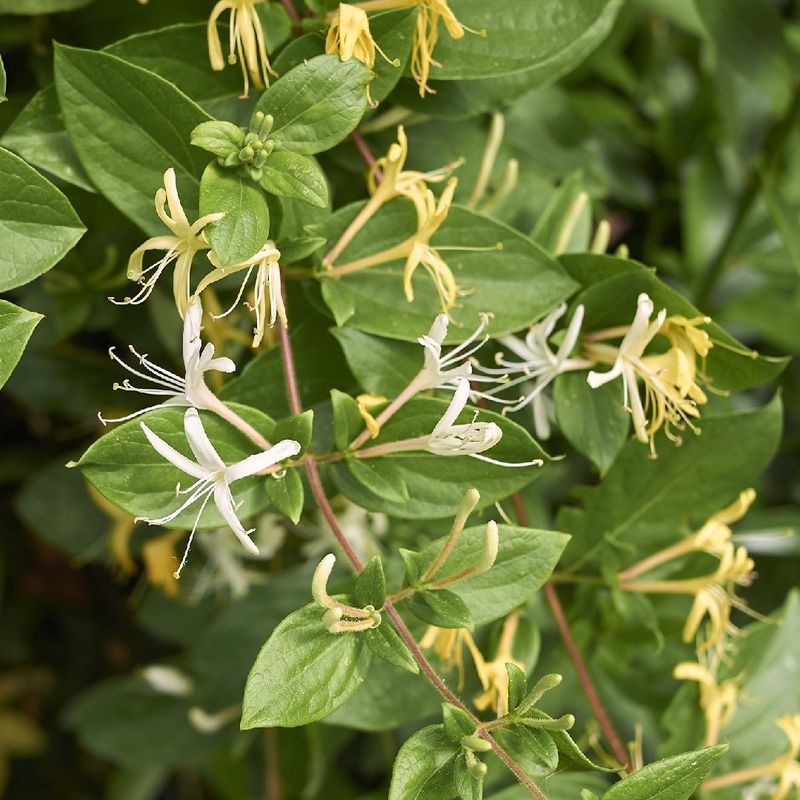
Walk up to the vine and look closely before you cut anything. Japanese honeysuckle is a twining vine, meaning its stems spiral around whatever they can reach.
Its fragrant white flowers age to yellow or buff, and early-season leaves may be lobed, according to the NC State Extension plant profile.
Plenty of vines look alike at a glance. Native Carolina jessamine and native coral honeysuckle can be mistaken for Japanese honeysuckle, especially when they are not in bloom.
Pulling out a native by mistake would defeat the whole purpose of the cleanup.
Take notes on flower color, leaf shape, and how the stems twine. Snap a few clear photos of the leaves, stems, and any flowers or berries.
If you are still unsure, bring a sample to your county Cooperative Extension office and ask staff to check it.
Confirming the plant comes first. Only after you know what you have should you pick a removal method or consider any treatment.
How Japanese honeysuckle affects a wooded edge
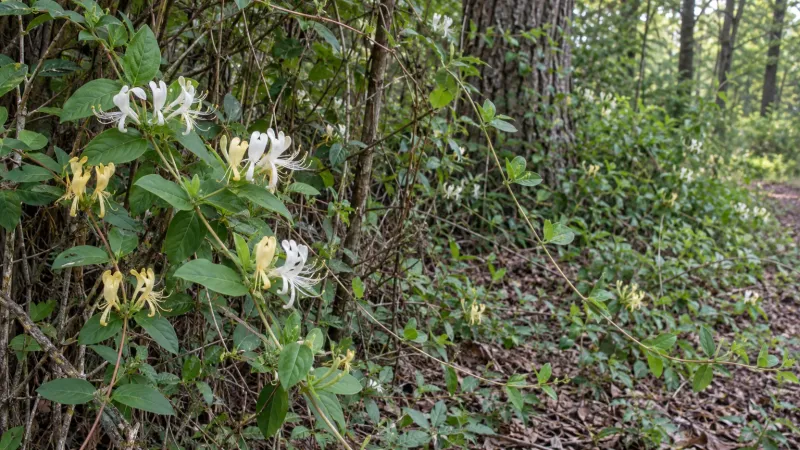
Japanese honeysuckle gets around in three ways. It spreads underground by rhizomes, along the surface by runners, and by seeds carried off by animals, as described in the NC State plant profile.
A patch can therefore widen from several directions at once.
Once the vine climbs over nearby plants, it can shade their leaves. Shaded plants have less light to work with, and that is one way the vine competes with native shrubs, wildflowers, and seedlings.
How much effect it has depends on the site and how dense the patch is, so a few stems are not the same as a thick mat.
The vine does have some wildlife value. Birds and small mammals eat its fruit, and that is exactly how seeds travel to new spots.
It is a food source and a spreader at the same time.
Do not confuse it with kudzu, another invasive vine with its own growth habits and control advice. Kudzu’s reputation for speed does not apply to Japanese honeysuckle, so judge your patch by what you actually see.
Fall can be useful, but it is not a deadline
Early autumn gets a lot of attention for weed control, and for good reason. The NC State Extension Gardener Handbook describes early fall as a good time for systemic herbicides on many perennial weeds, and its vine guidance mentions late-summer cutting and treatment.
Timing is not the same everywhere, though. NC State’s herbicide guide ties honeysuckle treatment to stages like full bloom and the month after.
A University of Georgia forestry guide lists a July to October window for certain Japanese honeysuckle treatments.
These windows depend on the method and the product. A treatment that suits one day in September may do little on a cold October morning or on a plant that has already gone dormant.
Read the label of any product you choose and follow its timing, weather limits, and site restrictions. Your county Extension office can tell you what works locally.
Fall is a useful opportunity, but plan around the method rather than the calendar.
Remove small patches without harming nearby plants
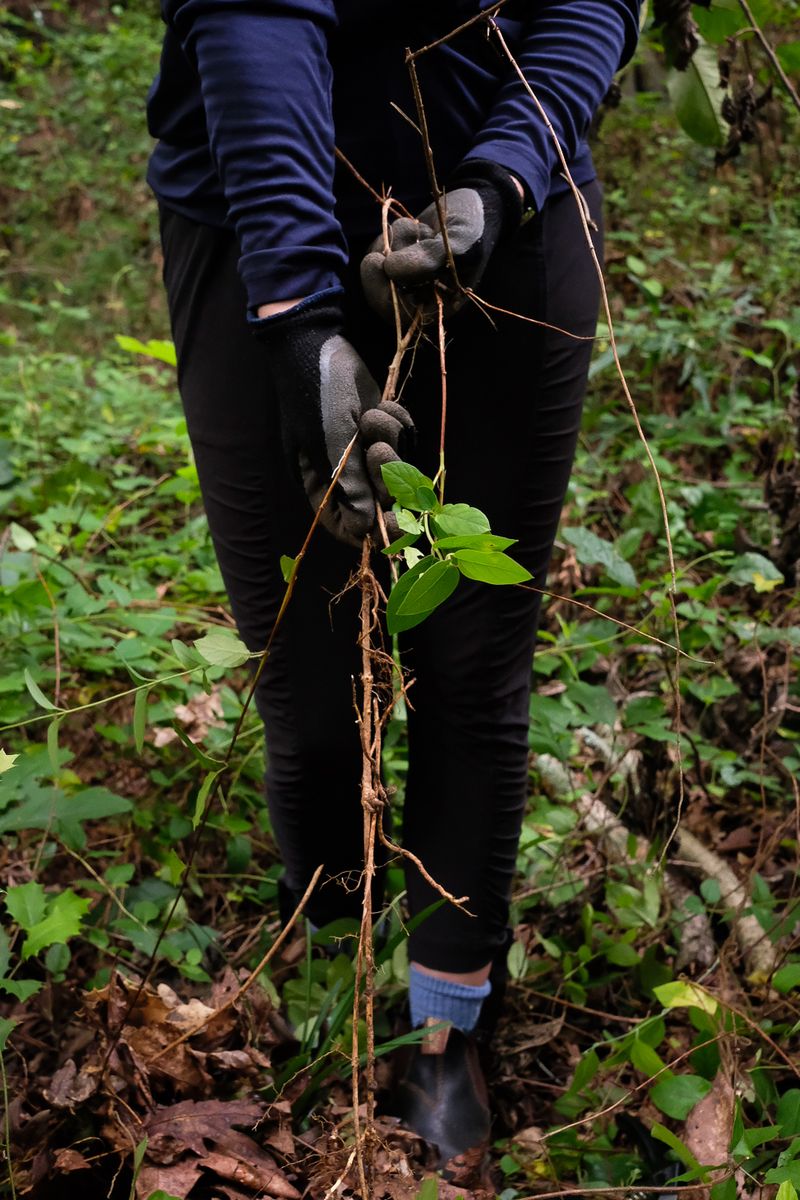
A small patch is the easiest to handle by hand. Wear gloves and start at the base.
The NC State handbook describes carefully unwinding vines from plants, pulling roots where feasible, and cutting vines to ground level.
Cut first, then unwind. Snipping the stem near the soil lets you ease off the lower, accessible growth without tugging on the plant underneath.
Work gently and stop if a stem resists.
Skip the dramatic yank. Intertwined vines in a tree crown can tear branches or bark when pulled, and UGA Extension warns against pulling large vines down from above chest height.
Falling vines can also hurt you.
Leave anything you cannot reach safely. Stems cut at the base and left in the canopy will wither over time, and you can remove the dead growth later without stress on the host plant.
Bag or discard pulled roots and fruit rather than composting them.
Manage larger patches with follow-up
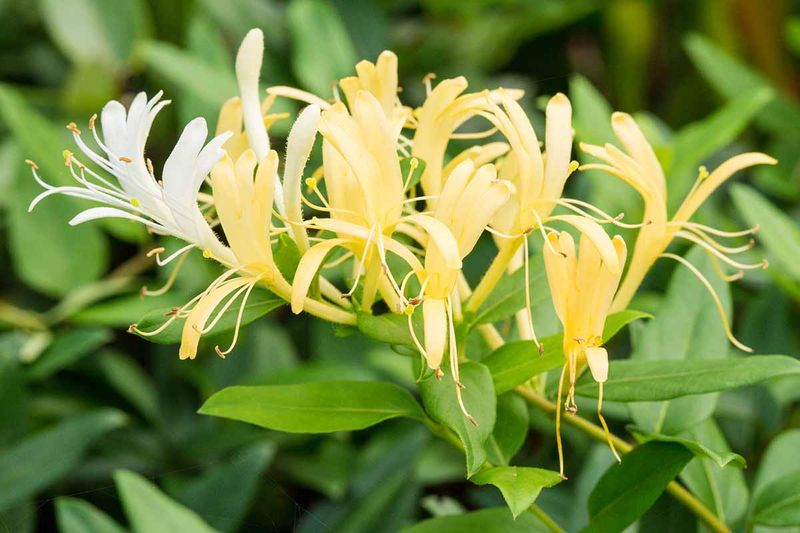
Bigger patches take a longer game plan. For these, NC State suggests cutting growth back, letting it regrow, then spot-treating the new growth as directed, according to its weeds chapter.
One cutting does not eliminate an established patch.
If you decide to use an herbicide, the choice matters. Non-selective products can injure any green plant they touch, as noted in NC State’s herbicide publication.
The EPA’s glyphosate page describes it as broad-spectrum, which is why drift onto neighboring plants is a real concern.
Broad spraying is not a safe default on a wooded edge full of plants you want to keep. Treat only the vine, and follow the product label for use sites, mixing, and application.
Your county Extension office can help you weigh options.
Kudzu control is a separate topic and can take years of follow-up. Keep that guidance apart from your honeysuckle plan, and expect to revisit the patch more than once.
Consider a native honeysuckle for the space
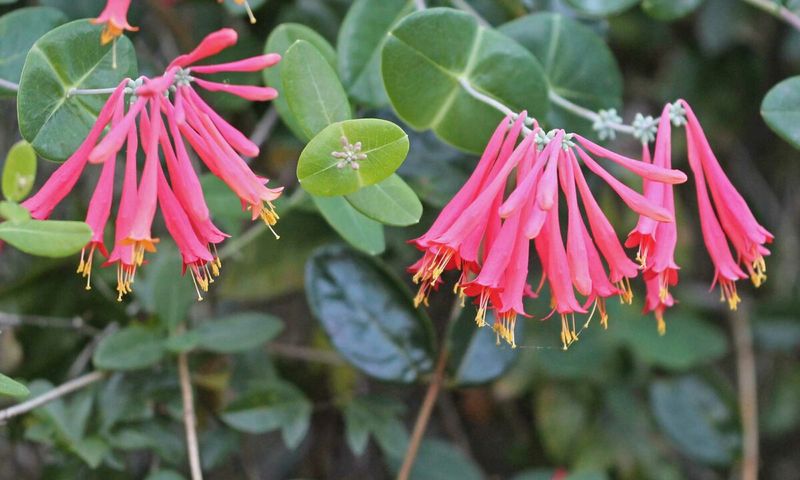
If you want a flowering vine where the invasive one used to grow, coral or trumpet honeysuckle (Lonicera sempervirens) is a North Carolina native worth a look. The Vascular Plants of North Carolina database notes that it occurs in the state and describes its red tubular flowers.
Those blooms are a clear clue once the vine flowers. When it is not blooming, it can be confused with Japanese honeysuckle, so keep a flowering shot or a labeled plant tag handy before you cut anything nearby.
Treat it as one option rather than a perfect answer. Check the light, soil, and space at your site, and give it a sturdy trellis or fence rather than a tree you want to protect.
Your Extension office or a local native plant nursery can help you decide whether it fits.
Check the edge for regrowth
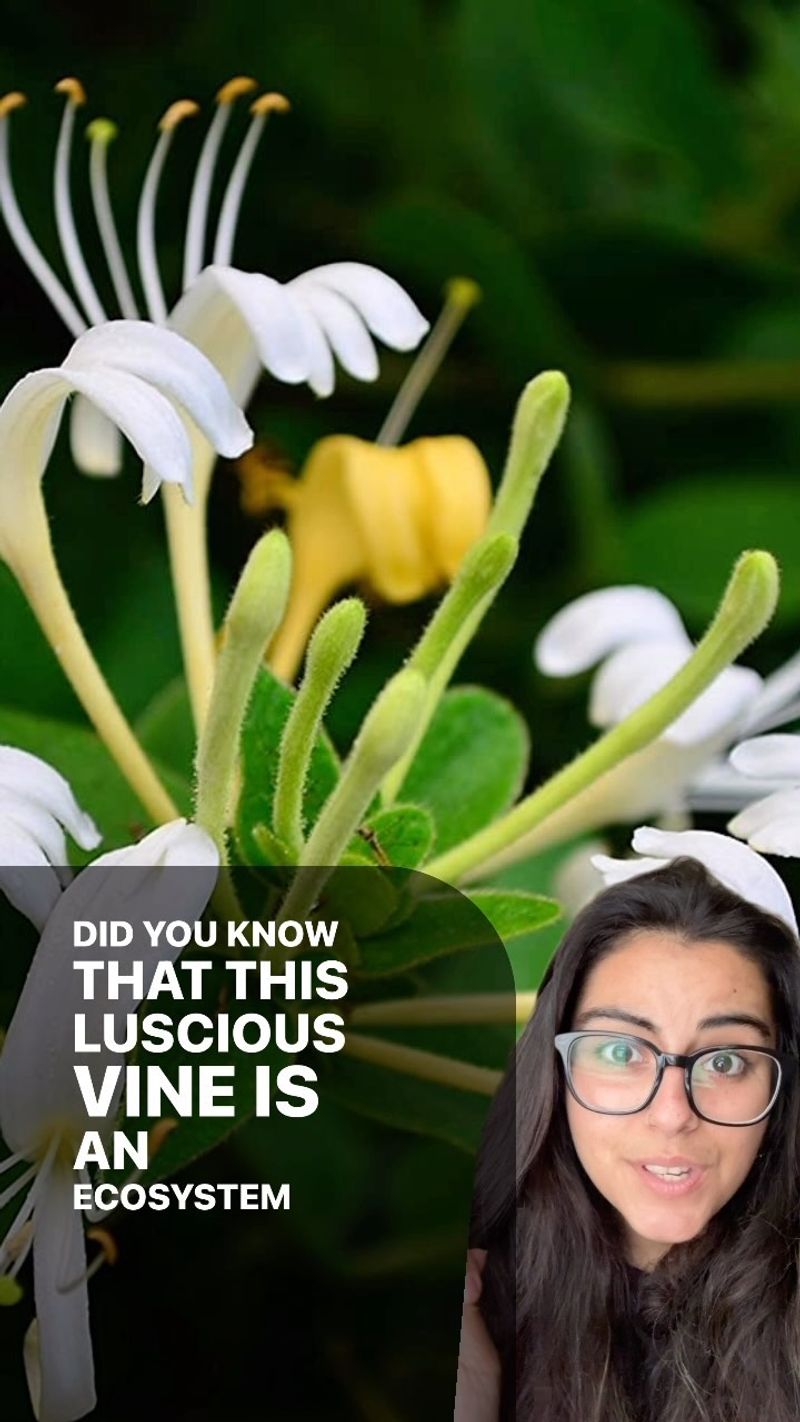
Cleanup is rarely finished in one afternoon. Confirm the plant with the NC State plant profile, pick a method that fits the size of the patch, and walk the edge again in a few weeks.
New shoots from roots and runners are common, and the handbook’s cut, regrow, and spot-treat approach expects them.
Fall may give you a good window for some methods, though it is no hard deadline.
A vine that gets checked every month rarely gets the chance to settle in again.