

Those pots of fall mums look great for a few weeks, and then the blooms fade and many get tossed. Some of them, though, can come back if you treat them right.
In North Carolina, one simple habit after the flowers fade can give a hardy mum a better shot at surviving winter. Here is what to do, what to skip, and what to expect.
Not every fall mum is a dependable perennial

Walk through any North Carolina garden center in October and you will see mums in every color. They all carry the same name, but they are not all the same plant.
Some are hardy garden types meant to live in the ground for years, while others are bred mainly to look good in a pot for one season.
NC State Extension’s plant toolbox separates hardy garden types from exhibition and florist types. It also notes that some commonly sold charm and cushion types are bred for pot culture.
The same page cautions that some mums do not reliably return to bloom, especially in the Southeast.
Timing matters too. A mum that is already covered in blooms when you plant it in fall has less time to settle its roots before winter.
Iowa State Extension warns about this in its much colder climate, so treat it as a general caution and not as a survival rate for the mountains, Piedmont, or coastal plain.
Check the plant tag for words like hardy or garden mum. If the tag says nothing, enjoy the plant as seasonal color and consider anything that comes back a bonus.
Setting your expectations here makes the care steps that follow feel much more worthwhile.
What should you do after the blooms fade?
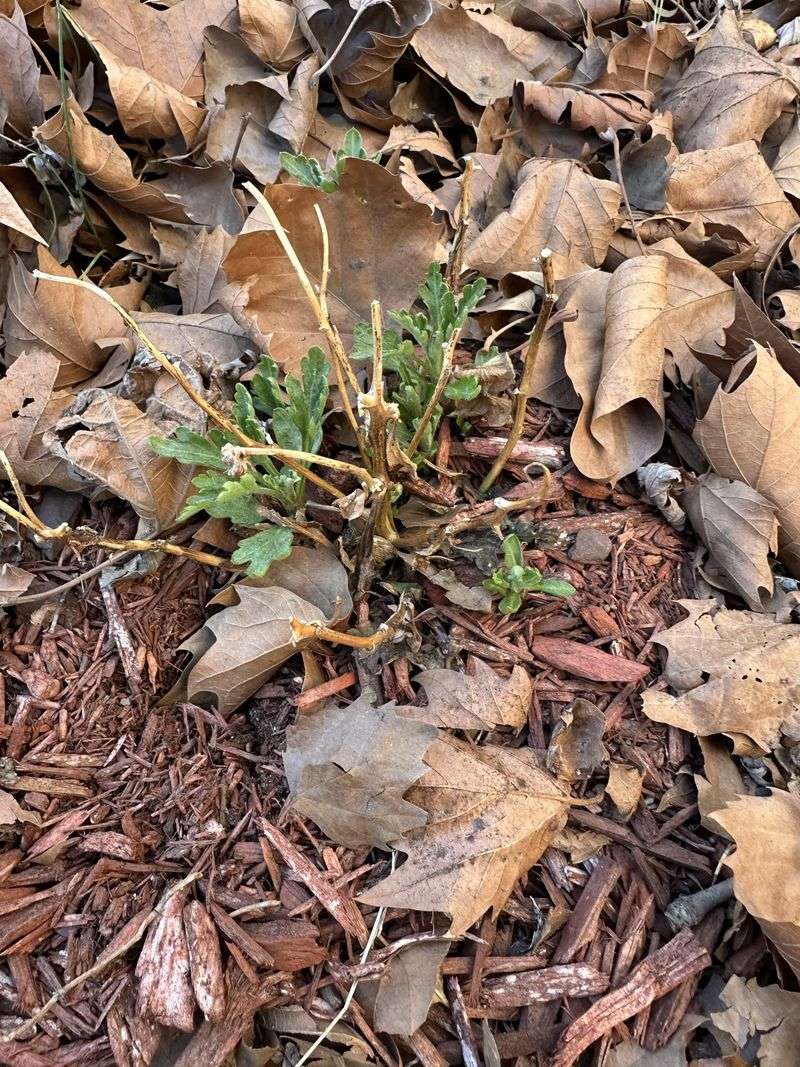
Here is the step that gives an established, in-ground hardy mum its best odds: leave the spent stems standing through winter. Wait until spring, when fresh green growth appears at the base, and then cut away the dead material.
Both Iowa State Extension and UNH Extension recommend waiting until spring to remove old stems. Iowa State reports better survival when the old growth stays in place.
Not every source agrees on the exact timing. Penn State Extension describes cutting mums to the ground after a hard frost.
So leaving stems is a conservative, well-supported option, not the only published method.
Keep in mind that this advice is about old stems. Snipping off faded flowers for looks will not make the plant bigger next year, and neither step guarantees the mum will return.
If the brown stems bother you, a layer of mulch around the base can tidy the look. Spring cleanup takes only a few minutes with hand pruners.
A good planting spot improves the odds
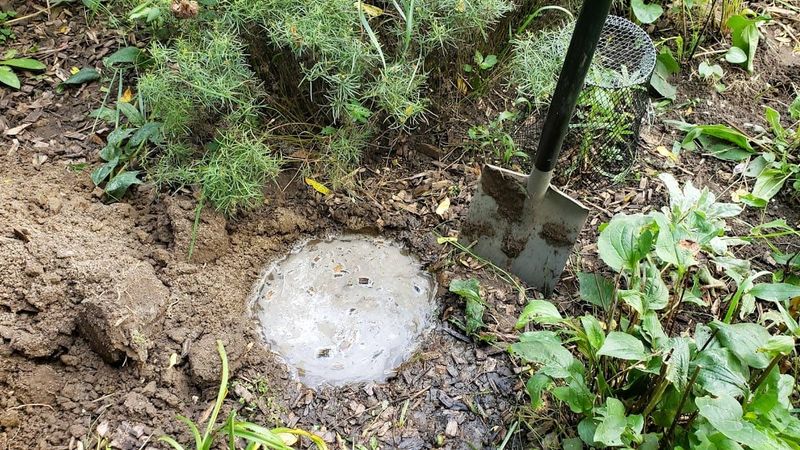
Where a mum lives can matter as much as what you do with the stems. A spot with plenty of sun and soil that drains well gives the plant a healthier start, according to NC State Extension.
Soggy ground is the troublemaker. Mums have shallow roots, and UNH Extension notes that poor drainage and winter freeze-thaw cycles can damage them.
Wet clay that sits cold and heaves with temperature swings is hard on those roots.
A simple test helps. Dig a hole about a foot deep, fill it with water, and see whether it empties within a few hours.
If water lingers, try a raised bed or mix compost into the soil to loosen it. Red clay in much of the Piedmont often needs this kind of help.
Choose a place that gets full sun for most of the day and avoid low spots where rain pools. These conditions support a healthy plant, but they do not guarantee that a particular mum will make it through a North Carolina winter.
Spring cleanup and summer pinching do different jobs
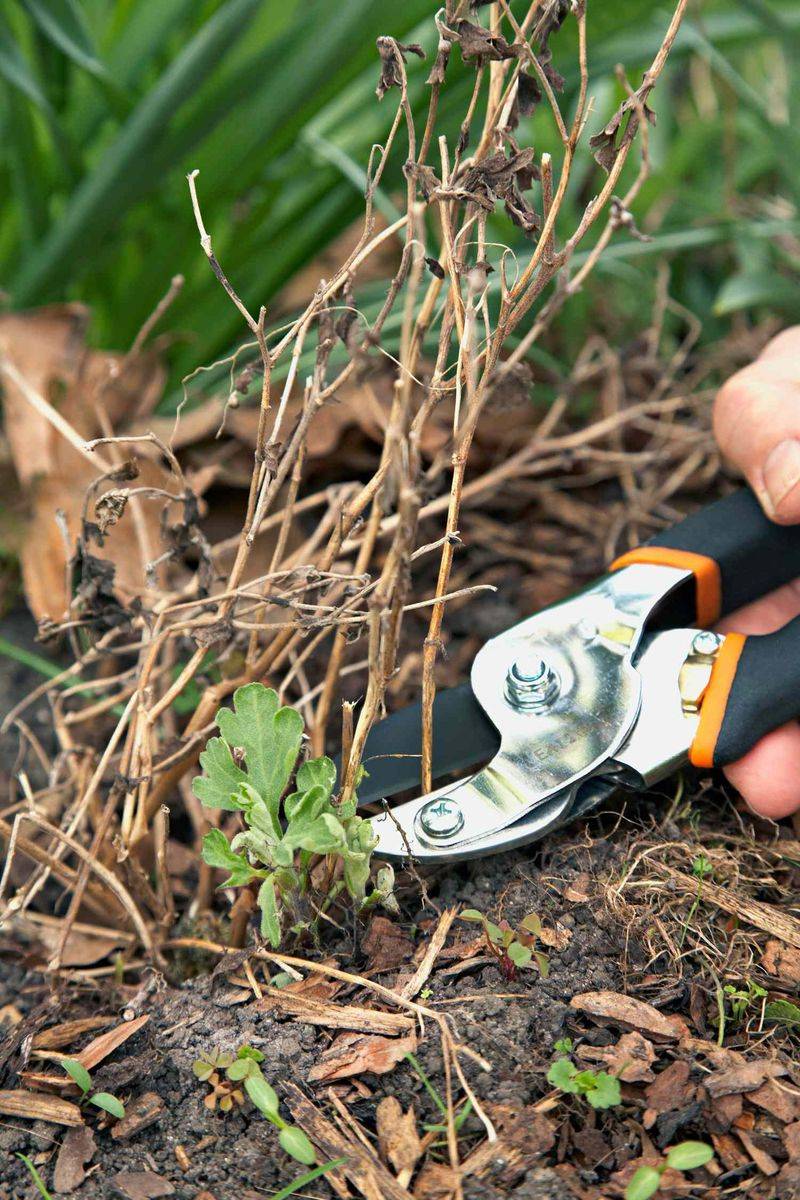
Two separate chores happen in the warm months, and they should not be mixed up. Spring cleanup comes first: once new shoots show at the base, cut away the dead winter stems so the fresh growth has room.
Pinching comes later and has a different purpose. Removing the tips of new shoots as they grow can encourage a bushier plant with more flowers.
Iowa State Extension advises pinching until early July, and UGA Extension suggests starting when plants are about 6 inches tall and continuing to early July in Georgia.
Treat early July as a general guide drawn from those two states. It is not an exact deadline tested for North Carolina, so a mountain gardener and a coastal gardener might adjust a little.
The NC State plant toolbox is a good place to check cultivar details.
A practical routine is to pinch the top inch or so of each shoot every few weeks through early summer. Pinching shapes growth and can improve flowering, but it does not guarantee a larger plant the following fall.
Crowded clumps may need dividing
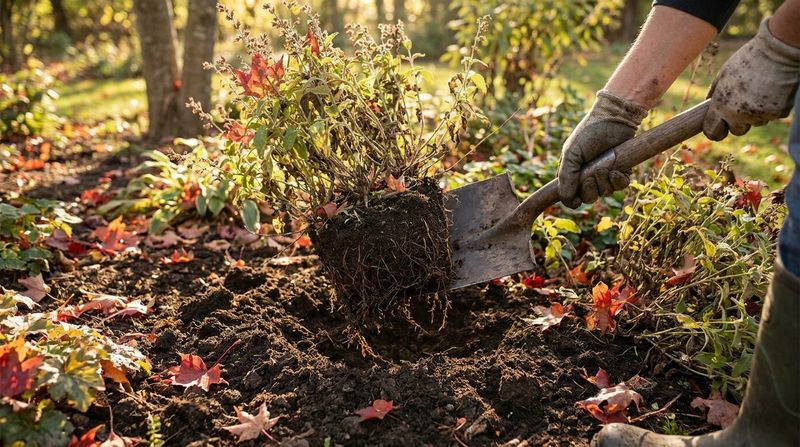
Division is its own decision, and only a surviving mum that has grown crowded needs it. If the center looks thin or the stems are packed tightly, dividing can refresh the clump.
Spring is the time to do it, when new growth is just emerging. Lift the clump, pull or cut it into sections that each have roots and shoots, and replant them at the same depth in well-drained soil.
Advice on how often varies. Iowa State Extension recommends dividing garden mums every two or three years, while Penn State Extension says every three to five years.
A young mum that is still filling in does not need the shovel. Dividing is upkeep, and it will not promise more blooms or a bigger plant.
Share extra sections with a neighbor or tuck them into another sunny, well-drained corner.
The realistic payoff is a better chance of return
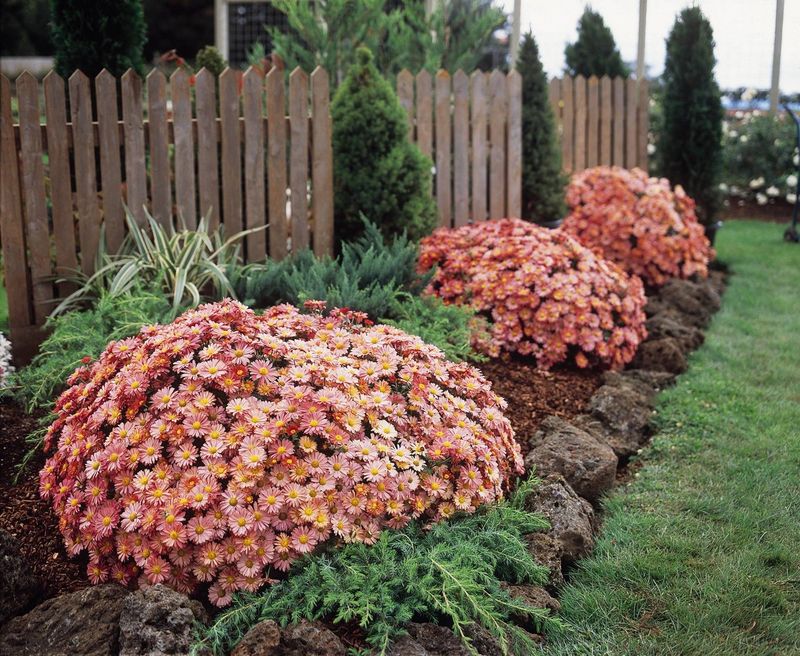
For an established hardy garden mum, the plan is simple: leave the stems through winter, tidy dead growth in spring, and pinch later if you want a bushier shape. Iowa State and NC State both back the care, though survival and size still depend on plant type, conditions, and your care.
The payoff is better overwintering odds, not a promise. Some years you will find green shoots in March, and some years you will find bare soil.