
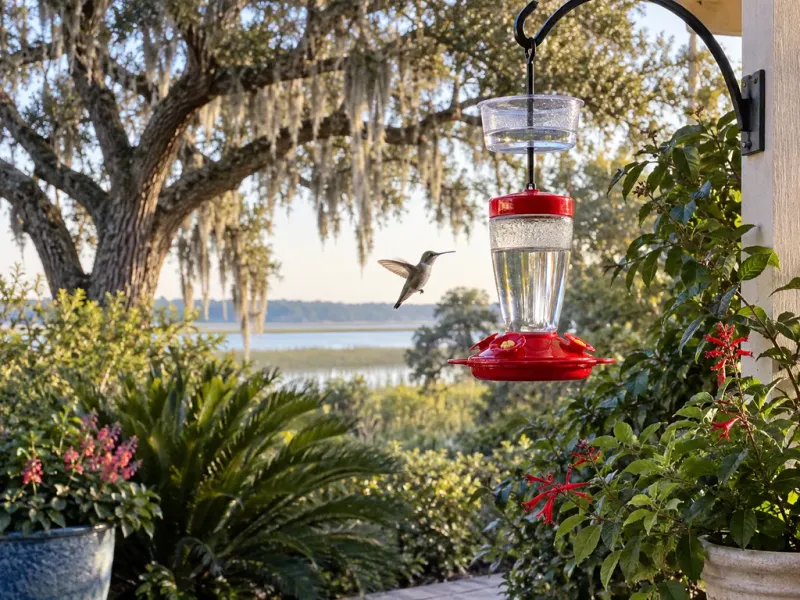
When the evenings turn chilly, many California yards still have hummingbirds zipping around the feeder. Fresh nectar matters because sugar water can spoil faster than you might expect.
The right swap schedule depends on more than the thermometer at midnight. Here is how to build a simple routine that fits your yard and the birds that visit it.
California’s winter visitors and feeder advice vary by region
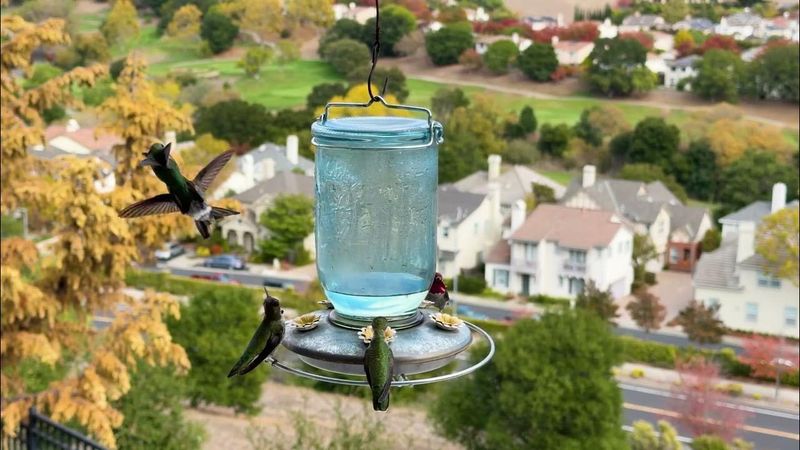
Winter hummingbird traffic is not the same from one California yard to the next. The U.S.
Fish and Wildlife Service describes Anna’s Hummingbirds as year-round residents in much of the state, and the California Department of Fish and Wildlife range map shows that their year-round presence varies by region. Other species have different seasonal patterns, so a bird at your feeder in December does not mean every hummingbird in the state stays put.
Many people worry that a feeder will keep birds from migrating. Federal guidance on feeding wild birds says there is no evidence that feeding after Labor Day delays migration.
The same guidance cautions against tempting birds to stay beyond their normal departure dates, and it recommends removing feeders in places with subfreezing winters.
Audubon takes a slightly different angle, saying feeders can stay up while hummingbirds are present. Those two pieces of advice fit together once you look at your own location.
That is why the rest of this article gives conditional guidance for people who keep a feeder out, not one rule for the whole state.
Use a practical service interval, not a nighttime rule
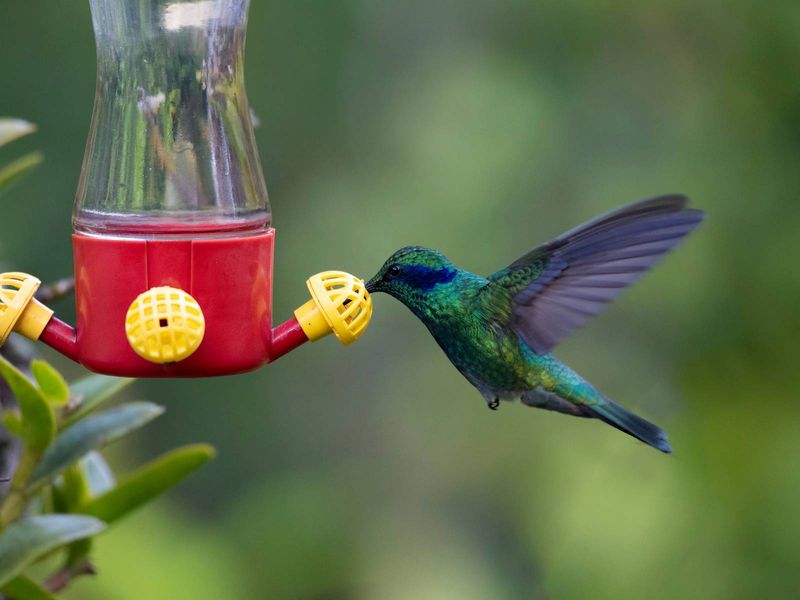
Here is the short version for anyone keeping a feeder out while hummingbirds are visiting. In genuinely cool weather, empty, clean, and refill it about twice a week.
In milder conditions, plan on every two to three days, or sooner if the nectar looks off.
Published advice differs a bit, which is a good reminder that these are practical ranges, not precise scientific cutoffs. Audubon suggests about every three days in temperate weather and twice weekly in cooler weather.
UC Marin Master Gardeners recommend every two to three days and more often when temperatures climb above 65°F.
Swapping nectar means more than pouring in something new. Empty the feeder, clean it, and only then refill it.
Topping off old nectar mixes fresh sugar water with a solution that has been sitting, and that defeats the purpose.
Notice that none of these schedules depend on how cold it gets after dark. A cool night is the season’s backdrop, but the interval comes from what your feeder experiences during the day.
Adjust for daytime warmth, sun, use, and nectar condition
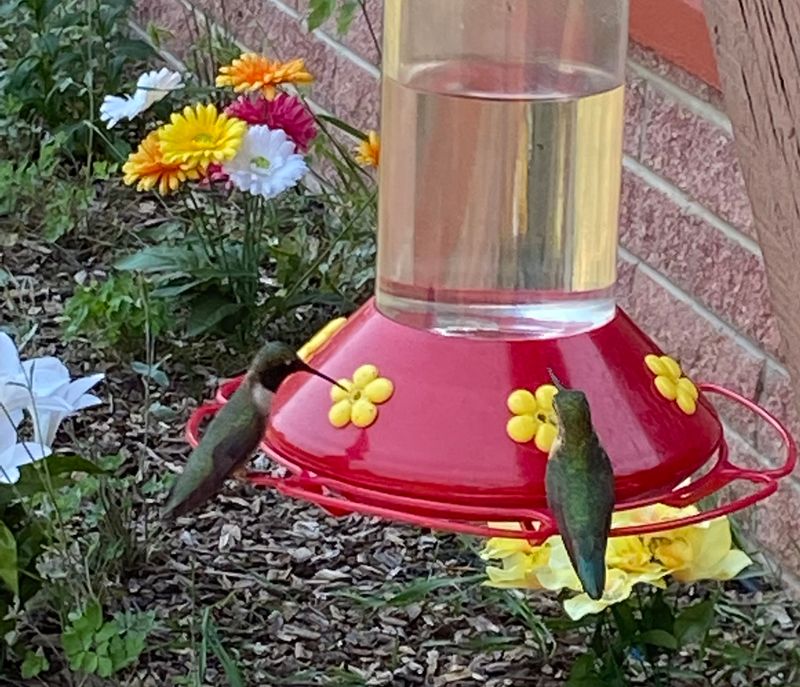
Picture two feeders on the same street. One hangs in a sunny spot where afternoons reach the 70s, and the other sits in shade on a cool porch.
The sunny feeder will usually need service sooner, so treat the twice-weekly baseline as a starting point and not a promise.
Mild or warm days, direct sun, and heavy use all push you toward the shorter end of the range. UC Marin Master Gardeners call for more frequent cleaning when temperatures rise above 65°F.
A feeder that empties fast is also turning over nectar quickly, though a busy feeder still deserves a close look.
One small study gives a useful hint about why sun matters. A Bulletin of the Oklahoma Ornithological Society study found that temperature and light affected the clarity of feeder solutions at its study site.
It came from one Oklahoma location, so it does not set a replacement interval for California.
Your eyes are the best tool. If the nectar looks cloudy or you spot mold, clean the feeder and replace the nectar right away, no matter what day it is on your schedule.
Clean the feeder before every refill
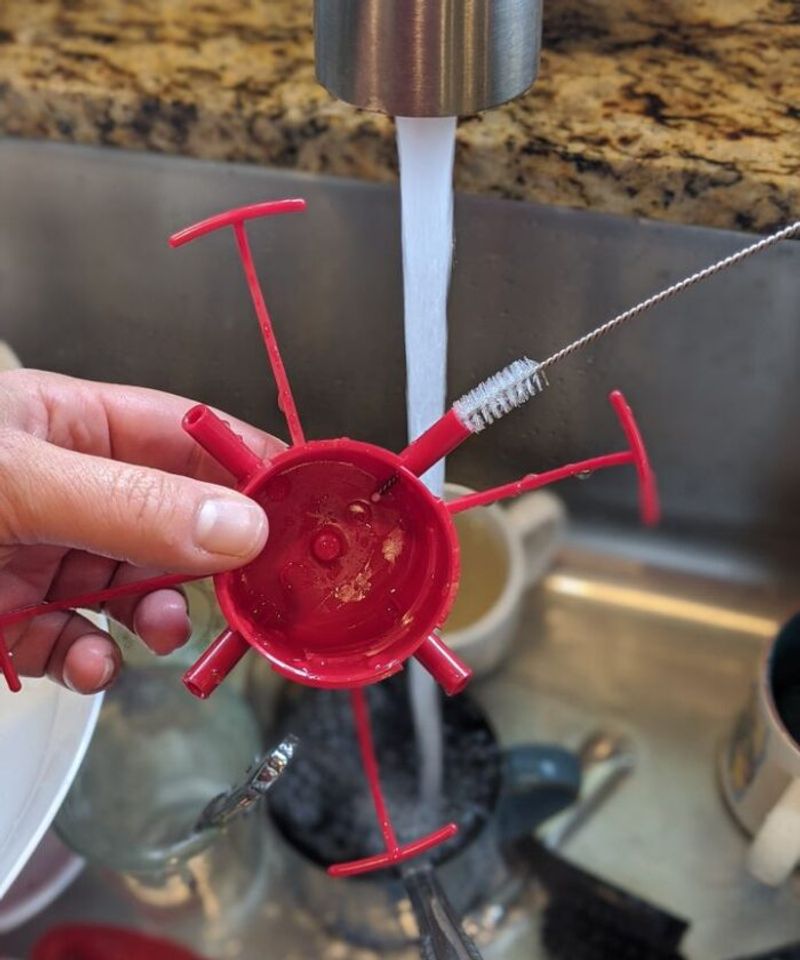
A good cleaning routine takes only a few minutes. Pour out the old nectar, take the feeder apart, scrub every part, and rinse it thoroughly.
Refill only once it is clean.
Skip the temptation to top off. Audubon advises emptying and cleaning feeders before refilling, and checking them regularly for mold or cloudiness.
If either shows up, clean right away.
Feeders do collect microbes. A study of microbial communities in hummingbird feeders found that they differ from those in floral nectar, but it also cautions that the effects on hummingbird health remain uncertain.
That means not every change in the nectar is proven to be toxic, though a clean feeder is still the sensible goal.
Cleaning agents are where advice splits. UC Marin Master Gardeners allow detergent or a little bleach with thorough rinsing, and warn never to mix the two.
Audubon suggests hot water with hydrogen peroxide or weak vinegar and advises against dish soap.
With that range of opinions, the safest path is to follow the feeder maker’s instructions. Scrub well, rinse until no trace of cleaner remains, and let the brush do the heavy lifting.
Mix a simple sugar solution and store extra safely
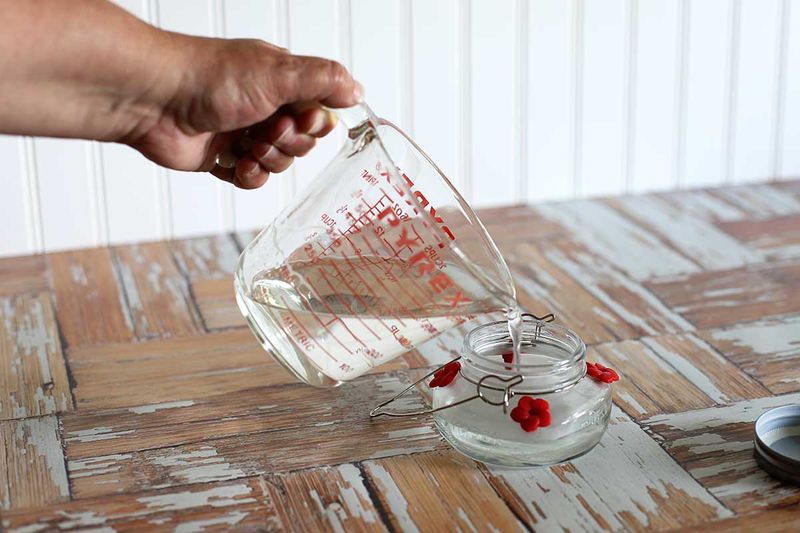
The best nectar is also the plainest. Stir one part refined white sugar into four parts water, as recommended by both Audubon and UC Marin Master Gardeners.
A cup of sugar with four cups of water is an easy example.
Make only as much as you will use soon. Extra solution belongs in the refrigerator in a clean, covered container, so a batch can cover a couple of refills without sitting on the counter.
Leave out honey, artificial sweeteners, and added supplements. None of them are needed, and plain sugar water is the standard recommendation.
Red dye is also unnecessary. Sources disagree on whether it could be harmful: Audubon warns it might be, while the U.S.
Fish and Wildlife Service says there is no evidence that it harms hummingbirds. Both agree you do not need it, and the red parts of most feeders already catch the birds’ attention.
Handle freezing separately from nectar freshness
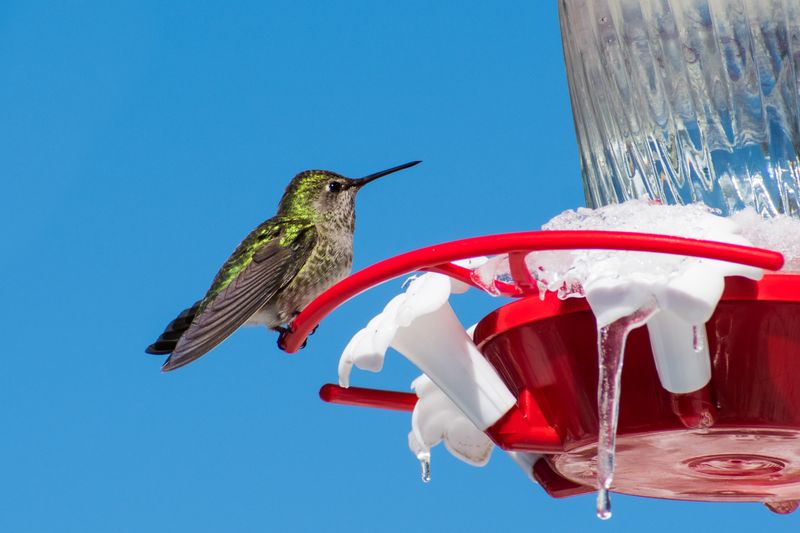
Freezing and spoilage are two different problems. Fresh nectar can still freeze, and old nectar can spoil on a mild day.
Where temperatures regularly drop below freezing, people who keep a feeder out should make sure the nectar does not freeze.
Audubon notes that slightly subfreezing temperatures may not freeze sugar solution, and that cold nectar itself does not appear to cold-stun hummingbirds. The practical concern is ice in the feeder.
It is also fair to remember the other side. The U.S.
Fish and Wildlife Service recommends removing feeders in places with subfreezing winters. That is separate from the advice for people who keep one out, and neither one is a rule for all of California.
Feeders also only supplement a hummingbird’s diet. UC Marin Master Gardeners point out that hummingbirds need insects for protein and recommend native flowering plants.
A winter bloom beside the feeder can do quiet work all season long.