
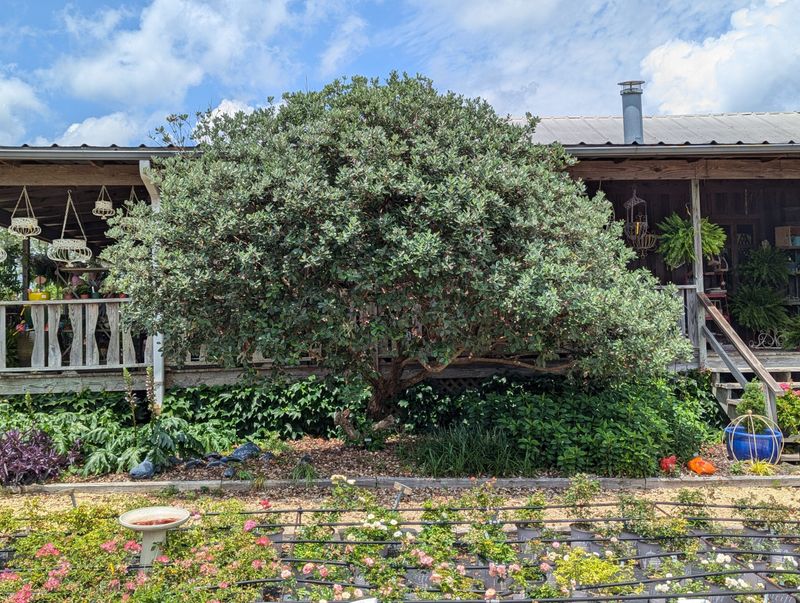
Pineapple guava, also called feijoa, is an evergreen plant with silvery leaves, bright flowers, and green fruit that can ripen from fall into early winter. It has been grown in California for a long time, often just as a pretty landscape plant.
Some yards can give it what it needs, and others cannot. Here is how to tell which kind of yard you have and how to grow it well.
What pineapple guava offers California gardeners
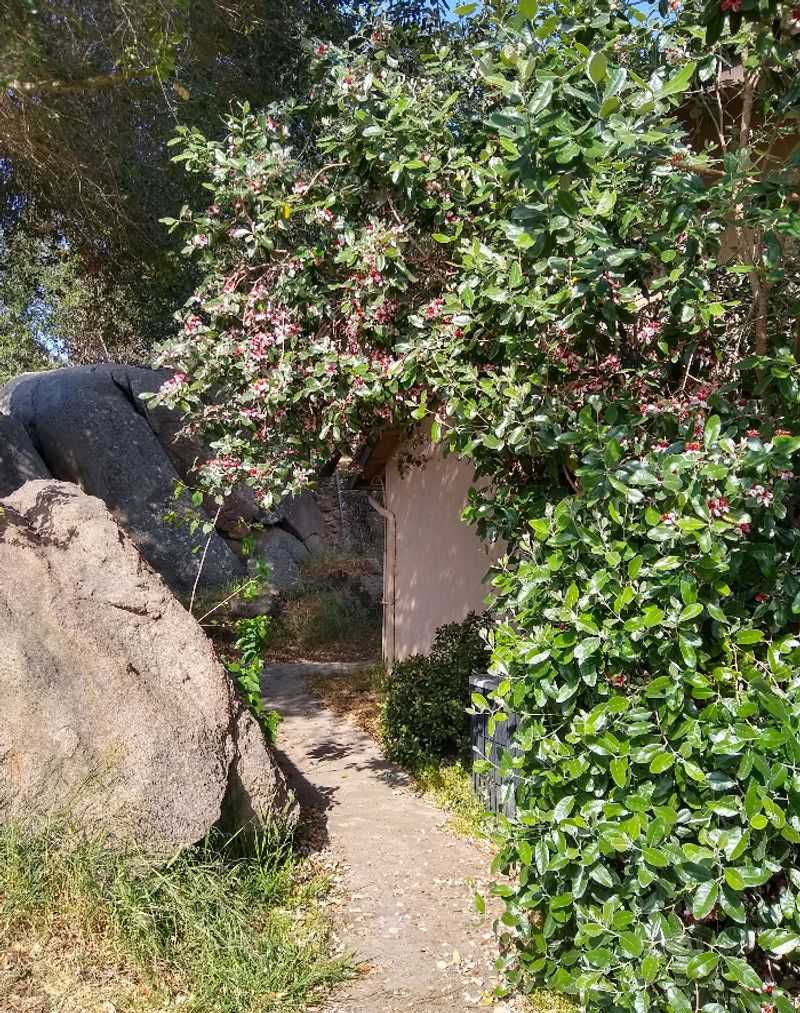
Pineapple guava (Acca sellowiana), also known as feijoa, earns its spot in a yard twice. It is an evergreen plant that looks good all year, and it can also produce fruit.
Gardeners who plant it for looks alone often find the edible side is a pleasant bonus.
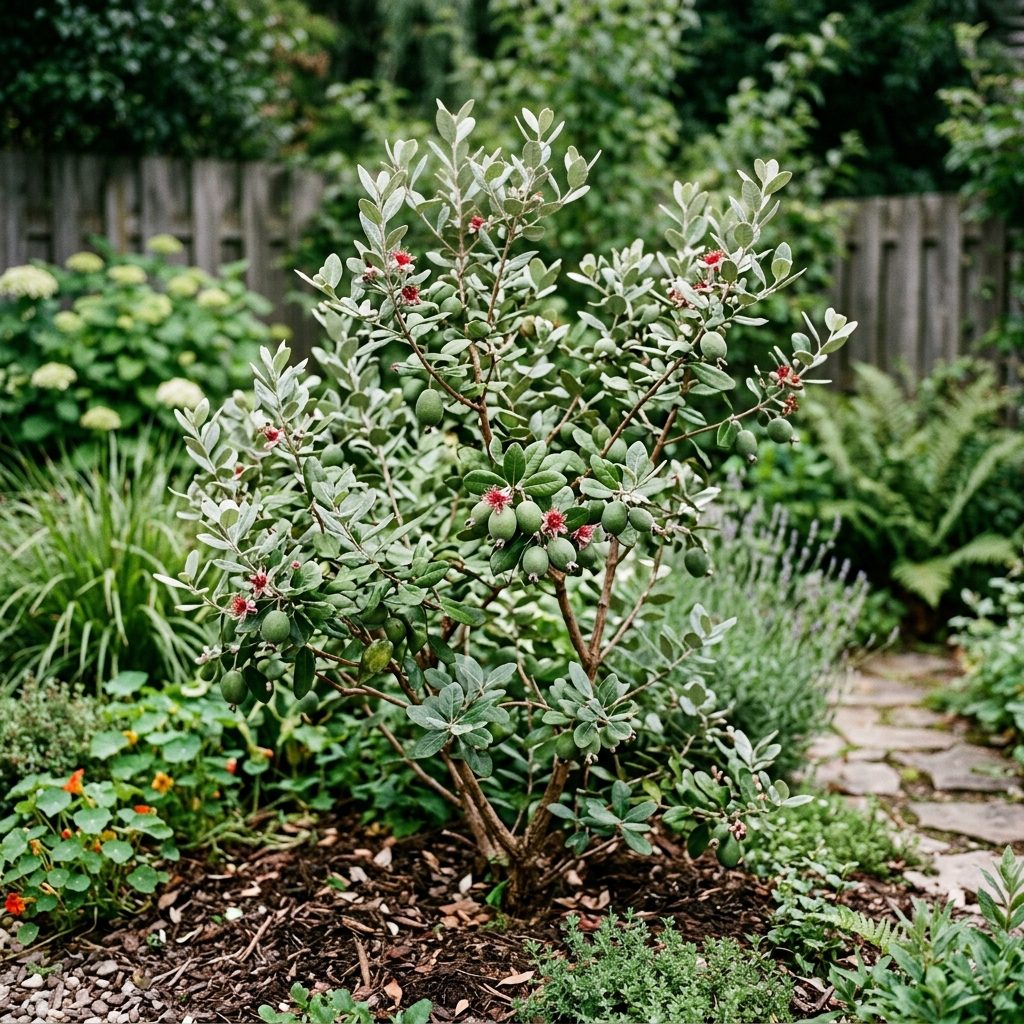
The flowers are the showiest part. They have fleshy petals with a bright red center of stamens, and the petals are edible too.
Some people toss them into salads or eat them straight from the shrub, though the plant’s main value is as a landscape shrub that happens to flower.
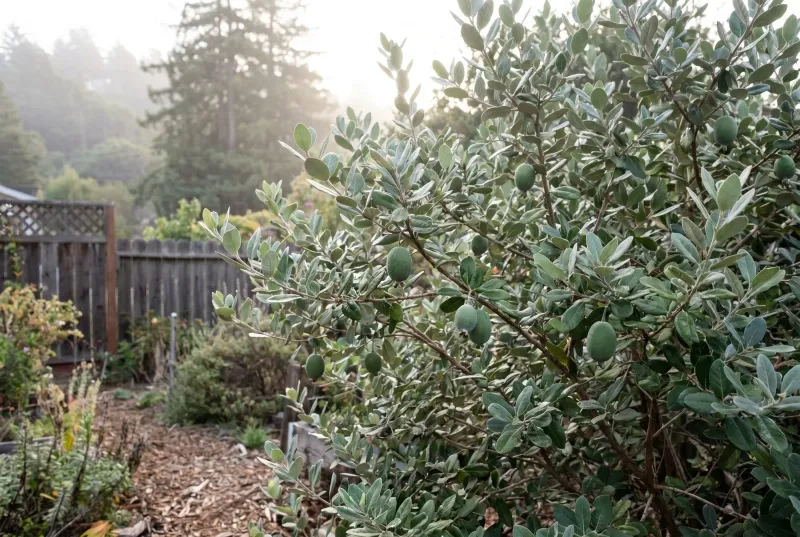
The fruit is green, oval, and a bit like a small egg. Its flavor is often described as a mix of pineapple, guava, and mint.
UC Master Gardeners in Sonoma County describe it as a long-lived evergreen that works as a shrub, hedge, or small tree, which gives you several ways to use it in a design.
Timing is where expectations need care. A UC Cooperative Extension article gives October through December as a typical California ripening period.
Meanwhile, UC Cooperative Extension in Ventura County lists several varieties as ripening anywhere from September to January.
That spread shows how much the harvest can shift by location, variety, and season. In some California yards, fruit may hang on into early winter.
In others, the crop may come earlier, come late, or fall short in a rough year. Think of it as a seasonal possibility, not a guarantee, and plan the plant as a good-looking shrub first.
Check your local climate before planting
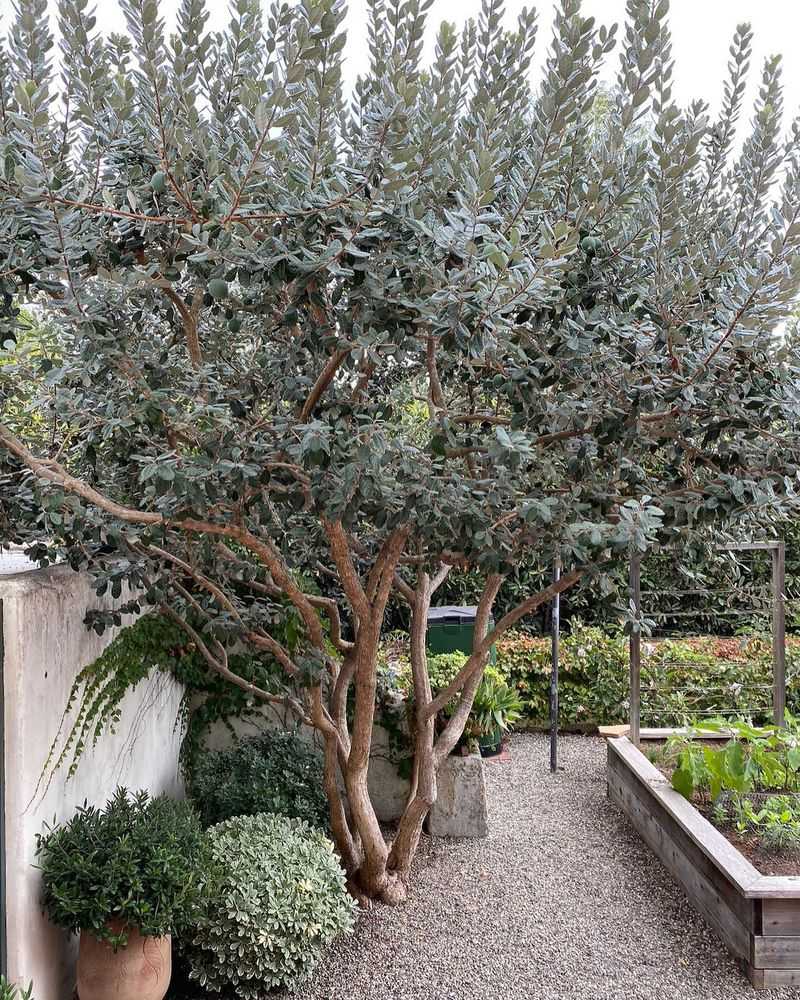
California covers a lot of climates, so a plant that thrives in one town can struggle in another. Feijoa generally does better where winters are mild and summers are moderate than in places with extreme heat or severe cold.
Coastal and some inland areas with gentle weather tend to fit best.
Heat matters most during fruit development. California Rare Fruit Growers notes that hot conditions can worsen fruit quality, and that sudden fall frosts can damage fruit before it is ready to pick.
So a hot valley or a frost pocket in a low spot may give you a very different result than a breezy coastal slope.
Numbers can help you judge risk, as long as you treat them as rough guides. UF/IFAS flags heat injury above 100 degrees F and fruit injury below 28 degrees F.
Those are source-reported figures from Florida, not promises for every cultivar or every California yard.
A simple check is to think about your own record. How often do summer highs pass 100 degrees where you live?
Does frost arrive early in fall? Watch your microclimate too, since a wall that holds warmth or a spot sheltered from wind can shift conditions by a few degrees.
If your yard sits at the hot or cold edge, you can still try one plant, but expect the fruit to vary from year to year.
Choose a form and site that fit your yard
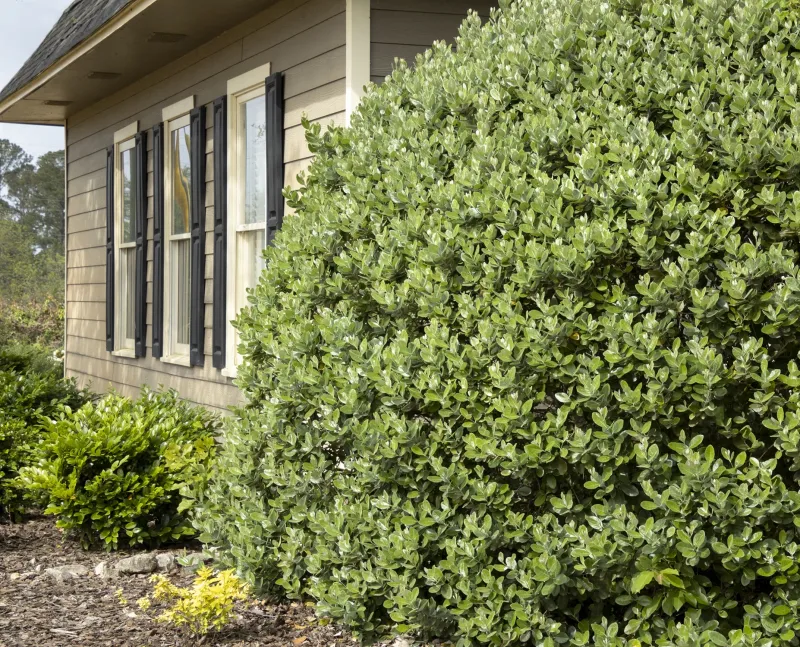
Picture the plant before you buy it. Pineapple guava is commonly a multistemmed shrub, yet it can be trained into a small tree by keeping a few main trunks.
It also works as a informal hedge or screen along a fence.
Mature size depends on the selection and how you prune it, so check the label and ask the nursery about the one you are buying. UC Master Gardeners in Sonoma County describe a range of forms.
UF/IFAS also describes it as a shrub or small tree. Leave room for the form you want, so you are not fighting the plant with shears every month.
Drainage deserves the most attention. California Rare Fruit Growers recommends well-drained soil and notes that feijoas tolerate a range of soils.
If water pools after a winter storm, pick a different spot or plant on a gentle mound.
UF/IFAS lists a preferred pH range of 5.5 to 7.0. That is a general guide from a Florida source, not a California rule, so use it as a starting point if you plan to test your soil.
Establish the plant before easing irrigation
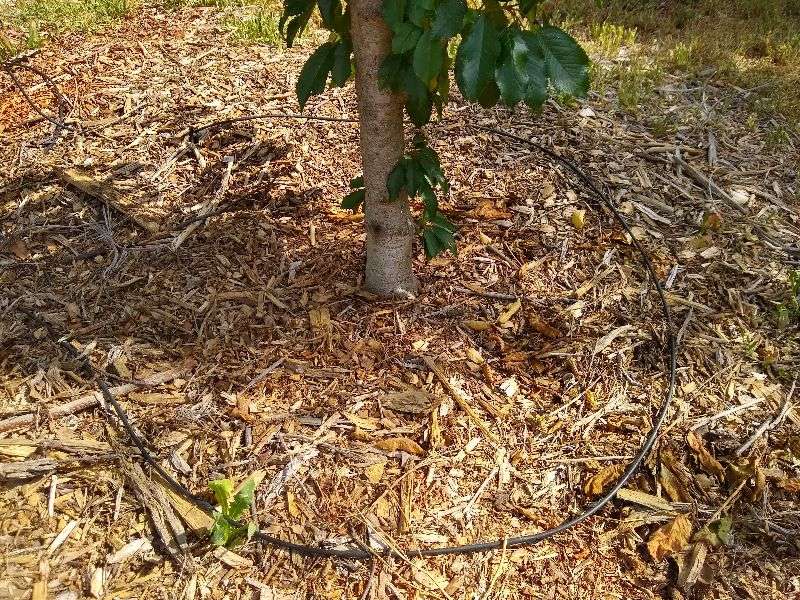
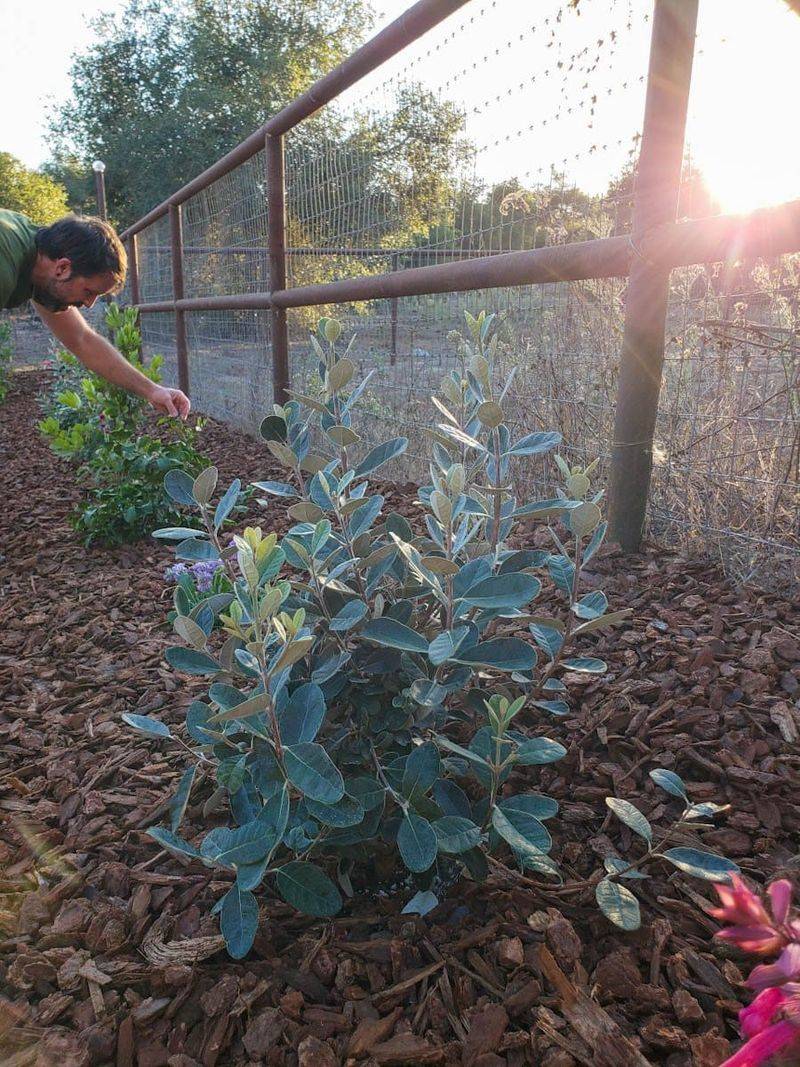
A new plant is not the same as an established one. Young pineapple guava has a small root system that has not yet spread into the surrounding soil.
Until it does, it relies on you for water, even if the mature plant will later handle dry spells better.
Treat planting day as the start of a watering routine, not a finish line. UC Master Gardeners in Sonoma County describe the plant as drought-tolerant once established, which means the key word is once.
Before then, the soil around the roots should not be left to dry out fully.
Drip irrigation is a natural fit for California yards because it puts water at the root zone and wastes less. UC Master Gardeners of Sonoma County offer guidance on setting up drip for different landscape situations, and it can be adapted to a young shrub or tree.
A layer of mulch over the root zone can also help soil hold moisture.
No single schedule fits every yard, because soil, weather, and plant size all change the need. Check the soil a few inches down, and water when it feels dry there.
California Rare Fruit Growers also recommends regular water for good growth. Ease off gradually as the plant shows steady new growth.
Drought tolerance does not mean a crop without water
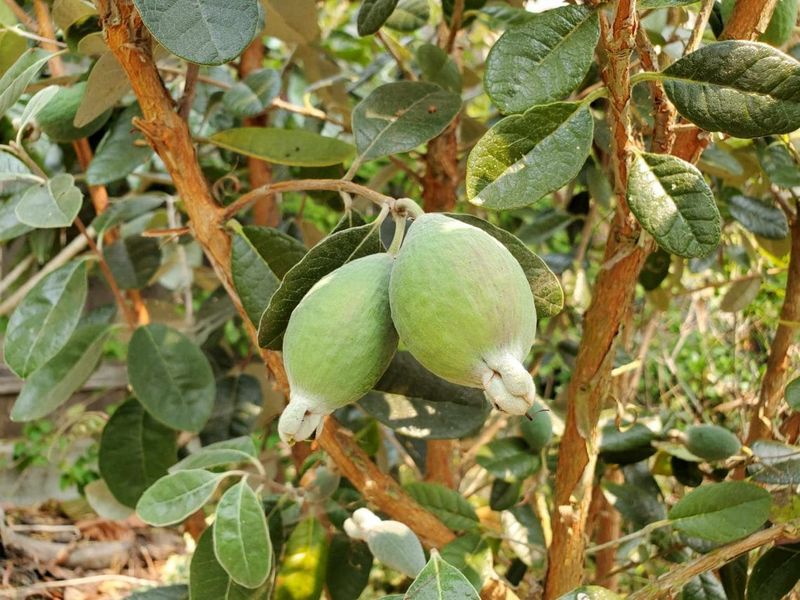
Surviving a dry summer and filling out good fruit are two different jobs. A mature pineapple guava may stay green through California’s long dry months, which is why it is often called drought-tolerant.
The fruit crop is the part that can pay the price when the soil stays dry for too long.
California Rare Fruit Growers notes that water stress can cause fruit drop and reduce quality. UF/IFAS makes a similar point about drought and fruit.
A plant that looks fine may still be dropping fruit early.
The practical fix is deep, periodic watering during dry weather. UC Master Gardeners in Sonoma County support that approach, and it matters most around flowering and fruit development.
Deep soaking encourages roots to go down, while frequent light sprinkles do not.
No universal schedule exists, so use your own yard as the guide. Sandy soil dries faster than clay, and a hot spell calls for more attention than a cool, foggy week.
If fruit is dropping while still small and hard, dry soil is one clue worth checking.
If your goal is mainly a handsome evergreen, a lighter watering plan may be enough. If you want fruit, plan on giving water during dry stretches.
Pollination and pruning can affect the harvest
Before you buy, ask a simple question: is this cultivar self-fruitful? Many improved varieties are, but not all of them are.
A plant that needs a partner may bloom beautifully and still set little fruit on its own.
UC Master Gardeners in Sonoma County note that self-fruitfulness varies. California Rare Fruit Growers also describes differences among varieties.
A second compatible plant nearby can improve fruiting, so if you have the space, two different cultivars may be a good bet. Even then, a crop is not guaranteed.
Pruning is where a lot of hedge-style plantings go wrong. Pineapple guava needs only minimal pruning to build good structure, such as removing crossing or dead branches and shaping a small tree.
Frequent or heavy shearing, the kind used on a tight formal hedge, can cut off the flowers that become fruit.
If you want a clipped look, expect a trade-off. A loose, natural hedge that is lightly trimmed tends to keep more bloom than one sheared into a box.
Treat cultivar choice and pruning as ways to improve your odds. They support a crop, but weather, water, and site still have their say.
Expect modest pest pressure, not pest-free growth
Many gardeners like pineapple guava because it rarely seems to need much pest control. UF/IFAS reports low overall pest pressure on the plant.
That is good news, but low is not the same as none.
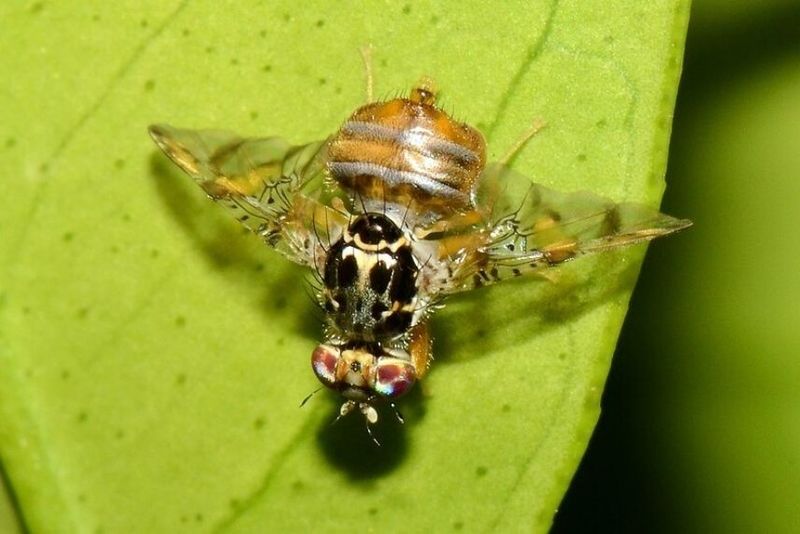
In California, sources have reported a couple of specific visitors. California Rare Fruit Growers mentions fruit flies and black scale as problems that have shown up here.
Fruit flies can affect the fruit itself, while black scale is a sap-feeding insect that can settle on stems and leaves.
A relaxed routine fits the plant. Look at the leaves and stems when you water or pick, and notice anything unusual, such as sticky residue, bumpy dark spots on twigs, or fruit with soft damaged spots.
Catching a problem early gives you more options.
Healthy plants usually cope better, which is another reason to match the site and water to the plant’s needs. If you do see trouble, your local UC Cooperative Extension office can help identify it before you spray anything.
Keep expectations balanced. The plant may need little attention in many years, but a clean bill of health is not guaranteed every season.
Pick fruit in repeated passes as it ripens
Harvest is less like a single event and more like a routine. Fruit ripens over an extended stretch, so one trip to the shrub will miss most of the crop.
Plan on repeated checks through fall and, in some locations, into early winter.
UC Cooperative Extension advises gentle touch-picking: mature fruit should detach readily when you lift or lightly twist it. If you have to tug, leave it a few more days.
This simple test keeps you from picking fruit too early.
There is a catch with fallen fruit. Some guidance suggests collecting fruit that has dropped naturally as a sign of ripeness.
Yet the same UC Cooperative Extension source warns that fruit sitting on the ground may bruise internally.
The practical answer is to catch it or collect it quickly. Spread a tarp under the plant to cushion falls, and check it every day or two during peak season.
Fruit that has just dropped is a good sign, but it should not sit for long.
After picking, handle the fruit gently. UC Davis Postharvest offers handling details for feijoa.
California Rare Fruit Growers also covers ripeness and use.
A worthwhile choice for the right California yard
Here is a simple rule: consider pineapple guava if your climate is mild, your soil drains well, you have room for its form, and you are willing to water during dry spells. If most of those fit, the plant offers good looks and possible fruit in one package.
UC Master Gardeners in Sonoma County and California Rare Fruit Growers both treat it as a useful home plant.
It has long grown in California yards, often as an ornamental, according to UC Cooperative Extension. Whether others overlook it is hard to say.
What matters is whether it suits your corner of the state.
Even in a good spot, it is a fruit shrub, not a promise.