
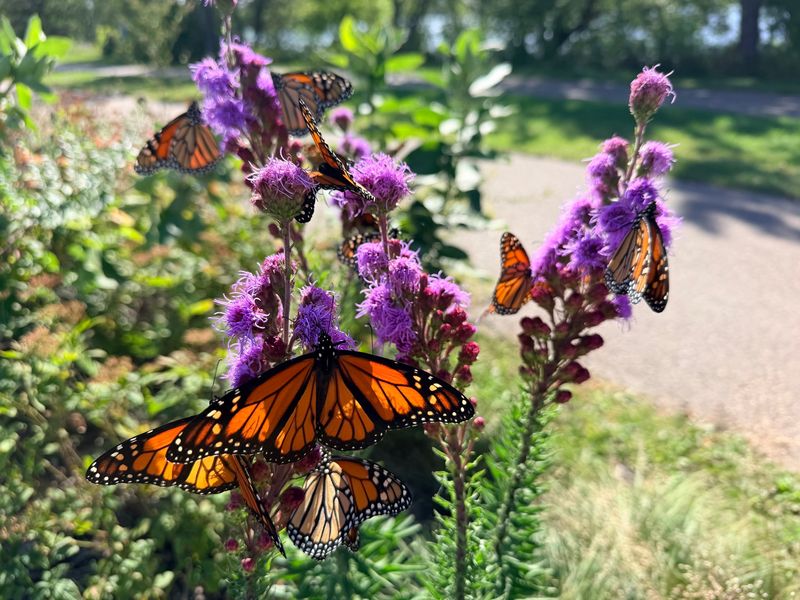
Every fall, western monarchs travel back toward the California coast, and the flowers they find along the way matter. A few well-chosen blooms in your yard might give an adult monarch a quick drink of nectar.
Of course, no garden can promise a visit, and some choices, like pesticides or the wrong milkweed, can do more harm than good. Here is how to plan a yard that offers helpful forage while staying honest about what it can and cannot do.
A fall garden can offer forage without guaranteeing a monarch visit
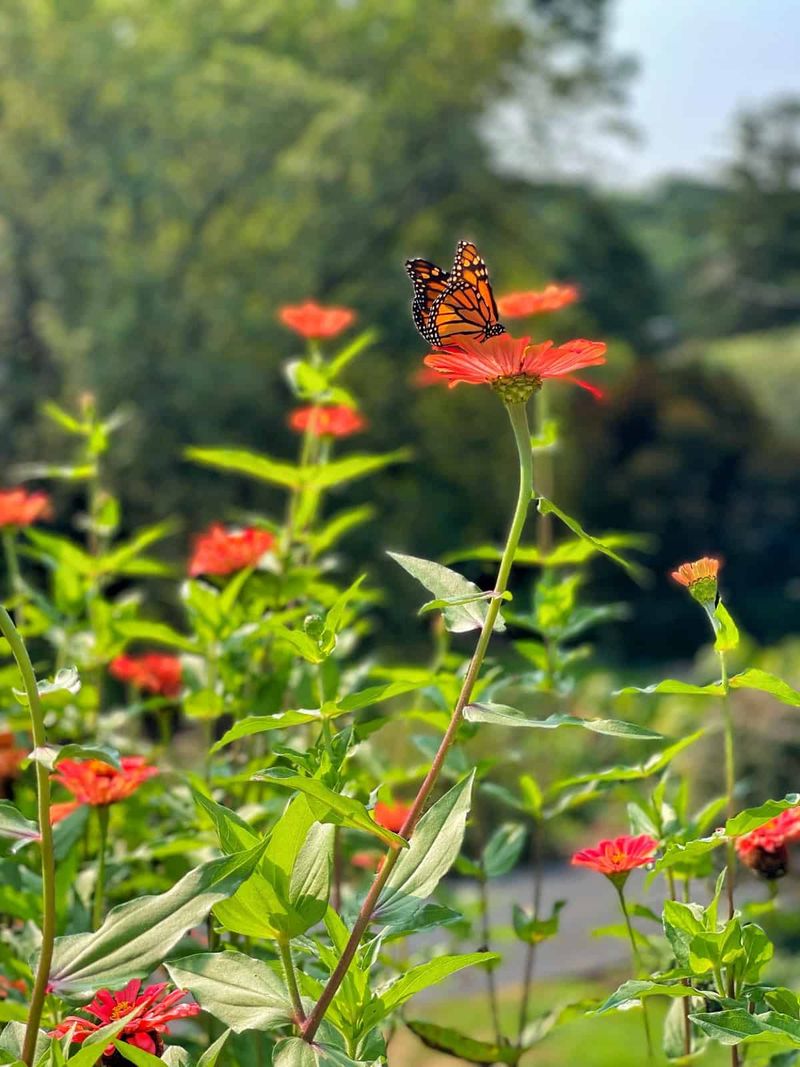
Western monarchs return to coastal California in fall, and adult monarchs rely on nectar during migration and again through the overwintering season. That is the reason fall flowers are worth thinking about.
A pesticide-free bloom can be a useful snack for a tired butterfly.
Still, a flower bed is only a possible food source. Monarchs do not show up in every yard, and planting something does not guarantee a sighting.
Your garden might get regular visitors, occasional ones, or none at all, depending on where you live and where the butterflies travel.
Calendar dates can be misleading too. The Western Monarch Count lists an early-season survey window from late October into early November, which tells volunteers when to count at overwintering sites.
It does not tell you whether monarchs are passing through your street this week.
The Western Monarch Count also explains in its overview of the program that monitoring focuses on the coastal groves where monarchs gather for winter. Think of your yard as a small side dish, not the main event.
With that mindset, you can enjoy the project without pressure. If a monarch does stop by, great.
If not, the same flowers will likely feed bees, hoverflies, and other pollinators.
Choose fall flowers for your California region
California covers coastal fog belts, hot inland valleys, foothills, and high deserts, so one plant list will not fit every yard. Start with a regional guide, then match each plant to your climate, soil, water needs, and bloom timing.
The Xerces Society’s California monarch nectar plant list is a good starting point.
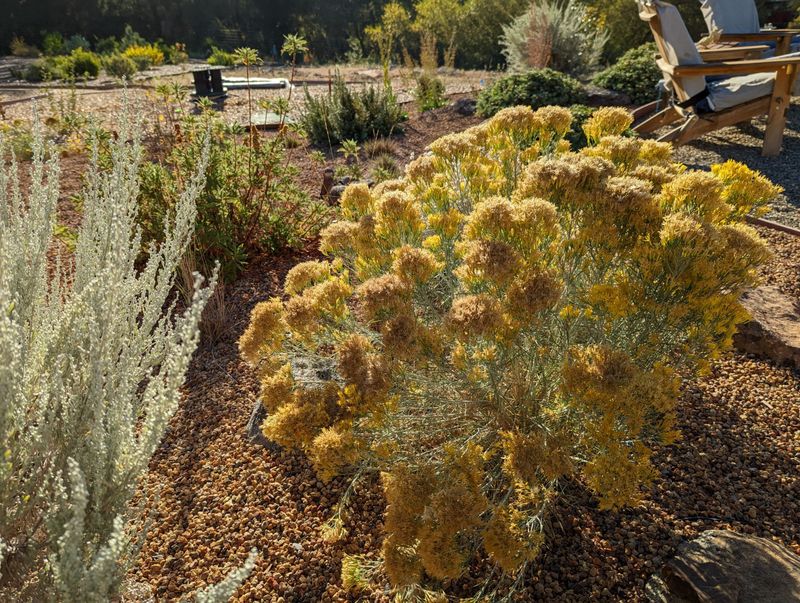
That list names goldenrods and rabbitbrush, also called goldenbush, among the summer-to-fall nectar options. Treat them as examples, not orders.
A species that thrives in a sunny foothill yard may sulk in heavy coastal clay or need more water than you want to give.
The statewide list may also be less suitable in the High Sierras, the Modoc Plateau, and the Eastern Interior Desert. If you garden in one of those areas, look for guidance written for your own region.
Xerces also offers a page of monarch nectar plants for California that you can browse alongside the PDF.
A local native plant nursery, a county master gardener program, or a native plant society chapter can tell you what blooms in your area and when. Pick plants that suit your water budget, too, since a thirsty bed in a dry summer defeats the purpose of a wildlife-friendly yard.
Plan a sunny bed with flowers that overlap

Picture a bed that has something in bloom for as many weeks as possible. Guidance in the same Xerces California plant list points to sunny locations, plants grouped in clumps, and overlapping bloom periods.
Clumps make flowers easier to spot, and overlap keeps nectar available as one plant fades and another opens.
A simple layout might put a summer bloomer, a late-summer bloomer, and a fall bloomer side by side. Check each plant’s expected bloom window for your region before you buy.
Give them the sun they need, and keep the bed away from spots where sprays or drift might reach.
Timing needs a reality check. A perennial planted this fall may not flower before November, and the guides do not promise how soon a new plant will bloom.
If you want flowers for this season, look at what is already blooming in your yard or at a local nursery.
For most gardeners, the better plan is long-term. Planting in the cooler, wetter months can help roots settle in many parts of California, and next year’s bed may be far fuller.
Even a well-planned bed cannot promise monarch visits. It simply raises the odds that nectar is on offer if one passes by.
Keep nectar flowers free of insecticides
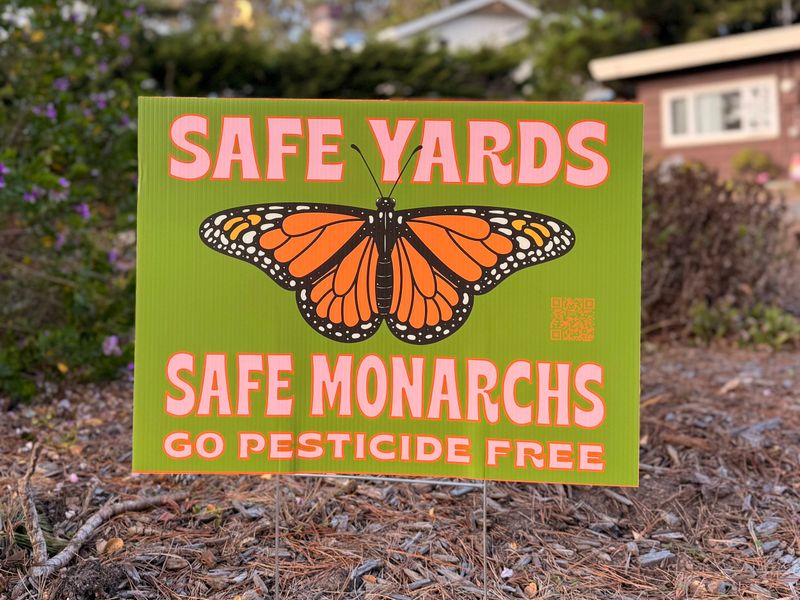
A flower that butterflies love is not automatically safe for them. Insecticides can harm monarchs, and systemic products can stay inside a plant for a long time.
The Monarch Joint Venture explains the risks in its pesticide FAQ.
Fish and Wildlife Service planning recommendations, published with Xerces in a western monarch conservation document, advise avoiding pesticides on milkweed and nectar plants, especially systemic insecticides. They also encourage native, insecticide-free plants.
Start at the nursery. Ask whether the plants were treated, and which products were used.
A friendly question is fine, and a vague or unsure answer tells you something too.
At home, skip sprays on or near your nectar beds. If a pest problem shows up, try a hose, hand removal, or tolerating a little leaf damage before reaching for a product.
No label, nursery answer, or planting habit can guarantee a plant is safe. But each step lowers the chance that a visiting butterfly meets something harmful, and that is a fix you can start today.
Near coastal groves, prioritize nectar over casual milkweed
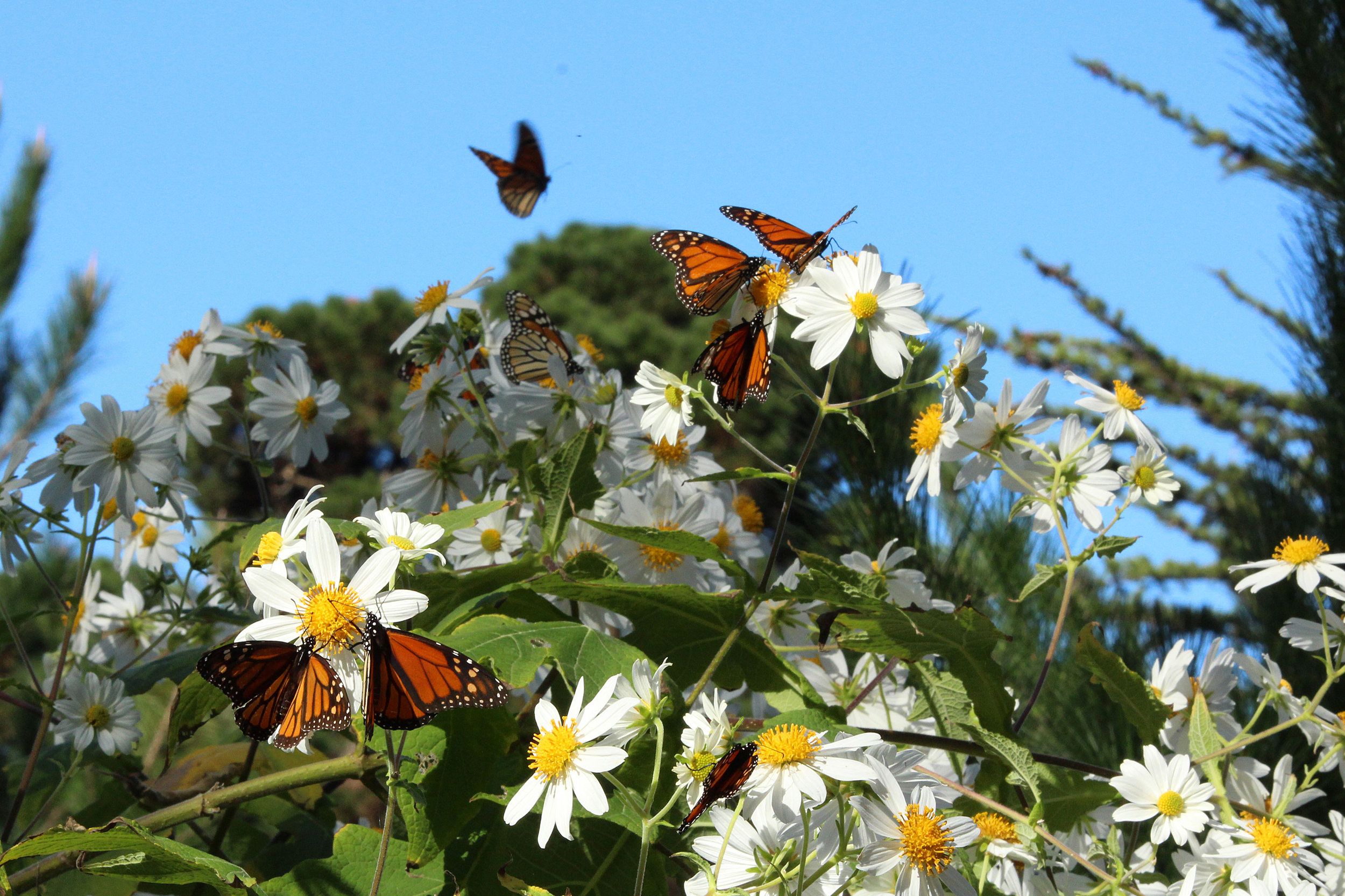
Nectar and milkweed do different jobs. Nectar plants feed adult butterflies, while milkweed is the plant monarch caterpillars need.
Overwintering adults do not need milkweed to get through the season.
That difference matters near the coast. Monarchs generally enter reproductive diapause during the October to March overwintering period, but milkweed that stays green in mild coastal weather may encourage winter breeding.
The Monarch Joint Venture explains this in its advice for people near California overwintering grounds.
So if you live close to a known grove, focus on nectar plants first. Tropical milkweed is not a quick fix, and neither is adding any milkweed casually.
How close is too close depends on the source. The Xerces California plant list says to avoid milkweed within one mile of known western monarch overwintering sites.
A separate 2021 Fish and Wildlife Service planning document names broader coastal zones, with five miles in specified central and northern coastal counties and one mile farther south.
Those numbers are not interchangeable, and neither one is a single statewide rule. The earlier-mentioned Xerces plant list is one of them.
If you are near a grove, check current, location-specific recommendations from local monarch groups or your county before planting any milkweed.
A sheltered yard is not an overwintering grove
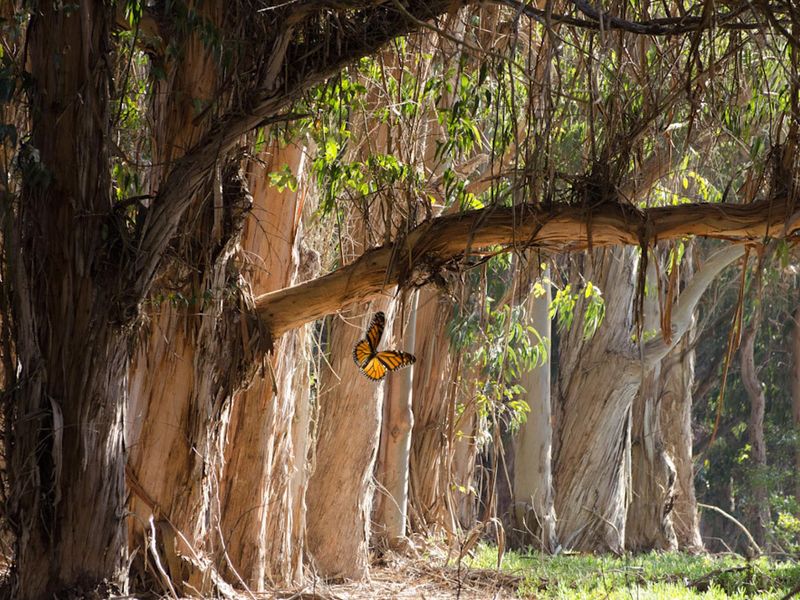
Existing shrubs and trees in your yard may give a butterfly a place to perch for a bit. That is a nice bonus, and there is no need to remove a healthy hedge for the sake of monarchs.
But overwintering shelter works at a bigger scale. Habitat recommendations in the Fish and Wildlife Service and Xerces planning document describe groves as specific, tree-based habitats with broader vegetation that protects the butterflies.
Researchers have also looked closely at the weather inside these sites. Saniee and Villablanca studied western monarch overwintering microclimates, and their work focuses on grove conditions, not backyard corners.
In plain terms, nothing shows that a few sheltered spots in a yard help monarchs finish migration. Nor can they replace a grove.
What you can do is keep your yard simple and honest: offer nectar, skip the pesticides, and leave mature trees in place where they already grow. Those steps are useful on their own, without pretending your garden is a winter home.
Make the yard’s contribution realistic and useful
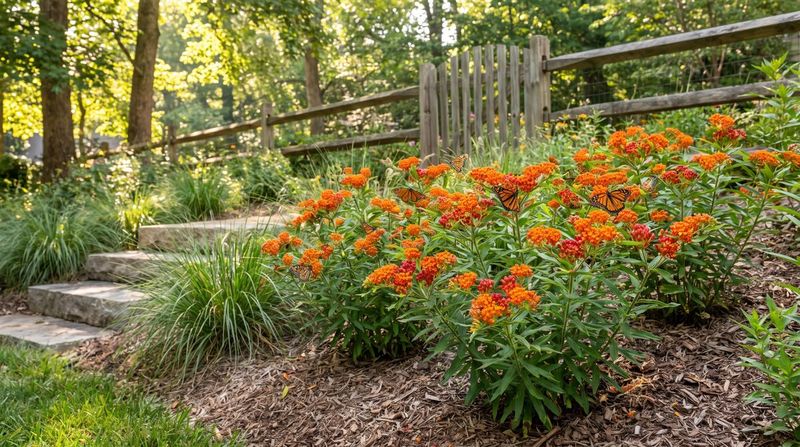
Pick fall nectar plants that suit your region, give them sun and overlapping bloom times, and keep pesticides away, as the Xerces plant list and conservation recommendations suggest. Near a coastal grove, check current local milkweed guidance first.
A new planting may not bloom before November, and shrubs or trees will not recreate a grove. Plant for next year as much as this one.
A garden cannot summon monarchs, but it can be ready when they pass.