
Hydrangeas can be beautiful, but they often frustrate Southern gardeners with drooping leaves, weak blooms, or the wrong light and soil. If you are tired of babying a shrub that still looks unhappy, it may be time to switch.
Plenty of flowering shrubs bring bold color with less fuss, especially in the long, hot growing season common in Florida and Texas. Here are eight dependable options that can make your yard look brighter without turning plant care into a weekly rescue mission.
1. Abelia
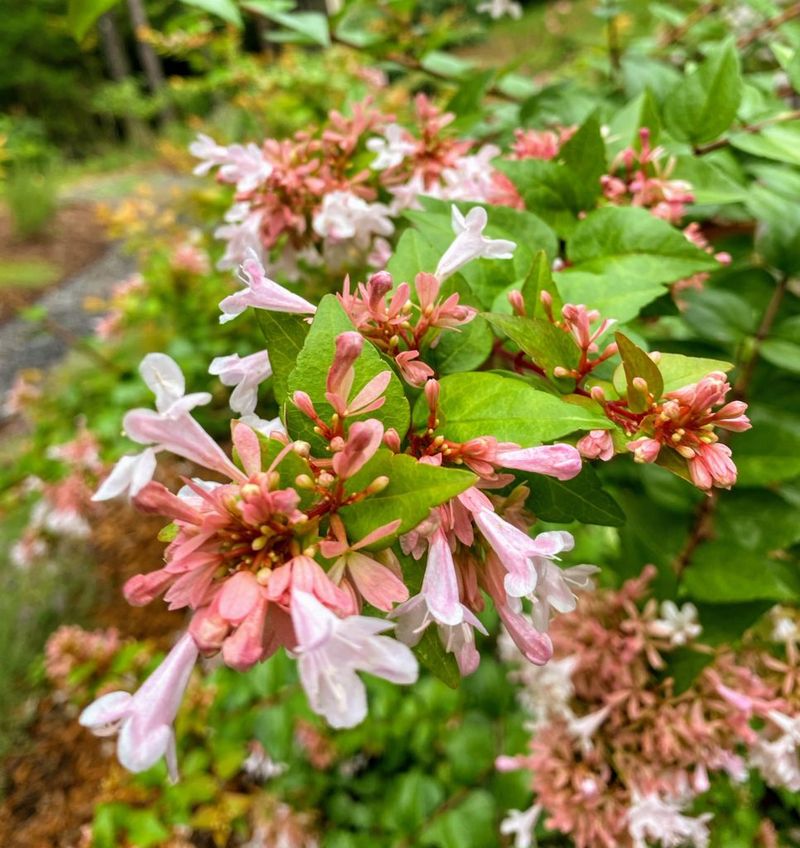
Some shrubs seem determined to prove how little they need from you, and abelia is one of them. While hydrangeas often wilt, bleach out, or sulk when the soil and light are not just right, abelia keeps pushing out color through heat, humidity, and the usual summer stress that shows up in Southern yards.
What makes it different is the long bloom season. Instead of one big floral moment followed by a lot of waiting, abelia flowers over many weeks, sometimes from late spring well into fall.
The small trumpet-shaped blooms may look delicate, but the plant itself is sturdy and forgiving. Pollinators often visit, so it can add movement as well as color near a porch, walkway, or mailbox bed.
Gardeners in the South also appreciate that abelia usually handles uneven watering better than hydrangeas once established. It grows best in full sun to part shade, and modern varieties stay neat enough for foundation beds without constant trimming.
Glossy leaves, arching branches, and reliable blooming give it a softer look than many tough shrubs.
If your hydrangeas keep asking for extra work, abelia offers a calmer deal. Plant it where you want months of easy color, and it may reward you with a fuller, happier border that does not need so much troubleshooting.
2. Loropetalum
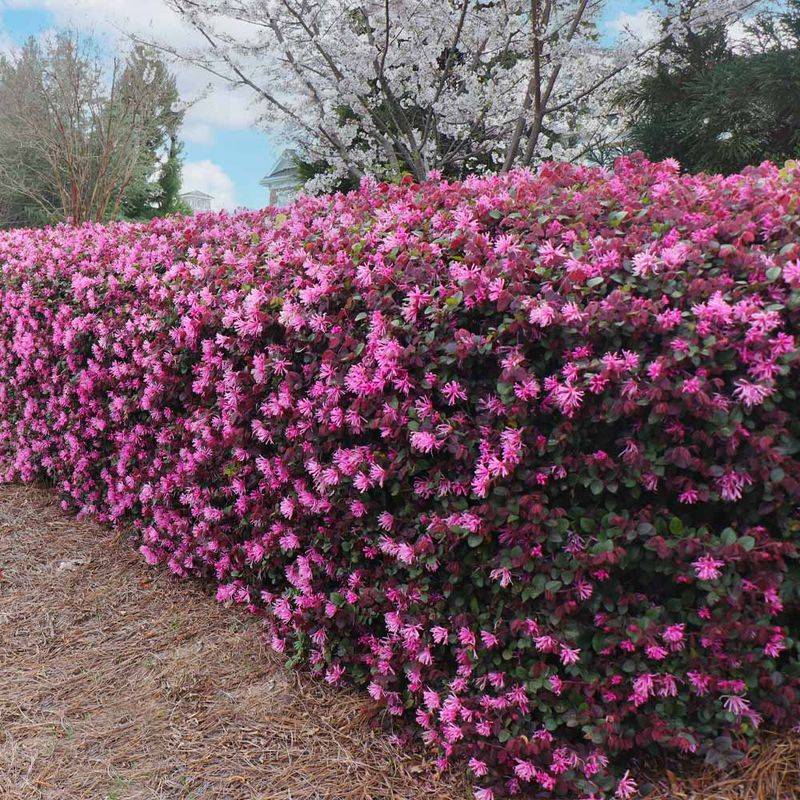
Right when a yard starts to feel flat, loropetalum brings in drama without asking for pampering. The ribbon-like flowers look playful and a little wild, and the rich burgundy foliage keeps the plant attractive even when it is not in peak bloom.
That combination gives you color from more than one angle, which is a big reason many gardeners find it easier to love than hydrangeas.
Hydrangeas often depend on careful moisture and the right exposure to avoid stress. Loropetalum is usually less needy once settled in, especially in Southern landscapes where heat can drag down thirstier shrubs.
Many varieties bloom heavily in spring and then may flower lightly again later, so the display feels generous rather than brief.
Another advantage is flexibility. Use loropetalum as a hedge, a foundation plant, or a loose accent shrub where you want contrast against green lawns and pale house colors.
In the South, it often performs best with morning sun and some afternoon relief, though many established plants handle more light. Good drainage matters, but you do not need to hover over it every dry spell.
For anyone worn out by floppy stems and bloom disappointment, loropetalum offers a sharper, bolder answer. It can turn a plain bed into something memorable while keeping maintenance on the manageable side.
3. Indian Hawthorn

Neat, tidy, and far less dramatic than a fussy hydrangea, Indian hawthorn earns its place by looking polished with very little coaching. If you want a shrub that can hold a front bed together instead of collapsing into a thirsty mess by midsummer, this one deserves a close look.
Its standout feature is structure. Indian hawthorn stays naturally compact, with evergreen leaves that keep the planting from going blank in winter.
In spring, it covers itself with clusters of pink or white flowers that brighten entryways and sidewalks. Later, dark berries may appear and add another layer of interest.
That steady shape makes it especially useful where homeowners want curb appeal that does not depend on weekly pruning.
Southern gardeners often use Indian hawthorn in sunny to lightly shaded spots, especially where reflected heat can be rough on softer shrubs. It can handle warm conditions better than hydrangeas, and once established it may need less constant moisture.
Florida and Gulf Coast gardeners should still aim for airflow and avoid overcrowding, since humid conditions can increase disease pressure on any dense evergreen shrub.
When the goal is easy color plus a clean outline, Indian hawthorn feels practical in the best way. It is not flashy for one week and forgettable for the rest.
It stays present, useful, and attractive for a long stretch of the year.
4. Firebush
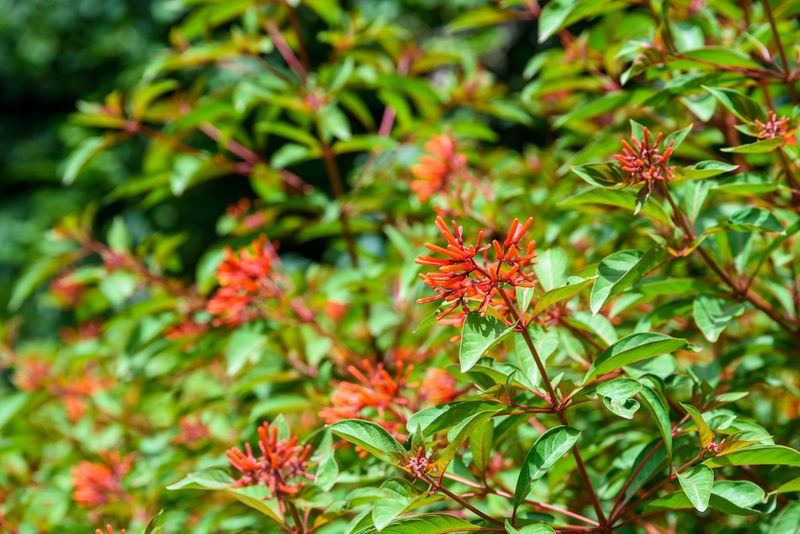
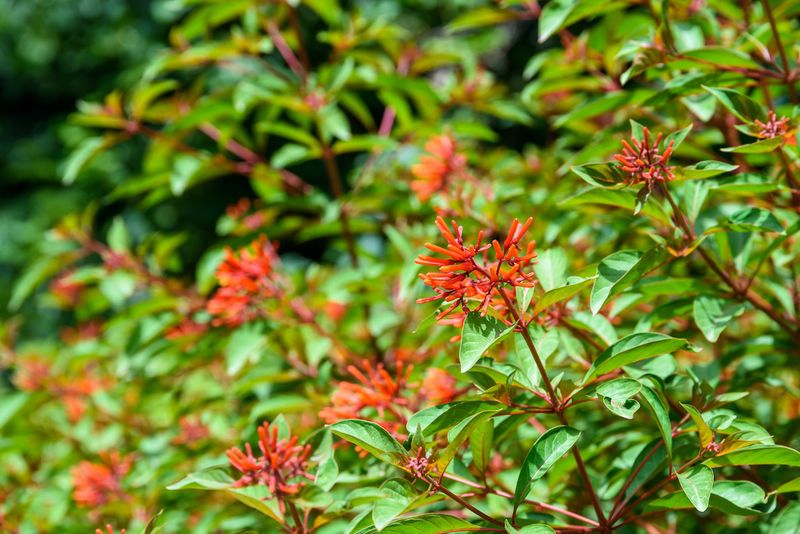
Few shrubs announce summer as boldly as firebush. When hydrangeas are drooping in the heat and looking tired by afternoon, firebush is just getting started, sending up clusters of fiery blooms that seem made for the hottest months of the Southern growing season.
The biggest reason to plant it is simple: heat does not scare it. Firebush thrives in warm climates and is especially useful in Florida, along the Gulf Coast, and the warmer parts of Texas.
Its orange-red tubular flowers can draw hummingbirds and butterflies, so the plant adds life as well as color. That makes it feel less like a static shrub and more like a busy little habitat feature right outside the window.
Unlike hydrangeas, which often complain when moisture or shade is off balance, firebush generally prefers sun and can handle periods of dryness once established. It grows quickly, which helps fill empty spots fast, and it can be pruned to stay denser if needed.
In frost-free or nearly frost-free areas, it may keep performing for a long season.
If your yard needs brightness that stands up to Southern weather, firebush may be the easy answer. It is cheerful, tough, and wonderfully honest about what it wants: sunshine, warmth, and a little room to show off.
5. Texas Sage
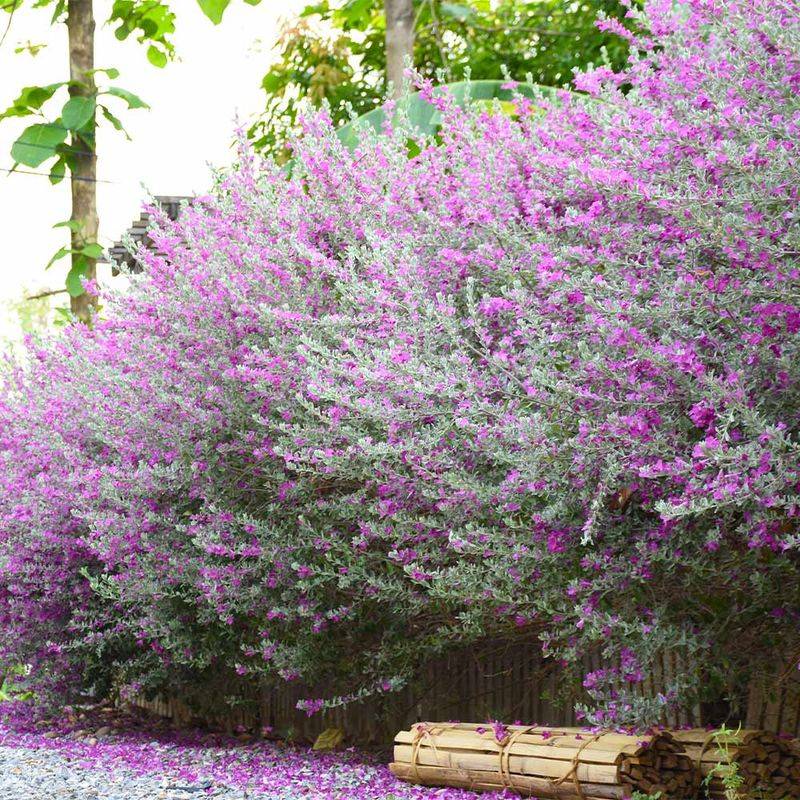
After a hot spell and a bit of humidity, Texas sage can suddenly burst into bloom like it has been waiting for applause. That surprise performance is part of its charm, but the real value for frustrated gardeners is how well it handles the kind of punishing sun that makes hydrangeas give up.
Texas sage stands out for drought tolerance. The soft silver foliage looks attractive even between bloom cycles, so the plant earns its keep long before the purple flowers arrive.
In sunny parts of Texas and similar Southern climates, it can be a smart swap for thirstier shrubs that demand richer soil and more frequent watering. It also pairs well with gravel, stone edging, and other low-maintenance landscape features.
One caution matters here: Texas sage does best where drainage is sharp and humidity is not constantly trapped around the plant. In wetter parts of the South, performance may be better in raised beds or very open sites.
Still, for the right yard, it can be a true workhorse. Full sun is the key, and overwatering often causes more trouble than neglect.
For homeowners tired of rescue-mode gardening, Texas sage offers a refreshing shift. It does not beg for attention.
It simply sits in the heat, keeps its cool, and then lights up the border when conditions suit it.
6. Knock Out Rose

Not every gardener wants a classic rose, but Knock Out roses changed plenty of minds by making blooms feel easy again. If hydrangeas have left you with weak flowering and constant fussing, a shrub rose that reblooms with far less drama can feel like a real upgrade.
The main strength here is repeat color. Knock Out roses are known for blooming in flushes over a long season, often from spring into fall in warm parts of the South.
Instead of waiting all year for a short display, you get a shrub that keeps coming back with fresh flowers. The shape is mounded and useful, making it easy to fit into foundation beds, mailbox plantings, or mixed borders where you need a reliable color anchor.
They still need the basics, of course. Full sun, decent airflow, and regular watering during establishment help a lot.
Yet compared with old-fashioned roses, these shrubs are generally simpler to manage, and compared with hydrangeas, they often shrug off heat better. Gardeners in humid areas may still see some disease pressure, but many find the plant manageable with sensible spacing and cleanup.
When a bed needs bright, familiar flowers without endless troubleshooting, Knock Out rose does the job. It gives your landscape a classic look while staying far more approachable for everyday home gardeners.
7. Crape Myrtle
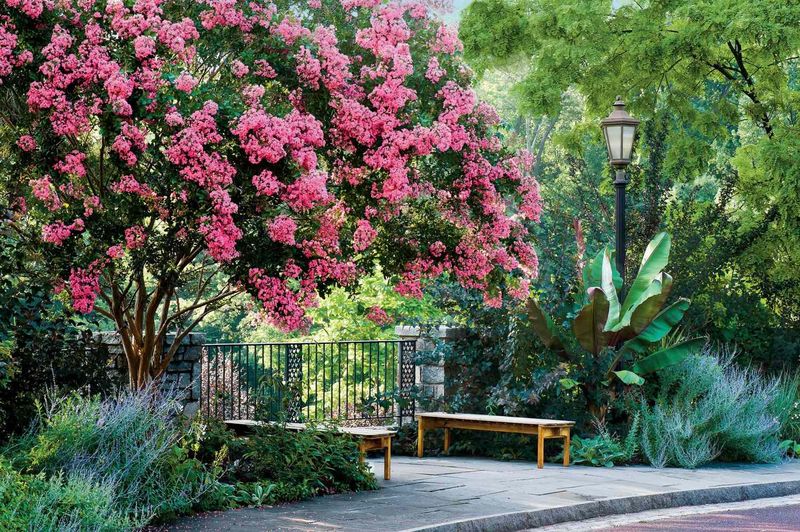
Summer can be brutal on bloomers, yet crape myrtle often looks like it is having the best season of its life. That alone explains why so many Southern gardeners trust it more than hydrangeas.
When heat builds and rainfall turns erratic, crape myrtle usually keeps the show going.
Its biggest advantage is timing. Crape myrtle blooms when many spring shrubs are already fading, so it plugs a real color gap in the landscape.
Depending on the variety, you can choose white, pink, red, or purple flowers and match the size to your space, from compact shrub forms to larger screen-like plants. Smooth bark and fall color add extra appeal, which means the plant contributes more than one seasonal highlight.
For Texas, the Deep South, and many warm inland areas, crape myrtle is one of the more dependable flowering choices for full sun. It generally wants good airflow and room to mature naturally.
Overpruning can ruin its shape, so the easiest care plan is often the best one: plant the right size, then trim lightly only when needed. Once established, it may handle dry stretches better than hydrangeas.
If you are tired of babysitting thirsty shrubs, crape myrtle offers a simpler path to a bright yard. It is sunny, resilient, and built for long Southern summers.
8. Ixora
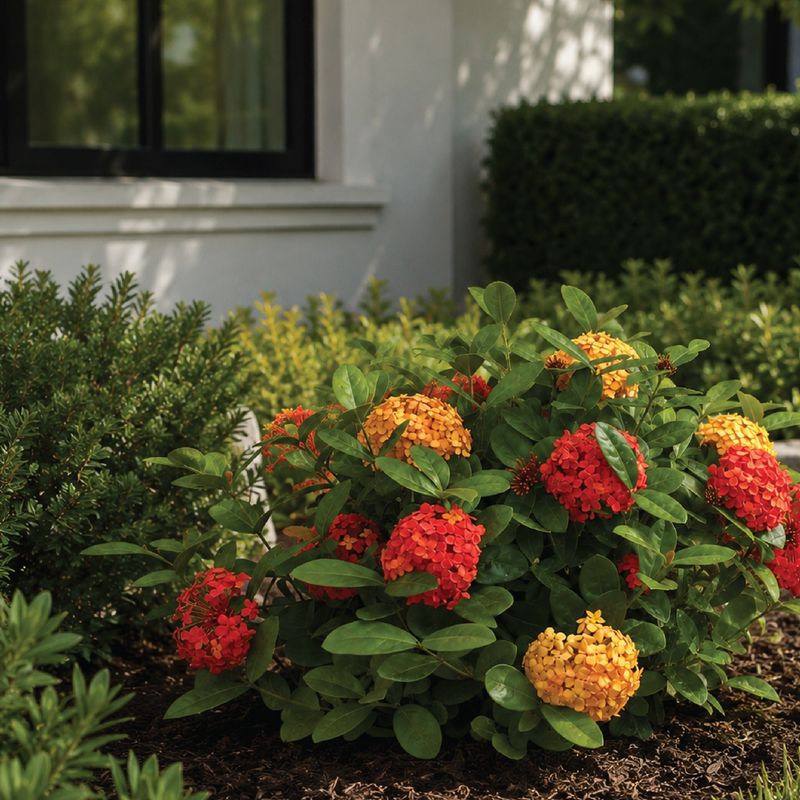
Bright flower clusters and glossy leaves give ixora a polished, tropical look that can make tired beds feel instantly more alive. In warm Southern climates, especially Florida, it often succeeds where hydrangeas struggle with heat, limp foliage, or too much afternoon sun.
What sets ixora apart is the punch of color. The flowers come in tight rounded clusters, and the shades can be vivid, from fiery orange and red to pink and yellow.
That saturated color reads clearly from the street, making ixora especially useful in front-yard plantings where you want curb appeal without relying on annuals. Because the foliage stays evergreen in frost-free areas, the plant keeps contributing even between bloom periods.
Ixora does ask for a suitable climate and soil, so it is not the universal answer for every Southern garden. It tends to perform best in warm regions with mild winters and may appreciate slightly acidic, well-drained soil.
Even so, in the right setting it can be more straightforward than hydrangeas, especially if you are gardening in central or south Florida. Sun encourages better flowering, though some afternoon relief can help in the hottest spots.
For gardeners who want a clean, colorful shrub with a tropical mood, ixora can be a satisfying switch. It delivers brightness, structure, and a sense of energy that keeps the landscape from looking sleepy.