
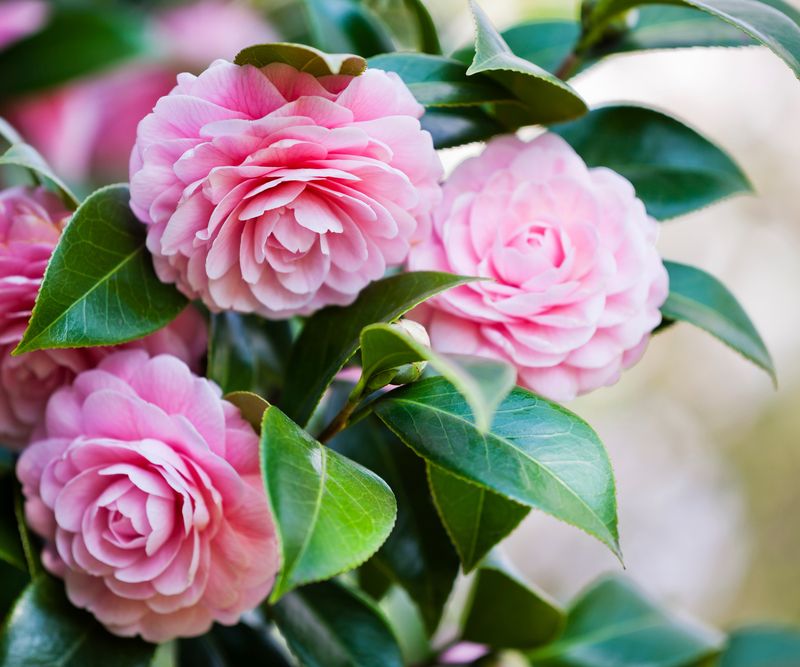
Watching a peony produce nothing but leaves year after year is genuinely frustrating, especially when you have done everything the label said to do. In many warm-climate gardens, the real culprit is not bad luck or poor care – it is a mismatch between what the plant needs and what the winter can provide. Japanese camellia, sometimes sold as “peony camellia,” can fill that flowering gap with large, layered blooms that echo the look of a peony, even if the two plants are not identical in every way. Understanding why your peony struggles and whether camellia is a good fit for your specific site is the practical starting point.
Check the cause before replacing the peony
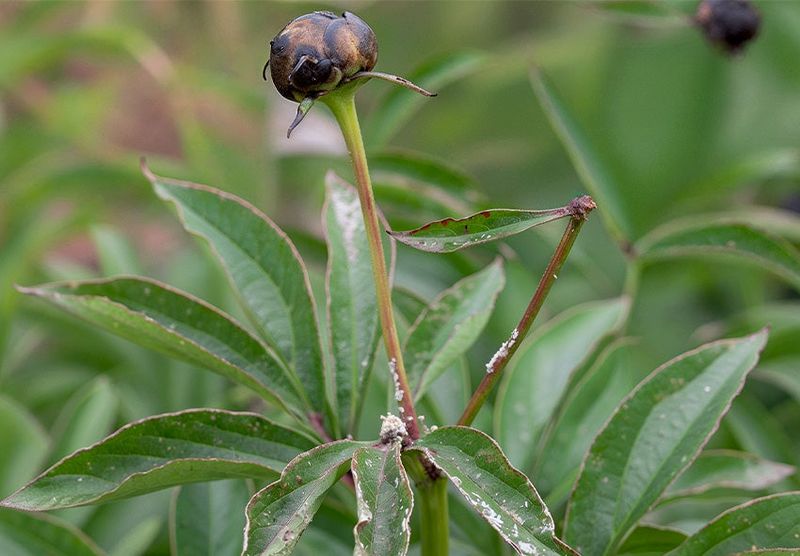
Before pulling out a non-blooming peony and replacing it with anything, spend a few minutes diagnosing what is actually going wrong. Insufficient winter chilling is one of the most common reasons herbaceous peonies fail to flower in warm regions. NC State Extension’s peony profile explains that herbaceous peonies can languish in areas where their chilling requirement is difficult to meet, and that low-chill cultivars are worth considering in warmer locations before giving up on peonies entirely.
Climate, though, is not the only possible explanation. Planting depth is a frequent offender: peony eyes set too deep in the soil may produce lush foliage with few or no flowers. Inadequate light, over-fertilization with nitrogen, inconsistent watering, and the plant’s own youth – peonies often need two to three years before they bloom reliably – can each suppress flowering on their own.
Disease, including fungal problems like botrytis blight, can also interfere with bud development. The most useful step before switching plants is to run through this short checklist: chilling hours in your area, planting depth, sun exposure, fertilizer history, plant age, and any visible signs of disease or pest damage. Identify the most likely limitation first, because a camellia planted in the wrong spot will disappoint just as reliably as a peony that never got cold enough.
Japanese camellia provides a strong peony-like effect
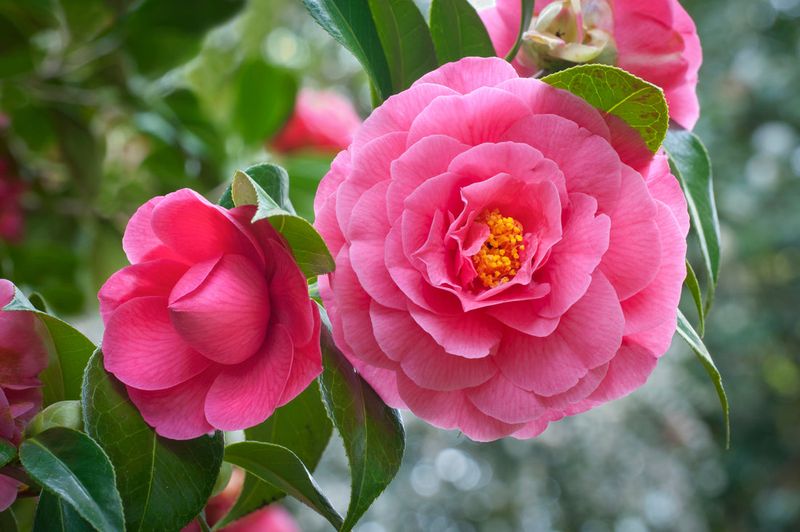
Few flowering shrubs come as close to peony’s visual drama as Camellia japonica, which is sometimes labeled “peony camellia” in nurseries for exactly that reason. The flowers are large, often semi-double or fully double, with overlapping petals arranged in a way that genuinely mimics the layered look of a garden peony. Colors range from white and soft pink through deep red, and many cultivars carry a subtle fragrance that adds to the effect.
The resemblance is real, but the plants are fundamentally different in how they live. NC State’s Japanese camellia profile describes it as an evergreen woody shrub suited to approximately USDA Zones 7a through 9b, while a typical herbaceous peony dies back to the ground each winter and returns in spring. Camellia keeps its glossy dark leaves year-round and functions as a permanent landscape shrub rather than a perennial that disappears in cold weather.
Bloom timing is another clear difference worth knowing before you plant. Camellias generally flower from fall or winter into early spring, depending on the cultivar, while herbaceous peonies bloom for roughly two weeks in late spring to early summer. The camellia is a strong visual stand-in for the right warm-climate garden – it echoes peony’s flower form and provides real garden impact, even though it does not duplicate every aspect of a peony’s life cycle or seasonal behavior.
Choose the camellia that fits the exposure
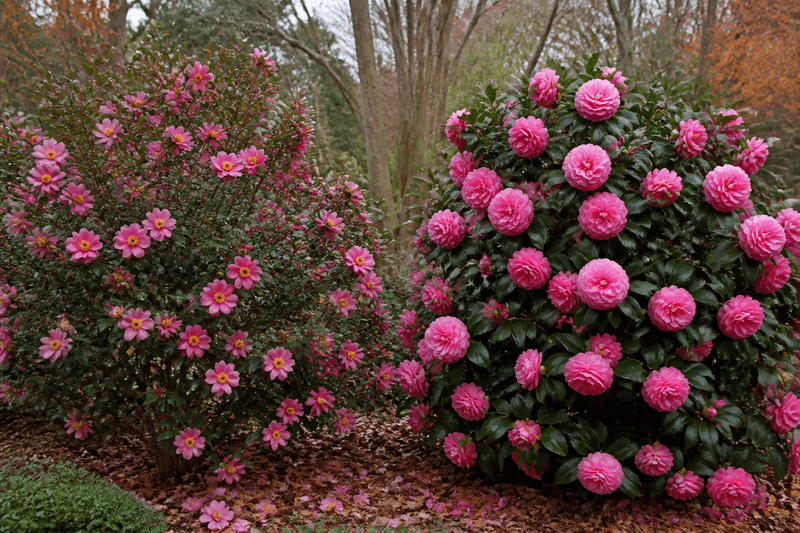
Not every camellia belongs in the same spot, and picking the right species for your actual site conditions matters more than most gardeners expect. Japanese camellia is the better choice when large, layered, peony-like flowers are the main goal and the planting area receives filtered light, morning sun, or afternoon shade. Its big double blooms are the closest visual match to a peony, but that flower quality comes with a preference for protection from hot, direct afternoon sun.
Camellia sasanqua is worth considering when the available site gets more sun than Japanese camellia prefers. NC State’s camellia overview notes that sasanqua generally tolerates more sun and blooms earlier in the season – typically from fall into early winter – making it a practical option for sunnier exposures. The trade-off is real: sasanqua flowers are usually smaller and often simpler in form, so the peony-like effect is noticeably reduced.
Think of this as a two-part decision. First, decide whether the layered flower shape or the sun tolerance matters more for your particular site. If your intended spot is shaded by a tall fence, a tree canopy, or the north or east side of your house, Japanese camellia is the stronger candidate. If the site is open and bright for most of the day, sasanqua may perform better even though the flowers will not replicate a peony’s fullness as convincingly.
Match the planting site, not just the hardiness zone
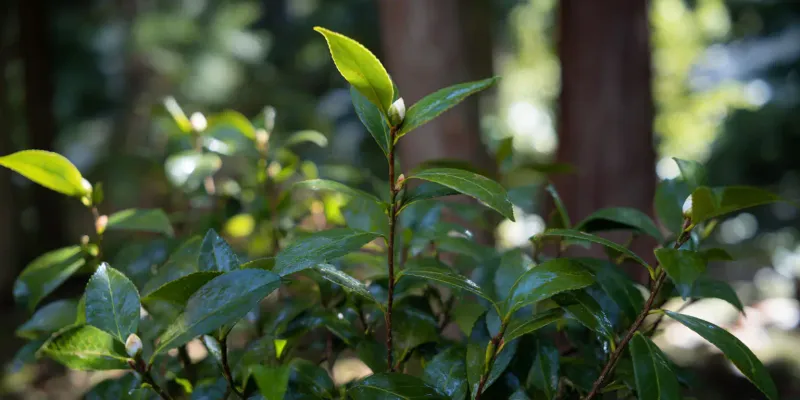
Knowing that Japanese camellia is rated for USDA Zones 7a through 9b is a starting point, not a guarantee. A hardiness zone tells you roughly how cold a region gets in winter, but it says nothing about soil drainage, summer heat intensity, afternoon sun exposure, wind, or irrigation availability – all of which can determine whether a camellia actually thrives or quietly declines.
Light is the first site factor to evaluate. UC IPM’s camellia guidance recommends bright filtered light, partial shade, or morning sun with afternoon protection for Japanese camellia. Excess afternoon sun can scorch leaves, reduce flowering, and stress the plant even in zones where it is considered cold-hardy. A spot under high-canopy trees, on the east side of a structure, or shaded by a pergola in the afternoon often works well.
Soil drainage and chemistry matter just as much. NC State’s Japanese camellia profile specifies fast-draining, organically rich, slightly acidic soil with a preferred pH of approximately 5.5 to 6.5. Avoid low spots where water pools after rain, areas near concrete that can raise soil pH, and compacted clay that stays wet for days. Extension diagnostic records show that poor drainage is a recurring factor in camellia decline.
Amending the bed with pine bark or aged compost before planting, and raising the planting area slightly if drainage is questionable, gives roots the environment they need to establish without sitting in moisture.
Establish roots with moisture and drainage in balance
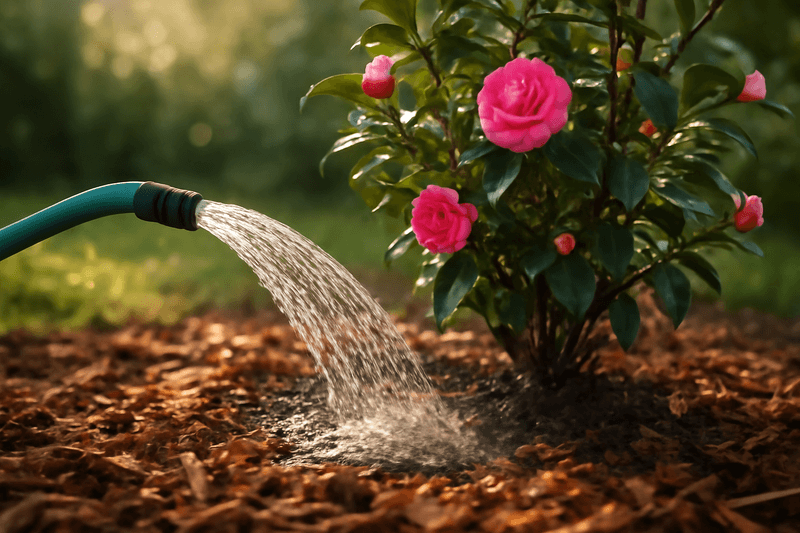
Getting a camellia through its first one to two years depends heavily on keeping soil moisture consistent without letting roots sit in water. UC Master Gardeners note that newly planted camellias need regular, even moisture as their root systems develop. Deep, infrequent watering encourages roots to grow downward rather than staying shallow, which improves drought resilience later.
The balance to strike is evenly moist soil that drains freely between waterings. Roots that stay wet for extended periods are vulnerable to root rot and crown problems, while roots that dry out repeatedly during establishment may cause bud drop or reduced flowering even before the plant matures. Applying a two- to three-inch layer of organic mulch – pine bark or shredded leaves work well – helps regulate soil temperature and slow moisture loss without sealing in excess water.
Established camellias can handle periods of reduced water better than newly planted ones, but “drought tolerant once established” does not mean the plant needs no irrigation. During prolonged dry spells, even a mature camellia may drop buds or reduce its flower count. Connecting moisture management to flowering outcomes gives you a practical way to troubleshoot: if bud drop appears despite good light and drainage, check whether the plant has gone dry for an extended stretch. Correcting irrigation is often the simplest adjustment with the most direct effect on bloom performance.
Prune after flowering and plan for mature size
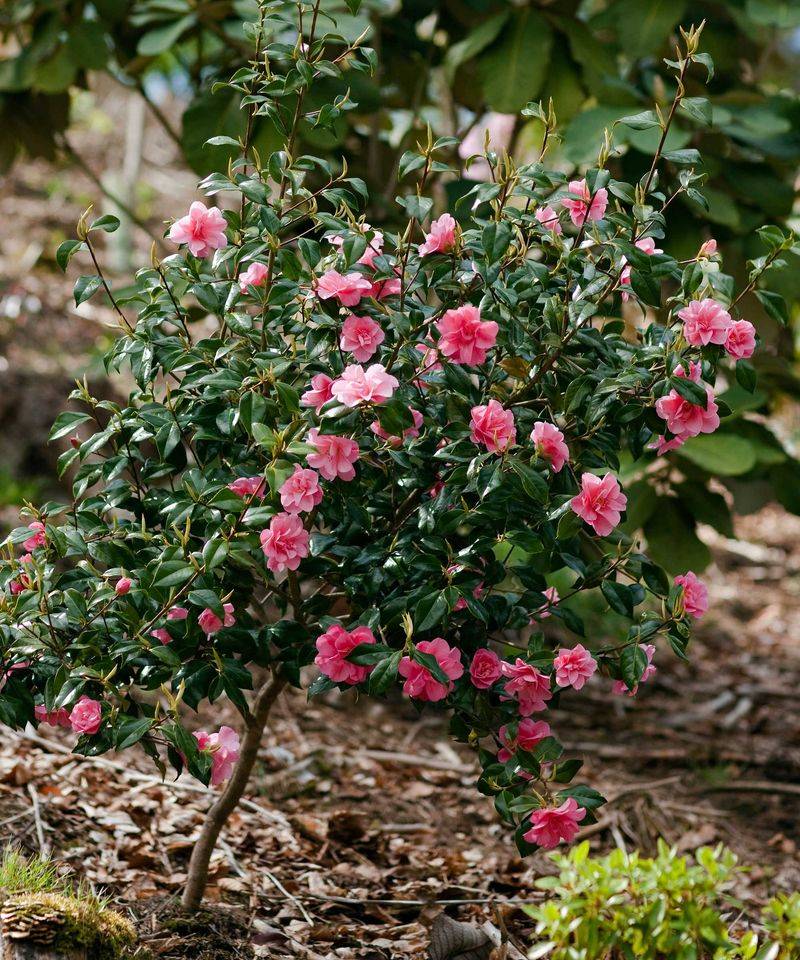
Pruning a camellia at the wrong time of year can cost you an entire season of flowers without any obvious sign that you made a mistake until the following fall or winter. NC State’s camellia overview explains that camellias form next season’s flower buds on older growth, so any pruning done after early summer removes the buds that were already developing for the coming bloom period. The correct window is immediately after flowering ends or, at the latest, in early summer.
Shaping the plant during that window gives new growth enough time to mature and set buds before the season turns. Heavy pruning to reduce size is best done gradually over two to three seasons rather than all at once, which can stress the plant and delay flowering recovery. Removing crossing branches, dead wood, and any stems that disrupt the natural form is usually all that is needed in a well-sited plant.
Size planning before planting saves a great deal of effort later. Japanese camellia can reach roughly 10 to 13 feet at maturity, and some camellias in the broader genus grow into shrubs or small trees approaching 20 feet. UC IPM’s camellia resource reinforces checking mature dimensions before choosing a location near foundations, walkways, or utility lines. A plant that looks manageable at nursery size can eventually crowd a small bed or press against a structure if the mature spread was not factored in at planting time.
Correct the conditions behind a struggling camellia
Sun scorch shows up as tan or brown patches on leaves, usually on the side of the plant facing the most direct afternoon light. Moving the plant or adding shade structure is more effective than any spray treatment. If relocation is not practical, a shade cloth over the plant during the hottest weeks can reduce further damage while you plan a longer-term fix.
Bud drop before flowers open is one of the more disheartening problems, and it usually points to stress rather than disease. Drought during bud development, sudden temperature swings, and waterlogged roots are the most common triggers. Check soil moisture first, then evaluate drainage. Extension diagnostic records on camellia decline consistently point to root and crown problems linked to poor drainage as an underlying cause of gradual plant deterioration.
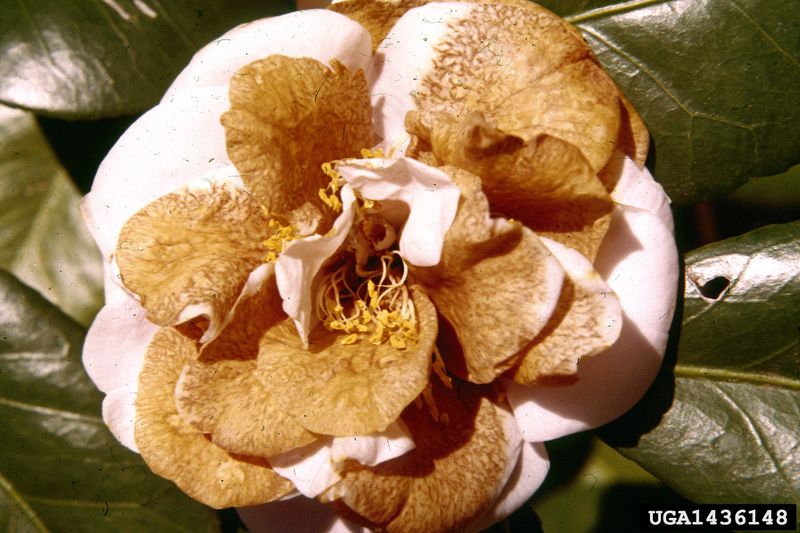
Petal blight causes flowers to turn brown rapidly, often within days of opening, and is more prevalent in humid conditions with poor air circulation. UC IPM’s floriculture camellia guidance recommends removing fallen diseased flowers and petals promptly, since infected debris on the ground can help sustain the disease cycle into the next season. UC Master Gardeners of Placer County echo this sanitation approach as a practical first line of management.
Deer may browse camellia buds and foliage, particularly in fall and winter when other food sources become scarce. University of Georgia Extension’s deer-tolerant plant guidance notes that no ornamental plant is fully deer-proof, especially under high browsing pressure. Physical barriers such as wire cages or fencing around young plants offer more dependable protection than relying on a plant’s general reputation for being less palatable to deer.
Treat camellia as a warm-climate compromise
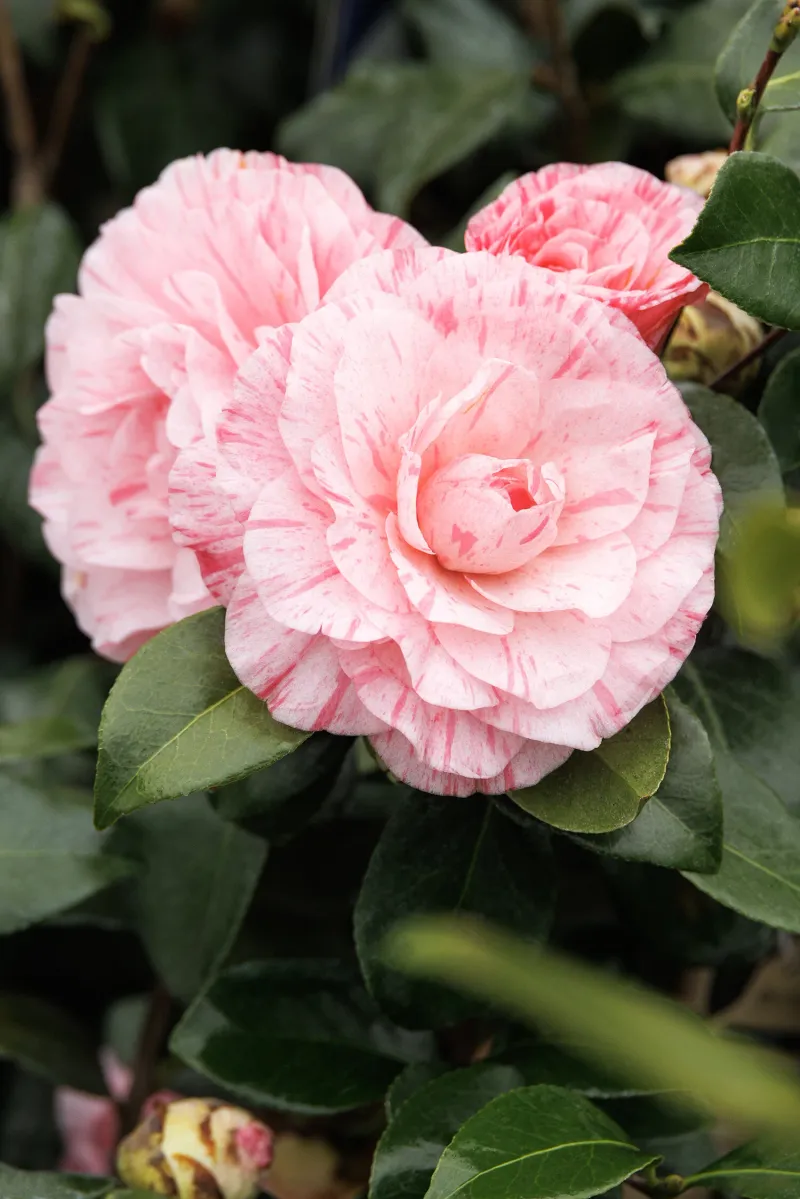
Japanese camellia earns its place in warm-climate gardens by doing something herbaceous peonies often cannot: it blooms reliably without a hard winter. UC IPM’s camellia overview and NC State’s Japanese camellia profile both support it as a strong visual alternative for gardens in approximately Zones 7a through 9b that can provide the right conditions – filtered light, acidic well-drained soil, and consistent moisture during establishment.
The differences are real and worth accepting before planting. Camellia blooms from fall through early spring rather than in late spring alongside typical peonies. It is a permanent evergreen shrub that can reach 10 feet or more, not a perennial that disappears each winter and reappears at a manageable size. Maintenance is not demanding, but it is not optional either: pruning timing, soil pH, drainage, and sun exposure all affect whether the plant flowers well or quietly underperforms.
Choosing camellia works best when you are matching it to conditions your garden can actually provide, rather than expecting it to adapt to whatever spot is available. A well-sited Japanese camellia in the right zone can deliver years of full, layered blooms that bring genuine peony energy to a warm-climate garden – on its own schedule, in its own form, and on its own terms.