
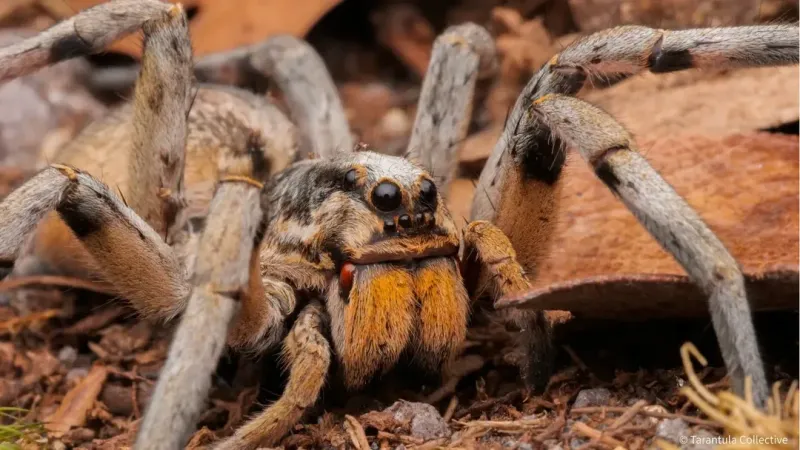
Finding a handful of large, fast-moving spiders patrolling your foundation on a cool October evening can make any homeowner uneasy. Before you reach for a spray can, though, those wolf spiders are actually handing you useful information about your yard. Their presence along one side of the house points to conditions worth a closer look, and understanding what draws them there can help you make smart, targeted improvements. This guide breaks down what those spiders are really telling you and what to do about it.
Fall sightings can have more than one explanation
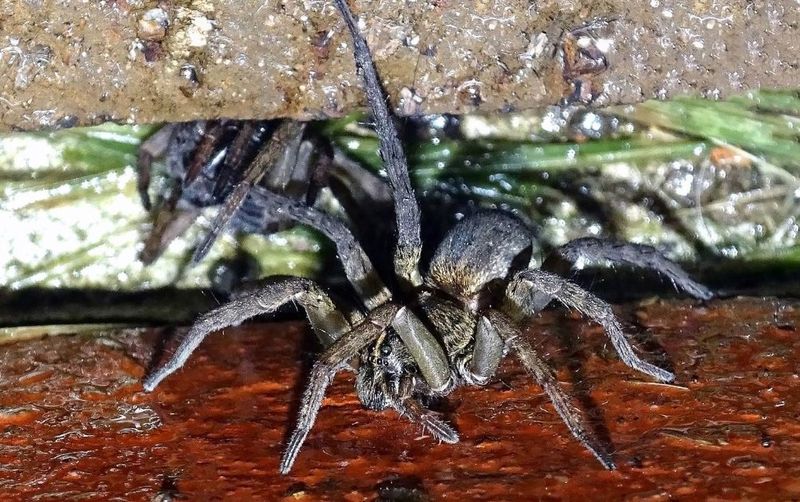
Seeing wolf spiders at your foundation in fall can feel sudden, but the situation usually has more than one cause working at the same time. Wolf spiders are solitary, ground-hunting predators. Rather than spinning webs to catch prey, they actively chase down insects and other spiders across soil, leaf litter, and low vegetation. The Missouri Department of Conservation’s field guide on wolf spiders notes that these spiders occupy a wide range of habitats, from moist areas near water to dry leaf litter, grass, and protected cavities beneath rocks and debris.
One factor that may push encounters higher near structures in autumn is seasonal biology. Penn State Extension’s wolf spider overview describes how mating activity and movement toward protected overwintering sites can increase the chance of spotting these spiders around buildings in fall. That evidence comes from broader regional research rather than North Carolina-specific studies, so it cannot explain every local sighting on its own.
Local habitat conditions often matter just as much, or more. A foundation wall that offers cover, warmth, and nearby prey can attract wolf spiders regardless of the time of year. Prey availability, shelter from debris or mulch, temperature buffering from the structure itself, and seasonal movement may all play a role on any given property. NC State Extension’s guide on spiders in and around homes connects outdoor spider activity with insect-rich areas, reinforcing the idea that where prey concentrates, predators follow.
Treating a cluster of fall sightings as a single-cause event misses the fuller picture. The more useful starting point is to ask what combination of conditions on your specific property makes that stretch of foundation an appealing place to hunt and shelter.
A foundation cluster offers a useful clue, not an exact map
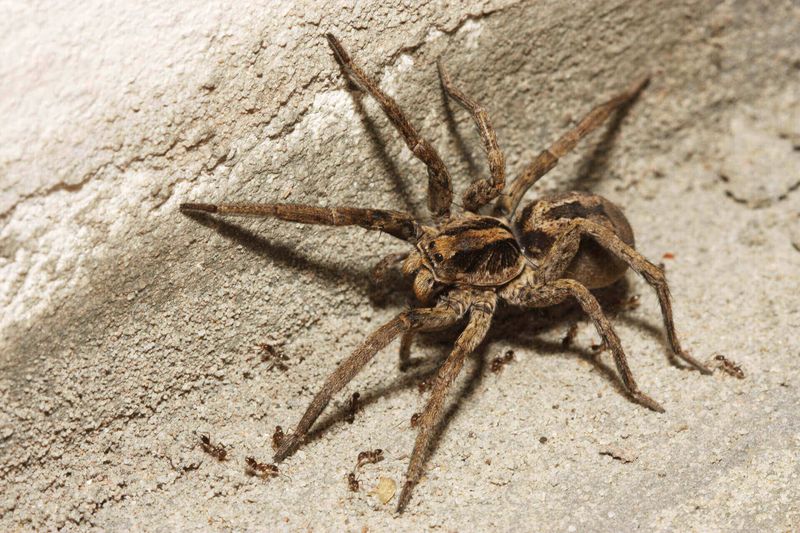
When wolf spiders concentrate along one section of your foundation, that spot is worth investigating, but their presence does not pinpoint the exact source of insects or moisture. Think of a cluster as a flag planted in the yard that says “something favorable is happening here,” not a precise diagnostic reading.
Several conditions can make one side of a house more appealing than another. Leaf litter, mulch, stacked wood, loose rocks, siding gaps, and soil retreats all provide cover where a ground-hunting spider can hide between pursuits. The UC Statewide IPM Program’s spider resource explains that wolf spiders actively run after prey and may shelter under stones, wood, siding, mulch, or debris, confirming that physical cover is at least as important as moisture in making a location attractive.
Outdoor lighting is another contributing factor that homeowners sometimes overlook. Bright lights near doors and windows draw flying insects, and a steady supply of insects near the foundation can bring hunting spiders right along with them. Dense shrubs or groundcover that touch the wall create a sheltered corridor between the yard and the house, offering both prey habitat and physical protection in one strip.
Moisture is one possible condition, not the whole story. Some wolf spider species prefer damp environments near drainage channels or wet soil, while others thrive in dry grass or sandy ground. The Missouri Department of Conservation notes the wide habitat range these spiders occupy, which means a dry foundation can attract them just as readily as a wet one if cover and prey are available.
The practical takeaway is that a foundation-side cluster tells you where to begin your inspection, not what you will find. Several conditions may be stacked on top of each other in the same area, and addressing the most obvious ones is a reasonable first step.
Inspect the foundation for moisture, cover, and entry points
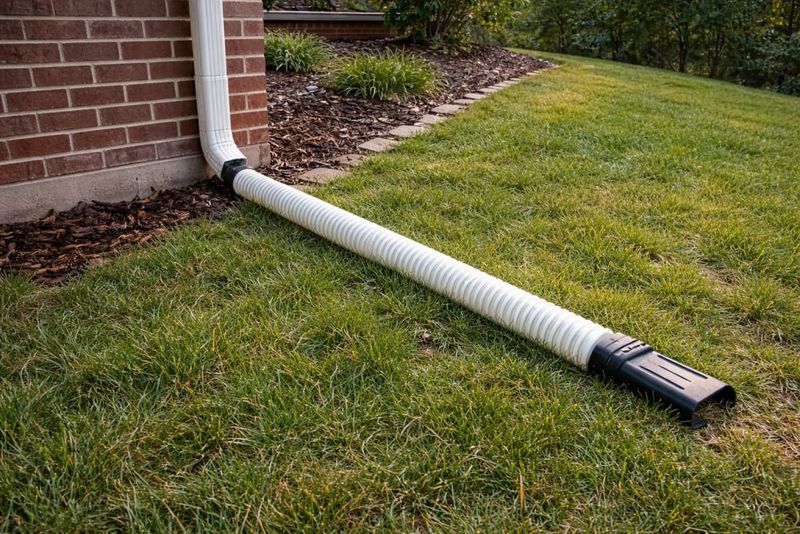
A focused walk around the area where sightings are concentrated can reveal several conditions at once. Start at the roofline and work down. Clogged or leaking gutters allow water to overflow and saturate the soil directly against the wall, which can soften wood framing, encourage mold, and create the kind of moist, sheltered ground that a range of insects and spiders find useful. Check that gutters are clear and that their seams are not dripping.
Follow each downspout to where it discharges. NC State Extension’s gutter management guidance recommends directing downspout water to a suitable outlet at least 10 feet downhill and away from the house where site conditions allow. A downspout that empties right at the foundation corner is one of the most common reasons water pools against a wall. Look for water stains on the foundation surface, soft or discolored soil, and any areas where the ground slopes toward the house rather than away from it.
At ground level, note what is stored or growing against the wall. NC State Extension’s preventative home maintenance guide recommends trimming shrubs at least one foot away from foundation walls and keeping gutters and downspouts in good repair. Firewood stacked against the siding, old boards, landscape timbers, or thick groundcover all create a covered microhabitat that insects and spiders can use year-round.
Finish by scanning the foundation surface itself. Cracks, gaps around pipe penetrations, damaged window-well screens, and poorly sealed door thresholds are potential entry points. NC State Extension’s spider resource connects outdoor spider activity with insect-rich areas and notes that gaps in the building envelope allow both insects and the spiders that follow them to move indoors. These inspection steps reflect sound home maintenance practice regardless of what you find crawling along the wall.
A wolf spider is not a funnel-weaving spider
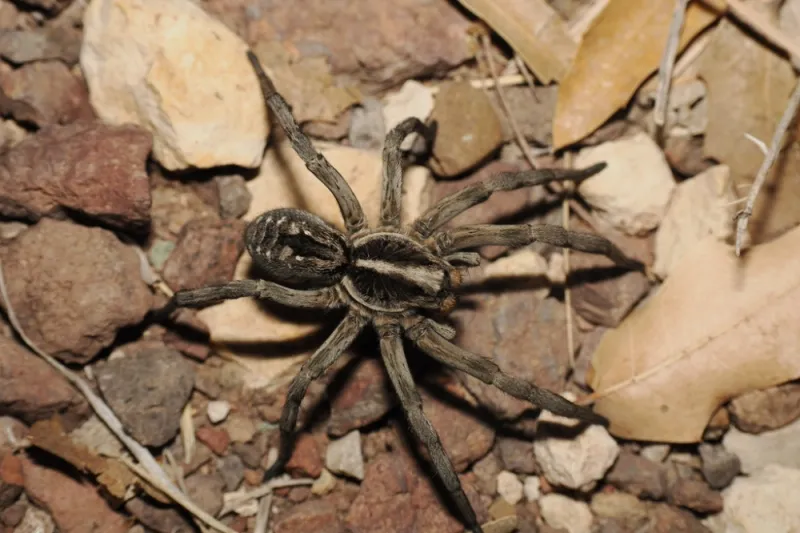
Misidentifying spiders near the foundation is easy, and the mistake can matter. Wolf spiders are active hunters. They pursue prey on the ground and do not build webs to capture insects. If you see a funnel-shaped web tucked into low grass, a foundation vent, or a gap in the siding, that structure belongs to a funnel-weaving spider, which is a different animal entirely.
A wolf spider is not the same as a funnel-weaving spider, and a funnel-shaped web near your foundation is not evidence that a wolf spider made it.
Color and size are not reliable identification tools. Many large brown spiders share overlapping appearances, and NC State Extension’s spider identification resource notes that brown-colored spiders are frequently misidentified. The guide also states that while North Carolina does have dangerous spiders, including black widows and brown recluses, brown recluses are not common in the state. That does not mean every brown spider near your foundation is harmless, only that appearance alone cannot settle the question.
Reliable identification combines multiple features at once: body structure, eye arrangement, leg proportions, the presence or absence of a web, and observed behavior. NC State Extension’s fishing spiders and wolf spiders guide describes the physical traits that distinguish wolf spiders from similar-looking species found around North Carolina homes, including fishing spiders, which are also large, brown, and often found near moisture.
When identification is uncertain or the spider is in a location where a bite could be medically significant, such as a child’s bedroom, a crawlspace you work in regularly, or a stored-clothing area, consult a pest management professional or cooperative extension office rather than relying on a quick visual match. Getting the identification right before deciding on a response saves time and avoids unnecessary treatment.
A short inspection can help address likely attractants

Once you know what to look for, the follow-up work at the foundation edge is mostly straightforward. Clear leaf litter, pine straw, and loose debris from the base of the wall. A thick layer of organic material against the foundation creates exactly the kind of sheltered, slightly humid microhabitat that insects and hunting spiders use as a base of operations.
Move firewood, lumber scraps, old boards, and stored containers away from the house. These materials are classic daytime retreats for a range of spiders and insects, and keeping them away from the wall reduces the overlap between outdoor habitat and indoor entry points. When you do handle these items, wear gloves. Spiders sheltering in stacked materials may react defensively if they feel cornered.
Trim any shrubs, ornamental grasses, or groundcover that touches the siding or grows over the foundation. NC State Extension’s home maintenance guidance recommends at least one foot of clearance between foundation walls and woody plants. That gap removes a sheltered corridor and also improves airflow, which helps the wall surface dry faster after rain.
Address the lighting near doors and windows. Switching to yellow or sodium-vapor bulbs, or using motion-activated lights that stay off when no one is present, reduces the insect draw that can bring hunting spiders close to entries. Repairing gutters and redirecting downspouts reduces wet soil at the foundation edge and improves drainage for structural reasons that go well beyond spider management.
Seal obvious gaps around door frames, pipe penetrations, and window wells with appropriate caulk or weatherstripping. NC State Extension’s wolf and fishing spider resource recommends exclusion as a first-line approach, noting that reducing entry points is more durable than repeated chemical treatment. These steps may reduce favorable conditions and the likelihood of indoor entry, though they do not guarantee that all outdoor sightings will stop.
Choose targeted control over blanket spraying

Most wolf spiders patrolling the yard at night are doing useful work. They hunt ground-dwelling insects and other spiders, which means a spider moving through your mulch or across the lawn is generally worth leaving alone. The question of whether to act comes down to location and context, not simply how many you see.
An individual spider near a door threshold or inside the house is a reasonable candidate for removal. A container placed over the spider and slid under a piece of cardboard lets you relocate it without contact. A vacuum with a bag or canister works equally well for spiders indoors. Either approach avoids the need for chemical intervention for a single animal.
When handling firewood, boards, crawlspace materials, or dense debris, wear gloves and move materials deliberately rather than grabbing quickly, since a spider trapped against skin will bite defensively.
NC State Extension’s wolf and fishing spider guide recommends against broad outdoor pesticide application for these spiders, noting that exclusion and habitat management are more effective long-term strategies. Routine broadcast spraying around the entire foundation or yard can harm ground beetles, parasitic wasps, and other natural enemies that help keep insect populations in check.
EPA integrated pest management principles call for identifying a defined pest problem before choosing a control method, with chemical treatment reserved for situations where inspection, exclusion, and habitat modification have not resolved the issue. Wolf spiders at the foundation are not, by themselves, evidence of a defined pest problem requiring chemical control. If a follow-up inspection reveals a genuine infestation of a different pest, such as a large population of cockroaches, ants, or stored-product insects, that finding justifies a targeted response aimed at the actual problem.
Handle spiders carefully and treat bite symptoms seriously
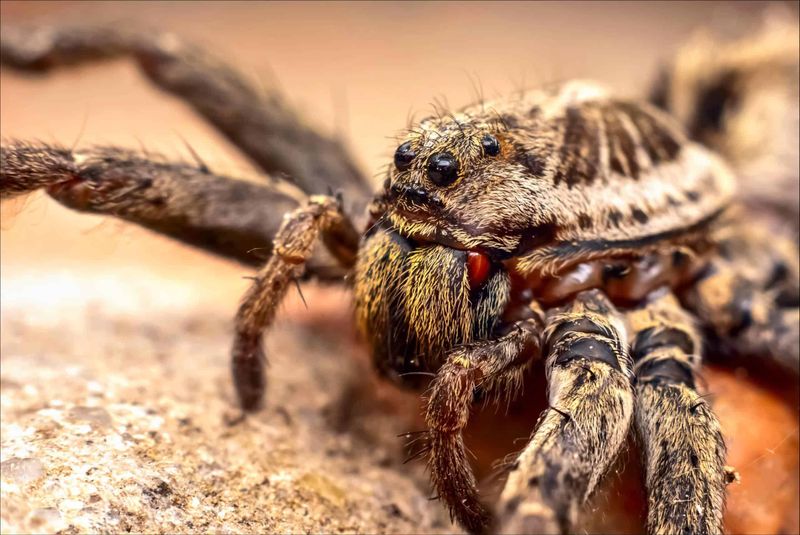
Wolf spiders generally bite only when they feel cornered or are pressed directly against skin. Picking one up bare-handed, reaching into a gap where one is sheltering, or trapping one inside a glove or boot are the most common ways bites occur. Wearing gloves when clearing debris, moving stored materials, or working in a crawlspace is a straightforward precaution that applies to any spider you might encounter, not just wolf spiders.
Penn State Extension describes wolf spider bites as defensive rather than aggressive, and the spiders are not known for causing medically serious outcomes in the way that black widow or brown recluse bites can. Even so, a bite from any spider can cause localized pain, redness, and swelling, and individual reactions vary.
A more important caution is not to assume that an unexplained skin lesion is a spider bite. CDC guidance on venomous spiders notes that many alleged spider bites are actually other skin injuries or infections, and that most spider bites occur when spiders are accidentally trapped or touched. Without actually seeing the spider bite you, the cause of a skin lesion remains uncertain.
Seek medical care promptly if you experience worsening redness that spreads, severe or increasing pain, blistering, tissue breakdown, fever, difficulty breathing, muscle cramps, or any systemic symptoms. These signs warrant evaluation regardless of whether a spider was involved, because several medical conditions can produce similar presentations. For ordinary outdoor sightings where no contact occurred, no medical response is needed.
Use the foundation as an inspection point, not a diagnosis
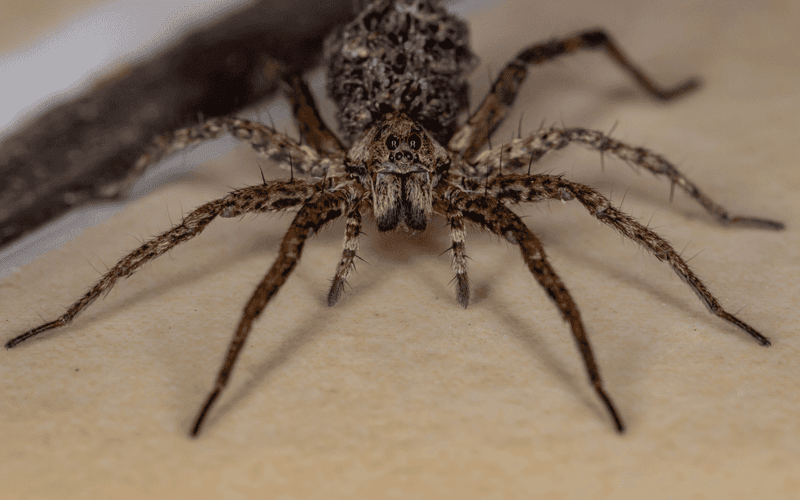
Fall wolf spiders along the foundation are most reliably understood as a sign that the area offers a workable mix of prey, shelter, and cover. A cluster concentrated on one side of the house points you toward a zone worth inspecting, but it does not confirm an indoor infestation, identify the precise source of insects, or prove that moisture is the only factor at work.
NC State Extension’s spider guidance connects outdoor spider activity with insect-rich areas and recommends exclusion and habitat management over routine chemical treatment. A focused inspection of drainage, vegetation, debris, lighting, and entry points gives you the clearest picture of what conditions are actually present. NC State’s home maintenance recommendations reinforce that these are sound structural practices regardless of what triggered the inspection.
Targeted maintenance at the foundation edge can reduce favorable conditions and lower the chance of indoor entry without requiring you to eliminate every spider or insect from the yard. Escalate only when the inspection turns up a defined problem: a structural moisture issue, a confirmed indoor pest population, a safety hazard, or a gap that clearly needs sealing. The spider that prompted the walk-around may have done you a favor.