
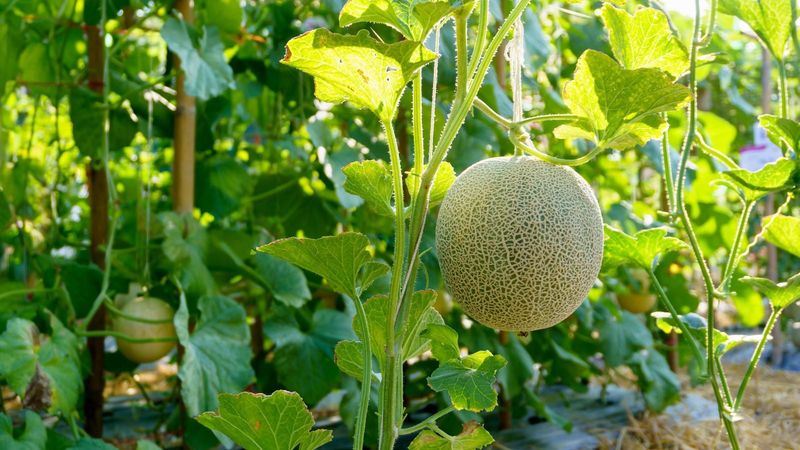
Watching a cantaloupe vine take over your garden bed while producing zero melons is one of the more frustrating summer puzzles a home gardener can face. The vines look healthy, the flowers keep coming, and yet nothing develops into actual fruit. Pollination is one common reason this happens, but heat, water stress, and a handful of other culprits can produce the exact same result. This guide will help you figure out which problem you are actually dealing with, and show you a practical option you can try the next time a fresh female flower opens.
Vigorous vines do not prove that fruit set failed at the flowers
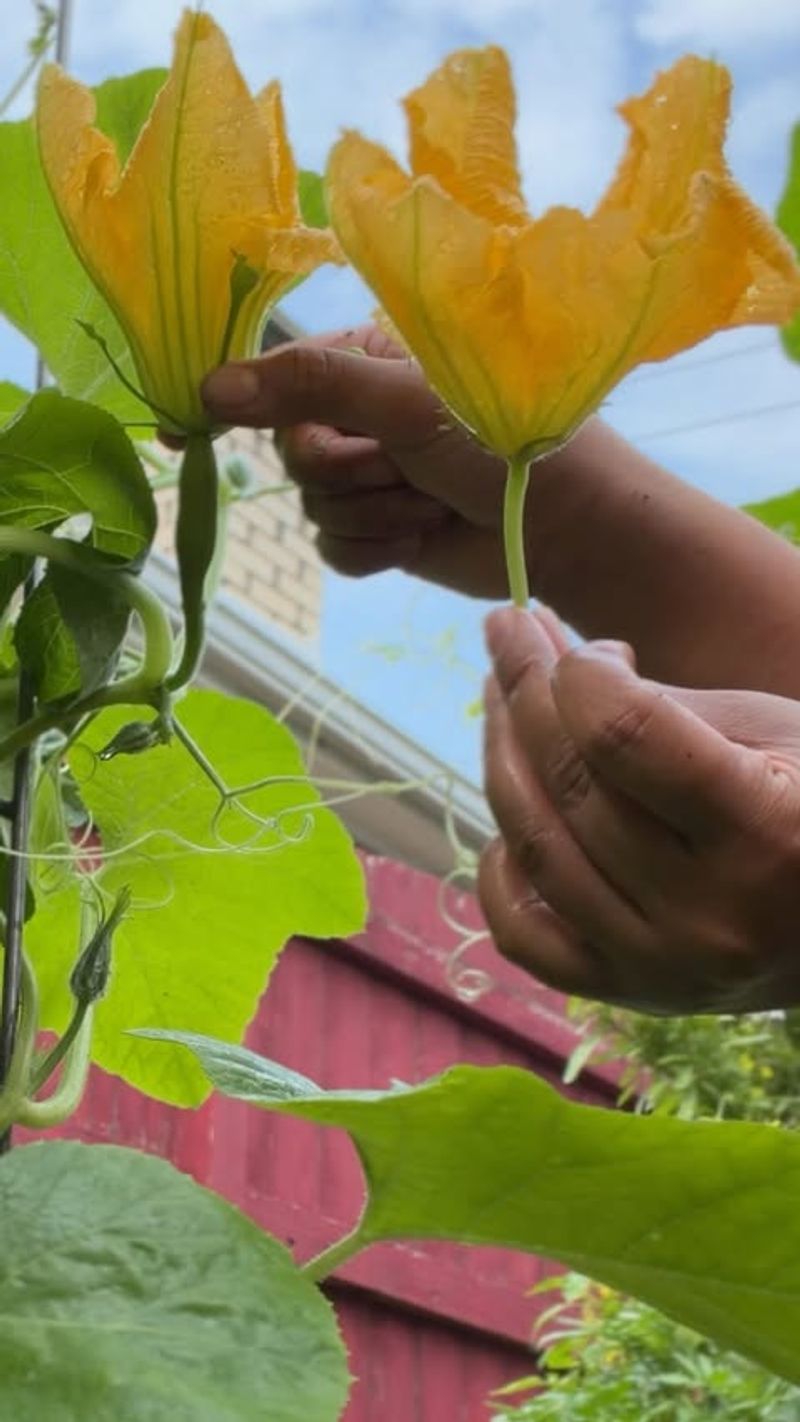
A cantaloupe vine that runs several feet in every direction without producing a single melon is not automatically telling you that pollination failed. Cantaloupes are wired to produce male flowers first, sometimes for a week or two before any female flowers appear, and those early male blossoms will drop without leaving any fruit behind. That is completely normal, not a sign that something has gone wrong.
The key to reading your plant is knowing which flowers to watch. Female flowers carry a small, rounded swelling at the base of the blossom, just below the petals. That swelling is the immature melon, and it is the only structure that can develop into fruit. Male flowers lack that swelling entirely.
A few cultivars also produce perfect flowers that contain both male and female parts, so it helps to know which variety you planted.
Rather than counting blossoms or measuring vine length, focus on whether that small ovary enlarges in the days after a flower opens. UC ANR guidance on cucurbit fruit development makes clear that flower presence alone does not confirm successful pollination. When female flowers appear but the ovary stays flat and the flower drops, inadequate pollination becomes a leading possibility worth investigating, though Utah State University Extension also names heat, water stress, excess nitrogen, pests, disease, and nematodes as causes of poor fruit set that can look identical from the outside.
Heat can narrow the pollination opportunity without causing every failure
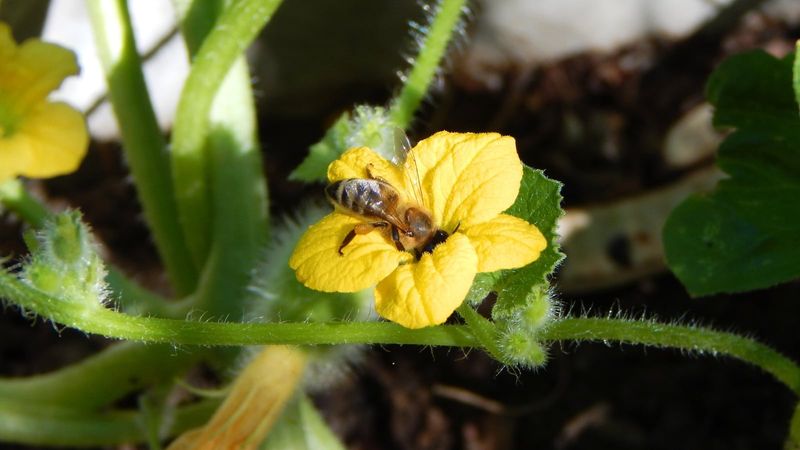
Melon flowers are not patient. Iowa State University Extension notes that cantaloupe flowers may remain receptive for only a day or even just several hours, which means the window for successful pollination is genuinely short. When temperatures climb during the summer, that already-brief window can become even harder to use well.
Heat affects fruit set in more than one way. It can reduce the activity of bees and other pollinators, which means fewer insects are visiting flowers during the short period when those flowers are ready to receive pollen. Utah State University Extension identifies very hot weather as a direct contributor to poor fruit set, and heat can also delay or reduce female-flower production and push the plant into water stress that makes fruit set less likely regardless of pollination.
Seeing a bee or two near your vines is encouraging, but occasional insect visits do not guarantee that every open female flower received enough pollen during its receptive period. UC IPM guidance on cucurbit pollination problems points out that rainy or cloudy weather, pesticide exposure, and low pollinator populations can all reduce bee visits even when conditions look fine from the garden path. Heat is a plausible contributor to your situation, but it is not the only explanation worth checking.
Hand-pollinate a fresh female flower early in the morning
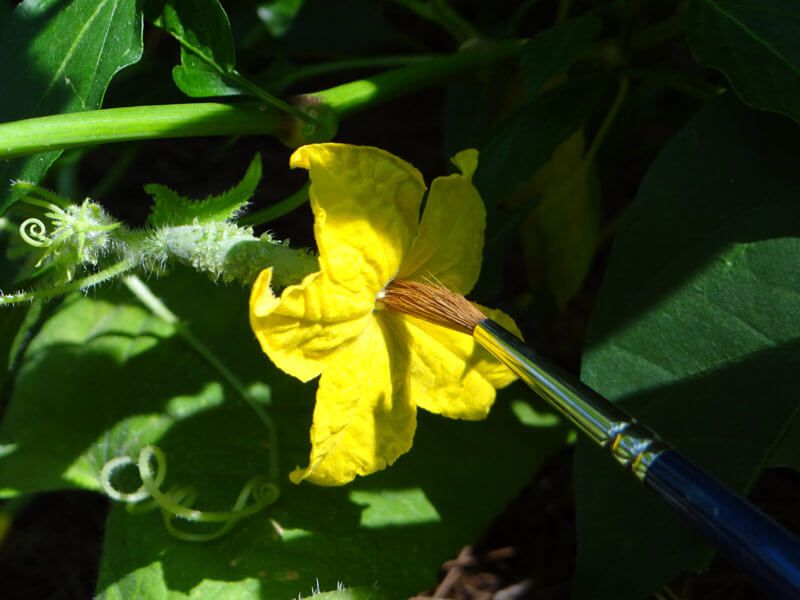
When a fresh female flower is present and you suspect that bees have not been visiting reliably, hand-pollination is a practical rescue option worth trying. The goal is straightforward: move pollen from a male flower to the stigma inside a female flower while both are fresh and open.
Start by finding a newly opened male flower with visible pollen on its anthers. It will look dusty or powdery at the center. Then locate a female flower that has just opened, identified by the small swollen ovary at its base. Extension pollination guidance describes two practical methods: use a small, clean, soft-bristled brush to collect pollen from the male flower’s anthers and gently dab it onto the sticky stigma inside the female flower, or remove the petals from the male flower entirely and lightly press its pollen-bearing center against the female flower’s stigma.
Either approach works when done carefully.
Do this early in the morning, while the flowers have just opened and are still dry. Timing matters because flowers tend to close as the day heats up and because damp petals can make pollen transfer messier and less effective. Natural History Museum of Utah hand-pollination guidance and UC ANR melon production resources both support early morning as the preferred time, though the exact hour varies with your climate and how quickly flowers open each day. One important limit: if your plant has produced only male flowers so far, extension advice on missing female flowers is clear that hand-pollination cannot help until female or perfect flowers are present.
Mark treated flowers and look for an enlarging ovary
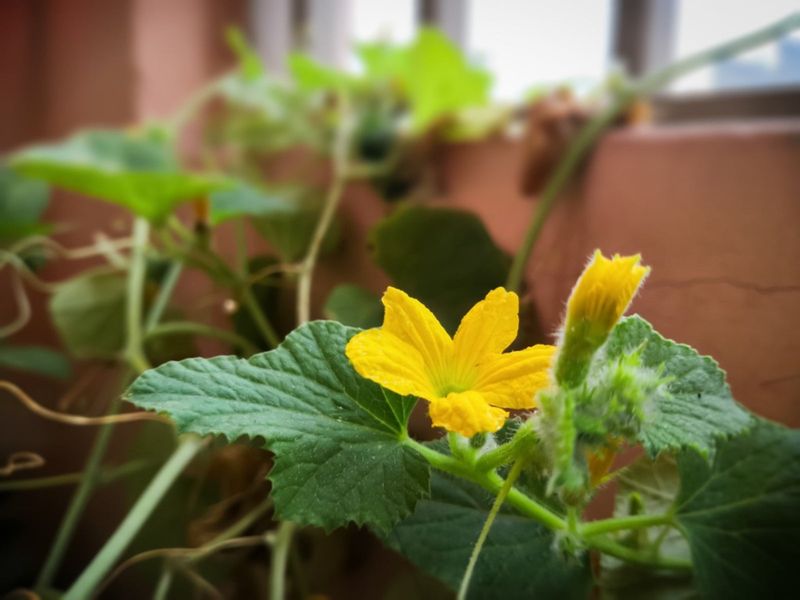
Treating hand-pollination as a diagnostic test, not just a rescue attempt, gives you genuinely useful information. Each time you transfer pollen to a female flower, mark that flower or the nearby vine with a piece of colored tape, a twist tie, or a garden marker so you can track it separately from flowers that were left for bees to visit naturally.
Check back over the following days and watch the ovary at the base of the flower. A successfully pollinated flower will show a noticeably enlarging ovary within a few days of treatment. Kansas State University Extension guidance on fruit set supports using this kind of comparison to assess whether natural pollination is the weak link. If your marked flowers develop while similar unmarked flowers drop, inadequate bee activity becomes a more plausible explanation for your overall problem.
Keep the inference honest, though. Extension pollination resources and UC ANR cucurbit research both make clear that even a successfully hand-pollinated flower can abort afterward because of heat, drought, disease, pest pressure, competition from other developing fruit on the vine, or the plant’s own natural thinning process. Pollen transfer is the first step, not the final guarantee. Repeat the process on each new female flower that opens, and continue monitoring for ovary growth rather than simply counting which flowers stayed on the vine.
Keep moisture steady and protect the insects that pollinate melons
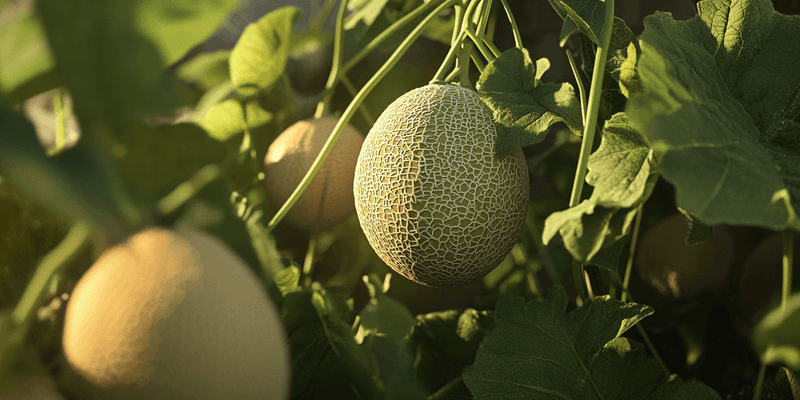
Soil moisture and pollinator access work together to support fruit set, and neglecting either one can undercut even a well-timed hand-pollination attempt. UC IPM cultural tips for cantaloupe recommend consistent root-zone moisture during flowering and early fruit development. The goal is steady, even moisture, not saturated soil or constant watering, which can contribute to disease and reduce fruit quality near harvest.
Drip irrigation or carefully directed watering at the base of the plant works better than overhead watering during the morning hours when flowers are open, because wet foliage can interfere with pollen and wet conditions can deter bees. University of Georgia Extension melon production guidance links water stress to reduced yields, delayed development, and small or misshapen fruit, so letting the soil dry out significantly during this period carries real risk. Oklahoma State University Extension lists water stress alongside heat and poor bee pollination as direct causes of poor fruit set.
On the pollinator side, avoid applying insecticides to open flowers or during the morning hours when bees are most active. EPA pollinator protection guidance recommends following product-label restrictions, which commonly include avoiding applications during bloom or timing treatments when pollinators are least active. Penn State Extension cantaloupe production resources reinforce that protecting bee access during the flowering period is one of the most practical steps a home gardener can take. These practices improve conditions for fruit set, but they do not override severe plant stress or the absence of female flowers.
Check plant stress before blaming pollination
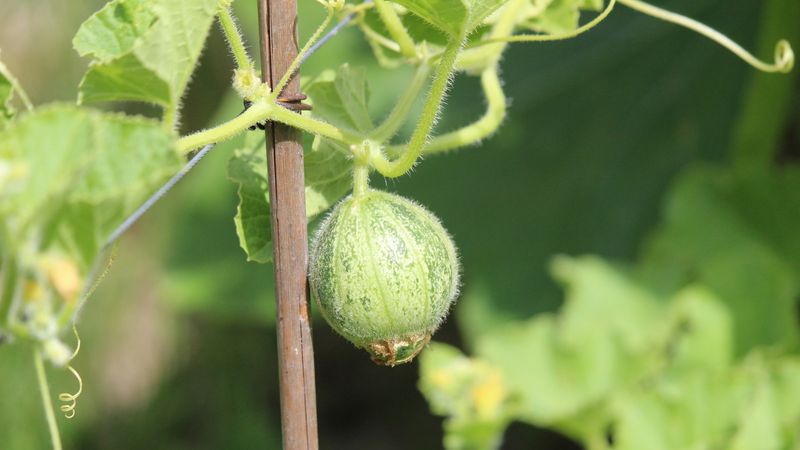
Before committing to more hand-pollination attempts, take a step back and look at what the whole plant is telling you. If your vine is producing only male flowers and no female or perfect flowers have appeared yet, hand-pollination cannot help at all. Extension guidance on missing female flowers is direct on this point: the right response is to reduce plant stress, maintain appropriate moisture, and wait. Heat and stress can delay female flowers, so patience combined with better growing conditions is the actual intervention here.
Excess nitrogen is a frequently overlooked cause of vigorous but fruitless vines. When a plant receives too much nitrogen, it tends to put energy into leaves and runners rather than reproductive development. Virginia Tech cantaloupe production resources connect excess nitrogen with reduced reproductive output, and Oklahoma State Extension vegetable FAQs echo the same concern. Adding more fertilizer, especially nitrogen-heavy products, will likely make the problem worse rather than better.
Several other conditions can produce the same fruitless-vine symptom and are worth ruling out. UC IPM cucurbit pollination problem guidance identifies cloudy or rainy weather, pesticide exposure, and low pollinator populations as contributors. Root-knot nematodes, soil-borne diseases, and pest damage can also interfere with the plant’s ability to sustain developing fruit even when pollination occurs. If hand-pollinated flowers are aborting consistently and conditions seem otherwise reasonable, inspecting roots, checking for pest damage, and reviewing recent pesticide applications are all worthwhile next steps before assuming pollination is the sole issue.
Use a fresh-flower check instead of a guaranteed fix
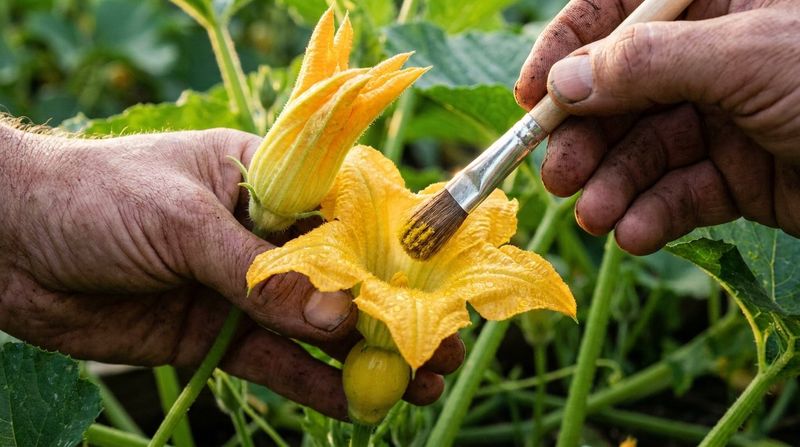
A simple morning routine can turn an uncertain situation into an actionable one. Each day, walk your vines early, while flowers are freshly open and still dry. Look for a female flower with a swollen ovary at its base. When you find one and bee activity has seemed low or unreliable, hand-pollinate it using a brush or a stripped male flower, then mark it so you can monitor that specific ovary over the following days.
Extension hand-pollination guidance and Oklahoma State University Extension both support repeating this process as new female flowers appear rather than treating it as a one-time fix. Pair it with steady root-zone moisture and avoided insecticide applications during bloom, as UC IPM cultural guidance for cantaloupe recommends, and you give each pollinated flower a reasonable chance to develop.
One cantaloupe plant can produce both the male and female flowers needed for fruit set on its own, so a second plant is not inherently required, though extension guidance on cantaloupe pollination requirements notes that more plants can mean more flower opportunities. Hand-pollination may meaningfully improve your results when missed insect visits are the limiting factor, but Virginia Tech Extension melon production resources make clear it cannot substitute for female flowers that have not yet appeared or overcome a plant already under severe stress. The most reliable outcome comes from combining the technique with honest attention to what your plant actually needs.