
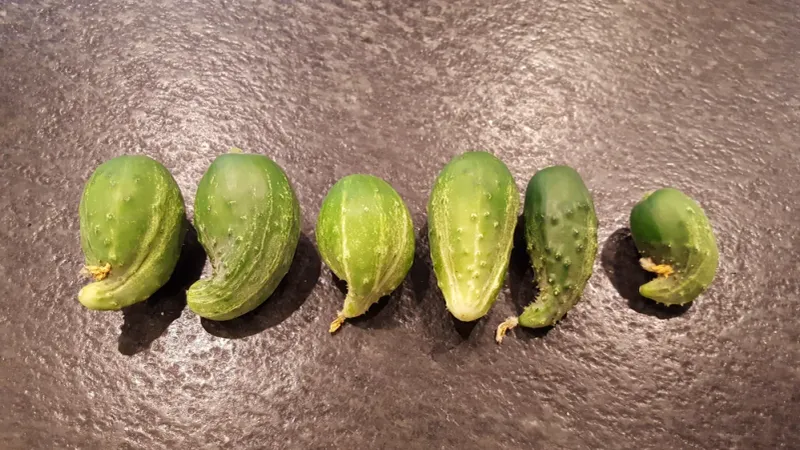
Pull a cucumber off the vine and find one end swollen and the other end narrow and pinched, and it is hard not to wonder what went wrong. That odd shape often points to incomplete pollination, a common problem that gets worse when summer heat slows down the bees.
The good news is that the rest of your vine can still produce normal fruit if you act on the next open flowers. Understanding what caused the problem, and what else might be behind it, puts you back in control before the season ends.
A Pinched End Often Signals Uneven Pollination
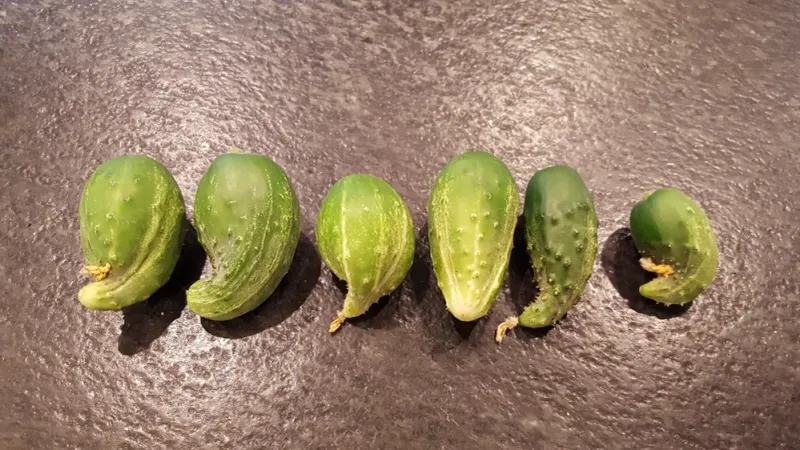
Spotting a cucumber that bulges at one end and tapers off sharply at the other can feel alarming, but this shape has a recognizable explanation in most home gardens. On standard field-grown varieties, that thick-fat-one-end, narrow-other-end pattern is a classic sign of incomplete or uneven pollination.
When only part of the ovary receives enough pollen to develop normally, the cells in the pollinated section grow and fill out while the under-pollinated section stays small and tight, producing exactly the pinched or gourd-shaped fruit you are holding.
Multiple university extension programs, including Texas A&M AgriLife Extension and Oklahoma State, list inadequate pollination as a direct cause of misshapen cucumbers. Penn State extension identifies deformed fruit with low or underdeveloped seeds as a specific indicator of pollination trouble.
One malformed cucumber does not mean the vine is dying or that every fruit will look the same. The shape alone cannot prove the diagnosis with certainty, because moisture stress, temperature extremes, mechanical injury, viruses, and cultivar genetics can produce similar distortions.
The critical distinction is this: the fruit already on the vine with a pinched end will not straighten out with any treatment, but flowers that have not yet opened can still receive proper pollination and develop into well-formed cucumbers.
Heat Can Disrupt the Short Window for Fruit Set
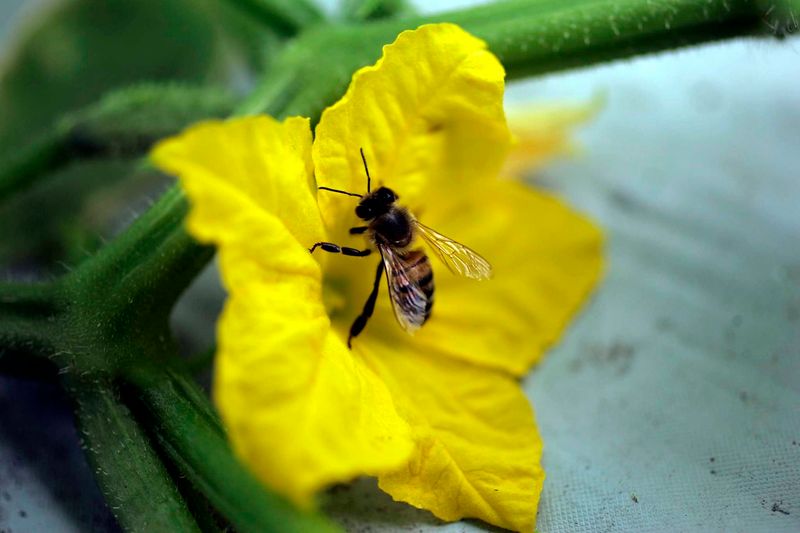
Most cucumber varieties grown in home gardens rely on insects to carry pollen from a male flower to a female flower. The male flower is a simple yellow bloom on a slender stem, while the female flower has a tiny, cucumber-shaped swelling directly behind its petals.
That small swelling is the ovary, and successful pollen transfer during the flower’s brief receptive period is what triggers it to develop into a full-sized cucumber. Miss that window, or deliver too little pollen, and the ovary may either drop off or grow unevenly.
Late-summer heat adds another layer of difficulty. University of Minnesota Extension notes that many bees reduce their activity as temperatures climb toward and above 90 degrees Fahrenheit, which can cut the number of flower visits at exactly the time your cucumber plants need them most.
Reduced bee traffic means less pollen is being moved between flowers, raising the odds of incomplete fertilization.
Heat can also place additional stress on pollen quality and plant physiology, making it harder for the fertilization process to complete normally even when a bee does visit. Oklahoma State Extension describes how high temperatures can contribute to poor fruit set in cucumbers.
Keep in mind, though, that heat is a contributing factor rather than the only explanation. A pinched cucumber during a hot stretch strongly suggests pollination trouble, but it does not rule out water stress or other problems happening at the same time.
Check the Flower and Cultivar Before Blaming the Bees
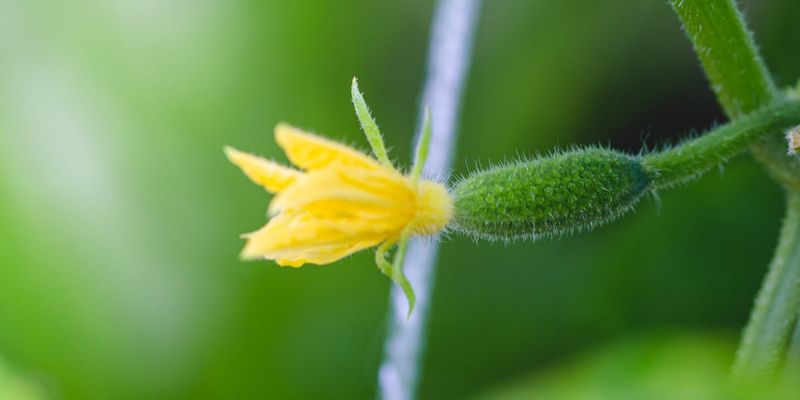
Before reaching for a cotton swab or worrying about bee populations, take a moment to look at what you are actually growing. Learning to tell male from female flowers takes about thirty seconds: the female flower has a miniature cucumber-shaped bulge sitting directly at the base of the petals, while the male flower attaches to a plain, thin stem with no such swelling.
University of Georgia Extension explains this distinction clearly for home gardeners.
Equally important is knowing your cultivar type. Standard field cucumbers are monoecious, meaning each plant produces both male and female flowers and depends on insects to move pollen between them.
Parthenocarpic varieties, which include many greenhouse, European, and some Beit Alpha types, are bred to set fruit without any pollination at all. University of Florida IFAS research on parthenocarpic cucumbers notes that bee visits to those varieties can actually produce seeded, bitter, curved, or misshapen fruit rather than fixing the problem.
Check your seed packet or the cultivar description before treating poor pollination as the cause.
Gynoecious cultivars add another wrinkle. Some of them produce mostly or only female flowers and require a separate monoecious pollinator variety planted nearby, while gynoecious parthenocarpic types do not need a companion plant at all.
Oklahoma State Extension’s cucumber production guide covers these distinctions in detail. One more myth worth clearing up: cross-pollination between cucumbers and squash or melons does not change the shape or flavor of your current-season fruit.
Any genetic effect from such a cross would only show up in plants grown from saved seed the following year.
Hand-Pollinate Fresh Female Flowers in the Morning
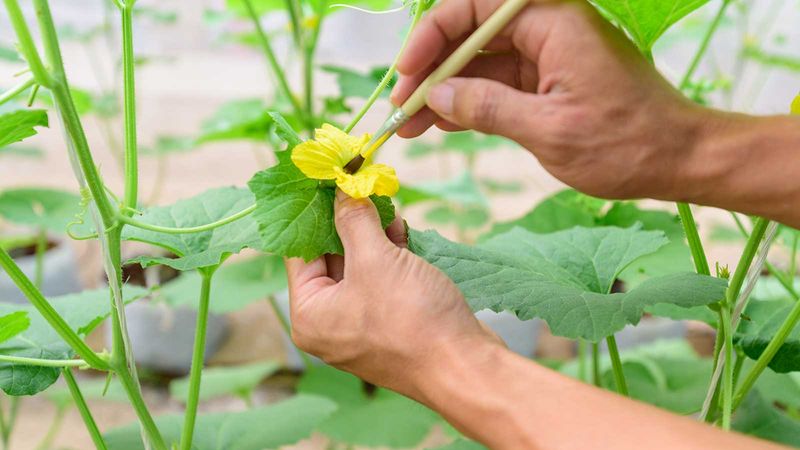
When bee activity has been low or the heat has been relentless, hand pollination gives your newly opened female flowers a reliable backup. The process is straightforward and takes only a few minutes each morning.
Go out early, before the heat builds, and find a freshly opened male flower. Gently collect pollen from its center using a clean cotton swab or a small soft-bristled brush, then carry that pollen directly to the center of a freshly opened female flower and transfer it with light contact.
Texas A&M AgriLife Extension specifically recommends touching the inside of male and female flowers with a soft brush or cotton swab when female flowers are dropping or failing to develop. The key word is “freshly opened” – a female flower is receptive for only a short period, so acting on the day it opens gives you the best chance of successful fruit set.
Hand pollination supports new fruit on flowers that have not yet been fertilized. It cannot straighten a cucumber that already has a pinched or narrow end.
Utah State University Extension advises that badly misshapen young cucumbers will not develop into normal fruit and are better removed from the vine entirely. Pulling those off redirects the plant’s energy toward new flowers and the fruits that can still develop properly.
Maintain Even Moisture During Heat and Fruit Growth

Fixing a pollination problem and managing heat stress are two separate tasks, and soil moisture sits at the center of the second one. Water stress on its own can produce pointed ends and misshapen cucumbers, independent of anything happening with the bees.
When a plant goes through cycles of dry soil and sudden wet soil during flowering and fruit enlargement, the developing fruit can grow unevenly, mimicking the very symptom you are trying to diagnose.
Penn State Extension’s cucumber production guidance identifies irrigation problems as one of the alternative causes of misshapen fruit, alongside temperature stress and mechanical injury. The goal is uniform moisture rather than any particular watering schedule.
Drip irrigation or soaker hoses deliver water near the root zone without repeatedly wetting foliage, which reduces the risk of fungal disease while keeping the soil consistently moist. A two- to three-inch layer of mulch over the root zone slows evaporation and buffers soil temperature during the hottest parts of the day.
Heavy watering is not the answer. Saturating the soil or flooding the root zone can damage roots, leach nutrients out of reach, and increase disease pressure.
University of Georgia Extension’s cucumber production bulletin recommends keeping moisture as uniform as practical rather than swinging between extremes. Think of consistent moisture as the foundation that makes everything else, including pollination support and heat management, more effective.
Protect Pollinators Around Blooming Vines
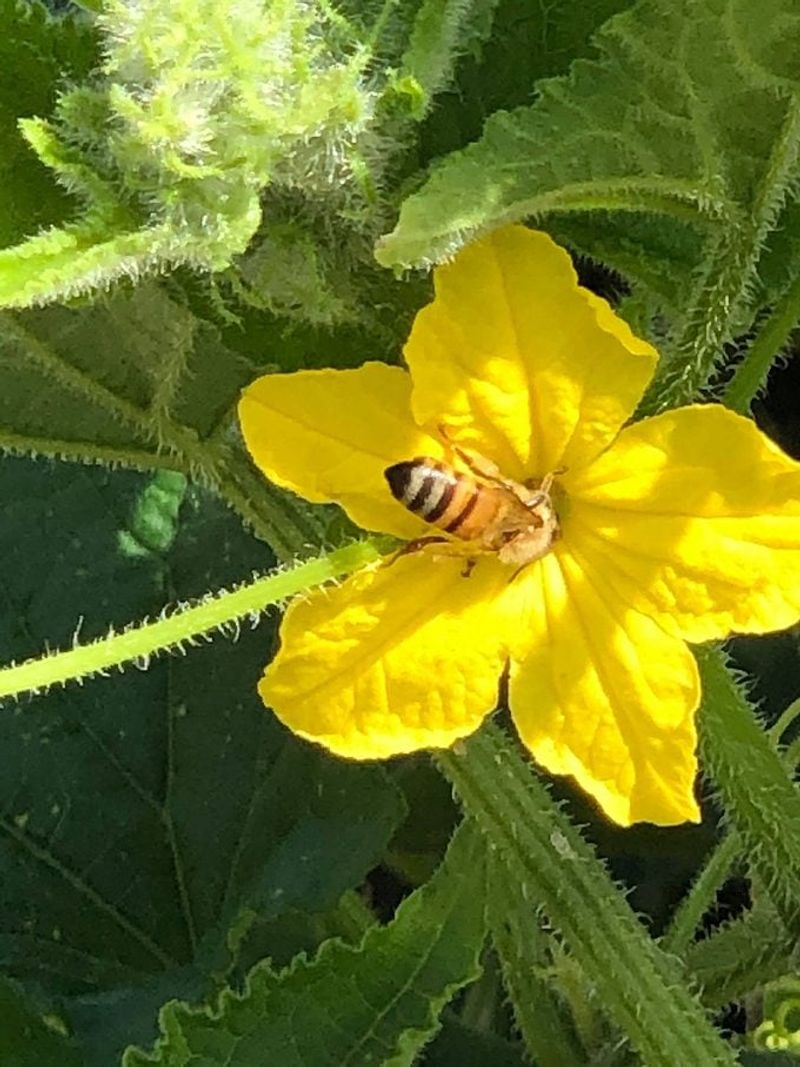
Bees are doing the work that produces your cucumbers, and protecting their activity around blooming vines is one of the most practical steps you can take for future fruit set. Honey bees, bumblebees, squash bees, and other wild insects all visit cucumber flowers.
Penn State Extension research on pollination services in cucurbits highlights how dependent cucumbers are on consistent insect visits for normal fruit development. Planting flowers that support pollinators nearby can improve habitat over time, but that kind of habitat improvement will not rescue fruit that is already forming on the vine right now.
The more immediate concern is avoiding anything that harms the bees currently visiting your plants. Insecticide applications to blooming cucumber plants carry real risk for pollinators, and automatic spraying is not a safe response to a misshapen cucumber.
EPA pollinator protection guidance emphasizes that pesticide labels control legal use and may prohibit applications during bloom entirely. If you have a genuine pest problem that requires treatment, identify the pest first, select a product that is labeled for use on cucumbers against that specific pest, and follow all pollinator restrictions on the label precisely.
University of Minnesota Extension guidance on pesticides and pollinators notes that some products permit application only when pollinators are not actively foraging, but the label’s specific language takes precedence over any general timing rule. When cucumber beetles or other pests are present, Minnesota’s cucumber beetle management recommendations include non-chemical options worth considering before reaching for a spray.
Look for Clues That Point Beyond Pollination
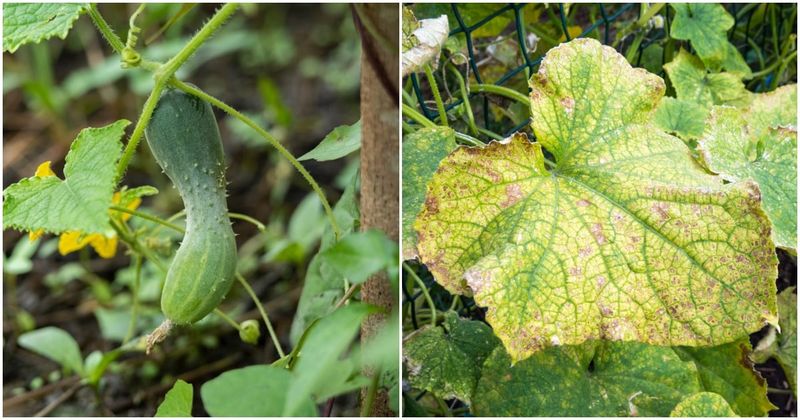
One misshapen cucumber on an otherwise healthy vine usually points to a pollination gap. A pattern of distorted fruit across multiple plants, or misshapen cucumbers paired with unusual leaf symptoms, calls for a broader look.
Several other problems can produce fruit that narrows at one end or grows unevenly, and sorting through them keeps you from applying the wrong remedy.
Irrigation problems and moisture swings are worth ruling out first, since their effect on fruit shape closely resembles pollination trouble. Low fertility can also contribute to poor growth and uneven development, but adding fertilizer without evidence of a deficiency is not a reliable fix.
Oklahoma State Extension’s gardening column warns that excess nitrogen encourages leafy growth and can delay fruit development, making the problem worse rather than better. Nutrient action should follow an honest assessment of the plant’s condition and, when possible, a soil test.
Penn State Extension specifically cautions that cucumbers are sensitive to excessive boron, so applying calcium, boron, or fertilizer as a blanket cure is not appropriate without a clear diagnosis.
Virus-related distortion deserves attention when misshapen fruit appears alongside other symptoms on the vine. Watch for mottled or mosaic patterns on the leaves, curled or puckered new growth, unusual fruit coloration, stunting, or a general decline across the plant.
University of Minnesota Extension’s guide to cucurbit viruses describes how several different viruses can affect cucumbers, and their cucumber leaf distortion diagnostic tool can help narrow down the possibilities. Visual symptoms alone cannot identify a specific virus, so if you see those warning signs, contact your local extension office for guidance.
One reassuring note: a cucumber that is firm, fresh, and free of rot or disease symptoms may still be perfectly edible even if its shape is off. Deformity by itself does not make the fruit unsafe or toxic.
Focus on the Next Open Flower
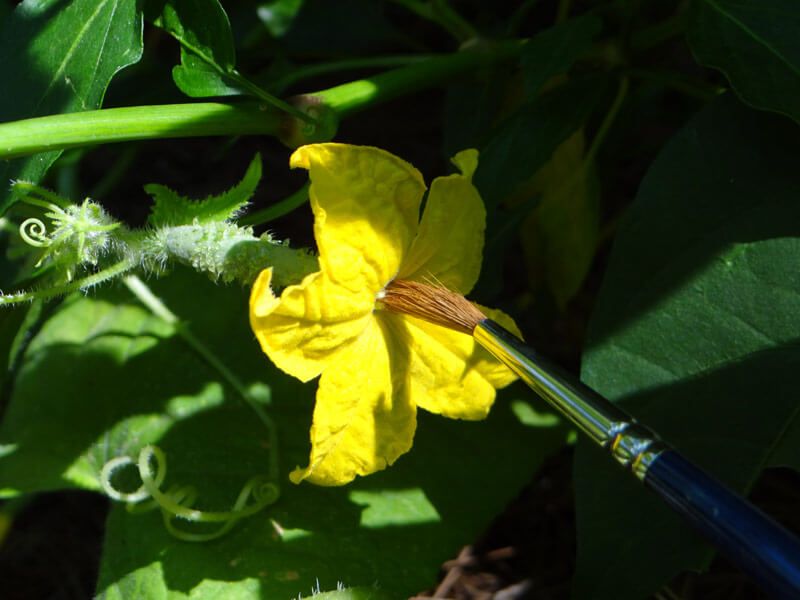
The most useful place to put your attention now is the next flower that opens on the vine, not the cucumber that already grew crooked. Start by confirming your cultivar type from the seed packet so you know whether bees are helping or whether your variety sets fruit on its own.
Then check the vine each morning for freshly opened female flowers, identify whether male flowers are open at the same time, and hand-pollinate when both are receptive and bee activity has been low.
Keep soil moisture steady, maintain your mulch layer, and avoid any insecticide application that could harm the bees visiting your blooms. Texas A&M AgriLife Extension and Utah State University Extension both support removing badly misshapen young fruit so the plant redirects energy to new growth.
If distorted cucumbers keep appearing across the vine or you notice leaf mottling and stunting, Penn State Extension’s broader cucumber troubleshooting guidance points toward moisture, temperature, or disease as the next areas to investigate.
Uneven pollination is the first and most common explanation for a cucumber that grows fat at one end and pinched at the other, but repeated deformity across the vine tells a bigger story. One well-timed morning visit to your open flowers can make all the difference for the cucumbers still to come.