
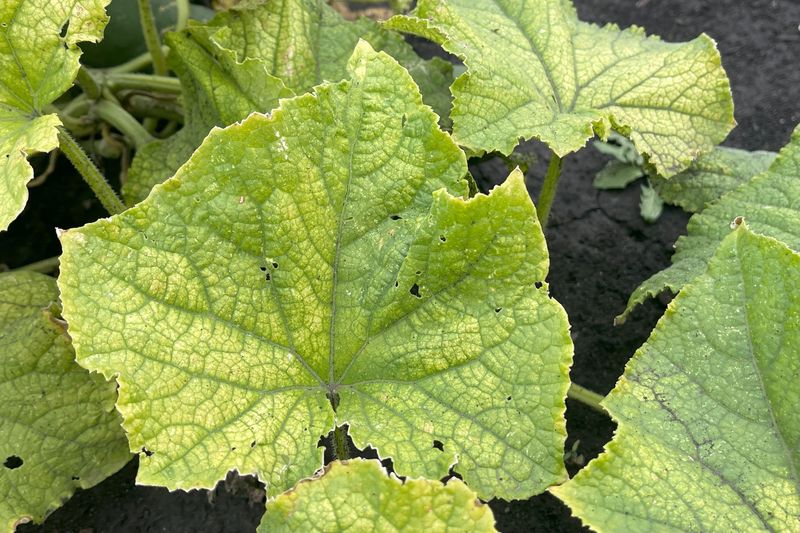
Yellow patches showing up between the veins of your cucumber leaves can stop a gardener cold, especially when the plants were looking fine just a week ago. That pattern is worth taking seriously, but it does not point to a single clear cause on its own. Magnesium deficiency is one real possibility, particularly when older leaves show the first signs, but disease, mites, and root stress can produce a nearly identical look. Before reaching for fertilizer or fungicide, a quick inspection of the leaves and growing conditions will tell you far more than the color alone.
Yellow tissue between green veins offers a starting clue
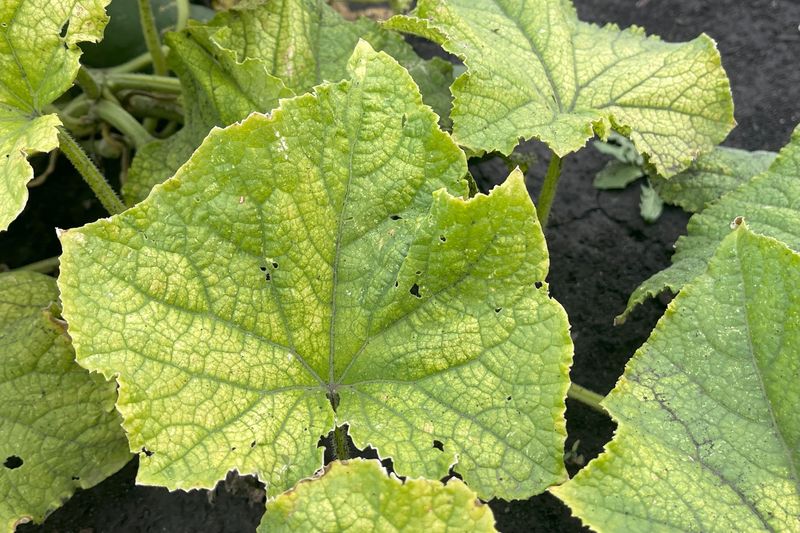
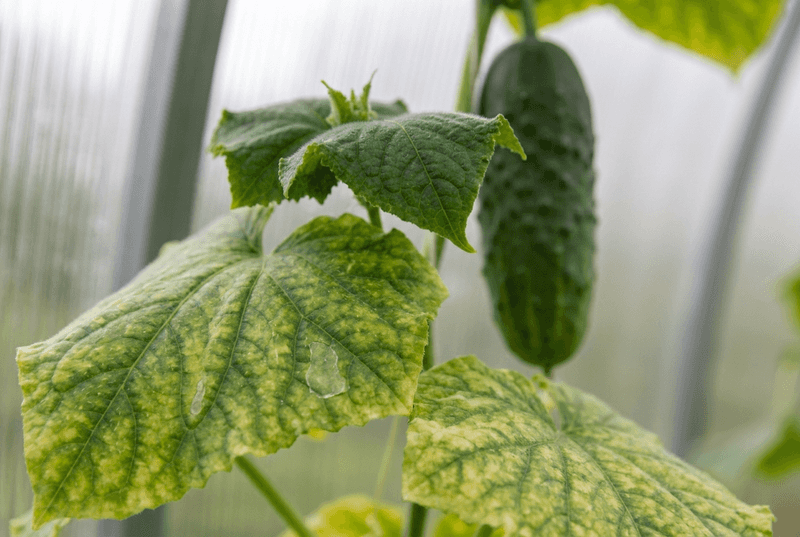
Interveinal yellowing means the tissue between the leaf veins turns yellow while the veins themselves stay green. On a cucumber plant, that pattern on older or lower leaves can fit magnesium deficiency because magnesium is a core building block of chlorophyll and moves freely within the plant. When the plant runs short, it pulls magnesium out of older leaves and sends it toward younger growth, so the oldest leaves often show the first color change.
That explanation is biologically reasonable, but the symptom alone is not a diagnosis. UGA Cooperative Extension’s guide to vegetable nutritional deficiencies lists magnesium as a cause of interveinal chlorosis in vegetables, while also making clear that multiple problems can produce similar patterns. Downy mildew, spider mites, viruses, herbicide drift, high soil pH, and other nutrient imbalances can all create yellow areas between the veins.
The corrected decision rule for this situation is straightforward: inspect the plant, the leaves on both sides, and the growing conditions before applying anything. A nutrient treatment will not help a plant fighting a fungal disease, and a fungicide will do nothing for a magnesium gap. Getting that distinction right starts with looking carefully rather than acting quickly.
Older leaves strengthen the magnesium possibility
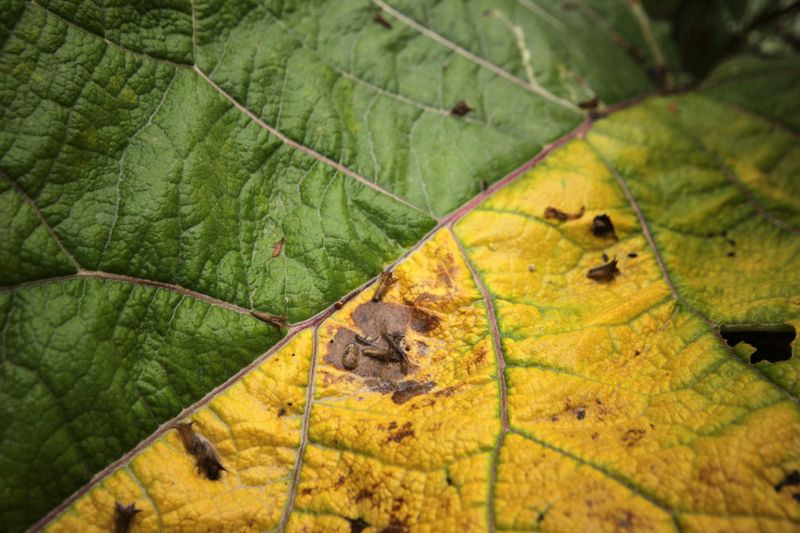
Leaf age is one of the most useful clues when trying to narrow down the cause of cucumber yellowing. Magnesium deficiency tends to show up on the oldest, most mature leaves at the base of the plant first, precisely because magnesium is mobile and the plant redistributes it toward actively growing tissue. If the yellowing started on upper or younger leaves, magnesium deficiency becomes a weaker explanation.
According to UGA Extension’s nutritional deficiency bulletin, classic magnesium chlorosis involves tissue between the veins turning yellow while the veins remain distinctly green, with newer growth staying comparatively normal in color and shape. That specific combination, older leaves affected first, green veins, healthy-looking new growth, makes magnesium a more plausible suspect.
Comparing that pattern against other common causes helps narrow the field further. Uniform pale yellowing across older leaves fits possible nitrogen deficiency more than classic magnesium chlorosis. Yellowing that appears first on younger or newly emerging leaves points more toward iron or certain other micronutrient problems, since those nutrients do not move as freely within the plant. Marginal yellowing or browning along leaf edges, rather than between the veins, can suggest potassium or other disorders instead.
These comparisons reduce the list of likely causes, but they cannot replace a soil test or a thorough inspection. As University of Minnesota Extension’s magnesium crop production guide notes, visual diagnosis alone is unreliable because diseases, pests, and environmental problems can mimic nutrient symptoms closely.
Late-summer heat can reveal stress without naming its cause
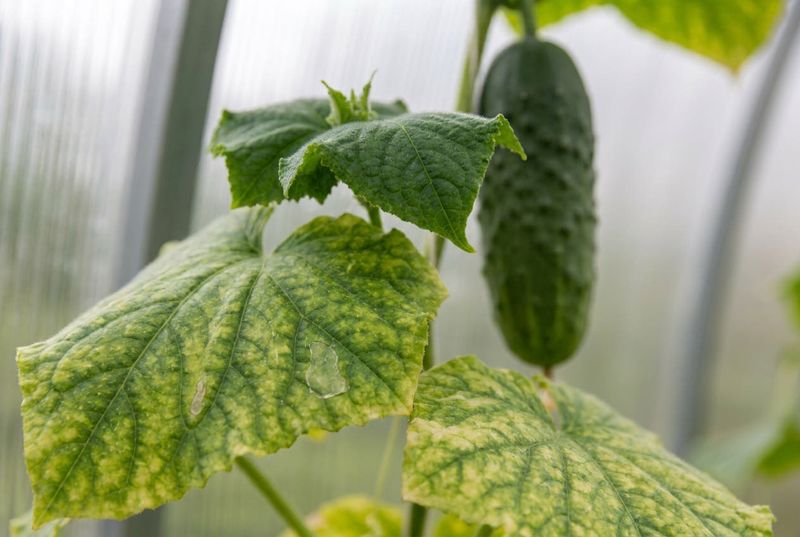
Hot weather does not directly create a magnesium deficiency, but it can make underlying problems harder for a plant to manage. When temperatures climb and wind picks up, plants lose water faster through their leaves. If irrigation does not keep pace, roots under dry stress become less efficient at pulling nutrients from the soil, which can make an existing marginal deficiency show up more visibly.
The relationship works in the other direction too. Over-watering during a heat wave can waterlog the soil, reducing the oxygen roots need to function, and heavy irrigation can leach mobile nutrients deeper into the soil profile where roots cannot easily reach them. Oregon State University Extension’s overview of environmental factors affecting plant growth describes how both drought stress and waterlogged conditions can impair nutrient uptake, even when nutrients are present in the soil.
Late-summer timing also brings its own pest and disease pressures that complicate the picture. Hot, dry conditions are well-known for favoring spider mite outbreaks, which cause a kind of stippled yellowing that can be mistaken for a nutrient problem. At the same time, UC IPM’s cucurbit pest management guidelines note that downy mildew can also appear during late-season periods when humidity, dew, or rain wet the foliage. Heat and seasonal timing, on their own, cannot tell you whether the problem is nutritional or biological.
Staying alert to UMN Extension’s heat-stress gardening guidance while also checking for pest and disease signs gives a more complete picture than heat alone.
Inspect both sides of every affected leaf
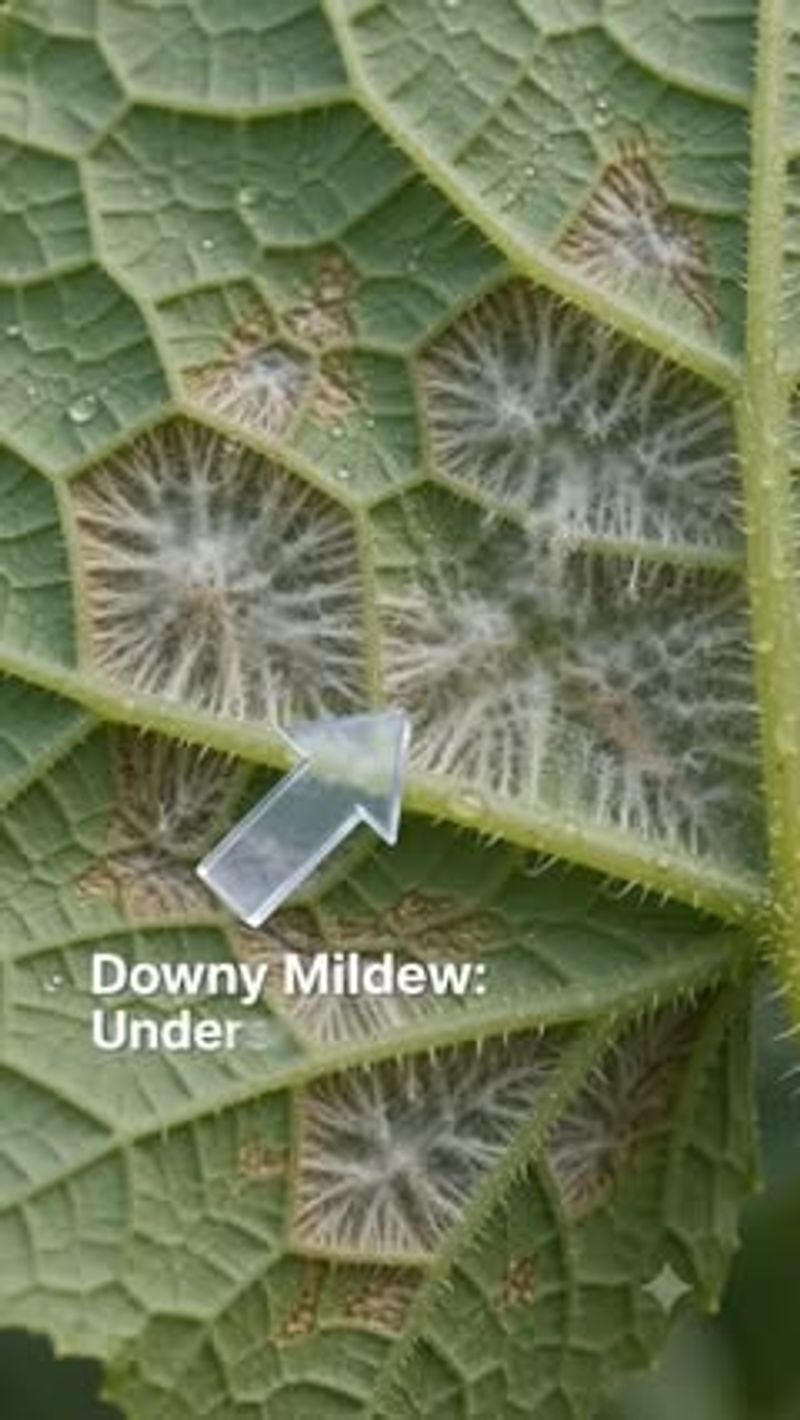
Turning over a leaf takes about five seconds and can completely change what you do next. The undersides of cucumber leaves hold some of the most important diagnostic information, and skipping that step before treating is one of the most common mistakes home gardeners make.
Start with the yellowing leaves and look at the top surface first. Are the yellow areas angular, bounded on at least two sides by a vein? Angular, vein-bounded spots that start pale green and shift to yellow are a hallmark of downy mildew on cucumbers. Flip the leaf over and look for fuzzy white, gray, or purple growth on the underside beneath those spots.
According to UC IPM’s downy mildew on cucurbits page, that underside growth appears under humid or wet conditions and is a key sign that separates this disease from nutritional chlorosis, which produces no such growth.
Powdery mildew looks different. It produces visible white powdery patches on leaf surfaces, usually on the upper side, and the affected tissue may eventually yellow and die. That white coating is not present with magnesium deficiency.
Fine yellow or white stippling scattered across the leaf, sometimes with a dusty or bronzed look, points toward spider mites. Check the underside for fine webbing, especially along the midrib and near the stem. University of Minnesota Extension’s cucumber leaf discoloration diagnostic tool lists mites alongside viruses and diseases as causes of discolored cucumber leaves that can be confused with nutrient problems.
If leaves show mottled light-and-dark green patches, distorted or cupped growth, unusual curling, stunting, or odd fruit symptoms, a virus is worth considering. Symptoms alone cannot reliably diagnose a virus, and that situation calls for extension or diagnostic lab help rather than a home remedy.
Reduce environmental stress while you investigate

While you are still figuring out what is causing the yellowing, a few low-risk steps can reduce stress on the plant without committing to a diagnosis. None of these actions assume magnesium deficiency, and none will make a disease or pest problem worse.
Keeping soil moisture reasonably even is the most important adjustment. Cucumbers are sensitive to both drought and waterlogging, and swinging between wet and dry extremes can affect how efficiently roots absorb nutrients. Water at the soil line rather than overhead to keep foliage dry, which reduces the humid leaf-surface conditions that favor downy mildew. A 2- to 3-inch layer of mulch around the base of the plant helps hold soil moisture, moderates soil temperature, and reduces how often you need to water.
UMN Extension’s guidance on keeping gardens thriving through heat specifically recommends mulching and consistent soil moisture during hot periods to protect vegetable crops. Avoid letting soil dry out completely between waterings, but also make sure the soil drains well enough that water does not pool around the roots after irrigation.
If disease is a possibility based on your leaf inspection, improving airflow around the plants matters too. Prune or thin any overcrowded growth, and avoid wetting the foliage when you water. These steps create less favorable conditions for fungal pathogens while you gather more information. They will not cure a nutrient deficiency, but they will not interfere with any treatment you might apply later once you have a clearer picture.
Use testing to evaluate magnesium availability
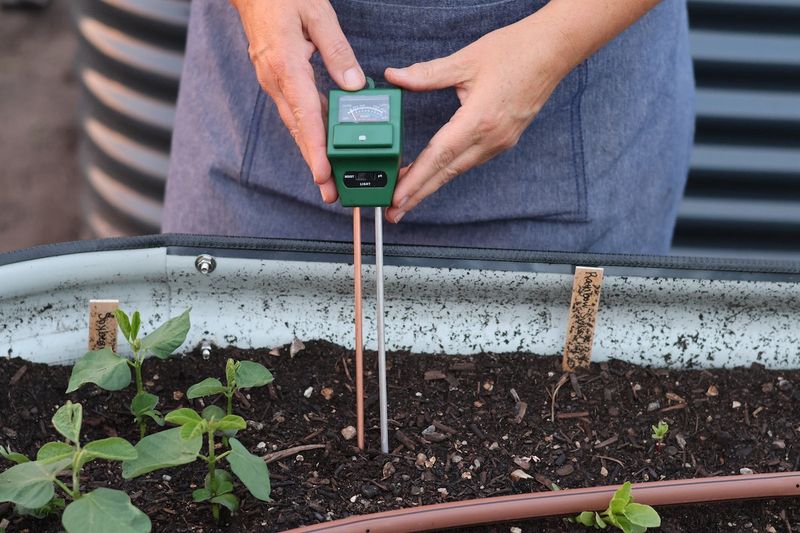
A soil test that includes magnesium gives you real evidence to work with instead of guessing. Most university extension labs and many commercial labs offer a standard vegetable garden panel that measures pH, major nutrients, and secondary nutrients including magnesium. Knowing the actual magnesium level in your soil, along with the pH, helps you understand whether a deficiency is even plausible before you buy any amendment.
Soil pH matters here because it affects how available magnesium is to plant roots, even when the mineral is physically present in the soil. UGA Extension’s nutritional deficiency bulletin notes that nutrient availability is closely tied to soil pH, and a soil test result showing adequate magnesium at a poor pH may still point to an availability problem rather than an absence problem.
When the soil test results and the symptoms do not line up clearly, tissue testing adds another layer of information. A tissue test measures what the plant actually absorbed, not just what was in the soil. That distinction matters when root damage, poor drainage, competing nutrients, or salinity might be blocking uptake even though the soil has enough magnesium on paper.
As University of Minnesota Extension’s magnesium guide points out, soil test results provide useful evidence about nutrient levels but do not prove that magnesium caused the chlorosis or rule out disease, pests, or root injury. Compare test results with your leaf inspection findings and growing conditions, and contact your local cooperative extension office if the evidence still does not point clearly in one direction. Consider also reviewing Penn State Extension’s guidance on interpreting water and soil tests if your irrigation source could be contributing to salinity or mineral imbalances.
Match the treatment to the evidence
Once you have a clearer picture from your inspection and any testing, treatment decisions become much more straightforward. The key is matching what you apply to what the evidence actually supports, rather than reaching for the most popular remedy.
If soil testing and your symptom observations together support magnesium deficiency, look for a labeled magnesium-containing fertilizer and follow the soil-test recommendation for rate and method. Dolomitic lime is one source of magnesium, but it also raises soil pH, so it is not an appropriate choice for every garden or every soil. If your pH is already adequate or high, adding lime could create new problems. Magnesium sulfate, sometimes sold as Epsom salt, is another option, but as UMN Extension’s review of common soil remedies explains, applying it without test-based evidence of deficiency risks excess magnesium interfering with calcium uptake, leaf scorch from foliar applications, and environmental runoff.
Rate and application method should come from the product label or local extension guidance, not a general online recommendation.
Foliar magnesium applications can sometimes produce a visible short-term response, but roots remain the primary nutrient-uptake pathway. Penn State Extension’s overview of foliar fertilization in vegetable production notes that foliar feeding is not automatically superior or safer than soil application, and misapplied products can injure foliage.
If your leaf inspection pointed clearly toward downy mildew or powdery mildew rather than a nutrient issue, the response is entirely different. A nutrient amendment will not slow a fungal disease. UC IPM’s downy mildew management page describes disease-specific management options, including properly labeled fungicides where appropriate, when the disease is confirmed or strongly indicated. Match the product to the pathogen, follow the label, and check local extension recommendations for any restrictions in your area.
Correct the actual problem, not just the leaf color
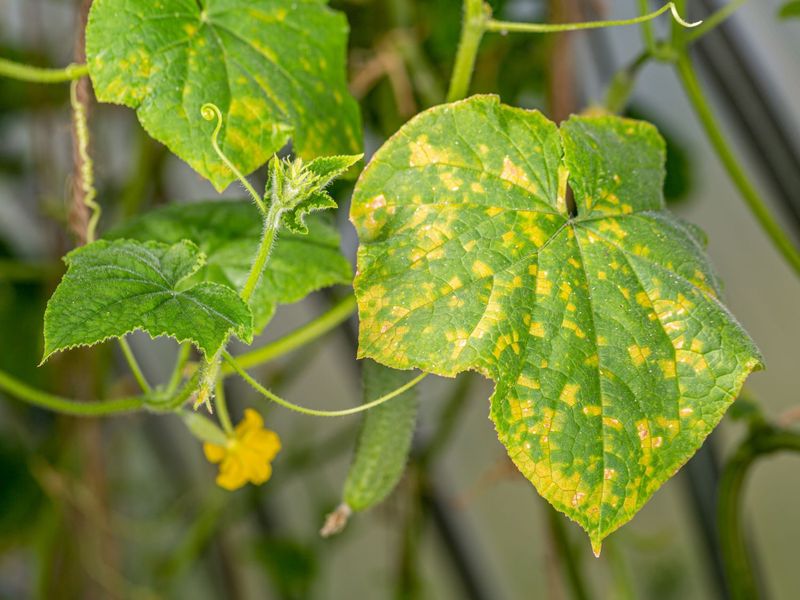
Yellow tissue between green veins on older cucumber leaves is a signal worth investigating, not a prescription for a specific treatment. Magnesium is worth evaluating when the oldest leaves show the first symptoms and newer growth looks relatively normal, but appearance and seasonal heat alone do not establish a deficiency.
Work through the evidence in order. Check both sides of the affected leaves for signs of downy mildew, powdery mildew, or mites before assuming a nutrient cause. Stabilize soil moisture and reduce foliage wetting while you gather information. Use a soil test, and consider tissue testing when results and symptoms do not agree.
Then treat what the combined evidence most strongly supports, whether that is a nutritional amendment, a disease-specific product, or a change in watering practice.
As both UGA Extension and UMN Extension’s cucumber diagnostic tool make clear, cucumber yellowing can reflect nutrition, roots, water, pests, or disease. The plant that gets the right fix recovers; the one that gets the wrong treatment often just continues to decline. Getting the diagnosis right is the most useful thing you can do for it.